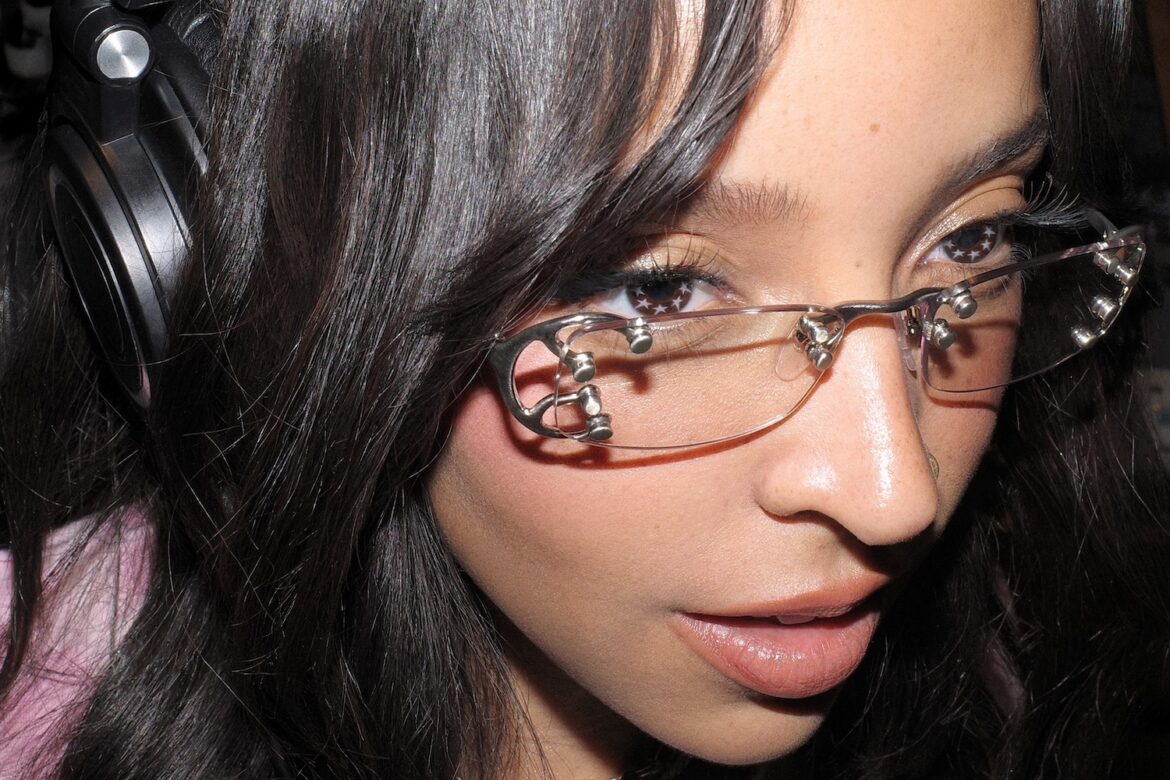
On her restless eighth album ‘Popstar,’ Tinashe claims the title she has long held for herself, then follows the performance past its breaking point. The joke in “Too Easy” becomes a question the whole album has to answer: How much of a person can the show consume?
by guest writer Shreshtha Bhardwaj
Stream: ‘Popstar’ – Tinashe
Tinashe dies before the work is finished.
In the video for “Too Easy,” a falling lighting rig cuts short a dance shoot on a green-screen set, and the business of finding another Tinashe begins. Women audition. The replacement eventually comes through cloning. Soon, a familiar face is doing the familiar work, carrying on a production that has already killed its star.
It is a nasty little joke to attach to a song about making stardom look effortless. The replacement can reproduce the image, but she enters the same routine and the same danger. The ending returns to the sparking lights, then cuts to black as she raises her hands toward the camera. A second impact is implied rather than shown. The repetition suggests that replacing the performer has left the original danger in place.

Released September 25 through Nice Life and Atlantic, Popstar takes that joke seriously without losing its appetite for the spotlight. The heavy bass of “Too Easy” gives her swagger something to ride; “Melatonin” keeps the electronic energy restless. Across sixteen songs, Tinashe makes room for pleasure, impatience, and exhaustion, sometimes with barely a breath between them. She can enjoy the performance and still question the conditions under which she is expected to give it. “Too Easy” supplies the smile. The rest of the record asks how long she has to hold it.
“Too Easy” works because the music performs the same trick as the image. Tinashe’s short, sharply separated phrases make the boasts sound casually tossed off, while the heavy bass does much of the physical work beneath her voice. The wordless refrain makes the effortlessness feel almost weightless. The video keeps puncturing that illusion: handwritten cue cards sit just outside the television frame, and a white Jeep Wrangler Rubicon posed before a green screen becomes a glamorous Hollywood drive. What sounds instinctive is surrounded by evidence of preparation. That tension carries into “Melatonin,” where the production grows busier without making Tinashe sound any less in command. Ease, on this record, is increasingly something the music has to work to produce.

The choice of title carries a history.
In a 2024 conversation with Kaytranada for Interview, Tinashe recalled an early label relationship in which her music failed to match expectations of “either a pop star or an urban star.” Moving between sounds became a marketing problem. Over time, she made compromises that left her confused about her own direction. A singer with a clear creative appetite was being asked to make that appetite easier to sell.
Those categories were never innocent descriptions of the music. The distinction between “pop” and “urban” also decided who could be presented as a star with broad appeal, and whose audience was imagined as narrower before anyone had heard the next song. Tinashe has been explicit about the racial stakes. Speaking to By Alexander this year, she challenged a sanitized, whitewashed conception of pop stardom and argued that judgments about genre often depend on who is singing. Naming this album Popstar puts her own description of herself on the cover.
She has held that description for years. In ELLE’s 2024 interview, she said she had always considered herself a pop star. The new title makes that conviction impossible to miss. Her song “Talk to Me Nice” was already drawing dance, R&B, pop, and hip-hop together in 2023. Popstar gives that freedom an even bigger stage, with room for the expansive singing of “I’d Rather Be Alone” alongside the rush of its club tracks. Her presence supplies the connection. Range was the difficulty for the people trying to market her; it is part of what makes the album hers.
“I’d Rather Be Alone” uses that range differently. Electric guitar and spellbinding, impassioned singing turn a wish for solitude into something large enough to occupy the same scale as the album’s pop-star fantasy. Her voice carries far more force than on “Too Easy,” but that power is pointed toward refusal rather than display. The contrast matters: range here is not proof that she can do everything. It gives her another way to decide what she will and will not keep performing.

Leaving RCA in 2019 gave her room to rebuild that confidence.
Songs for You, 333, and BB/ANG3L arrived before “Nasty” became a viral hit in 2024, a sequence worth remembering whenever her career is reduced to its latest breakthrough. She had already been making the work. The audience for one song grew dramatically; her artistic life did not begin with that audience’s arrival.
The distinction matters because “Nasty” could so easily have become another instruction. Having finally found a phrase people wanted to repeat, she might have been expected to keep supplying versions of it. In her 2024 interview with GRAMMY.com, she said she had made the song by following what inspired her, rather than using its potential to become a hit as her measure. Success had come out of a practice she wanted to protect. Popstar keeps moving, even when its own title seems to promise an easily identifiable product.
Her “B2B” remix with Charli xcx had already caught the thrill and fatigue of that moment in 2024. Tinashe’s verse rushes from international travel to the stage to a shoot that runs into the early hours. The tiredness comes with the delighted recognition that she has made it. Two years later, “Too Easy” gives that relentless schedule a darker visual punchline: The work can continue even when the woman doing it cannot.

That movement gives “Too Easy” its bite. Tinashe described the song to NPR’s Juana Summers as having a “cheeky and almost sarcastic energy.” The boast comes with an awareness of the role being played. Its failed auditions make the cloning especially pointed. A production that cannot find somebody to do what Tinashe does responds by manufacturing her likeness. The video’s satire becomes crueler when read alongside her struggle to fit an industry category. The same individuality that was difficult to accommodate is now something the business wants to duplicate. Her value is suddenly obvious when it can be reproduced without having to contend with a new person’s choices.
There is also something uncomfortable about how well the replacement keeps up. She looks capable. The work gets done. The fantasy of an inexhaustible performer briefly appears to have become practical, until the return to the lighting rig threatens the same outcome. Read this way, the video’s world can imagine replacing a worker more readily than changing the work. That is a sharper accusation than simply saying fame is fake. The performance is real enough to wear somebody out.
Tinashe knows the labor behind that appearance. In a 2024 NYLON interview, she described funding her tours and usually losing a couple hundred thousand dollars afterward. Rehearsal time was compressed into days, even as the production required dancers, choreography, screens, and the people who moved and assembled it. These were the practical terms of making her vision visible. Independence restored decisions to her and left substantial costs in her hands.
The same interview also complicates the familiar story of an artist rescued from a villainous label. Tinashe rejected the idea that RCA had deliberately sabotaged her, describing misguided business decisions instead. Keeping that distinction gives her story more force. A company does not have to want an artist to fail for its assumptions about success to damage her confidence. She can reclaim control without pretending that control makes the work light.

Popstar is itself arriving with major-label involvement: Its release credit names Tinashe Music Inc. under exclusive license to Atlantic.
She is carrying the confidence she rebuilt into another label arrangement. The record’s breadth makes that confidence audible, but the songs also leave room for feelings she cannot settle through a business decision.
“Empty Stadium” makes the cost of performing disturbingly concrete. Its dream places her inside a vast venue with no apparent exit, an image that makes the usual scale of pop ambition feel enclosing. Coming fourth, just after “Too Easy” and “Melatonin,” it unsettles the record early. The fantasy has barely had time to establish itself before the space built to display her starts to feel like somewhere she cannot leave.
“Empty Stadium” keeps moving between intimacy and scale. Its opening is airy and restrained, leaving space around Tinashe’s voice before the beat and fuller layers build around her; later, sweeping orchestral layers make the song feel suddenly much larger. That expansion fits the nightmare at its centre. She has been singing for so long that she realizes nobody can hear her, then finds herself waiting onstage for applause that will never come. Yet the song complicates that fear almost immediately: she imagines finally having everything she has worked toward and everyone loving her, only to wonder whether even that would be enough. The arrangement’s movement between openness and grandeur gives both anxieties room to exist at once, the fear of going unheard and the fear that being heard still might not satisfy what she has been chasing.
It would be too easy to treat that song as the confession that cancels the swagger. Tinashe has resisted the demand that every performance reveal her private life. In her September Stereogum interview, she observed that “authenticity can be performative.” She also explained that sensual expression in her music need not correspond neatly to her dating life. The confidence can be sincere without being permanent. The fear can matter without becoming a diagnosis. Both are available to an artist with more to express than a consistent public mood.
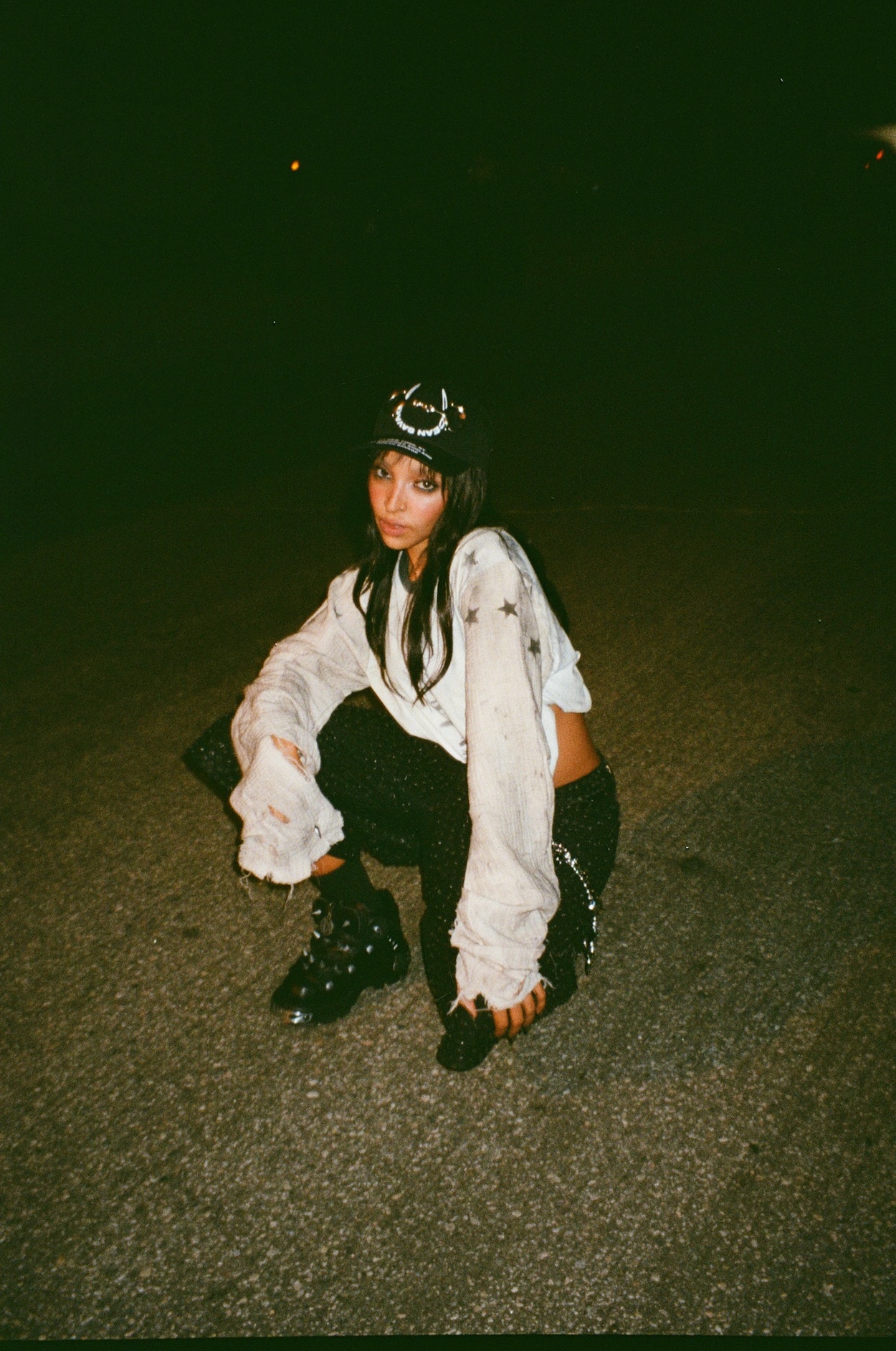
That interview contains another useful objection: Tinashe wants listeners to encounter albums beyond the fragments that circulate online. Popstar gives them a reason to. Hearing “Too Easy” alone delivers a boast with a sinister visual joke. Meeting “Empty Stadium” soon afterward changes the scale of that joke. The person who seemed so comfortable being seen can also imagine the stage as a trap. An album allows those impressions to sit together without demanding that one be the definitive Tinashe.
By the final song, “Heavy Weight,” the acoustic-guitar-led arrangement brings the record into a smaller space. Tinashe told NPR that she wanted this ending to change the intention and become more intimate. The song locates its burden in another role, that of the “oldest daughter.” Its speaker keeps trying to repair what is broken, with the expectation that she will hold everything together. Working harder has become the response to being overwhelmed by work.
That detail takes the album beyond the exceptional demands of celebrity. There is something painfully familiar about becoming so reliable that people stop asking what reliability costs you. The ability to manage everything becomes an obligation to keep managing it. “Too Easy” turns competence into a public boast; “Heavy Weight” finds the point at which competence gives other people permission to ask for more. After the cloning and the stadium, the problem has come home.
The guitar holds to a steady, recurring figure, giving “Heavy Weight” a sense of repetition without turning its burden into spectacle. Tinashe’s verses remain comparatively contained before her voice opens up in the chorus, particularly as she stretches the final “down.” Even then, the arrangement resists a huge climax. She says she is not strong enough to admit that she cannot carry the weight anymore, even as the song becomes the place where she finally does. After so much bass, electronic movement and performance across the album, that restraint allows Popstar to end without turning exhaustion into one more demonstration of what she can withstand.
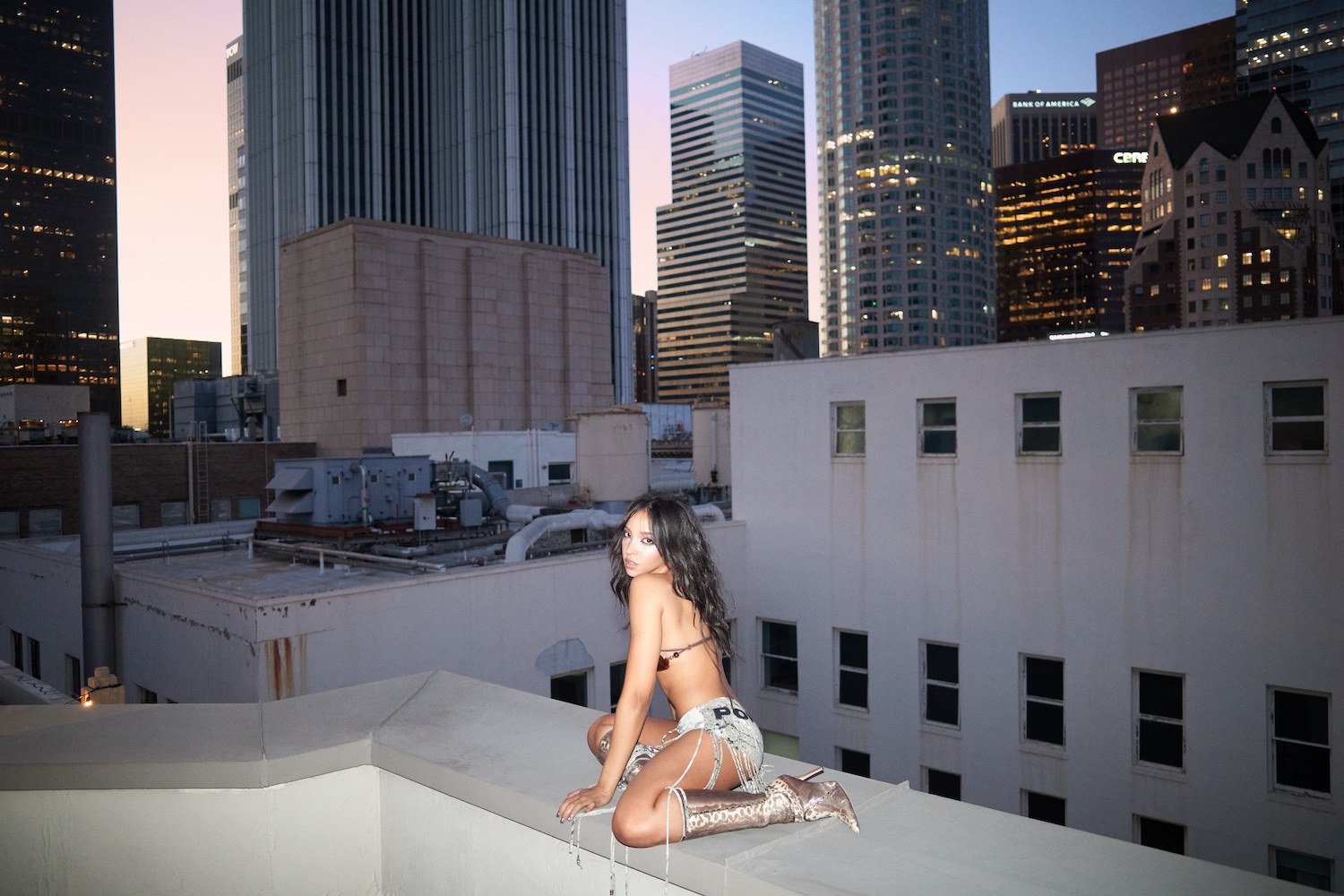
The video offers a replacement when the performer breaks. The album allows the performer to speak about the burden before that happens.
This is where Tinashe’s claim to pop stardom feels most persuasive: She can make the show exhilarating while leaving room for the woman who has to live through it.
At the end of Popstar, she is allowed to stop smiling long enough to tell us what she has been carrying.
— —
Shreshtha Bhardwaj writes about pop and R&B, especially the way music, visuals, and performance feed into each other. When she’s not writing, she’s probably playing guitar.
— —
:: stream/purchase Popstar here ::
:: connect with Tinashe here ::
— —
— — — —

Connect to Tinashe on
Facebook, 𝕏, TikTok, Instagram
Discover new music on Atwood Magazine
© Hugo Comte
 © Hugo Comte
Popstar
an album by Tinashe