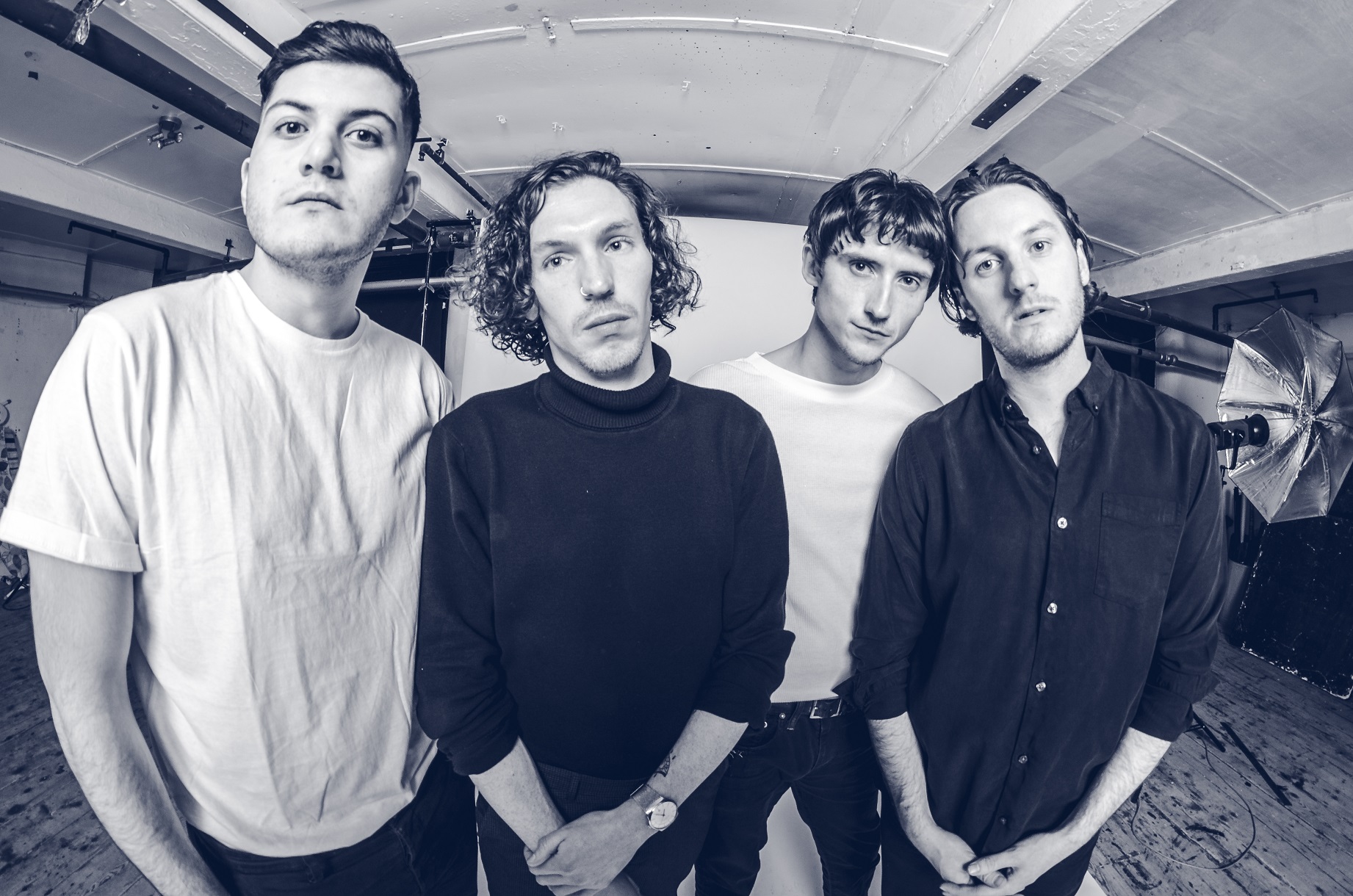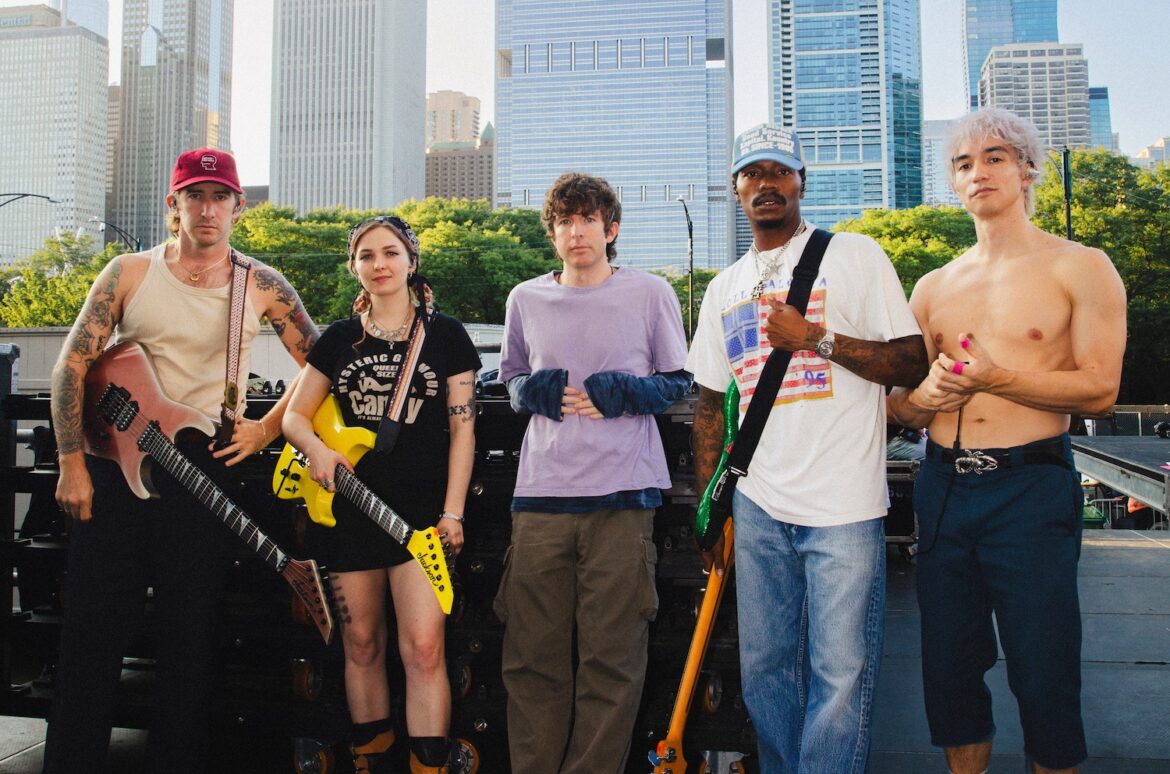
From jazz reinterpretations to dancefloor-ready reworks, ‘NEVER ENOUGH: VERSIONS’ takes Turnstile’s music in unexpected directions.
‘NEVER ENOUGH: VERSIONS’ – Turnstile
A remix album can be a curious thing.
Sometimes, hearing a familiar song reimagined only makes you appreciate the original all the more, leaving you wondering why anyone felt the need to change it in the first place. Turnstile, however, take a different approach: What if a song doesn’t need to sound anything like its original at all, to be worth listening to? On NEVER ENOUGH: VERSIONS, the Baltimore band hands its music over to artists from across genres, ranging from Elton John to Four Tet. Unsurprisingly, the results stretch far beyond what one might usually expect of a remix album. Some tracks end up barely recognisable; others reveal entirely new dimensions to familiar songs, and a few make you wonder how Turnstile ever got here in the first place. And somehow, it all works.
Following the band’s critically acclaimed fourth studio album, NEVER ENOUGH, this 22-track collection features reimaginins of all 14 original songs. And Turnstile take the album’s title quite literally. The band seems intrigued by the question of what a song might become when left in someone else’s hands entirely, instead of treating a remix as the usual straightforward reworking of an existing track. Instead, familiar material is pulled apart and stripped back, rebuilt, and occasionally transported into entirely different musical worlds across the record. Less a remix album than a genre experiment, NEVER ENOUGH: VERSIONS borrows something from everywhere, moving from heavy metal to jazz, from electronic dance music to stripped-back singer-songwriter covers. Throughout, the featured artists aren’t merely incorporating elements of their own genres but oftentimes abandoning the entire frameworks of the original songs altogether.
And by all accounts, such an album is destined to struggle to find its footing. Yet Turnstile find strength precisely within this disjointed and inconsistent listening experience. Here, inconsistency by no means suggests uneven quality: The album may be sonically unpredictable, but it is also consistently rewarding. With this versions album, the band takes collaboration to a new level, going far beyond the usual approach.
Even my Spotify account acknowledged this: In my weekly listening stats, it pointed out that listening to Nathan Archie and Dying Fetus in the same week is “a combo as unique as you.” Yes, and everyone say, “Thank you Turnstile” for this.
Fellow Baltimore artist Brandon Woody transforms “DREAMING” into a dazzling jazz rendition. It’s a demonstration of just how far the band is willing to let their songs travel. Few artists could let their hardcore-punk roots be turned into jazz. The original composition fully lends itself to a slower, more spacious interpretation. The track abandons frontman Brendan Yates’ vocals, and yet lands not an inch less convincing than its original, because such a transformation might seem entirely unexpected.
Dan Deacon, in turn, takes the same song in an entirely different direction and reveals something new by taking things away. Some of the album’s most compelling moments aren’t necessarily its most radical – sometimes, all a song needs is room to breathe. The lyrics to “DREAMING,” which otherwise might get lost competing against the intense instrumentation of the original song, suddenly find an entirely new emotional meaning on this stripped back version. The heavily distorted voice adds to the idea of “DREAMING,” almost like a sunken-in realisation of the lyrics:
When I get to dreaming, then I know
Everything I fear is so real
When I get to dreaming, then I know
You’re fading away
A beautiful dream
As the synths set in, the original instrumentation is subtly woven back into the song, creating a cinematic soundscape. So much so that, if you close your eyes, you might just find yourself within the dream, floating through space and time, maybe losing track of reality after all. The song seems to invite listeners to inhabit the blurriness of the dream itself.
The original album’s most popular track, “BIRDS,” sees Slayyyter put her own spin on it, turning the song into an eclectic mix of pop and electronic elements alike. Slayyyter gives the lyrics more of a melodic quality, and as Yates’ original vocals come in right before the song’s chorus, the unlikely combination of the two makes the drop all the more explosive. Although Slayyyter clearly imprints her signature sound on her version of “BIRDS,” the track continues to thrive off its unpredictability. Her take on the song is so good that any second-guessing about how pop and hardcore-punk could possibly go together vanishes within seconds: This is how you do it.
Chanel Beads’ version of “DULL” turns the hardcore track into a softer and more understated rendition. What might on paper sound like sucking the life out of a song, instead lands as a version that’s worth considering. It’s a showcase of how a track can retain its emotional core even when its original intensity is stripped away. And what a way to highlight and celebrate artistic diversity, showing the ways in which the same idea can be approached and interpreted differently.
With Four Tet and KETTAMA, two electronic musicians take on “LOOK OUT FOR ME,” a decision that doesn’t seem all that surprising, considering that this is arguably the most electronic-leaning track on the original NEVER ENOUGH. While other versions on the album are more radical departures from Turnstile’s original sound, these variations of “LOOK OUT FOR ME” build on a musical possibility that was already there. It’s also worth noting that electronic influences aren’t new to Turnstile – in 2020, they released three remixes of tracks from their third album alongside Australian producer and DJ Mall Grab.
While the band’s original version of “LOOK OUT FOR ME” gradually moves from a hardcore first half into a cinematic second half that comes close to electronic dance music, both Four Tet and KETTAMA take their time building their respective interpretations from the ground up. Four Tet, in particular, has a knack for building a room, often spending hours carefully steering a crowd’s energy. The same patience is reflected in his version of the song, where the beat takes shape element by element, almost imperceptibly. When Yates’ vocals eventually emerge, they’re initially just distant, echoing fragments before gradually coming into focus.
KETTAMA takes a similarly patient approach, though with a different destination in mind. His version only subtly resembles Turnstile at first, slowly building its production before synths set in and the song erupts into a high-energy drop in the second half, where his unmistakable sound finally comes into full force. It’s a particularly satisfying moment from a producer whose recent releases have often been defined by their energy from the very first second. Yet KETTAMA has always had a taste for more cinematic moments in his sets, making the slower build-up feel particularly suited to those moments during his live shows. And in fact, that’s precisely what has happened. He’d been testing out his interpretation of Brendan Yates’ vocals in front of crowds around the globe long before Turnstile announced the full versions album, including as the closing track of his performance at Coachella earlier this year.
And with “SOLE: FLOATING POINTS VERSION,” there’s yet another electronic musician deconstructing a Turnstile original, revealing a driving, almost eerie quality about Yates’ vocals. All of a sudden, there’s a real chance one might hear Turnstile on dark, sweaty dance floors.
Meanwhile, Faye Webster and Paramore’s Hayley Williams take Turnstile’s music into yet another direction , with their covers of “I CARE,” and “CEILING” respectively. Their tender voices are at odds with Yates’ vocals on the original album. Who would have thought Turnstile would qualify to be played at a Sunday morning brunch after all?
Yet the album’s irresistibility isn’t solely measured by how far its collaborators can take Turnstile’s music from its origins.
Beyond the music itself, the album also serves as a beautiful reminder of just how distinctive each featured artist sounds. It’s just as striking to hear how clearly their own identities come through in the process. Whether it’s Oklou’s expansive yet stripped-back version of “LIGHT DESIGN,” complete with an organ, or Blood Orange’s own take on the same song, it takes only seconds to recognise who’s behind each version. These are artists with unmistakably distinct sounds, which they carry into these versions entirely and without excuses.
With the release of NEVER ENOUGH came a wider cultural conversation about Turnstile, which made moments such as Charli xcx’s call for a “Turnstile Summer” at her Coachella performance, following her own “Brat Summer” phenomenon, possible in the first place. Even though Charli herself doesn’t appear on this record, it doesn’t come as a surprise that her long-time collaborator, and producer behind most of her work, A.G. Cook, reimagines “DULL.” After all, aren’t we all just fans of Turnstile by now?
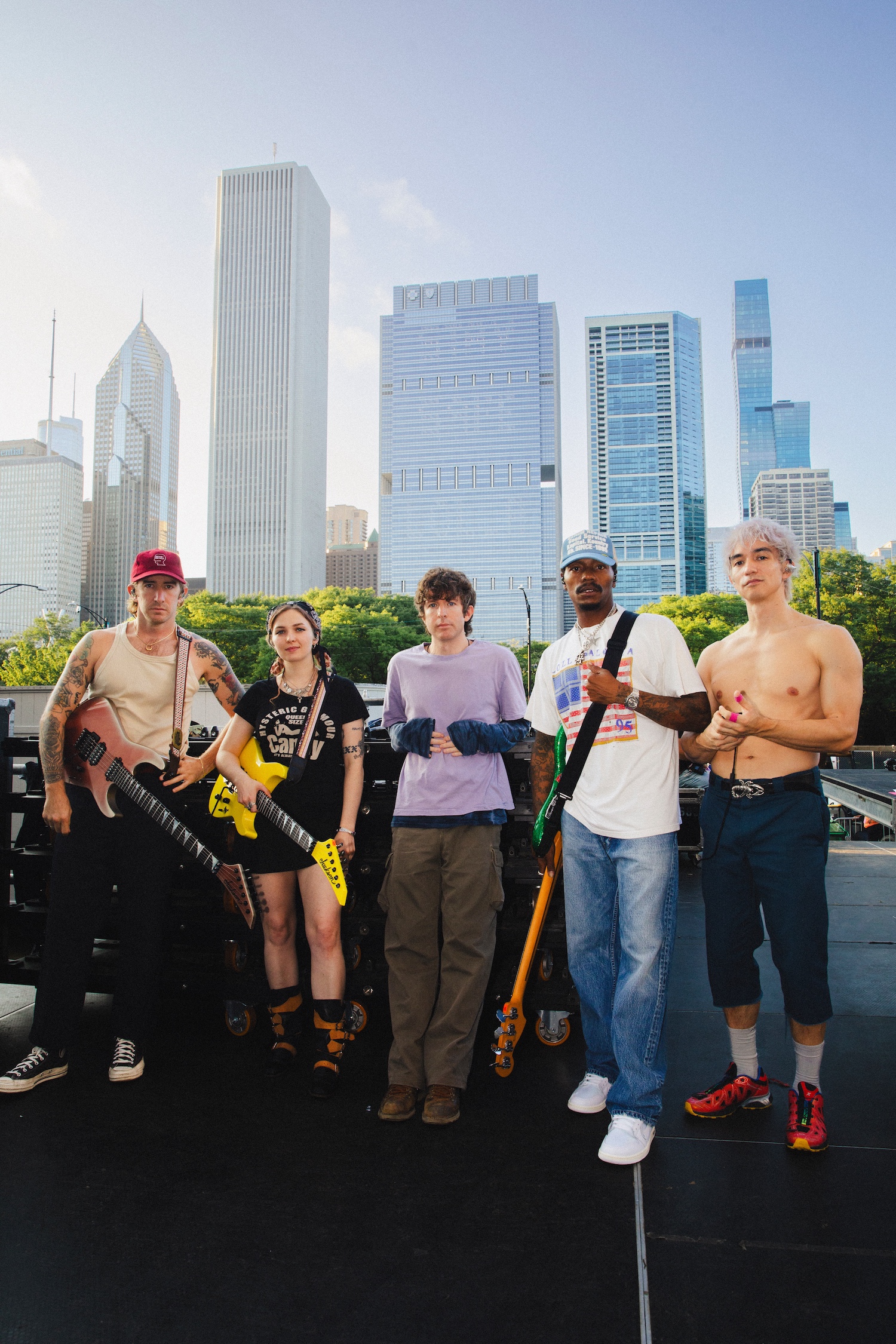
Ultimately, all of NEVER ENOUGH: VERSIONS becomes a demonstration of just how differently a song can be interpreted.
Each of the featured artists retains their own identity, while engaging with Turnstile’s material in new ways. This creative freedom works precisely because the project feels rooted in mutual appreciation rather than novelty for its own sake.
What holds NEVER ENOUGH: VERSIONS together is a sense of mutual respect and appreciation. Elton John, for example, had already voiced his love for Turnstile before contributing to the project. Turnstile frontman Brendan Yates in turn described the collaboration by saying: “the gift is actually, it’s ours to receive.” This sentiment that captures what makes the album feel so genuine: artists from vastly different musical worlds have come together not simply to experiment with the original material, but to celebrate it, each in their own way. The result is a reminder of how many different lives a song can have when it’s given the freedom to become something else entirely.
Turnstile bring together an almost absurdly diverse collection of artists to reinterpret NEVER ENOUGH. And with this many gorgeous variations from across all genres, there really is NEVER ENOUGH: VERSIONS.
— —
:: stream/purchase NEVER ENOUGH: VERSIONS here ::
:: stream/purchase NEVER ENOUGH here ::
:: connect with Turnstile here ::
— —
— — — —

Connect to Turnstile on
Facebook, 𝕏, TikTok, Instagram
Discover new music on Atwood Magazine
© Trevor Roberts
 © Trevor Roberts
NEVER ENOUGH: VERSIONS
an album by Turnstile