
Atwood Magazine is excited to share our Editor’s Picks column, written and curated by Editor-in-Chief Mitch Mosk. Every week, Mitch will share a collection of songs, albums, and artists who have caught his ears, eyes, and heart. There is so much incredible music out there just waiting to be heard, and all it takes from us is an open mind and a willingness to listen. Through our Editor’s Picks, we hope to shine a light on our own music discoveries and showcase a diverse array of new and recent releases.
This week’s Editor’s Picks features Yonny, FRIEDA STAR, Rebounder, Jordan Joy, Coco Elise, and wave to earth!

 follow EDITOR’S PICKS on Spotify

“New Ebonics”
by YonnyThe cold gave the daffodil a reason to bloom. Seattle gave Yonny a hell of a lot to say.
On his dazzling single “New Ebonics,” the rapper lets loose with dizzying wit and audacious swagger, his astonishingly smooth flow and quick-fire lyricism making every second feel like a celebration of everything that made him who he is.
Jazzy, smoldering, and utterly electrifying, the Seattle artist’s May single is a fever dream of hip-hop ingenuity, its irresistible grooves and soulful instrumentation providing the perfect backdrop for a breathtakingly charismatic performance. A vibrant love letter to his hometown and a thrilling declaration of artistic identity, “New Ebonics” captures Yonny at his most inventive, impassioned, and undeniably magnetic.
‘Cause 24 hours is not enough time, woo!
Yeah, ‘cause a daffodil flower
Only springs ‘til after coldest of
temperatures, how are
we to be sweet, when
everything ‘round us so sour
ain’t been the same
since the Supersonics
If I can be true and honest
Introducing new Ebonics
I be that young fly ass
I be having finally ass
Ask about he, you know
where to find me
Tell ‘em ain’t shit
change like an Arizona iced tea
And forces with white tees
They pure like a key a snow
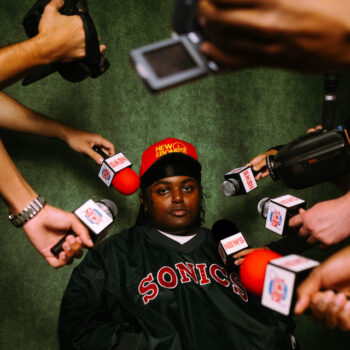
Yonny has an extraordinary command of the microphone, and “New Ebonics” is a true showcase of his gifts. His delivery is fluid and fearless, each phrase rolling effortlessly into the next as he dances between elastic melodies and razor-sharp rap cadences. There’s a spectacular sense of spontaneity to his performance, as though we’re hearing his thoughts take shape in real time, every clever aside giving way to another unexpected turn of phrase. The music is equally captivating, a richly textured blend of jazz, funk, soul, and hip-hop that seems to move and breathe around his words. Silky melodic flourishes curl around a supple, infectious groove, the production simmering beneath Yonny’s increasingly impassioned delivery. He’s magnetic throughout, his voice moving from an intimate, conversational murmur into heated bursts of rhythmic intensity with profound control. It’s an exhilarating performance, alive with the kind of personality and musical imagination that makes you want to rewind a verse just to hear how he pulled it off.
And beneath all that bravado is a surprisingly poignant reflection on growth. “‘Cause a daffodil flower / Only springs ‘til after coldest of temperatures,” Yonny raps, introducing a recurring image that gives the song its emotional foundation. The flower becomes a symbol of resilience, blooming after enduring the bitter cold, its beauty inseparable from the conditions that shaped it. “How are we to be sweet, when everything round us so sour,” he asks, a striking question that captures the tension between maintaining hope and navigating an imperfect world. It’s a brilliant lyrical opening, as thoughtful as it is infectious, revealing a songwriter who can pack an enormous amount of meaning into a deceptively playful turn of phrase.
“I was looking at myself with that line, to be honest,” Yonny tells Atwood Magazine. “The daffodil represents me and where I’m from. In LA, I get asked from time to time how I’m as up and bright as I am for being from somewhere that’s grey and rainy for 9–10 months out the year. Using how daffodils grow as a parallel to me and my come-up felt like it fit perfectly, also potentially foreshadowing things for the future?”
There’s an endearing optimism in that explanation, a determination to embrace the experiences that have shaped him while looking enthusiastically toward everything still to come. Yonny’s confidence is rooted in an understanding of where he’s been, and the joy he finds in expressing himself feels all the more meaningful because of it. The daffodil also gives “New Ebonics” a particularly compelling emotional tension: Growth requires endurance, but survival alone isn’t enough. The real triumph lies in what we become afterward, the individuality we preserve, and the ways we choose to make our presence known.
A lot you be talking jeep in a kia soul
That shit be amazing,
in case some y’all didn’t know
these *** be acting like hoes
hoes be acting like ***, huh
shit that would be embarrassing
now is the set up, huh
for ya pockets to get up,
got a couple screws loose,
I don’t bother to nail em
times pass things change
like the seasons
made for a reason
followed my p’s and q’s
breaking news
this shit here make ya b**ch want who, me
it’s always been me
And Yonny certainly knows how to make his presence known. His lyrics are outrageously entertaining, filled with sly observations and inventive wordplay that tumble through the track with a dazzling sense of possibility. “Tell em ain’t shit change like an Arizona ice tea,” he declares, delivering one of the song’s most irresistibly cheeky punchlines with effortless swagger. It’s funny, clever, and wonderfully specific, a little flash of wit that speaks volumes about his personality. Elsewhere, he playfully skewers artificiality while celebrating his own authenticity, declaring, “I ain’t never had no chrome heart, I gold heart / And I’m proud of it.” The contrast is especially satisfying, invoking the language of luxury and status to suggest that his real wealth comes from the person he is rather than the things he possesses. Yonny’s lyrical intelligence is inseparable from his humor, and the combination gives his music an extraordinary sense of character.
This playful self-assurance also informs the song’s title, which carries a deeper significance than its immediately memorable hook might suggest. Ebonics, a term associated with African American English, becomes a means of exploring the relationship between language and identity, the ways culture shapes our expression and how the words we choose can communicate who we are. Yonny approaches that idea with the same spirited confidence that drives his performance, embracing his own speech and experiences as essential parts of his artistic identity. There’s real power in that insistence, particularly within a genre whose history has been shaped by the creative possibilities of Black language and expression.
“I think the song really is myself at full expression, ranging from so many different emotions,” Yonny explains. “The line ‘Introducing New Ebonics…’ is me utilizing what Ebonics are by definition, and embracing that fully with self-inspiration. The song really holds a pretty special place in my heart, definitely one of my favorite records I’ve made. If someone were to ask me for one song to define me as an artist, I would choose this without a doubt.”
It’s easy to understand why. “New Ebonics” is overflowing with confidence, but its greatest appeal lies in how naturally that bravado coexists with genuine introspection. Yonny isn’t simply declaring himself a formidable rapper, although his deft, dynamic delivery makes a compelling argument on that front. He’s celebrating the language, memories, and cultural references that have shaped his perspective, weaving them into a musical statement that feels exuberantly alive. His individuality is the whole point, and there’s an infectious pleasure in hearing an artist so completely at ease with his own creative instincts.
This sense of identity is intimately connected to Seattle, the city Yonny has called home for much of his life. Born Yonatan Daniel and raised in the Pacific Northwest, the rapper draws on his Ethiopian heritage and wide-ranging musical influences to create a sound that resists easy categorization. Seattle’s cultural legacy runs through his music, from its historic rock scene to the contemporary hip-hop community he’s helping bring into the spotlight. In “New Ebonics,” those influences become part of a larger celebration of place, his lyrical references carrying the unmistakable affection of someone whose hometown remains central to his understanding of himself.
“It’s my favorite city in the world, and I truly mean that!” Yonny says. “There really isn’t a place like home and the way your home can shape who you are as a person, music aside. From the culture, people, art, everything here helped mold me into who I am today.”
That pride comes through in some of the song’s most memorable lyrical moments. The recurring references to the Seattle SuperSonics and Jimi Hendrix are more than clever name-drops; they’re expressions of a shared cultural memory, connecting Yonny’s contemporary sound to the people and institutions that helped define his hometown. The SuperSonics, whose departure from Seattle in 2008 remains a painful chapter in the city’s sporting history, become an especially evocative symbol of what has been lost and what might someday return. Hendrix, meanwhile, represents a different kind of inheritance, a reminder of Seattle’s incontrovertible contribution to the evolution of popular music. Yonny folds these references into his verses with remarkable ease, letting hometown pride become part of the rhythm and personality of the song itself.
24,000 on my chest, but it’s inside of it
i ain’t never had no chrome heart, i gold heart
and I’m proud of it
bet you can’t see me with a sonar,
that shit was counterfeit
that mean ya artificial, ai
*** like me we never gon die
we just finna multiply
and hope to god
gon come and sing kumbaya
i’m not new to this
b**ch i’m true to this
Where you coming from?
Out the sea **
From the Northside, to down at the beach **
It’s a long ride, to catch up with me
“They sort of naturally started coming into place as the song was being made, which I love,” he recalls. “With the Sonics line, that was coming from a very present moment with the Sonics potentially coming back (which they will!). I wanted to keep dropping more Seattle lore sprinkled throughout the song, and it felt like none of it was forced. This song was made by people from the city but can be enjoyed by others, and I feel like it can make someone want to be interested in where I’m from and want to look into it.”
There’s a tremendous generosity in that ambition. Yonny isn’t simply celebrating Seattle for those who already know and love it; he’s inviting the rest of the world to discover what makes the city special. His perspective is proudly local, but the music reaches outward, using the specificity of his own experiences to communicate emotions that resonate far beyond the Pacific Northwest. That spirit extends into the song’s accompanying music video, which follows Yonny through the city he knows so well, capturing its familiar streets and summertime atmosphere with an affectionate, almost documentary intimacy. Created with longtime collaborator Nash Pearson, the visual offers a glimpse of the people and places behind the music, bringing the song’s celebration of home into vivid focus.
“New Ebonics” also arrives at an exciting moment in Yonny’s artistic journey. His 2024 sophomore album Everywhere, But Always, later expanded with a deluxe edition featuring collaborations with Ambré and acclaimed producer Sango, established him as one of Seattle’s most promising emerging voices. Songs like “City In Motion” demonstrated his gift for weaving personal storytelling into irresistible hip-hop, while his increasingly adventurous production reflected an artist eager to experiment with the boundaries of his sound. Now, with “New Ebonics,” Yonny seems to have found an even greater sense of creative freedom, embracing the full range of his influences while allowing his own personality to guide every musical decision.
“Man, that record in particular felt like a version of myself with the last two years of work getting to showcase all the new things he’s learned, all through song,” he reflects. “A much sharper, evolved version of myself, both sonically and visually. You also are seeing me experiment with different sounds and incorporating what I’ve done in the past all at the same time.”
This evolution is particularly exciting because Yonny’s music is becoming increasingly difficult to pin down. The jazz-inflected instrumentation and elastic rhythms of “New Ebonics” give the track an enjoyably unpredictable character, allowing his verses to move between playful boasts and meaningful reflections without ever losing their momentum. His musical imagination recalls the boundary-pushing spirit of artists like Kendrick Lamar, Vince Staples, and Tyler, The Creator, yet Yonny’s particular blend of wit, melodic fluency, and hometown perspective remains distinctly his own. His delivery can be dramatically intricate one moment and disarmingly direct the next, capturing the restless energy of an artist whose creative ambitions seem to expand with every release.
“For me, my main focus is making sure I still have that same enjoyment and satisfaction in the music I make every single time,” he explains. “What first made me fall in love with the process was how it almost felt like a puzzle being pieced together, and once one idea is formed, that creates three more immediately after. What I’m most excited about for the new stuff I’m making is that I’m letting myself continue to be creative and take liberties in genres and styles, not making what’s worked already.”
His commitment to discovery gives Yonny’s music an appealing sense of spontaneity, even when the writing itself is remarkably intricate. Every lyrical turn seems to open another avenue for exploration, each musical flourish suggesting a new possibility waiting around the corner. His July follow-up single “Ringin” offers another compelling glimpse of that range, trading some of the audacious intensity of “New Ebonics” for a breezier, more reflective perspective on his rapidly changing life. Its lyrics acknowledge the excitement of growing recognition while emphasizing the importance of family and the relationships that keep him grounded. Together, the songs suggest an artist learning to navigate success without losing sight of the values that brought him this far.
“Life has been moving fast, and it’s the realest way I can bring people along with me for it,” Yonny says, reflecting on his journey from working odd jobs to playing festivals and signing with a record label.
This sense of momentum is palpable throughout “New Ebonics,” where even the repeated refrain “24 hours is not enough time” carries an almost breathless excitement. There’s so much Yonny wants to say, so many ideas he wants to explore, and so much life he seems determined to experience that a single day can barely contain his enthusiasm. Yet for all the song’s forward-looking ambition, its emotional foundation remains rooted in the past. The Seattle references, the daffodil metaphor, and the insistence that he’s still the same person beneath his growing success all point toward a musician who understands that evolution doesn’t have to mean abandoning the things that made him who he is.
“I really hope it just feels like I’m inviting the listener to my world and where I grew up,” Yonny shares. “I think my music making has been taking so many leaps and bounds in new directions and ideas that have been so exciting. I’m dipping into different sounds, and I hope it resonates with new listeners and those that just find me.”
That invitation is one of the many reasons “New Ebonics” is such an unparalleled listen. Its jazzy grooves and smoldering atmosphere are intoxicating in their own right, but it’s Yonny’s sheer charisma that makes the performance unforgettable. His bars are witty and surprising, his flow astonishingly fluid, and his delivery charged with an excitement that seems to spill out of the speakers. The song rewards repeated listening, each return revealing another ingenious lyrical connection or unexpected rhythmic flourish. And underneath all that thrilling showmanship is a deeply personal statement about resilience, belonging, and the beauty of embracing one’s own identity.
“I’m the same old me / Still the same old me,” Yonny insists as the song approaches its end, and the sentiment lands with an unexpected emotional force. After all the spellbinding wordplay and audacious declarations, those simple words reveal the enduring conviction at the heart of his artistry. The music may grow more adventurous, his audience may expand, and the opportunities ahead may become increasingly extraordinary, but the person behind the microphone remains connected to the city and experiences that shaped him.
“New Ebonics” is hip-hop at its most vibrant and exhilarating, a breathtaking showcase of technical brilliance and unrestrained imagination that makes an irresistible case for Yonny as an artist worth watching. It’s provocative, funny, and wonderfully alive, a celebration of individuality that carries real emotional substance beneath its infectious bravado. The cold gave the daffodil its strength, and Seattle gave Yonny his roots. Now, with every quicksilver rhyme and electrifying verse, he’s showing us just how beautifully those roots can bloom.
“Micky The Drink”
by FRIEDA STARMicky is falling apart in plain sight. FRIEDA STAR are raising hell to make sure somebody notices.
Their incendiary third single “Micky The Drink” is a blistering, full-throttle blast of alternative rock, its ferocious energy carrying a devastating story about the struggles people are too often expected to suffer in silence.
Scuzzy guitars roar, drums hammer relentlessly, and Garran Hickman’s impassioned vocals tear through the mix, building toward a chorus that’s as irresistibly catchy as it is cathartic. Released September 30, the Black Country band’s electrifying song is a breathtaking collision of fury and feeling – an unflinching performance whose sheer firepower makes its plea for empathy impossible to ignore.
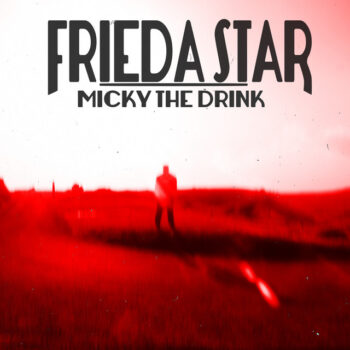
The city sold sweet
what Micky couldn’t reach
She’s looking at his brain
because she thinks he needs help with it.
A man of pleasure,
easy leisure, he’s a hedonist
Always keen and
he’s bound to 3 days of it.
careless what they print of him.
Micky the drink’s the
Stickiest briber, Bookie’s scriber.
Bailiff diver, Cut shove driver.
Eye’s wide, blood shot iris
Benson and hedges stylish.
The Divinest
Micky the drink, the city’s finest
From the very first note, “Micky The Drink” is an absolute force of nature. The guitars are filthy, their snarling riffs surging forward with a feverish intensity as Xavier Al-Naqib’s muscular bass lines and Scarlett Churchill’s thunderous drumming drive the music toward its next explosive release. There’s an extraordinary physicality to the performance, a sense of urgency that makes every beat hit harder and every guitar line feel increasingly combustible. Hickman is magnificent at the center of it all, his voice an electrifying mixture of desperation and defiance, delivering each phrase with such conviction that you can practically hear the sweat pouring off him. His rapid-fire verses give way to a roaring, exhilarating chorus that feels enormous in its emotional release, yet the band never sacrifice their immediacy or grit. The whole thing is breathtakingly alive, a relentless rush of sound that demands your undivided attention and refuses to give it back.
“We wanted to make a song that felt quick, urgent, but still something you can dance to!” bassist Xavier Al-Naqib tells Atwood Magazine, explaining how the band’s mood during the writing process informed the recording’s explosive sound.
This combination of urgency and irresistible musical momentum becomes all the more compelling as the lyrics reveal the world of Micky, a man whose life is unraveling beneath the enormous weight of everyday expectations. “The city sold sweet what Micky couldn’t reach,” Hickman sings, introducing a refrain that hangs over the narrative like an accusation. It’s a haunting image, suggesting a world filled with enticing promises that remain perpetually beyond someone’s grasp. The city becomes a symbol of aspiration and alienation, a place where the expectation to succeed can become overwhelming, especially when the reality of working-class life offers far fewer opportunities than the advertisements and aspirations surrounding it might suggest.
“It means whatever the listener wants it to mean, that’s the beauty of words,” Hickman explains. “Writing it, I guess I felt like the big businesses dangle the carrot to make people feel a sense of romance from working in the city. It’s not for everyone, yet you feel this expectation to try and push through, ultimately resulting in feeling lost and forgetting your purpose.”
It’s a painfully recognizable predicament, and FRIEDA STAR give it a face through a character whose story grows increasingly troubling with every passing verse. Hickman’s writing is vivid and wonderfully idiosyncratic, sketching Micky’s world through a breathless collection of observations and details that seem to tumble over one another. He introduces a hedonist, a man of pleasures and bad habits, someone whose larger-than-life persona seems to conceal a steadily deteriorating relationship with himself. Then comes one of the song’s most arresting passages, a rapid escalation that begins with the deceptively reassuring “2 beers, thoughts clear” before tumbling through “5 beers, feels weird” and “6 beers, he cries fear,” finally arriving at the ominous “8 beers, oh deary me.” What initially resembles a cheeky drinking chant becomes a deeply unsettling portrait of addiction, the accelerating numbers tracing Micky’s descent as the music charges relentlessly forward. The contrast is extraordinary: The band sound absolutely ferocious, while the character at the heart of their performance is losing control.
2 beers, thoughts clear
3 beers, All cheer
4 beers, More cheer
5 beers, Feels weird.
6 beers, He cries fear
7 beers, Heavens near
8 beers, Oh deary me,
“Because of pressure, people succumb to their demons by trying to mask their unhappiness with addiction,” Hickman says. “The character is an observation of the environment and hopefully, within Micky’s story, we can unfold the struggles and let people know they’re not alone in sorrow.”
There’s tremendous compassion behind that observation, and it gives the song’s ferocity an entirely different significance. FRIEDA STAR refuse to romanticize Micky’s suffering, but they also resist reducing him to his worst decisions. His drinking becomes part of a larger portrait of someone struggling to reconcile the expectations placed upon him with the emotional reality of his life. The chorus drives that tension home with devastating force: “Just give me a minute, tell me I’m free,” Hickman cries, his voice soaring above the guitars in a release that’s as exhilarating as it is desperate. It’s an extraordinary hook, an impassioned plea for relief that seems to grow more urgent each time it returns. Beneath the song’s furious exterior is a man asking for space to breathe, a moment away from the relentless demands of a life he no longer knows how to navigate.
And then comes another piercing observation: “Oh, Micky’s got it all / But no words to speak.” The line captures a different kind of isolation, one born from the distance between outward appearances and inward suffering. Micky may look like someone who has everything under control, but his silence reveals how little those appearances tell us about what he’s actually experiencing. There’s a cruel irony in the suggestion that someone can possess all the outward markers of a successful life while feeling utterly unable to express the turmoil underneath. The lyric also speaks to a much broader social problem, particularly in communities where pride and expectations of resilience can make admitting vulnerability feel like a failure.
Just give me a minute, tell me l’m free.
Oh, Micky can’t you see,
That you can believe
Just give me a minute, tell me l’m free.
Oh, Micky can’t you see,
This ain’t your time to leave.
Grind all week, grind all week.
Oh, Micky’s got it all but no words to speak.
Just give me a minute, tell me l’m free.
Oh, Micky I can see,
You’re now at peace.
The city sold sweet
what Micky couldn’t reach
“You never truly know what’s going on with people, ourselves included,” drummer Scarlett Churchill reflects. “You can give off the persona of someone who has it all whilst truly being a totally different being underneath. I suppose the recurring character in our music videos, Micky, represents a struggling person that lots of people can relate to, or might recognise as someone they know.”
That recognition becomes increasingly important as the song reaches its devastating final act. Micky’s attempts to escape his unhappiness have taken a terrible toll on his relationships and sense of purpose, and Hickman’s storytelling eventually arrives at a tragedy that casts the entire performance in a different light. “Another stat, another lad, another dad,” he sings, before delivering the heartbreaking revelation that “The twins won’t get to see dad another day.” The words land with devastating force, exposing the human cost of a struggle that has unfolded largely out of sight. What began as a furious, darkly entertaining character study has become an account of a family shattered by loss. And when the chorus returns, its desperate appeals carry a terrible new weight, the repeated “This ain’t your time to leave” sounding like a plea that can no longer change the outcome. The music remains fiercely alive, but the emotions it carries have become almost unbearable.
It’s an astonishing piece of storytelling, made all the more powerful by FRIEDA STAR’s refusal to soften the edges of either the music or the subject matter. The band’s relentless performance embodies the frustration and helplessness surrounding Micky’s circumstances, giving a sense of physical urgency to emotions that might otherwise remain unspoken. Yet the song’s real strength lies in its understanding that Micky’s story could belong to someone far closer to us than we might like to imagine. His struggles are recognizable, his attempts at escape painfully human, and his inability to ask for help reflects a culture that too often mistakes silence for strength.
“We all know a Micky, you know, it could be you, your neighbour, your mother or brother, your enemy,” Hickman says. “Everyone has personal pressure, especially in the working-class culture, where it’s taboo to talk about your struggles due to pride. We want to try and reduce this, and relieve social expectations, which makes for a kinder world too. You know what I mean?”
Whimsical Micky trades the car for half a monkey,
Black balled his family for enjoyment of junkie,
Knew Colin from the skirts of Dundee,
Nicked a 93’ Nova, it was ramshackle and clunky.
Prides back now,
Back to family man dad now,
Promised the wife to go out on the Sunday.
Headed back to the midlands,
Screamed sick of this shithole,
He pulls out the metal,
Now The Devil now whistles.
another stat, another lad, another dad
that was just a day late,
to vacate his own brain, a safe place
The twins won’t get to see dad another day.
The city sold sweet what Micky couldn’t reach
This desire to challenge expectations is central to FRIEDA STAR’s identity. Hailing from Wolverhampton in England’s Black Country, the band draw on their working-class roots to create fiercely immediate music rooted in the realities of the communities around them. Led by Hickman’s uncompromising lyricism, Churchill’s powerhouse drumming, Jordan Smith’s cutting guitar work, and Al-Naqib’s formidable bass lines, FRIEDA STAR have established an unmistakable creative voice through their first three singles. Their sound draws from the guitar-driven intensity of bands like Pixies, The Strokes, and Interpol, but what distinguishes them is their determination to use that musical firepower in service of stories that might otherwise go unheard.
Their January debut “Mothers and Sisters” confronted sexual harassment and misogyny following an upskirting incident involving Hickman’s girlfriend, transforming personal anger into a furious demand for accountability. March’s “The Kerb, to The Louvre” turned toward working-class identity and the right to dream beyond the limitations imposed by circumstance. Both songs established a band with plenty to say and absolutely no interest in diluting their convictions to make them easier to swallow. “Micky The Drink” continues that trajectory while broadening its emotional reach, replacing the immediacy of righteous anger with a deeply affecting portrait of a man whose suffering reflects the weight of the world around him.
“I don’t think we’ll ever be a band to ‘soft-launch’ anything,” Churchill says of their introduction to the world. “‘Mothers and Sisters’ felt like a punch in the gut enough to start our band. We feel it’s a subject not spoken about enough either and is often brushed over. It felt right to speak up about it and deliver an important message in a song like ‘Mothers and Sisters.’”
There’s a remarkable consistency of purpose behind the band’s early releases, even as each song explores a different dimension of contemporary life. For Hickman, growing up in the Black Country has shaped both his understanding of the world and his sense of responsibility as a songwriter. His characters are rooted in experiences that are often overlooked or dismissed, and his writing is filled with the language and imagery of people navigating circumstances far removed from the romanticized versions of success they’re encouraged to pursue. That grounded perspective gives FRIEDA STAR’s music its emotional credibility, allowing their most explosive moments to carry genuine substance beneath the noise.
“I write about real life, and from an autobiographical angle,” Hickman explains. “Most of our favourite bands are from writers who you believe, and have something to say. We’re that hellbent on writing about real life that we’d rather write about something that was true and monotonous rather than being deceitful to get people’s attention.”
That commitment to honesty is especially evident in the way “Micky The Drink” grapples with the relationship between happiness and purpose. Micky is caught in a world that continually urges him to pursue an idealized version of the good life, even as the pressures of reaching it seem to be pulling him further away from himself. His story raises uncomfortable questions about what we value, what we sacrifice, and how easily people can become trapped by expectations that leave little room for their emotional wellbeing. It’s a profoundly affecting subject for a song that hits with such unapologetic force, and one that Hickman approaches with a surprisingly philosophical perspective.
“Purpose is actually more important than happiness,” he explains in the song’s press materials. “Happiness is moments, we’re all just simply living. Don’t attach yourself to happiness too much, it’s a swaying freight train away from disaster.”
There is a deeply moving distinction in that sentiment. Happiness can be fleeting, arriving and departing according to circumstances we cannot always control, while purpose asks us to consider the deeper meaning behind the lives we’re leading. Micky’s tragedy exposes the danger of becoming so consumed by external expectations that we lose sight of the connections and convictions that give our existence its worth. FRIEDA STAR don’t offer an easy answer to those struggles, and the song’s ending is deliberately devastating. Instead, they insist that we acknowledge them, that we recognize the people suffering around us, and that we create room for conversations too often suppressed by shame or pride.
For all its gravity, “Micky The Drink” remains an astonishingly exhilarating rock performance. Its scalding guitars and thunderous percussion make for an electrifying collision of sound, and Hickman’s commanding vocal delivery gives every lyrical turn a startling immediacy. The chorus is nothing short of breathtaking, an enormous, cathartic release whose emotional force grows with every listen. There’s no disconnect between the band’s furious musical intensity and their underlying compassion; the two strengthen one another, transforming a tragic narrative into a performance that refuses to let its subject disappear into the background. It’s alternative rock at its fiercest and most purposeful, powered by the conviction that music can make people pay attention when ordinary words have failed.
And that conviction extends beyond the recording studio. FRIEDA STAR have made clear that the stage is central to who they are, and “Micky The Drink” practically demands to be experienced at full volume, its ferocious rhythms and impassioned delivery promising an extraordinary live release.
“As much as we love writing and releasing, we are a live band!” Al-Naqib declares. “There’s nothing better than getting on stage and playing until you leave a piece of yourself there.”
This willingness to give everything is written into every second of “Micky The Drink.” It’s an uncompromising, soul-stirring eruption of alternative rock that captures the exhilarating power of a band playing with absolute conviction, while telling a story whose consequences extend far beyond the final note. FRIEDA STAR understand that Micky’s tragedy isn’t an isolated incident or an abstract social problem. It’s a reminder of the suffering that can exist behind familiar faces, the expectations that can make asking for help so difficult, and the terrible cost of allowing people to struggle alone. Their music is loud because the subject demands attention, fierce because the stakes are real, and deeply affecting because the humanity at its center never gets lost amid the fire.
Micky is falling apart in plain sight. FRIEDA STAR make sure we hear him – and remind us why listening to one another matters long after the music stops.
Just give me a minute, tell me l’m free.
Oh, Micky
Can’t see you see,
That you can believe
Just give me a minute, tell me l’m free.
Oh, Micky Can’t you see,
This ain’t your time to leave.
Grind all week, grind all week.
Oh, Micky’s got it all but no words to speak.
Just give me a minute, tell me l’m free.
Oh, Micky I can see,
that you’re now at peace.
The city sold sweet what Micky couldn’t reach
“Downtown People”
by RebounderCharm might get you past the doorman; a bass line this good keeps you downtown all night.
Euphoric and utterly entrancing, Rebounder’s “Downtown People” is a deliriously infectious celebration of New York cool, its irresistible sparkle and swagger concealing a sly fascination with what it really takes to belong.
Buoyant, hypnotic, and downright enchanting, the New York indie rock band’s title track rides a thick, pulsing bass groove through glistening lead melodies and dreamy, atmospheric production. A breathtaking highlight from Rebounder’s long-awaited debut album Downtown People, released today via Nettwerk, it’s an intimate, exhilarating reverie that makes the city’s restless energy sound like the best night of your life.
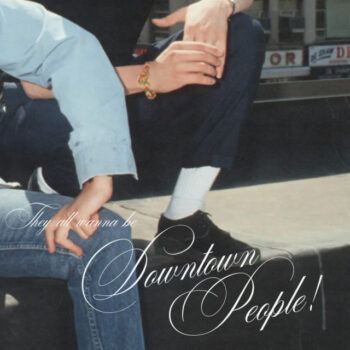
C H A R M
The only ticket you’ll need in the end
Whether it’s for real or just pretend
We all wanna be downtown people
Shine a light in the darkness
You’re never alone
Somebody will phone
So early that it feels late
Been there, done that before
It was sold in the store
From its opening moments, “Downtown People” practically demands that you move. Its bass line is an absolute marvel – fat, funky, and relentlessly propulsive, driving the song forward with a swagger that feels as natural as breathing. Glistening guitars weave through the arrangement, their bright, shimmering melodies dancing above the rhythm section while a dreamy wash of atmospheric textures lends the whole performance an almost hypnotic quality. There’s a delightful sense of motion to everything, a playful give-and-take between the instruments that keeps the music bustling with possibility. The vocals glide through this effervescent soundscape with an easygoing confidence, never overwhelming the groove, and the result is pure, unadulterated pleasure. It’s a wonderfully immersive performance, the kind of song that makes an ordinary walk through the city feel like the opening sequence of your own personal movie.
And then there’s that chorus. “C.H.A.R.M. / The only ticket you’ll need in the end / Whether it’s for real or just pretend / We all wanna be downtown people,” Rebounder sing, transforming five little letters into an irresistible declaration of social ambition. It’s absurdly catchy, a hook that seems to burrow deeper into your brain with every repetition. But the sentiment is equally fascinating. In a city where access can depend on who you know, how you dress, or whether a stranger decides you’re worth their attention, charm becomes a peculiar kind of currency. The song recognizes the ridiculousness of these unwritten rules while acknowledging how thoroughly they’ve become woven into our understanding of success and belonging. And beneath all that knowing humor lies an interesting question: What does it actually take to make it in a place where everybody seems to be performing some version of themselves?
hate that I don’t know you
Can we change that
The middle takes too long
Who worried better
Its not now or never
Where are ya later on
“With that song, we had the melody first, and the word ‘charm’ sounded good with the melody, so we sort of worked backwards,” bassist and singer Noah Chenfeld tells Atwood Magazine. “I think when you live in New York for a while, you begin to realize that the people who succeed aren’t always the smartest or most skilled, but oftentimes they are the ones who can make you laugh or feel special. But maybe that’s just how the world works? I don’t know, I’m not a philosopher.”
C H A R M
The only ticket you’ll need in the end
Whether its for real or just pretend
We all wanna be downtown people
The song’s lyrics are a wonderfully cheeky collection of downtown observations, capturing the strange contradictions of a social world that never stops reinventing itself. “Here we go again it never ends / Doom-scrolling the CDJs to the latest trends / Late with a latte it’s irrelevant / To the plot,” the band sing, taking aim at the dizzying pace of contemporary culture with a wink and a perfectly timed punchline. Elsewhere, an encounter with a particularly selective doorman becomes another hilarious commentary on social privilege: “Tell me you know somewhere in the city / Alive and open late / Doorman’s a dick but not when you’re so pretty / For you it’s a smile away.” There’s an almost conversational quality to these observations, as though the brothers are recounting snippets of an especially entertaining night out. The writing is sharp and mischievous, the music irresistibly bright, and the combination gives “Downtown People” its wonderfully distinctive personality.
For the record, guitarist and singer Dylan Chenfeld has one important clarification about that particularly memorable DJ lyric.
“Also, we’re not doomscrolling the CDJs, the DJ is,” he insists. “We were just at the party.”
Here we go again it never ends
Doomscrolling the cd-j’s
to the latest trends
Late with a latte it’s irrelevant
to the plot
Tell me you know somewhere in the city
Alive and open late
The doorman’s a dick,
but not when you’re so pretty
For you it’s a smile away
That humor is central to Rebounder’s appeal, but the song’s emotional reach extends beyond its affectionate satire. “Hate that I don’t know you, can we change that? / The middle takes too long,” the brothers sing, capturing the exhilarating impatience of wanting to connect with someone before the night slips away. And when the refrain gives way to “Shine a light in the darkness / You’re never alone / Somebody will phone,” a surprisingly reassuring sentiment emerges from beneath all the social posturing. The city may be filled with arbitrary hierarchies and fleeting encounters, but it also holds the promise of genuine connection. That possibility gives “Downtown People” an unexpected sweetness, making its bustling rhythms and radiant melodies feel all the more inviting. For all their observations about the absurdity of urban life, Rebounder sound absolutely delighted to be living it.
“We love artists who are able to capture the darkness of modern life but set it to a lively tune,” Noah explains. “The movie Digger comes to mind, particularly the final scene in which earth is revealed to be completely devastated by climate change, but the song playing in the background is cheery and lighthearted. I think that’s called irony?”
This contrast is one of the song’s greatest strengths. “Downtown People” is overflowing with infectious enthusiasm, yet its bright exterior contains an impressively observant portrait of the world around it. The lyrics recognize the exhausting competition for status, the fleeting nature of cultural trends, and the strange ways we assign value to ourselves and one another. But rather than wallowing in that cynicism, Rebounder embrace the exhilaration of being alive in the middle of it all. Their music pulses with the excitement of an endlessly changing city, offering a soundtrack to the beautiful absurdity of trying to find your place within it.
For Dylan and Noah, that relationship with New York runs especially deep. The brothers were born and raised in the city, growing up together, sharing a bedroom, and eventually building an artistic partnership that has become the foundation of Rebounder. Their music carries the unmistakable imprint of their hometown, a place whose neighborhoods have served as the backdrop to their lives for decades. And while “Downtown People” takes its name from a familiar geographic and cultural designation, the brothers have developed their own understanding of what that identity represents.
“So much of our life has occurred and continues to occur between 14th Street and Battery Park,” Noah reflects. “Downtown New York, the history, lore, the good, the bad, and the ugly, it all scratches a certain itch as lifelong New Yorkers. But downtown people can mean anything to anyone.”
That last observation opens the song up to a much broader interpretation. Downtown has always represented more than a collection of streets and neighborhoods; it carries an almost mythical promise of creativity, freedom, and cultural significance. Yet the very qualities that make a place desirable can eventually transform it into a commodity, a carefully cultivated aesthetic that people aspire to inhabit. The meaning changes as the city changes, and the distinction between belonging somewhere and merely looking as though you belong becomes increasingly difficult to define.
“Increasingly, it feels less like a specific cohesive aesthetic and more like a kind of broader catch-all term for things that are vaguely ‘desirable,’” Dylan says. “I think it’s going to be an evolving phrase for a long time, one that people from different generations would have to argue about its ‘true’ meaning. We all wanna be downtown people, who they want to be in this world. I don’t know.”
This self-awareness makes Rebounder’s music particularly compelling. The brothers are participants in the very culture they’re observing, and their songs capture the strange experience of loving a place while watching its identity continually shift beneath your feet. It’s an especially fitting perspective for a band whose musical partnership stretches back to childhood. Having spent years playing together and developing their sound through a series of well-received EPs, the Chenfelds have finally arrived at their debut full-length, a fifteen-song collection that celebrates their hometown’s endless contradictions while capturing a pivotal moment in their own creative lives.
“We write so many freaking songs, and you get to a point where it just makes sense to release an LP,” Dylan explains. “Fifteen songs. It’s been a dream of ours to release a full record, and now felt like the right time. We’re hoping it makes for a better talking point at parties.”
There’s a wonderful confidence behind that humor, one rooted in the musical chemistry the brothers have cultivated over years of collaboration. Much of Downtown People was written, performed, recorded, and produced by Dylan and Noah themselves in their Greenpoint studio, with contributions from a small circle of friends and fellow musicians. Their approach is refreshingly fluid, allowing ideas to develop organically through instrumental experimentation and the simple pleasure of making music together. That creative freedom is evident throughout the album, whose arrangements embrace an eclectic range of influences while remaining distinctly Rebounder.
“One of us will typically bring in an idea, and the other one will add to it, and we go from there,” Noah explains. “Sometimes we like to write songs with just our voices and an instrument; other times we enjoy writing with a DAW open and getting inspiration from pressing buttons.”
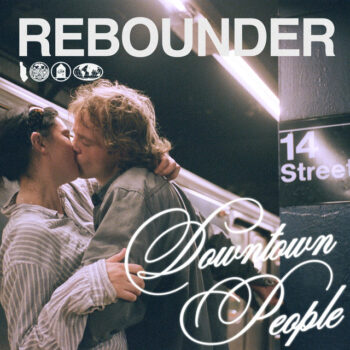
Released November 6, Downtown People is a vibrant, richly detailed portrait of contemporary New York life, its fifteen tracks exploring the excitement and uncertainty of growing older in a city that seems determined never to sit still. Across the album, the brothers navigate romantic entanglements, changing neighborhoods, social ambition, and the persistent feeling that time is slipping through their fingers. Their songwriting is filled with specific observations and playful cultural references, but the emotions beneath those details are strikingly universal. These are stories about wanting to be seen, searching for connection, and trying to hold on to the people and places that matter while everything around us continues to change.
Dylan, naturally, has his own way of describing the record’s subject matter.
“I’m sure someone described it as that, but it wasn’t me,” he says of the album’s characterization as a collection of stories about love, lust, and f***-ups. “I never use the word ‘lust’ and would never admit to a ‘f***-up,’ despite my life being a never-ending series of them. It’s stories about real life, not science fiction, not incorrect visions of the future. Just accurate visions of the now. The past few years.”
This commitment to capturing the present gives Downtown People an appealing sense of immediacy, even as its songs frequently find the brothers looking backward or imagining what might come next. The album opens with the buoyant “Convertible Season,” a sun-drenched celebration of possibility whose playful declaration, “You know I miss you like the iPod,” immediately establishes Rebounder’s fondness for blending nostalgia with contemporary romance. “Miss Little Italy” offers an affectionate stroll through the city, its vivid references to the San Gennaro festival grounding a flirtatious love song in the familiar geography of downtown Manhattan. Elsewhere, “Heavenmaxxing” reaches across the country toward Los Angeles, embracing a laid-back West Coast groove without abandoning the band’s unmistakably New York sensibility. And “Tennis Bracelet,” featuring Austrian singer/songwriter Sofie Royer, brings another playful dimension to the record through its breezy melodies and charming lyrical interplay. Each track offers a different perspective on the brothers’ musical world, making the album feel like a collection of interconnected encounters unfolding across one particularly memorable stretch of life.
The record’s emotional arc is especially affecting when considered through its opening and closing songs. While “Convertible Season” celebrates the excitement of what’s still to come, the closing “Instant Nostalgia” confronts the peculiar sadness of missing an experience almost as soon as it’s over. It’s a striking contrast, one that captures how quickly the present becomes the past and how easily our happiest moments can acquire a bittersweet quality once we’ve left them behind. For a band so fascinated by the fleeting nature of contemporary culture, it’s an especially fitting way to frame their debut.
“‘Instant Nostalgia’ is about looking back on what just happened and already feeling a sense of loss, missing the world that it happened in,” Dylan reflects. “I felt instant nostalgia when I got home from my first tour. It made sense to close the record with it, as once you’ve completed listening to it, you are no longer in the world you listened to the album in.”
There’s an unexpected poignancy to that observation, particularly given how much of Downtown People is devoted to documenting a city in constant transformation. The brothers seem keenly aware that the places, people, and experiences shaping their lives won’t remain unchanged forever. Their music captures those moments before they disappear, preserving the excitement of a particular time while acknowledging the inevitability of its passing. And for all the record’s wry social commentary, there’s genuine affection at its center. Rebounder may have plenty to say about the ridiculousness of modern life, but their music makes an enthusiastic case for embracing its pleasures while we still can.
That brings us back to “Downtown People,” whose irresistible energy makes it one of the album’s most immediately captivating highlights. The song’s phenomenal bass groove and gleaming melodies create a kind of musical euphoria, an exhilarating sense of possibility that perfectly captures the thrill of heading out into the city with no particular destination in mind. Its lyrics offer a knowing portrait of the social rituals we participate in, occasionally mocking the very things we’re most eager to experience. Yet beneath the jokes and sharp observations is a sincere desire for companionship, adventure, and the simple pleasure of being part of something larger than ourselves.
For Dylan, preserving that sense of humor is an essential part of what Rebounder hope listeners will discover in their music.
“I hope they enjoy these fifteen songs and know the lyrics to them,” he says. “Now that we’ve made a debut album, I know how to make one, so I hope to make many more debut albums. Also, if the listeners find something funny, then that was our intention. If they don’t, then it was a bit!”
“Downtown People” captures that irreverent spirit with extraordinary finesse. It’s a dazzling, hypnotic indie rock anthem that makes New York’s restless social landscape sound positively irresistible, inviting listeners to revel in the city’s absurdity while appreciating the human desire for connection beneath it all. The music is exhilarating, the songwriting delightfully observant, and the performance so effortlessly infectious that it’s difficult to resist getting swept up in the groove. Rebounder understand that wanting to belong can be both ridiculous and deeply meaningful, that the pursuit of being cool often says far more about our insecurities than our accomplishments, and that the most memorable nights rarely unfold according to plan.
Charm might get you through the door, but the real magic happens once you’re inside – when the music takes over, the city opens up, and for a few perfect minutes, everyone gets to be downtown people.
C H A R M
The only ticket you’ll need in the end
Whether its for real or just pretend
they all wanna be downtown people
5 4 3 2 1
Almost after midnight you’re not done
Whether you are boring or real fun
We all wanna be downtown people
Shine a light in the darkness
“Don't Kill the Vibe”
by Jordan JoyThe heartbreak can wait until morning – tonight, we’re dancing.
Jordan Joy’s “Don’t Kill the Vibe” is an intoxicating invitation to lose yourself in the moment, capturing the delicious, almost defiant thrill of refusing to let a beautiful night – or a fading love – slip away.
Dreamy, charged, and effortlessly charming, the Irish singer/songwriter’s April debut single glides through a mesmerizing haze of shimmering synths and late-night rhythms, building toward a hypnotic refrain that begs to be played again. Now a standout from her recently released debut EP LED Moon, “Don’t Kill the Vibe” is a spectacular first impression from an artist who understands just how much joy can live in one last dance.

There’s a heady tension running through “Don’t Kill the Vibe,” an electricity that seems to grow stronger the closer the night comes to ending. Co-produced by Catherine Marks and Jackson Phillips, the song pulses with an irresistible dream pop energy, its glistening synthesizers and propulsive rhythms creating an atmosphere at once intimate and exhilarating. Joy’s vocals glide through the arrangement with effortless confidence, carrying an undercurrent of longing beneath their playful, almost flirtatious delivery. “You say I’m to blame, sulking like a king / Tonight with me, you can’t prove a thing,” she sings, setting the scene for a confrontation that feels equal parts romantic standoff and invitation to surrender. There’s mischief in her words, but also a palpable desperation to keep the night alive, as though the right song, the right drink, or one more dance might postpone the inevitable.
“When I was writing the lyrics, I imagined the scene taking place in a kitchen,” Joy tells Atwood Magazine. “There’s an after-hours party going on. I’m not sure if there’s more than two people there, but someone isn’t ready to call it quits. The song is about enjoying the end of something – whether it’s the end of the night or a relationship. I believe that in relationships, how you end things is more important than how you start them. It’s important to me to go all the way for things when they’re over, and this song is determined to enjoy that last moment and do the thing justice.”
It’s a wonderfully evocative image: Two people lingering in a kitchen after everyone else has gone home, the music still playing as the evening stretches toward dawn. Perhaps they’re laughing. Perhaps they’re arguing. Perhaps they’ve already said everything they need to say, and neither wants to acknowledge what happens when the music stops. That ambiguity gives “Don’t Kill the Vibe” its emotional intrigue. The song celebrates a kind of joyful resistance, a refusal to let the knowledge of an ending diminish the pleasure of being present. And there’s an unexpectedly generous philosophy beneath its irreverence. Joy approaches the final moments of a relationship as an opportunity to honor what two people have shared, allowing affection and excitement to coexist with the sadness of letting go. It’s a beautiful way of looking at love, especially in a world where endings so often become defined by blame, resentment, or regret.
Remarkably, that spirit of spontaneity extends to the song’s creation. Rather than laboring over every lyrical detail or trying to engineer a perfect introduction to her solo career, Joy found herself embracing the same immediacy that animates the music. The result is a debut that feels wonderfully unburdened by expectations, alive with the thrill of an artist trusting her instincts and following a moment wherever it leads.
“The song was written quickly, in a day,” she explains. “I usually take a while with lyrics. But there was something about this track that’s not overthought; it’s taking on the moment. Maybe the song was an unconscious message to myself on how to start. Nothing needs to be overthought. To put out music in the moment that it’s responding to, don’t sit on it.”
That approach is especially captivating in the song’s final stretch, where Joy’s repeated insistence that we “don’t kill the vibe” becomes almost trance-like. Her voice moves through the refrain with an increasingly hypnotic intensity, the words shedding their conversational meaning as they’re absorbed into the music’s shimmering pulse. The effect is exhilarating. What begins as a playful request gradually takes on the urgency of a plea, as though Joy is trying to will the moment into lasting just a little longer. And yet, the more she repeats herself, the more the listener becomes immersed in the very sensation she’s fighting to preserve. It’s a beautifully realized musical contradiction, one that captures the dizzying magic of surrendering to a night even as you know it can’t last forever.
“Drink your drink, don’t overthink it,” Joy says of one of her favorite lyrical moments. “It’s saying let it happen, let in the joy. Don’t fight the good night.”
That final sentiment feels particularly fitting for an artist whose path toward music has been anything but conventional. Born in Dublin and now based in London, Jordan Hewson spent years exploring other creative and professional pursuits before stepping into the spotlight as Jordan Joy. She studied poetry in New York, publishing work in Boston Review and A Public Space, and founded the technology company Speakable before eventually beginning to set her writing to music after returning to Dublin during the pandemic. Music, of course, has always been part of her life: Her father is U2 frontman Bono, and her younger brother Elijah Hewson fronts Irish rock band Inhaler. But “Don’t Kill the Vibe” introduces an artist with a distinct sensibility, one whose imagination has been shaped as much by literature and lived experience as by the musical legacy surrounding her. There’s a refreshing sense of discovery in her approach, an openness to imperfection that makes this first chapter particularly exciting.
“Music has been helping me grow up,” Joy shares. “It’s teaching me how to be open and flawed and light and easier on myself. Listening to music has always given my imagination a soundtrack; in writing music, I hope to share that back.”
That marriage of poetry and pop gives Joy’s songwriting an especially compelling dimension. Her lyrics are conversational yet suggestive, drawing meaning from ordinary gestures and fleeting exchanges while leaving plenty of space for interpretation. And her musical world is similarly fluid, weaving together the romantic melancholy of dream pop with the kinetic appeal of electronic music and indie rock. Released October 2, her five-track debut EP LED Moon expands that vision into a larger story of attachment and disillusionment, drawing from Joy’s complicated relationship with New York City and the experience of leaving it behind. Across songs including “LED Moon,” “One on One,” and “Indigo Girl,” the project explores the emotional trajectory of falling in love with a place, becoming consumed by its possibilities, and eventually confronting the reality that neither the city nor the person inhabiting it can remain unchanged.
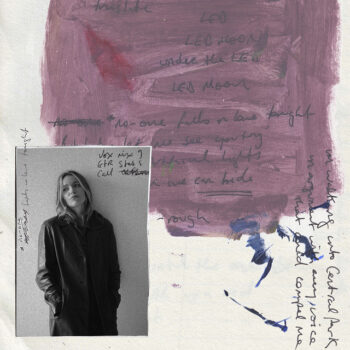
It’s an especially intriguing backdrop for “Don’t Kill the Vibe,” whose late-night setting and resistance to closure become even more poignant within the EP’s wider narrative. The song’s determination to prolong a beautiful moment reflects a universal desire to preserve the places and relationships that once made us feel most alive. Joy’s collaborators, including Marks, Phillips, Cameron Avery, and her brother Elijah, help shape a musical landscape that feels adventurous and richly atmospheric, drawing from her affection for artists as varied as LCD Soundsystem and Joni Mitchell. For Joy, that freedom to explore is an essential part of what makes pursuing music so rewarding.
“I always wondered what Joni would sound like if she were in a band,” she reflects. “Maybe that’s some inspiration for me. I want to experiment as much as I can as an artist, and being a solo artist gives you the freedom to do that by working with different collaborators. I hope fans of the project want to explore as much as I do.”
There’s an appealing fearlessness in that ambition, and “Don’t Kill the Vibe” offers an exhilarating glimpse of where it might lead. The song’s sophistication lies in how effortlessly it balances emotional complexity with sheer musical pleasure. Its melodies are immediate, its rhythms infectious, and its atmosphere so enveloping that the outside world seems to recede for a few precious minutes. Joy invites listeners into a space where sadness can exist without overwhelming the night, where the knowledge of an impending goodbye can make every remaining moment feel even more precious. The song acknowledges that endings are inevitable while insisting that the time preceding them deserves to be enjoyed fully.
“If this song is soundtracking a late-night kitchen party, that’s a win for me,” Joy says. “Listening to it brings me back to nights where I’ve let go and had some of the best times.”
And really, what more could we ask of a song like this? “Don’t Kill the Vibe” is a radiant, irresistible debut that captures the peculiar beauty of those hours when possibility still hangs in the air, when the music is too good to stop and the people around us seem worth staying up for. Joy’s shimmering production and enchanting performance make the track a pleasure to inhabit, but it’s her understanding of life’s fleeting pleasures that gives the music its lasting emotional resonance. We can’t make a beautiful night last forever, nor can we hold on to every relationship or version of ourselves we’ve loved along the way. What we can do is give those moments our wholehearted attention while they’re here, appreciating their magic instead of mourning their eventual disappearance.
The heartbreak can wait until morning. For now, Jordan Joy has given us every reason to keep dancing.
“Rest My Tyres”
by Coco EliseA quarter-life crisis has no business sounding this sexy.
Yet Coco Elise’s “Rest My Tyres” makes the prospect of sacrificing love for ambition sound downright irresistible – a slinky, infectious indie folk pop daydream whose sweetness belies the devastating loneliness beneath it. It’s a song you want to lose yourself in, even as its lyrics imagine a life that’s lost its way.
Buoyant and slyly seductive, the Perth singer/songwriter’s July single rides a bustling bass line, dreamy guitars, and warbling keys, while Josh Ellis’ smoldering vocals slip effortlessly between chest voice and falsetto. A standout from his recently released debut album The longest bridge in the world, “Rest My Tyres” is an achingly beautiful, hypnotic reverie that wraps a deeply unsettling fear in music you can’t help but fall in love with.

There’s a delicious looseness to the song’s arrangement, a sense of playful experimentation that makes its every little flourish a pleasure to discover. Warped guitars curl around an insistent, rubbery bass groove; bright percussion gives the music an almost mischievous bounce, while Ellis’ vocals glide through the mix with extraordinary ease. His falsetto is especially captivating, rising into a breathy, honeyed upper register before settling back into a rich, smoldering croon. The performance is intimate and effortlessly suave, the instrumentation simultaneously bustling and beautifully unhurried. It’s a phenomenal piece of songwriting and production, all the more impressive for how naturally its disparate elements come together. And remarkably, Ellis never intended “Rest My Tyres” to become quite the song it is today.
“I started this song in the middle of writing ‘Porcelain Tiles’ and ‘Avoid Your Stare’ while I was a bit stuck on what to do next,” Ellis tells Atwood Magazine. “It was meant to be an instrumental for the live set, but it worked so well with that ‘comma comma’ line, so I kept making it. That’s probably why the song is so short. I was watching Succession at the time, and the song felt like Kendall Roy at the end of the series when (spoiler alert) he loses everything and he’s walking through the park all alone. That kind of helped with the darker atmosphere, where I haven’t really taken Coco before.”
That Succession connection is especially revealing. Ellis’ protagonist occupies a similarly unsettling emotional space, surrounded by the trappings of success while confronting the possibility that everything he’s pursued has left him profoundly unfulfilled. Yet the song approaches that existential reckoning with a wonderfully disarming sense of humor. Its opening lyric, “Last night my face caught me off guard, thought that the lights made my skin hard,” captures the shock of suddenly recognizing yourself as someone older than the person you thought you were. A fleeting glance becomes an uncomfortable confrontation with time, the sort of ordinary experience that can unexpectedly leave you questioning your entire trajectory. Ellis delivers the line with a knowing, almost conversational ease, allowing the anxiety to emerge from the words themselves.
“This happened once somewhere on a night out when I noticed myself in a mirror looking shit, and I felt so past going out and whatever,” he recalls. “It was just a moment of, ‘I’m getting a bit older,’ and ‘What am I doing?’ It felt like a turning point, and I was like, ‘Damn, I probably have to start moisturizing my skin now, I think?’”
It’s hilarious, painfully recognizable, and a surprisingly poignant doorway into the song’s larger concerns. The realization that time is passing carries particular weight when we’re forced to consider the decisions shaping our future. Careers demand commitment. Relationships require attention. Dreams take years to pursue, and the paths we choose inevitably close off others. “Rest My Tyres” gives that anxiety a seductive soundtrack, its easygoing rhythms masking a much more difficult question about what we’re willing to sacrifice in pursuit of the lives we think we want. The song’s emotional stakes stretch far beyond one uncomfortable look in the mirror.
“These songs are part of a bigger body of work. They all follow the same theme,” Ellis explains. “That is going through big changes and having to make decisions that seem pretty instrumental to how your life will turn out. In this song’s case, it’s the worry about choosing something you want to do with your life over someone who you love, and then the regret that might come with that later.”
That fear takes on a wonderfully peculiar shape in the chorus, where Ellis sings, “Comma comma, look at you / You got yourself a single room / Just to save up for a parachute / I bet it got a single use.” There’s a wry, teasing quality to his delivery, as though he’s addressing some imagined future version of himself with a mixture of disbelief and pity. The parachute is a brilliant lyrical image, an absurdly specific object that gives the song’s existential anxiety a tangible form. In a melody this infectious, the lyric can almost pass as another playful flourish. But the more closely you listen, the more devastating it becomes. A single-use parachute promises the thrill of a lifetime, while the room waiting afterward threatens to be painfully empty.
“To me, it means saving up for something so outlandish and expensive that’s meant to be life-changing, like skydiving,” Ellis explains. “But then once you get there, you only use the parachute once, and it turns out you’ve wasted all this time trying to get to this point. But now you’re alone in an apartment with something so massive and useless like a parachute, whilst other important things are long gone.”
It’s an extraordinary metaphor for the emptiness of achievement without connection. The object itself is almost comical, but the circumstances surrounding it are heartbreaking: A person has dedicated so much of their life to obtaining the things they believed would make them happy that they’ve lost sight of the people who already did. Ellis’ genius lies in setting that realization against a musical backdrop that practically begs you to dance. The incessant bass line keeps the song in motion, guitars sway around the beat, and his supple vocals seem to float above the whole arrangement. The contrast makes “Rest My Tyres” especially intoxicating, its sweetness heightening the melancholy rather than diminishing it. And Ellis’ own reaction to the song’s unexpected sensuality makes the whole affair even more endearing.
“A good friend of mine said it felt sexy, which a Coco Elise song has never been described as, and we are all about new feelings at Coco Elise,” he shares. “I’m pretty proud of ‘Rest My Tyres,’ as I haven’t really made anything like it. I hope the people like it.”
That willingness to experiment is central to Coco Elise’s evolving identity. The solo project of Western Australian songwriter and producer Josh Ellis, Coco Elise has grown from a home-studio endeavor into a distinctive indie folk and alternative pop outfit, supported by a live band whose members have played together for more than five years. Ellis’ music embraces the off-kilter possibilities of self-production, balancing organic instrumentation with inventive electronic textures and an increasingly sophisticated command of arrangement. On “Rest My Tyres,” the care behind each warped guitar line, layered vocal, and rhythmic detail is evident, even as the performance maintains an appealingly spontaneous character.
“Nowadays I’d like to think it’s not just easy listening music, but also a bit more emotive,” Ellis says. “I’m really trying to hone in on writing lyrics exactly how I see things, and right now there’s a lot of change going on in my life. Hopefully people can relate to what I’m talking about in these songs. On the production side, I’ve gotten better at layering my vocals and getting more intricate with instruments to make songs more interesting to me.”
Released October 30, The longest bridge in the world is the culmination of that creative growth, a compelling ten-song debut distilled from approximately twenty tracks Ellis wrote over the course of a year. Its overarching narrative examines the consequences of avoidance, following a character who struggles to confront the damage he’s done to his relationships while clinging to the familiar comforts of his own ambition. The album’s musical palette is wonderfully varied, blending folk-inspired guitar work with eccentric pop arrangements and wistful melodies that often conceal a far more bruised emotional reality. That tension is integral to its appeal: These songs are as inventive and inviting as they are deeply concerned with regret, growing older, and the complicated process of accepting responsibility for our choices.
“I think each song tells a similar story, and these ones were specific to what I was actually going through and what was in my head at the time,” Ellis reflects.
The record’s surrounding songs illuminate the larger story that “Rest My Tyres” introduces. “Porcelain Tiles” captures the longing of separation, its narrator unable to escape thoughts of someone he misses while trying to embrace the freedom of being young. “My Apartment Looks Like A Basement” extends the loneliness of Ellis’ imagined future, where a comfortable home and material success offer little consolation for a relationship lost through selfish decisions. On “Bridge,” a Korean spoken-word interlude becomes a crucial turning point as the album’s central character finally begins admitting how much he misses the person he’s pushed away. And the deeply affecting “Sadie” reaches toward a more generous understanding of love, embracing the possibility of wanting someone else’s happiness even when their future no longer includes you. Together, these songs trace a moving progression from self-deception toward emotional honesty, giving “Rest My Tyres” an even greater resonance within the album’s wider narrative.
For all the loneliness embedded in its lyrics, however, “Rest My Tyres” is also a celebration of the creative freedom Ellis has discovered in his own music. The song’s darker atmosphere and irresistibly playful arrangement suggest an artist growing increasingly comfortable with contradiction, willing to chase a captivating groove wherever it leads while allowing his songwriting to venture into more uncomfortable territory. There’s genuine excitement in that balance, a confidence that comes from knowing your own artistic instincts well enough to challenge them. Ellis may be imagining a future where ambition has displaced love, but the music itself captures a musician finding fresh possibilities in the work he loves.
Even his response to the song’s central metaphor retains a wonderfully mischievous sense of perspective.
“I hope that if they buy a parachute, they end up using it a few times,” he jokes. “Parachutes are expensive. I’ve probably learnt that I can try out different moods with Coco songs, which opens up a lot of possibilities now.”
And that’s part of what makes “Rest My Tyres” so irresistible. Its breezy, infectious rhythms and sultry vocals invite us into a world of sun-drenched guitars and playful musical detours, only for its words to expose a darker possibility lurking beneath all that charm. Ellis captures the strange dissonance of growing older and chasing success while wondering whether the life we’re building is actually the one we want. The result is an intoxicating, achingly intimate indie folk pop gem that rewards repeated listening, revealing another flash of humor, another inventive instrumental detail, or another devastating implication each time around. “Get me a bridge to rest my tyres for the night,” Ellis sings, his request carrying the exhaustion of someone who’s spent so long moving forward that he’s forgotten what he was moving toward. It’s a beautifully understated plea, and an apt one for a song whose breezy sweetness disguises such profound uncertainty.
A quarter-life crisis has rarely sounded so irresistible. With “Rest My Tyres,” Coco Elise proves that even our darkest fears can inspire music worth dancing to – and that perhaps the greatest thing we can accomplish in life is recognizing who we want beside us when we finally come to rest.
“heaven and hell”
by wave to earth“Do you need to judge?”
Five simple words, and a question that cuts straight through our instinct to divide the world into right and wrong, good and bad, heaven and hell. Who are we to draw those lines in the first place – and what might we discover if we approached life with curiosity instead of judgment?
Brooding, achingly beautiful, and profoundly moving, wave to earth’s “heaven and hell” wrestles with these questions in a haunting reflection on innocence, identity, and the freedom of seeing the world as it is. A mesmerizing highlight from the South Korean indie rock trio’s recently released sophomore album bad pieces, the song offers a gentle but urgent invitation to look beyond the labels we impose on ourselves and others.
Do you need to judge?
When your life is down
You call it your conviction
Well is that your honest answer?
Heaven and hell
Heaven and hell
It’s not all about it
It’s not all about it
The opening verse slips beneath the surface of our convictions, challenging the certainty with which we navigate our lives. “When your life is down / You call it your conviction / Well is that your honest answer?” Daniel Kim sings, his words hanging in the air like an unresolved thought. It’s a disarming question, particularly because the song recognizes how easily our beliefs can become defenses against uncertainty. How much of what we consider right or wrong comes from genuine understanding, and how much comes from the need to make sense of a complicated world? For wave to earth, that interrogation begins with the willingness to examine their own assumptions.
“It’s directed outward, but at the same time it’s also a question we ask ourselves,” the band tell Atwood Magazine. “We wanted those thoughts to naturally shape the mood of the song from the very beginning.”
Their self-questioning carries a broader urgency, confronting the speed with which certainty becomes judgment in the world around us.
“Lately, we’ve felt that people are too quick to judge situations and divide things into binaries. But we started questioning whether those judgments are really ours to make at all. In the end, we felt that what matters most is staying true to yourself and not losing your essence, and we wanted to express that through this song,” the band explain.
Musically, “heaven and hell” is a breathtaking exercise in restraint and release. It opens with a lonesome acoustic guitar, its delicate, melancholic progression suspended beneath atmospheric tones and Kim’s distant, heavily treated vocals. There’s an almost ghostly intimacy to these early moments, the instrumentation leaving enormous space around his words. Slowly, the arrangement unfurls. Hazy synthesizers gather around the guitar, pedal steel adds a wistful, otherworldly shimmer, and drums and electric guitars gradually deepen the song’s emotional pull. What begins as an isolated reflection blossoms into a lush, enveloping reverie, each new layer widening the space until the music seems to breathe with a life of its own. The eventual crescendo is extraordinary – a soul-stirring convergence of instruments and overlapping voices that gives the song’s searching spirit a magnificent, aching release.
“In the beginning, we tried to keep the arrangement very restrained and minimal so the emotions could slowly build up,” wave to earth explain. “Then in the outro, we focused on creating a sense of emotional release through layers of sound expanding together with the a cappella section.”
That progression gives the song’s deceptively simple chorus a remarkable emotional weight. Kim repeats “Heaven and hell” like an incantation, only to gently undermine the very distinction he’s invoking: “It’s not all about it / Well that ain’t the only answer.” The repetition is hypnotic, but its meaning is wonderfully liberating. Heaven and hell become symbols for the countless opposing standards we use to understand our existence, from success and failure to happiness and despair. And while the song acknowledges those extremes, it also questions their authority over our lives. What if the answers we’ve been searching for have less to do with defining the world than with deciding how we want to live within it?
“Rather than representing one specific meaning, they symbolize the many binary standards and opposing emotions that exist in the world,” the trio explain of the song’s title.
“Each person has their own version of heaven and hell,” bassist John Cha explains. “But the world cannot be divided in a binary form. Rather than trying to find a heaven and hell… what’s most important is trying to find out how we should live in our current life.”
The answer wave to earth offer is disarmingly innocent: “Be alive you are holding the answer / Like a child purity is the way / Live a life as if you’re in heaven.” These lines cut to the emotional core of “heaven and hell,” where the band reach toward the openness of childhood as an antidote to the judgments we accumulate with age. It’s an especially affecting proposition because innocence here represents a choice – to remain receptive to wonder, to meet others with compassion, and to preserve the sincerity that experience can so easily erode. There’s enormous hope in that idea, and even greater poignancy in the way Kim delivers it, his voice rising through the increasingly rich arrangement as though trying to reclaim a part of himself.
When you try to exist
But your life is down
You just need commitment
But why doesn’t it feel like the answer?
Be alive you are holding the answer
Like a child purity is the way
Live a life as if you’re in heaven
Heaven and hell
Heaven and hell
“We believe everyone still has a childlike purity inside them,” the band share. “In a world where it’s easy to lose touch with your essence, we hope the song encourages listeners to reflect on themselves and reconnect with that sense of purity. Making this song also reminded us of the importance of holding onto that childlike sincerity ourselves.”
For Kim, that desire carries a particularly personal significance as the three musicians approach their thirties and reflect on the lives they’ve led so far.
“The three of us are inching towards age 30, and it feels like we’re closing our first phase of life. it’s a very important period for us. In this period, we want to resonate with the lyrics of ‘heaven and hell’—we’re trying to find and live with the naïveté and the purity of a child, even as we’re getting older. This is our message to us, and we want our listeners to feel the same,” he reflects.
That desire to reconnect with one’s essence extends into the larger story of bad pieces, wave to earth’s second full-length album, released August 7. Since debuting in 2019, Kim, Cha, and drummer Dong Q have built an extraordinary international following through their atmospheric blend of indie rock, lo-fi textures, and jazz influences. Their 2023 debut LP, 0.1 flaws and all, propelled them to new heights, with “bad” topping Spotify’s Global Viral 50 chart and “seasons” amassing hundreds of millions of streams. Now, with bad pieces, the trio are embracing a fresh creative direction, drawing inspiration from older recordings and incorporating instruments such as nylon-string guitar, Minimoog bass, and CP-70 piano. Their changing musical vocabulary reflects a group growing more confident in its collective identity, discovering fresh possibilities within the chemistry that brought them together.
“We studied a lot of records from the past, and we wanted to incorporate the sounds and the instruments used on those records,” Kim explains. “As we started using these new sounds, we felt like, apart from them feeling analog, they bring a certain type of inspiration.”
The album’s title offers another fascinating window into the band’s thinking. Inspired by the “Bed Peace” sign displayed during John Lennon and Yoko Ono’s 1969 bed-in protests, bad pieces carries a deeply felt aspiration toward peace and connection. Its songs embrace imperfection as an inevitable part of being alive, while the band’s experiments in songwriting and arrangement reflect their growing trust in one another. For wave to earth, music has become an expression of the friendship that sustains them, and the joy they discover through making art together.
“Through all of that, we’ve been strengthening our friendship and love for one another,” the trio reflect. “Those experiences alone bring us so much joy — they’re something money could never buy, and I wouldn’t trade them for anything else.”
Across bad pieces, that spirit manifests in songs that approach familiar emotional struggles from refreshingly compassionate perspectives. On the soulful, searching “sing it all again,” Kim asks, “Purity, tell me how to be,” before arriving at a vision of renewal and finding his way home. “courage” confronts the painful ways relationships change, admitting “We were so ugly / When we were blaming each other ’bout nonsense” before reaching toward forgiveness and understanding. Meanwhile, the radiant “cherry flavoured love inside your heart” celebrates the possibility of belonging amid life’s imperfections, finding solace in the simple declaration, “We are here, together.” Each offers another perspective on the questions raised by “heaven and hell,” enriching an album concerned with how we treat ourselves, how we care for one another, and what it means to remain openhearted in an imperfect world.
For Kim, the urgency behind “heaven and hell” reaches far beyond the recording studio. Its central question arose from a desire to offer listeners a moment of reflection amid the relentless noise of contemporary life.
“The world is getting heated. There’s a lot of news. Within this noisy world, I wanted to throw a moment of pause, a moment of peace—a question worth sitting with about how one should live in this world,” he explains.
And yet, “heaven and hell” remains especially arresting for the vulnerability of its central plea. That extraordinary final swell, where instruments and voices rise together into a mesmerizing wash of sound, carries an emotional force that reaches beyond language. The song’s beauty lies in its willingness to sit with uncertainty and offer solace within it. In an increasingly divided world, wave to earth extend an invitation to rediscover the wonder that survives beneath our defenses – to recognize that our circumstances needn’t determine our capacity for kindness, and that growing older doesn’t have to mean surrendering the innocence that once came so naturally.
“We hope our music can become a place people turn to when they need somewhere to rest or lean on,” wave to earth tell Atwood Magazine.
“Heaven and hell” fulfills that hope with extraordinary grace. Achingly intimate and profoundly affecting, it offers shelter from the exhausting pressure of having to know, decide, and judge everything around us. The song begins by asking whether we need to judge at all; by its final, breathtaking moments, that question has opened onto a far more meaningful possibility. Perhaps heaven is something we can nurture here, in the lives we’re already living – through the compassion we extend, the wonder we preserve, and the courage to see one another with open eyes.
It’s not all about it
Well that ain’t the only answer
No no no
Heaven and hell
Heaven and hell
— — — —

Connect to us on
Facebook, 𝕏, Instagram
Discover new music on Atwood Magazine
Editor’s Picks
follow EDITOR’S PICKS on Spotify