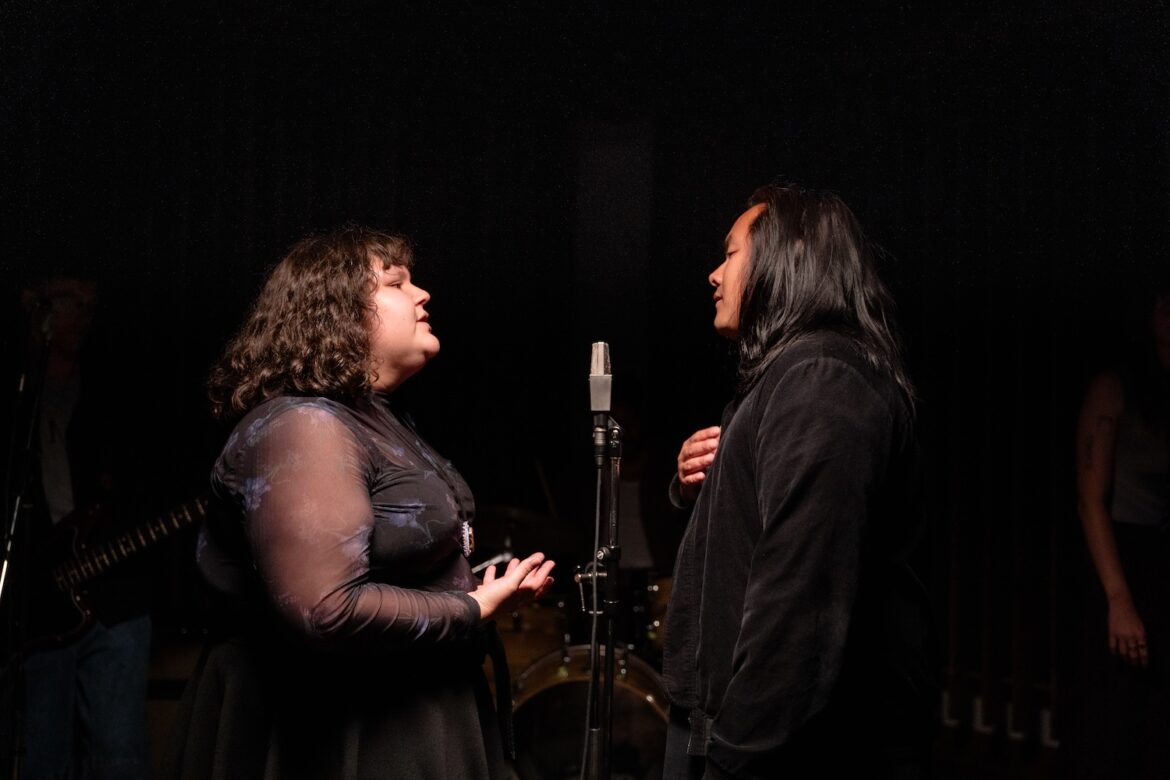
Montreal-based Indigenous artist Siibii and Juno Award winner Aysanabee join forces on the achingly beautiful “Body to Body” – a breathtaking, soul-soaked anthem that reclaims intimacy as sacred, celebrates love as medicine, and turns closeness into an act of healing, empowerment, and resistance.
Stream: “Body to Body” – Siibii ft. Aysanabee
This song moves like a slow heartbeat for me – an ode to the sacred meeting of skin, breath, and spirit, where touch becomes medicine and closeness becomes a kind of healing.
* * *
There is power in touch – in the closeness of skin against skin, the intimacy of breath against breath.
For Siibii, a queer, trans, non-binary, Montreal-based Indigenous artist, that closeness is more than affection: It’s an act of reclamation, a defiance of colonial systems that once sought to sever Indigenous peoples from their bodies, their pleasure, and their power. “Body to Body,” their soul-stirring new duet with Juno Award winner Aysanabee, pulses with this spirit of healing. It’s a song of radical intimacy – of connection as medicine, of love as resistance.
I ache in this energy
Oh what you do to me
Blood rushing to my cheeks
I feel you in every beat
Your love is medicine
Each time I let you in
Your touches is healing me
Your touch is what is I need
Atwood Magazine is proud to be premiering “Body to Body,” a stunning soul-soaked anthem full heat, human depth, and the kind of intensity that occurs only when we are at our most vulnerable, visceral, and raw. Out today, September 17, via Ishkode Records, the track arrives as both a love song and a statement of reclamation – elegant and moving, a ballad-cum-anthem that builds from shiver-inducing piano chords into a dramatic flood of warmth, wonder, and release. Directed by Vera Oh, its accompanying music video places us face-to-face with both artists and their band, while capturing tender vignettes of intimacy and joy between actors Manu and Maryam. From playful shopping cart rides and goofy embraces on a basketball court, to quiet moments of holding one another on train tracks, the video underscores the sacredness of closeness at the heart of the song.
“Colonization, through the enforcement of residential schools and the imposition of Christian doctrine, disrupted Indigenous family and societal structures – shaming intimacy, demonizing sexuality, and severing generations from their own bodies and relationships,” Siibii tells Atwood Magazine. “This song exists in direct defiance of those imposed ideologies, reclaiming touch, love, and physical connection as natural, sacred, and healing.”
The song begins in a hush of vulnerability: Siibii’s voice, delicate yet commanding, rides on a bed of bright piano chords that feel like the first sparks of light in a darkened room. There’s an intimacy to those opening moments – a sense of being drawn close, of secrets whispered at arm’s length – and as the verse unfolds, the tension mounts in tandem with their words. “Your love is medicine / Each time I let you in / Your touch is healing me / Your touch is what I need” lands with breathtaking conviction, the first chorus erupting as both a release and a revelation:
Face to face
Skin to skin
Body to body
You’re my medicine
My medicine
The chorus is simple, but in its simplicity lies its power. “Face to face, skin to skin, body to body, you’re my medicine” is a mantra of connection – a reclaiming of touch not as something shameful or profane, but as sacred, necessary, and profoundly healing. By centering closeness as medicine, Siibii transforms physical connection into an act of restoration, defiance, and love all at once. It’s the song’s emotional core, where vulnerability is celebrated rather than silenced, and where the weight of history meets the possibility of renewal. The repetition itself becomes ritualistic, echoing the very heartbeat Siibii later describes, embodying both the personal tenderness of a love song and the collective significance of cultural reclamation.
From there, the song expands outward. Drums, guitar, and organ swell beneath Siibii’s voice, creating a sonic landscape that is as cinematic as it is soul-stirring. It’s in this space that Aysanabee steps forward, his deep baritone grounding the track with a warmth and gravitas that contrasts – and ultimately complements – Siibii’s alto. Where Siibii sounds like the spark, Aysanabee is the flame, steady and unyielding, carrying the song into deeper emotional waters.
When their voices converge in the second chorus, “Body to Body” reaches its true peak – a cathartic eruption of intimacy and energy, of passion laid bare and shared between two artists at the height of their power. It’s a sonic and emotional climax where tenderness meets intensity, and the full weight of the song is realized in harmony. The effect is electrifying: you feel it in your chest, in your pulse, in the quiet spaces where you keep your own vulnerabilities. This is the moment where connection becomes not just healing, but holy.

The earliest spark for “Body to Body” was lit during Siibii’s first-ever songwriting camp – the Inaugural Indigenous Song Camp presented by Amazon Music Canada.
Nervous and managing social anxiety, Siibii met Aysanabee on a smoke break, joking that they weren’t writing together. Fate and a last-minute schedule change paired them up, along with artist Sunsetto. What began with an icebreaker exercise – yelling “vagina” until the word lost its giggles – soon blossomed into a waltz-tempo ballad that would evolve into today’s soaring anthem.
“I’m so happy this song is finally coming out, and there’s truly no better person than Siibii to release it. They’re such an incredible human who radiates joy, and their journey has been anything but easy,” shares Aysanabee. “I’m always in awe of being in the orbit of artists like Siibii. And honestly, it still makes me laugh that my very first memory of them is sitting in a room full of strangers where we were asked to scream ‘vagina’ at the top of our lungs. I can only imagine what the songwriters and producers in the rooms next door must have thought.”
While one early recording leaned toward polished pop, Siibii ultimately returned to the original waltz’s gentler, less refined touch. “I wanted to create something a little more intimate and romantic… something that felt like medicine,” they reflect. Recording the final version in Montreal at their guitarist and producer’s home was a celebratory experience: “We ordered like 40 dumplings and recorded for a few hours. Aysanabee’s voice is incredible, and one of the biggest compliments was him saying he was happy with my vocals. I was over there with my jaw on the floor, like this man is ripping it, and he’s complimenting me.”
The result is a cinematic outpouring of passion, with Siibii’s spellbinding alto and Aysanabee’s rich baritone intertwining in an irresistible call-and-response of love and longing. Lyrics like “Your love is medicine / Each time I let you in / Your touch is healing me / Your touch is what I need” turn closeness into prayer, and passion into power.
I ache for this energy
Oh what you do to me
Blood rushing to your cheeks
I feel you in every beat
This love is medicine
Each time you let me in
Your touches is healing me
Your touch is what is I need
With guidance from director Vera Oh and the crew, the song’s accompanying music video is a strikingly tender performance of intimacy as healing and empowerment.
“To be honest, I was freaking nervous,” Siibii admits of filming the video. Having grown accustomed to solo shoots, embodying intimacy alongside a close friend was daunting – compounded by the challenges of being neurodivergent. “It was a little intense because Aysanabee is my friend, a homie. I just had to get past that initial weirdness and remember we were here to make something beautiful.”
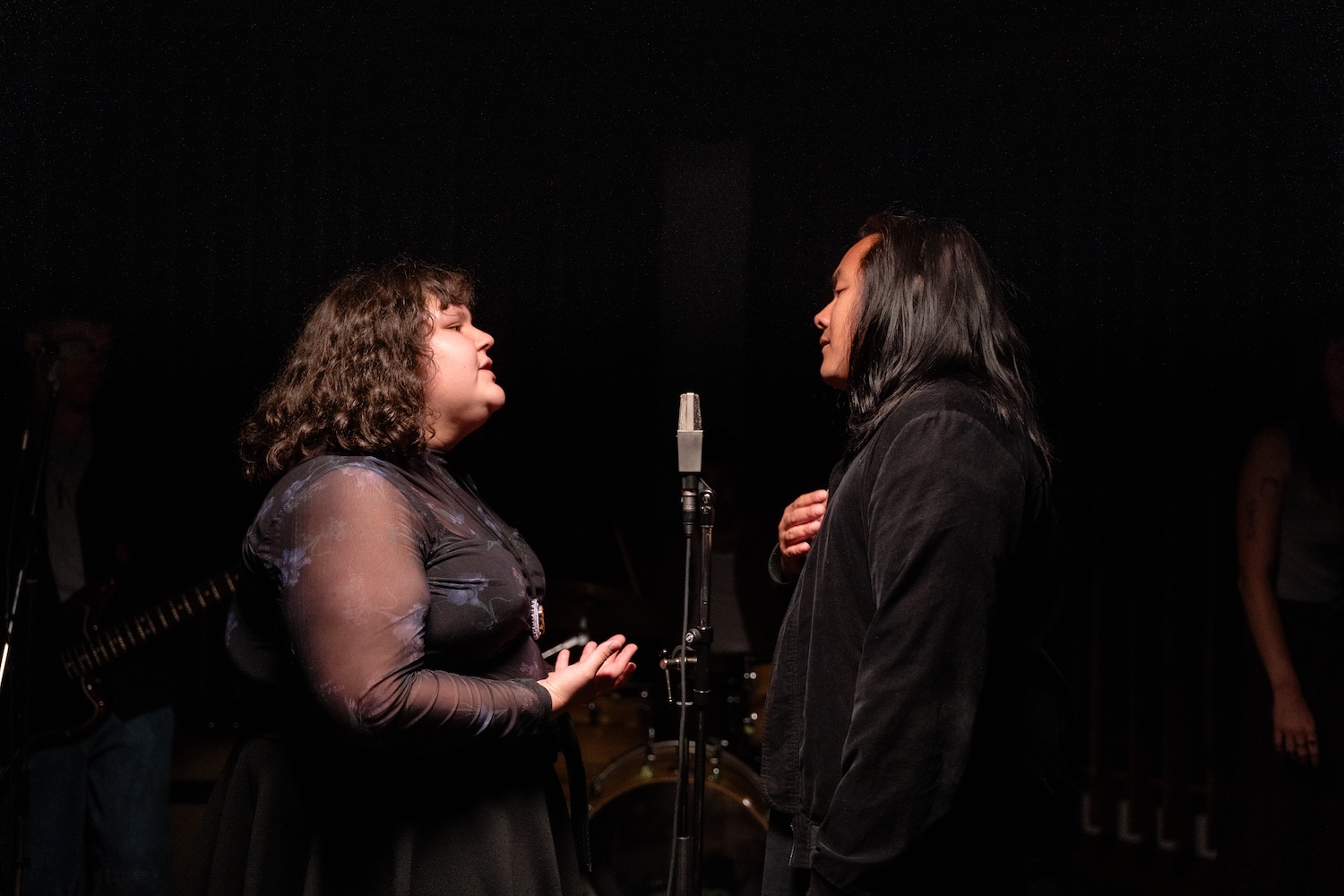
The powerful visual mirrors the song’s emotional depth: Vulnerable yet empowering, playful yet profound. We see Siibii and Aysanabee performing with their full band (Megan Griffin, Joshua Cunningham, Matt McCormack, Talya Gad, and Jacob Liutkus), their voices rising together in moments that feel almost ceremonial, contrasted with glimpses of everyday tenderness between actors Manu and Maryam – laughing, kissing, holding one another close. These parallel storylines weave music and movement into a single tapestry of connection, reminding us that love lives as much in the quiet gestures of care as it does in grand declarations. The video doesn’t just illustrate the song; it amplifies its spirit, underscoring that intimacy, in all its forms, is both beautiful and brave.
For Siibii, the song’s purpose is crystal clear: “The goal of the song was essentially to talk about physical intimacy in a decolonial mindset… to represent connection in a way that isn’t derogatory, but instead feels like medicine. I hope ‘Body to Body’ becomes the next big snagging song. There better be a thousand more Native babies being born after its release.”
Face to face
Skin to skin
Body to body
You’re my medicine
You’re my medicine
What makes “Body to Body” so impactful is how seamlessly it holds both the deeply personal and the universally human.
On one level, it is a love song – a tender exchange of devotion between two voices, offering themselves up to one another. But beneath that tenderness lies something greater: a reclamation of intimacy itself, and a reminder that connection is not only natural, but sacred. The song’s repetition, its ebb and flow, feels like a grounding ritual – a sonic ceremony that restores what colonization once tried to sever. In this way, the chorus becomes more than music; it becomes an affirmation, a healing, and an act of resistance.
As Siibii so beautifully puts it, “This song moves like a slow heartbeat for me – an ode to the sacred meeting of skin, breath, and spirit, where touch becomes medicine and closeness becomes a kind of healing.”
Love as healing, intimacy as reclamation, closeness as catharsis: “Body to Body” is all of these things and more. It is a song that insists on the sacredness of touch, reminding us that to love and be loved is both timeless and revolutionary. This is music to carry into your everyday – to remind you of the beauty in closeness, the power in tenderness, and the healing we can find in one another. Stream “Body to Body” exclusively on Atwood Magazine, and fall in love with the magic Siibii and Aysanabee create when their voices and souls intertwine.
— —
:: stream/purchase Body to Body here ::
:: connect with Siibii here ::
— —
Stream: “Body to Body” – Siibii ft. Aysanabee
— — — —

Connect to Siibii on
Facebook, 𝕏, TikTok, Instagram
Connect to Aysanabee on
Facebook, 𝕏, TikTok, Instagram
Discover new music on Atwood Magazine
© Vera Oh
 © Vera Oh
:: Stream Siibii ::