
Men at Work frontman Colin Hay reflects on the enduring life of the band’s songs, the regrets of its dissolution, and what brought him back to the stage as Men at Work after seventeen years.
Stream: “Down Under” – Men at Work
Forty-five years after Men at Work first made their mark, Colin Hay is still hearing something in the songs that refuse to disappear.
All around the world, people instantly recognize the first notes of the iconic flute riff of “Down Under” and the piercing saxophone that opens “Who Can It Be Now?”
Scottish-born Colin Hay and Ron Strykert began playing as a duo in Melbourne. Over the years, drummer Jerry Speiser, bassist John Rees, and multi-instrumentalist Greg Ham joined the lineup, and the band released their debut record, Business as Usual. Complete with immediate hits and now beloved classics such as “Down Under” and “Who Can It Be Now?” the record dominated the charts in Australia and spread like wildfire globally, even gaining the band the Grammy Award for “Best New Artist” in 1983.
The band rode the wave with their second record Cargo, with lead single “Overkill” reaching number three on the U.S. Billboard Hot 100. However, conflict between members led to the disbanding of Men At Work in 1986, one year after the release of their third record
Since then, Hay has enjoyed a successful solo career, touring his catalogue of over fifteen studio albums and sprinkling in Men at Work songs during his performances. Formal revivals of the band ended with Greg Ham’s passing in 2012, which brought the band’s reunions to a close.
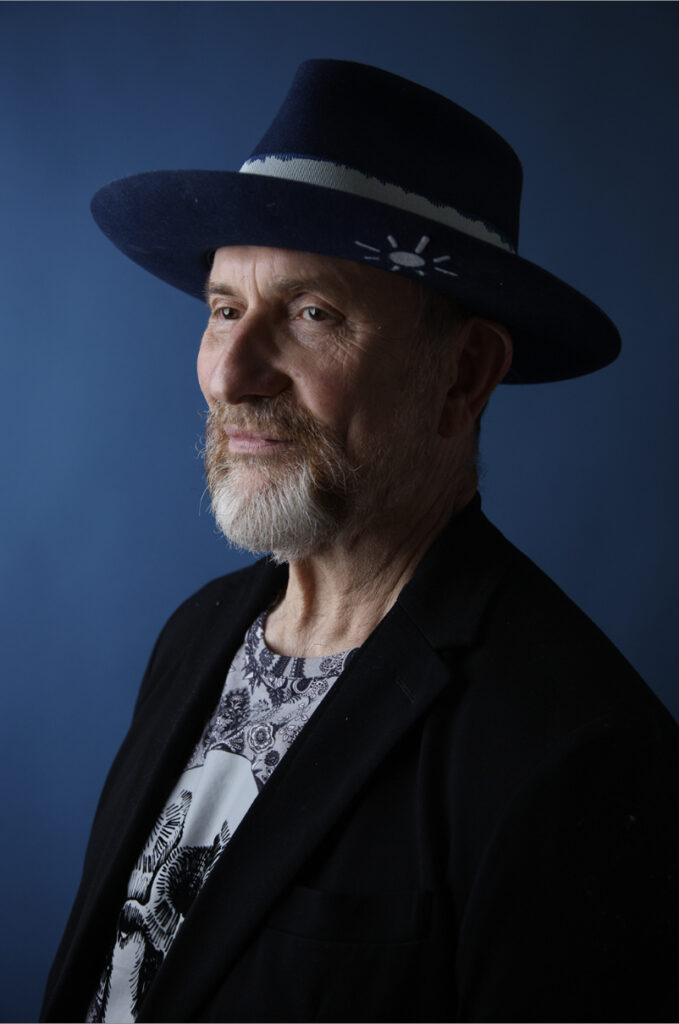
It wasn’t until Hay performed with Ringo Starr & His All-Starr Band that he thought, “What if we got the old band back together?”
As Hay tells Atwood Magazine, the experience reminded him that there was still an audience for Men At Work’s beloved songs. The Europe tour proved him right, serving as a successful experiment and reaffirming the enduring appeal of the music. Save for the frontman, however, the Men at Work that is touring now looks nothing like the old band. The current line-up is comprised of Hay’s wife, Cecilia Noel, drummer Jimmy Branly, bassist Yosmel Montejo, guitarist Allen Hinds, and multi-instrumentalist Rachel Mazer.
For Hay, returning to Men at Work is less about revisiting the past and more about recognizing the strength of the songs that they had made. Fueled by curiosity, Hay returns to the stage as Men at Work after decades of life, loss, and change. As the frontman shares, “The songs don’t feel like the past to me because they all live inside me.”
As Hay tells it, the dissolution of the band was hardly the dramatic finale one might imagine. “It was kind of like everyone just went home,” Hay remembers. But decades later, Hay came back – not necessarily to the band as it was, but to the music that refused to fade into the background.
— —
:: connect with Men at Work here ::
— —

A CONVERSATION WITH MEN AT WORK
Atwood Magazine: What about the music landscape drew you back to the stage now?
Colin Hay: I want to see how long I can do it for and how long it makes sense to do it. It’s really only three albums, and only two were successful. So you think to yourself, “Well, why am I going out on the road as Men at Work?” I have a great band, the same one I have when I go out under my own name. So another reason for going out is the fact that I can employ people.
Your solo catalog is extensive. What is the distinction between Colin Hay performing his music versus Colin Hay performing as Men at Work?
Colin Hay: When I first started to write songs and play music, I was maybe 14 years old. I was on my own for 15 years or so. When the band formed, I seemed to hit a stride. One of the reasons is meeting Ron [Strykert], who is a very inspiring guy to work with. Writing a song by yourself, it tends to be introspective. Whereas rehearsing with a band, you come up with this idea, and boom, there’s a song. Everything seems to be a bit more immediate; you’re working with these people as opposed to having a song and it lingering for years.

Men at Work songs are not only distinctly recognizable, but they never seem to lose their character, even after multiple listens. Where does this singularity stem from?
Colin Hay: I think there was a lot more to the songs than we got credit for in many ways. A song like “Down Under” can be seen as a novelty song, and indeed a lot of people say it that way. But there’s a strength to it. You can play it in all different kinds of formats; it works in a merengue band, reggae band, or rock band. Some religious Jewish people have turned it into one of the songs they sing at weddings. I think there was a density to the songs that people did not get straight away. “Down by the Sea” or “It’s a Mistake” are not just one-dimensional. Light bulbs go off if you want them to.
One example is the subject matter of “Down Under.”
Colin Hay: I had a deep love of the place as an immigrant and as someone who was walking around thinking, “Wow, the ground feels really different under my feet here.” Then you had others plundering the country, knocking down old forests, and selling them for wood pulp. I’m just blown away by Australia, environmentally and geographically. You can drive and see the state of Victoria, which is where I used to live, and get lost in the most exquisitely beautiful countryside. You can really get away if you want.
Do you find a difference in the audiences when you compare performing now to performing back then?
Colin Hay: As far as people’s perception of the band is concerned, it was pretty much Greg and I who were recognizable. For example, Greg and I were on the cover of Rolling Stone, but they took photographs of us all. These nuanced little fissures start happening within a group of people.
I have noticed while reading interviews that you have a sense of self-awareness and responsibility around the breakup of the band.
Colin Hay: The band didn’t really break up. It was the sacking of the rhythm section. I regret how we did it. We should have said, “What are the problems?” I mean, I knew what the problem was. It was to do with people’s royalties and what they thought was best for the band. Jerry [Speiser] wanted to sack Russell [Depeller], the manager, who was my friend that I went to university with. So, obviously, I did not want to sack Russell. We had conquered the world together!

You use the word “regret.” Are there any other feelings you have about the dissolution of the band?
Colin Hay: I regret the fact that they were sacked in the manner they were. You know, we should have sat down and said, “Do we want to keep this thing going? And if we do, then what should we do to make that work?”
Halfway through the third album, Ron [Strykert] just got sick of it. So one day, he said, “I’m going home.” I said, “You coming back?” He goes, “Nah.” Then the third record came and went with a whisper. As far as I was concerned, there was no band left to leave. It was kind of like everyone just went home.
That’s a funny way of putting it. Are you still in touch with Jerry or John Rees?
Colin Hay: No, I’m not. Not for any particular reason, just life. Sometimes you don’t hang out with people that you did forty-five years ago.
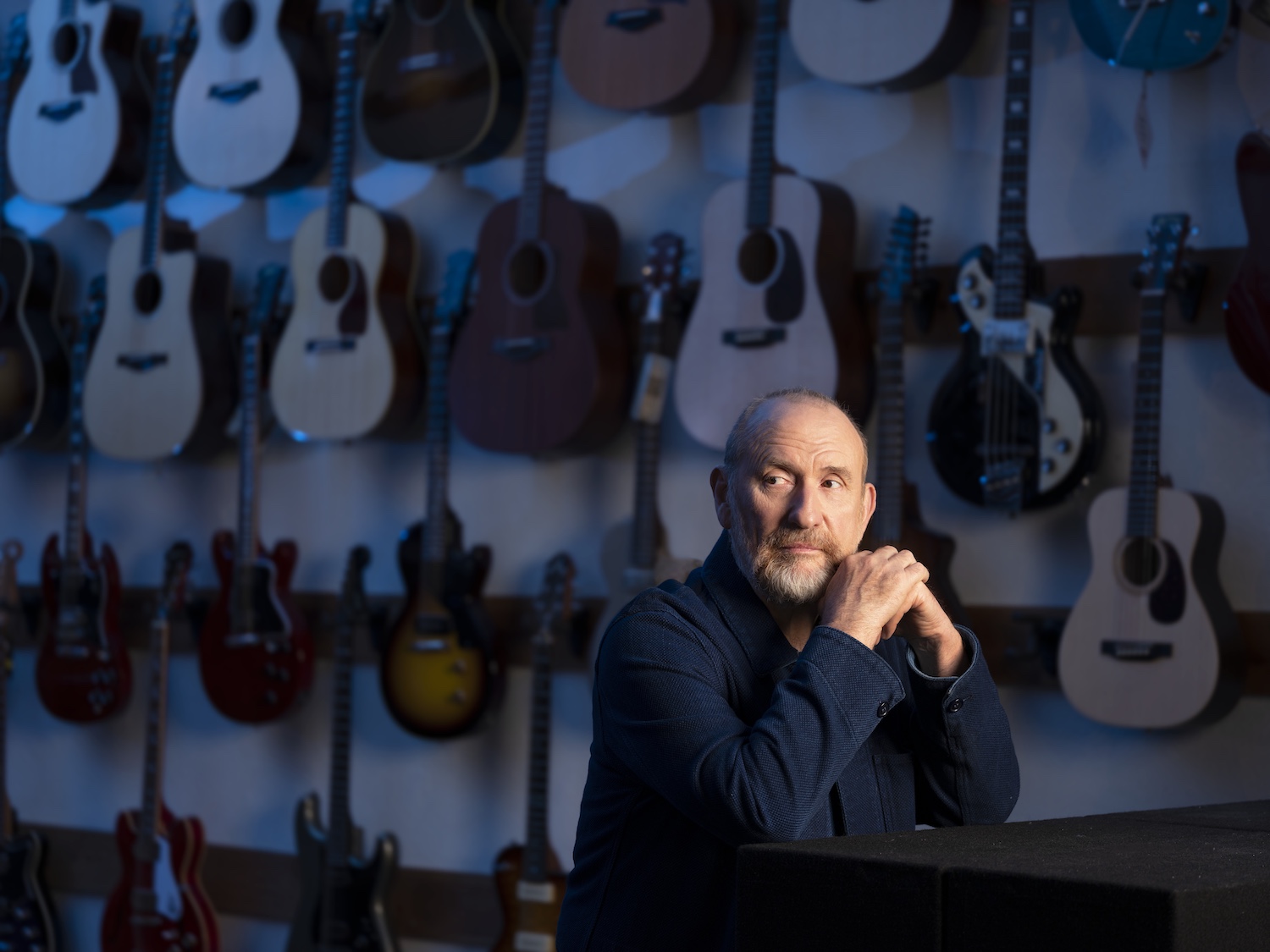
Your relationship with the band and its members has changed. Is it difficult to revisit these songs because of this connotation?
Colin Hay: The songs don’t feel like the past to me because they all live inside me. I played it last night, and I played it 45 years ago. It doesn’t matter. For example, when I was in Europe playing in Ringo’s band, I said to the producer of his shows, “I think I could tour in Europe.” And he said, “Well, if you called it Men at Work, you probably could.” I became curious to see whether the band had an audience. I did the European tour and discovered that I did! That was pretty good for a band that hasn’t done anything for 45 years.
— —
:: connect with Men at Work here ::
— —
— — — —
Connect to Men at Work on
Facebook, 𝕏, TikTok, Instagram
Connect to Colin Hay on
Facebook, 𝕏, TikTok, Instagram
Discover new music on Atwood Magazine
© Paul Mobley Studio
 © Paul Mobley Studio
:: Stream Men at Work ::