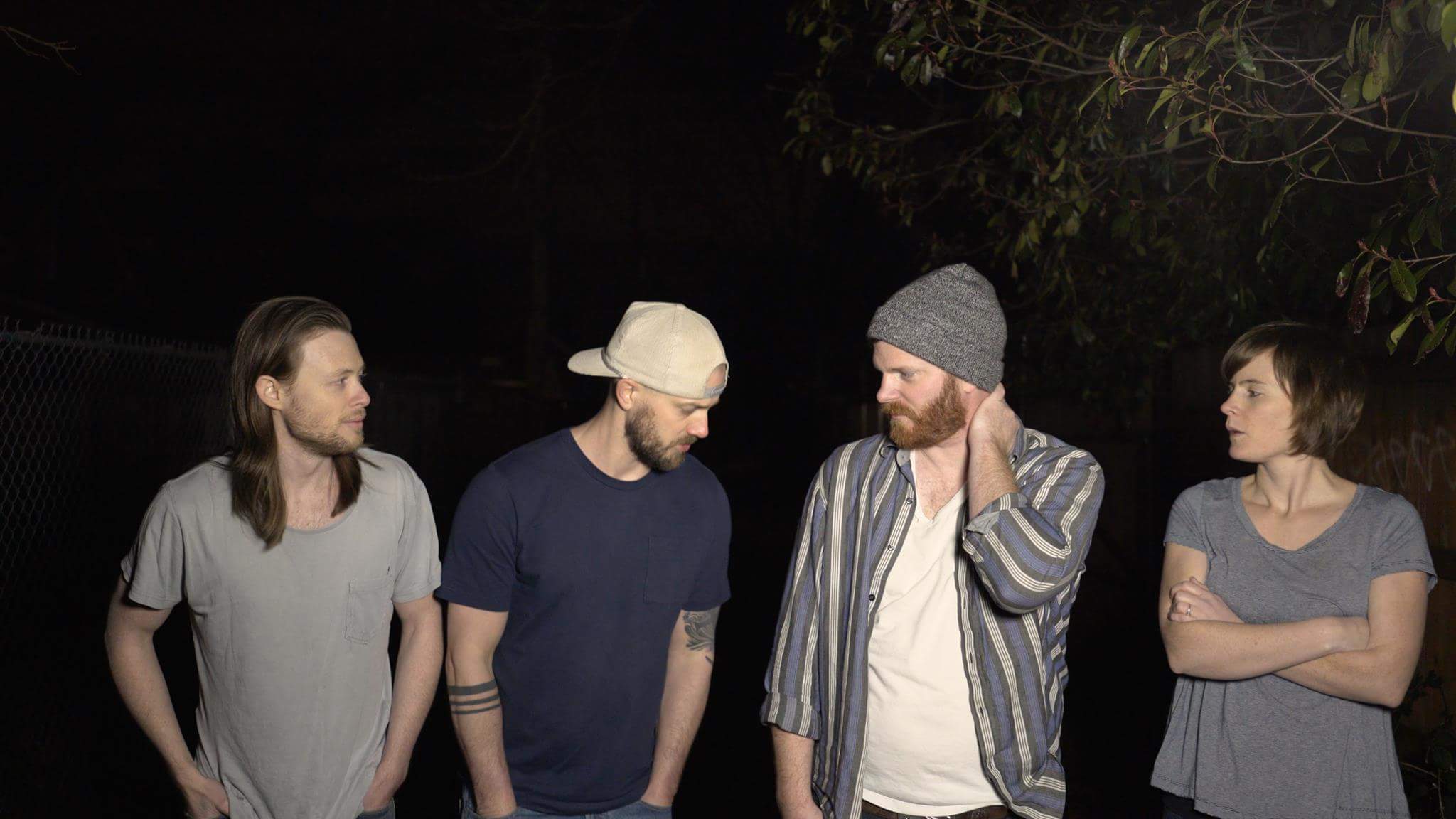
Atwood Magazine’s writers dive into Paul McCartney’s warm, reflective 20th solo album ‘The Boys of Dungeon Lane,’ a Liverpool-rooted love letter to the memories that made him – unpacking its classic rock craftsmanship, its Beatles and Wings echoes, and the unforced wonder of a legendary songwriter still making music with nothing to prove.
Featured here are Atwood writers Aidan Moyer, Ashley Littlefield, Charlie Recksieck, Dusty Hayes, and Isabella Appell!
— —
To start, what is your relationship with Paul McCartney’s music?
Charlie Recksieck: He’s probably my favorite songwriter of all time, the best rock bassist in my opinion, a beloved figure in my household growing up, and a guy who seems incredibly grounded despite the status he achieved. This is going to sound insane, but he might be among the top 5 people that humanity has ever produced. Does that sound silly? Show me 5 better.
The Beatles’ output in just 8 years of recording is as unbelievable as Shakespeare’s output. But his solo and Wings stuff is nearly as amazing; Ram, Band on the Run, Venus and Mars are favorites from start to finish and even lesser or later albums always have 1 or 2 pop gems that have stuck.
One quick story: I saw McCartney in concert just a few years ago, and he played hard for three and a half hours, which was incredible. About three hours in, he was telling a story and his voice was cracking so I was fearing for this old man performing on the stage – until he then counted off the beginning and launched into a blistering “Helter Skelter.” Unbelievable at his age.
Aidan Moyer: McCartney’s body of work is indelible to my life and artwork, and foundational in my closest musical connections. I spent my high school years in a cover band called Shabbey Road – go figure – and wrote my college thesis on Wings. I’ve had the pleasure to see McCartney live seven times and speak to many in Sir Paul’s collaborative orbit, including the late Denny Laine, Wingsmen Steve Holley and Laurence Juber, and longstanding music director Paul ‘Wix’ Wickens. All have attested to what I’ve suspected all along – McCartney is a preternatural talent with the greatest songbook of the 20th century, and a workhorse who shows no sign of slowing down at 84. There are very few reasons to camp outside in freezing rain; seeing Paul McCartney headline a 400-seat venue is chief amongst them.
To date, one of my proudest moments was drafting a question that McCartney’s team selected for his newsletter, citing my favorite song of his (or anyone’s), Daytime Nighttime Suffering, and its special place in Linda McCartney’s heart. McCartney recently repeated this answer in the New York Times, but Atwood got the scoop!
Ashley Littlefield: A large part of my journey and my discovery of music came from long car rides with my parents. My father would put on Beatles CDs and would share the history and the stories behind the band members. Throughout my time growing up, watching the Grammys, I was always impressed by Paul McCartney’s creativity and the professionalism of his performances and piano playing.
In 2021, I came across his album McCartney III Imagined, with the song “Find My Way.” There are collaborations with artists, including Blood Orange and Khrungbin – released on Capitol Records. I was hooked from there. It was my song and album on repeat for that summer, which ultimately guided me to dive deeper into his discography.
Dusty: I’m not much of a Beatles fan, they have few songs I dig, “The End” and “Hello Goodbye,” but not many, however I am a massive Paul McCartney fan. I know in some circles this opinion is punishable by execution, but I’ve always been way more into Wings than the Fab Four. I couldn’t tell you how many copies of Band on the Run I’ve eaten through over years due to over spinning.
Isabella Appell: My admiration for Paul McCartney has been primarily shaped by his role in The Beatles, and though I haven’t listened to any of his recent solo projects, his voice remains a time capsule of the ’60s and ’70s for me. Having minored in the music industry in undergrad, I thoroughly dissected “Beatlemania” as a concept. In terms of his solo career, I wish more of his own music was recognized as his most popular, instead of tracks he was merely featured on, like “FourFiveSeconds” and “Say Say Say.” Nevertheless, I don’t know anyone who doesn’t know the name Paul McCartney, and for good reason.
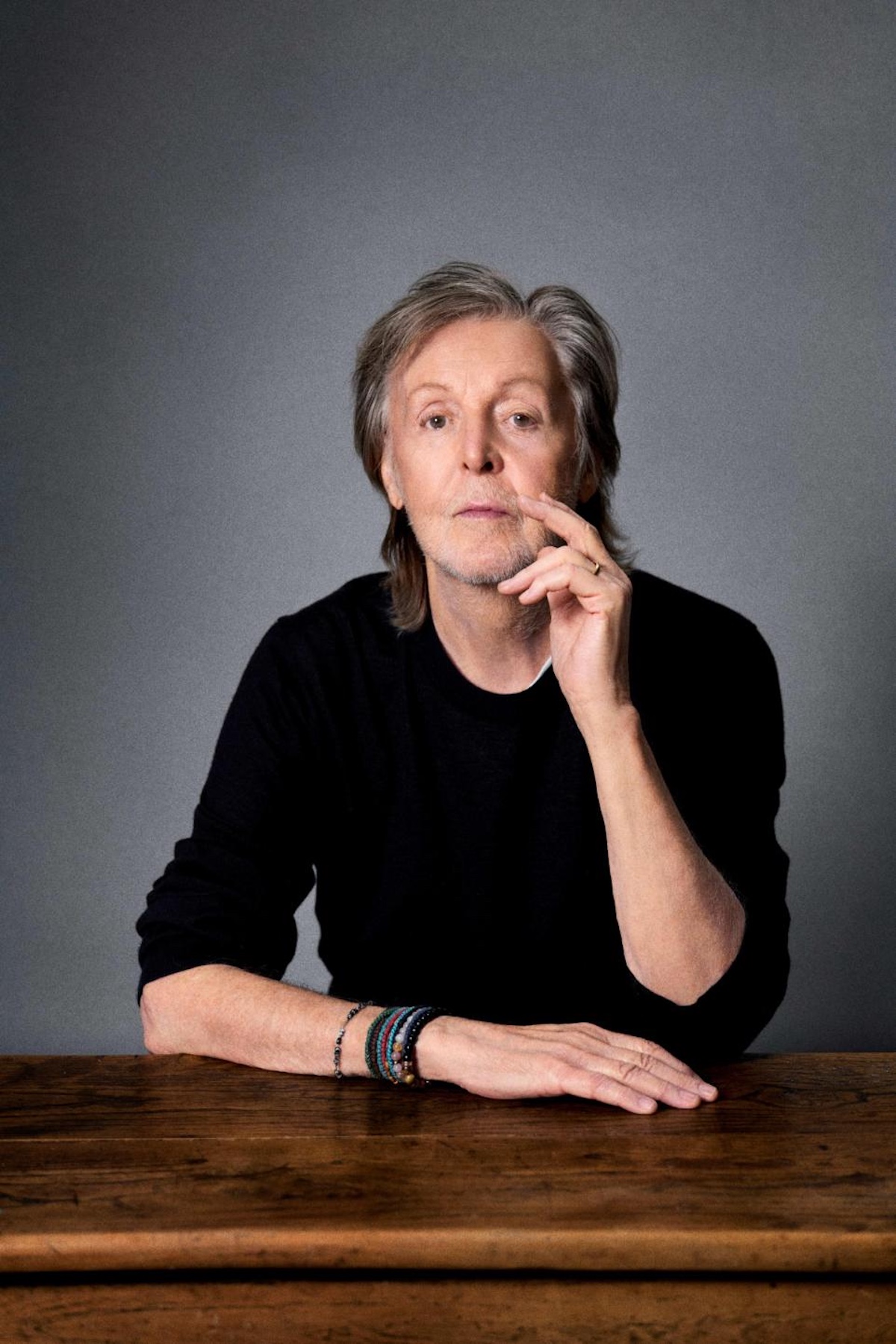
What are your initial impressions and reactions to The Boys of Dungeon Lane?
Charlie: First of all, this isn’t an obligatory album where a great artist keeps making music well after the point where fans actually want it. This is vibrant stuff by a guy who clearly feels like a recording studio is one of his favorite places on Earth. And it’s kind of mind-blowing that this was created by an 84-year-old. That’s nuts.
“As You Lie There” or “Ripples in a Pond,” like so many other McCartney songs, each has enough ideas for 2 or 3 songs but he loves crafting music two-fers that sound natural instead of like forced prog rock. “Mamma Gets By” is a great Paul-at-the-piano closer.
Everything Paul has done well for decades is on display here. This is not a tired album. “Never Know” could have been a Paul outtake from 1971 or 1980.
Aidan: I’ve been spinning the record since it dropped at midnight a month ago and have enjoyed Paul’s heavy media push. It’s a delight to see an Octogenarian Beatle quipping on Chicken Shop Date and hosting a TikTok Live. The album proper is a delight, mostly delivering on a 1966 pitch for a Beatles record about their Liverpool childhoods. Though “Strawberry Fields” and “Penny Lane” were pulled from what eventually became Sgt. Pepper’s Lonely Hearts Club Band, Paul travels just down the road to Dungeon Lane for a solid set of songs with a reflective through-line. The opening track, the Wingsy “As You Lie There,” is the album highlight, with its multi-suite structure, a killer rock vocal, erratic opening chord and a rare spoken-word introduction harkening to a teenage crush. “Lost Horizon” bears the hallmarks of the strongest tracks from the Chaos and Creation / Memory Almost Full era, and is presented mostly unaltered from a demo unearthed by engineer Eddie Klein. “Ripples In a Pond” is hooky and infectious, and the album closers “Salesman Saint” and “Momma Gets By” are elevated by lush and period-appropriate Giles Martin orchestration. There’s not a bad melody in the bunch and the record has grown on me in the month since its release.
Ashley: The album has a classic rock, easy-listening feel, with some signature guitar moments paired with raw vocals, a stripped-down performance in “Down South,” and the theatrical electric highs of “Come Inside.” McCartney taps into his lucid dreaming in “We Two,” offering listeners a new vulnerability that adds to the story as he shares insight into his world for others to see.
Dusty: I went into it expecting something satisfactory but stale, like a three day old baguette taken from the discount rack of your local bakery. I mean let’s be so real, this is McCartney’s twentieth solo record, not to mention the eight studio albums he did with Wings, thirteen he did as a Beatle, and the countless other projects he’s played on. At some point you would expect the idea well to begin running dry.
What we got with “The Boys of Dungeon Lane” was not quite so uninspired. The album definitely treads on old ground, it’s a classic rock record and I don’t mean it’s this new wave classic rock we’re seeing from bands like Greta Van Fleet and Wolfmother, I mean it’s a collection of classic rock tunes written by someone who was composing classic rock back when it was still pop music. Stale bread? No. But “The Boys of Dungeon Lane” isn’t reinventing McCartney’s sound.
Isabella: I’m not sure if it’s his voice or his lyrics, but for me, Paul McCartney is the epitome of nostalgia. Truly, they don’t make music like this anymore – his voice is raw, and the way he pairs it with only a few instruments is something I greatly appreciate.There’s a sense of wistfulness and reminiscence that seeps through “Life Can Be Hard,” and a quiet determination in “Salesman Saint.” I don’t typically love slower music, but “First Star of the Night” has just the right amount of edge to keep me listening. To me, The Boys of Dungeon Lane is as close to a no-skips album as any I’ve heard in a while. It’s interesting that McCartney mentioned in an interview that he worried the album wouldn’t be cohesive enough, then noted it would probably turn out fine, since The Beatles never had that problem either. That ability to make an album of songs so varied yet somehow uniformly great is a talent very few artists have.
How does this album compare to 2020’s McCartney III – what are the most striking similarities or differences?
Charlie: For starters, The Boys of Dungeon Lane is very obviously a lot about Liverpool and memory, where McCartney III is more about varied subject matter. And that previous album, to me, felt a little like it was a 78-year-old trying to recapture the relevance and feeling of a 58-year-old pop star, whereas Dungeon Lane is more relaxed and self-assured. McCartney III wanted to try on a few musical costumes of modern music that Paul was curious about, then in 2026, he went back to just being himself. (This sounds too negative about McCartney III; it’s still a phenomenal record for a 78-year-old.)
With all of this, I feel like we’re arguing over whether LeBron James had a better NBA season as a 40-year-old or a 41-year-old. Nobody is saying LeBron is better as a Laker than he was in Miami or Cleveland; similarly, Paul can’t compete with Beatles or Wings era Paul, while it’s incredible what he’s still doing in the league today.
Aidan: This is my third album cycle as a McCartney obsessive; I missed NEW by one year, but I stood outside a 2018 Grand Central Station performance for Egypt Station’s release and emerged from my COVID bunker to snag McCartney III. Paul’s been teasing this record since shortly after then, playing “Life Can Be Hard” for Rick Rubin in a 2021 Hulu special to promo III. Instrumentally, Paul is mostly sticking to the trilogy’s mode of covering all the parts, but Andrew Watt’s production, guitar work, and guest spots by Chrissie Hynde and Richard Starkey disqualify Dungeon Lane as McCartney 3.5. Several of these tracks could fit right in on the previous record, especially “Mountain Top” with its dreamy harpsichord and auxiliary tape-rewind outro. The thematic consistency here is less madcap/free-for-all than the more daring moments of III, and the polished production choices like the big band horns of “Salesman Saint” and the Ram-esque “Momma Gets By” are more of a piece with Egypt Station. Though it”s challenged by As You Lie There, the strongest track on either record is tucked at the end of McCartney III: The 1991 outtake “When Winter Comes,” one of Paul’s finest.
Ashley: On his previous album, McCartney III, there are more harmonics and vocal effects throughout. McCartney’s acoustics are deeper, with a bolder body to the sound. In “The Kiss of Venus,” the lyrics offer an example of one sonic difference – “This golden circle has a most harmonic sound.” Now, on his latest, The Boys of Dungeon Lane, the classic rock shines through while giving the spotlight to more stripped-down tracks. Yet McCartney III features an interesting shift in the padded keys that you can hear on “Seize The Day.” If I were to compare the songs across the two albums, “Come Along” and “Slidin’,” both feature a star-studded riff that carries the same energy, but with different lyrical takes and varying tempos.
Dusty: The Boys of Dungeon Lane is a classic rock album; you can close your eyes and listen to it and trick yourself into thinking you’re listening to something from late era Beatles or early Wings. McCartney III, on the other hand, was an attempt at something more modern. You don’t have the blues inspired guitar, or the preppy drums, or the simple lyrics that tell a sweet story. You can hear the attempt at modernization in McCartney III. The guitars are looping riffs that are written to be catchy, they convey more of an idea, an emotion you should be feeling, than an actual story, the arrangements have little to no heritage to them, you can’t hear the touches of blues and ’50s rock that helped formulate McCartney’s early sound – it’s all written to be tight and catchy. It was pop music.
Isabella: 2020’s McCartney III is definitely more my speed in terms of genre, but it feels less authentic to what I associate with McCartney’s voice. It leans a lot more pop rock and hip hop than his current album, which does feel more relevant to the time it was released. However, I think this world could use more music reminiscent of the ’80s and earlier. Without McCartney’s distinct nostalgic voice, McCartney III relied more heavily on lyrics, and for me, there simply weren’t enough of them, nor were they as well-written as those on his newer album.
Paul McCartney teased The Boys of Dungeon Lane with just two songs – “Days We Left Behind” and “Home to Us,” the latter of which features his former Beatles bandmate, Ringo Starr. Are these singles faithful representations of the album?
Charlie: So far, I don’t think they’re that representative of the album; mainly because the album itself is pretty eclectic in tone and tempo. “Days We Left Behind” is a stately feelings song when the album has plenty of straight rock and fairly complex pop.
And “Home to Us,” the Ringo collaboration, is everything we could hope for from a mini Beatles reunion. It sounds exactly like we’d want from the two of them, with straight 4/4 toe-tapping drive, Ringo feel-good vocals peppered throughout then odd time stops or production values that are, for lack of a better word, Beatlesque.
Aidan: “Days We Left Behind” is a bold choice for the lead single, a downbeat meditation on childhood friends who ‘made it’ and those who didn’t. It’s the most emotionally plaintive moment on the record and was played to great effect on SNL last month. Sonically, it belies the more buoyant moments and standard McCartney love songs on Dungeon Lane, but thematically it’s the perfect thesis for the record.
Home To Us sounds a lot more like a made-to-form Ringo track, as Paul originally intended it to be. It’s elevated by Beatley flourishes in its backing vocals and it was rightly earmarked as a cut above the tunes Paul has dutifully provided Ringo for his last few albums. Most would figure that this sunny track would define the record but ‘Dungeon Lane’ is significantly weirder than Home To Us would suggest.
Ashley: It’s interesting to see McCartney and Ring Star duet on “Home to Us.” They both have unique journeys to create their own solo work, with Ringo Starr’s latest country album release, A Long Long Road. The spirit of their collaboration allows them to connect with their shared history while remaining independent – that way, McCartney can stay true to his The Boys of Dungeon Lane project. Both singles serve as a bridge and a core to the journey that shares a story. They have both reflected on their careers while referencing memories in Liverpool together.
Dusty: It’s hard to sit here and pick out any one song that I would say represents the album as a whole. As some of my fellow journalists have pointed out the record is fairly diverse in sound. I do think, however, that if you look beyond the surface of what the music sounds like and what the lyrics are saying at the album as a whole, they are accurate representations. The album is sort of a victory lap around McCartney’s old stomping ground. Another shot at the sound that made the man who he is. What better representation of that is there than “Home to Us,” a song reminiscing on the scene McCartney rose up out of featuring his fellow Beatle Ringo?
Isabella: Although I don’t necessarily feel like these songs are faithful representations of the album as a whole, since the majority are distinct in their own tone, they do represent the goal of the album, which is to take a trip down memory lane. “Days We Left Behind” really epitomizes McCartney’s voice and, in my opinion, is a perfect encapsulation of nostalgia, especially in terms of his music career. The inclusion of Ringo Starr in “Home to Us” mirrors this, while still bringing a different type of feeling to its listeners.
Macca has called this record his most introspective work to date – summing it up as “my memories of Liverpool.” Does this description capture the spirit of these songs, and where do you hear or feel it most?
Charlie: “Days We Left Behind” is almost a postcard from somebody going back to the street he grew up on, with personal name-checking of places Paul loved and loves like Forthlin Road and Dungeon Lane. “Home to Us” is a shared version of this between Paul & Ringo, a love letter to a tough place that feels charming through the lens of memories from 70 years ago.
Similarly, the celebration of train whistles and car engines in the “Lost Horizon” lyrics are pretty clear about how Paul romanticizes Liverpool. And sometimes he’s clearly in remembrance mode but not drawing us a map or fully explaining, like in “Down South”: “It was a good way to get to know you – As we were bombing around down south.”
Aidan: McCartney’s entire 21st Century output is rife with breadcrumbs of the eventual Dungeon Lane. There are shades of Dungeon Lane in McCartney’s 2005 classic Chaos and Creation in The Backyard, from its Mike McCartney photo of Paul at Forthlin Road to the acoustic George Harrison tribute “Friends to Go,” the forebear to Dungeon’s “Down South.’ On Chaos, Paul is “looking through the backyard of [his] life”; see also “Ever Present Past,” “Vintage Clothes” and “Feet In The Clouds” on 2007’s Memory Almost Full, “On My Way To Work,” “Queenie Eye” and “Early Days” on 2013’s NEW, and “Confidante” on Egypt Station. A playlist comprised of these tracks alongside the nostalgic cuts on Dungeon Lane paints a fuller picture of this premise. Paul can’t help but slip a few contemporary Silly Love Songs to break up his latest release… “and what’s wrong with that?”
Ashley: I would agree! The choice and style of instrumentation, with a raw sensibility, revisit past memories in sounds that can carry us as we listen. “Home To Us,” a duet by McCartney and Starr, conveys a mutual, endearing trust through the tone they share. I keep going back to “Down South.” Not only is it minimal, but it’s also because the lyrics create a narrative that carries a message and meaning beyond mere production, into a striking, sincere ballad of warm memories that can come with “an empty seat.” It takes years of craft to articulate emotion, and just how far a conversation can go shapes memories as they’re evaluated over the years, and how time passes into the present shapes the current moment.
Dusty: Absolutely, I agree. The Boys of Dungeon Lane is a fourteen track walk down memory lane. The opening lines of “Days We Left Behind” are Looking Back / At white and black / Reminders of my past. I don’t know how much more blunt than that you can be. The album is over encumbered with sticky sweet nostalgia, it’s all about looking back on those warm half remembered days left years in our past.
Isabella: Yes. Every track on the record describes a specific memory in Liverpool. “As You Lie There” is a remembrance of McCartney’s neighbor, whom he had a crush on in his youth; “Days We Left Behind” looks at his bus rides with George Harrison down to the beach; and “Down South” is the origin story of them meeting. “Days We Left Behind” probably captures this spirit the most – a gentle nod to his past, it depicts Dungeon Lane, where he grew up, the conversations he and Harrison would have about music, and all of the days he’s now fond of looking back on.

Which song(s) stand out for you on the album, and why?
Charlie: “Home to Us” is the exact Ringo / Paul collab I was wanting, for reasons stated above. “Life Can Be Hard” is the British music hall throwback stuff McCartney plays with joy and no irony that gets your toes tapping involuntarily. “As You Lie There” starts the album as if it’s a 1979 Wings record throwing the pop kitchen sink at you. “Salesman Saint” and “First Star of the Night” have pop production haymakers and novel chord changes come out of nowhere that would be career highlights for a new artist instead of the 7th best song on an artist’s 40th album.
Aidan: “As You Lie There” stands among Paul’s multi-suite best and showcases a killer rock vocal. I”m so glad Charlie mentioned the ‘79 Wings because Back To The Egg was also the first record I thought of! “Ripples In a Pond” has been in my head for weeks, its nimble melody and propulsive bass are killer. The pared down arrangement of “Down South” showcases its lyrical Scouser humor, and it tugs at the heart strings with a gentle reminder that George and Paul’s friendship started it all. The best musical moment on the record might emerge in the fakeout recorder ending of “Never Know” that SLAMS into a hard-rocking Wingsy guitar/ synth outro. The big band clarinets on “Salesman Saint” are a perfect flourish and fans of Ram will enjoy the sprawling strings of the closing track (an uncredited George Martin did the Ram string arrangements and his son Giles takes over here.)
Ashley: The heart of the album is my favorite! The production’s easy groove and rests that “We Two” carries, along with the soft cadence of the production, have an independent feel that I enjoy. In the lyrics, “We want to live for love / like other people do” expresses a desire to keep peace and love within everyday reach while holding onto devotion – like all great things, it takes effort to support the relationships we surround ourselves with. Additionally, “Down South” does so much with very little production. Yet it’s the story told within 2:23 in the play, and it reminds me of a folk freestyle, which I find timeless in music.
Dusty: “Home to Us” stands out if nothing else purely for the collaboration with Ringo. It’s the closest thing we will ever hear to a new Beatles song and it is a damn fine tribute to the early days of these two legends’ careers. I also find myself partial to “Lost Horizon” as it was the track that sold me on the album. I wasn’t sure about the opening tune, I liked it but feared it may have been a fluke. One fast paced rock ‘n’ roll song to start off before the album begins an agonizing descent into progressively slower and simpler tunes; an all too common trick if you ask me. “Lost Horizon” came along and squashed those fears. The mildly twangy guitars and one two drum beat sounds like the kind of thing I’d hear in a honky tonk on Indy’s southside. It was a pleasant surprise to find several of these kinds of songs on the album.
Isabella: I love “Come Inside” and “Home to Us” because they represent McCartney’s range, even at the age of 84. I’m obsessed with the rasp in “Come Inside” when he sings, “Open up your heart, nothing else is keeping us apart,” about halfway through the song, and of course, I have to love the collaboration with Ringo Starr on the latter. Not only do the lyrics encapsulate McCartney’s upbringing in “Home to Us,” but the song itself is both modern and somehow sounds like it was written well before its time.
Do you have any favorite lyrics so far? Which lines stand out?
Charlie: The Ringo collaboration is a fairly brilliant turn of illustrating his and Paul’s personal, then shared love of Liverpool: “And it was all I knew – ‘Cause it was home to us.” And Beatles archaeologists should love digging into the clever lyrical nods to “Twist and Shout” and “We Can Work It Out.”
I feel like there’s a lot less symbolism or oblique lyrics here. Most of the words on this album are simple, direct, and conversational.
Aidan: It’s hard to beat the plaintive “It was a good way to get to know you/ a fine way to Work It (all) Out/ it was a good way to get to know you/ before we learned to Twist And Shout.” I love the limerence of “am I there inside your head/in every book you’ve ever read? Front and center on your screen, in every film you’ve ever seen/ as you lie there, do i ever cross your mind?” In a few short years, Paul’s crush would literally be unable to escape his visage on every piece of media imaginable. As stand-alone poems, “Life Can Be Hard” and “Momma Gets By” are expertly woven.
Ashley: The Boys of Dungeon Lane shines a light on the beginning and delves further into the introspection McCartney wanted to share on the album, in the lyrics: “I sat beside you on an empty seat / We talked about guitars and Rock and Roll.” I find it charming how an unexpected conversation can become the start of a lifetime of learning and cherishing the memories he looks back on as compelling and warm, with endearing sentiment, as listeners take a look into his world.
Dusty: I have to circle back to “Days We Left Behind” for this one as that opening verse stuck with me immediately. The entire verse is Looking back / At white and Black / Reminders of my Past / Smoky bars and cheap guitars / but nothing built to last / Nothing ever stays / Nothing comes to mind / No one can erase / The days we left behind. For one thing, I think that is a verse that flows off the tongue and over the brain like a gentle river current swallowing a downed tree. More than that however it perfectly encapsulates the album. Everything you need to know about the themes the record dives into is right there in the opening of “Days We Left Behind.”
Isabella:
She doesn’t care, she’s got her own philosophy of life
It wasn’t too long ago that she agreed to bе his wife
And even though hе’s complicated, she takes it in her stride
What are his silly faults compared to what she feels inside?
For “Momma Gets By,” McCartney made it very clear that these lyrics were not based on reality, but made up, yet the pain in his voice is palpable and relatable. Unlike his fellow Beatles, McCartney always loved storytelling – he would invent a character, and his music would act as a world of its own. I loved how he was able to incorporate this whimsy into the record.
Where do you feel The Boys of Dungeon Lane sits in the pantheon of Paul McCartney’s legendary discography?
Charlie: I can’t say this is on a par with Revolver, Band on the Run, or Ram, mainly because I’m not a lunatic. By my count, he’s done 39 studio albums counting Beatles and Wings efforts. If I ranked them all, maybe this album is somewhere around #25? The idea of listening to somebody’s 25th best album sounds uninviting, and it would be for anybody other than Paul McCartney.
There might be a couple times in Paul’s career where he had a chip on his shoulder; between marriages, a maybe apocryphal feud with John, demonstrating he wasn’t the “soft one” – this record sounds like arguably our greatest songwriter and producer just making music with nothing to prove.
Aidan: McCartney has always done great work and I’ve obsessively studied it as one canon. The Wings period is now receiving some belated and much-deserved flowers, but there are very few dips in the solo McCartney catalog, and Dungeon Lane stands among the best of his 21st Century Efforts. It’s not as starkly melancholic as Chaos and Creation, as daring and weird as McCartney III or as sprawling as Egypt Station, but I’d place it on par with Memory Almost Full and NEW, two very fine records. It is a gift that Paul still siphons his melodic gift into albums that are so delicately crafted!
Ashley: The album makes an impact through his strength as a songwriter – distinctly sharing his memories of small moments that can have a lasting effect. McCartney III Imagined was a rework with great collaborations, yet The Boys Dungeon Lane is raw, rooted in memory through the reflection of life’s passage – all we have is now!
Dusty: It’s difficult to say for certain what will become of “The Boys of Dungeon Lane.” On the one hand it’s a beautiful record which I think longtime fans will adore. It is, unfortunately, McCartney’s twentieth solo studio release which puts it at a major risk of being lost among the sea of other albums in his discography. If the album can rise above the others to catch the constantly shifting public eye I think it could be one of McCartney’s best performing records yet, if not then it becomes a deep cut. Regardless, it has everything that fans could want from it and will be loved endlessly by the community McCartney has forged over his long strange career.
Isabella: This is extremely hard, given that it’s McCartney’s 20th solo record; however, the way I look at it, if this were his last record ever, I would be content with that. Band on the Run is considered one of his most notable solo albums, but I’d say I like The Boys of Dungeon Lane better, because it alludes to his Beatles days, which clearly marked a prominent point in his career. Unlike his other records, this one feels all-encompassing.
— —
:: stream/purchase The Boys of Dungeon Lane here ::
:: connect with Paul McCartney here ::
— —
— — — —
Connect to Paul McCartney on
Facebook, 𝕏, TikTok, Instagram
Discover new music on Atwood Magazine
© Mary McCartney
 © Mary McCartney
The Boys of Dungeon Lane
an album by Paul McCartney