Brazilian singer/songwriter D’Clair chooses love in the face of doubt on “Lights,” an intimate, dreamy indie folk reverie that gathers fireflies, candlelight, and a supermoon into a beautifully luminous act of remembrance and recommitment.
for fans of Bon Iver, José González, Ólafur Arnalds, RY X
Stream: “Lights” – D’clair
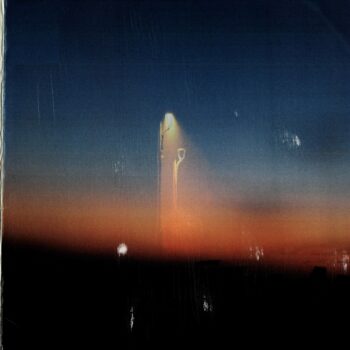
After fourteen years together, the reasons to stay can live in details small enough to miss: Fireflies in July, carnival lights, candlelight, a supermoon, an old truck glowing at the side of the road.
Brazilian singer/songwriter D’Clair gathers those flashes into “Lights,” an intimate, dreamy indie folk reverie born from a difficult season in his own relationship and the memories that kept pulling two people back toward each other. Glistening with lilting acoustic guitar, weightless atmospherics, and the artist’s own enchantingly warm, honeyed voice, the song holds doubt and devotion in the same luminous frame – illuminating the love that remains when certainty has begun to fade.
i’d give up forever to touch you
but there’s something else on your mind
maybe’s the way i mistreated you
when i was afraid of the light
Something else i guess
creeped its way inside
burning us close
dying stars collide
Atwood Magazine is proud to be premiering “Lights,” the title track off D’Clair’s forthcoming debut album of the same name, out this Friday, August 28, 2026.
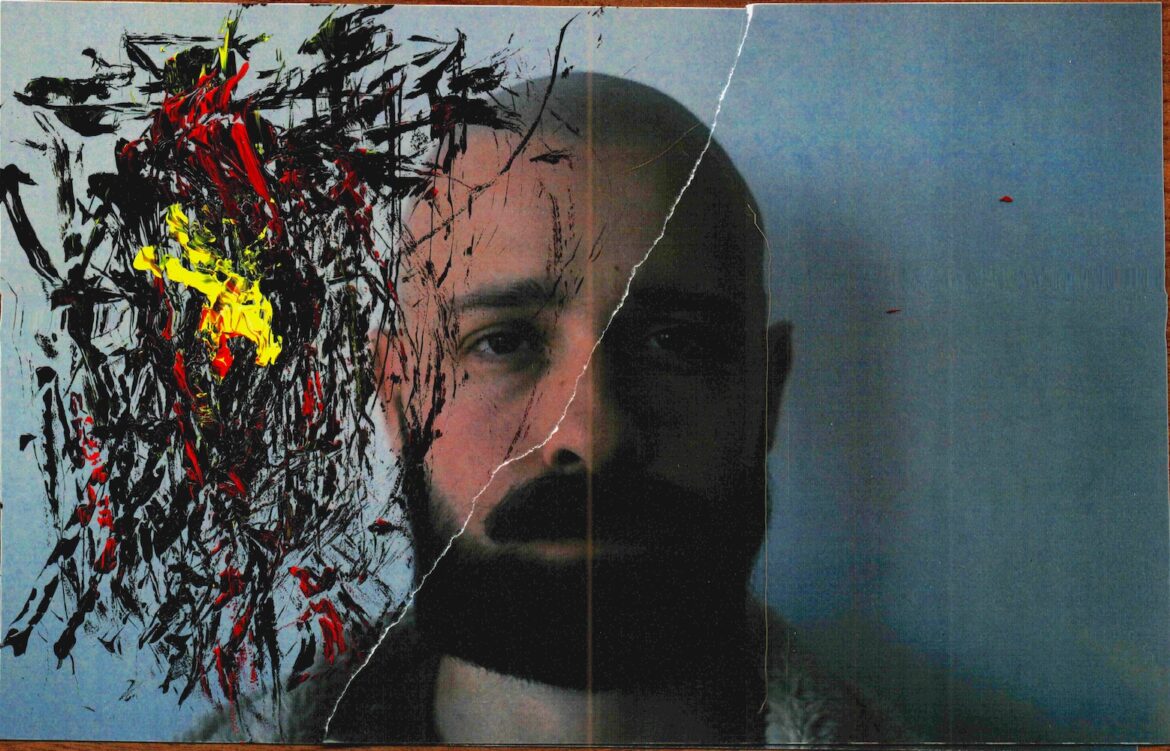
Behind D’Clair is Rodrigo Caldeira, a multidisciplinary songwriter and visual artist whose path to this music has stretched across countries, mediums, and identities. His early creative life took him through a Berklee College of Music summer program and later to Ireland, where he studied cinema and busked on the streets of Dublin, gradually developing an artistic language that moved through projects Tom’s White Garden and Tom Brando before arriving here.
That evolution carries real emotional weight. Caldeira describes his later work as Tom Brando as a period steeped in grief and deep sadness; D’Clair emerged as his answer to that chapter, an outlet built around looking forward, letting himself be seen, and connecting even when fear and overthinking threaten to get in the way. Music, photography, film, distressed prints, and physical textures all belong to the same creative world for him, each another means of giving shape to memory and making the imperfect worth preserving.
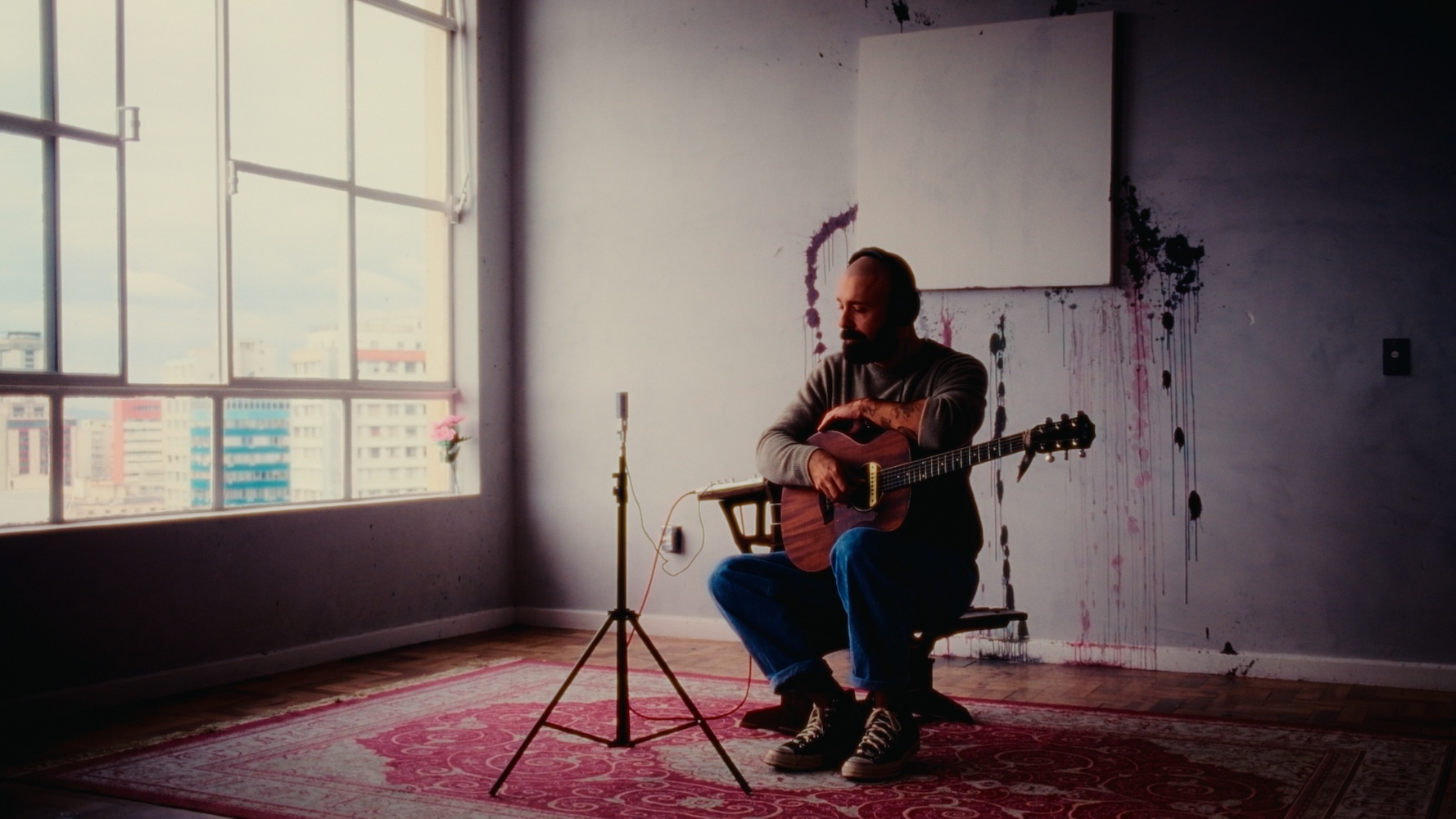
In “Lights,” memory becomes active – a way of reaching through the accumulated debris of a life together and seeing what still burns underneath.
“[It’s] a song about choosing love in the face of doubt,” D’Clair tells Atwood Magazine. “As distance and misunderstanding begin to erode a relationship, the narrator turns toward the memories, places and moments that first gave it meaning. Through recurring images of light, the song transforms remembrance into an act of hope and choice.”
The arrangement moves with the patience of that choice. An acoustic guitar gently establishes the pulse while ambient layers of piano, electric guitar, drums, and more gather around it, recede, and return, allowing the track to breathe and deepen without ever breaking its spell. D’Clair’s hushed, soulful voice sits at its center – close, exposed, and heavy with restraint – and the song ebbs and flows masterfully around him, swelling in all the right places while preserving the closeness that makes every confession land.
The song announces its intentions from its very first breath, opening with “I’d give up forever to touch you” – a direct homage to the Goo Goo Dolls’ “Iris,” and one D’Clair embraces knowingly. He calls the lyric a piece of “bumper-sticker poetry that carries a whole universe inside of it,” drawn to the way its devotion reaches beyond even death. In his hands, that reference does more than summon nostalgia: It places “Lights” in a lineage of songs willing to make love sound enormous, then immediately pulls that grandeur into the messier reality of a relationship under strain. The borrowed phrase becomes a threshold – a familiar declaration of impossible devotion leading into D’Clair’s own reckoning with fear, hurt, and the choice to stay.
There are traces of Bon Iver’s emotional granularity and José González’s acoustic brilliance here, but “Lights” also occupies the spacious borderlands inhabited by Ólafur Arnalds and RY X, where delicate instrumentation, ambient texture, and soft vocals become inseparable from the songwriting itself. D’Clair understands the power of leaving air around a phrase. Guitar notes linger. Atmospheres hover at the edges. His voice smolders rather than soars, drawing the listener closer until the smallest inflection carries enormous weight.
And the words give that intimacy plenty to carry. Early on, D’Clair offers one of the song’s most piercing admissions: “Maybe it’s the way I mistreated you / When I was afraid of the light.” It’s confession without self-exoneration. He acknowledges the hurt he has caused and recognizes the fear underneath it, allowing the song to reckon with how old patterns can infiltrate a partnership until two people struggle to recognize what brought them together. Rather than lingering in blame, “Lights” begins searching for a way out of that cycle.
The shift arrives through a remarkably simple physical gesture:
“I’ll step back and breathe
See the points of your feet
From right under me
Away from history
There’s just you and me.”
Step back. Breathe. Look again. D’Clair strips away years of accumulated history for a few seconds and brings the person standing in front of him back into focus. Love becomes the practice of paying attention – of recognizing another person apart from every argument, inherited reflex, and scar that has gathered around them.
From there, the song opens wider. Its recurring points of illumination rush through the chorus like fragments from a private film reel, each one carrying the emotional charge of an entire memory. The arrangement follows suit, rising and falling around those images with exquisite control. Nothing erupts simply for the sake of release; the beauty lies in how carefully D’Clair lets the tension loosen, little by little, until remembrance itself begins to sound restorative.
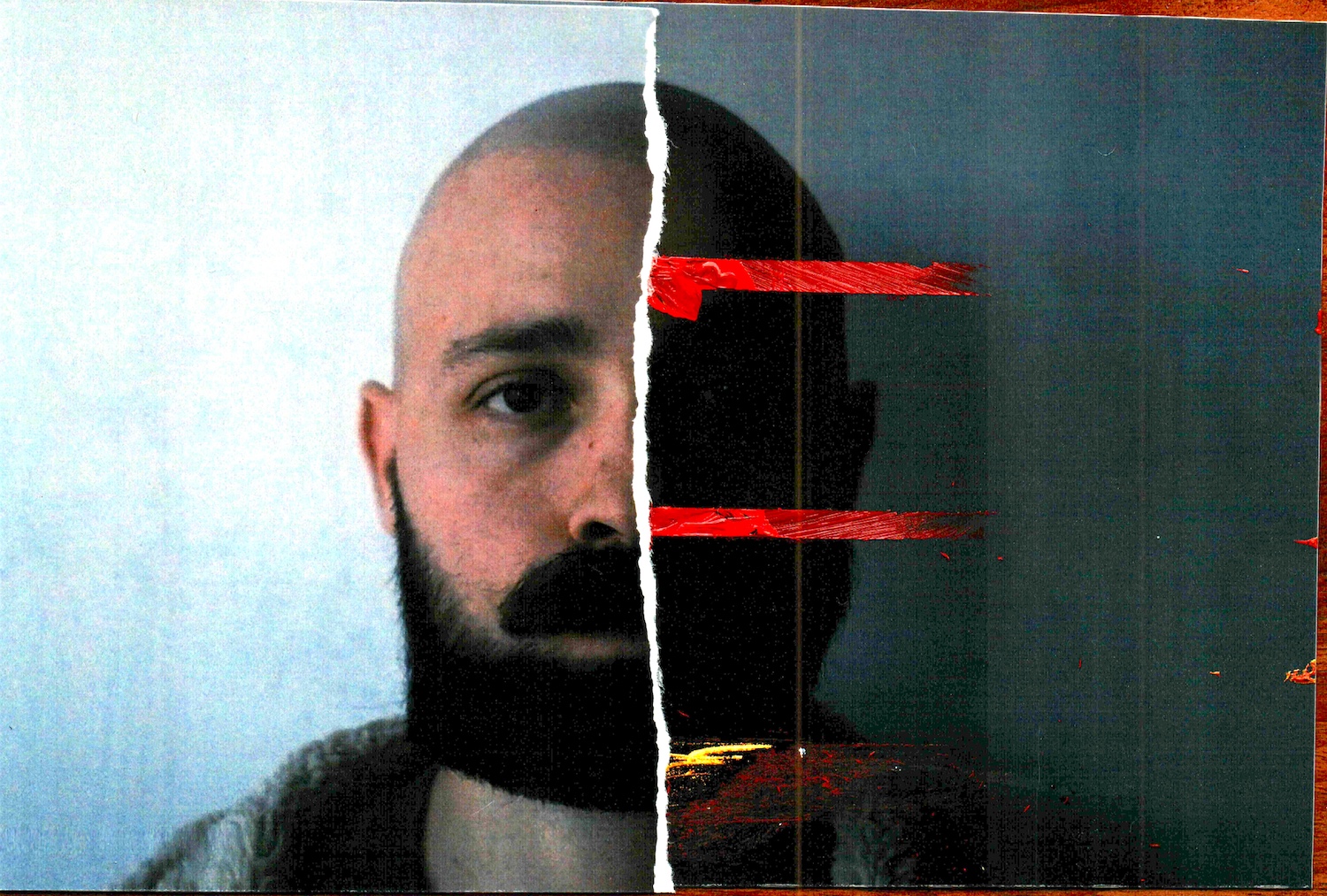
That same impulse expands across Lights, a six-song debut concerned with the places and people we carry after life has altered them.
“Wild” traces freedom and brotherhood through a cross-country drive from New York to San Francisco; “Gallows” wrestles with judgment and the damage done by demanding certainty; elsewhere, love, family, loss, and inherited history keep reshaping the record’s idea of home. Each song approaches that larger question from another angle: How do we keep moving forward while honoring what deserves to come with us?
For D’Clair, that wider journey still leads somewhere deeply personal: Lights is less a collection of answers than an invitation to step inside the imperfect spaces that shaped him. “I really hope [people] hear it as coming from a distant friend,” he says. “Someone who’s yearning for connection, with open arms, inviting you over for a dinner party so we can catch up! I feel like the album as a whole is an open invitation into my well-decorated, cracked walls, where the light finds its way in, and now finally finds its way out at dusk.”
“Lights” is the perfect doorway into that world because its answer begins with the smallest possible motion: Step back, breathe, remember. D’Clair trusts attention over certainty, allowing love to exist with its cracks intact and choosing to look once more at the reasons it mattered in the first place. His title track glows because the decision at its center is still difficult – and because choosing another person means infinitely more when doubt has already entered the room.
Atwood Magazine caught up with D’Clair to step inside the memories, relationships, creative histories, and questions of home illuminating his debut album. Read our full conversation below, and get lost in the radiant warmth of “Lights” – streaming exclusively on Atwood Magazine.
It’s a reminder, not just to the artist but to all of us, to recenter ourselves and reconnect with our roots – to look closely enough at the life we’ve built together to remember why we chose each other in the first place.
— —
:: connect with D’Clair here ::
— —
Stream: “Lights” – D’clair
A CONVERSATION WITH D’CLAIR
Atwood Magazine: Rodrigo, hello and thank you for your time! For those who are just discovering D’Clair today, what do you want them to know about you and your music?
D’Clair (Rodrigo Caldeira): Oh man… Thank you for the opportunity. I’m thrilled to be here. D’Clair, to me, means the death of neurosis in a way, haha. It’s all about putting it out there despite being afraid, overzealous, and just trying to connect. I hope it feels like an open canvas, all distressed and sprayed with textures of paint, where the listener can just throw themselves in and get lost. It’s about declaring who I am to the world.
Who are some of your musical north stars, and what are you most excited about the music you’re making now?
D’Clair: Glen Hansard was the guy who made me go after folk expression per se. I know he must be busking around heaven somewhere, and I miss his existence deeply. Damien Rice’s and Justin Vernon’s work inhabit my soul in ways I couldn’t even describe. In my later work as Tom Brando, I dwelled a lot in deep sadness. Grief was a huge part of my life back then.
D’Clair feels like life’s response from somewhere deep within me. It’s about looking forward and bringing the light that lives inside of me out, instead of hoping it finds a way in.
Your debut album LIGHTS began with you trying to understand what home really is. How do you feel this record introduces you and captures who you are as an artist today?
D’Clair: I feel like my later work was more individualistic. It felt like a language that only I could speak. I guess my home was like that for a good while, too. But a home changes through the relationships we build along the way. LIGHTS aims to open the door to this home. To let in whoever happens to live in this crazy folk neighborhood. It’s an invitation.
What does the title LIGHTS mean to you?
D’Clair: A reminder that light comes from within and from outside. I think we have to make some of it ourselves, but we also have to remain open enough to receive it from other people. It’s an equal effort with a brilliant response. Pun intended.
We’re premiering the title track today, which you’ve said came from a difficult season in your 14-year relationship, and the quiet moments that reminded you why you had chosen each other in the first place. What’s the story behind “LIGHTS”?
D’Clair: Man… fourteen years is some time. We’ve been through hell and back. I lost everything that ever meant something to me. She was always there for me. Like a lighthouse of some sorts. Love lives beyond the titles we use to try to contain such a huge world of feeling. I think it can be compared a little to faith. It only really becomes something when it’s put through something and still resists. It’s in the cracks. That’s where the light pours in.
I love the lyric, “maybe it’s the way I mistreated you / when I was afraid of the light.” What were you trying to capture there?
D’Clair: There’s an illness in familiar repetition. Sometimes it feels like a curse. We all have our mothers’ and fathers’ ghosts living inside of us in some shape or form. Those apparitions do have some fear of light.
The song keeps returning to these vivid images of light – fireflies, carnival lights, candlelight, fireworks, a super moon, an old truck on the side of the road. What do those images mean to you?
D’Clair: The small sources of light that surround us. I feel like they mimic a person. It could be a hug, shared silence (underrated af), a small touch, a smile, a gaze. An exchange of light that carries a world within itself. That’s how my partner brought me back from a well of darkness. The supermoon comes from a personal story. My mother was the most tense, executive-job-oriented person I’ve ever met. She always told me she’d die standing.
A few years after she was gone, my aunt told me that when my mother was young, she loved driving fast cars at night, guided only by the moonlight. It’s a crazy reminder that we can lose parts of ourselves along the way that perhaps we shouldn’t, haha.
The track also opens with the line, “And I’d give up forever to touch you” – which feels like a direct homage to The Goo Goo Dolls. Is it – and if so, can you share more about that reference and what inspired it?
D’Clair: It is indeed. Such an iconic opening line. It always felt to me like one of those pieces of bumper-sticker poetry that carries a whole universe inside of it. It transcends death, and that’s huge for me. It’s something I’ve always aimed to give, even when I’ve fallen short. Still an objective, though.
“Gallows” feels like one of the album’s most haunting songs, especially in the refrain, “Don’t you ever try to see lights in the gallows.” What’s the story behind this song, and what were you trying to capture in that image?
D’Clair: I mean, it’s all about judgment. Jury and executioner. I feel like my head goes there too often. Jumping to conclusions, trying to fill every possible void with certainty. For me, that’s death in itself. The light for sure doesn’t live there!
“Wild” feels like a road song, a brother song, and a home song all at once: “Oh brother, those wild horses were you and I.” What does that song mean to you now?
D’Clair: It does mean a lot. It’s a trip that my brother and I had planned since we were little boys: to drive across the U.S. from one end to the other, NYC to San Francisco. Normally, I’d attach the word “wild” to something almost like a demeanor, a way of being. But somewhere along that road, it became freedom.
“Kite” has such a striking image at its center: “Love for me is a pair of wings / and to you is a pair of rings.” What were you trying to understand about love in that song?
D’Clair: “Kite” as a whole is a marker in my life as an artist. It was born during my last project as Tom Brando.
We built and sank an entire house into a river to tell its story for its music video. I couldn’t be more literal than that.
If you fall in love, you risk sinking. You risk losing yourself. It’s a long way back.
“Empty Glory” closes the album with this searching question – “Did I use to kneel and pray before you?” – and it feels like the record ending in reflection rather than resolution. Why did this feel like the right final song?
D’Clair: I feel like “Empty Glory” as a whole tries to paint an image of distant familiarity. Blue blood, drenched halls, an invasion of some sort, and a soldier who feels like honour wasn’t a great paycheck.
It’s about losing battles. Sometimes there isn’t a good ending. A lot of times, actually. It’s about letting go of the result you expected. Some people never change and never will.
As a lyrically forward artist, do you have any favorite lyrics in these songs?
D’Clair: “The line is broken, tremor true / walls are drenched from the blue inside these veins / Oh, what a shame / to die without a name / I see a distant light / reminds me of your eyes.”
Do you have any definitive favorites or personal highlights off this record?
D’Clair: I do love “Gallows.” My amazing talented friend, producer and mixer Leo Tows, always brings up that special moment when we were laying down its vocals. What you hear is my first take, and a storm was brewing on the horizon while we were tracking. It was magical. I feel like a little bit of it spilled onto the record.
“Empty Glory” surely has its special place too. I remember writing it all in one sitting. It felt delivered, not written, haha.
Can you describe this record in three words?
D’Clair: Proud of me.
You’ve described LIGHTS as a small argument for staying with things a little longer. What does that idea mean to you in the context of this album?
D’Clair: Immediacy, man. Everything is twenty seconds now. Relationships tend to fall into the same category. It feels like we’re rushing through life, through relationships, through music and art. I want to be more present. I kinda just want to be.
I feel like art lives in those little spaces where we just are, and it’s so difficult to access that nowadays. I miss being bored.
Your work brings together folk, indie pop, photography, cinematic storytelling, and physical textures. How do you think about the visual world around D’Clair, and how does it connect to the music?
D’Clair: One of my best friends is a designer freak. He really showed me how interesting and artistic that kind of expression could be. My father deeply loved cinema, and it’s still a huge part of who I am.
I feel like the people around me whom I deeply admire leave traces that eventually become indistinguishable from what I do. So the visual world isn’t really how I’d like to present myself to the world. It’s more like who I am.
What do you hope listeners take away from “LIGHTS” and LIGHTS, and what have you taken away from creating this music and now putting it out?
D’Clair: I really hope they hear it as coming from a distant friend. Someone who’s yearning for connection, with open arms, inviting you over for a dinner party so we can catch up!
I feel like the album as a whole is an open invitation into my well-decorated, cracked walls, where the light finds its way in, and now finally finds its way out at dusk.
In the spirit of paying it forward, who are you listening to these days that you’d recommend to our readers?
D’Clair: Gracie Abrams’ “What if it’s Right?” has been on repeat for a while now. And Bloom Innocent by Fink… what an album. Ryuichi Sakamoto’s Insen has been in rotation as well.
— —
:: connect with D’Clair here ::
— —
Stream: “Lights” – D’clair
— — — —
Connect to D’Clair on
TikTok, Instagram
Discover new music on Atwood Magazine
© courtesy of the artist
 © courtesy of the artist
:: Stream D’Clair ::