Atwood Magazine is excited to share our Editor’s Picks column, written and curated by Editor-in-Chief Mitch Mosk. Every week, Mitch will share a collection of songs, albums, and artists who have caught his ears, eyes, and heart. There is so much incredible music out there just waiting to be heard, and all it takes from us is an open mind and a willingness to listen. Through our Editor’s Picks, we hope to shine a light on our own music discoveries and showcase a diverse array of new and recent releases.
This week’s Editor’s Picks features Ber, Mini Trees, Joviale, Now, Now, Just Penelope, and The Brook & The Bluff!

 follow EDITOR’S PICKS on Spotify

“Good, Real”
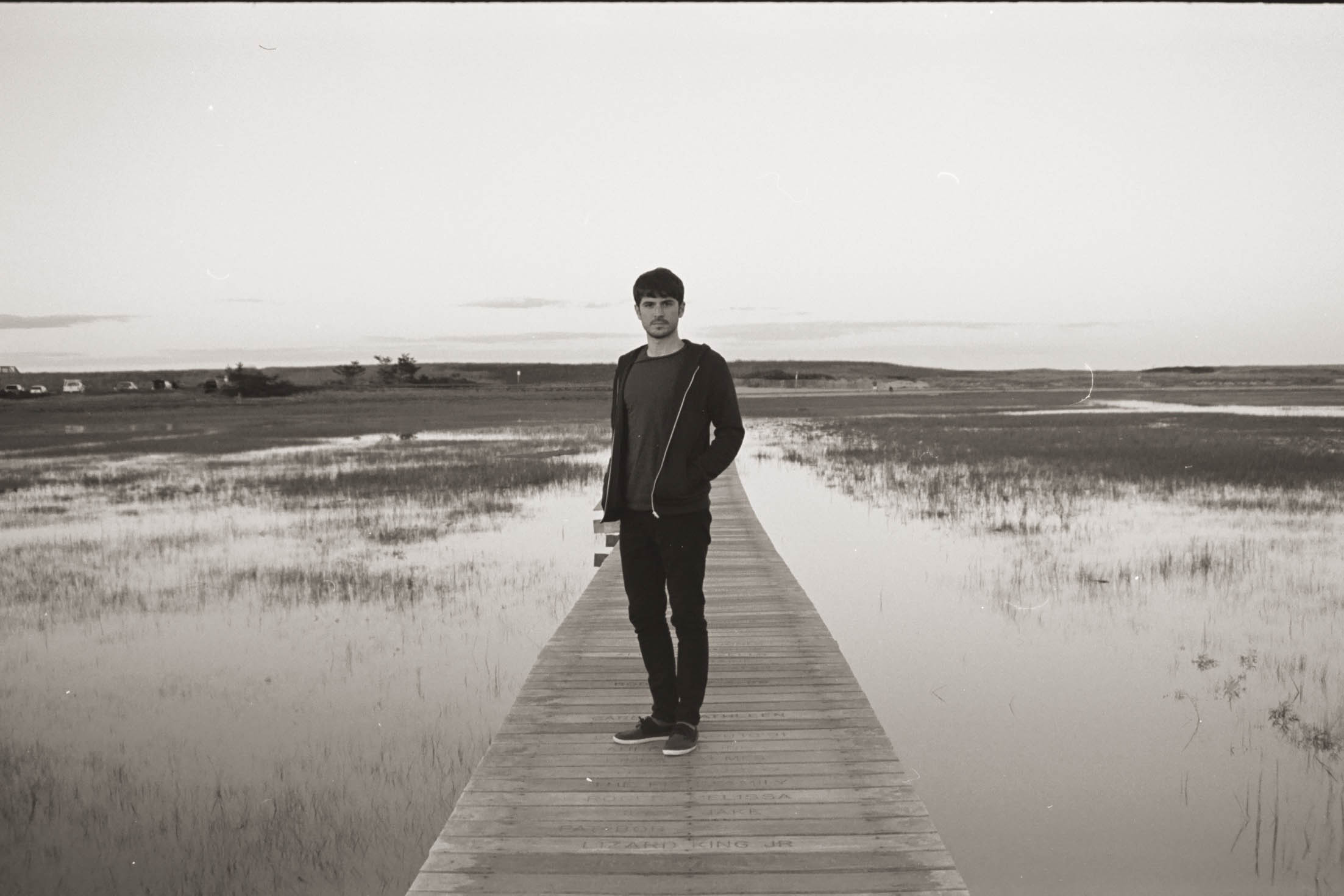
by BerAs intensely immersive as it is instantly intoxicating, Ber’s “Good, Real” is pure dopamine in song form – a euphoric, heart-swelling anthem that captures the dizzying rush of falling in love and the quiet ache of distance that comes with it. “It’s a gold rush, it’s a god-sent dream that woke me up,” she sings, her words hitting like sunlight through the blinds – inviting us to bask in her joy, to feel her fervor, and to join her on the intimate adventure of a lifetime.
It’s a gold rush
It’s a god-sent dream
that woke me up
So simple like
Your touch in the morning, oh
Before I go,
give me that
good, real love
Released October 24 via Nettwerk Music Group, “Good, Real” is the Minnesota-born singer/songwriter’s second single of 2025, and one of her brightest songs yet – a feel-good, feel-everything burst of warm, smile-inducing alt-pop joy designed to make you move, smile, and maybe text the person you love.
“‘Good, Real’ was written as I was falling in love in real time and experiencing the bittersweet odds of long distance,” Ber – full name Berit Dybing – tells Atwood Magazine. “Lyrically it’s a bit of a time capsule for me, capturing those moments of falling that felt like the first ray of sunshine after a long dark winter of loneliness, and wanting to hold on to them with a tight grip because those moments were always fleeting. It’s a pure, shiny love song at its heart.”
Black coffee
Some second-hand smoke
Lean on me when the train stops
Blue T-shirt from the charity shop
My grey eyes
The thread of your sweater
Your pupils kinda dilate
Oh, hold on, give me a minute
A second just to live it
‘Cause oh, I wanna feel it, uh
From its bold, buoyant bassline to the glittering chorus that begs to be sung at full volume, “Good, Real” radiates joy from the inside out. There’s an infectious sincerity in the way Ber delivers each line – “It’s a gold rush, it’s a god-sent dream that woke me up / So simple like your touch in the morning” – her voice riding the beat with the kind of open-hearted abandon that can only come from real happiness. It’s the sound of Ber giving herself permission to love freely, fully, and without irony.
It’s a gold rush
It’s a god-sent dream that woke me up
So simple like
Your touch in the morning, oh
Before I go, give me that good, real love
That emotional candor runs through all her work, but here it shines brightest. “It’s a love song!” she exclaims. “I wrote it at the start of a new relationship that was long distance… I was really doing my best to lean into the falling, and breathe in the good. We just knew we had to write a love song and lean into all the scary parts of that!”
Where some artists might guard their hearts, Ber hands hers over willingly. She calls “Good, Real” a breath of fresh air – and you can feel it in the production’s shimmer and lift, in the way each hook releases tension instead of building it, in the propulsive pulse that refuses to let up. It’s a celebration – pop music as renewal.
Hotel, black cab
Your hands on me
Sunset, bar tab
That look in your eyes
Highway I take to
The sound of your voice
Hold on, give me a minute
Just one second to live it
Oh, I just wanna feel it
Just one drop in the desert of me
That deep breath that I needed
Feels crazy to miss you when I’m leaving
Oh, before I go
Give me that good, real love
As she tells Atwood, “I hope it just makes listeners feel good. It’s a feel-good song. I hope people want to sing it in their shower, send it to their loves and say, ‘this is how you make me feel!’ The world needs more love and joy at the moment.”
Ber’s music has always felt unguarded and deeply human, but “Good, Real” is her most generous, and most playful, offering yet. It’s a love song about loving the love itself, about holding tight to the fleeting moments that make all the uncertainty worthwhile. With its glowing synths and golden-hour spirit, this track doesn’t just sound good; it feels good, real good.
It’s a gold rush
It’s a god-sent dream that woke me up
(Dream that woke me up)
So simple like
Like your touch in the morning
Oh, before I go (go, go, go)
Oh, before I go (go, go, go)
Yeah, oh, before I go
Gimme that good, real
“On Repeat”
by Mini TreesHypnotic and intoxicating, Mini Trees’ “On Repeat” pulls you into its spell before you even realize you’ve fallen under. A lush, dreamy haze of shimmering synths and smooth, spiraling guitars, the song feels like floating in a fog you don’t want to escape from – a wash of sound that seeps through the ears and down into the soul. “Got me on repeat, play the game so easily,” Lexi Vega sings, her voice equal parts surrender and strength, caught between clarity and confusion. It’s light yet heavy, dynamic yet tranquil, spirited yet vibey – a set of contradictions that make it all the more mesmerizing.
How long did you keep me in the dark
It felt so harsh when it fell apart
When you were fixed on the writing on the wall
It’s funny how we used to think
we could’ve had it all
It’s funny how we used to think
we could’ve had it all

Released ahead of Slow It Down (out November 7), “On Repeat” closes out Mini Trees’ sophomore album cycle with a smoldering, seductive rush of emotion and movement. It’s sleek and spacey, yet grounded by an ache that feels distinctly human – the weight of wanting what you know you shouldn’t. “‘On Repeat’ is about the feeling of being caught in a loop… drawn to something or someone you know isn’t good for you, but can’t quite let go of,” Vega tells Atwood Magazine. “It’s that intoxicating mix of hope and disappointment, the quiet tension that keeps pulling you back even when you know better.”
That sense of push and pull runs through every beat and breath. Written the same day Vega downloaded Ableton for the first time, the song’s hypnotic backbone came from a single serendipitous moment. “I stumbled on a random arp setting that completely transformed the synth chords I was playing,” she recalls. “That moment of discovery became the backbone of the song – steering it toward a more pop-forward, dance-driven sound that still carries emotional weight underneath. In the final version, we re-tracked the arp so it weaves in and out of the song, but if it weren’t for that simple discovery, I don’t think this song would’ve come together the way it did.”
Got me on repeat
Play the game so easily
Spiraling I’m out of control
Contact throw me back
I know you’d never feel like that
I’m all in for more than you know
It’s the same story, babe it gets boring
Wouldn’t waste your time,
oh unless you’re feeling lonely
And I know I never fit into the story
Tell yourself would’ve been could’ve been lovely
It’s a sound that feels both intimate and expansive, alive in its stillness. Vega croons over pulsing rhythms and soft waves of sound that never quite resolve, mirroring the cycles she’s trapped in: “It’s funny how we used to think we could’ve had it all.” The repetition becomes its own kind of catharsis – an admission, a confession, a sigh.
How long did you keep me in the dark
It felt so harsh when it fell apart
When you were fixed on the writing on the wall
It’s funny how we used to think
we could’ve had it all
Got me on repeat
Play the game so easily
Spiraling I’m out of control
Contact throw me back
I know you’d never feel like that
I’m all in for more than you know
Within Slow It Down, “On Repeat” embodies the album’s broader theme of transformation through tension – of being caught between what’s comfortable and what’s actually good for you. “So much of Slow It Down lives in that tension,” Vega reflects, “between staying in a version of your life that feels safe, and taking the risk to step into something that’s unknown but truer to who you are.” Her voice carries that conflict beautifully here, gliding across layers of reverb and rhythm with ease, even as she digs into the discomfort. The result is a song that feels like it’s perpetually in motion – cyclical, seductive, and spellbinding.
At its core, Slow It Down is a reckoning – a record of endings, unravelings, and rebirth. For Vega, it’s also a coming home to herself. She calls it her most vulnerable work yet, written in the wake of major personal and professional shifts: Leaving her label, ending her marriage, and coming out in the process of making the record. “Even when I thought I was writing from imagination, I was subconsciously telling the truth before I was ready to admit it,” she shares. Through ten tracks that blur the personal and the professional, Slow It Down captures the radiant courage of starting over, the ache of self-discovery, and the sweet, intimate freedom of finally choosing yourself. It’s an album about standing in the in-between and realizing that uncertainty can be its own kind of peace.
And it still haunts me
Turning up empty
Can’t make up your mind
So you’d rather keep me guessing
And I know I’m getting tired of confessing
Saying that we would’ve been
could’ve been something
How long did you keep me in the dark
It felt so harsh when it fell apart
When you were fixed on the writing on the wall
It’s funny how we used to think we could’ve had it all
That spirit of reckoning and renewal comes to a head on “On Repeat,” where Vega turns that self-awareness inward, tracing the patterns that keep her circling the same pain and still finding beauty in the loop. “On Repeat” lingers long after it ends, echoing like a thought you can’t shake. It’s the kind of song that demands surrender: To the loop, the longing, the lure of the familiar. Mini Trees may be asking herself to break free, but she makes staying stuck sound absolutely beautiful.
Got me on repeat
Play the game so easily
Spiraling I’m out of control
Contact throw me back
I know you’d never feel like that
I’m all in for more than you know
“HARK!”
by JovialeThere’s a fever running through Joviale’s “HARK!” – a sweat-slicked pulse that burns hotter the longer you listen. Smoldering, seductive, and unapologetically strange, this song hits like a spell you can’t shake: White-hot guitar strokes and an entrancing drumbeat swirl around Joviale’s commanding, all-consuming vocals as she chants, “Oh my! Oh my! Not even them mountains can stop you! Not even them angels can help you! Not even your prayers will save you!” The sound is hypnotic, sweaty, and stirring – a collision of power and vulnerability that feels both spiritual and visceral, ecstatic and elemental.
Oh my! Oh my!
Not even them mountains can stop you!
Not even them angels can help you!
Not even your prayers will save you!
I was born with Grace
True child of Sunday
My tongues my sharpest blade
I bet you wish you stayed
Hark are the angels!
I’m nor dream nor a fable
We plead to those unstable
Return us to our cradles
The North London multidisciplinary artist’s debut album Mount Crystal (out now via Ghostly International) is full of drama and daring, but “HARK!” might be its most visceral revelation. A fusion of sinister funk and serene majesty, it channels the tension between desire and danger that pulses through the record’s core. “‘HARK!’ is the point on the journey when I’m starting to hype myself up in the mirror after feeling sad,” Joviale (née Joviale Tshabola) tells Atwood Magazine. “Like you know what? I’m not sad, I’m f**ing pissed off actually!” That raw, fiery energy spills through every line, transforming grief into confidence, chaos into catharsis.

Co-produced with John Carroll Kirby and Jkarri, “HARK!” captures Joviale’s fearless experimentation at its fiercest. Michael Jackson’s Thriller was reportedly a studio staple during recording, and you can hear its spirit in the song’s kinetic groove and theatrical flair. “It’s so fun; there are no rules in melody in that song, I love how lawless it feels,” she says – and that lawlessness is exactly what makes it so alive. It’s as if Joviale is conjuring a ritual of release, summoning strength from sound itself.
Oh my! Oh my!
Not even them mountains can stop you!
Not even them angels can help you!
Not even your prayers will save you!
Hark are the angels!
I’m nor dream nor a fable
We plead to those unstable
Return us to our cradles
You’re my whole world…
I need to see you for what you are
I need to see you for what you are
(You’re my whole world)
That same daring, cinematic energy – that same freedom – radiates across Mount Crystal, a bold and wildly imaginative debut inspired by Prince, Kate Bush, and the surrealism of David Lynch’s Twin Peaks. Initially conceived as a musical play, the album unfolds like a cinematic odyssey – a metaphysical climb through Joviale’s own desire, danger, and desperation. What began as a surreal, theatrical concept became a vessel for self-realization, a reflection of her own evolution as a producer, composer, and performer.
“If I was a mountain, Mount Crystal is the name I’d want,” she explains. For her, this record is both research project and self-portrait: A study in control and chaos, precision and play. She describes her process as crystalline – slow, deliberate, and transformative. “Crystals are formed over a long time, and they are formed and reduced for many purposes. That’s how I would best describe my process.” It’s this balance between discipline and abandon that makes her artistry so magnetic. Each track feels like a scene in her own burgeoning mythology, culminating in a debut that’s as experimental as it is emotive, as unpredictable as it is precise.
“‘HARK!’ is supercharged, but not the center piece – that depends on your mood,” she says with a laugh, “but it’s lawless, and that’s the beauty of it.” That spirit of liberation defines both the song and the record as a whole. In a world full of restraint, Joviale’s debut feels like a declaration of freedom – a defiant exhale after years of quiet study.
“I need to see you for what you are,” she sings in hushed tones toward the end, every breath an unraveling between revelation and release. “HARK!” doesn’t just demand to be heard; it demands to be felt – a hypnotic blaze of funk, fire, and fearless self-possession.
“Talk to God”
by Now, NowIt’s hard not to love a song that sends shivers down your spine; that hits you like a ton of bricks; that makes you feel alive; that hurts in all the best ways. There’s a heat that radiates through Now, Now’s “Talk to God” – slow, simmering, and soul-stirring. The first track off the beloved Twin Cities duo’s surprise new EP 01 is dark, intimate, and all-consuming, the kind of song that leaves you breathless in its wake. Heavy drums pulse like a heartbeat, guitars burn slow and steady, and KC Dalager’s voice – husky, raw, and softly smoldering – carries the ache of someone wrestling with themselves in real time. “I notice every time I’m down / I stay down…” she sings, her confession spilling out like a prayer whispered through clenched teeth. “Now I talk to God at the window… I’m always sitting in silence, it’s just a habit.”
I notice every time I’m down
I stay down
Each time it’s coming around
I just stay down
‘Cause I don’t even like myself
How could anyone
After everything I’ve done
How could anyone
And now I talk to god at the window
Yeah, I know I go too fast
Then I move slow
I’m always sitting in silence
It’s just a habit
And now I talk to god at the window

Seductive, soul-baring, and brutally vulnerable, “Talk to God” feels less like a song and more like a reckoning – an emotional exorcism set to sound. It’s a brutally honest self-portrait painted in shadow and static, where pain and beauty coexist, tangled and inseparable. “This one is about a feeling of desperation and loneliness, but accepting and understanding why you feel that way,” Dalager tells Atwood Magazine. “Knowing that if you don’t like or accept yourself, no matter what anyone does it will never feel as though anyone cares about you enough. Because even that can’t and won’t fill that space where you lacking compassion for yourself has left a hole in your unconscious body mind.”
“There is a feeling of defeat and stuckness, but still longing to feel whole and complete. I do sit in silence most of the time since I rarely listen to music. Especially in the car where I spend a lot of time each day. Or on a walk. ‘God’ can be God or any spiritual entity or any energetic source or force (or the universe as a whole) that you reach out for in moments of desperation. Sonically, we were going for clear and classic and to the point. I had originally written this for KC Rae, but decided to use it for Now, Now instead.”
That self-awareness is what makes “Talk to God” so powerful. Its darkness isn’t aimless; it’s searching, restless, human. “The theme of this song is learning new ways to exist, while simultaneously having to unlearn everything you’ve ever known about yourself,” Dalager says. “There is a desperation and in some ways a sense of defeat with this song.” That push and pull – between despair and acceptance, self-loathing and self-love – forms the beating heart of 01, an EP that finds Now, Now reconnecting with their roots while facing their present selves without flinching.
I always think of the worst thing
That could happen
I never learned to give myself compassion
Now every word is coming back to get me
Echoing across the silence
Talking to myself
Oh heaven help me
Heaven help me
Now I talk to god at the window
Yeah, I know I go too fast
Then I move slow
I’m always sitting in silence
It’s just a habit
And now I talk to god at the window
Recorded back in their basement studio, 01 feels like a homecoming. It’s a return to the band’s core: Acacia “KC” Dalager and Bradley Hale, stripped of label pressures and rediscovering their shared rhythm. “01 is a bridge connecting our past to the present, and with an eye to the future,” Hale says. “It’s another lesson in trusting ourselves.” Across its four tracks, the duo explore themes of undoing and unlearning, peeling back layers of sound and emotion until what remains is raw, radiant truth.
And yet it’s “Talk to God” that sets the tone – and the temperature. It aches inside and out, every note steeped in longing, every silence heavy with reflection. The drums hit like an echo of the heart, the guitars shimmer like heat on the horizon, and Dalager’s voice becomes the axis around which everything spins. She isn’t just singing about desperation; she’s living through it, metabolizing it, and transforming it into something tender, something transcendent.
“Heaven help me,” she pleads, the line looping until it dissolves into itself. “Talk to God” doesn’t offer answers – it doesn’t need to. It’s enough that it feels true.
In the context of 01, “Talk to God” feels like the beginning of an unraveling – the first unspoken step toward healing, toward seeing yourself clearly again. It’s an act of unlearning, of surrender, of quiet reckoning. And in that stillness, Now, Now find something sacred: A reminder that even in the darkest corners of loneliness, connection – to self, to spirit, to sound – is still possible.
Now every word is coming back to get me
Echoing across the silence
Talking to myself
Oh heaven help me
Heaven help me now
I talk to god at the window
I go too fast then I move slow
I talk to god at the window
Heaven help me…
“June, July”
by Just PenelopeSweaty, searing, and unapologetically raw, Just Penelope’s debut single “June, July” hits like a sunburn you can’t stop touching. There’s an intimate heat to it – grungey but soft, sweltering yet strangely soothing – the kind of song that wraps you in warmth even as it scorches. “June, July, my shoes untied. I scraped my knee while you’re saving face,” frontwoman Ella Curiel sings, her voice teetering between resignation and rebellion. It’s unfiltered, unrelenting, and completely unbothered by polish – a stunning first strike from a band ready to make some noise.
June, July
My shoes untied
I scraped my knee
While you’re saving face
My guitar out of tune
I told her about you
I did not care then
As I do now
Blue and white bed sheets,
Cross stitch repeat
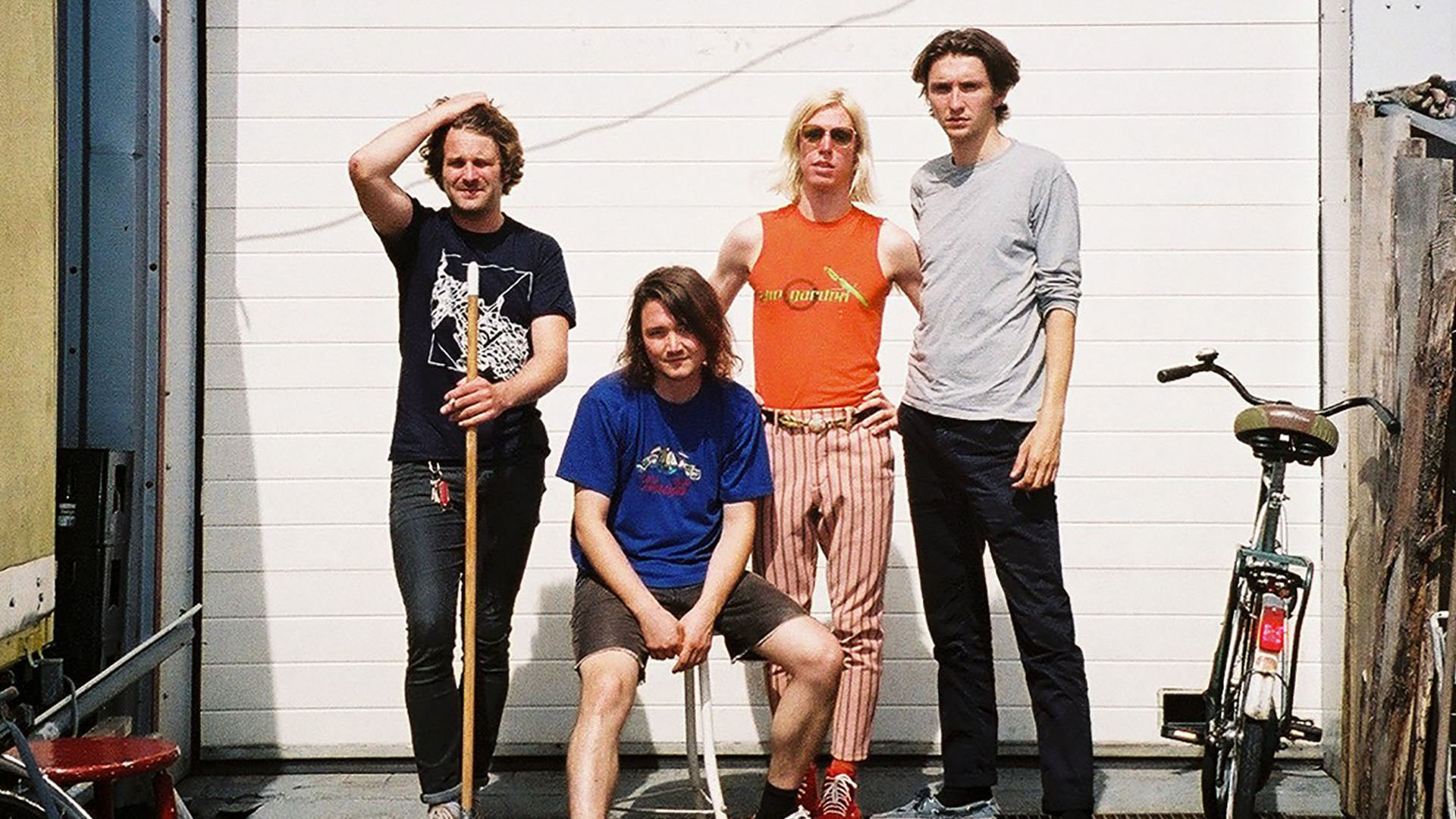
The Bloomington, Indiana trio – Curiel, drummer/vocalist Ethan Cantrell, and bassist Drew Goforth – formed out of the Jacobs School of Music, and they sound like they’ve already outgrown the classroom. “We felt it was unapologetically in your face, and we sort of like to be perceived that way,” they tell Atwood Magazine. That confidence radiates through every fuzzed-out riff and thundering drum hit, blurring the lines between indie rock and grunge with thrilling precision. It’s smoldering, reckless, and honest – a sound born in basement shows and blistering summer nights.
Co-produced by Curiel, Cantrell, and Nathan Allen, “June, July” was tracked with minimal mics and intentionally low fidelity, a choice that mirrors its lyrical ethos of chaos and consequence. “Sometimes, chaos has a certain swagger to it that makes you forget the consequences of your erratic actions,” Cantrell explains. You can hear that in every scrape and shiver of the track – in its walls of noise that collapse and reform, in Curiel’s voice as it strains against restraint. It’s a song that doesn’t just flirt with imperfection; it thrives in it.
The story behind “June, July” is as endearingly ordinary as it is iconic: Curiel got in a fight with her parents about going to a Wilco concert alone, went skateboarding instead, and came home with a scraped knee and a song. That teenage defiance bleeds into the music itself, turning frustration into catharsis, bruises into melody. When she sings about mistakes and not asking for forgiveness, it’s not a plea – it’s a declaration. “We wanted to be honest with ourselves that sometimes we do shitty things and we don’t always feel bad about it in the moment,” the band admits. “We felt it would be important to convey that honesty to our audience on our first single.”
If I had to pick one thing
It’s the lowball betting
Not the smell of my clothes
When they were on you
Blue and white bed sheets,
Cross stitch repeat
“June, July” captures the spirit of youth in all its messy glory: the freedom, the recklessness, the heat that makes you want to drive too fast with the windows down. Just Penelope take those fleeting moments of pain and release and turn them into something electric, unflinching, and strangely beautiful. Their debut doesn’t just mark the arrival of a new band – it feels like the start of a new era for indie and grunge alike.
“June, July” is a fever dream of youth and noise – unrefined, unforgettable, and alive with the kind of hunger that reminds you why music matters in the first place.
“Super Bowl Sunday”
by The Brook & The Bluff“Super Bowl Sunday” came 14 weeks early, and right on time. Fun, radiant, and irresistibly spirited, The Brook & The Bluff’s latest single is a charming dose of sonic sunshine that’s arrived just as we enter the darkest stretch of the year (petition to end daylight savings, anyone?). It’s the kind of song that lifts your head toward the light and makes you feel something again – a smile-inducing indie rock daydream drenched in heart and heat, and bursting with life.
The stars were hanging
like a blanket on the night sky
I’m wide awake, watching
satellites float by
I spend my years
picking fakes with a keen eye
Close the blinds
when the world feels tight
Am I just waiting for the end times?
The world is burning, I’m just inside
Or do I wanna see the sunrise?
Paid off ’cause I can never sleep right

The Nashville-based quartet channel pure blue-sky revelry here, trading melancholy for motion and introspection for release. “Do you wanna throw it all away? Find a place to feel something,” frontman Joseph Settine sings, his voice aching with urgency and hope in equal measure. The band’s chemistry is electric – guitars shimmer and churn, drums crash and glow, and harmonies soar like sunlight through fog. It’s cathartic, endearing, and endlessly replayable: a track that’s as exhilarating as it is emotionally grounding.
Do you wanna throw it all away?
Find a place to feel something
Or are we standing on our last leg
Running in circles for nothing?
“‘Super Bowl Sunday’ is a song about falling back into a box that feels comfortable, resisting growth and staying stuck, mostly out of being plain old scared,” the band tell Atwood Magazine. “It’s looking at your life at a crossroads and saying something insane like, ‘I’d rather watch the game with the boys,’ instead of making a real decision. It’s all of that avoidance, covered up with some rippin’ guitar.” That juxtaposition – triumphant music paired with self-reproachful lyrics – is part of what makes The Brook & The Bluff so special. They’ve always been masters at disguising heartbreak in beauty, but here the balance feels sharper, more deliberate, and more alive than ever.
The single marks the first taste of the band’s upcoming fifth album Werewolf (out March 6 via Dualtone Records), a record they describe as a return to their rock and roll roots and the raw, live energy that built their foundation. “We wanted to come out of the gates really hot, so we picked the most urgent feeling song of the bunch to lead the charge,” Settine explains. “The whole idea behind this record was to bring the same energy we bring to our live shows to every song. There really isn’t a more fitting way to introduce Werewolf than with ‘Super Bowl Sunday.’”
“We felt like [it] had that crazy first punch feel that’s maybe a little shocking,” he smiles. “It’s a great fit narratively because it is mostly just self-reflection, I was trying to look at my role in my life falling apart, and honestly I was a piece of sh*t about a good bit of it.”
The stars were hanging like a blanket on the night sky
I’m wide awake, pull the wool up over my eyes
I spend my years saving face and keeping inside
Scared of a change and what it might feel like
Am I just waiting for the end times?
The world is burning, I’m just inside
Or do I wanna see the sunrise?
Paid off ’cause I can never sleep right
At its core, Werewolf is about rediscovery – a reflection of the band finding themselves again after nearly a decade of constant motion. Settine wrote through heartbreak and reinvention, pulling together the threads of loss, identity, and renewal into a record that thrums with life. “Werewolf is about us finding ourselves again collectively, figuring out after three albums and two EPs what we really wanted to be moving forward – and the answer was a rock band,” he says. “The lyrics and the story deal with a lot of things I have often written about – the self-reflection and sometimes self-denigration cycles that I spin in and out of, leaving a decade-plus long relationship and starting over, all of the heartbreak and grief that comes with that, and even some of the remembrance of what was great, or the hope of something new. It all translated into this electric and pulsing batch of songs that is, I think, our most alive feeling project yet.” That clarity radiates through every riff and refrain here, where the band’s exuberance becomes a kind of catharsis all its own.
“Super Bowl Sunday” captures that spirit in full. It’s loud and lively, but never shallow – a song that holds its optimism close to the ache it came from. “You know that living’s such a hard thing, loving something that you can’t change,” Settine sings, his voice carrying the weight of acceptance. There’s heartbreak beneath the gloss, and that’s what makes it so human.
Do you wanna throw it all away?
Find a place to feel something
Or are we standing on our last leg
Running in circles for nothing?
You know that living’s such a hard thing
Loving something that you can’t change
Are you gonna throw it all away?
But it was Super Bowl Sunday
It’s a soundtrack to renewal – a reminder that even in our avoidance, we’re still growing, still learning, still moving toward the light. Super Bowl Sunday isn’t just an anthem for the moment; it’s a burst of warmth for the winter ahead, and a damn good reason to believe that rock and roll – and everything it stands for – is still very much alive.
Because in the end, you don’t have to throw it all away to feel something – sometimes, all it takes is a great song.
— — — —

Connect to us on
Facebook, 𝕏, Instagram
Discover new music on Atwood Magazine
Editor’s Picks
follow EDITOR’S PICKS on Spotify