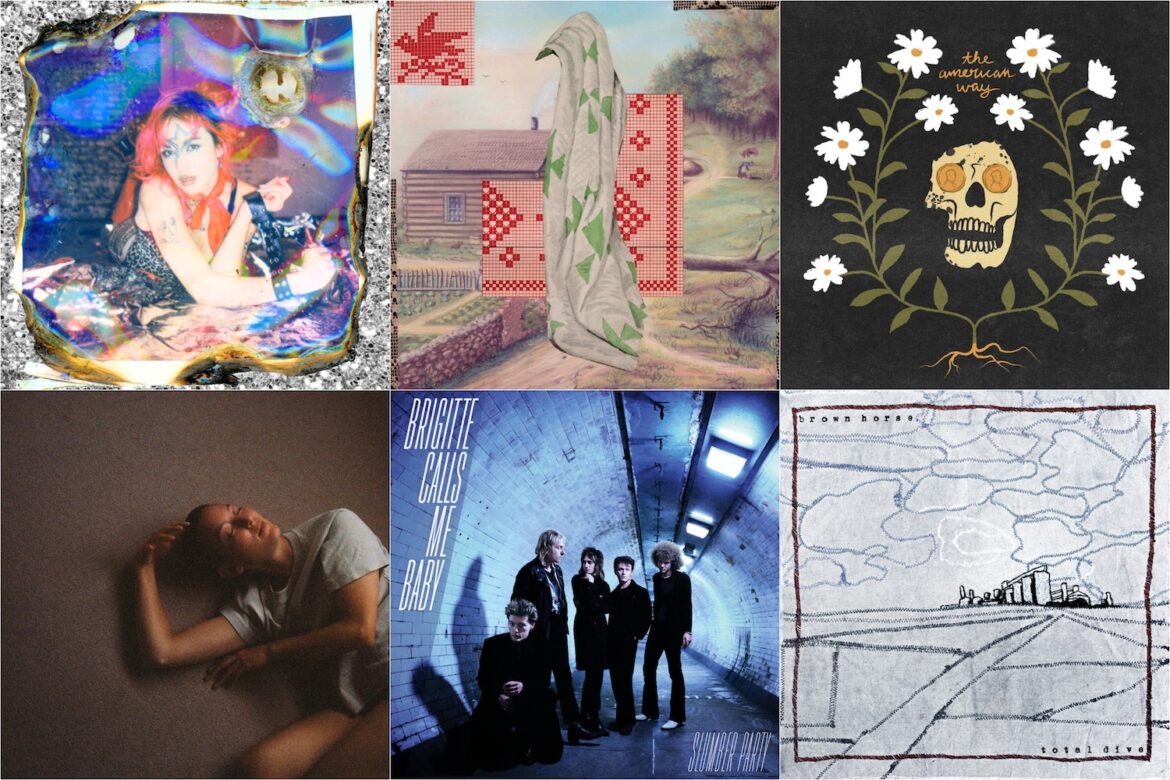
Atwood Magazine is excited to share our Editor’s Picks column, written and curated by Editor-in-Chief Mitch Mosk. Every week, Mitch will share a collection of songs, albums, and artists who have caught his ears, eyes, and heart. There is so much incredible music out there just waiting to be heard, and all it takes from us is an open mind and a willingness to listen. Through our Editor’s Picks, we hope to shine a light on our own music discoveries and showcase a diverse array of new and recent releases.
This week’s Editor’s Picks features MARIS, Brigitte Calls Me Baby, midori jaeger, Brown Horse, Hayden Everett, and Happy Landing!

 follow EDITOR’S PICKS on Spotify

“Body Is on Fire”
by MARISElectric desire isn’t subtle. It doesn’t whisper politely from the sidelines – it pulses, it prowls, it takes up space. On “Body Is on Fire,” MARIS leans all the way into the heat, pouring her full self into a song about wanting someone so badly your skin feels lit from within. It’s the kind of attraction that short-circuits logic and floods the senses: Playful, sweaty, a little dangerous, and completely, unapologetically alive. Over soaring synths and pounding, sweat-slick beats, she sings, “Hold my arms, pin me down, my body is on fire, come on, baby, put me out,” turning physical urgency into a euphoric pop eruption that’s as intentional as it is intoxicating.
Hold my arms
Pin me down
My body is on fire
Come on, baby put me out
“‘Body Is On Fire’ is a cathartic exploration of being so attracted to somebody your skin feels like it’s on fire. The only way to put it out is making out and getting sweaty,” MARIS tells Atwood Magazine. “I wanted this song to feel reckless in the best way, like when you stop overthinking and just let your body take over. It’s playful, sweaty, a little dangerous, and totally honest.” That honesty is what elevates the track from steamy to striking: This isn’t coy seduction or coded longing – it’s bold, embodied, and empowered. Even when she teases, she holds the reins. “It’s just one of those songs when you’re so horny that you feel like your skin is on fire and you need to take all of your clothes off… that’s all I’ll share here,” she laughs, keeping the mystery while owning the flame.
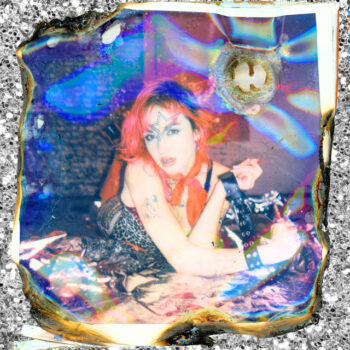
Produced by earwulf (Marshmello, Charli XCX, Ava Max) and released January 30th, “Body Is on Fire” arrives as the first glimpse into MARIS’ new era – one that feels sharper, louder, and more unfiltered than ever before. The LA-based artist has spent the past few years building a glittering, queer-charged pop universe, earning praise from Rolling Stone, Paper Magazine, and more outlets while cultivating a fiercely loyal fanbase. Atwood previously hailed her as “an explosion of sound and color” with “a voice like a lightning bolt and a heart full of queer longing,” and that voltage is only surging higher here.
“I’m always working to supply cathartic, energetic pop music to soundtrack our lives!” she says, citing a diverse array of north stars that includes everyone from Queen and Prince to Amy Winehouse, Frank Sinatra, and Stevie Wonder. That lineage of theatricality, groove, and vocal bravado runs wild through the chorus. She doesn’t just sing it – she detonates it. When asked how she bottles that reckless energy, her answer is simple and perfect: “Wailing my face off on that chorus!!” And it shows: Each refrain climbs higher, hotter, more breathless than the last, until the repetition of “Body is on fire” feels less like a hook and more like a chant on a packed dance floor.
I might crash out
One second, you pull me into you
Then you push me out
Caught feelings faded
But baby, I’m stone cold sober now
And I still feel the same
I’m going up in flames
Why water down
The sense of danger
No stranger to me
You’re in the house
It might be messy, but you know
How hot I take it now
Burn me up again
Treat me like oxygen
There’s tension in the verses – “Caught feelings faded, but baby, I’m stone cold sober now / And I still feel the same, I’m going up in flames” – that gives the song depth beyond pure lust. Beyond a fleeting spark, this is about wanting someone even when the haze clears. MARIS sings about craving the danger instead of watering it down, fully aware of the mess and willing to dive in anyway. That self-awareness – that refusal to dilute intensity for comfort – is what makes “Body Is on Fire” feel so alive.
The chorus hits like a true flashpoint. Synths swell and surge beneath her, bright and breathless, electricity climbing the spine as the beat tightens its grip. It’s a full-throated release: MARIS belts hot on the mic, her voice unfiltered, flushed, almost feral in its urgency. The production blooms outward with each repetition, layers stacking, tension snapping, until the hook becomes a radiant crescendo you can feel in your chest. The entire moment is incandescent – sweat, synth, and surrender colliding in one breathtaking rush.
Hold my arms
Pin me down
My body is on fire
Come on, baby, put me out
Pull my hair
Kiss my mouth
My body is on fire
Come on baby put me out
Body is on fire
Body is on fire
Body is on fire
Baby put me out
For MARIS, who has long championed yearning and queer euphoria in her music, this track feels like the next logical inferno. Less tentative crush, more full-body combustion. It’s an invitation – not just to listen, but to sweat, shout, sing, and surrender.
“Body Is on Fire” doesn’t smolder – it roars. It’s sensual without apology, theatrical without excess, euphoric without losing its edge. MARIS has always known how to light a match; here, she sets the whole room ablaze, striking hard enough to burn the walls down.
“Slumber Party”
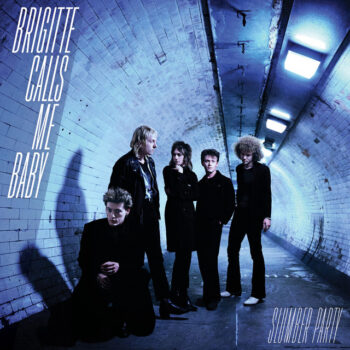
by Brigitte Calls Me BabyIsolation has a way of disguising itself as comfort – until the walls start to close in, and leaving the house feels like its own impossible task. Brigitte Calls Me Baby stare straight into that spiral on “Slumber Party,” a song about the people who retreat inward and ruminate so long that connection begins to feel out of reach, even when it’s right outside the door. It’s a sharp, human premise – one that turns everyday avoidance into something cinematic, dramatic, and piercingly relatable, made all the more potent by how urgently the band deliver it.
Catchy, clean, and made for repeat listens, “Slumber Party” opens with a radiant guitar lick that snaps into focus and refuses to let go. From there, the track moves with purpose – each section tightening the tension and raising the voltage until it bursts, once more, into that intoxicating riff and Wes Leavins’ emphatic refrain, “That’s what makes it harder.” The line lands with chest-hitting force, not because it’s vague, but because it’s specific: Shame is public, loneliness is private, and sometimes the hardest part is knowing you’re seen.
I thought I told you
No excuses to stay home
Too bad it’s Friday
There will be people you know
What if I was there knocking on your door
Would you let me in or would you ignore?
Oh everyone knows
And that’s the part that makes it harder
I bought blue velvet on a dvd
I brought it to the slumber party
Oh oh oh everyone knows
that’s what makes it harder
Leavins puts it plainly: “I wrote that song thinking about the type of people who isolate and ruminate, to the point where it becomes a chore to leave the home.” That truth runs through the lyrics in bright, unsettling detail – the push to go out, the pull to stay in, the ache of possibility just down the street: “Happiness is just a street away / Inside of your home address.” Brigitte Calls Me Baby frame connection as an invitation – “What if I was there knocking on your door, would you let me in or would you ignore?” – and turns the fear of answering into the hook’s central wound.
Happiness is just a street away
Inside of your home address
And that feeling you’ve been looking for it waits
And after all that’s all you have to do
What if I was there knocking on your door
Would you let me in or would you ignore?
Oh everyone knows
That’s the part that makes it harder
I bought blue velvet on a dvd
I brought it to the slumber party
Oh oh oh everyone knows
that’s what makes it harder
Released in mid-January as the lead single off Brigitte Calls Me Baby’s forthcoming sophomore album Irreversible (out March 13 via ATO Records), “Slumber Party” is the first flare in a new chapter for the Chicago band – vocalist Wes Leavins, guitarist Jack Fluegel, bassist Devin Wessels, and drummer Jeremy Benshish – following their 2024 debut The Future Is Our Way Out. That record made their mission clear: big feelings, bigger questions, and rock songs that refuse to flatten their edges. With Irreversible, they’re doubling down on the same commitment – to drama that feels physical, to vulnerability without irony, to a live-wire intensity that hits hardest when it’s honest.
Produced by Yves Rothman and Lawrence Rothman (Blondshell, Yves Tumor) and recorded live at Rothman’s home studio, Irreversible was shaped by motion – written largely on the road, tested in real time, and sharpened night after night onstage. Bassist Devin Wessels says “Slumber Party” was already built in the wild before the band ever hit record: “‘Slumber Party’ had already taken on a life of its own by the time we brought it into the studio. As a regular staple in our sets, the song evolved over months of touring, informed in part by audience reaction. We worked to capture as much of that on-stage energy as possible in the studio.” That raw momentum is audible – the song doesn’t drift; it drives.
The chorus is the flashpoint: guitars gleam, the rhythm section locks in, and Leavins’ voice cuts through with a feverish clarity that makes the lyric feel inevitable. Each return to “That’s what makes it harder” hits with more weight – not because the band pile on theatrics, but because they commit to the emotion already inside the words. Even the title carries bite: “Slumber Party” sounds innocent until it doesn’t, a social scene turned pressure cooker, a night in turned into a test of whether someone will show up for you – or whether you’ll let them.
With Irreversible arriving March 13 and a North American headline tour launching this spring, Brigitte Calls Me Baby are meeting their moment head-on – louder, more dialed-in, and more fearless in the way they turn inner chaos into something you can shout back. “Slumber Party” captures the band’s rare gift in full: Making isolation feel vivid, making longing feel loud, and making the struggle to step outside feel like a story worth singing at the top of your lungs.
Oh that’s what makes it harder
That’s what makes it harder
Oh that’s what makes it harder
What once was out of reach
Came to me tonight
If this is the holy dream
I wanna see the light
That’s what makes it harder
“exasperate”
by midori jaegerHeartbreak doesn’t always collapse inward; sometimes, it thrums. On “exasperate,” midori jaeger captures the fevered aftermath of pushing someone to their limits – and pushing yourself, too – until something has to give. The London-based cellist and songwriter builds the song around a restless pulse, tracing the frantic space between regret and resolve, between wanting the unfamiliar and mourning what’s been lost. “I want something unfamiliar, unpredictable / Who do you let your guard down for?” she sings, voice close and urgent, as if the question has only just occurred to her and already refuses to leave.
Tell me you didn’t feel it
Soft feathers in that tiny room
Dark stain on the ceiling
I thought of climbing up
and looking through
I want something
unfamiliar, unpredictable
Who do you let your guard down for?
Oh today I spoke for hours to no-one

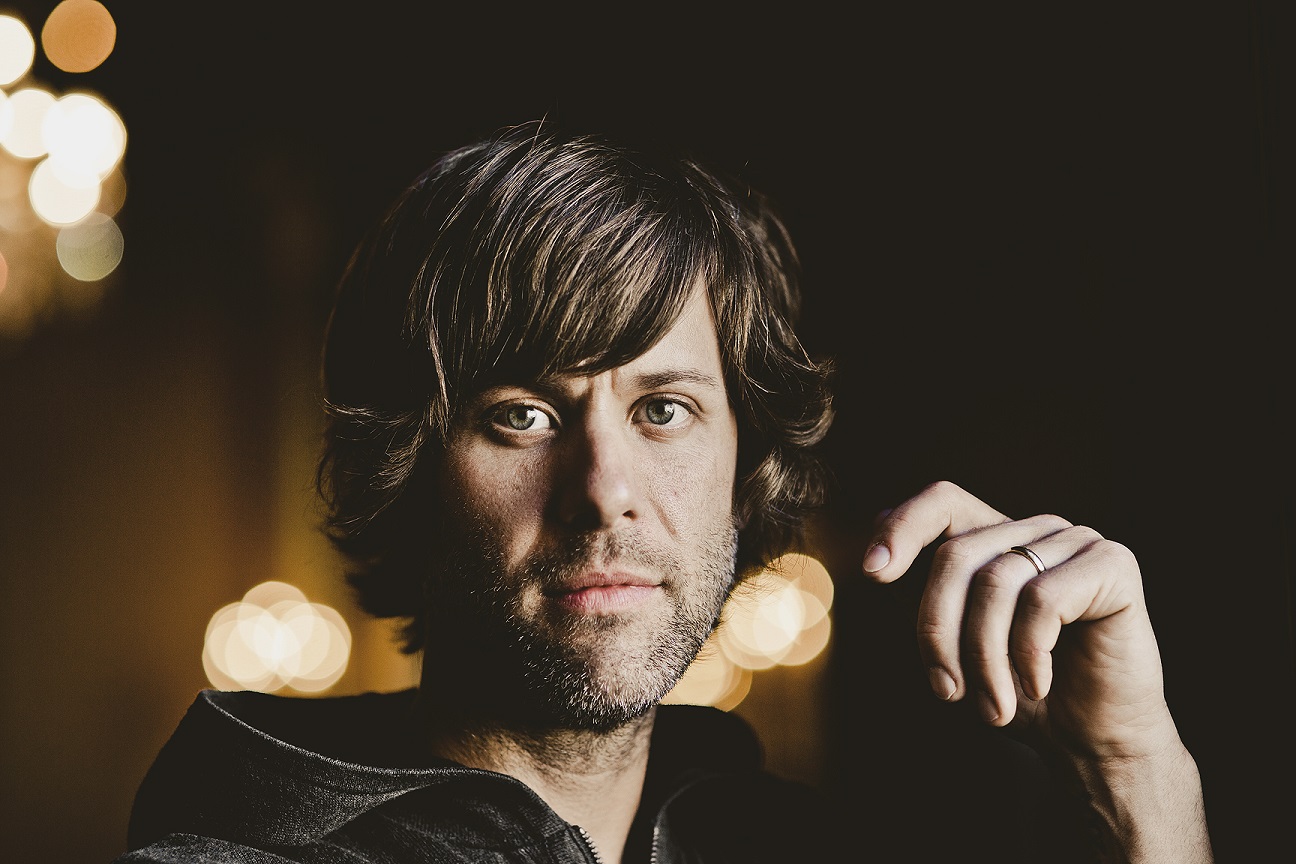
Released as the second single from her forthcoming EP (Un)planted, out March 9, “exasperate” offers a striking glimpse into a project rooted in upheaval and redefinition. Born in Japan, raised between Tokyo and the UK, and classically trained at the Royal Academy of Music, jaeger has long wrestled with ideas of uprooting and replanting – cultural, romantic, creative. (Un)planted marks her most comprehensive statement yet: Music written in the immediate aftermath of a long-term breakup, recorded over ten intense days in Lisbon, and shaped by a desire to create something that sounds like nothing else. “I intentionally try to make music that doesn’t sound like something that already exists,” she says – and here, that intention feels fully realized.
The origin of “exasperate” is as visceral as the track itself. “I improvised the music for the song at the cello in one go during an intense period of loneliness and change,” jaeger tells Atwood. The word itself lingered in her mind – the idea that she had somehow driven her former partner to their breaking point. “To exasperate somebody is to push them to their limits,” she adds. “This song is about knowing you did that, but also knowing it was true to who you are. Exasperated by the overpowering urge to break away from old patterns, to so desperately want the new at any cost, but to feel overwhelming regret for things lost, this song expresses the incessant pull of the unknown against the push of the familiar.”
Where do my hands go?
I’ve gotta feel you joining me now
Join me when my fingers fall
Carry my body like a doll
Fallen tree trunk in your
Exasperated arms
“Although I knew it wasn’t exactly true, I was pondering and imagining this extreme narrative where my actions alone had driven my ex to the point of exasperation.” That spiraling self-interrogation fuels the song’s tension; it never settles into certainty, only motion.
And motion is everything here. Electronic textures and acoustic resonance melt together in a percussive, staccato dreamscape that feels both bodily and otherworldly. Claps land like punctuation. Synths flicker in and out of the cello’s woody grain. The rhythm doesn’t drift – it pulses, nervous and alive, as if mirroring the mind replaying old conversations at 2 AM. There’s a lightness to it, too – an organic buoyancy that keeps the song from collapsing under its own weight. It’s a breathtaking, inescapably frenetic three-minute whirlwind: jaeger sweeps you up in a storm of feeling and places you back down gently, a little shaken, a little clearer.
I’ll never know what that note said
Bear your needles on a page
I’ll leave this door wide open
To remember how you filled my days, oh but now
I want something unfamiliar, unpredictable
Who do you let your guard down for?
Oh today I spoke for hours to no-one
Where do my hands go?
The chorus cuts deepest. “Carry my body like a doll / Fallen tree trunk in your / Exasperated arms.” The imagery is raw and strangely tender at once – the self rendered both fragile and heavy, uprooted and offered back. That language resonates even more when viewed through the lens of (Un)planted, a project jaeger describes as being “all about being uprooted.” The cello, once a tree itself, becomes an emblem of that transformation: Dug from the soil, shaped into song, held against the body. She sheds old patterns and old certainties, turning grief into groove.
I’ve gotta feel you joining me now
Join me when my fingers fall
Carry my body like a doll
Fallen tree trunk in your
Exasperated arms
For jaeger, songwriting is intensely private. “I’m very private in my process and don’t share anything until it’s done,” she explains. That intimacy radiates here. “Exasperate is about the urge to break away from old patterns, to so desperately want the new at any cost, but to feel overwhelming regret for things lost… But it’s also about knowing that you ultimately had to do those things to be yourself.” The track doesn’t resolve that tension – it inhabits it. Regret and self-recognition share the same breath.
As the first part of a double EP release, (Un)planted reintroduces jaeger not just as a classically trained cellist but as an artist fully entwined with her instrument and her history. Where her previous EP See Touch Kick And Sweat explored deeply personal terrain, this new body of work speaks more explicitly to cultural identity and displacement – to replanting oneself in new soil, again and again, and choosing to grow anyway.
“Exasperate” may begin in heartbreak, but it doesn’t end there. It culminates in release – in the catharsis of naming what hurt, of feeling the push and pull of the unknown, of daring to be uprooted. midori jaeger has created something singular here: A world unto itself, percussive and human, feverish and tender. It’s more than a song about exasperation. It’s about the cost – and the necessity – of becoming yourself.
“Twisters”
by Brown HorseA long stretch of highway can make a person confront themselves. In “Twisters,” Brown Horse capture that suspended headspace – the strange in-between of motion and reflection, where the radio hums, the moonlight pools in the backs of cars, and everyday images start to glow with something heavier. Written by lead guitarist Nyle Holihan, the band’s new single wrestles with isolation, repetition, and the quiet dread that creeps in when you’ve been staring out the window too long. “I like the voices on the radio / I like the feeling of changing lanes,” Patrick Turner sings at the outset – a gentle confession that slowly unravels into something far more combustible.
I like the voices on the radio
I like the feeling of changing lanes
Moonlight pooling in the backs of cars
Clothes drying on a wire fence
Corridors
Rambling capillaries
A gaping hellmouth by the door
Takes all day for the tears to start falling
When they hit the ground
they become nothing at all
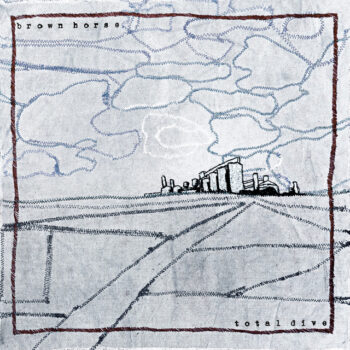
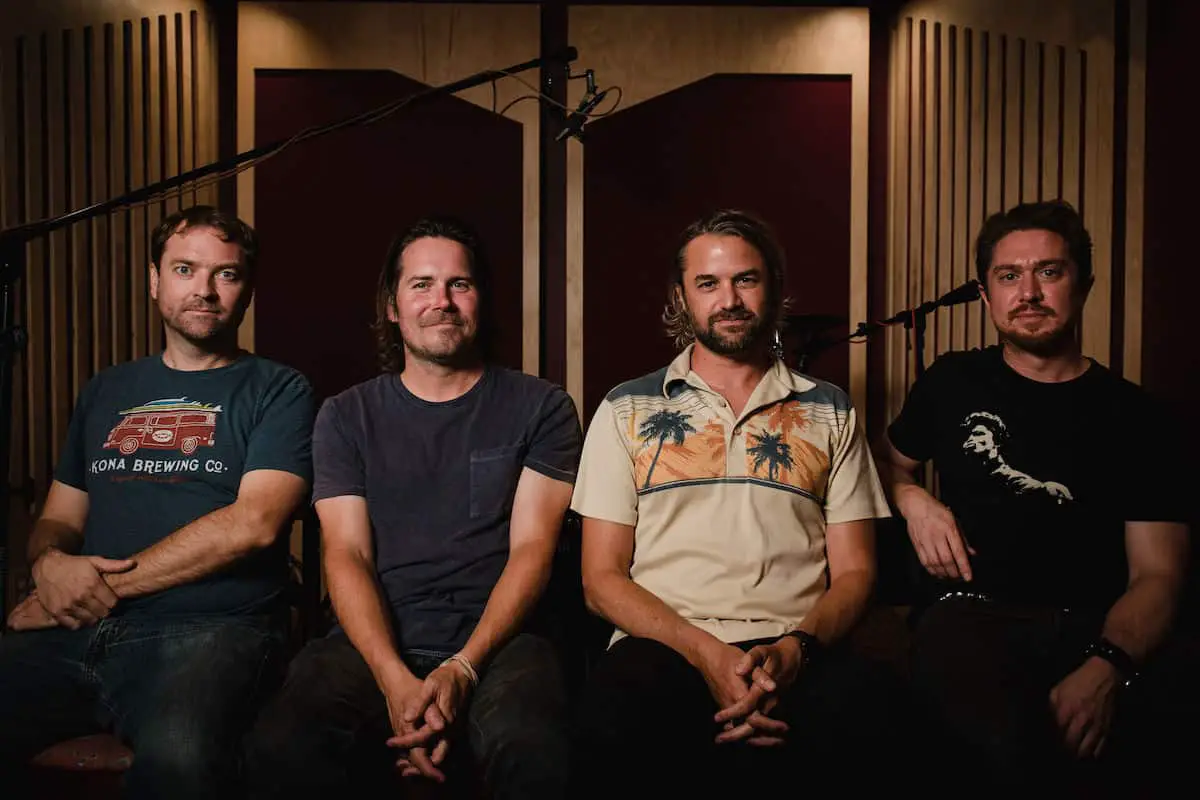
Released January 27, “Twisters” signals the next chapter for Norwich, UK’s Brown Horse, a band Atwood has long championed for their ability to turn roadside images and interior unrest into something bracing and deeply human. Comprised of Emma Tovell, Patrick Turner, Rowan Braham, and Nyle Holihan, Brown Horse have steadily carved out a singular space in Britain’s alt-country landscape – one defined by close harmonies, textured guitars, and songs that find quiet revelation in the mundane. Following the haunted intimacy of 2024’s debut album Reservoir and the road-worn expansion of 2025’s All the Right Weaknesses, the group’s new single finds them stepping forward with greater scale and sharpened conviction, without losing the ache that first drew us in.
The track serves as the lead single from their forthcoming third album Total Dive, out April 10 via Loose Music. Described as their strongest and most grounded work to date, the record leans into darker terrain with cautious optimism, charting small revelations and painful changes while embracing a tighter, more assured musical voice shaped by shared miles on the road.
Holihan tells Atwood Magazine he “wrote that song thinking about the type of people who isolate and ruminate, to the point where it becomes a chore to leave the home.” That tension – between wanting to move and feeling unable to – runs like a fault line through the track. The verses drift through flickering scenes: A coffee pot crackling, a cigarette burning down, rain dripping from the ceiling. And then comes the lightning strike – literally: “I hope a whip of lightning cuts me right in two.” It’s a line that lands with startling force; not melodrama, but release. A wish to be split open, jolted awake, severed from the paralysis of overthinking.
You spoke a new word
that rhymed right with the feeling
I watch my face change in the mirror by the bar
Lights flash and rain drips from the ceiling
I hope a whip of lightning cuts me right in two
I hope a whip of lightning cuts me right in two.
Sonically, “Twisters” is Brown Horse at their most expansive. A radiant, glistening tangle of electric guitars hums beneath plaintive vocals that ache as much for the words left unsaid as the ones carried in the melody. The song builds with patient resolve, verse giving way to pre-chorus tension until the refrain crashes through with full-bodied country-rock urgency. There’s warmth in the tone – pedal steel shimmering at the edges, organ swirling low in the mix – but also grit, a creaky edge that keeps the song from polishing itself smooth. It’s a blockbuster in scale, just as Holihan intended, yet still unmistakably Brown Horse.
That sense of scale didn’t arrive overnight. Holihan explains that “Twisters” grew out of “that strange nowhere space of motion and reflection” that defines life on the road – long stretches of interior quiet where thoughts get louder than the engine, hours of landscape barely changing between heightened bursts of performance and confrontation. Touring, he says, is full of short, intense moments – “the big show, tough conversations, all the daily disasters and celebrations” – followed by mindless hours spent staring out the window, trying to process it all. You can hear those miles in the song’s steady propulsion and in the way the chorus swells with something earned rather than imposed.
Hear the crackle of a coffee pot
Hear the sound of a closing door
Your back turned smoking a cigarette
Watching a pot that’ll never boil
Wash my hands in the
blue light of the bathroom
Plunge my fingers down into the sink
Hear my heartbeat drift in space
Yeah it drifts for days and days.
Total Dive promises a widening of Brown Horse’s interior and exterior worlds. With songs contributed by all four band members, the upcoming record brings together years of shared miles, small fractures, and hard-won clarity into something denser and more deliberate. Where earlier work often felt like it was catching passing images mid-blur, this album lingers – tracing the beauty and abrasion of daily life with sharper outlines and a steadier hand. The band step further into shadow here, not to dramatize it, but to examine it, letting noise and tenderness sit side by side without flinching.
For Brown Horse, “Twisters” feels like both continuation and ignition. The Norfolk skies are still there. The ache is still there. But the guitars shine brighter, the chorus hits harder, and the internal monologue has found its thunderclap. “You spoke a new word that rhymed right with the feeling,” Turner sings, watching his face change in a mirror by the bar. In that small, surreal image lies the whole song: Recognition arriving slowly, painfully, beautifully. “Twisters” doesn’t try to outrun the disquiet – it lets it gather, lets it glow, and then lets the lightning fall.
You spoke a new word
that rhymed right with the feeling
I watch my face change in the mirror by the bar
Lights flash and rain drips from the ceiling
I hope a whip of lightning cuts me right in two…
“Angela”
by Hayden EverettSunshine can be blinding when it never lets up. On “Angela,” Hayden Everett turns his gaze toward Los Angeles – not as a postcard fantasy, but as a place that slowly hollowed him out. What begins as a breezy, porch-swing folk tune reveals itself as a gently cutting meditation on vanity, excess, and the quiet erosion of spirit that can come from living somewhere that prizes image over intimacy. “Angela, you took all my money and my kindness and the way I used to wake up in the morn,” he sings, honeyed voice soft but unsparing. It’s witty and warm on the surface, but underneath lies something more vulnerable: A longing for rain in a place obsessed with perpetual sun.
I don’t mind that your dramatic
But now the sunset’s made of kerosene
And i cant find one patch of green
That likes its bed of plastic
We’re all workin in her factory
Turning trees to magazines and fires
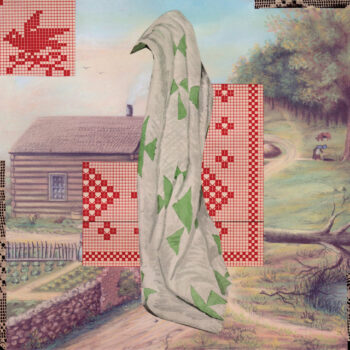
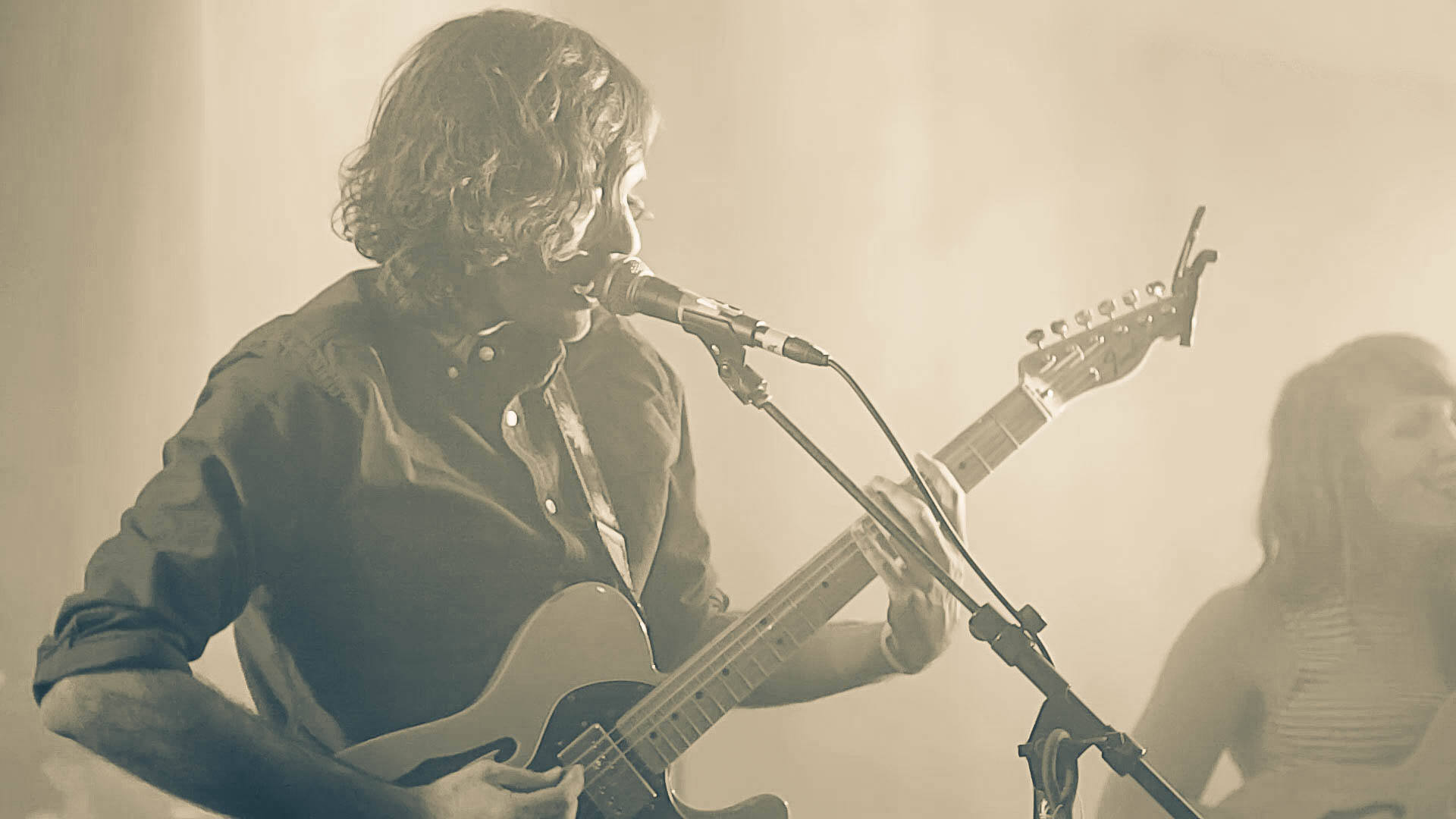
Released January 23, “Angela” marks the first single from Everett’s forthcoming debut album So The Sun Can Pour, due this spring. A longtime favorite of these pages – previously praised for his “iridescent indie folk sound” – the Seattle-based singer/songwriter has long balanced folk storytelling with jazz-trained nuance, earning praise for the way he “makes every second worth savoring.” A UCLA jazz graduate who has toured alongside The Paper Kites and Hazlett, Everett writes with the sensitivity of someone who listens closely – to landscapes, to contradictions, to the emotional temperature of a room.
For Everett, “Angela” is both satire and sincere letter. “It jokingly prods at how expensive it is, the traffic, and the lack of trees and greenery,” he tells Atwood Magazine. “But a layer deeper, it is also more broadly about human vanity and selfishness… everyone thinking they’re the most important car on the highway.” Living in LA, he explains, felt draining: “I’m a canvas of the place I’m in – and the self motivated spirit of that place felt really draining to me emotionally and energetically.” That line lands hard in the song itself – I’m a canvas of the place I’m in / And all your paint is poisonous and dry – a realization delivered not with venom, but with weary clarity.
Angela
You took all my money
And my kindness and the way
I used to wake up in the morn
Angela
I’m all outta honey
Now I’m bitter like the highways here
and all their honking horns
Angela, you never felt like home
And yet, this is not a bitter song. Everett’s acoustic guitar glows warmly beneath gentle percussion and airy harmonies, the melody carrying a smile even as the lyrics sharpen. His voice – rich, rounded, and impossibly tender – gives the chorus a buoyant lift. “Angela / I’m all outta honey / Now I’m bitter like the highways here with all their honking horns,” he sings, stretching the vowels just enough to make the sting feel human rather than hostile. The sweetness in his tone makes the critique land more deeply; he isn’t burning the city down, he’s mourning what it could be.
That duality threads through the entire project. The title of So The Sun Can Pour comes from the line, So let’s let it rain, so the sun can pour – a thesis Everett says emerged naturally while writing. “A central theme emerged: duality. Summer needs winter. Joy needs sorrow. Day needs night. When love is real, grief is simply the proportional result of how deeply we cared.” LA’s endless sunshine becomes a metaphor for a culture chasing comfort at the expense of growth. “Sure – warm, rainless days may be more comfortable,” he reflects, “but when you finally look down you’ll notice that the grass is all dead.” “Angela,” then, becomes less about a city and more about the danger of refusing seasons altogether.
I don’t mind that your method acting
But i get dizzy from the lies you spin
To sell to me as medicine
But it drives me to madness
I’m a canvas of the place I’m in
And all your paint is poisonous and dry
Angela
You took all my money
And my kindness and the way
I used to wake up in the morn
Angela
I’m all outta honey
Now I’m bitter like the highways here
with all their honking horns
It’s fitting that Everett chose this as the album’s introduction. “It’s lighthearted and easy, but also has some edged one liners that pull you into the lyrical world of the record,” he explains. The track carries a sit-on-the-front-porch ease, yet its edges cut just enough to hint at the broader existential questions the LP will explore. Written largely during solo backpacking trips and shaped by long stretches of solitude in Glacier National Park, the record promises something wider and more reflective than his earlier EPs – what he calls “my thesis statement thus far as a human.”
Ultimately, “Angela” radiates more love than resentment. Everett admits he wouldn’t write “such a cutting song about a place” if he didn’t care deeply about it. What lingers after the final chorus isn’t cynicism, but a gentle nudge: Reflect on where you live. Challenge it. Let it rain. Let it pour. In Everett’s hands, even a critique becomes an invitation – to live more generously, more honestly, and with the kind of presence that makes the sun actually mean something when it finally breaks through.
Angela
Your politics are cunning
Voting loudly to the left
but stepping right over the poor
Angela
You’re just too goddamn sunny
How I miss the rain and colder days
to make the sun worth more
Angela, you never felt like home
“The American Way”
by Happy LandingThe American Dream has always come with fine print, and on “The American Way,” Happy Landing stare straight at it – the money, the dopamine, the endless churn of ambition sold as destiny – and ask what it’s really costing us. It’s a song about the machinery behind the myth – the quiet indoctrination that tells us productivity equals virtue and that success is something you can stack high enough to outrun your own emptiness. Beneath its swagger, it questions whether the version of “winning” we’ve inherited was ever designed to make us whole.
“Make that money, baby, dig your grave / Honey, that’s the American way,” frontman Matty Hendley sings, voice low and smoldering over a brooding groove that refuses to blink. It’s not satire for sport. It’s a reckoning – with a culture that confuses wealth for worth, hustle for purpose, and noise for truth.
That’s the way, that’s the way it goes
In this modern, in this modern world
Make that money, baby, dig your grave
Honey, that’s the American way

Released January 20, “The American Way” arrives as the latest single from the Oxford, Mississippi five-piece’s sophomore album Big Sun, out March 6 via Too Fine Records. Formed in 2020, Happy Landing – Matty Hendley (lead vocals, guitar), Keegan Christensen (vocals, keys), Jacob Christensen (drums), Andrew Gardner (fiddle, vocals), and Wilson Moyer (bass/guitar, vocals) – have built a reputation as one of the most dynamic young bands in modern folk rock, blending southern grit, indie urgency, and anthemic hooks into something that feels both road-worn and sharply contemporary. After a breakout debut in Golden and a year of relentless touring, the band return heavier, darker, and more deliberate, sharpening both their sound and their perspective.
Hendley began writing “The American Way” in fragments over several years. “It started out as just an acoustic song that felt like it cut very deep,” he tells Atwood. “Then there was a point where I thought it could resonate even more if it was more of that brooding, rock-leaning power that you hear in the song.” The result is sultry and swagger-heavy – heavy drums locking into a lived-in pulse, gritty guitars circling like smoke in a dim barroom, even the percussive clatter of money change drawers embedded into the beat. It simmers rather than explodes, letting tension build until the refrain lands like a hard truth you can’t un-hear.
God bless Uncle Sam
Hit me with that dopamine
Money is a drug,
freedom isn’t free
Hallelujah, make me rich
The devil’s in the politics
I don’t know what’s true
Just the red, white and blue
Lyrically, the song doesn’t hide behind metaphor. “Money is a drug, freedom isn’t free.” It’s a line Hendley says still means exactly what it did when he wrote it: “The song is meant to go beyond politics and really make the listener think about what we value, who we listen to and promote, and what really is the end goal for America and for our individual lives.” That clarity runs through every verse – from dopamine hits and dollar signs to kings of Hollywood and algorithms raised on the internet. It’s seductive language, because the system itself is seductive.
That’s the way
that’s the way it goes
In this modern, in this modern world
Make that money, baby,
dig your grave
Honey, that’s the American way
What makes the song hit harder is its refusal to posture. Hendley describes watching people “get sucked into living a normal life, with a job they hate, chasing money, status and retirement… It didn’t seem like truly living, it seemed more like digging a grave with a golden shovel.” That image lodges deep. The band were just entering their twenties when they formed, coming of age in a world where burnout is normalized and validation is monetized. “The American Way” doesn’t pretend to offer easy alternatives – it simply asks whether this is the life we actually want.
Sonically, it’s one of the boldest moments on Big Sun, an album that balances its heaviest themes with flashes of brightness and lift. “This album is definitely the most mature piece of work we’ve put together,” Keegan Christensen explains. The band push into darker textures while strengthening the brighter, anthemic instincts that first defined them. Placed between a bright, airy track and one titled “Gallows,” “The American Way” sits at the center of that tension – the sun blazing overhead, the shadows stretching long beneath it.
And it lands at a moment when its questions feel especially urgent. In an era of rampant and public corruption, where greed and division dominate headlines and power often goes unchecked, silence is complicity. Songs like this matter not because they shout, but because they refuse to look away. If we can’t name the rot – if we can’t challenge the systems that reward crooks and conmen while punishing community and care – then we can’t hope to change them. Happy Landing don’t call out specific names; they don’t need to. The critique is bigger than a single administration or election cycle. It’s about the culture that allows corruption to metastasize in the first place.
Hail the kings of Hollywood
Dollar sign, Zuckerberg
Going down like honey,
do it for the money
Believe in anything we’ve read
We grew up on the internet
Going down like honey,
do it for the money
If the American Dream was meant to offer freedom and possibility, then “The American Way” asks whether we’ve mistaken the chase for the dream itself. For Happy Landing, “The American Way” isn’t a rejection of hope – it’s an insistence on it. Big Sun may wrestle with ambition, burnout, and distortion, but its spirit is still forward-looking. Acknowledging the past. Confronting the present. Driving toward something brighter. “That’s the way it goes in this modern world,” they sing, and the groove rolls on – heavy, relentless, unflinching. The weight doesn’t let up, and neither should we.
If this is the dream, maybe it’s time we wake up.
That’s the way,
that’s the way it goes
In this modern, in this modern world
Make that money, baby,
dig your grave
Honey, that’s the American way
Honey, that’s the American Way
— — — —

Connect to us on
Facebook, 𝕏, Instagram
Discover new music on Atwood Magazine
Editor’s Picks
follow EDITOR’S PICKS on Spotify