Atwood Magazine is excited to share our Editor’s Picks column, written and curated by Editor-in-Chief Mitch Mosk. Every week, Mitch will share a collection of songs, albums, and artists who have caught his ears, eyes, and heart. There is so much incredible music out there just waiting to be heard, and all it takes from us is an open mind and a willingness to listen. Through our Editor’s Picks, we hope to shine a light on our own music discoveries and showcase a diverse array of new and recent releases.
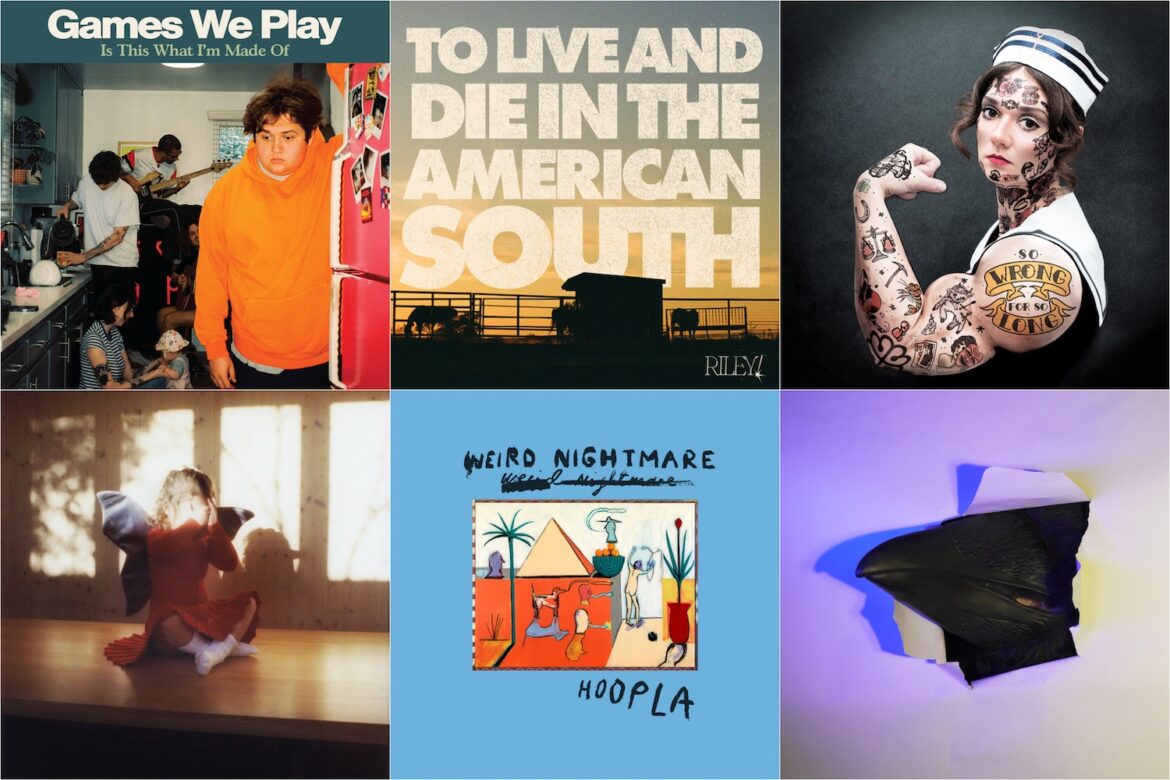
This week’s Editor’s Picks features Games We Play, Weird Nightmare, Nora Kelly Band, Erotic Secrets of Pompeii, Tooth, and Riley!

 follow EDITOR’S PICKS on Spotify

“Is This What I'm Made Of”
by Games We PlayThis is what pop-punk is for: Taking the ugly thought you can barely say out loud and blasting it through horns, bright piano chords, gang vocals, and a chorus big enough to make shame sound alive.
On the explosive and exposed “Is This What I’m Made Of,” Games We Play channels self-doubt into one of the year’s most invigorating pop-punk gut-punches – a fun, irresistibly catchy, achingly human anthem that smiles with its teeth clenched and bleeds with the windows down. It’s bright and sing-songy, punchy and raw, hooky as hell and equally heartfelt, with Emmyn Calleiro singing like he’s trying to talk himself out of quitting in real time.
There’s a light, I can feel it
But I’m bound to mess it up
Like I’ve done my whole life
I’m beginnin’ to start believin’
Is this what I’m made of? Yup!
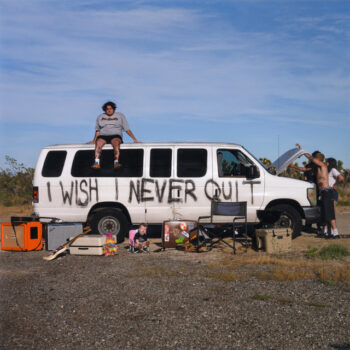
Released as Games We Play’s Nettwerk debut, “Is This What I’m Made Of” is the fiery preview of Calleiro’s forthcoming second album I Wish I Never Quit, out September 18th. It’s a stunning preview of a record that already sounds like a reset and a reclamation: Not a pivot away from the sharp hooks, humor, and heart-on-sleeve energy that made Games We Play stand out, but a deeper plunge into the person behind the project. Calleiro has spent years turning anxiety, charm, and self-deprecation into pop-punk rocket fuel. Here, the joke cracks open. The song is still a blast – maybe one of the most purely enjoyable songs he’s ever released – but the fun doesn’t cover the wound. It points straight at it.
“I think the main thing I’d want somebody to take away is that it’s just me writing songs in my house,” Calleiro tells Atwood Magazine. “Nothing crazy, just singing about my life. Trying to make it sound as cool as I can.”
That plainspoken mission is the whole engine. “Is This What I’m Made Of” doesn’t dress its crisis up in metaphor or bury it under cleverness. It asks the question directly: How many times can you doubt yourself before doubt becomes your identity? How many chances can you get before luck starts to feel like proof that someone else deserved them more? Calleiro sings about manhood, burnout, jealousy, shame, gratitude, wasted opportunities, and the fear of becoming the person who gives up right before the light gets brighter. The song hits because it refuses to make that fear pretty. It makes it loud.
“To be honest, it’s a really deep song for me,” Calleiro says. “It’s about my relationship with my band. About how bad I’ve wanted this to work, about how long I’ve been doing this for, and the feeling of wanting to give up because it hasn’t worked out exactly the way I thought it would. So, when I say “is this what i’m made of?” It’s kind of me yelling at myself for even wanting to give up. It’s a big conversation with myself. I hope I don’t give up, haha. But I think about it all the time.”
I hate starting things again,
burnin’ out from wakin’ up
And I’m afraid I’m not a man,
every day I’m losin’ luck
I’ve had every opportunity
to have the things I love
But if I waste another day,
I will give up
Why can’t I just give up?”
The arrangement refuses to mope, and that’s the genius of it. “Is This What I’m Made Of” charges forward with a showman’s grin and a panic attack in its chest: horns bursting through the frame, piano chords bouncing with old-school pop warmth, drums kicking everything into motion, and Calleiro’s voice riding the whole thing with bratty, wounded conviction. It’s over-the-top in the best possible way, the kind of song that knows a breakdown can hit harder when the room is lit up. Then comes that late-song key change – classic, shameless, electric – and the emotional temperature jumps. The chorus doesn’t just return; it floods the bloodstream. Suddenly the question in the title isn’t a spiral. It’s a dare.
“I think that’s the vision for most of my music,” Calleiro says. “I get bored with music a lot, so I wanted to make this song as over the top as possible. Key changes, horns, tempo changes, gang vocals. I’m into “over the top” music as much as I am into stripped down acoustic music.”
There’s a light, I can feel it
But I’m bound to mess it up
Like I’ve done my whole life
I’m beginnin’ to start believin’
Is this what I’m made of?
Is this what I’m made of?
The second verse cuts deeper because it stops framing doubt as a mood and starts treating it like a family inheritance. Calleiro sings about growing up with the belief that luck came too easily, that his opportunities should have belonged to someone more grateful, more deserving, more disciplined. It’s brutal writing because it’s so specific, and because the song never pauses to ask for pity. The piano keeps bouncing. The hooks keep coming. The whole thing stays airborne while the lyrics dig into core beliefs that clearly still have their hands around his throat.
“My parents always used to tell me I was lucky my whole life,” he says. “It’s kind of personal but when I was a kid, my parents used to yell at me about how I “didn’t try.” How I “got what I wanted” without much effort and how there were people out there that wanted the same things as me or we’re better at music or more appreciative but didn’t always have the opportunities I had when I was young (being able to drop out of school, making an album that my parents helped me pay for when I was 15). So that second verse is kind of me visiting those thoughts now, in my adult age. They’ve turned into core beliefs now, unfortunately, so I was just being honest in that second verse.”
Somehow since I was a kid, I think I’ve been lucky
But it was for somebody else, not for me
Someone who is thankful, who takes their chance
A person that’s nothing like me
Then I met a pretty girl that I think is stupid
‘Cause she has seen every chance, I blew it
But for a reason I don’t understand
She thinks I can do things that I can’t
This honesty matters even more in the shadow of I Wish I Never Quit. Calleiro has described this album as the first Games We Play record where he wrote every word himself, and that detail gives “Is This What I’m Made Of” extra weight. This isn’t just a song about doubting the band. It’s a song about reclaiming the band from the inside out – taking the fear, the insecurity, the awkwardness, the ugly little thoughts, and refusing to outsource them. The result is not polished distance. It’s ownership. It’s Emmyn Calleiro looking at Games We Play, looking at himself, and deciding the only way forward is to say the thing exactly as only he can.
“I’m not gonna sing about something that’s not important to me anymore,” Calleiro affirms. “It’s coming from my heart. I’ve taken that this is the only way I can do Games We Play. No one can help me say what I have to say, ’cause it’s mine to say.’ Except my wife with the one-off grammatical check (or grammar checks?)… I don’t know how to say that,” he laughs.
That last chuckle is key – “Is This What I’m Made Of” may be heavy, but it never begs to be treated like homework. It’s alive. It’s funny. It’s huge. It has horns, heart, piano, panic, a killer chorus, and a key change that makes the whole thing burst into color at exactly the right moment.
This really is pop-punk at its finest: Messy enough to be real, bright enough to scream along with, and honest enough to leave a mark. Calleiro is still asking the question, and that’s the point. The answer is in the song itself – in the nerve it takes to keep going, keep writing, keep shouting the doubt back at itself until it starts to sound like survival.
I’ll lay in bed when I’m in my head
I don’t have a friend to complain to
There is nothing left, have I reached my end?
I don’t think I’m made for this
For this
So, what is Emmyn Calleiro made of? He doesn’t have a clear answer yet, and maybe that’s okay.
“I still struggle with the same doubts,” he admits. “I still think about quitting all the time. I’m going to therapy for it. So, at the moment, I’m still asking myself the same question.”
Calleiro isn’t pretending “Is This What I’m Made Of” solved the struggle it names; he’s actively living with it, working through it, and deciding what survival looks like from one day to the next. Maybe this is the kind of question we spend our whole lives asking – who we are, what we’re worth, how much fight we still have left in us, and whether the light we feel ahead is enough to keep us moving toward it.
Maybe it’s just another one of those games we play.
There’s a light, I can feel it
But I’m bound to mess it up
Like I’ve done my whole life
I’m beginnin’ to start believin’
Is this what I’m made of?
Is this what I’m made of?
“Where I Belong”
by Weird Nightmare“Why the hell am I still on the road? I’ve got a girl and a son back at home.”
Every open road asks for a sacrifice – the miles blur together, highway lines stretching endlessly beneath a sky that never seems to settle. There’s a peculiar loneliness in that constant motion, where gas station lights, late-night diners, and fleeting conversations become familiar landmarks in a life lived between destinations.
On “Where I Belong,” Weird Nightmare turns that cost into a sprightly, aching power-pop rush – bright enough to grin through, raw enough to sting. The closing track off Alex Edkins’ sophomore Weird Nightmare album Hoopla bursts with Weezer-like melodic punch and a dusting of Tom Petty road-worn warmth, all peppy drums, glowing guitars, and hooks that hit fast and hard. But beneath that charm is a blunt question with no easy answer: What happens when the dream that keeps you alive is the same dream that keeps taking you away from home?
“Why the hell am I still on the road?
I’ve got a girl and a son back at home
When the dream that you dreamt ain’t enough
When the days and the years call your bluff”
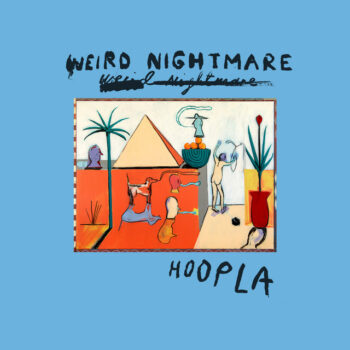
Out now via Sub Pop Records and Dine Alone Records in Canada, Hoopla finds Alex Edkins stepping deeper into the sunlit fuzz and tightly wound melodicism of Weird Nightmare – a world far removed from the pulverizing noise-rock force of METZ, the band he has fronted for nearly two decades. Here, the songs are short, sharp, and delightfully hook-forward, trading blunt-force impact for jangle, crunch, harmony, and heart. “Where I Belong” may be one of the album’s most instantly inviting moments, but it also cuts straight to the emotional center of the project: Nostalgia without retreat, optimism without denial, and the strange restlessness of a life built around motion.
“Hoopla is a bonafide studio album where as the first album was more of a document/home recording that captured the feeling of the pandemic,” Edkins tells Atwood Magazine. “Completely different states of mind. Hoopla is quite sentimental lyrically, there is a lot of looking back at my younger years. I think I was feeling nostalgic but it’s also really optimistic which is new for me.”
That optimism lends Weird Nightmare its charge. Edkins’ work with METZ thrives on pressure, abrasion, and release; Weird Nightmare runs on melody first, letting fuzz and distortion sharpen the sweetness rather than crush it. The distinction matters because “Where I Belong” doesn’t sound like a side road so much as a necessary release valve: A songwriter chasing a different kind of voltage, one rooted in big chords, clean hooks, and the emotional directness of saying the hard thing without hiding behind noise.
“When writing METZ songs I was very interested in the push and pull of dissonance and tension,” Edkins explains. “It was a 3 headed monster approach to a power trio that set out to pulverize listeners. A joyous cacophony is how I always imagined it.”
“Weird Nightmare, the band name is misleading in many respects and is actually a Charles Mingus reference, is more lighthearted short/concise songs that have melody and harmony at front of mind,” he adds. “Very very different musical outlets for me. I think Weird Nightmare was and is reactionary, an about-face in many ways, after almost 20 years of METZ. It’s really exciting and rewarding to be doing something that feels drastically different and exactly right at the same time.”
That “exactly right” feeling comes alive in the song’s opening seconds. “Where I Belong” is all lift and forward motion, the kind of track that sounds built for car speakers, sidewalks, summer drives, and the small private drama of singing along before the sadness fully catches up. Its guitars radiate, its rhythm section kicks, and Edkins’ voice carries a rough-edged sweetness that makes the song glow without smoothing over the ache. The chorus is pure power-pop confession: “‘Cause I don’t know where I belong / I hide in the words of this song.” It’s catchy because the melody is undeniable; it hurts because the lyric is deadly serious. The song doesn’t romanticize touring, ambition, or escape. It names the split right down the middle.
“Well, that song is about when your passion forces you to be away from your loved ones for extended periods of time,” Edkins shares. “Being ‘absent’ from my family never gets easier and is still the part I find most difficult about being in this line of work. It also touches on that sense of doubt that I think we all share, ‘am I making the right choices with my life?’, ‘could my time be spent more wisely doing something?’”
“’Cause I don’t know where I belong
I hide in the words of this song
And I take and I take and then go
I wish I never knew what I know”
That line – “I wish I never knew what I know” – lands like the song’s hidden bruise. Knowledge has a cost here: Once you understand what the road takes, once you see the absence clearly, once you know the dream can be both gift and theft, innocence is gone. Still, “Where I Belong” refuses despair. Its brightness is not denial; it’s propulsion. The song keeps moving because the narrator keeps moving, caught between devotion and compulsion, home and work, love and calling. Edkins isn’t winking through the pain or dressing it up as rock-star mythology. He’s stating the problem plainly, and the plainness is what makes it hit.
“I think those lyrics are the complete opposite of nihilistic,” Edkins says. “If anything they are far too honest and sincere to be sung in a rock song. But that’s also why I like them. I’m being deadly serious, there is no wink and nod.”
The guitar solo rips the song open. Just before the final chorus, “Where I Belong” stops circling its own ache and lets the electricity speak: A roaring, ragged lead line tears through the brightness, pushing the whole track from peppy power-pop rush into full-bodied release. It doesn’t decorate the song; it detonates it. By the time the chorus comes back, Edkins’ doubt sounds louder, rawer, and more exposed, as if the guitar has dragged every buried nerve to the surface and left the melody glowing around the wound.
Sincerity is the song’s secret weapon. “Where I Belong” could have settled for being merely charming – and it is charming, wildly so – but it chooses honesty over ease. It captures the contradiction of a life spent chasing sound: the joy of getting lost in music, the privilege of making it, the guilt of leaving, the doubt that waits in the quiet after the show. By the time Edkins repeats, “I shake and I shake to the bone / I wish I wish I knew the way home,” the song has become more than a peppy power-pop closer. It’s a confession in motion, a sunlit reckoning, and one of Hoopla’s most emotionally direct statements.
Heart of gold that can never decide
Feeling old when I see them walk by
(Them walk by)
Got no place I can claim as my own
(As my own)
Got no face I would call on the phone
‘Cause I don’t know where I belong
I hide in the words of this song
And I shake and I shake to the bone
I wish I wish I knew the way home
Making music, for Edkins, remains the anchor. “Making music is a blessing for me,” he says. “It’s the only thing I’ve found so far that I can do every day for endless hours and completely get lost. I hope it brings people some joy, where they can momentarily escape their day to day. That would be a win.”
“Where I Belong” earns that win. Bright, raw, charged, and open-hearted, it turns uncertainty into momentum and homesickness into melody, wrapping one of life’s hardest tradeoffs in guitars that sparkle, hooks that soar, and a chorus that refuses to let go. Weird Nightmare may be asking where home is, but on this song, Edkins sounds right where he needs to be: Inside the rush, inside the doubt, inside the words, shaking to the bone and singing his way toward the answer.
“‘Cause I don’t know where I belong
I hide in the words of this song
And I shake and I shake to the bone
I wish I wish I knew the way home”
“Imposter Syndrome”
by Nora Kelly BandImposter syndrome can make even your own life seem like a fraud.
Every hard-won step becomes evidence against you, every compliment turns into a mistake waiting to be corrected. Even growth starts to look suspicious, as if becoming yourself were just another role you somehow tricked the room into believing.
On the tender and wry “Imposter Syndrome,” Nora Kelly Band channel that familiar inner heckle into a warm, funny, and disarmingly irresistible reverie: A seductively smile-inducing alt-country gem about self-doubt, self-perception, and the strange work of learning not to believe every cruel thought that calls itself truth. Sweet guitar licks glow around frontwoman Nora Kelly’s aching vocal as she sings, “I could really use a reset now, or just a kick in the head,” landing somewhere between joke and confession, shrug and bruise. Charming, wry, vulnerable, and beautifully human, “Imposter Syndrome” doesn’t try to conquer insecurity so much as sit beside it, laugh a little, and keep playing anyway.
“I could really use a reset now
Or just a kick in the head
You called me selfish and I felt that, ow
Now I can’t get out of bed
Turn me down, shut me off
And my software updated overnight
Now I’m more accessible
I’m less transgressible
A girl that everyone can like”

Out now via Mint Records, “Imposter Syndrome” appears on Nora Kelly Band’s recently released sophomore album So Wrong for So Long, a lush, vivid, and lovingly expansive record that finds the Montreal outfit stepping deeper into their own quirky, theatrical country-rock world. Led by Nora Kelly alongside Rachel Silverstein, Ethan Soil, Patrick Rendell, Isaac Seglins, and Dylan Keating, the band weave twang, grit, humor, and heart into songs that are both carefully arranged and full of mischievous life. Kelly calls herself “a retired punk who went country,” and that description says a lot: The edges may be more polished now, the arrangements richer and more cinematic, but the spirit still has bite. Her writing carries a wink without hiding the wound, turning vulnerability into a real, raw lived-in listening experience.
“The songs are much more polished and lush than my old punk bands, but I try to keep that mischievousness and authenticity in my writing,” Kelly tells Atwood Magazine.
That blend of polish and mischief is exactly what makes “Imposter Syndrome” shine. The song is bright on the surface – buoyant rhythm, easy swing, guitars sparkling with just enough country warmth – but underneath, Kelly is naming a kind of self-doubt that can warp the whole room. She sings about being criticized and immediately believing it, about wanting a reset not because life has ended, but because the brain has latched onto the wrong voice and mistaken it for authority. The “software updated overnight” lyric is especially sharp: Funny at first, then quietly devastating the longer it sits. In a few lines, Kelly imagines herself edited into someone easier, safer, more likable – “more accessible,” “less transgressible,” “a girl that everyone can like.” It’s playful phrasing with real ache inside it, a joke that knows exactly what it’s protecting.
“I’ve noticed that if someone criticizes me, I am quick to believe they’re right, even if they barely know me,” Kelly shares. “So the first verse is coming from that place and wanting a reset. The reset would be to realize that people’s judgement has nothing to do with me.”
The chorus opens that private spiral into a wider, almost communal recognition. “You can go to school or spend a year abroad, there’s no way around it you still feel like a fraud,” Kelly sings, turning achievement, experience, and self-improvement into flimsy armor against the same old fear. The punchline is that there may be no credential strong enough to silence the feeling; the gift is realizing how many people are carrying it. Kelly’s delivery keeps the song from sinking under its own psychology. She sounds warm, rueful, amused, and genuinely exposed, letting the melody smile even as the lyric winces. That tension gives “Imposter Syndrome” its charm: It’s a song about feeling fraudulent that never feels false, a self-diagnosis set to music that makes room for both the sting and the silliness of being human.
“You can go to school
Or spend a year abroad
There’s no way around it
You still feel like a fraud
Oh my god, tell me doc
Is it true, have I got a bad case
Of imposter syndrome?”
“‘Imposter Syndrome’ is definitely a lighter track,” Kelly says. “It’s meant to highlight something that many of us seem to be feeling. I’m a self-taught musician, and have often felt like a fraud because I don’t know music theory or about gear.”
“First, I think it has helped me to know that most people have imposter syndrome!” she adds. “Second, I go back to this proverb that says, ‘In the beginner’s mind there are many possibilities, but in the expert’s there are few.’ Imposter syndrome seems to be rooted in the belief that we don’t truly know our field, but everyone is in a constant state of learning.”
This idea – of staying open instead of perfectly certain – runs straight through So Wrong for So Long. Produced by Marcus Paquin and recorded with a scope Kelly had never experienced before, the album surrounds her bold, character-rich songwriting with strings, horns, autoharp, timpani, pedal steel, and all kinds of warm, textured flourishes without burying the person at its center. Where 2023’s debut LP Rodeo Clown marked a first chapter in which Kelly was recognizing her own people-pleasing, this record feels like the sound of an artist asking what strength actually means once the costume comes off. Sometimes it looks like walking away. Sometimes it looks like getting angry and believing that anger might be justified. Sometimes, on “Imposter Syndrome,” it looks like admitting you still feel like a beginner and deciding that doesn’t make you less real.
“My new year’s resolution is to get angry
And to believe that it is justified
I’d like to call myself an artist and maybe
Not feel like I just told a lie”
“I’d say the over all narrative of the album is about finding the true meaning of strength,” Kelly explains. “On the cover, I’m as a super buff sailor who’s covered head to toe in tattoos. This was kind of poking fun at the stereotypical imagery around strength, but I think in the album the discovery is that strength is about staying true to yourself and remaining vulnerable or authentic despite fear.”
For all its sweetness, “Imposter Syndrome” becomes more piercing as it goes. The bridge turns anxiety into a shopping list of imagined fixes – “I need more kettles / I need less pedals / I need to know what all these pedals do” – before opening into the deeper wish beneath every adjustment: “I’d like to be somebody new.” That line hurts because the song has already shown us how ordinary and absurd those impulses can be, how self-improvement can blur into self-erasure if we let every judgment rewrite us. By the final verse, Kelly lands on one of the album’s most quietly devastating images: “I’m just a copycat killer who’s murdering the real thing.” It’s a stunning lyric, funny in its melodrama and raw in its truth – the realization that trying to become the “best version” of yourself can sometimes mean smothering the self you were supposed to protect.
“I was always trying to be something I’m not
Known as the best version of me
But I’m just a copycat killer
Who’s murdering the real thing
Who’s murdering the real thing
Who’s murdering the real thing”
That’s why “Imposter Syndrome” remains such a standout: It understands insecurity without worshipping it. Nora Kelly Band don’t turn self-doubt into a grand tragedy or a tidy lesson; they make it charming, bodily, melodic, and recognizably everyday. The song glows because it lets contradiction stay intact: Warm and visceral, funny and raw, polished and punk-hearted, vulnerable and full of life.
In a culture obsessed with mastery, branding, and becoming more palatable overnight, Kelly offers something gentler and more honest – the possibility that not knowing everything doesn’t make you a fraud. It makes you open. It makes you human. And in the bright, tender churn of “Imposter Syndrome,” that may be the truest kind of strength.
“Listen to my podcast
Watch my YouTube doc
There’s no way around it
I still feel like a fraud
Oh my god, tell me doc
Is it true, have I got a bad case
Of imposter syndrome?”
“Crowstepper”
by Erotic Secrets of PompeiiEvery age gets the trickster it deserves – the sly, dark figure who crawls out of the muck to mock our fears, expose our follies, and show us all the things we’d rather not see.
On “Crowstepper,” Erotic Secrets of Pompeii conjure a grinning shadow-self for our fractured present: Part swamp prophet, part spiritual con artist, part feverish escape hatch from the dead-eyed machinery of modern life. Quirky, charged, churning, and gloriously unwell, the Bristol band’s new single twists religion, self-help, online rot, and personal collapse into a delirious art-rock séance – a song that doesn’t merely stare into the absurdity of the world, but straps on talons, rings a cowbell, and dances straight through it.
Welcome to the swamp district – I’ve gone limp
I’ve been like this for fifteen years
It’s the gooseberry season
but I’ll try to be reasonable… with you”
Megastore – you can buy yourself a goddess
Happy hour – full of wine and full of promise
Philistine – is a badge that you can dangle
If you can untangle pain I couldn’t handle
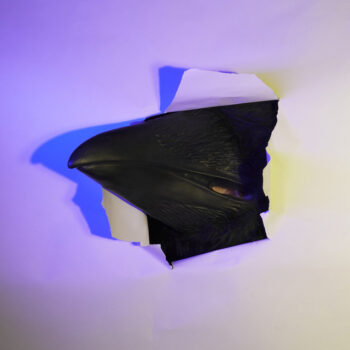
Released in mid-May, “Crowstepper” marks Erotic Secrets of Pompeii’s first new music since last October’s sophomore album Pitchfork Libra, and it arrives with the full-force strangeness of a band delighted by the outer edges of its own imagination. The five-piece – vocalist/lyricist Thomas Hawtin, guitarist/synth player Tom Hackwell, bassist Louise Schwarz, guitarist Sean Jones, and drummer/percussionist Jake Cheesman – have spent the past few years building a singular, scintillating world that feels authentic, haunted, endearingly weird, and mischievously alive: Equal parts art-rock, post-punk, theatrical groove, and grotesque pageantry, stitched together with raw humanity, sharp musicianship, and a refusal to make anything spiritually dead. Their songs lurch, wink, snarl, and bloom; they sound like a band allergic to dullness.
“We’re here fighting the good fight against A.I. music and slop in general,” Erotic Secrets of Pompeii tell Atwood Magazine. “We put everything we have into our art – music, artwork, videos. If you dig it, you’re a big freak! Welcome to the family!”
“Crowstepper” is our initiation into the band’s special universe. Inspired by crows as tricksters, guides, omens, and shadowy myth-creatures, the song gives name and body to an unruly alter-ego – the part of the self that crawls out when the respectable version has finally run out of answers. ESOP’s crowstepper mocks the madness around him while joining the parade: Megastore goddesses, televised blessings, credit-card salvation, comment-section derangement, empty willpower, false miracles, and a culture desperate to buy transcendence before happy hour ends. In the band’s hands, the crow becomes both clown and oracle, an absurdist spirit for volatile times and the personal dark corners those times keep feeding.
“The song was inspired by different aspects of crowiness – the mythological trickster figure, psychopomp spirit guides, Ted Hughes poetry collection Crow,” the band share. “And also Jung’s shadow self – unlocking or unloading your dark side. Musically, the track started as a demo written by Tom (guitar/synth) and when Jake brought his tom-heavy groove to it, it opened up this real swampiness to the whole thing. And you can’t deny that cowbell… it’s a paid actor, as the kids say!”
“The times are pretty volatile both globally/politically and on a more personal level in society with people getting locked into unproductive grooves, social media etc.,” they add. “The character of the song alludes to religion, self help, toxic online culture, and archly mocks the whole absurdity of it all. I think there’s always time for a trickster.”
There is, blessedly, nothing polite about the way “Crowstepper” moves. Cheesman and Schwarz lock into a dark, intoxicating groove caked in dirt and lit by neon; Hackwell and Jones’ guitars slither, bend, and scratch at the edges; Hackwell’s Moog flickers in like a strange mechanical creature briefly showing its teeth. The cowbell – bright, relentless, almost comic in its insistence – transforms the whole thing into a crooked ritual you can dance to before realizing the floor has shifted beneath you. Hawtin’s vocal performance is pure theatrical electricity: He spits, croons, taunts, and declaims his way through lines that sound pulled from a medieval carnival, a late-capitalist nightmare, and a hallucinated sermon all at once. “Due to sudden miracles I am now unkillable” is the kind of lyric that stops the brain in its tracks – ridiculous, brilliant, and somehow exactly right.
“There’s nothing wrong
But I brought a gun and the safety’s off
And you’ve got to know
What I came here for
’Cause the safety’s off
Due to sudden miracles
I am now unkillable”
“At the heart of the intro (and the song in general) is Jake and Louise’s (bass) dark desert groove which is topped with some disconcertingly bendy guitars from Tom and Sean (guitar) before Tom’s Moog Subsequent 37 briefly rears its head,” the band explain. “Our songs are less narrative than acid flashback dream sequences! This song is like a sinister, shamanic town cryer… but also a psychopomp leading someone to the other side, perhaps showing them the errors of their ways.”
“We like combining different ideas and creating something mad and mangled,” they continue, “and the lyrics are always packed full of vivid imagery – we try to make them the audio equivalent of a Bosch painting. This part you mention is in the pre-chorus of the song in which the crowstepper is unveiled – the shadow self is ready to come out and play. Also keeping in line with the religious themes of the song.”
That Bosch-like sprawl is what makes “Crowstepper” such a rush. Its references leap centuries in a breath – hurdy-gurdy girls, ziggurats, Elizabethan punishments, Abbadon, evensong, carrion, dog biscuits, megastores, comment sections – but the song never feels random. It moves by nightmare logic, accumulating images until the whole thing becomes its own deranged cosmology: Ancient appetite colliding with algorithmic malaise, ritual and retail locked arm-in-arm, the sacred and stupid doing laps around the same fire. Erotic Secrets of Pompeii have always thrived in this kind of collision, and “Crowstepper” distills their gifts into four intoxicating minutes: The wit, the menace, the rhythm, the grotesque beauty, the strange joy of hearing a band make art that sounds unmistakably, defiantly human.
“Please forgive my inattention,
I lost myself in the comments section
A pit of crime and insurrection
I’m home!”
“There’s a lot of time travel in our songs,” the band say. “From the Dancing Plague of 1518 to the spirits of Jack the Ripper’s victims manifesting as a fatberg in the sewers of Whitechapel. I read a lot of different fiction and non-fiction and I’m interested in science fiction, horror, the occult, and history (especially medieval) – it all congeals into something vast and sprawling which becomes the cosmic tapestry of the ESOP world.”
The song’s accompanying video pushes that world further outward, shifting the spotlight onto actor and dancer Josh Ben-Tovim for a physical performance that turns the track’s twitchy, possessed energy into bodily language. Shot at Bristol’s Wardrobe Theatre, the visual feels less like an explanation than an extension – another doorway into the “Crowstepper” fever state, where movement becomes character and character becomes ritual.
Erotic Secrets of Pompeii call the song “a synthesis of everything we do,” and it’s hard to argue: “Crowstepper” is funny, grotesque, sharply played, deeply odd, and packed with more hooks than should legally fit inside one track. It’s also a reminder that the weird still has teeth, that art can still surprise and shock the senses – wresting the body awake – and that sometimes, the only reasonable response to the horrors of modern life is to invent a crow-footed shadow-self and let him lead the dance.
“Crowstepper
He knows better
Even on the radio
the hurdy gurdy girls”
“The Age of Innocence”
by ToothYouth rarely ends in a clean break; more often, it drifts out of reach one charged, confusing night at a time.
Tooth’s feverish debut single “The Age of Innocence” lives in that restless threshold between adolescence and whatever comes next, where desire tangles with nostalgia, heartbreak cuts deeper than expected, and the future glows just far enough down the road to feel both thrilling and impossible. Arresting, raw, and remarkably assured, it’s one of the most electrifying debut singles in recent memory – a bristling, big-hearted rush of guitar music from a band who already sound like they know exactly how to make growing up feel loud, messy, and alive.
The pavement cracked under my feet
As my thoughts were caught in a daydream
Oh, stuck in a dream
And the streetlights lingered in my eyes
As Sophia started to sigh
When they kissed, I wanted to cry
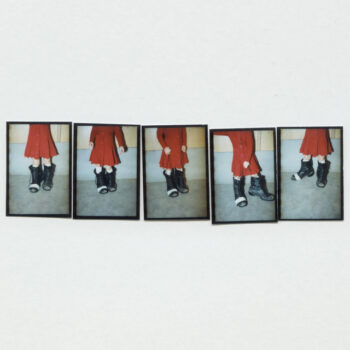
Released in late January via Soil To The Sun Recordings, “The Age of Innocence” introduced Tooth with all the force of a band kicking the door open mid-song. The London four-piece – Tom Pollock on guitar and vocals, Ben Ashley on guitar, Charlie Arnison on bass, and Roy Lowe on drums – have spent the past few years sharpening their sound through “riotous live shows” and a growing presence across the UK circuit, marrying anthemic alternative, second-wave emo, and garage rock into a sound that feels furiously finessed and gloriously unstable. Their shows have earned a reputation for shout-along choruses, erratic noise, sweat, and communal release, leading to enviable support dates with Keo, Dust, Brigitte Calls Me Baby, Men An Tol, and more, as well as festival appearances across the UK. Even before releasing a song, Tooth had begun building the kind of mythology most new bands spend years chasing; with “The Age of Innocence,” they made good on it.
“We’re just a bunch of mates who like guitar music and being in each other’s company,” Tooth tell Atwood Magazine. “We want our music to get to those who enjoy the same shit as us, and for the live shows to demonstrate that we don’t rly know what we are doing but we like working it out together.”
That friendship is the pulse running through the song. Written just before the band left school – and, fittingly, the first song they wrote together as Tooth – “The Age of Innocence” captures the strange emotional weather of early adulthood before anyone has the language to explain it. The world feels open, but not simple. Desire feels urgent, but misdirected. The night stretches on, streetlights blur, and every feeling seems to arrive with a bruise already attached. Pollock sings, “Oh, but I didn’t think youth would get so complicated,” and the line lands with aching clarity: A sudden realization that innocence does not vanish all at once, but fractures in flashes – a kiss witnessed from the outside, a crush that points somewhere deeper, a heartache too fresh to hide.
“It was the first song we wrote together as Tooth,” the band share. “It was written just before we all left school and we all were experiencing this strange transition from youth to early adulthood. The song reflects fondly on adolescence and holds hope for whatever’s up t’road.”
Oh, but I didn’t think youth
would be this complicated
It’s a certain fate,
I’ll never think straight
Is there point in lust?
Must I just brace the bruise?
When I only liked her
’cause she looked a bit like you
This duality – fondness and confusion, memory and momentum – gives “The Age of Innocence” its emotional charge. Recorded at Church Studios in Crouch End with producer Kev Jones, mixed by Vince Ratti, and mastered by Will Yip, the track recreates the immediacy and ambition of Tooth’s live show without sanding down its turbulence. The drums roll forward with feverish urgency; the guitars cut and shimmer with spiky, Walkmen-like bite; Pollock’s voice carries the whole thing with a raw, invigorating force that makes every chorus feel like a room suddenly shouting back. The song’s structure is tight, but its spirit is unruly – timeless songwriting lit up by the bristling electricity of youth in motion.
And heartache is hardest to hide
But she blushеd when he clutched to hеr waistline
Troubled valentine
Then the daylight settled on the walls
I’d lost track in the black of nightfall
Sinking into withdrawal
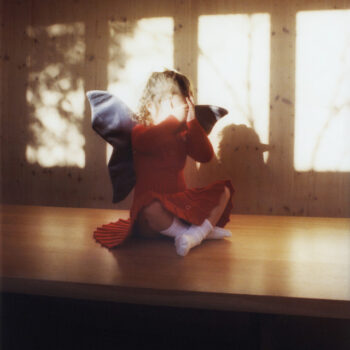
Out now, Tooth’s debut EP Restless in Bloom widens that first spark into a five-song statement of arrival. Across “Schoolyard,” “The Age of Innocence,” “Wallflower,” “Medicine,” and “Restless in Bloom,” the band trace the emotional residue of their formative years: Friendship, self-discovery, hidden brilliance, nervous energy, and the ache of becoming. Pollock has described the EP as a collection that captures who they were and “all the emotions of that time,” and that sense of lived-in memory runs through every track. “The Age of Innocence” remains its first great revelation – the song that people initially gravitated toward in their set, the one that felt like both beginning and ending, the sound of a band finding itself by writing through a moment none of them could quite define.
“We feel relieved putting the song out as it feels like it’s been hanging around for a while,” Tooth say. “It’s the first tune that people who now regularly come to shows, initially gravitated towards in our set. Everyone goes through that period and so we hope it can be some kind of comfort.”
That comfort is what makes “The Age of Innocence” so special. For all its ruckus, bite, and live-wire momentum, the song is ultimately tender – a hand reaching back toward the selves we were before everything became more complicated. It doesn’t romanticize adolescence so much as honor the ache of leaving it behind: The sweetness, embarrassment, lust, confusion, and bruising beauty of realizing a chapter is closing even as another waits ahead. Tooth don’t arrive here like a band asking for permission; they arrive like a band already in motion, already sweaty and singing, already surrounded by a room full of people who know the words. If this is their opening statement, then “The Age of Innocence” doesn’t just announce a promising new band – it captures the exhilarating sound of one blooming in real time.
And I tried
But I know I can’t do it again
But I wonder if it will always be like this
The age of innocence
The age of innocence
“Another Round of Radical ‘Ritas, Please”
by Riley! ft. Tades Sanville of Hot MulliganSelf-loathing has a way of making every moment feel like a test you’ve already failed.
On “Another Round of Radical ‘Ritas, Please,” Riley! channel that pit-in-the-stomach spiral – the fear that your friends barely tolerate you, the humiliation of feeling left behind, the ugly little voice insisting you’re the problem – into an emo punk fever dream that aches inside and out. The refrain hits like a body blow and lingers like a bruise: “rotten right down to the core / if I were you, I’d hate me more.” It’s brutal, blunt, and painfully sticky, a line that doesn’t just articulate shame but lets it sit there, heavy and sour, until the whole song seems to vibrate with the weight of it. Loud, frantic, melodic, and achingly alive, “Another Round of Radical ‘Ritas, Please” is Riley! at their most emotionally exposed and sonically combustible – a hard-hitting anthem for anyone who has ever tried to laugh, drink, or talk their way through the fear of being secretly unwanted.
it’s cool
i was thinking i was gonna dip out soon, anyway
honest
there’s like a million other places i could be tonight
if that’s what i wanted
but it’s not and i’m not fooling anyone
but it’s not and i’m not fooling anyone
but it’s not and i’m not fooling anyone
learn to let go, shut up, bite my tongue
rotten right down to the core
if i were you, i’d hate me more
if i were you, i’d hate me more
if i were you, i’d hate me

Released May 27th via Pure Noise Records, “Another Round of Radical ‘Ritas, Please” arrives as the lead single off Riley!’s forthcoming EP To Live and Die in the American South, out July 17. Hailing from South Texas’ Rio Grande Valley, vocalist/guitarist Ryan Bluhm, bassist Kris Gallardo, and drummer Cesar “Izzy” Izaguirre have spent the past several years turning isolation, anxiety, friendship, and small-town restlessness into a hyper-modern spin on Midwest emo – one full of twinkly high-capo guitars, raucous rhythm-section energy, gut-punch storytelling, and a community-minded spirit that makes even their most jagged songs feel lived-in. As an openly queer, progressive band in a deeply red state, Riley! have built their own version of belonging from the ground up, growing from scrappy cult favorites into one of modern emo’s most compelling young bands. Their music is heartfelt and tongue-in-cheek, technically sharp and emotionally messy, abrasive and inviting all at once.
“We’re friends and we write music we like,” the band tell Atwood Magazine. “We also try to make sure you’ll like it, too! It’s a little serious, a little goofy, a lot of fun, and we love to watch our community grow.”
That balance has always been central to Riley!’s appeal, and “Another Round of Radical ‘Ritas, Please” sharpens it into a full-on gut check. The song was written with accessibility in mind – an upbeat, poppier entry point into the EP’s world – but its emotional center is anything but easy. Bluhm describes it as a “relatively vague encapsulation” of anxieties around how they feel they’re perceived by friends and loved ones: Intrusive thoughts that everyone secretly dislikes them, feelings of being unlikable, apprehension around relationships that should feel safe. Those fears come through in every line, from the false casualness of “I was thinking I was gonna dip out soon, anyway” to the bitter little diagnosis of “Well, that’s fine, you only like me in doses / right medication, wrong diagnosis.” This is a song about social fallout as internal combustion – the smile cracking, the joke souring, the self turning on itself in public and private at once.
well, i know that i messed up
you caught me down on my luck
could you let me down gentle?
i don’t need to take another shot to my mental
well, that’s fine, you only like me in doses
right medication, wrong diagnosis
“I deal with a lot of these intrusive thoughts that all my friends don’t actually like me all that much,” Bluhm shares. “I guess I sometimes feel like I’m not the most likable person and it gives me a lot apprehensive feelings about my relationships with people. It’s something I have to constantly remind myself as irrational, but that doesn’t always kick the thoughts.”
“We chose this song as the first single on the EP purely for its accessibility,” they add. “This track is definitely going to be the easiest to listen to and catchiest for fans and potential fans even outside of the ‘emo’ genre. There’s also the Tades feature on it, which we thought would be an exciting crossover for a lot of people.”
What’s remarkable is how Riley! make all this heaviness not just listenable, but exhilarating. This is one of the hardest-hitting songs in recent Editor’s Picks memory, but the screaming never feels alienating or indulgent; instead, it feels earned – another texture in the band’s arsenal, a raw nerve threaded through polished punk finesse. The verses bounce with anxious, almost conversational urgency, while the chorus comes crashing down with full-body force, turning self-hatred into a communal shout. Tades Sanville of Hot Mulligan fits seamlessly into that storm, his feature amplifying the song’s sense of social dread and emotional circularity: “Counting down to the time where we’re ‘sposed to hang out / knowing I’m getting left in the dark because / I was always good at quitting.” What began as one guest section became a “double feature” after a happy accident, and the result feels essential – another voice in the spiral, another body caught in the room as everything spins out.
counting down to the time
where we’re ‘sposed to hang out
knowing i’m getting left in the dark because
i was always good at quitting
rolled my eyes, who was i kidding?
it’s okay, it’s okay ‘til it’s not
(it’s not, it’s not)
run it back in circles again
never really f***ed with your friends
it’s okay, it’s okay ‘til it’s not
(it’s not, it’s not)
rotten right down to the core
if i were you, i’d hate me more
if i were you, i’d hate me more
if i were you, i’d hate me
“This is the first song we wrote with the intention of it being a part of this record,” the band say. “We all wanted to try writing a more upbeat, poppy track. I took a lot of inspiration from modern pop songs that I like and came up with the idea for the verses. We played around with 4 or 5 different ideas or choruses, but ultimately decided the heaviest version just felt right and ended up with what you hear now. I think this is when we decided to start asking our friends to do features all over this EP and felt like Tades would kill it on this track. He initially was supposed to only do one part but through some miscommunication, he ended up recording vocals over what was supposed to be an instrumental break. Sounds badass so we kept it and he still recorded the part we initially intended for him to do. hooray double feature.”
Recorded in Austin with producer Phil Odom, To Live and Die in the American South finds Riley! pushing their sound forward without sanding off the grit that made 2024’s Keep Your Cool resonate so strongly. The five-song EP carries features from Tades Sanville, Eric Egan of Heart Attack Man, and Gabe Wood of Saturdays at Your Place, and it moves through existential dread, melody, classic emo urgency, grief, loss, and impermanence with a newfound sense of focus. For Riley!, the project is about coming to terms with where you are in life, both physically and metaphorically – learning how to navigate the places you’re stuck in, the communities you depend on, and the versions of yourself you’re still trying to survive. “Another Round of Radical ‘Ritas, Please” fits that arc by staring directly at self-loathing and asking what happens when those private fears start warping the relationships around you.
“I feel like it’s a natural transition from Keep Your Cool,” Bluhm says. “Going into this EP, we wanted to keep the grit that KYC was raved for while trying to not release the same record again. Considering how much thought and consideration that now goes into what songs we keep, how we write them, and how they are placed in what order in a record, it feels like we really are growing into our musicianship and showcases that growth each time we release something.”
“We were going for something a little bit more polished,” Bluhm explains. “Not everyone is necessarily into screaming emo music, so we wanted to make things a bit more digestible.”
“We hope that the listeners hear the differences and changes from KYC to TLADITAS and how each song has their own personalities within the scope of it,” Gallardo adds. “What we have take away from us creating this album was how much we have grown as musicals artist. In the past we showed off our technical playing and abrasive style but now focus on the song as a whole. Also realizing that less is more.”
That growth is exactly what makes “Another Round of Radical ‘Ritas, Please” feel so exciting. Riley! haven’t dulled their edges; they’ve learned how to aim them. The song is frantic, funny, wounded, catchy, and cathartic, a blistering rush of punk rock feeling that makes room for ugliness without letting it swallow the whole room. Its title grins; its chorus bleeds. Its guitars sparkle and scrape. Its screams land hard, then somehow open the door wider.
If this is where the next wave of emo is headed – more polished without being sanitized, more accessible without being flattened, more willing to let raw feeling and sharp songwriting tear through the same three-minute explosion – then Riley! aren’t just part of that future. They’re helping make the case for it, one rip-roaring, rotten-to-the-core refrain at a time.
rotten right down to the core
if i were you, i’d hate me more
if i were you, i’d hate me more
if i were you, i’d hate me
— — — —

Connect to us on
Facebook, 𝕏, Instagram
Discover new music on Atwood Magazine
Editor’s Picks
follow EDITOR’S PICKS on Spotify