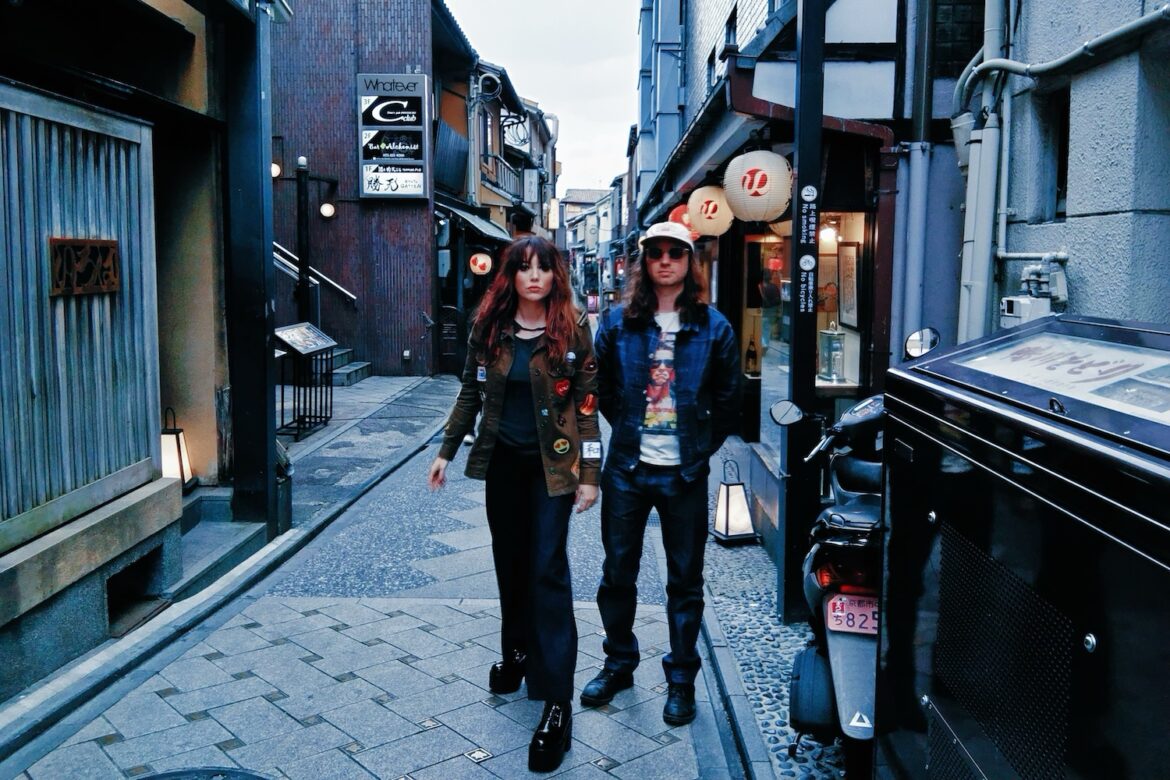
Livingmore’s story started in the frayed ends of other lives – a cosmic alignment that pulled two people into a twelve-year creative firestorm, eventually trailing smoke all the way to the backstreets of Japan.
by guest writer Lily O’Delia
Stream: “Away Away Away” – Livingmore
There is something disarming about the way Alex Moore and Spencer Livingston tell the story of how Livingmore began.
They do not offer it up as an origin myth, not in the way people so often reshape the past into something cleaner than it ever was. There are no neat lines here, no singular moment that can be pointed to and named as the beginning. Instead, they allow the story to remain what it was: Fragmented, human, unresolved. It begins, as so many real love stories do, in the margins of other lives – other bands, other relationships, other selves not yet fully shed.
Before they ever met, Moore knew Livingston first as a presence, almost as a rumor moving through the Los Angeles music scene. Some people arrive in your life first through the voices of others, their names gathering shape before the person themselves ever steps into view. He existed first as an idea, a kind of whispered mythology. And then, suddenly, he was real: A show, a conversation, a passing compliment, a smile that seemed to linger.
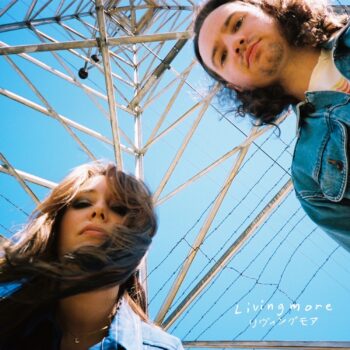
What followed was less a beginning than an accumulation, a gathering of moments. A solo project in need of a guitar player. Long nights spent writing songs together. Weed smoke curling through the room while old reruns of Goosebumps flickered in the background. Conversation stretching so late into the night it eventually dissolved into sleep. The same room. The same two people. Again and again, until something unnamed began to press gently but insistently between them. Spencer remembers it as something cosmic, and perhaps that is the only word spacious enough for it.
The music came first. Then the relationship. Then the band itself, its name a fusion of their surnames; Livingmore. It was as if language had already begun to understand what they themselves were still learning: That two separate lives were becoming something singular. Alex recalls she has never looked back.
More than a decade later, that intimacy still runs beneath everything they create. Their songs seem to live in that fragile and often unspoken space between tenderness and wound, where longing and release are not opposites so much as companions – two hands reaching for one another in the dark.
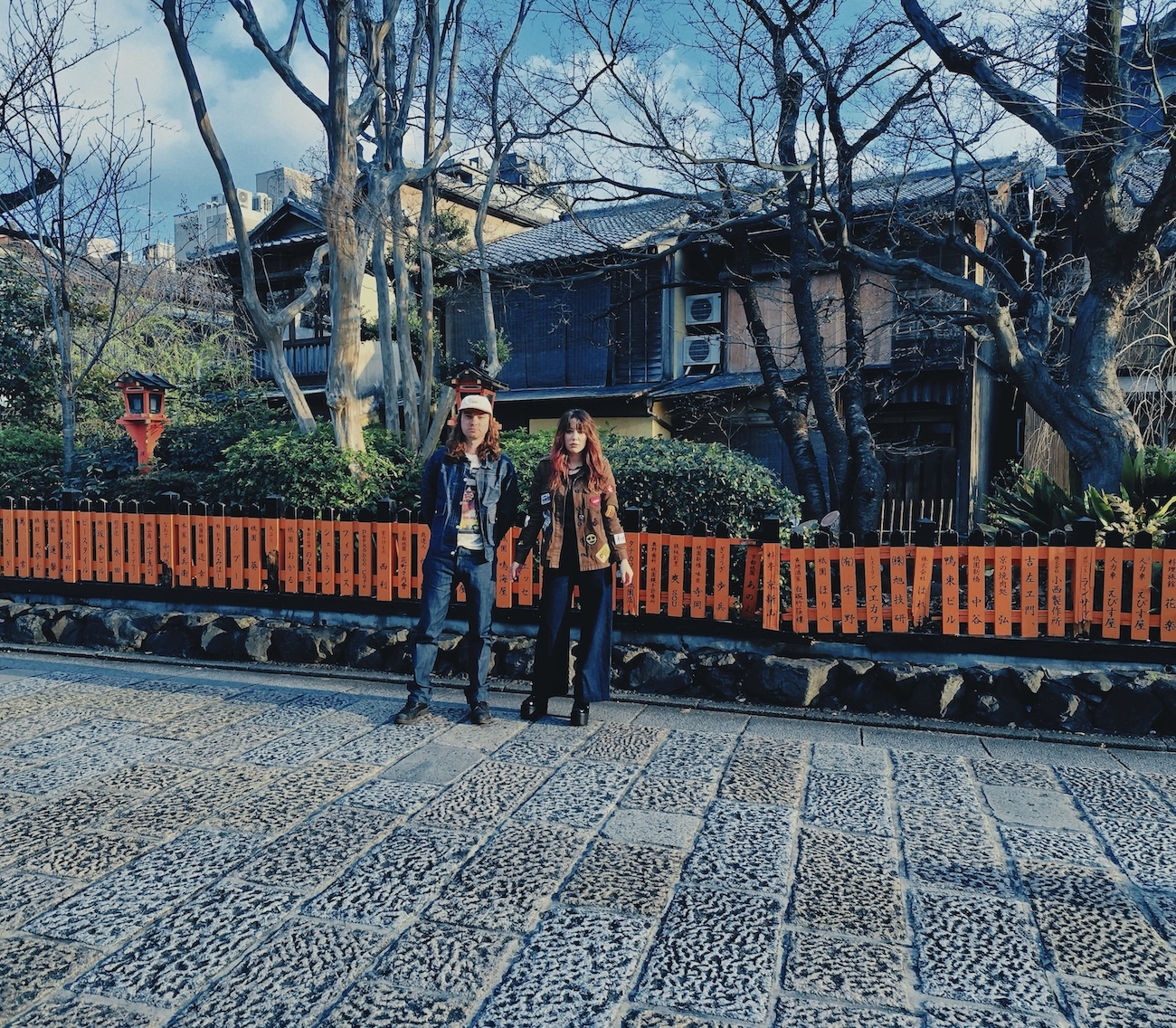
Speaking with Moore and Livingston now, as a new creative chapter unfolds in Japan, what emerges is not a tidy love story, nor even a conventional band narrative.
It is something far more convincing than that: The portrait of two people drawn toward one another – musically, romantically, spiritually – long before they had language for why.
Ahead, Livingmore reflects on their beautifully fragmented beginnings, the making of their self-titled fifth album, the viral spark that carried their sound far beyond Los Angeles, and the quiet grit of remaining fiercely independent. They speak, too, about their love of vinyl, and about the enduring mystery of why, after more than a decade, the fire between them seems not to have dimmed, but to burn brighter than ever.
— —
:: connect with Livingmore here ::
— —
A CONVERSATION WITH LIVINGMORE

Atwood Magazine: What is the Livingmore origin story, and what was that initial meeting like for you both?
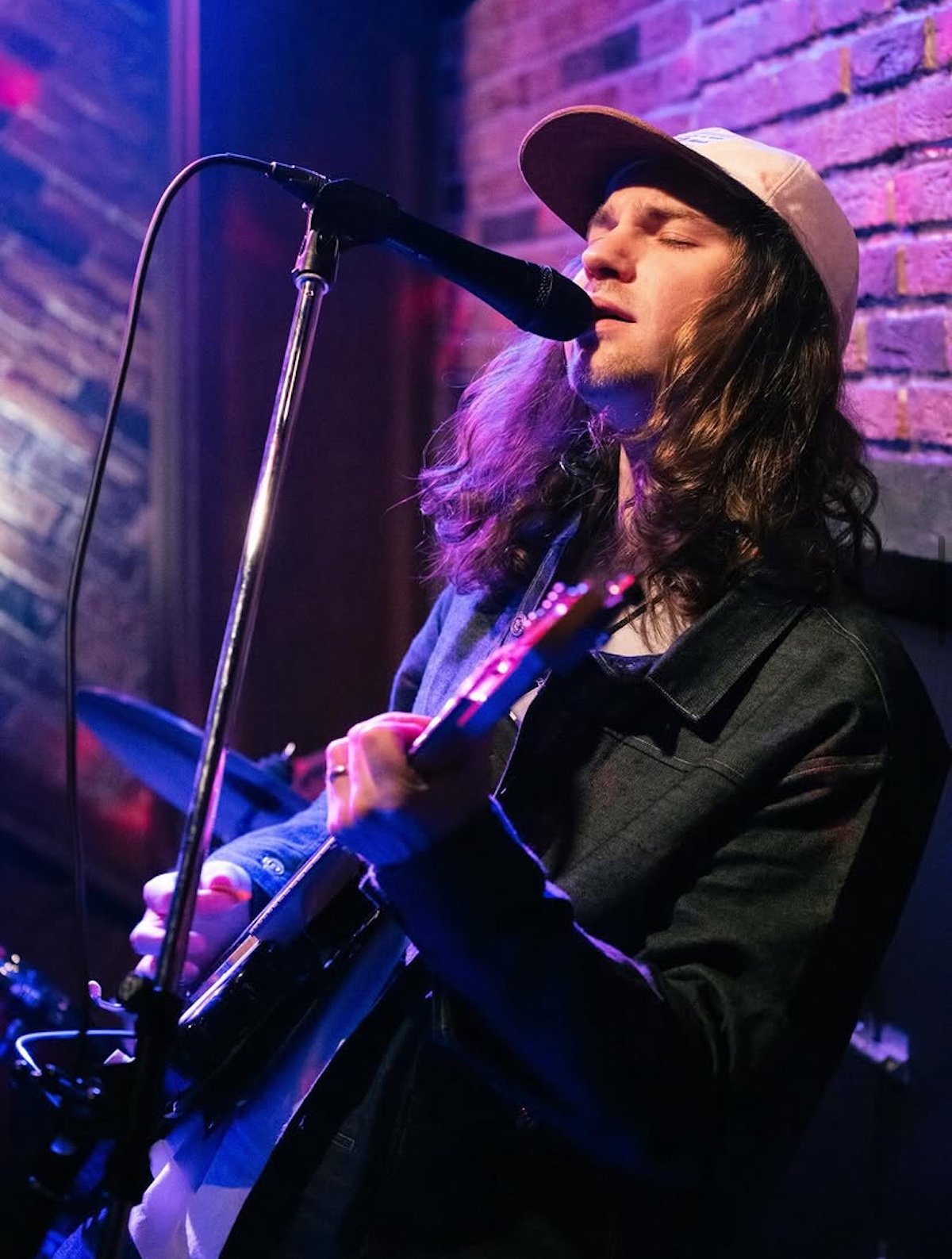
Alex Moore: We actually met in 2014 while we were both in different projects. I was in a band called The 40 Wink Slumber that broke up, and I was pretty devastated – there were some opportunities tied to it that fell through. After that, I ended up in this sort of rebound band just trying to stay busy, but through that I met some mutual friends of Spencer’s. They talked about him a lot – I knew he was in a band called The Alternates that had a pretty big following at the time, and that he had started doing solo music. I went to one of his shows and really loved his songs – his melodies were unique and his lyrics had a poetic warmth to them. I remember complimenting him afterward – he gave me this big smile, and I thought that was that. I didn’t see him for months. But later on, I started my own solo project and needed a guitar player – and Spencer ended up volunteering after coming to one of my shows. From there, we started writing, hanging out, smoking weed while watching reruns of the ’90s Goosebumps series until we’d fall asleep – the ultimate bonding moment. You could say that’s how Livingmore was born. [laughs] Back then, it was just the two of us on acoustic guitars, playing duo shows to get the songs out there. From there, we met more musicians and slowly built the full band sound.
Was there a specific “aha!” moment when you realized your last names fit together so perfectly as “Livingmore,” or did you cycle through other band names first? What does the name mean to you today?
Spencer Livingston: I honestly don’t think we really cycled through any other names. It came to us pretty naturally. We liked the double meaning of it and it just kinda made sense. We were in our early 20s when we gave this project its name and there was definitely a young, fleeting sense of optimism there. Not to say that all of my optimism has been lost but a lot has happened since then… and I do think the meaning has changed a bit as I’ve gotten a little older. Personally, nowadays it is more symbolic of our journey not just as artists but as people trying to make the best of all the ups and downs life throws at you.
When you first began writing together, what was it about each other’s solo music that clicked creatively?
Spencer: My friend Janelle invited me to a show that Alex was playing at Molly Malone’s in Hollywood in 2013 and I was immediately a fan. Alex has a timeless quality about her voice. Her melodies and lyrics hit me like a lightning bolt and I knew I had to find a way to try to write something with her. When we did finally get together to write something it clicked effortlessly and we’ve never questioned it beyond that. I am a big believer in cosmic attraction in the spiritual sense, and I believe that has something to do with it. I’m also somewhat superstitious and I think that trying to explain it too much can kill some of the magic, so I don’t try to do that too much. When something just works in that kind of cosmic way I think it’s best to just go with it and not ask why.
Alex: Like I said before, his unique and catchy melodies and lyrics really drew me in. We both love classic bands like The Beatles, The Kinks, and The Velvet Underground, and I could hear that energy in his music. I felt like it would really complement mine – we’re kind of like water and air in the way we write.
Did the romantic chemistry spark immediately, or did it evolve slowly out of the creative partnership?
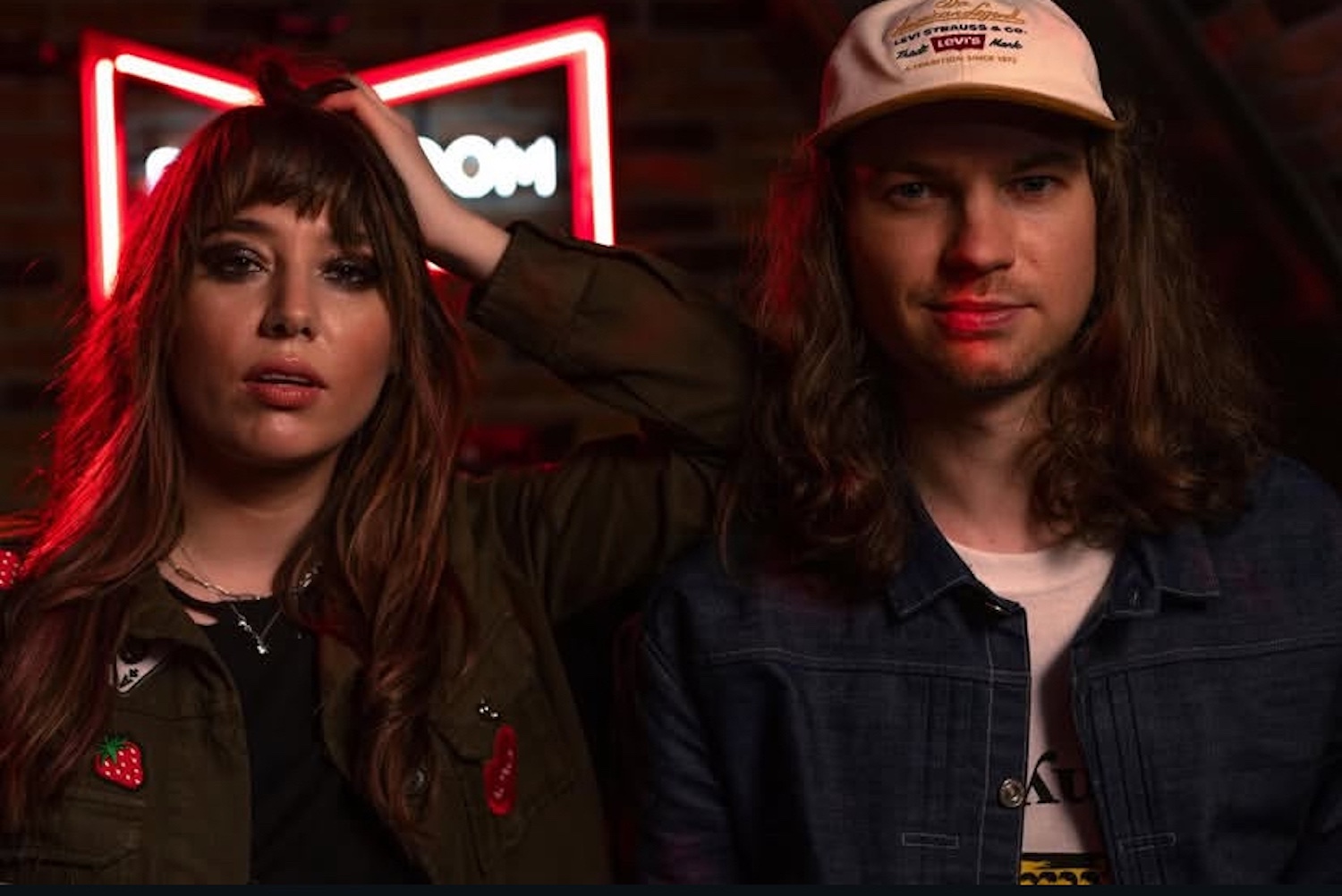
Alex: I think we did have chemistry pretty quickly, but we were both in relationships when we met, so we were just friends at first. We ended up confiding in each other a lot when those relationships were not going well, and I can’t really make this sound any better – it is what it is, messy and all… But we left those relationships very abruptly and created our own. Sometimes those stories, where you leave your partner for someone else, don’t work out – but here we are 12 years later. It felt like a new beginning in a lot of ways, musically and romantically. I’ve never looked back.
Speaking of beginnings, your performance of “Little Bird” in a parking garage went viral early on. What did that sudden attention feel like? And why do you think that specific raw setting resonated so deeply with people?
Alex: That happened in the early days of Vine, before TikTok, when you could post and scroll short videos. It really attracted fans of art, comedy, and music, so it was a great platform for us. Honestly, it felt like one of the quickest moments of acceptance we ever experienced on social media, even before YouTube really clicked for us. I can’t fully explain why that video hit the way it did – sometimes it’s always the song you least expect. But musically, it was a moment before that kind of raw, slow burn performance really became more mainstream, so it felt new in a way. Also I think the song just has a lot of heart, and people felt that. The simplicity of the setup made it very no thrills – this-this-is-just-us sort of thing. Our friend Logan had the idea to film it in his apartment parking garage. We went at night while it was raining and used some random books to prop up my toy glockenspiel. Those little makeshift touches added to the honesty of it all. We just sang and played our hearts out, using the natural reverb of the space – literally running away whenever a car came through. Luckily, we got the take pretty quickly. One thing about Livingmore is there’s always been something a little unconventional about our videos, whether it’s strapping weights to our feet to sing underwater or sticking my head out of a car’s sunroof. All for the name of the art, as they say. [laughs]
You’ve been compared to Blondie, specifically on the track “Sharp.” Alex, you’ve mentioned that while you love Blondie, you were actually channeling Elton John there. How does it feel when the public’s “sonic mirror” reflects something totally different from your intention?
Alex: To be honest, it’s a little annoying, although it’s completely out my control. [laughs] I love Blondie, but I never actually thought about them while making any of our songs. When I mentioned Elton John, I think I was more referring to his sense of fun and those chaotic, imaginative qualities in his music. ‘Sharp’ actually started pretty simply with my lyrics, some piano chords, and then bringing it to Spencer, who helped shape it on guitar. Even though I always imagined it as a dance track, the early version we had was a bit more raw and mysterious. Then our drummer Mike – who’s probably more of a Blondie fan than either of us – came in with that beat, and the production leaned more into that synthy direction. I love how it turned out – it feels like the song became what it was meant to be.
But at its core, that song was really important to me lyrically. It’s about not fitting into a box, not conforming, and celebrating individuality. So when you’re expressing something like that and the main takeaway becomes, ‘Oh, it sounds like Blondie,’ it can feel like that intention gets a little overlooked. I mean, I get it – I have ears, I can hear similarities. But there are plenty of big artists who pull from other sounds and still get to exist as themselves without constant comparison. And not to make it a whole thing, but as a woman, I do think people can be quicker to define you through someone else – whether it’s your sound, your image, even your hair. At the end of the day, I’m Alex Moore. I’ve never been trying to be anyone else.
You’ve been associated with the “power of positivity,” but beyond that, what other messages feel central to what you want your music to hold, and do you ever feel pressure to make darker music?
Alex: Honestly, I’ve found that perception interesting, because a lot of our songs are built on angst. If you listen to “Dead Fruit,” “Really Mean It,” “Overworked Meltdown,” or even our latest track “Not That Nice,” there’s a definite darkness running through them.
For some reason, though, that side doesn’t always get acknowledged, even though it’s a big part of our catalog. So it’s been kind of funny to feel like people only take away the “sugar,” when there’s always been a wide range of emotions in our work.
More than “the power of positivity,” our message has always been about holding light and dark at the same time. Even our feel-good songs come from resilience – or just holding onto a good day for dear life. We’re not afraid to express joy when we write because we know it’s not permanent… a sad or angry song is always on its way soon enough. [laughs]
You’ve amassed over 2 million streams independently. That’s a huge achievement. What is the most rewarding part of staying independent in an industry that constantly pushes for major label backing?
Alex: Thank you! I will say there are definitely pros and cons – mainly when it comes to money, which can limit you at times. But honestly, those limitations can also push you to be more creative. I think our visual aesthetic actually benefits from not having a big machine behind it, because we’re able to create something more personal. I feel really lucky to have a brother who’s an incredible video creator and artist, a true one-man show who’s collaborated with us on many Livingmore music videos. We’ve also been lucky to work with Branden Bernath, who really brings our DIY spirit to life. Being independent has also made us more self-sufficient. We record most of our music at home now, and Spencer has really stepped into production in a big way. But the most rewarding part is the freedom. We’ve never had to stay the same for the benefit of a label. We’ve been able to grow and evolve naturally, and that’s what art is really about – it’s not supposed to be this thing where something works once and you just repeat it forever, and I find that personally boring.
What was the catalyst for your partial relocation to Japan?
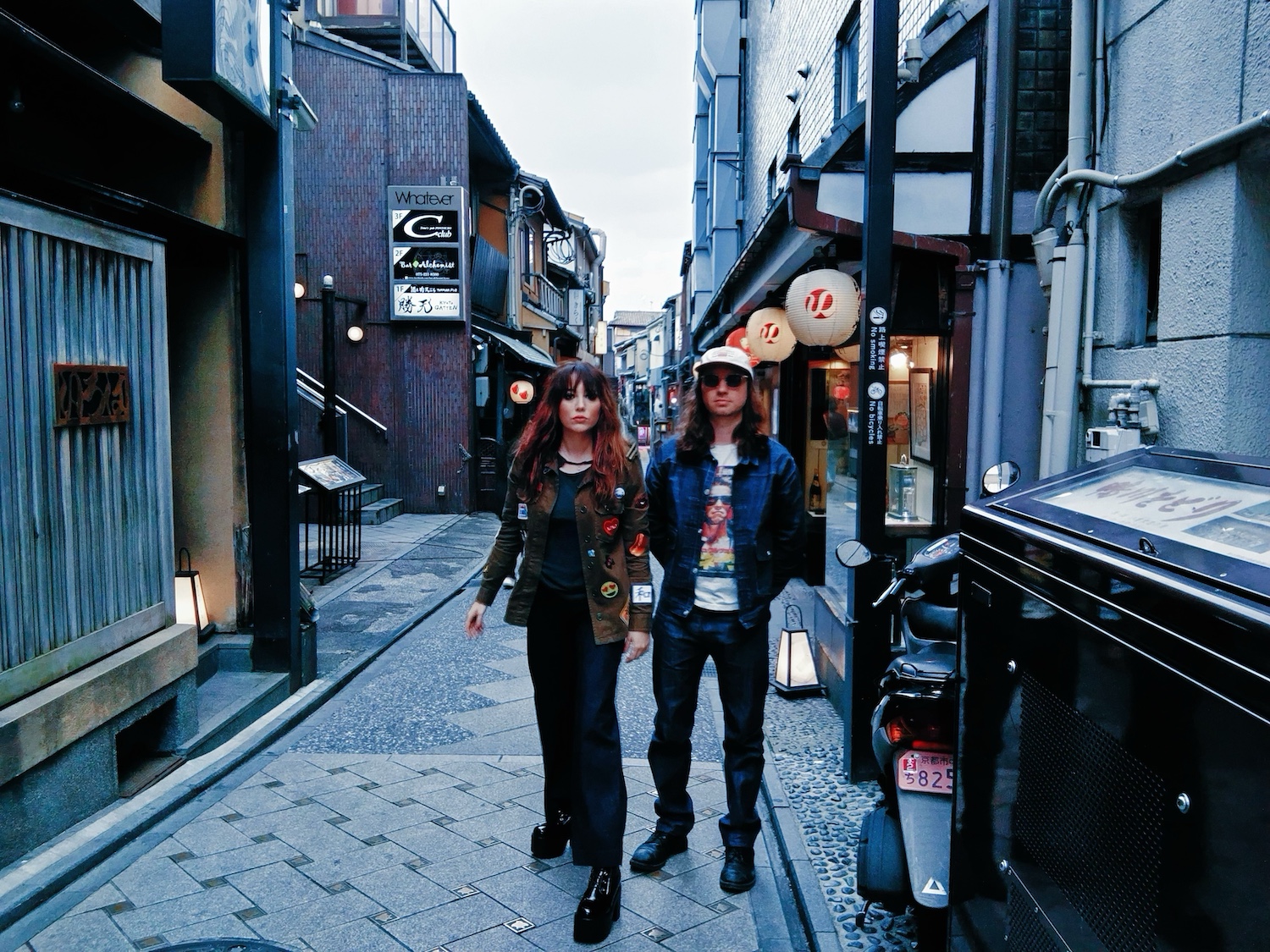
Spencer: We first came to Japan a few years ago and fell in love with so many parts of it. The people, culture, food are obvious reasons to love it here. But we also discovered a very thriving music and art scene. There is so much great music and art in Japan right now it is kind of insane. There is a real music scene and community of people in the Kansai region of Japan (Kyoto, Kobe, Osaka) that have made us feel very welcome. Playing in Tokyo has also been pretty unbelievably awesome. It is the most support and love we’ve felt for this project since it first started so it was basically a no brainer to try to make a big effort to return the love. Being here and showing up is the least we could do.
We’ve had quite a few successes in the US, but we’ve always been outsiders in the music scenes there, especially in Los Angeles where we grew up and had always been Livingmore’s main base. We’ve never fully fit in, which I actually think has contributed to our longevity. The LA music scene has seen some pretty big ups and downs over the past decade especially with Covid. Most of our favorite DIY or mom and pop venues are gone and it’s been a hard recovery for the whole music community, although I do think it’s finally starting to come back. I want to be optimistic about it because I love LA so much. I think probably 90% of the bands that were around when we started doing this thing aren’t around anymore, and somehow we are still here. It’s a bittersweet feeling.

What does a completely normal day look like for you when you’re not actively “being the band”?
Alex: It depends – some days are busy, and other times are more mellow. In Los Angeles, I do costuming work on set when I can, which has been my latest venture. My résumé is filled with a lot of different things – the old tale of artists having all kinds of odd jobs still rings true – but I actually really love costuming. I even costume designed a short film not too long ago. Working on set is kind of like being in a band: you’re all creating something together, everyone has their roles, and you end up staying up really late shooting, haha. So I’ve found that’s another passion of mine at the moment. Spencer also does artist management work. If we’re talking about a non-busy day in Japan, I’ve really enjoyed drawing by the Kamo River, going to izakayas with Spencer, ordering a lemon chu-hai – that’s our favorite drink there – and just walking around. There’s always something new to see in Kyoto. But yeah – food, drinks, walking, maybe watching a movie – that’s my kind of perfect day.
How have you navigated the Japanese indie music scene? Is there a different kind of camaraderie among bands in Tokyo or Kyoto compared to the competitive nature of Hollywood?
Spencer: There are a lot of similarities. From what we’ve experienced so far, I can’t say we’ve really felt much of a competitive vibe. Maybe just a little shyness sometimes from the bands but that is really a pretty normal thing and sometimes there can obviously be a bit of language barrier but we are slowly but surely improving with that lol. One thing that I think might surprise a lot of people is how diverse the music scene really is. People from all over the world singing in many different languages with all kinds of different backgrounds.
Last year we made friends with incredible musician that goes by ADM. He is originally from Georgia, but has lived in Kyoto for the past 16 years and he’s pretty much a legend in the Kansai region of Japan. He writes these beautiful folk songs that are gritty and raw but also sensitive and sometimes humorous. Truly one of the best songwriters and singers that we have ever known. He really took us around and introduced us to so many cool people, musicians and amazing places to play. It’s very much about making personal connections if you are interested in playing shows in Japan.
It would be pretty difficult to book any gigs by just blindly emailing venues and asking for a date like a lot of DIY bands are used to doing in the US. To have someone walk you into a place and introduce you to the owner is everything. So we are forever grateful to ADM for tapping us into the community in the way he did. We are actually recording producing some music for him at the moment and we’re very excited for people to hear it. So far, most of our interactions have been very positive and welcoming in nature though. One other thing that we’ve noticed about the music scene in Japan is that people really love physical merch more than they do in the US. Vinyl, CDs and cassette tapes all do really well at the merch booth here. I think audiences in the US tend to gravitate towards shirts, posters, buttons and sometimes Vinyl. But there is still a huge love for physical media in Japan which has almost entirely been lost in the US aside from the niche vinyl collector. Tower Records is still thriving in Japan for God’s sake!

When you’re in the thick of a songwriting process, how do you negotiate conflicting impulses? Do you try to reconcile the differences, or do you lean into that contrast to create something more dynamic?
Alex: I think we’ve always leaned into what our differences bring to the music, because we write in so many different ways. When one of us brings in a song that’s already fully formed, we usually let that person follow their instinct because it’s their story to tell, and we respect that. But on the songs we build together, our different instincts actually help us finish them. That push and pull tends to lead us somewhere more interesting than if we were thinking exactly the same way.
Alex, you’ve spoken before about writing from the space between longing and liberation, and about always remaining true to yourself as a songwriter. With this fifth, self-titled album, did you find yourself accessing a new level of vulnerability – something perhaps harder to articulate in your twenties? Was there a particular song on the record where you felt compelled to strip everything back and allow a more raw, unsettled truth to sit at its center?
Alex: Speaking of truth, there’s a song on the album called “To Be True” that we recently released as single, and I feel like that song reflects a new sense of vulnerability the most. It’s about learning to sit with pain for a moment instead of trying to force it away. Sometimes that’s actually when new doors open. When I first started Livingmore, I was already in my mid-twenties, so I never felt like I was writing from a super young mindset or trying to pander to any age group. I just wrote whatever rang true to me or intrigued me in the moment. Now, I’m more aware that I don’t have everything figured out – and that’s okay. The difference now is how I handle things. It’s less about wishing difficult feelings away and more about letting them exist for a moment. I’ve been through enough to know things shift if you stay open and keep going.
A big lesson I’ve learned is to hang in there – sometimes life can feel like lightning has struck, but if you keep moving forward, things can shift and suddenly there’s light again. Instead of running away from things, I’m more interested in embracing them and writing from that place. Another vulnerable song for me is “Undone.” The line “something happened when you kissed her” is intentionally ambiguous. I’ve never been very interested in explaining everything in a song – I like when a lyric opens a door rather than closes one. That line captures a moment where something shifts emotionally, and it just is what it is. I’ve always tended to leave the attraction door open in life, and I think that perspective naturally finds its way into my writing. It’s also something that feels different now than it did in my twenties – I’m a lot more confident about who I am as a person. For me, it’s less about defining it and more about capturing a real moment and letting people connect with it in their own way. Both of these tracks reflect that growth; it’s about being more confident in the ambiguity and just letting the truth be what it is.
What is one thing from the Japanese music scene that you wish you could transplant to California, and vice versa?
Spencer: Every music venue in Japan has a full backline for the bands. Any band can literally show up with nothing but your guitars effects pedals and the venue will supply everything you need for you to play a solid show. They always have a bass amp and usually a couple guitar amps to choose from. A full drum kit with cymbals and kick pedal. Usually nice, well maintained gear that works… it makes it very easy to tour around Japan just using the trains and subways. You don’t need a van like you do in the US to pull it off. No driving or gas money required. It’s honestly a little embarrassing that venues in the US usually don’t take note of this.
Some US venues can supply certain backline equipment for touring bands upon request, but it’s always a discussion, and most places want the headliner to backline the drum kit for the night. If you’re doing a bunch of dates in the US, you would be a fool to not bring a drum kit and amps, because more than 50% of venues aren’t going to have what you need when you get there. In Japan, you can always rely on a solids backline without any worries. I think the only thing I would transplant to Japan from California is In-N-Out. The after show ritual of going to In-N-Out would be a very nice thing to have in Japan [laughs], and I think it would be quite appreciated here. Not just for us musicians…
Do you think audiences romanticize your dynamic – and if so, what do they usually get right or wrong?
Alex: When we first started the band, we actually weren’t promoting that we were a couple. Sometimes that can overshadow things when you’re just starting out. Now I don’t care at all – it’s a huge part of our lives, obviously. [laughs] But when people did start to catch on, there was this “aww, they’re so cute” thing that honestly pissed me off sometimes. It could feel a little demeaning, like it took away from giving us real credit as writers – both together and individually.
That said, if people romanticize our dynamic now, I’ll take it as a compliment. I think what they’re getting right is that there is a real connection there – but what they don’t see is the day-to-day reality of who we are and how much work goes into our project.
Living between LA and Japan now, do you look back at your San Fernando Valley roots differently? Does the “Valley boredom” you once wrote about feel different from across the ocean?
Alex: It’s kind of made me realize how small my world used to feel. My goal for us was always to tour more – and we did at times – but it just wasn’t enough for my dopamine levels. I have ADHD, I thrive on adventure. For a while, I did feel stuck in the Valley.
We used to live with our drummer at the time, Mike, in Sherman Oaks. We’d play music in the house, write, have friends over, walk to get pizza – the three of us were really close. Sometimes he’d drive us crazy, like waking us up playing drums at 8am, but there was this weird beauty to it. I had some of the best and worst moments in that house. I was grateful he let us rent a room there, because at that time I literally couldn’t even pay my phone bill – I just straight up wouldn’t have a phone sometimes.
We also went through COVID in that Sherman Oaks house, and a lot went down during that period that kind of drained the battery. We’ll always love Mike, though like family.
So it’s hard to just call it “Valley boredom.” Looking back now, it feels more like a wild ride than I realized at the time.
I’m obsessed with Japan, so it’s hard for me to say I’m completely homesick. But being away has definitely made me appreciate parts of Los Angeles and our life there… mainly friends, family, and Mexican food. I’m half Mexican, so I really can’t go without it – it’s my favorite… although I did manage to find a great taco spot in Kyoto. And our LA fan base too – we’re really excited to come back and play our album release show in Los Angeles after being away for so long.

Why was it important to you to give analog listeners the first full experience of the record via the early vinyl release?
Spencer: We’ve been collectors of vinyl for a while now and I think, in a time when music is such easy access, it’s fun to try things a little differently. To me, vinyl is the best way to experience an album, so we wanted to let that option be available for some time before we make it available on streaming – kind of the same way some movies are released in theaters before they go to streaming.
It’s about wanting and hoping people will allow themselves to hear it in the best way. We also knew we were doing a bunch of shows in Japan this year and they love vinyl here, so we figured it would be cool to have it available on vinyl at all the Japan shows before it’s available anywhere else.
Your track “Away Away Away” has such a distinct energy. Can you pull back the curtain on the headspace you were in when the song came together? Was it at all inspired by the physical transition of moving to Japan, or was it born from a more internal emotional shift?
Alex: That’s probably the most Japan-inspired song on the album, lyrically. Even though We sing “Away Away Away” in the chorus It’s not about escaping – it’s more about a reset and what pushes you to change your life. It came from a more internal place, but being in Japan definitely influenced that mindset.
Alex, you mentioned your love of Mexican food and your half Mexican heritage. Being multi-ethnic can sometimes feel like living in the ‘in-between.’ How do you navigate that space in your music career, especially when people might make assumptions about your background before you even speak?
Alex: It’s not something I overthought when I was younger. I think it became more apparent as I got older and started noticing how people sometimes assume things about your background before they really know you. Sometimes people recognize that you’re mixed right away, and sometimes they don’t see it at all.
One interesting experience is being around people who don’t realize you’re part of that world and hearing casually racist things about Hispanic people without them realizing it applies to you. It almost makes you feel like an undercover detective because you’re suddenly seeing how people really are when they think no one in the room is connected to what they’re saying. I’ve also experienced the other side of it, too; I had an ex-boyfriend whose mom realized I was Mexican and suddenly started making some pretty wild comments. So, I’ve seen both sides of that dynamic.
My mom is from LA and she never learned Spanish, so I didn’t grow up speaking it either. I wish I did – funny enough, I probably know more Japanese at this point. But culturally, I’ve always felt really connected to my mom and her family. Growing up in the Valley, we’d go to my grandma’s house in Montebello all the time, and I’d sleep over there while my mom’s brothers and sisters were around.
They played so much music around me – Garbage, ’80s new wave, Jane’s Addiction – and that really shaped me. It was such a special time in my life. I remember wanting to be more like them because I related to that side of my family so much.
Being mixed sometimes means you exist in a bit of an in-between space, but I’ve actually come to appreciate that. I’ve always felt a little in-between in a lot of things – even my signature. I’ve rarely had a solid one, which is kind of funny. For the longest time, I didn’t even match my socks. I think subconsciously I just got used to never being only one thing, and I’m sure that probably comes out creatively in ways I don’t even realize.
“Hurting” has a striking duality – it feels raw and heavy, yet the melody is incredibly catchy. How do you approach balancing those darker emotions with such a strong melodic sense? Is the goal to create a release of energy, or something more meditative?
Spencer: I think a lot of our music tends to have a sort of happy/sad quality to it. Sometimes, if you aren’t feeling okay or you are having a hard time, it feels good to scream about it with heavier music that represents that anger or discomfort. That can absolutely be true and obviously works, but I don’t think that is the only way to convey a heavier or more painful emotion. I think of a song like “Hurting” more as a meditation on something painful rather than throwing a brick through a window to release that energy. I tend to gravitate toward more melodic music. Some of my favorite songs tend to have a happier-sounding exterior, but when you really get deeper into the lyrical content, you realize it’s actually the complete opposite. A lot of Livingmore songs are definitely in that realm.
This industry is built on networking and ‘small talk’ – two things that can be incredibly taxing with ADHD and for people who don’t always feel comfortable in social situations, as mentioned. Have you found any ‘hacks’ or ways to navigate these industry related events (or life in general) that don’t leave you feeling burnt out?
Alex: I’ve actually recently discovered the beta blocker haha, which has been helpful in certain situations. Otherwise I’ve basically just been unmedicated and totally unleashed onto the world. But it’s interesting because I do love people and I’m a social person, I just also experience complete burnout after social situations sometimes. I’ll go to something and then feel like I don’t want to see anyone for a week afterwards.
I also sometimes feel a little out of my body in regular social situations, especially when I’m meeting someone for the first time. It’s funny because I’ve always heard people say, “Oh, on stage you’re so different.” So sometimes when I meet people in person I wonder if they’re seeing a different version of me than they expected.
Career-wise, it wasn’t something I talked about very openly in the past, mainly because I was only officially diagnosed recently, even though I struggled with it my whole life. I was actually tested more than the average kid growing up, but ADHD in girls was harder to recognize at the time, so it kind of got overlooked.
Now I’m learning every day to not mask it so much and to embrace that I just do things my own way. I spent a lot of time trying to cover it up with perfection, which didn’t really work anyway haha. Now I try to embrace it, and sometimes I even like letting people know so they can understand me a little better.
That being said, I still always want to work on myself and be a better listener. I think one thing that helps in both life and career situations is just taking a breath and letting people talk. I don’t have to rush to have the perfect answer right away. But honestly, I’m still figuring it out.
Spencer, you often handle the technical architecture of the songs. How do you switch from being Alex’s creative partner to being the “editor” without losing the emotional spark of the original demo?
Spencer: To me, the most important part of getting a great recording of any artist is for them to be relaxed. So, I don’t really think there is much of a switch that happens, actually. When we decide to record something, we do it very casually and kind of treat it like we’re just making a demo. We try to approach it with the mentality that we may use what we record or we may not.
I don’t like to put too much pressure on ourselves to feel like whatever we’re working on is “make or break” in any way; that’s how we’ve always gotten the best results. We’ve also never put time constraints on ourselves or logged any hours. We tend to finish things relatively quickly once we start working on a recording, but we never put that kind of pressure on ourselves to hurry things along.
We’ve got our own studio, which really gives us a lot of freedom in that regard. We like to give ourselves an abundance of time to explore all the different possibilities. We’ve recorded certain songs in just a few hours; others take weeks or even months. On certain occasions, we’ve completely scrapped songs after working on them for weeks. There aren’t really any rules – we never release anything that Alex and I both aren’t proud of, and however long it takes to get it right during the process is the right amount of time. Most importantly: stay relaxed and have fun with it. That’s the way we try to approach all of our recordings.
What do you believe music is supposed to do – for you, and for the people listening?
Alex: I feel like music is the way I can express the most honest part of myself. I’m not always on point in social situations – I like to collect my thoughts and express them through writing. It’s definitely helped me process my emotions, and I hope our music can do that for others as well.
You have a secret release show in Downtown LA this June. Which new track are you most excited to play for a live audience for the first time?
Spencer: “Resident Psycho” has been a really fun one to play in Japan. There is a nice little guitar jam at the end and, selfishly, I look forward to that every time we play that song. [laughs]
Alex: For me, it’s our song “Not That Nice.” I haven’t played any of our new songs in LA yet so all are pretty much equally exciting, but Japan really seemed to love that one. It has such a fun, slightly menacing energy live – I loved seeing people rock out to it in Tokyo.
After a decade together, what’s the most valuable lesson you’ve learned about keeping both the relationship and the creative spark alive?
Spencer: There’s a lot of people who say that a relationship takes a lot of work. Obviously, there have been many difficult moments to work through over the years, but in terms of keeping the spark alive, it hasn’t felt like either of us has had to work very hard to make that happen.
We both have a lot of love and respect for each other, and that makes it easy. I think listening to each other is probably the most important thing.
Alex: I think always having new goals together has really kept things alive, and also not forgetting to laugh. We both share a dark sense of humor and can completely crack up – even after being in turmoil over something. I’m not saying that heals everything, but it would be hard to go through life without those moments where you’re like, “I can’t believe this,” and just laugh about it. Not trying to sound like the Joker from Batman, but honestly laughter really is medicine.
— —
Lily O’Delia is a writer and music journalist living in NYC. She is currently working on her debut memoir. Find her on Facebook.
— —
:: connect with Livingmore here ::
— —
— — — —
Connect to Livingmore on
Facebook, 𝕏, TikTok, Instagram
Discover new music on Atwood Magazine
© courtesy of the artist
 © courtesy of the artist
:: Stream Livingmore ::