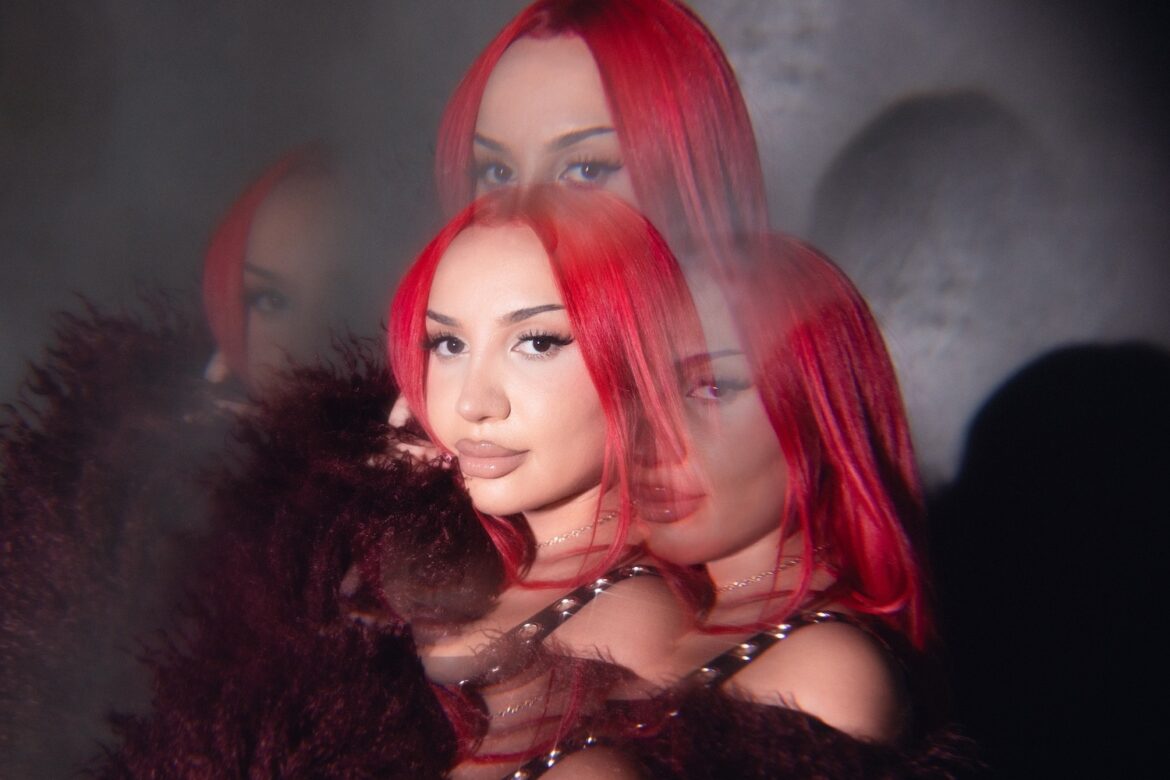
Young Money’s first female rock artist Lucifena talks about growing up in the East Los Angeles punk scene, finding creative freedom with Lil Wayne, and the years of work that came before her breakthrough.
Stream: “Tyrant” – Lucifena ft. Lil Wayne
Long before Young Money came calling, a 14-year-old Lucifena was playing shows around Los Angeles.
She often found herself surrounded by older men who did not always take her seriously. She learned what it meant to play to an empty room and keep going anyway. There were Warped Tour dates and auditions for television competitions, followed by years spent figuring out how to make a life in music without connections clearing the path ahead of her. When her post-hardcore band You Only Live Once ended in 2018, she briefly tried another kind of life. She went to school and started working. The absence of music became difficult to ignore.
“I just felt like when I wasn’t doing music, I felt so empty,” she says. “So I always find my way to somehow creating.”
That persistence eventually brought her to Lil Wayne. After hearing Lucifena’s music, Wayne reached out, set up a meeting with her, and asked her to send him more. She sent everything she had. “Tyrant,” a song Lucifena had already been sitting with for roughly two years, caught his attention and eventually became a collaboration between the two artists. She signed to Young Money as the label’s first female rock artist, a milestone that placed her somewhere she could hardly have predicted during those early years playing shows as a teenager.

Lucifena’s music had already been crossing genre lines long before Wayne entered the picture. Her 2019 EP, Mood Swings, introduced her solo work at a point when she was experimenting with heavy music, hip-hop production, and electronic sounds. Her newer material continues to broaden that palette. Hardcore screams give way to melodic singing, while guitars sit alongside 808s. Shoegaze and alternative rock have become a larger part of her music as her voice has grown stronger and given her more room to explore what she hears in her head.
Growing up around East Los Angeles punk also left a lasting impression. Lucifena remembers being drawn to the freedom she saw in that community and its lack of concern with fitting into the expectations of the larger music industry. Years later, she carried some of that fearlessness onto stages with Lil Wayne, screaming and delivering hard vocals in front of audiences who may never have encountered her kind of music before.
“I’m trying to pioneer,” Lucifena says. “I don’t want to do what everyone’s expecting or what’s the norm.”
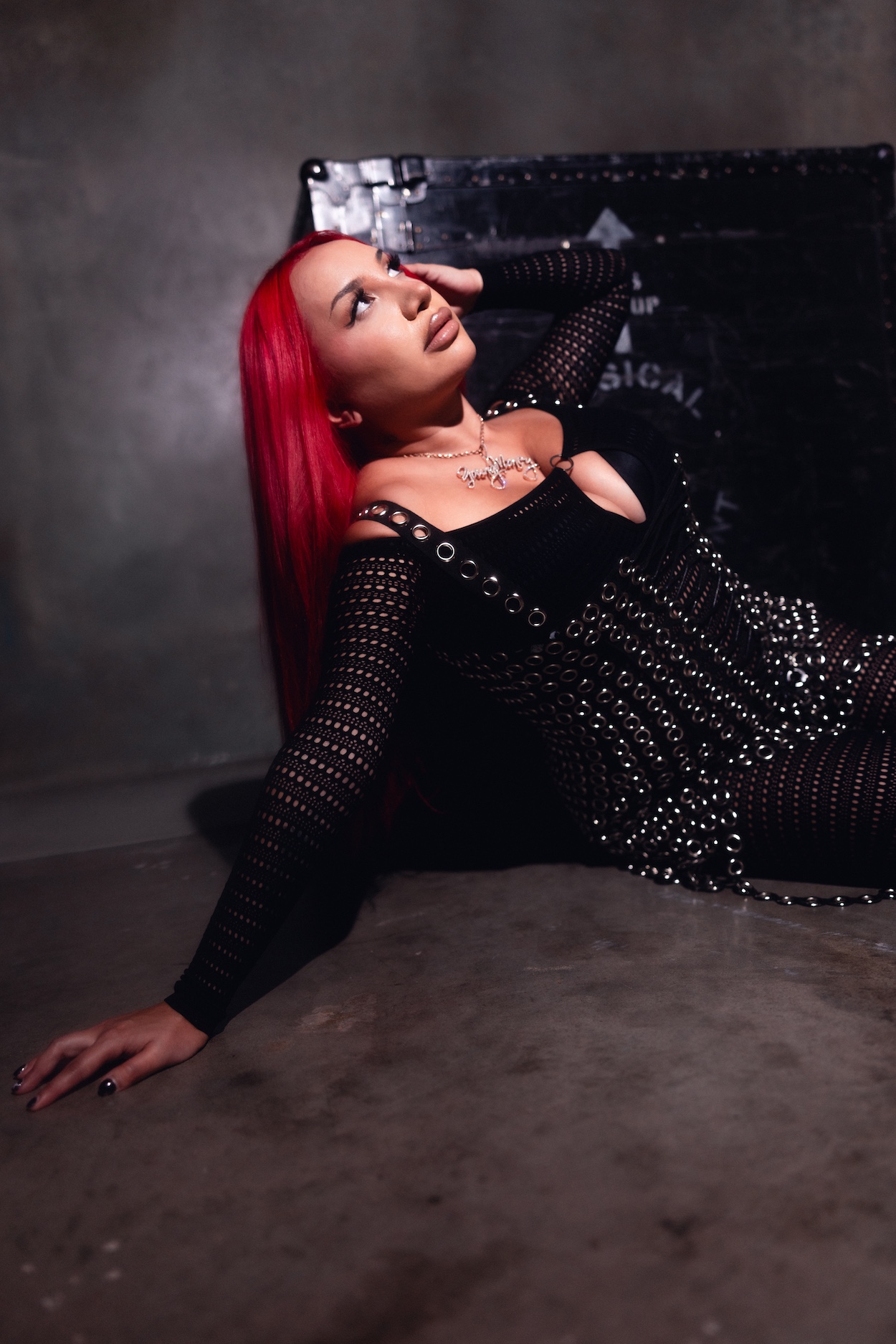
Now, with her debut album WARZONE set for release September 11 via Young Money, Lucifena can look back at a career that has already required years of persistence.
She remembers putting her own money and time into music while wondering whether the recognition she hoped for would ever come. When asked what her teenage self would think of her life today, her answer comes back to one thing: she kept going.
Lil Wayne recently gave her a simple piece of advice while she was showing him songs from WARZONE: “Be monumental. Be monumental.”
It has stayed in her head ever since.
Atwood Magazine recently spoke with Lucifena about signing with Young Money, growing up in the Los Angeles music scene, and the experiences behind the music she is making today.
— —
:: connect with Lucifena here ::
— —
Stream: “Disassociated” – Lucifena
A CONVERSATION WITH LUCIFENA

Atwood Magazine: You’re Young Money’s first female rock artist. What were you feeling when you got signed?
Lucifena: I felt really grateful and blessed that Wayne understood me as an artist. I felt like I met with a lot of labels throughout my career, and I never felt like anything was a good situation for me. And when I met Wayne, I just felt like he understood me as an artist. I think it’s because he’s also an artist, and he just really gets having freedom and he respects that. I just felt like he seen me, so I just felt grateful for the opportunity.
Lil Wayne discovered you after years of building your career independently. What was that first conversation like, and what do you think he saw in your music?
Lucifena: He first DM’d me and told me that he liked my music, and then we had a meeting. In that meeting, it felt really surreal, and I was really nervous. But after a couple minutes, I felt really comfortable. He was just so down to earth and really humble. It felt like the conversation just flowed. He was really interested in hearing my story. I was grateful that he wanted to hear my music, and I sent him every song I ever made and just wanted him to check it out. I didn’t really know that it would lead to all this, but I’m super grateful.
Before Lucifena, you fronted the post-hardcore band You Only Live Once, and you played Warped Tour. Looking back, what lessons from that chapter still shape the artist you are today?
Lucifena: I feel like what really shaped how I feel today is just the grind that I went through. I was so young when I started that band, and we really were just playing shows everywhere. There were no girls when I would play shows. I was 14. It was all just older guys in bands, and I went through so many different experiences, from guys just being rude to you and not taking you serious, to playing empty shows, to having to do presale, to playing a decent venue. Just so many different things.
I feel like that made me have such tough skin, and I feel like if I didn’t go through all of that, I wouldn’t be so bulletproof as how I am today. I feel like that whole journey, starting so young and getting in the scene, I feel that really shaped what I am today.
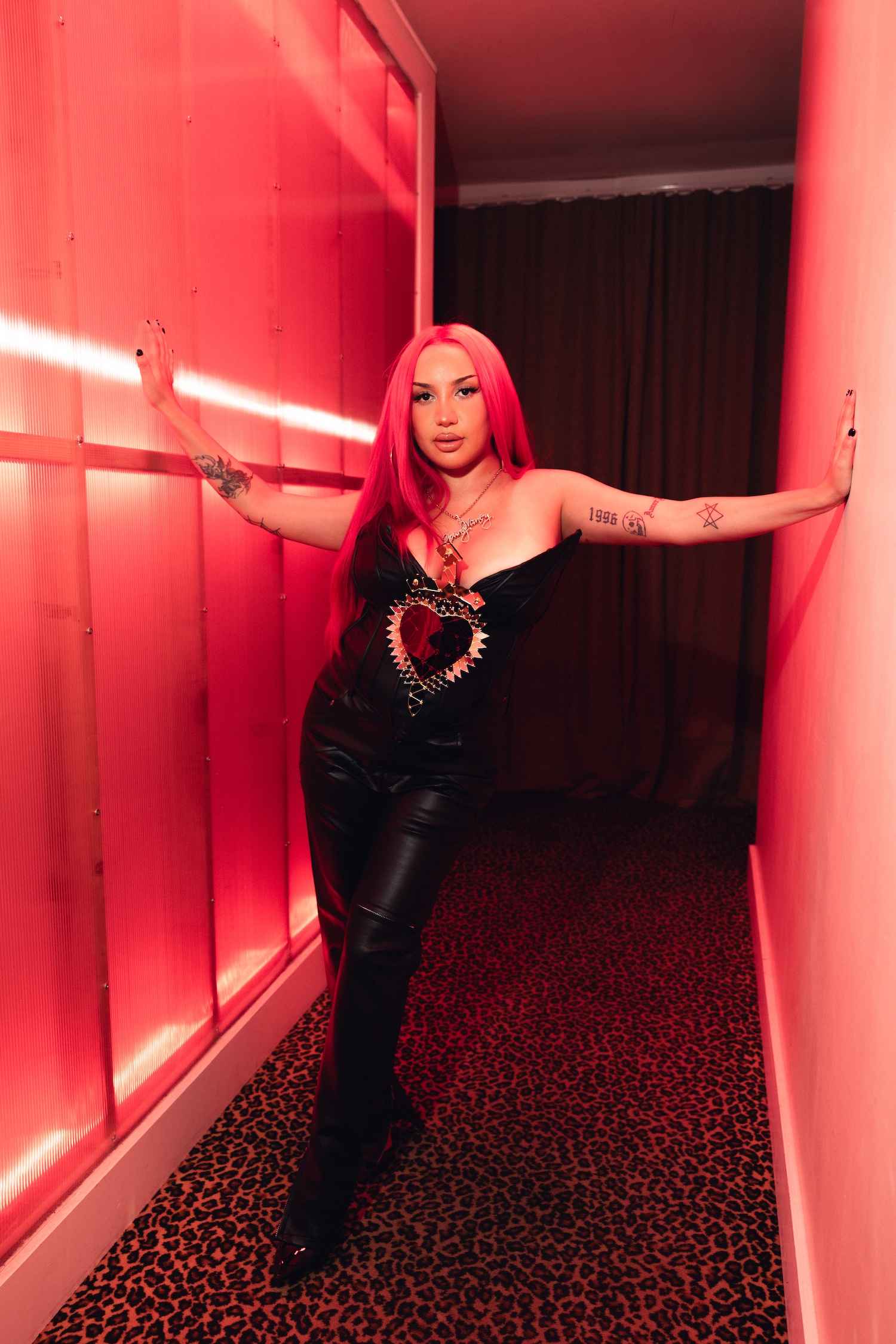
You auditioned for major television competitions early in your career. What were you hoping those opportunities might do for you at the time?
Lucifena: Yeah, I feel like what’s also kind of crazy full circle is that Nicki Minaj was the judge the year I did American Idol, literally walked out to go do, I guess, a rehearsal right before my audition. I think it would have been just so full circle if I would have met her in that audition and then now working with Wayne.
I feel like that whole audition process, for me, I knew that I wouldn’t obviously become an American Idol. For me, it was more making a statement and just letting my voice be heard on any type of platform, because I didn’t really come from connections or anything. I just wanted to somehow get my name out there and promote the genre of music I’m doing on a bigger scale. That was my point of doing all that.
When your band ended in 2018, what convinced you to keep going instead of stepping away from music altogether?
Lucifena: Well, it was really hard because I was faced with the reality of, okay, I have to start working. I have to make a living. I have to either go to school. And I did do that. Once I was in that world, I just realized, this is really not what I want to do.
Even if I can’t do what I want to do on a major scale, I just knew I wanted to do music for the love of it regardless. I think I’ll just always feel that way. The love of the music is what kept me interested and kept me coming back to it. I just felt like when I wasn’t doing music, I felt so empty, so I always find my way somehow to creating.
When did that start for you? I know you were pretty young when you started the band.
Lucifena: I started doing acting when I was eight years old, so I just knew I liked performing. But when I started writing songs, I would say I was about 11 or 12. Taking it seriously, that was when I was a little bit older, but I always find myself coming back to it no matter what. (laughs)
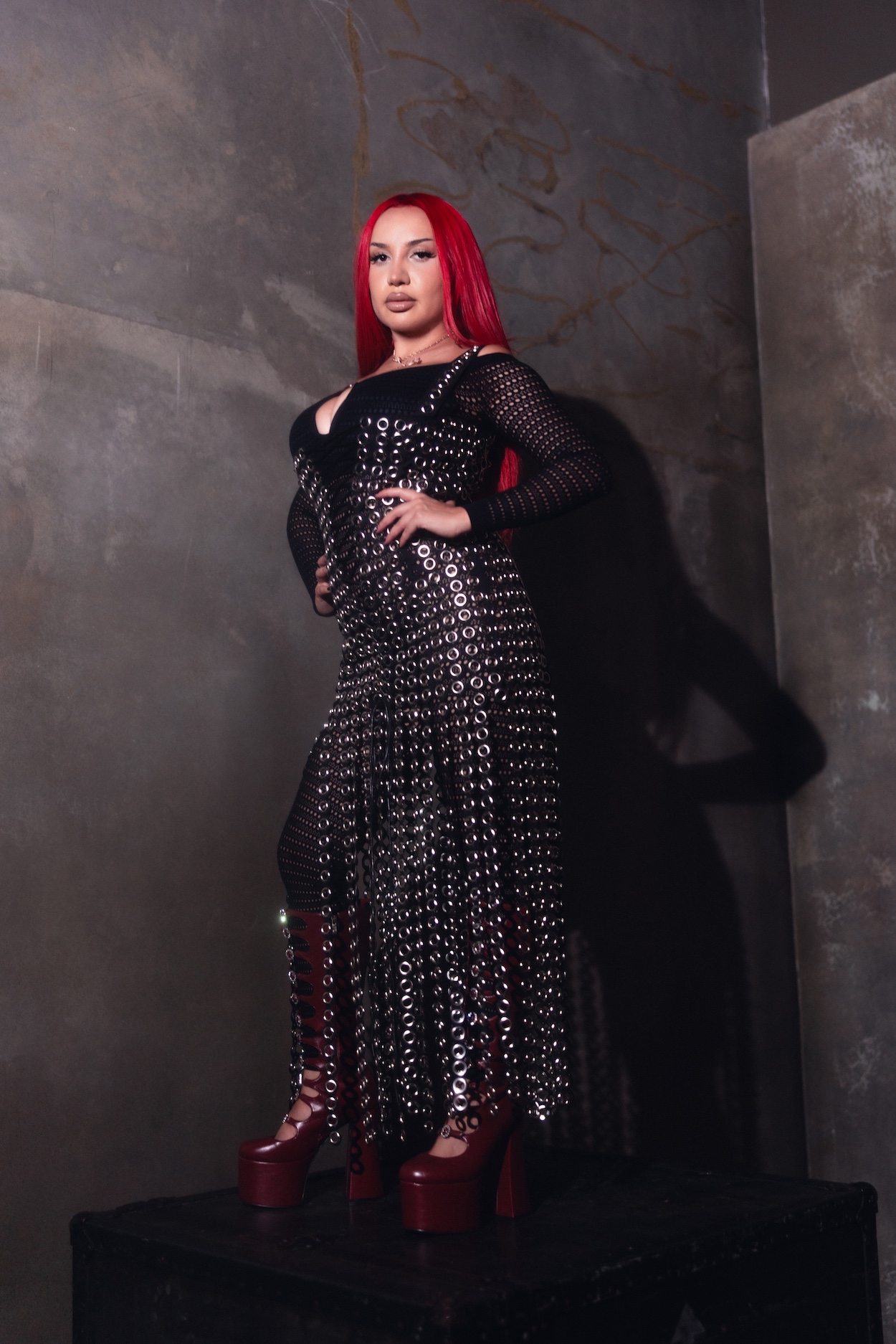
You were one of the early artists blending metal, rap, and electronic music into what became known as trap metal. At the time, did you feel like you were taking a risk? Did you realize you were creating something new, or were you following your instincts?
Lucifena: I started writing with Morgoth Beatz, and he really helped shape the sound, and we were just experimenting. I knew that, as a solo artist, I wanted to do something totally different from anything I’d ever done. I wanted to try to push the envelope and do something different.
The goal was to try to create a new sound. With the help of Morgoth, it just came really natural, and it ended up happening. Then we just kept pushing forward with it.
Your music leans into shoegaze, hardcore, and alternative rock while still carrying elements of hip-hop. What drew you toward that particular evolution of sound?
Lucifena: I think it’s cause I listen to many different genres constantly, so it just kind of reflects into what I create. There’s just so many different vibes to the album. I think it just comes naturally, but I also feel like I am versatile and I have the freedom to be versatile. I’m just taking advantage of that and doing what feels right.
You’ve echoed Nina Simone’s famous sentiment that an artist’s duty is to reflect the times. How does a song like “Disassociated” capture the current social and political climate?
Lucifena: So when I wrote “Disassociated,” there was a really insane protest that happened the night before. I live in downtown L.A., and my whole block, because I live by City Hall, was blocked off. It was just full-on police shooting at protesters. The energy was so intense. I even had to help people that were hiding, protesters that were hiding. I had to bring them into my apartment because they were so terrified of the police brutality that was literally happening right if I looked out my window.
The energy was just so strong that night. I had a session scheduled the next afternoon, so when I wrote “Disassociated,” it really came from a f***ing insane experience that I witnessed. It was just a reflection of what I saw firsthand. Most people, if you don’t live in the city when shit goes down in protests and stuff, you don’t really get to experience that. I tried to channel what I saw into that song in the session that I did the next day.
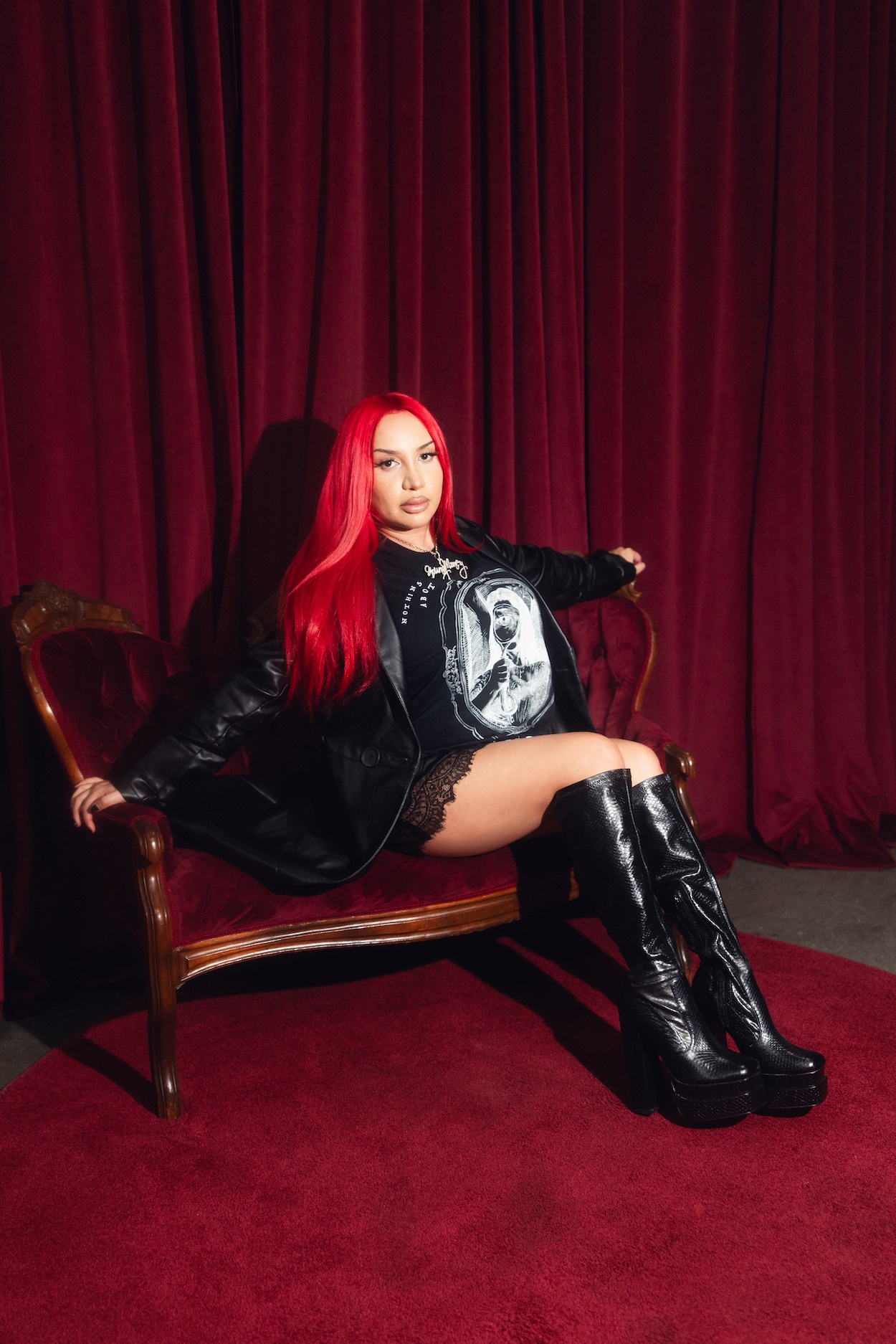
You work with producers who move between heavy music and hip-hop. What makes those creative relationships work so well for you?
Lucifena: I feel like the producers that I’ve been blessed to work with are pretty versatile. All of them have a strong love for heavy music and metal and hardcore, but all my producers also do hip-hop beats, and they also work with major hip-hop artists. That’s something that I never planned, but that’s just what ended up happening.
I trust them and they trust me, and it always flows. I end up making something that I just feel is so f***ing different and cool. Working with these versatile producers that are my friends has been such a blessing.
Why did “Tyrant” feel like the right song to introduce this new chapter, and what does the song represent to you?
Lucifena: “Tyrant” is a declaration of war against all tyrants and assholes that you have to encounter in your life, whether it’s your boss or a boyfriend or a political leader. It could be so many different things.
When I wrote that, that was my way of expressing my rage and rebelling against what I’ve dealt with in the music industry, my personal life, and what I see when I open the f***ing news or something. I made that song two years before Wayne heard it, and I think he related to that too in some way, whatever his life experiences. “Tyrant” was one that I didn’t know would be so special, but it really is something special, and it has true meaning and true life experiences behind it.
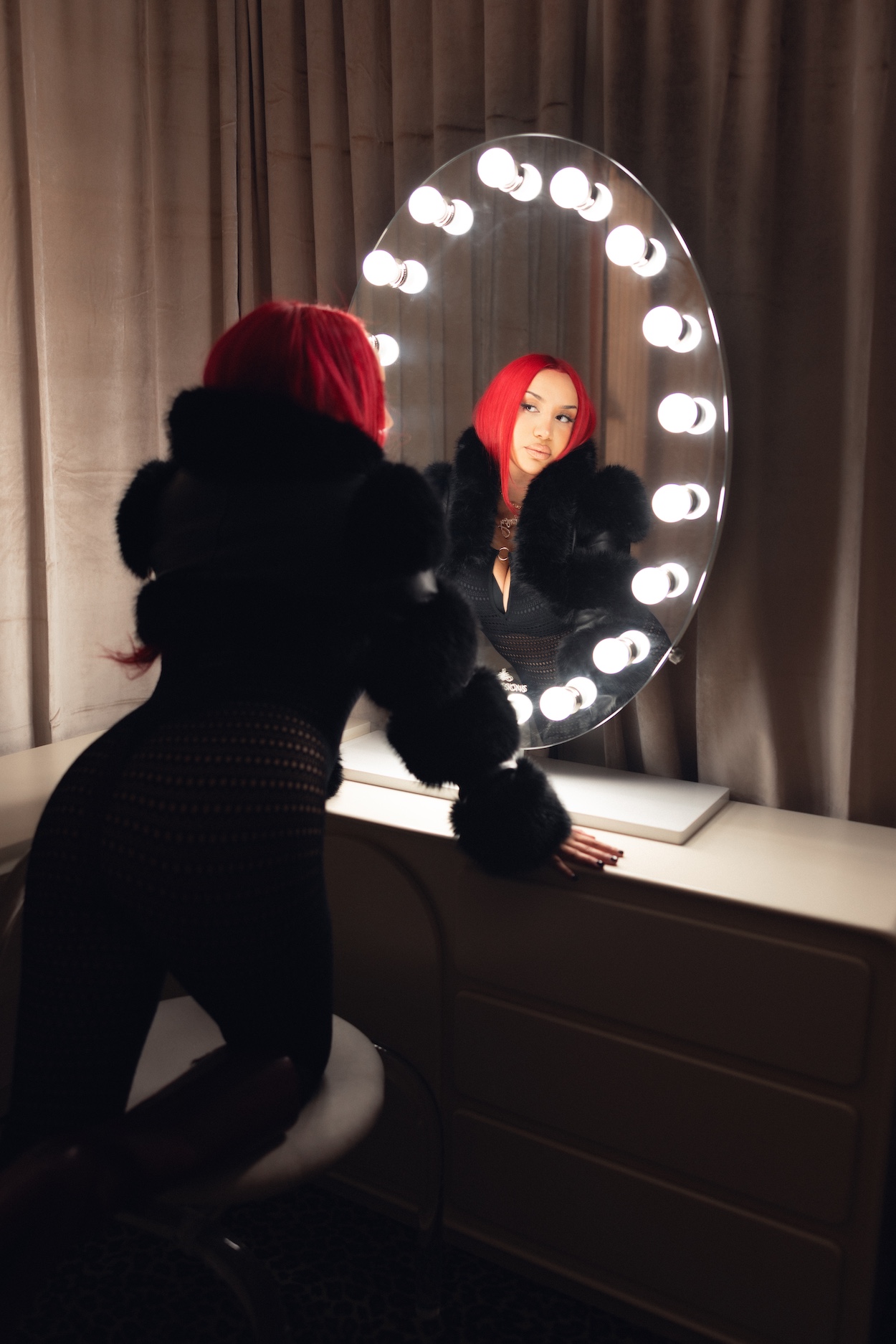
“Tyrant” is a declaration of war against all tyrants and assholes that you have to encounter in your life, whether it’s your boss or a boyfriend or a political leader.
* * *
You’ve said your goal is to push pop culture in a new direction by breaking genre boundaries. What does that actually look like in practice?
Lucifena: I feel like doing that has been such a journey because you get misunderstood and you get people that judge you and try to bring negativity to what you’re doing when you’re doing something different.
For example, going on American Idol and doing something so polar opposite of what everyone wants to hear or what’s expected, or going on a tour with Wayne and screaming and doing hard vocals and stuff like that. You kind of get the pushback, but I feel like as a person that wants to pioneer and innovate, that comes along with the territory. That is how it goes when you’re trying to push pop culture in a different direction.
I feel like I’ve always been kind of fearless when I’m in that mode, and that’s my mindset. I’m trying to pioneer. I don’t want to do what everyone’s expecting or what’s the norm.
Los Angeles has produced so many different music scenes over the years. How has growing up there shaped your creativity?
Lucifena: Growing up in L.A., there’s a really big punk scene in East L.A. I feel like that really shaped me, seeing the punk scene growing up and just how free it is and how it’s not so focused on monetization. It’s not focused on trying to fit in or anything like that. It’s true freedom in music.
Growing up and feeling that energy and seeing those artists and those bands really inspired me. Of course, there’s so many other parts of L.A. with different genres too, but for me, growing up and being exposed to the punk scene really shaped me.
You’ve collaborated with Sid Wilson, Noah Sebastian, and Lil Xan, among others. What has each collaboration taught you about yourself as an artist?
Lucifena: Each collaboration taught me to believe in myself and that you never know who’s listening. You never know who actually wants to support you, so don’t doubt yourself. I feel like I used to doubt myself and not know that there are other f***ing legendary, talented people that appreciate what I’m doing.
As I’ve continued and pushed myself forward, I’ve seen, okay, people notice that. People do appreciate it. Getting those opportunities to be in the same rooms with people that are talented and respected motivates me so much. It’s always a reminder: you never know who’s listening. Just believe in yourself.
Was there a piece of advice Lil Wayne has given you that stayed with you?
Lucifena: Yeah. There’s so many, but recently, when I was showing him the album and the songs, he just was like, “Be monumental. Be monumental.” So I feel like now that’s just in my brain, and I’m just like, be f***ing monumental. (laughs)
The name Lucifena is distinctive. Is there a story behind it, or what does it represent to you?
Lucifena: Lucifena was a nickname that my family gave me growing up because I was really rebellious, and they just were like, “She’s so bad,” so they would just call me Lucifena, and that was my nickname.
When it was time to go solo and pick an artist name, my sister was like, “Why don’t you just go by Lucifena? That’s what we call you.” It wasn’t by friends or anything. It was just an inner-circle, my-family kind of thing.
I was like, you know what? It’s kind of different. It sounds pretty dark, but it’s sick at the same time for the music I was doing. I guess it means “lightbringer in a feminine tone,” so I guess it has double meaning.
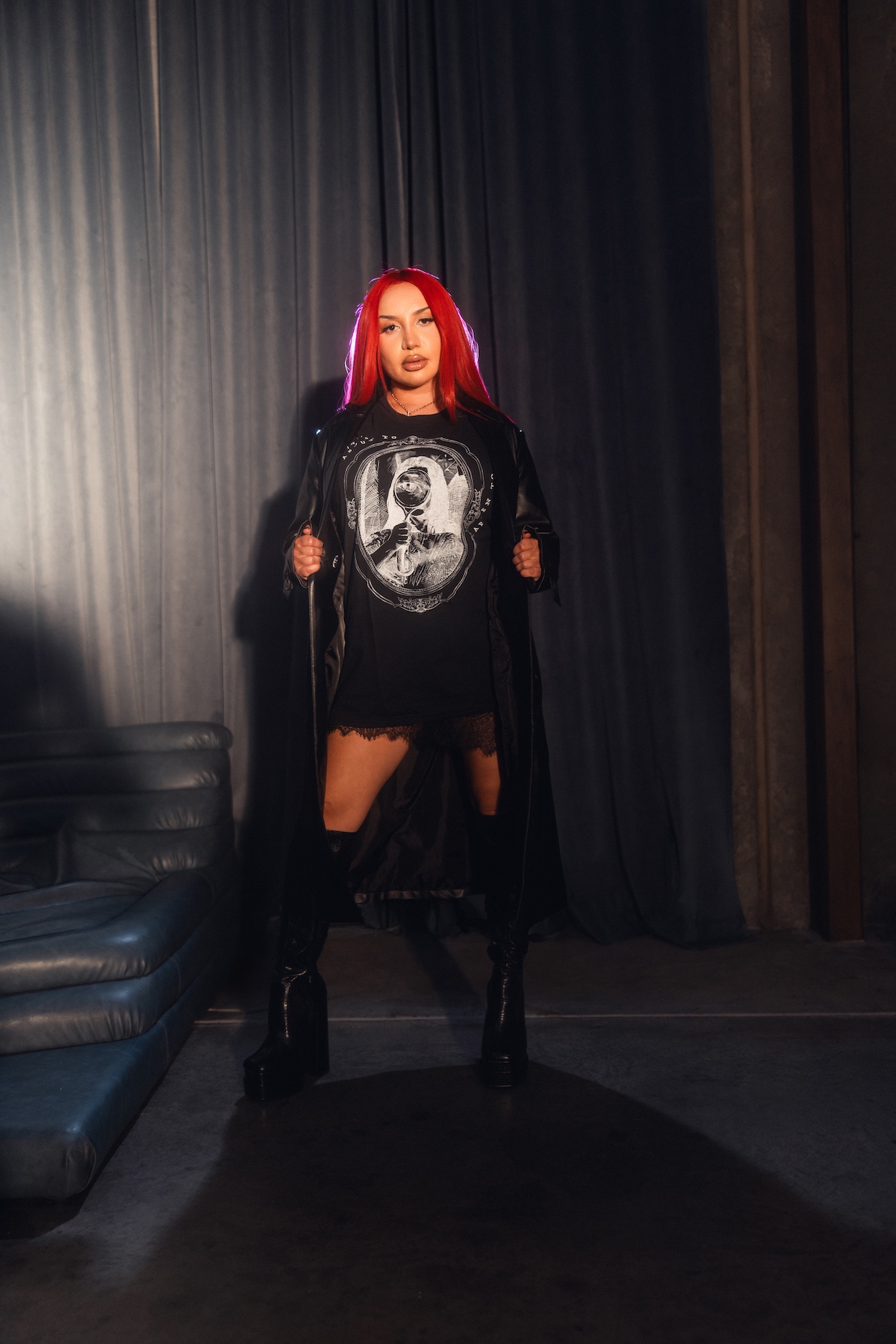
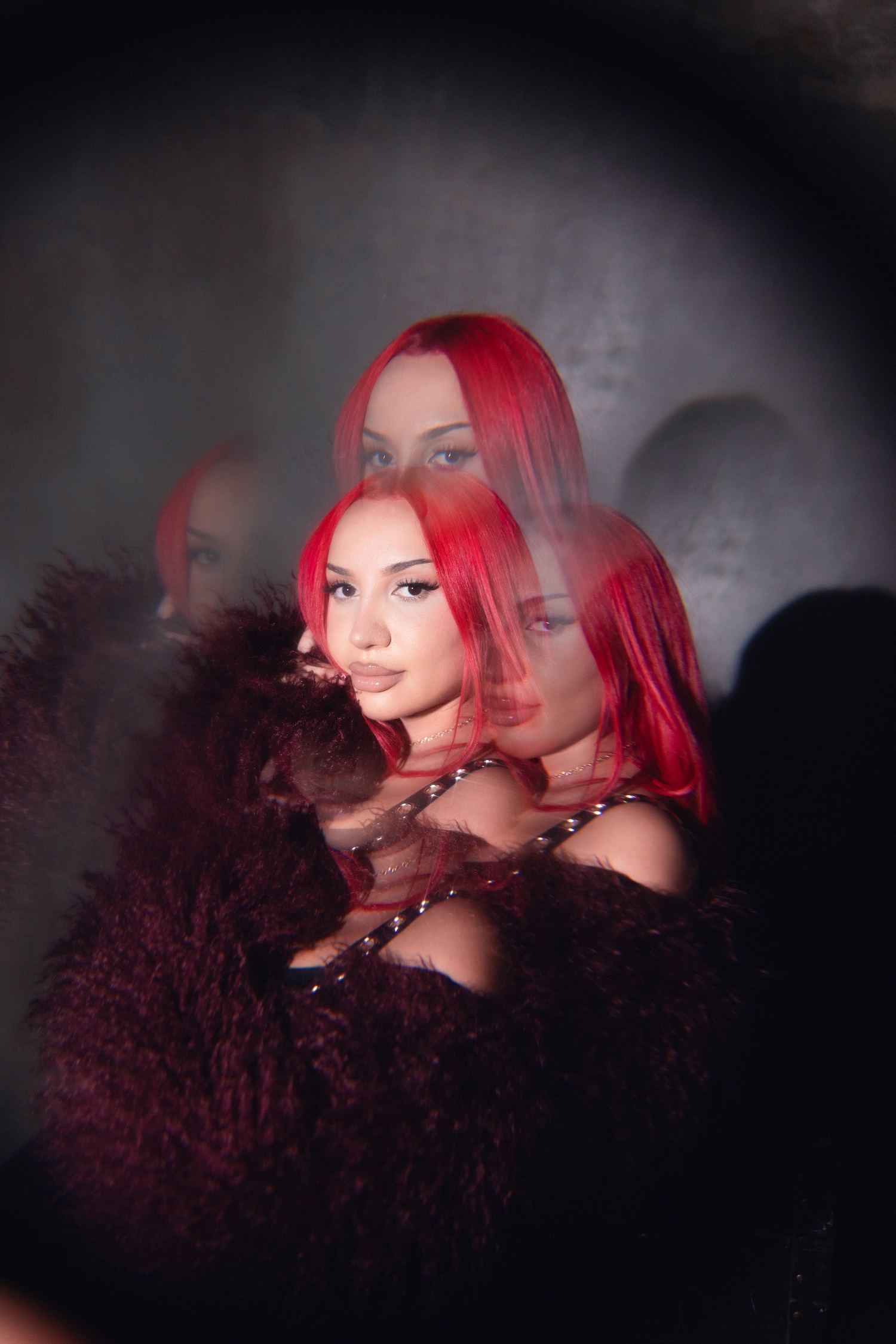
Your visual style is just as recognizable as your music. What influences the looks and imagery you create?
Lucifena: I’m really influenced by films and horror films and things like that, and I just try to implement certain color schemes into the visuals.
Are you involved in choosing your wardrobe, hair, makeup, and overall styling, or do you work closely with a creative team?
Lucifena: I do everything myself. I do my own makeup, and I try to do beauty content and things like that. I’ve always just been very into learning makeup and recreating myself and having fun and changing looks. So yeah, I do it all myself.
My sister has really fun style too, and she’ll be like, “This is a cool piece. Let’s pair this with that.” But yeah, I do everything myself.
Are there particular films that have influenced that visual world?
Lucifena: Yeah, I really love films like The Love Witch or The Craft, or any kind of ’90s, ’80s horror films. I just love that aesthetic.
Your music can be incredibly heavy, but there’s also vulnerability. Do you find it easier to express difficult emotions through music than in everyday life?
Lucifena: I feel like that’s the only way that I can express things like that. I am very introverted in my daily life, and I’m not always the best communicator, so I feel like I put everything into the music. If I feel like I need to rage, or there’s something I really have to f***ing get off my chest, I put it into a heavy song.
If I feel really sad and heartbroken, I’ll put that into a song, and I’ll probably never tell the person how I truly feel, but I’ll put it into a song that I wrote.
What artist or album completely changed the way you thought about making music?
Lucifena: I would say when I got this Ozzfest compilation CD. It was 2006 when I heard that compilation CD of all the artists that played on the festival, because that was the first metal festival that I ever went to. That totally changed everything for me.
After that, I heard so many different types of heavy music, like melodic versus screaming, and just so many levels to it. That really changed my whole trajectory of music and inspired me to want to make something different. It’s not necessarily an album, but that compilation CD inspired me so much.
If you were introducing somebody to your music, which song would you play for them first and why?
Lucifena: Right now, my favorite song is “Coming In,” and it’s gonna be track one on the album. That one is such a sick introduction. If someone never heard me and they had to hear something, it just is so hard, and I’m just so proud of it. I made that one with Morgoth. I think that one, for sure, is gonna get people shook when they hear that.
Can you talk a little bit about your creative process? Is there a usual starting point for you, whether that’s lyrics, music, or something else?
Lucifena: I would say it’s usually an idea. With “Disassociated,” how I had that experience of the protesting and witnessing all the crazy shit with the police, that sparks an idea.
From there, it’s like, okay, I have a lyric, a hook idea. Then it’s like, okay, let’s get the music. What is the tone for the song? Are we going darker? Do we want melodic? What kind of guitar?
With my producers, with this album, I was a lot more hands-on, kind of directing where I wanted each song to go sonically. It’s been just a spark of an idea, a lyric or a melody, or I hear something in my head, and then we build on it and add guitars, and then we keep going from there.
When you cover a song like Nirvana’s “Smells Like Teen Spirit” or Lil Uzi Vert’s “Just Wanna Rock,” how do you approach making such a recognizable song your own?
Lucifena: I feel like the goal is to always take it to a new place and not do it too similar to the original.
When I did “Smells Like Teen Spirit,” I really wanted to implement 808s and chop drops into it, also adding more screams to push it further.
With the Lil Uzi, we’re gonna add full metal, sweep guitars, and really level it up to sound like a metal anthem. I feel like with doing these covers, it’s paying respect to these great artists, but also, let’s try to f***ing level it up to be something epic, you know? As much as I can do and make it myself, or how I would do it if that was my song.
Looking back on your 2019 EP, Mood Swings, versus your recent tracks, in what ways has your personal definition of heavy music shifted over the years?
Lucifena: I think as far as how I’m molding it and changing it, I feel like my vocals, the screams have always been hard, and that’s been my thing, my strength. But I think my singing, I really built my voice to be stronger and better. I’m hitting different notes now.
I feel like now I could truly do these songs and what I heard in my mind from 2019, I could really do it now. I feel like that’s just from, okay, I’m gonna keep practicing. I’m gonna keep trying to build my voice to take it to where I wanted to go. I feel like that’s changed from 2019 to now.
Looking back at the teenager playing Warped Tour, what do you think would surprise her most about where your career has taken you?
Lucifena: I think I would be shocked for sure, but I think I’d be proud that I kept going, because there’s just so many different times that it feels like it’s easier to just quit.
When you’re putting all your money into this and all your time, and you’re not necessarily getting the recognition you thought you would be getting or you hoped for, but you do it for the love of it. I think the younger me would be so proud that I didn’t give up and that I kept going and stayed true to who I’ve been and what I’ve been authentically trying to do.
— —
:: connect with Lucifena here ::
— —
Stream: “Disassociated” – Lucifena
— — — —
Connect to Lucifena on
Facebook, 𝕏, TikTok, Instagram
Discover new music on Atwood Magazine
© Roxy Rodriguez
 © Roxy Rodriguez
:: Stream Lucifena ::