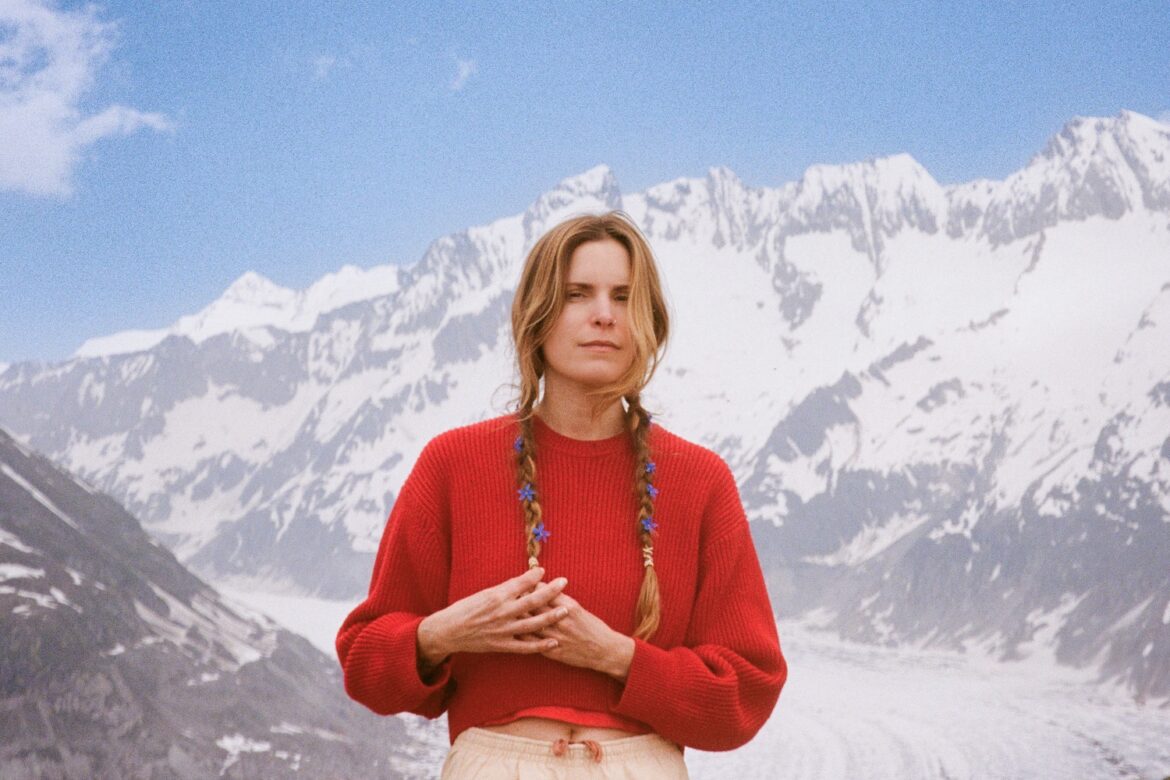
Lydia Luce transforms hardship into harmony and survival into serenity on her third album ‘Mammoth,’ a sweeping and intimate record born from chronic pain, resilience, and the embrace of new life. The Nashville singer/songwriter sat down with Atwood Magazine to discuss the climb that inspired the tender title track, her journey through healing and motherhood, and the lessons she’s carrying into her next chapter of life.
Stream: “Mammoth” – Lydia Luce
I want whoever is listening to my new album or watching the music videos to be inspired to go outside and sit in the grass.
* * *
“Sounds like the trees and the waves and a forest stream.”
That’s how someone recently described Lydia Luce’s music – and for the Nashville-based singer/songwriter, it couldn’t feel more true. A lifelong nature lover and creator, Luce has long found her voice in the spaces where the natural world and the human spirit intertwine. “I want whoever is listening to my new album or watching the music videos to be inspired to go outside and sit in the grass,” she says. That desire – to connect people not just to her story, but to something larger than themselves – pulses at the core of her third studio album, Mammoth.
Out October 31st via Tone Tree Music, Mammoth is both a personal reckoning and a hard-earned celebration: A record that documents Lydia Luce’s healing from chronic pain, her embrace of motherhood, and her arrival at a place of peace she once feared she might never find. It’s an album steeped in the textures of the natural world, woven through with field recordings, ambient layers, and songs that meditate on resilience, love, and trust. And at its center is the title track – a single memory that came to embody the greater journey behind the whole record.
I sweat it out on the first ascent
June lake passing to the left of us
Eyes down better watch my step
I need to know how to trust myself
Can you walk me through this?
I was bitching ‘bout your worn-out tent
Silver moon shining on our skin
How did you see me through the bitterness
You held me tight when I needed it
Can you hold me through this?
Can you hold me through this?
– “Mammoth,” Lydia Luce
A tender, windswept meditation on resilience, “Mammoth” is a dreamy indie folk hymn that climbs slowly, steadily, toward light. With close-miked vocals and hushed acoustic guitar plucks, it feels as intimate as a whispered prayer and as vast as the mountain that inspired it. “Felt my heartbeat in my fingertips,” she sings, and it lands like a shiver – a quiet, vulnerable moment of surrender that stays with you long after the song ends.

Written with Collin Pastore and Jake Finch, “Mammoth” was born from a memory – a strenuous hike up Mount Ritter in California over ten years ago –
– but it reverberates with the emotional weight of a larger journey: Luce’s healing from chronic pain and a long stretch of physical uncertainty. “I sweat it out on the first ascent,” she opens, “June lake passing to the left of us / Eyes down, better watch my step – I need to know how to trust myself.” The lyrics walk us through the climb and the metaphor it came to hold: Recovery not as a straight path, but as a switchback-laced mountain – daunting, exhausting, and full of unexpected grace.
“The sheer difficulty of it all stuck with me,” she recalls. “Some moments just stick with you like that.”
I can see it all, I close my eyes
It’s awful quiet
Closer to Andromeda
I hear my thoughts they’re coming on
And I start to fall getting dizzy from
The weight of it all
You walk me through this
More than just a memory, the song became a mirror for the lessons Luce was learning in real time: That healing is nonlinear, that reaching out to those around you is its own form of strength, and that inner peace is something you walk toward slowly, one step at a time. “The song is about asking for help,” she explains. “Something that I have had to learn how to do while healing through my injuries.”
“I loved writing this with [Jake and Collin],” Luce shares. “We kept the guitar parts from the day we wrote it because they are so incredible! The music video was created with Jason Lee Denton and Aliegh Shields. We hiked over 30 miles on the Rocky Mountains with my husband Ryan assisting. It was an incredibly magical time in nature with buds. I’m grateful that we have this time capsule of a video to remember it.”
In many ways, the music video mirrors the song’s spirit: A testament to perseverance, companionship, and the beauty of leaning on others when the climb feels too steep.
Produced with longtime collaborator Jordan Lehning, Mammoth (out October 31) was recorded at Real World Studios in the English countryside, where days of creation bled into family meals and evenings of shared music-making – a communal experience that bleeds into the songs themselves. Inspired by ambient textures and field recordings of the natural world, the album pulls us into a landscape of serenity and survival – one that honors pain without being defined by it. On “Mammoth,” you can hear the stillness: The pause between thoughts, the breath before the plunge. “When the water’s this cold, you gotta plunge right in / I close my eyes, you count down from 10.”
Felt my heartbeat in my fingertips
My body telling me that I should quit
I’ve never been the type for giving in
But is it living if it’s gotta feel like this?
Can you walk me through this?
Where her last album, Florida Girl, was about true acceptance, Mammoth is about what comes after. “I think this album reflects the place we’ve settled into,” she says, speaking of her life with her husband and soon-to-be-born first child. “A place that is comfort and peace and the aftermath of the last few years of healing – chronic pain, a tornado, a pandemic, learning how to be in a healthy relationship. I’m truly looking forward to this next chapter of life as a new mother.”
Songs like “Florence” and “Wisteria” testify to that peace: Lullabies of longing, gratitude, and home. Elsewhere, tracks like “Belly,” “Deep End,” and “Walking Song” trace the peaks and valleys of recovery, all patient reminders that life is a series of unexpected twists and surprise turns, each one leading us forward.

That wider landscape comes into sharp focus on “Mammoth,” where a single memory becomes a metaphor for Luce’s whole journey.
It’s a song about humility and self-acceptance, about trusting someone – or something – to walk you through it. And in Luce’s hands, it becomes something restorative: A time capsule, yes, but also a lighthouse. A softly stirring reminder that peace isn’t passive – it’s something we earn, inch by inch, song by song.
I let it out on the final stretch
And walked straight out to the rivers edge
When the waters this cold
you gotta plunge right in
I close my eyes, you count down from 10
Can you talk me through this?
Can you walk me through?
Can you get me through?
Atwood Magazine sat down with Lydia Luce to discuss her new record, the journey that shaped it, and the lessons she’s carrying into this next chapter of life. Mammoth is an album of switchbacks and summits that transforms struggle into serenity, grief into grace, and uncertainty into trust.
Read on as Luce opens up about healing, nature, motherhood, and the power of accepting one’s own vulnerability. “This record feels like a gentle hug and an invitation to pause or take a walk outside,” she smiles. “I hope it brings people peace when listening to it.”
— —
:: stream/purchase “Mammoth” here ::
:: connect with Lydia Luce here ::
:: pre-save Mammoth here ::
— —
A CONVERSATION WITH LYDIA LUCE

Atwood Magazine: Lydia, for those who are just discovering you today through this writeup, what do you want them to know about you and your music?
Lydia Luce: Someone recently described my music as “sounds like the trees and the waves and a forest stream.” I was so moved and honored by that suggestion, and it does feel like it captures what is important to me as a nature lover and creator. I want whoever is listening to my new album or watching the music videos to be inspired to go outside and sit in the grass.
Last we spoke was around your third album Florida Girl, which you described as being about “true acceptance.” What is your relationship like with that record and its songs, nearly two years after its release?
Lydia Luce: I feel grateful for the personal work that I did to find that true acceptance. Accepting that I needed to stop playing my instruments to begin to find healing after my herniated disc. Accepting that I needed to get bilateral carpal tunnel surgery further prolonging my ability to play. I took it day by day doing PT, listening to my body and paying attention to its limits. I accepted that I may have to say no to certain things that don’t align with what my body is telling me it needs. I am in such a beautiful place with my healing. I have flare ups, but I don’t panic. I breathe through them having learned that in a few days the pain will decrease, and I will get through this like I have time and time again.
Someone recently described my music as “sounds like the trees and the waves and a forest stream.” I was so moved and honored by that suggestion, and it does feel like it captures what is important to me as a nature lover and creator.
* * *
Similarly, where do you feel your new album Mammoth fits in your discography? If your last record was about acceptance, what is this one “about”?
Lydia Luce: My husband and I are expecting our first kiddo the month after my new album comes out. Last year when I was in the middle of figuring out my chronic pain and injuries, I had such a big fear that I would never be able to hold my baby without pain. I no longer have that fear. I know it will be challenging, and it may trigger some of my pain, but I have the tools to get through it and trust that I will listen to my body.
My partner has been the biggest support to me over the last few years dealing with my chronic pain and now in my pregnancy. We have settled into this beautiful vibrant life together and bringing a child into the fold feels like such an honor. I think this album reflects the place we’ve settled into. A place that is comfort and peace and the aftermath of the last few years of healing (chronic pain, a tornado, a pandemic, learning how to be in a healthy relationship). I’m truly looking forward to this next chapter of life as a new mother.
Can you tell me a bit about the album's first two singles, “Florence” and “Wisteria”?
Lydia Luce: “Florence” is a lullaby I wrote a year and a half ago while imagining myself as a mother. My partner and I had been trying to get pregnant for about a year and a half and had an appointment April 11 to go to the Nashville Fertility Clinic to discuss IVF treatment. Florence came out April 24 and we found out we were pregnant March 14! All incredibly serendipitous timing.
“Wisteria” is about finding peace at home and feeling so hopeful about the future. There is a line that says, “I hear you singing softly from somewhere in the house, a light is pouring in, it touches every inch around.” That is about my husband. We both work from home and sometimes I’ll hear him singing our laughing at himself, and I just smile and feel so grateful for our little life together.
What's the story behind the title track, “Mammoth” – and why did you ultimately name the album after it?
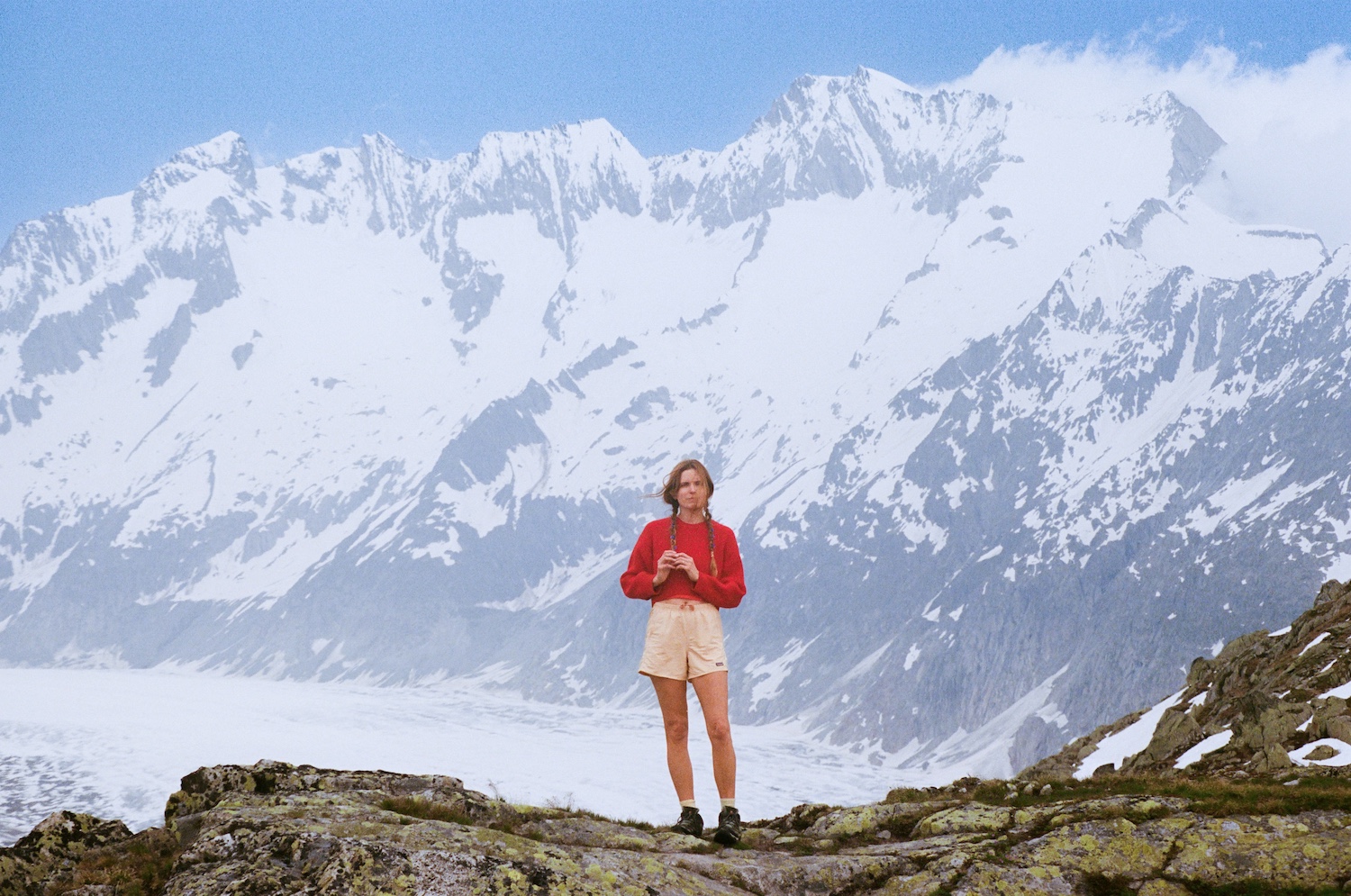
Lydia Luce: “Mammoth” was inspired by a hike I did in my twenties out in the Sierras. It was so challenging, and I had to rent crampons, an ice pick, and a helmet to get up that mountain. The song is about asking for help. Something that I have had to learn how to do while healing through my injuries.
You've talked about how this song was inspired by a hike of Mount Ritter in Mammoth, California eleven years ago. I'll be honest, I can barely remember what I ate for dinner last night, let alone a hike over a decade ago. What made that event so memorable, all these years later?
Lydia Luce: I think the sheer difficulty of it all stuck with me. It was a completely new experience for me and pushed me to my limits. I felt so accomplished making it back to the car and leaping into June Lake at the end of those three days. Some moments just stick with you like that.
Your lyrics seem to live in-between the physical world and the internal dialogue. What is this song about, for you?
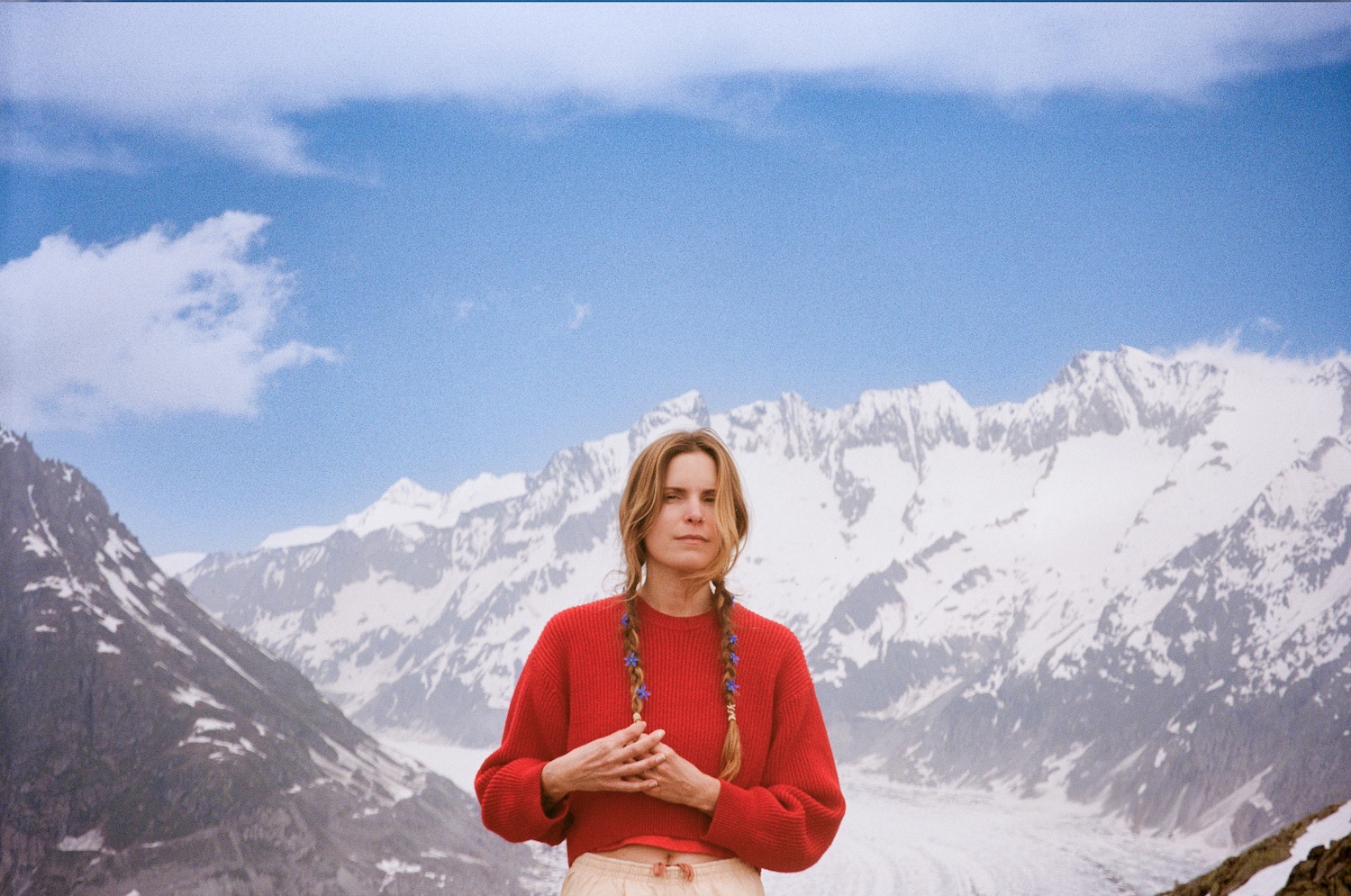
Lydia Luce: When I was writing the song with Collin Pastore and Jake Finch, it became easy to relate a challenging hike to the peak of a mountain to being in the middle of a crisis. When you can see the top of the mountain and it seems so daunting and far way, and little by little, switchback after switchback, you make your way to the top. Then follows a valley and another peak! It’s just the rhythm of life and its ups and downs, and taking it moment by moment is the only way through.
It became easy to relate a challenging hike to the peak of a mountain to being in the middle of a crisis… It’s just the rhythm of life and its ups and downs, and taking it moment by moment is the only way through.
* * *
How does this track fit into the overall narrative of Mammoth?
Lydia Luce: I think I chose it as the title track for a reason. It sets the scene for a lot of the songs on the record. “Belly,” which is about being patient with yourself as you heal, “Deep End,” which is about being dead center in the middle of the crisis, “Walking Song,” which is about accepting that this shit will just keep happening and all we can do is breathe and keep moving through it. “Mammoth,” asking for help is one piece of the overall healing journey.
I actually had the honor of interviewing Jordan Lehning, and later premiering one of his songs, a few years ago! Nice guy, great ear. What was working with him like, both in making this particular song and ultimately the full album?
Lydia Luce: Jordan and I have become so close over the years. He is my business partner in Lockeland Strings, we made my first album Azalea together back in 2017, then Dark River in 2019. We traveled with both of our families to make Mammoth over in the UK at Real World Studios. He feels like family to me at this point and its incredibly easy to work together. He is a musical genius and so inspiring to me.
Making the record at Real World was a dream. We had family meals together and created in the stunning countryside studio during the day. After we finished the record, we traveled to Paris to do a Lockeland Strings show. Feels like we’re on this big ole musical adventure together, and I don’t see an end in sight.
What do you hope listeners take away from “Mammoth,” and what have you taken away from creating it and now putting it out?
Lydia Luce: There is an instrumental song on the record called “Signet” named after all of the baby swans around the studio. Joe Pisapia, Jordan and Jason Lehning, Ryan Usher and I created it in the room. This record feels like a gentle hug and an invitation to pause or take a walk outside. I hope it brings people peace when listening to it.
— —
:: stream/purchase “Mammoth” here ::
:: connect with Lydia Luce here ::
:: pre-save Mammoth here ::
— —
Stream: “Mammoth” – Lydia Luce
— — — —
Connect to Lydia Luce on
Facebook, 𝕏, TikTok, Instagram
Discover new music on Atwood Magazine
© Ryan Usher
 © Ryan Usher
:: Stream Lydia Luce ::