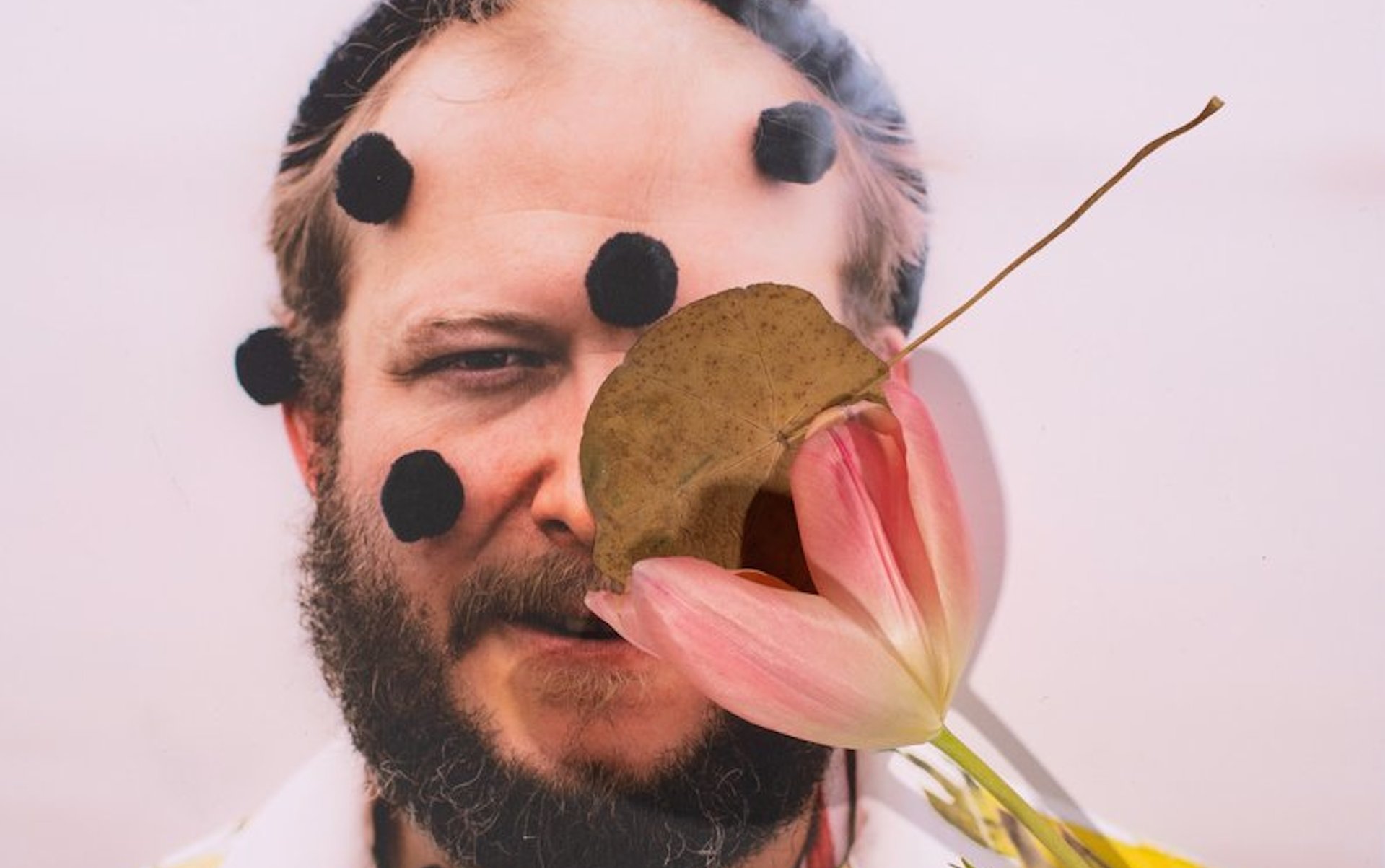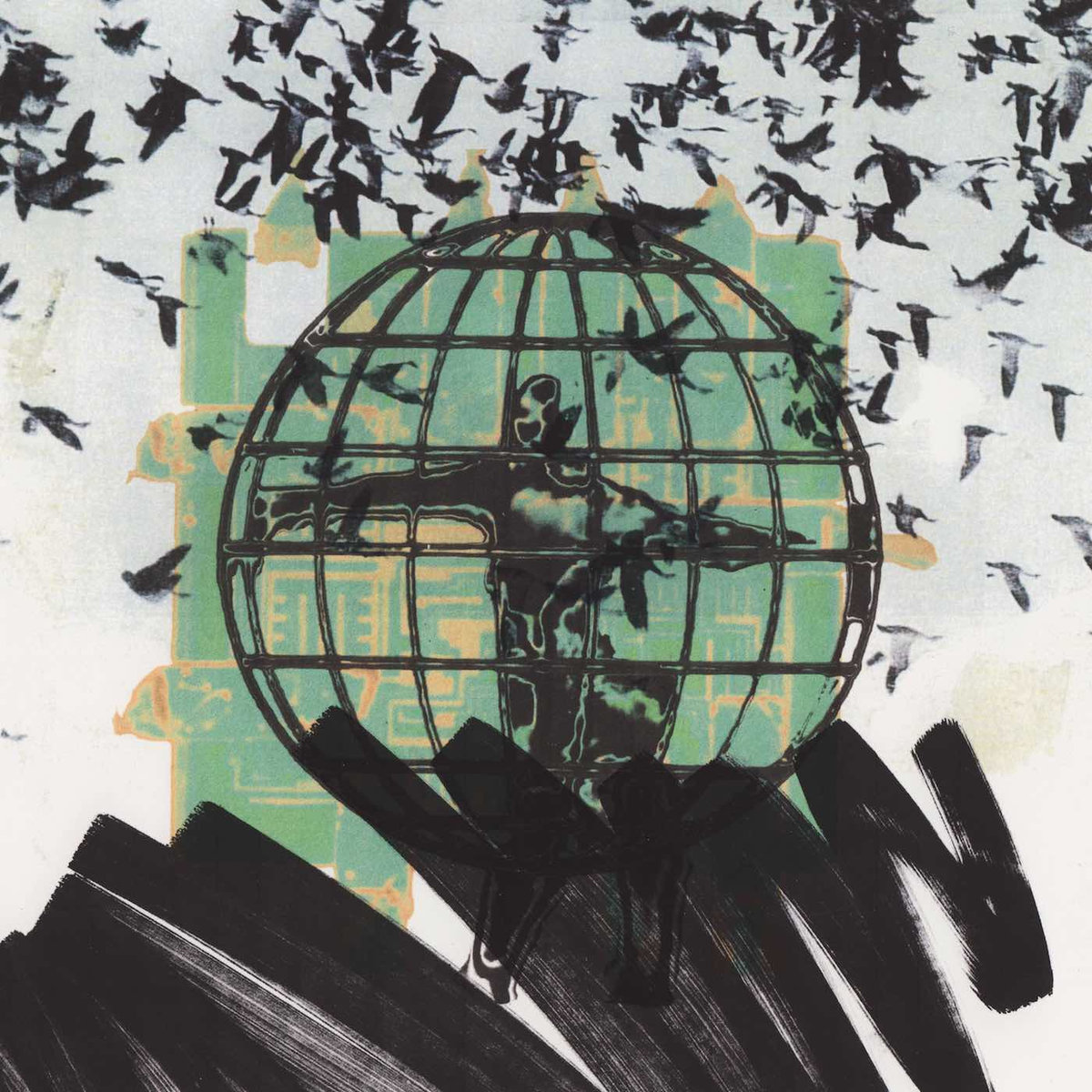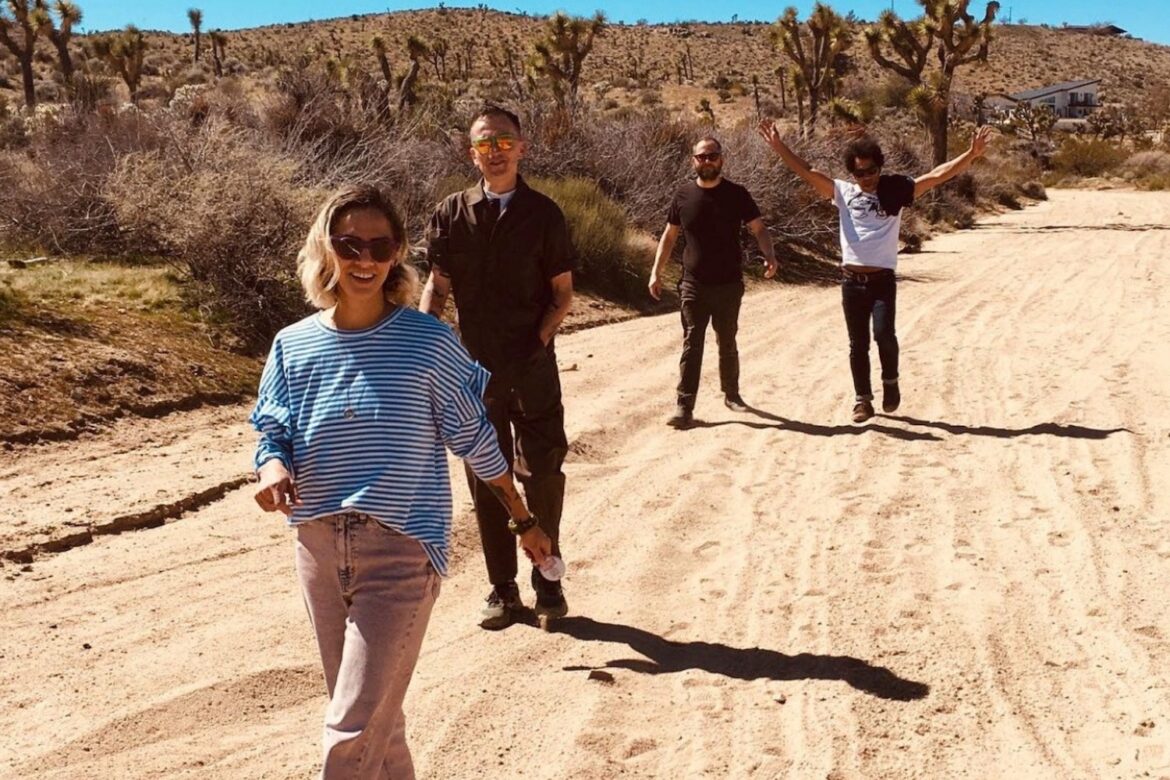
Indie rock band LAPêCHE carve space for emotional complexity with ‘Autotelic,’ their most unflinching release to date – a spiritually charged, desert-born record that trades post-punk urgency for shoegaze drift, melodic emo textures, and raw meditations on distance, identity, and deeply personal reckonings.
Stream: ‘Autotelic’ – LAPêCHE
LAPêCHE are a band in motion – geographically, creatively, and emotionally.
With members now split between New York and Salt Lake City, that sense of distance and evolution pulses through their third full-length album Autotelic, released in February via Tiny Engines. Named for the idea of doing something for its own sake, the record embraces process over outcome, tracing a path defined by presence, persistence, and personal reckoning.
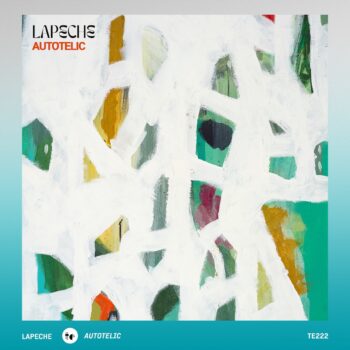
Produced by Alex Newport (At the Drive-In, Bloc Party, Death Cab for Cutie) and recorded in Joshua Tree, Autotelic marks a striking sonic shift – trading the band’s raw post-punk edges for shoegaze drift, melodic emo textures, and moments of stark minimalism. The result is a spiritually charged body of work that mirrors the stillness and expanse of the desert, giving space for reflection, vulnerability, and emotional clarity to take root.
That openness sits at the heart of the album. Across Autotelic, frontperson Krista Holly Diem leans into deeply personal subject matter with unflinching honesty, most notably on “Happy 4U,” where she confronts the complexities of fertility and the dissonance of joy and grief existing side by side. It’s a bold, vulnerable step forward – one that underscores the band’s growth not just in sound, but in purpose. Diem’s openness as a songwriter is also something to be admired, as she grasps a nettle of subject matter which can only be painful to write about.
In conversation with Atwood Magazine, Diem reflects on working with Newport, leaving New York to return home to Salt Lake City, navigating life as a bi-coastal band, and the emotional truths that shaped Autotelic into LAPêCHE’s most mature and fully realized release to date. The band have invested everything in this record – and it shows.
— —
:: connect with LAPêCHE here ::
:: stream/purchase Autotelic here ::
— —

A CONVERSATION WITH LAPêCHE

Atwood Magazine: Congratulations Krista on your album, Autotelic! You must be very proud of it.
LAPêCHE (Krista Holly Diem): I am very proud of it, and it was kind of a long time coming. It’s the longest from writing to actual having the record that we’ve ever gone through. It’s been almost a little over two years, I think. So, yes, we’re ready to have it out and available to people.
If we just go back a little Krista, you started out originally as a solo project in Brooklyn, New York and that grew into a collaboration with your husband and a couple of members joining. You’ve had a couple of different drummers since, but you’re now based in Salt Lake City?
LAPêCHE: Half of us are here. So, my husband, Dave, who’s our bass player, and I are here in Salt Lake City. Then our drummer Colin and our guitar player Drew are in Brooklyn.”
Colin I’ve seen has a nickname, “the machine.” He’s certainly a machine on drums on some of those songs!
LAPêCHE: He’s an incredible drummer, and he’s also just an amazing human. But, yes, we actually played in a record store two weeks ago in Boise, and somebody came just to see him, and he wasn’t there. They were so disappointed as he was why they came.
You recorded this album at Joshua Tree Studios in California with producer Alex Newport from Bloc Party, but I also know him from his mixing of an album Mercy Works for the band Casper Skulls from Ontario a few years back. Can you tell us a little bit about what working with Alex was like, and did you form a trust early on?
LAPêCHE: Yes. We definitely did; we had a pretty good relationship prior, and it was kind of cool that we got to become friends with him. It really felt like he was a friend; it looked like we were definitely equals and working together. He actually found us on Instagram, and we were like, who is this guy who started following us? Then we just saw some of the things that he had worked on and then we started chatting with him. He mentioned that he would love to work with us.
We worked together for about a year before we recorded the album. We got familiar with how he does things, what he likes, and he was honest about everything. His focus on this album; the vocals were going to be in the center. I’ve never really had that recording before. It’s always kind of been like a guy’s club, where I’m the only female in the studio. It didn’t feel like that when we recorded it, and I felt like it was a safe place. I get very nervous when I record, and I was nervous. But he did such a great job of kind of walking me through it and giving me time when I needed time. I felt very comfortable being like, my armpits are sweating I just need to take some deep breaths, and he’s like…. “Take your time,” instead of me just trying to get through it on my own. So, it was wonderful working with him, and we really feel like he was invested just as much as we were in making it sound good. We never felt like there was a rush or let’s just get this done. He’s a wonderful person, and we really want to record with him again.
That’s awesome. As a band, were you actively looking for feedback on your own music? or directions or influence, or does he just come forward with suggestions?
LAPêCHE: Both. He was like, send me everything you got, I’ll listen to all of it. Then he was like, I love this song and this is why, these are the parts, use this as a blueprint for your song structures and just write as much as you can and send it to me. A lot of times, he was like, “No” or, “you know this isn’t it, keep going!”
That’s not easy to do. First of all, I’m not good at turning out product. It takes me sometimes a really long time to write even just the chorus of a song. So that was a challenge. He was very, “nope, That’s not it!” There were songs that we wrote that I did not like, and he was saying “yep, this is great” and I’m like, it’s not great, what are you talking about? He was very opinionated, but in a way that didn’t feel like a criticism. It just felt for him he just wanted it to be the best and was pushing us that this isn’t the best we can create and that was good. It was also nice too because he was the deciding factor for things instead of us fighting in the band; he got the last word. So that was actually really helpful for us because the band got along so well during all of the recording because we were just like Alex, what do you think? And then he could decide.
I guess that’s part of the trust as well, listening and taking on board some of that constructive criticism?
LAPêCHE: Yes, and not just taking it personally, because he thought we were great enough to work with us, just trust that. Trust that he thinks we’re great and that he wants whatever we create to be great.
I know you had 18 to 20 songs and whittled it down to 10. But for Alex, was he more encouraging on the more vulnerable type of songs? Because I know there’s a certain duality on the album with joy and melancholy. Or was he encouraging that?
LAPêCHE: He was. He also wanted to know what every song was about, every lyric. Even the way that I would sing it, if there was a word in it that he felt needed to really stick out more than the rest, then he would say let’s figure out a way we can phrase this so that word is more dominant in the melody. I don’t know if he was necessarily sensitive to it because it was kind of a secondary thing, once he chose the song. I don’t want to share on his personal life, but I will say that he related to some of the subjects and that was helpful I think because he was able to take care of it in a way.
Right, does being public on subjects come natural to you, or does it feel a little awkward?
LAPêCHE: [laughs] No, It’s not. I don’t know why, I just don’t have any shame about it. I mean, the subjects make me feel a lot of things. But, yes, it’s not hard for me to talk about.
We mentioned “Happy 4 U” has this melancholy on it; you grasp this difficult subject of fertility issues and your point of view on it. All credit to you for being so open about this. But was that cathartic, or was that still uncomfortable? Or how did it feel like writing this emotional song?
LAPêCHE: Yes, cathartic for sure. It’s also I have to kind of go somewhere else when we perform it, or else I’ll start crying. I think just kind of honoring the heartbreak is very cathartic for me and just putting it out there in a way that is very real for me. It’s kind of how I handle it. I am almost feigning this; everything is fine, and I’m really glad that you’ve had such an easy time having children.
Pretend it’s mine and just be in it
My train never made the station
Or maybe God forgot my location
So happy for you
You know that it came so easily
And it happens to be truе
That it wasn’t so easy for me
I’m happy for my friend. It’s just very painful. I’m trying to convince myself to be happy for the people that I love, that have kids or are expecting? If I think about it too much or if I get into the lyric when I’m performing it, it’s heavy for me.
Very difficult, it’s such an emotional topic, but credit again for highlighting it as well because it’s such a difficult subject for people who don’t have experience talking about it. Along with other female health subjects such as endometriosis, which I have many friends that have struggled with that and don’t get enough attention, especially from male doctors, I have to say.
LAPêCHE: Women’s health is a whole other podcast! They know nothing and it’s very frustrating. But a lot of things are not talked about. One other thing is that my mom never said anything to me about menopause or perimenopause. How is this hasn’t been a topic of discussion? It’s mind blowing to me that’s what our mothers did, they went through this and they never talked about it.
And buried the rage.
LAPêCHE: Yes, That rage totally.
But I’ve highlighted a couple of songs that I played on my radio show. “Heart NY” I think was the first song that I came across from you. I came across your music through Tiny Engines, the record label in North Carolina, and I was curious how you got on there?
LAPêCHE: Oh, well, we are fans of the label, and we were shopping this record around.
We were on a label called New Granada, and they’re wonderful people there in Tampa, Florida. They were great to work with. But they’re very small, and we just were really hoping to have a wider reach with this record, especially because it was an investment. We spent a whole month recording it rather than doing it, shoving it all into four days, which is what we’ve done in the past.
We wanted to try get it to be as “successful” as possible with a bigger reach with distribution and PR. Will from Tiny Engines was interested in putting it out. We talked with him, and we were on the same page as far as we felt about music. He was excited to put it out, but he was like, I want to put it out, but I can’t do it this year, my roster is so full. But I want to, so please are you guys cool with putting it out in 2026? even though this was, beginning of 2025.
And so, we waited, but he’s been wonderful to work with. We feel very lucky to be on Tiny Engines. There’s been some great bands on here that I didn’t know because I’m not really a label person. (I don’t know what label every band is on or whatever.)
I think you’re a good fit for the music that’s on there as well because you have a nice mix of shoegaze and even bits feel like a bit of emo on there as well. But to go back to a song like “Heart NY,” you spent fourteen, fifteen years in New York. It must have been difficult to pack up, and I know you were heading back home, but it must have been a tough decision for the two of you?
LAPêCHE: Yes. I was in New York City for eighteen years, and I think Dave was up close to that as well, seventeen or eighteen. I love New York City so much, and I feel like I figured out who I was or am there and grew up a lot. I’m very grateful for it. But I really felt like as I’ve gotten older, I really was not embracing all that New York had to offer.
I feel like it’s a young person’s game in a way, where it’s like if you’re willing to live in a very small space with a lot of roommates and that’s your life then. But if you want to have a kid or a yard or a washer and dryer, then this place isn’t for you. And then so that was kind of like, are we aging out of this place? Then my dad died, and my mom was here in Salt Lake City by herself. I just felt it was time. But it was hard to leave for sure. I nanny in New York for two little girls, but for well, for a bunch of kids, but one little girl in particular. I’ve been with her since she was one, and she just turned 10 in December. I’ve been with her, for her whole life, basically. So that was hard to leave her.
I’m sorry to hear about your dad. That must have added to the complicated feelings of leaving New York and heading back home, to help your mom. I hope she’s getting on ok, it’s a difficult time losing that companionship, and there’s not much you can say about it, but just to be there for her.
But I’ve only seen videos of Salt Lake City; it looks like an amazing city. Having read more about it, it’s emerged as a one of America’s top businesses and tech hubs, the job market is good, and it’s really on the rise. Have you felt a huge difference in the city since you returned?
LAPêCHE: Back here? Yes, well, I grew up here, and it’s changed so much. It’s a lot more metropolitan and there’s a few museums. People are a little more open-minded, liberal, and inclusive. It’s awesome to be back here. Since I grew up here, I didn’t really see my surroundings because they were just there. And now I’m like wow, it’s so beautiful here, I can’t not see it.
We’ve gone back to New York a handful of times over the last couple years to play shows. On my first day back in New York, I’ve missed this so much, this energy. And then the next day, I’m like, okay, …ready to go.
I could imagine it being claustrophobic going back there, especially with such space in Salt Lake City and hiking in the surroundings. Then to going from 200- 250,000 people to 12 or 13,000,000 must be kind of crazy as well.
LAPêCHE: Yes, totally.
Part of the process for you as a band then was getting over collaborating remotely. It’s something that’s come up with a couple of my interviews recently. Did you find that a difficult or enjoyable experience? Because I’ve heard from both sides.
LAPêCHE: Oh, I really love it. This is the best setup for me personally because I’ve never really been someone that can just start jamming.
So, writing remotely has been so helpful to me because I can really sit with whatever guitar riffs Drew writes or guitar riff that Dave writes because Dave writes a lot of our guitar riffs too. I can sit with it and listen to it throughout my day, and then I can write on my own when I have time. It’s also cool that we can all work on the same thing at the same time or our different parts, and I feel like everybody’s idea gets heard. I’ve loved working remotely.
It’s funny because we started working remotely during the pandemic even though we all lived in the same neighborhood. We were terrified to see each other. Even when we went back to being in person and the social distancing was over, we were still, like, writing remotely because it was just fun and easy, and we could all work on things at the same time at different locations.
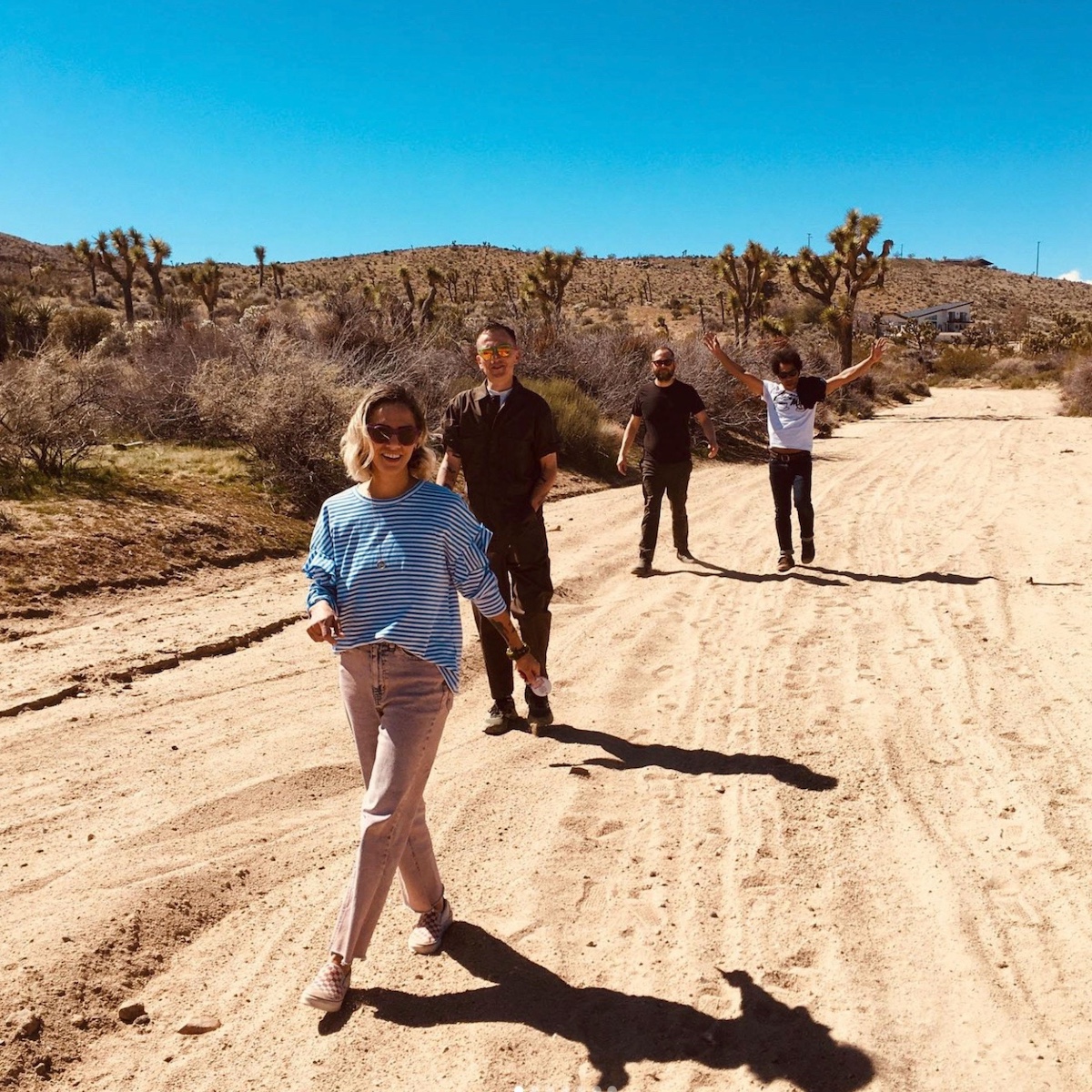
When you come back together then, finally after working remotely and all come into the studio, is there that renewed enthusiasm once you get together physically in the one room, with renewed vitality?
LAPêCHE: Oh, totally! It’s so different than a regular practice if we would practice every week or something. Because you’re just so excited to have all of those instruments live, see each other and feel each other’s energy. It’s great. I really miss that part of it. I just miss those guys when I’m writing or listening to something, I’d love to have their energy in the room.
One final thing I wanted to mention is that I loved the name of the album, Autotelic, and congratulations on creating the artwork for the album as well. But there’s a UCLA professor and mathematician Terence Tao, and I came across something he said recently about using AI to solve hard math problems. He had a metaphor about where he talked about hiking and the journey you go on, to a distant location. He was saying AI tools are like taking a helicopter to drop you off at the site. You miss all the benefits of the journey itself, which is what you’re talking about with Autotelic, It’s about the journey itself. And it’s a nice way to highlight the shortcomings of AI at the moment.
LAPêCHE: Oh, thank you. Yes, I think it’s kind of trying to have both things be true at the same time where the creation of the album was the end. That was the whole purpose, the doing, but we also want it to be listened to.
— —
:: connect with LAPêCHE here ::
:: stream/purchase Autotelic here ::
— —
— — — —
Connect to LAPêCHE on
Instagram, Bluesky, TikTok, Facebook
Discover new music on Atwood Magazine
© Alex Newport
 © Alex Newport
:: Stream LAPêCHE ::