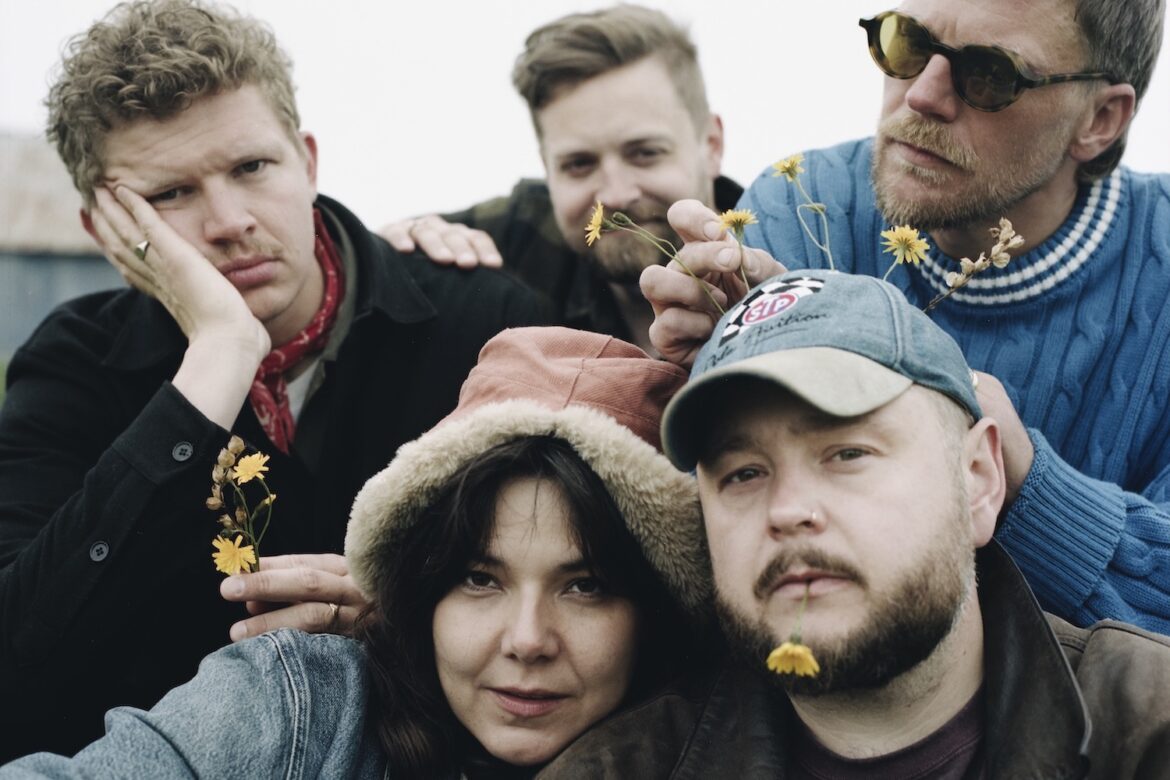
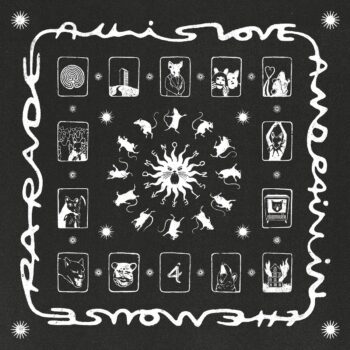
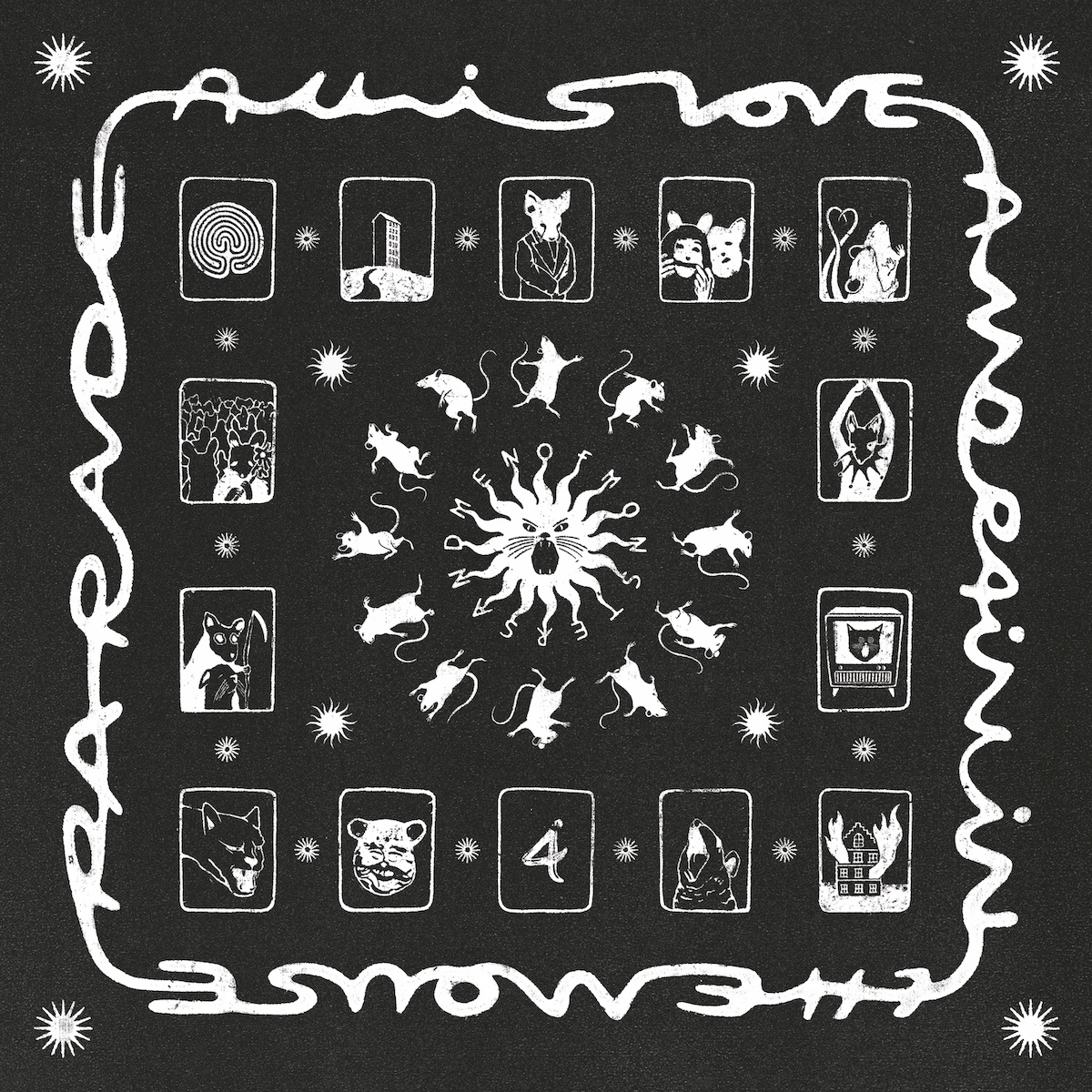
Of Monsters and Men’s beautifully breathtaking fourth album ‘All Is Love and Pain in the Mouse Parade’ is their most intimate and heartfelt record yet – a communal homecoming that finds the Icelandic indie folk band rediscovering their bonds, their roots, and the tender, tangled truths that have carried them through fifteen years together. Sitting down with Atwood Magazine, the band’s co-founders Nanna Bryndís Hilmarsdóttir and Ragnar Þórhallsson open up about the spiritual and creative rebirth behind the music, the quiet reset that brought this deeply human set of songs to life, and the fragile, familial philosophy at the heart of the Mouse Parade.
Stream: ‘All Is Love and Pain in the Mouse Parade’ – Of Monsters and Men
“Some lost, we stay, we wait… all is love and pain, mouse parade.”
There is a whole world tucked inside that line – a world where heartbreak and hope share the same room, where generations stack atop one another like floorboards, where community becomes a shelter and a mirror. Of Monsters and Men have always written from the space between wonder and ache, but All Is Love and Pain in the Mouse Parade is something different. It is the most human, communal, perspective-shifting album they have ever made – a record about growing up, returning home, and understanding that love and pain shape each other, depend on each other, and echo across time.
Heavy head
Don’t you start now
There are million different
endings to a song
And if the best part is
in the past, love
You’ll be the face
behind the maze behind the door
I don’t want to cry my eyes out…
I was hoping for a minute not to care
I don’t want to see the sundown…
I was wondering for a second not to stare
but you need me there
– “Dream Team,” Of Monsters and Men
Released October 17, 2025 via Virgin Music Group, All Is Love and Pain in the Mouse Parade is an intimate and expansive triumph – one anchored in the quiet rituals and shared histories that shaped its creation. Written over several years and sewn together like a series of letters passed between versions of themselves, the songs on Of Monsters and Men’s fourth studio album – their first since 2019’s FEVER DREAM – document the slow, quiet transformations that happen in the margins of life.
There were babies born, routines rebuilt, days spent in their Reykjavík studio brewing bad coffee and talking about nothing in particular. There were parents stopping by with forgotten keys, friends drifting in to play, and the simple comfort of a small island that gives you the space to get lost, bored, and creative again. After nearly a decade on the go, the band stepped away from the treadmill they had lived on since “Little Talks,” and in that pause they rediscovered the closeness, looseness, and chemistry that defined their earliest years together.
“With this record, we’re kind of coming home a little bit again… returning to our roots in a way, and returning to this sense of home,” Of Monsters and Men’s co-lead vocalist and guitarist Nanna Bryndís Hilmarsdóttir tells Atwood Magazine.
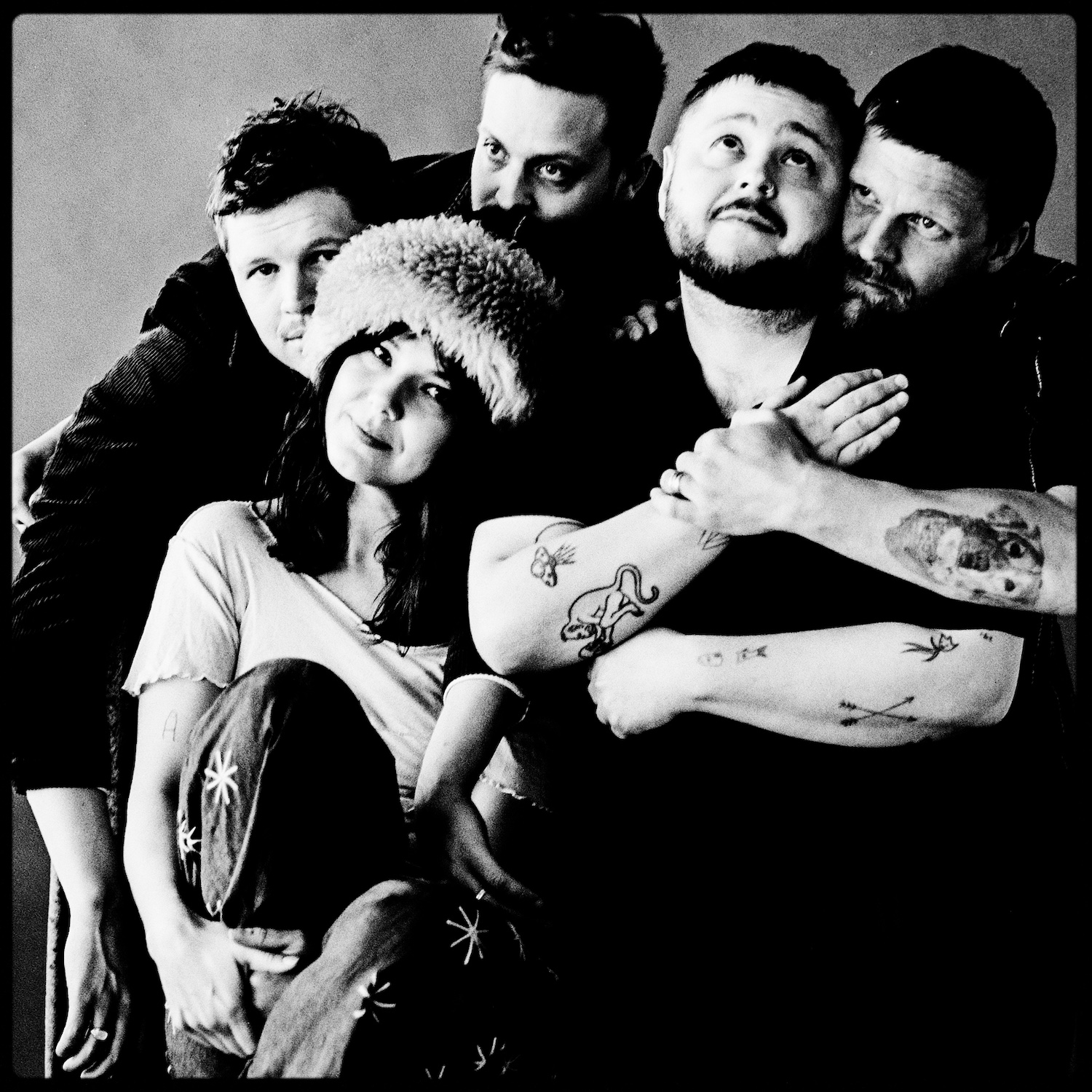
That feeling is collective – and communal. Fifteen years in, Of Monsters and Men remain a tight-knit circle, five musicians who grew up together on and off the stage, each one carrying a piece of the band’s shared history.
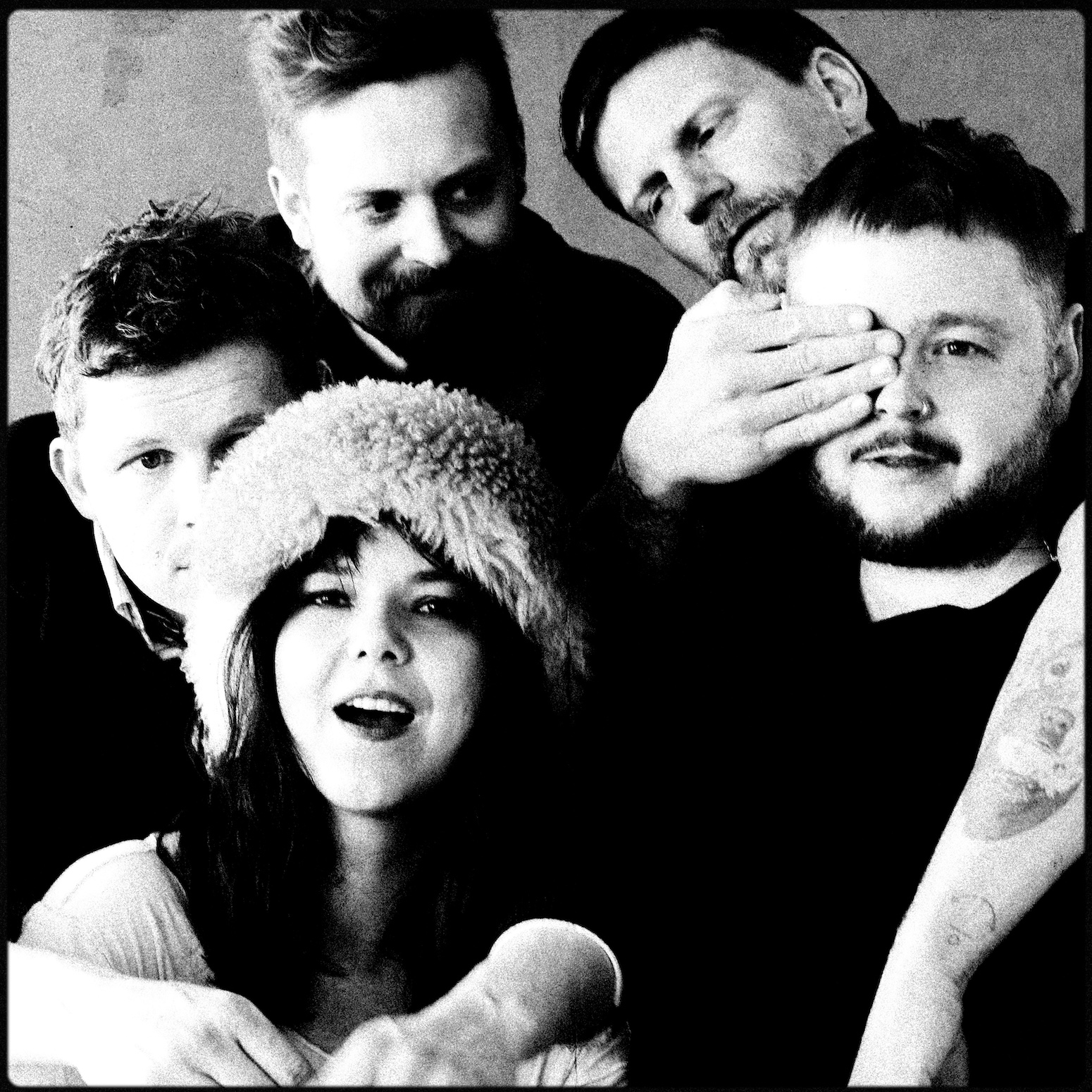
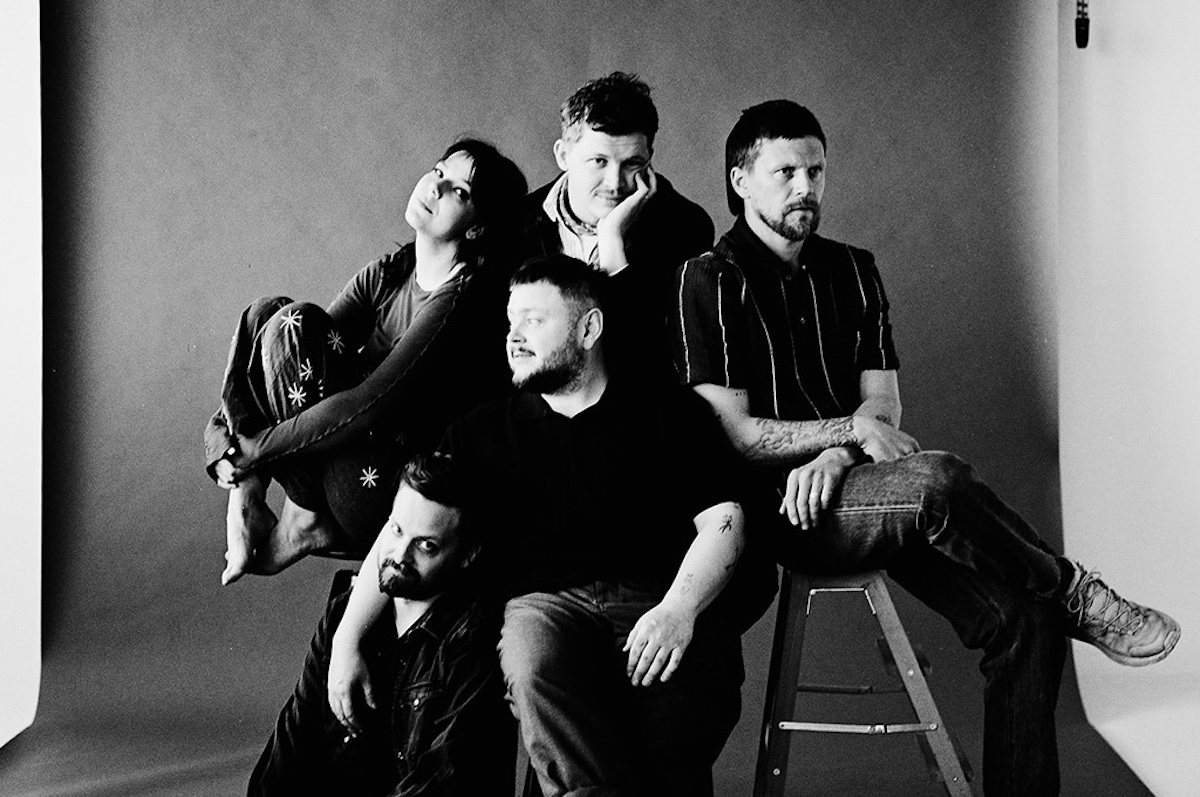
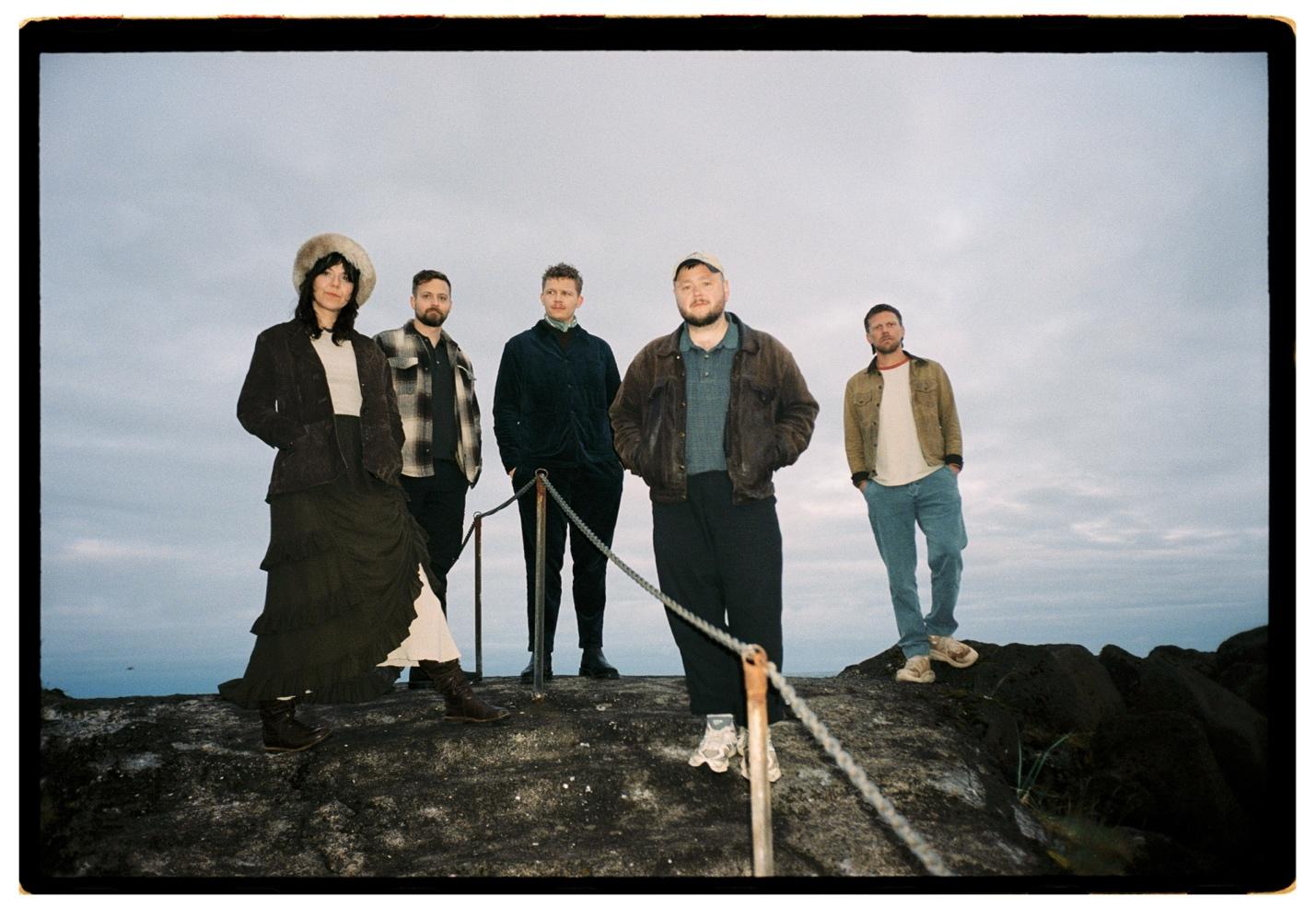
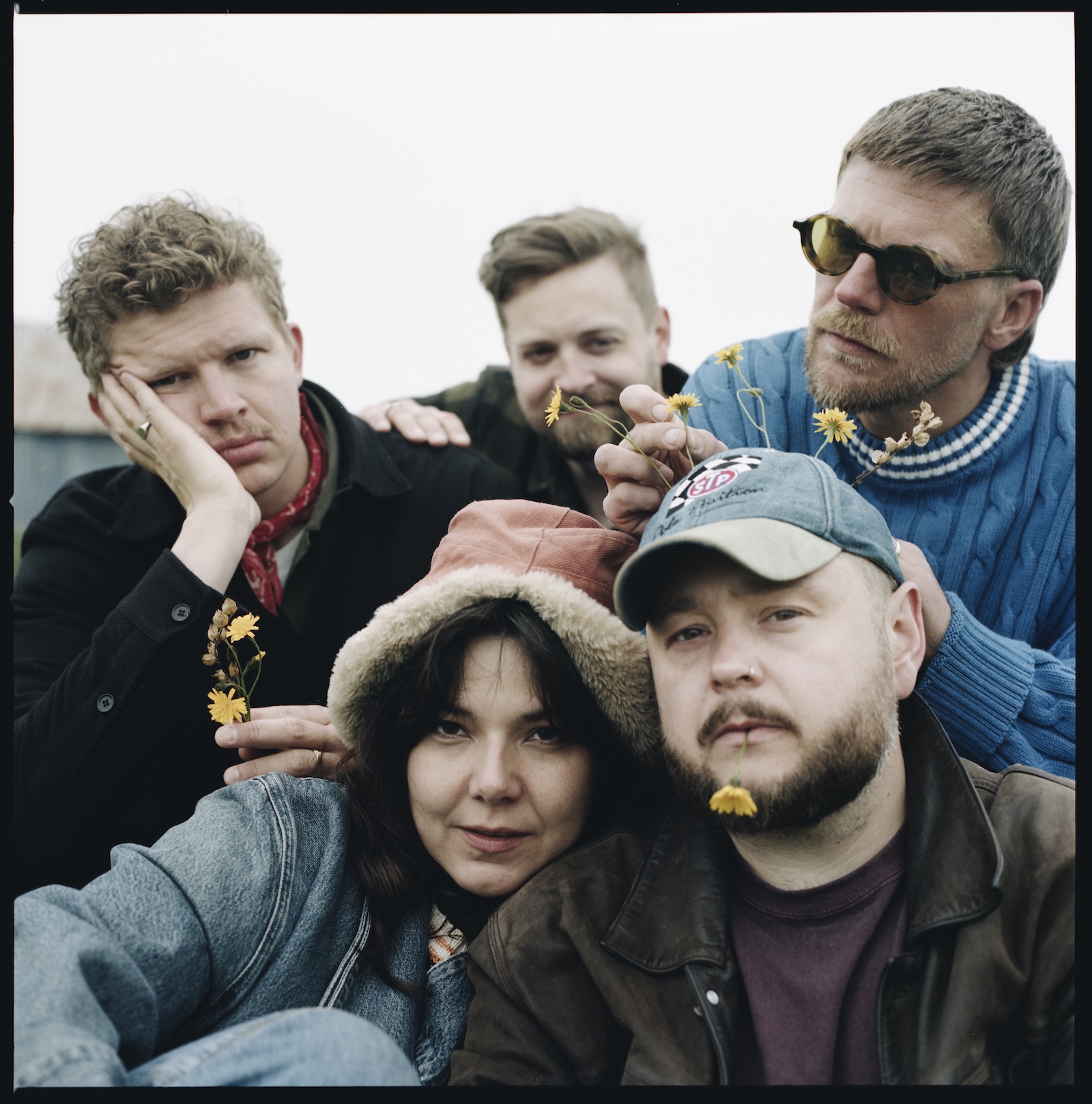
Comprised of singers and guitarists Nanna Bryndís Hilmarsdóttir and Ragnar “Raggi” Þórhallsson, lead guitarist Brynjar Leifsson, drummer Arnar Rósenkranz Hilmarsson, and bassist Kristján Páll Kristjánsson, the Icelandic indie folk outfit has always been greater than the sum of its parts – a small, tightly woven community in its own right, a real-life, ragtag “mouse parade” of lifelong friends whose lives and histories continually fold into one another.
You can hear that homecoming Nanna speaks of – that warm, wide-eyed rediscovery – everywhere: In the yearning of “Ordinary Creature,” the existential shrug of “The End,” the cheeky melancholy of “Tuna in a Can,” the smoldering pulse of “The Block,” and the mythic, communal storytelling of “Mouse Parade.” These songs move through personal confessions and shared memories, but they are always circling something bigger – the understanding that our lives are intertwined with the people who came before us, the communities that carry us, and the families we create along the way. It is an album written from two perspectives at once: The intimate, immediate self, and the zoomed-out narrator who sees the whole constellation of people and histories orbiting beneath the surface.
Tuna in a can
Sticky from the brine
I thought I’d gone bad
You thought I was fine
He came down the stairs
Remember what he said
Heavy is the head
Happy is the fool
You’re insecure
Lost in your mothers,
lost in your daddy’s shoes
This dim lid living room
Feels like the pocket
of your brothers suit
And it all comes back around
I know that I’ve not really tried
And it all comes back somehow
I know that I’ve not really tried
– “Tuna in a Can,” Of Monsters and Men
Raggi describes the band’s current music as a reset. “We erased the structure around us, so what came out of it was something that really meant something to us,” he explains. “It was important to feel that inspiring feeling together again.”
Nanna echoes his statement, adding that they were creating out of a collective desire to make music together, and not simply out of obligation or inertia. “We made the record that everybody wanted to make,” she says, “rather than, ‘Oh, now we have to make an album.’”
That freedom and intention ripple throughout All Is Love and Pain in the Mouse Parade – from its intrepid first notes, to its final fading breath.
Album opener “Television Love” feels like a thesis statement and a reintroduction all at once – its hazy, churning, emotionally charged build capturing the record’s push and pull between distance and devotion. “Dream Team” answers like a spark catching fire – an anthemic, propulsive release that channels self-doubt into motion, its striking refrain (“I don’t want to see the sundown, I was wondering for a second not to stare, but you need me there”) landing like a reminder of how grounding it can be to be seen, needed, and held in someone else’s orbit. “The Actor” hits like a quiet collapse, Nanna’s voice trembling through the question at the song’s center – “Is it enough that I’m playing the part?” – as she grapples with identity, performance, and the widening gap between who we are and who we pretend to be.
“Ordinary Creature,” one of the album’s most luminous singles and an obvious standout on the record, captures the band’s homecoming in its most intimate form. Dreamy and dramatic, it feels like a quiet awakening – a song that moves from winter to summer, sorrow to relief, darkness to the first flicker of light. Its yearning (“I wish I could run to your house when it gets dark out”) aches with the kind of longing that is both tender and transformative, while Nanna and Raggi’s harmonies intertwine like two halves of the same story, carrying fear and hope in equal measure. Built on a slow, steady pulse that blossoms into something warm and widescreen, “Ordinary Creature” embodies the album’s duality: The way a mind opens back up after a long, hard season; the way comfort, connection, and selfhood slowly return. It’s a song that doesn’t just mark a highlight on All Is Love and Pain in the Mouse Parade – it encapsulates the emotional heart of the entire record.
I was on a train
heading through the veins of your heart
you were looking in
but the passenger window was dark
slow swim in sloe-gin
getting lost in the labyrinth
I’ve been grinning through easter
like an ordinary creature
farewell my dreaded fear
thank you but I’m out of here now
I wish i could run to your house
when it gets dark out
Deeper in, the enchanting “Fruit Bat” stretches out into a slow-burning, softly cinematic, eight-minute storm. It’s the kind of loose, hypnotic band performance you can tell was built in a room full of friends, more about staying inside the feeling than rushing to the finish line. “The Towering Skyscraper at the End of the Road” turns inward, holding the past at a distance and seeing it with softer eyes – a sweeping, vulnerable meditation on the people, places, and moments that quietly shape who we become, even long after we’ve left them behind. “Styrofoam Cathedral” turns late-night grocery runs and shared silences into something sacred and communal, proof of how easily Of Monsters and Men can transform the mundane into myth.
“Mouse Parade,” the album’s namesake, brings those themes into their most fragile and intimate form. Often performed with all five members gathered around a single microphone – backs to the audience, faces turned toward one another – it feels less like a performance and more like a private moment you’ve been quietly invited into. The music is delicate, familial, and almost unbearably personal. The refrain at its center becomes a whispered truth, shared gently between them: “Some lost, we stay, we wait… all is love and pain.” In that softness, the band distills the album’s worldview into something tender and deeply human, honoring the people who carried them here and the tiny rituals that tether us to each other – the communities we build to survive the weight of living. It is the album’s quietest song and somehow its most revealing – a reminder that the Mouse Parade isn’t a spectacle at all, but a circle of voices choosing to meet in the middle.
Our home warm, table set
all is war, shame
mouse parade
One day, winter come
they go away
make, mouse parade
some lost, we stay, we wait
all is love and pain
mouse parade
Finally, on “The End,” Of Monsters and Men pull all that perspective into focus, watching the world fall apart with a kind of calm, clear-eyed tenderness – accepting that everything ends, but insisting that connection, care, and small daily comforts still matter while we’re here.
Sleeping in the silo
talking in the stairs
how to get away from here
How to be a tender man
walking on a tight rope
funny little game
How to skip past the stream
How to climb the olive tree
I know, something you don’t know
Somehow in the dead of night
We’re like bunny and the reptile
I need something you don’t seem to need
A sweeter goodbye
I’m like a fruit bat hanging tight
All Is Love and Pain in the Mouse Parade is the sound of a band seeing themselves clearly for the first time in years – not by reinventing who they are, but by rediscovering what has always held them together.
These thirteen tracks are not just the latest highlights in a storied catalog; they are touchstones that show us who Of Monsters and Men have become. These songs breathe with the weight of lived experience and the lightness of renewed curiosity, tracing the fragile, familiar patterns of everyday life and finding something sacred inside them. They hold wonder and weariness in the same hand; they sit calmly with fear and still reach for hope. Taken together, the album feels like a map of what it means to love, to lose, to grow, and to return – to your people, to your place, to yourself. It is Of Monsters and Men at their most openhearted and unguarded, stitching the past and present into something warm, expansive, and deeply human. In the end, the Mouse Parade isn’t just a metaphor – it’s a homecoming, a testament, and an invitation to see the beauty in the small, complicated, quietly extraordinary lives we’re all trying to live.
Fifteen years into their career, Of Monsters and Men sound more like themselves than ever – not because they’ve returned to a past version of their band, but because they’ve returned to the foundation that built them: Curiosity, closeness, community; a sense of home; the space to play. The Icelandic band’s fourth studio album makes all of that visible and audible, glowing at the intersection of comfort and chaos, love and pain, tenderness and perspective.
Atwood Magazine sat down with Nanna and Ragnar to talk about how this album came to be, what it taught them, and why the Mouse Parade feels like the truest reflection of who they are now.
— —
:: stream/purchase All is Love and Pain in the Mouse Parade here ::
:: connect with Of Monsters and Men here ::
— —
Stream: ‘All Is Love and Pain in the Mouse Parade’ – Of Monsters and Men
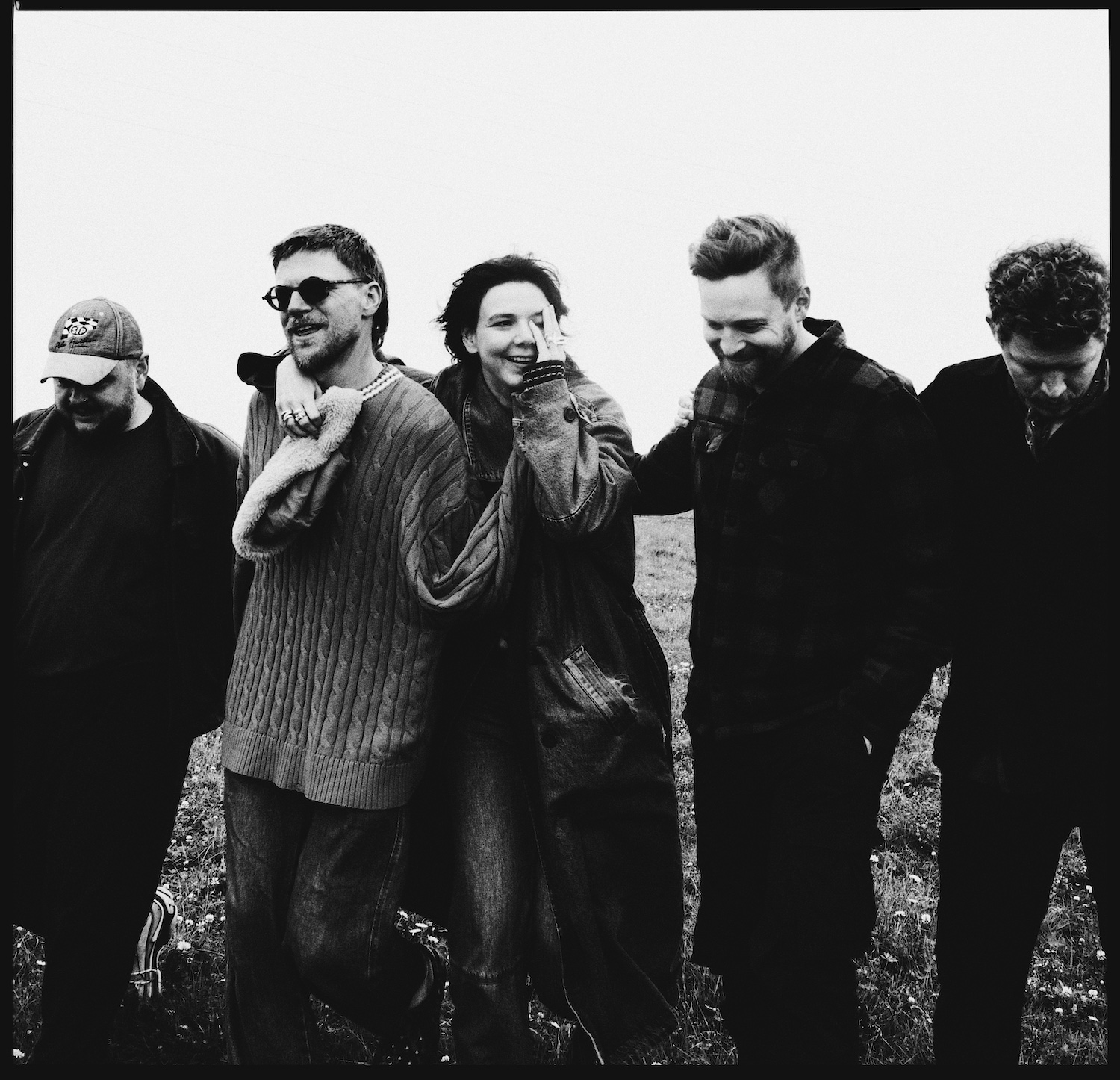
A CONVERSATION WITH OF MONSTERS AND MEN
Atwood Magazine: Who is Of Monsters and Men today, compared to the band we first met, ostensibly through My Head Is an Animal so many years ago?
Ragnar: Wow. Who are we?
Nanna: We are fifteen years in now. When we made My Head Is an Animal, we were such babies. I look back at that and think, wow. But it’s also pretty incredible to have a documentation of that time in our lives – to put something out that shows exactly who we were, what we were writing about, and how wide-eyed and curious we were about the world. That curiosity has stayed with us, but a lot has changed in between. We went from being very wide-eyed to being much more serious, and the music got a little heavier. Then we wanted to explore a different sound. And now, with this record, it feels like we’re coming home again – returning to our roots in a way, and returning to that sense of home.
What does “home” look like and sound like for you?
Ragnar: That’s a good question. It’s actually very mundane in a way – it has routine, it has rhythm, and it’s just… here in Iceland.
Nanna: It’s walking the dog. It’s your friends and your family and your community.
Ragnar: It’s about being in the studio and my mom and dad dropping by to give me the keys I left at their house, or people just stopping in to visit. It’s a nice feeling – that kind of space you have, and the space you have in your mind. You need room to create. You need a sense of stability and some structure around you – at least I do. And then I can go off in another direction from that structure, if that makes sense. I think that’s what home is for me.
I finally had the opportunity to visit Iceland a few years ago, and it gave me a small, yet deeply meaningful window into the world that is your beautiful home country. You're one of the lucky ones to have had the opportunity to go all around the world, to meet people of all walks of life from countless places. What has touring taught you about your slice of life?
Ragnar: I think in Iceland… what comes to mind is that there are limitations here. We don’t have everything. We have everything we need, but there are limits. And that also means there aren’t a lot of distractions, which I like, and it suits me. Compared to other places, it can be really boring here sometimes – especially if you’re not doing the Golden Circle or any of the tourist things. That’s not your life. Your life is just Reykjavík, driving everywhere, doing your routine. But I think those limitations are beautiful. And Rich Costey, a producer we worked with on our last two albums, once said we’re on “island time.” Our minds operate differently here.
Nanna: Yeah, which is funny when you’re putting out a record and doing press. That idea of being on “island time” is where I think creativity comes from – where you can get completely lost because there’s nothing pulling at you. There are no real distractions. It’s nice living in a place like Iceland because you can afford yourself that time of being bored. And from boredom comes that moment of picking up your guitar, and suddenly you’re writing something. And then it’s funny when you put the record out and clash with the rest of the world again. There’s always this adjustment period – re-entering the world.
Ragnar: It’s like we’re on a little rubber dinghy, just floating in the ocean, and then we throw a rope to a big old ship. That’s the feeling. You have to adjust to that.
I guess no matter where we are, the grass is always greener or the ice is always whiter. Other Icelandic artists speak of Iceland as someplace where they find comfort in isolation. Of Monsters and Men’s music is not so much about isolation, as it is about community. I'd love to talk about that, especially knowing that community has such a big role especially in your new album. What does that community look like for you?
Nanna: Well, it’s the community of the five of us – the band, and what we create together. And then so much of this album is also about how… since the last time we made a record, there are five more kids. There was one, and now there are six. So that’s our community, too – it’s this family we’ve built. And then there’s the musical community. When we started, we were here in Iceland playing all the time, and we made a lot of friends. But we quickly went abroad, touring constantly, and we never really got to just be here for a long stretch. At least for myself, I felt this real sense of needing a community around us – around the music – because we left so early. So these past few years, it’s been really important to seek that out again and feel like we’re part of something.
Ragnar: And that’s how we started this whole thing. We were just playing a bunch of shows here, and we had so many friends coming out. There was this interactive, feeding-off-each-other energy, and that was the beginning. So having that community around us became important again. Being here in Iceland since COVID and building this album with friends – lifelong friends, musicians we love, even my dad playing on it – that feeling matters. It makes the whole thing more worth it. It makes it make sense.
Nanna: Yeah. I feel like, oh, this person I really care about – I want them to be part of this. I want to cement them into these albums.
I’m only just realizing that this is the band's first album since COVID. Do you feel the impact of that world event, of that horrific experience that we all shared together in these songs? Do you feel like it impacted this music?
Nanna: Yeah, because we wrote a lot of these songs during that time, so there’s this strange feeling we’re all familiar with – this unknowing, this sense of not knowing what’s coming next, being in an in-between state. A lot of these songs come from that period.
Ragnar: But it’s also about seeing the… I don’t want to say the positive, because I know it was a traumatic time for so many people, but it did force everything to stop. You had to do things differently, and you got a different perspective. A lot of good things can come out of hard situations. For us, it felt like the right time to build something here and reconnect. It was an interesting period – because when things stop, you’re left with yourself, and you can actually work things out. That’s part of this album too, which is kind of cool in a selfish way to have.
”I
 All is Love and Pain in the Mouse Parade – Of Monsters and Men[/caption]
I absolutely love that. You zoomed out of your own world to see yourselves from that external point of view, to see all of us from that external point of view. So, we have this album that is as intimate as you can get, but there's also a little bit of trying to look at it from an outsider's perspective as well.
Nanna: Yeah. Like, what are we doing?
Ragnar: You write a song from the heart, but then you join it with another song that puts your problems in perspective.
You described the record as a tapestry of stories, moments, and conversations stretched across time, which I just love. You took me through what the title's about; what does this collection of songs mean to you?
Ragnar: What’s interesting to me is that a lot of it was written over time. For me personally, there are things happening in the lyrics that could have been easy to erase and rewrite because you’ve lived with a song for so long. But these songs became time capsules – almost like letters you can revisit. Like in “Television Love,” there’s a lot of time in it, and a lot of aloneness, which I didn’t realize I would appreciate so much. I appreciate that we let those moments stay and built on them.
Nanna: Yeah, because we were working on this album for a while, and naturally sometimes you haven’t finished the lyrics. You have a few words, a verse, a little story, and then three years later you revisit it and you’re not the same person anymore. But it was nice to have that feeling of, okay, I’m going to continue the story from where I am right now. In that way, you’re almost having a conversation with yourself.
Ragnar: And I feel like these thirteen tracks… this album… is a lot about going back to the things we enjoyed when we started. It was almost like a reset, where we were just alone doing this album. It was important to feel that inspiring feeling together again and really listen to each other.
Nanna: Yeah. Because life happens, and we’ve been doing this for a while, and naturally people wander off or things come up. So I really do feel like we made the record everybody wanted to make, rather than, “oh, now we have to make an album.”
Ragnar: Yeah, instead of just being on a path. We erased the structure around us, and what came out of that was something that really meant something to us.
I hear elements of folk, of alternative, of rock, of soul in “The Block.” That song is so soulful, and you really let that go… I feel like you’ve managed to accomplish this all while still feeling like the same band. I'd love to talk about your musical approaches and how these songs came together.
Ragnar: Yeah, I mean… wow. I never thought of “The Block” as R&B, but that makes sense. When the five of us throw our elements into something we’re working on, you don’t always know each other’s inspirations – and those inspirations change. So it’s this ever-changing thing: Five voices doing something together, and everyone is different than they were on the last song or the last album. It’s interesting. You give as much of yourself as possible, but you also give yourself to the process. You don’t try to control it too much.
Nanna: It’s just what it is to be in a band. I’m trying to find the right word, but… being in a band is this constant thing of: I’m bringing something, someone else is bringing something, and then it all meets in the middle. It melts into something nobody expected, something nobody imagined at the beginning – and then it becomes what it is.
Ragnar: And you kind of… we found out that if I have a preconceived idea of what I want a song to be, and I bring that in, that’s fine – it’s something to build on. But if that idea is the thing controlling me, the song won’t flourish. It has to be a little give-and-take.
What excites you most about these songs, about the music in this new batch of songs? And what are you really excited for people to hear?
Nanna: I think if people have been following our journey, they can hear the evolution and probably understand how we ended up here. But I’m just excited for people to hear it because I feel very proud of this album, and I think it really captures us in this specific time. It’s cool to share where we’re at right now.
Ragnar: For me, these songs… I connect with them, each one of them, personally. So I’m excited for people to see that. I’m excited to play them and feel that connection with people, because sometimes you create something and you don’t really know what you’ve made until you see the back-and-forth – the look in people’s eyes. You discover so much from that. So I’m very excited to have that flow again, if that makes sense.
One thing that really stands out to me, that I wanted to highlight was the opening lyrics of “The End”: “Someone said the world is ending, something’s kind of falling from the sky. That’s all right with me, such is gravity. Everything around here must come down eventually.” Earlier we talked about COVID, about writing through time and seeing ourselves not just as individuals, but as part of a generational transmission through the years, through eras, as part of a bigger community. There’s a solemn acceptance to your words there, a recognition that life is what it is for however long it is. Can you tell me about “The End,” the final song off this album and where it came from?
Nanna: Yeah. It’s this funny feeling that I think a lot of us are living through right now – this sense of, “What the hell is going on in the world?” You’re terrified and bewildered, but it’s also gotten to a point where you’re like, okay… I guess that’s what it is.
Ragnar: No, I mean… I think the world would be a much better place if more people had acceptance. It’s hard to say in English, but if more people would just… stop trying to change everything all the time and actually see the beautiful things in the world –
Nanna: – and accepted people for who they are –
Ragnar: – yeah, then it would be so much better.
Nanna: Yeah. And cared about each other more than they care about themselves. That would be nice.
Ragnar: Yeah. And just saw themselves from a bigger perspective.
Nanna: To be of service of others and all those things.
Ragnar: It’s so easy to just be accepting of people and not have your own morals and whatever, but just accept that we are all different. It’s way easier, in a way. But that song, it’s an interesting last song for us on this album.
Nanna: We thought it would be kind of funny to end a record with a song called “The End.” This person wakes up in the morning and the world is ending, and they just go on with their life – like, okay, that’s the fact, and I’m going to continue. But there’s also this deep disconnect that happens. And then there’s another person in the song – you can interpret it as someone who cares about them, or as this mother figure who comes in as a voice of comfort. So it ends the album on a positive note, with this gentle voice saying, “It’s all right. It’s all right in the end.”
Ragnar: Yeah. I guess most things work out in the end. Most things. In our personal lives, you tend to blow things up because they feel important in the moment, but then you look back and maybe it was actually a good thing – or at least a thing that moved you forward. The motor… that was the word.
Nanna: Changed you or –
Ragnar: – shaped you.
You open the album with “Television Love,” which, if I'm not mistaken, was also the first single. Why begin the album with that song?
Ragnar: I mean, yeah, as soon as that song came about, in our process of creating this album it felt like an “oof” moment. It steered us in a certain direction. It shaped the rest of the album – almost like a bookend or a pillar we could build on. It is not your typical single, and it was not meant to be that kind of song. It just felt like: okay, we have been away for a while, and this is something we would be really proud for people to hear. We were very excited for people to hear it. That was the main factor – how to introduce this album in a way that felt honest. Some people know us from singles and only know one part of who we are, and it is important for us –
Nanna: – They don’t know all the emo. [laughs] They don’t know the melancholic weirdness.
Ragnar: Yeah, that’s also a part of us. This song kind of captured both parts in a way. So, yeah, it felt like a great little way to return, and a poetic way to start the album as well.
You follow that with “Ordinary Creature,” which I have taken such a liking. I love the sentiment behind it, of running to someone in the dark. What does that song mean to you, and what is its personal significance?
Nanna: It’s a song about yearning, about wanting to be close to somebody, like I wish I could run to your house when it gets dark out. It’s just that feeling of yearning for somebody. I think when that song came about too, for the band, it felt very much like everybody got it, everybody got the emotion behind it. That really steered that song.
Ragnar: It’s a simple emotion, really. And sometimes it’s tricky to do something simple in a way that feels good to you. That song kind of just did that. It was a simple message, which is nice to be able to do.
I've talked your ear off about all the different songs that I love on this album. What are some of your favorite songs? What are you most excited for people to hear once the album is out?
Nanna: There are different songs that have different meanings to me, but I am pretty excited for people to hear “Fruit Bat.” It is an eight-minute-long song. We have been playing it a lot in the studio now, getting ready for the live show, and when we play it you just feel like you want to build and build and keep going. It is such a band song – a song that feels very effortless for us to play together in a room. I am very excited for people to hear that one.
Ragnar: I am excited to play “Styrofoam Cathedral.” I think it has elements that remind me of when we started. There is a certain energy to it and a simplicity that feels raw, and I really enjoy that. I feel loose when I play it. And there are songs like “Barefoot in Snow” that I am also very excited to play.
Do you have any favorite lyrics?
Nanna: Immediately I thought of “Tuna in a Can.” Even just the opening line – “Tuna in a can, sticky from the brine. I thought I’d gone bad. You thought I was fine.” I think it is cheeky. When Raggi first sang that to me, I thought it was so funny, but also very… oh yeah. It has that same thing of being self-deprecating – feeling like this tuna in a can that is sticky from the brine – and then someone saying, no, you are fine, you are okay. I just think it is really cheeky.
Ragnar: I really like “We worship the devil, we worship the God, so perfectly evens out to nothing at all” from “Barefoot in Snow.” I think that sums up a lot of the album for me. We have our good moments, we have our bad moments, those opposites. And if we do not chase those feelings so much, sometimes you can just stay in a steadier place. It is hard to explain fully, but I like that line. It works in my head for some reason.
What do you hope listeners take away from All Is Love and Pain in the Mouse Parade and what have you taken away from creating it and now putting it out?
Ragnar: I hope this is a collection of songs that stays with people and means something to them. It will be very special if these songs resonate with them or with our fans.
Nanna: Yeah. And for the people who have been following us for a while… there are people who have grown up with us or stayed with us for a long time. So it would be an incredible feeling if these songs make sense to them now that they have grown up too, the same way we have.
What have you taken away from making this album?
Ragnar: Absolutely nothing. [laughs]
Nanna: I think we have learned a lot. It has been an album about growing, about growing up, and all these little things that come with that. It is an album about growing up, and I think that is what has happened during the process of making it. We have changed, and life has changed.
Ragnar: Yeah. And also just being thankful for each other and thankful to be doing this. It sounds like a cliché, but it is something you forget when things just become life. Being in a band, touring, being able to do this as our work – I wake up and this is what I do. So looking at that in a different way and being appreciative… that is a lot of what I have taken from creating this album. It makes me excited to create more albums, more music. And I think if you make music that makes you excited to make more music, then you are probably doing something right for yourself, at least.
In the spirit of paying it forward, who are the two of you listening to these days that you would recommend to our readers?
Ragnar: Throughout these last years, there has been a lot of John Prine for me. And I listen to Nanna’s playlists a lot. She is my only source of new music. I have kind of lost all connection with the music world. Nanna made a playlist the other day connected to “The Towering Skyscraper,” one of the songs on the album, and I think that playlist showcases a lot of what has been playing in the speakers. Yesterday I was listening to a guy called Cameron Winters – our engineer did his whole album – and I really like his music.
Nanna: Yeah, he’s great.
— —
:: stream/purchase All is Love and Pain in the Mouse Parade here ::
:: connect with Of Monsters and Men here ::
— —
— — — —
Connect to Of Monsters and Men on
Facebook, 𝕏, TikTok, Instagram
Discover new music on Atwood Magazine
© Eva Schram
 © Eva Schram
:: Stream Of Monsters and Men ::