
British dream-folk singer/songwriter Luca Wilding delivers one of the most breathtaking works of his career with “Ocean Mother,” a luminous, majestic song that lifts the bond between mother and child into a vast inheritance held in memory and the sea. Shot in Zanzibar, filmmaker Steve Won’s beautiful, deeply human music video gives that devotion a living pulse, following three generations of women whose linked hands, sunlit rituals, and shared laughter carry that love from one life into the next.
Stream: “Ocean Mother” – Luca Wilding
Ocean Mother, bathe me in your body blue…
* * *
Every life begins by being held, and growing up means learning how to leave without severing the connection that first carried us into the world.
Dreamy, tender, and gently expansive, Luca Wilding’s “Ocean Mother” gives that lifelong pull a vast, elemental shape, tracing the passage from dependence to release through a dream-folk hymn steeped in sweetness, longing, and maternal love. Its music opens like a hand and rises like a tide, carrying the ache of separation alongside the devotion passed from parent to child – a soul-stirring portrait of the home we outgrow but never entirely leave.
Atwood Magazine is proud to be premiering the Steve Won-directed music video for “Ocean Mother,” the spellbinding title track at the center of British singer/songwriter Luca Wilding’s forthcoming third EP. A soul-stirring meditation on motherhood and letting go, the song arrived June 18 as Wilding’s first single of 2026, following last year’s “Laredo Rose,” “Heavy,” and “Leonine.” Since debuting in 2017, Wilding has shaped his own strain of dream-folk – intimate, poetic music that draws private longing into vast questions of memory, devotion, and release.
Across nearly a decade of songwriting, Wilding has returned again and again to the places where love meets loss and endurance begins: The fractured mind, the absent friend, the stranger whose pain lingers long after they disappear from view. His work carries an uncommon emotional fortitude, staying inside grief and uncertainty until their sharpest edges begin to reveal beauty. When Atwood first premiered the track “Heartachers” in 2020, his falsetto already held the ache and conviction of an artist determined to make private pain communal; by last year’s “Leonine,” which we praised as “a luminous dream-folk reverie that carries grief in one hand and liberation in the other,” that instinct had grown more vivid and assured, carrying memory toward movement, light, and hard-won freedom.
That balance of vulnerability and imaginative reach is why Atwood has continued to champion Wilding across the past six years: His songs make interior experience tangible and deeply shared.
Now, as this week’s featured artist on BBC Introducing, Wilding reaches a new threshold with “Ocean Mother,” gathering the intimacy of everything before it and sending it outward toward lineage, nature, and the lives still to come.
The song enters on a wash of light. Glistening, muted piano chords hover beneath a fingerpicked guitar pattern whose strings carry both melody and pulse, giving the opening the sun-kissed clarity of morning breaking over water. Wilding’s voice is breathtaking – dreamy and enchanting, yet close enough to catch every tremor. He sings as though leaning toward a presence he can sense but cannot fully reach, allowing wonder, devotion, and unease to coexist within the same breath.
The first verse reaches immediately for language larger than the self:
Ever the night comes
Ever the sun comes striding out of you
Reading the entrails
Only to find out something new
And the low we wrote about
I would know the secrets of
When you see that love is empty
Who will know the name of god?
Night gives way to sun; entrails are read for signs; love and God become mysteries whose meanings refuse to stay fixed. Wilding writes from the threshold between innocence and understanding, where every revelation carries a cost. “Ever the sun comes striding out of you” casts the maternal figure as a source of life itself, while the verse’s final question introduces the fear beneath the song’s beauty: What remains sacred once certainty falls away?
The scene then narrows from the cosmic to the immediate. “Leave me by your window waiting for the nurse to call,” Wilding sings sweetly, grounding the song’s spiritual searching in a room charged with absence, vulnerability, and news yet to arrive. “If I could be there with you we would talk about it all” aches with everything left unsaid – the conversations distance postpones, the closeness adulthood complicates, the instinct to return when the people who once protected us become fragile themselves.
The chorus answers that distance with a plea stripped to its most primal form:
Ocean Mother
Hold me like you used to do
Ocean Mother
Bathe me in your body blue
“Hold me like you used to do” is the language of a child spoken from an adult body. Its directness gives the refrain its power: Beneath the song’s mythic imagery lies the elemental desire to be gathered back into safety. “Bathe me in your body blue” collapses the distance between mother and ocean until they become one vast, life-giving presence – a source that carries, cleanses, and eventually releases. Each return of the chorus lands like another wave, its simple melody gathering weight through repetition.
Wilding deepens that separation in the second verse. “I was carried away then / Cursing the day you opened my eyes” holds birth and departure inside the same image; to be brought into consciousness is also to begin moving away from the person who made that life possible. “And I knew you from my memory” suggests a bond older than language, while “Honey I’ll leave you where you lie” introduces the painful work of accepting that love cannot preserve every relationship in its original form.
I was carried away then
Cursing the day you opened my eyes
And I knew you from my memory
Honey I’ll leave you where you lie
Lift me to your window,
show me how to be reborn
There I sat beside you,
we would pass around the phone
The rebirth imagery soon becomes explicit: “Lift me to your window, show me how to be reborn.” Yet rebirth here offers no clean beginning. It carries memory, separation, and the knowledge that home can remain emotionally present even after we have stepped beyond it. By the bridge, Wilding has reached adulthood’s central contradiction:
Oh a life to lead alone
And you will be my home
And wait there like a mother
The life ahead belongs to the individual, but the origin remains. Even as the narrator wades waist-deep into the water – “overdressed and strung out on another” – he carries the weight of who and what came before him. The image is awkward, physical, and beautifully unguarded: A person entering the sea with all his attachments still clinging to him, asking to be received anyway.

Wilding gives that generational current a moral dimension, framing inheritance as both a gift and a responsibility.
“There’s an undercurrent throughout the song about inheritance,” says Wilding. “The idea that we’re all given something sacred – emotionally, spiritually, environmentally – and that part of becoming an adult is deciding what we carry forward and what we leave behind.”
Written while Wilding was reading The Song of Achilles, “Ocean Mother” absorbed the novel’s ideas of devotion, fate, and inevitable separation. At the same time, his wife was pregnant with their first son, bringing those ancient questions into the immediacy of his own family. The song emerged at the meeting point between leaving and beginning again: a son reflecting on his mother while preparing to watch the bond between mother and child form anew.
“I’m the eldest of four kids and I’ve always been pretty close with my mother. The moment my first son was born, I saw that intangible closeness begin again in the connection between my wife and her child. I realised that this relationship is one of the most important, storied and poetic things that any human being can experience and I will be happy if this song captures even a glimpse of that feeling.”
By the finale, the repeated “Hold me like you used to do” loosens from lyric into invocation. Wilding no longer needs to explain the longing; he simply returns to it, again and again, as the arrangement widens around him. What began as a private address rises into a sweeping hymn for every child who has grown away from home while remaining tethered to its first love.
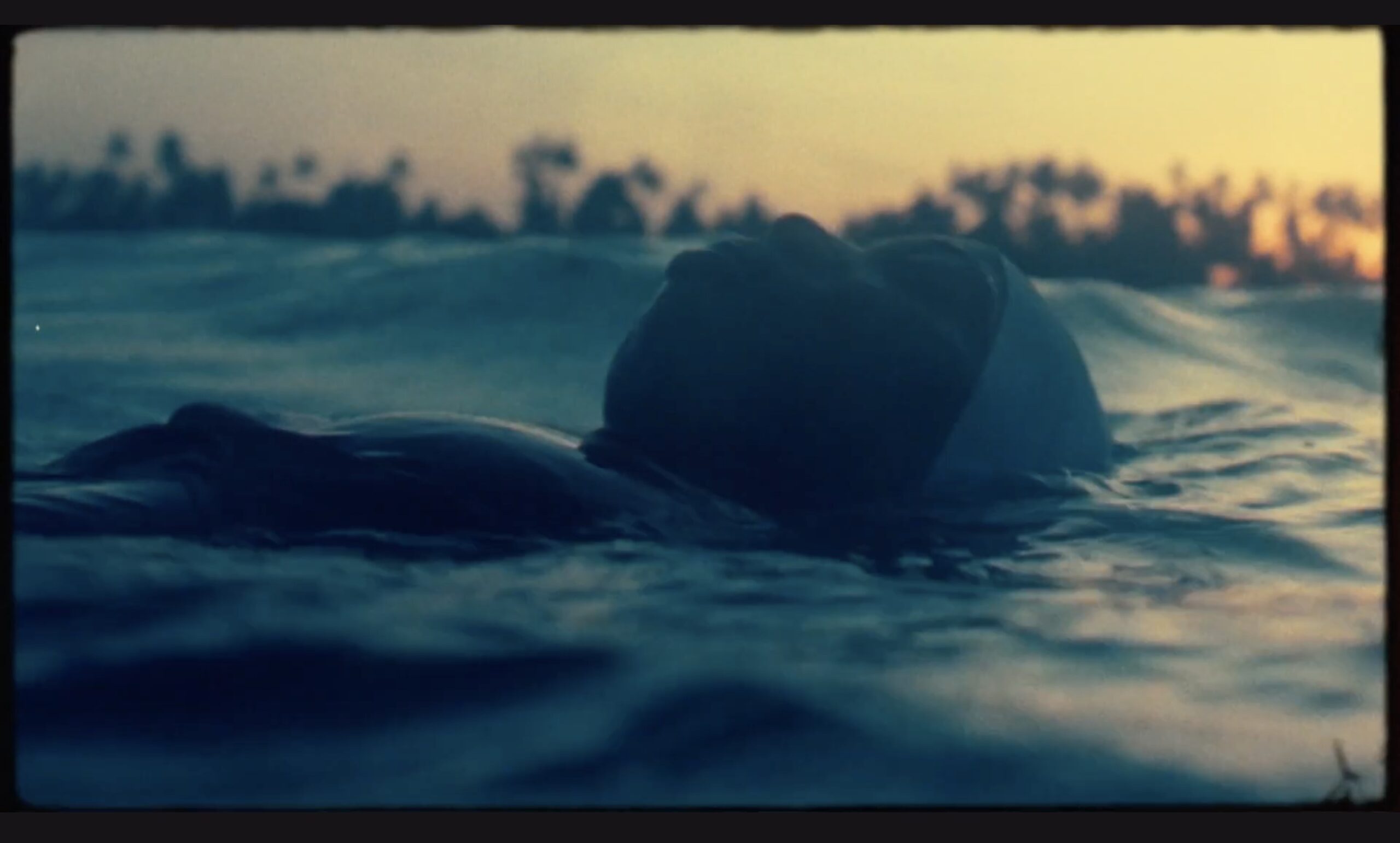
Steve Won’s accompanying music video gives that hymn a body.
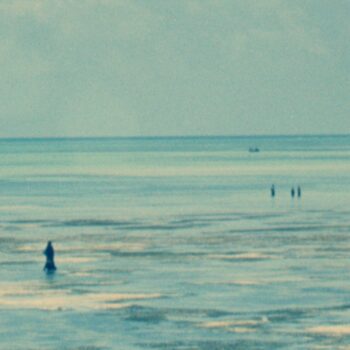
Shot in Zanzibar, the film follows three generations of women whose lives are bound to an ocean community, placing Wilding’s reflections on motherhood and inheritance inside the rhythms of lived experience. Won opens his frame to children moving beneath trees, girls and women gathered together, communal worship, wooden boats resting beside the shore, and neighbors laughing in the daylight. These images establish the world around the water before anyone enters it: A place shaped by family, faith, work, and shared routine.
The film’s textured, sun-washed photography carries the beauty of memory without separating it from the present. Light pours through leaves, silhouettes gather beneath towering clouds, and figures cross the shoreline in groups rather than alone. Won keeps people at the center of every vista. Even the broadest views of sea and sky return us to hands, faces, bodies, and the relationships moving through them.
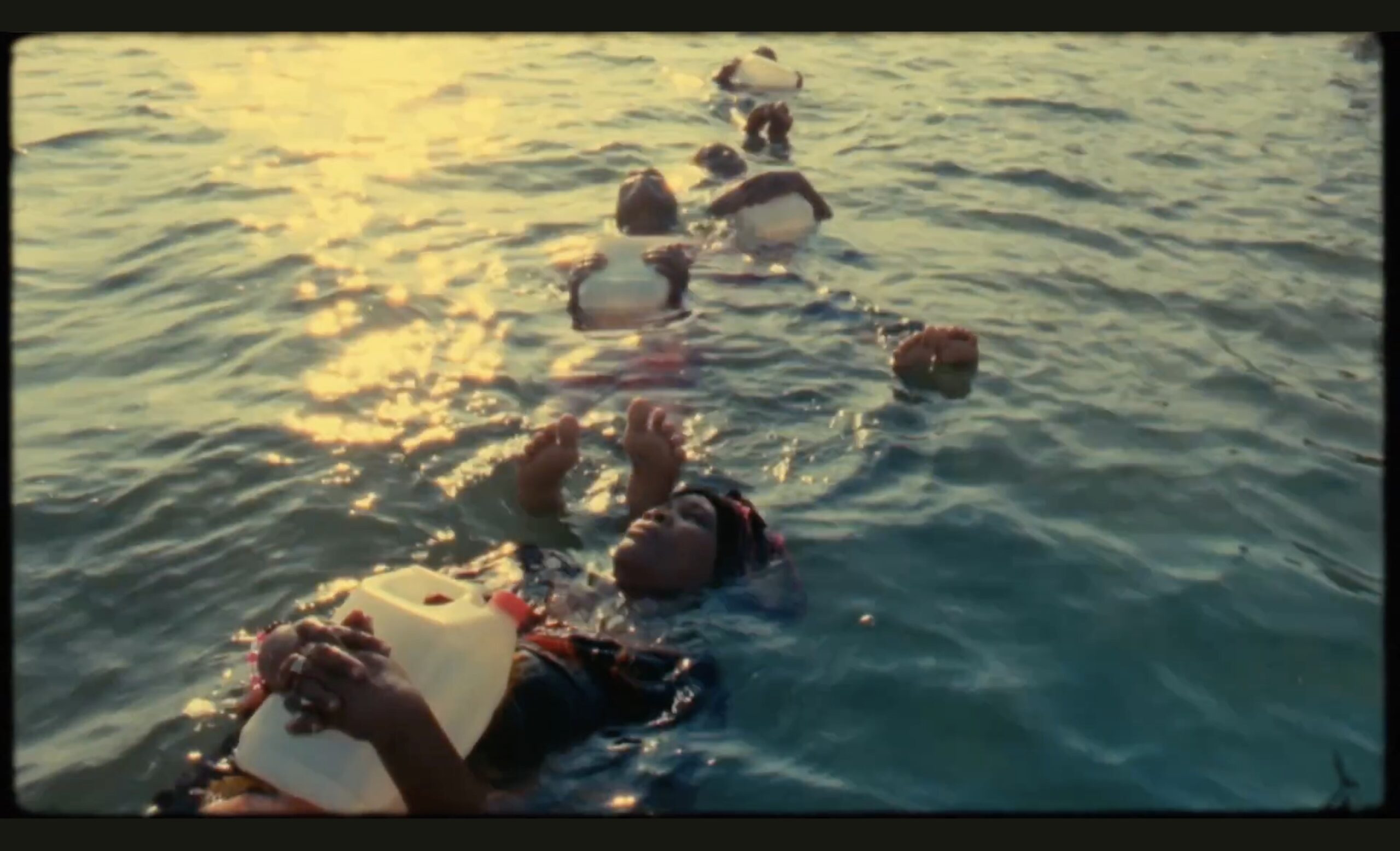
As the women make their way into the ocean, the film settles into a sequence that reads as part ritual, part recreation, and part daily labor. They hold hands while wading forward, swim beside one another, float beneath the golden surface, and carry containers and netting through the water. Their joy is unforced and infectious: Women laugh together on land, then surrender their weight to the sea, trusting both the water and one another to hold them.
The chorus becomes newly physical in these scenes. “Hold me like you used to do” meets images of linked arms and joined hands; “Bathe me in your body blue” becomes a woman floating on her back, her face open to the sky as the current gathers around her. The ocean ceases to be purely metaphorical. It is shelter, livelihood, meeting place, and inherited knowledge – a force woven into how this community moves through the world.
Won’s focus on women of different generations gives the song’s central cycle a living form. Girls stand at the beginning of their lives, mothers move through the water with practiced confidence, and older women carry histories the film does not need to explain aloud. Their presence humanizes Wilding’s meditation, drawing it away from abstraction and into gestures passed between people: walking together, working side by side, reaching back for another hand.
The closing images hold the women against an open horizon, their bodies small beneath an immense sky but strengthened by their togetherness. They walk deeper until land gives way beneath them, then float within the same water that has sustained those who came before. Beautiful, earnest, and stunningly alive, Steve Won’s film reveals “Ocean Mother” as a living inheritance – carried through family, community, and the enduring pull of the sea.




Luca Wilding has always written as though private emotion deserves the widest possible frame, and “Ocean Mother” stands among the purest expressions of that instinct.
Its grandeur never overwhelms the person at its center: One voice reaching backward for the safety that formed him even as life carries him forward. The arrangement keeps widening, the imagery stretches toward myth, and still the song remains close enough to hear every breath. Piano, guitar, falsetto, and film move with a shared purpose, allowing an intensely personal reckoning to take on a scale that feels almost infinite.
Across nearly a decade, Wilding has refused to shrink experience to fit inside a song. He builds music spacious enough to contain the full weight of a life, meeting sorrow at its deepest point and drawing beauty from places others might leave untouched. “Ocean Mother” continues that legacy with extraordinary grace. Every chord carries emotional consequence, every image deepens the central plea, and every repetition draws us closer to a truth adulthood often teaches slowly: Leaving does not erase belonging, and growing older does not end our need for the love that first taught us who we are.
By the time the final refrain recedes, “Ocean Mother” has opened into a world of its own – one where departure and devotion can occupy the same body, where the child remains alive within the adult, and where each generation carries traces of those who came before. Wilding meets that truth with rare generosity, offering music as intimate as a whispered prayer and as immense as the horizon.
Let “Ocean Mother” carry you back to the beginning, then send you forward with a fuller sense of what it means to belong. Watch Steve Won’s breathtaking music video exclusively on Atwood Magazine, and stay tuned for Luca Wilding’s forthcoming third EP.
Even as we learn how to leave, the love that first held us keeps moving through us, from one generation into the next.
— —
:: stream/purchase Ocean Mother here ::
:: connect with Luca Wilding here ::
— —
Stream: “Ocean Mother” – Luca Wilding
— — — —

Connect to Luca Wilding on
Facebook, 𝕏, TikTok, Instagram
Discover new music on Atwood Magazine
© courtesy of the artist
 © courtesy of the artist
:: Stream Luca Wilding ::