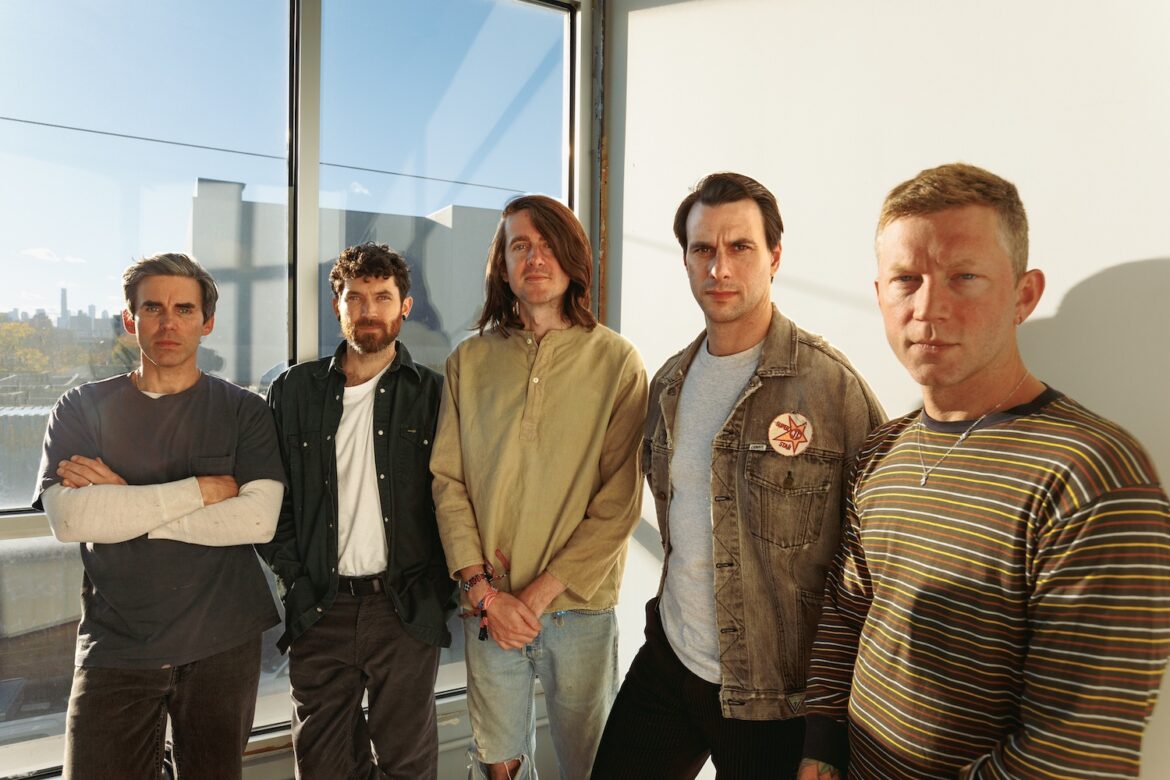
Reflecting on 20 years of adventures and artistry, guitarist Brooks Betts of emo-pop band Mayday Parade discusses creative partnership, the synchrony of past and present, and the lessons learned and taught across the ambitious creation of an album trilogy.
Stream: ‘Sugar’ – Mayday Parade
It’s about the music first… We’ve always been more about just writing the best songs. I think it’s limiting to be super concept album-oriented.
* * *
Mayday Parade is a household name for anyone who grew up with countercultural proclivities in the early 2000s.
Although I can’t necessarily claim that I’m a part of that cohort, given the fact that I was just gearing up for preschool during their heyday, the band nonetheless remains an integral part of my journey in taste development as I came to better understand my inclinations in my early teens. In 2026, they remain scene icons, determined, persistent, and active as ever.
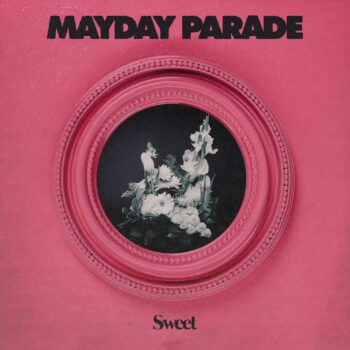
Released July 24th via Many Hats Endeavors, Mayday Parade’s tenth studio album, Sugar, is the third and final offering of an album series dating back to April 2025. Across Sweet, Sad, and now Sugar, the five-piece fortifies their signature heart-rending, angsty-yet-hopeful lyricism across ten tracks that sit promptly at the intersection of fresh and familiar. Guitarist Brooks Betts is candid about their bold decision to release an album trilogy, looking back at the production process from two contrasting angles.
“Doing a trilogy like this, I suppose, is kind of like a double LP thing; you probably don’t do it all the time. An artist does it once in their career, maybe,” he reveals. “Historically, the double record is like an ego move. It’s an ego move for most artists that usually does not monetarily play out the way that most people hope. I don’t think we’re living in that world. We’re not worried about album sales. We’re worried about music, getting to our listeners, and giving them a lot of content to go through. That’s what we did here.”
You know you’re doing something right when your work makes people feel. Betts makes it clear that a conceptual throughline is secondary to creating authentic, powerful, and emotionally resonant standalone tracks throughout our conversation. Theming is unintentional, and primarily a byproduct of the stories told within each song. Ultimately, the band’s formula for maintaining an intimate connection with their audience is staying rooted, understanding, and unmistakably themselves.
For most artists two decades into their careers, however, executing that is easier said than done. From A Lesson in Romantics to Sweet, Sad, and Sugar, Mayday Parade have remained unwavering in that executional ability; they are nothing if not consistent, and they do so without faltering creatively.
“The overall goal at any point in our career is to put out at least a song that is reactive,” says Betts. “It gives us legitimacy to still be here, doing what we do. It’s not easy to do this. It’s easy to say things, but it’s not easy to create music that is worth listening to.”
“We’ve made it a point to write really good albums, because that is, to me, the coolest thing that you could do: To write a record that people want to listen to front-to-back.”
Atwood Magazine caught up with Brooks Betts, three days ahead of the release of Sugar and five ahead of a main stage gig at Vans Warped Tour, to discuss all things music, mentorship, artistry, and evolution.
— —
:: stream/purchase Sugar here ::
:: connect with Mayday Parade here ::
— —
A CONVERSATION WITH MAYDAY PARADE
ATWOOD MAGAZINE: WE’RE LESS THAN A WEEK AWAY FROM THE RELEASE OF SUGAR! WHAT ARE THE THOUGHTS RUNNING THROUGH YOUR MIND?
Brooks Betts: It’s nice to get to the conclusion of three parts! We didn’t set out to do this much work, and so it’s kind of cool to see it all come to fruition. With all the releases over time, you almost became slightly used to music just constantly being released; it’s kind of crazy.
I KNOW THAT THE ALBUM ROLLOUT STARTED BACK IN APRIL OF LAST YEAR, AND IT WENT FROM SWEET, TO SAD, AND NOW SUGAR. CAN YOU TELL ME MORE ABOUT THE DECISION TO ORGANIZE EVERYTHING IN THE FORMAT OF A TRILOGY?
Brooks Betts: We went into the first session for the first part of the release and just realized we had a lot of material that we didn’t necessarily want to have to put on the back burner, which is what happens a lot. We all write, so we’ll have 30+ songs on the table when we come into our recording sessions. We just realized that there was a lot of music that we didn’t want to leave off the table. We bet on ourselves that we could continue getting enough good material each session for every part of the release, just given how we came into the studio. We always have a lot of music that we want to put out.
Although there was going to be a faster turnaround between each session, we kind of just put the pedal to the metal, and just got through as much writing as we possibly could in a relatively short period of time. It worked out! I feel like we did a really good job with it! Even by the end of Sugar, I think we got some of our best material on that release, so it wasn’t as if we were running out of steam.
DID ALL THE FINISHED SONGS MAKE IT INTO AT LEAST ONE OF THE ALBUMS?
Brooks Betts: Yes. Actually, yes and no. Everything got recorded, but there were a couple we held back. When you get to the end of tracking songs, sometimes you second-guess them, and you want to hold back so that you can release some bonus material, which everybody kind of comes to expect these days. We ended up holding a couple tracks back so we’d have a couple little treats or surprises that we can sprinkle around later to keep the ball rolling. We really enjoy the way that you can constantly release music and keep people engaged, so we did reserve some tracks.
HOW DID YOU DECIDE WHICH SONGS WENT INTO WHICH PART OF THE TRILOGY?
Brooks Betts: We tried to play on the lyrics that were already there, but it wasn’t as if we constructed them conceptually per release or per term, like Sweet, or Sad, or Sugar. We didn’t put ourselves in a box with it; it’s about the music first. If there were lyrics that played into the concept a bit more, then that’s where we started theming. We’ve always been more about just writing the best songs. I think it’s limiting to be super concept album-oriented.
I KNOW DEREK SAID THAT TO HIM, THIS ALBUM REPRESENTS NOSTALGIA. POP PUNK. OR THIS SCENE IN GENERAL, IS HEAVILY ROOTED IN NOSTALGIC ELEMENTS. DO YOU THINK YOU SEE THAT WITH THIS ALBUM, OR DOES NOSTALGIA SHAPE YOUR APPROACH TO MUSIC?
Brooks Betts: I try not to, although I will say that when you can touch on that, it’s a really cool thing! That is so much of what built our scene; it’s been a long era of emo music, so I think it’s really cool when you can touch on that. I don’t actively try to do it because I think that gets sort of flat, you know what I mean? It’s been done. We’ve done it. Other people have done it. I think it’s great, and I don’t think he’s wrong at all when he says that.
There are a lot of songs that do touch and play on that, but when I’m putting music together, or when we’re working together as a group, I prefer to look at it as moving forward and trying to
feel fresh, while also making sure that we’re still obviously giving the fans what they hope they’re going to get from a Mayday release.
WHERE DID YOU SEE THE MOST GROWTH IN THIS RECORD, OR JUST THROUGHOUT THE TRILOGY IN GENERAL?
Brooks Betts: I think just songwriting overall in the group continues to be strong. If nothing else, it doesn’t seem to dwindle. I think that we take chances on stuff. There are some things that people can depend on in our sound. We also work with Zack Odom and Kenneth Mount
very well, and they’re the producers who have done a lot of our material in the past. That helps us keep a very consistent Mayday Parade sound. There are songs that always push the envelope, but we try to push the envelope while retaining the roots.
WHAT IS MAYDAY ROOTED IN? YOU SAID THAT YOU’VE WORKED WITH KEN AND ZACK FOR AGES, WHICH PROBABLY MAKES THEM BAND MEMBERS JUST AS MUCH AS THE CORE FIVE. HOW HAS YOUR RELATIONSHIP DEVELOPED, AND HOW HAS THAT SHAPED THE MAYDAY SOUND?
Brooks Betts: I think that starting with them kind of put a stamp on what the band was. Having the success that we had on A Lesson in Romantics kind of kicked things off in that way; people loved that album, they loved that sound. It was cool to experiment on other albums as we went through our career, but we kept going back to them, not only because the sound was great, but also because we had a good working relationship. We would go out and work with other producers, who are great in their own right, but at the end of the day, they just felt more like we were working with friends. Maybe that had to do with the consistency of work we did with them
and building that relationship over 20 years, but we didn’t start out as friends. We started out as just a business relationship. It was just being able to trust them, feeling comfortable, and feeling like nobody was working against you or for ego reasons. It always felt like they were along on the journey with us.
WHAT DO YOU THINK HAS CHANGED THE MOST IN YOUR DYNAMIC AND THE WAY YOU APPROACH MUSIC AS A COLLECTIVE?
Brooks Betts: I think that we understand what songs work well. That’s a very hard thing to put a finger on, because when you have a lot of material, and there’s a lot of good, it’s hard to understand what songs may stand out. We’ve been pretty good at picking those standouts. We can understand what songs work really well and what our fans like. We’ve also done the experimental thing and pushed things that were a little bit too outside of the envelope for singles, but they’re good tracks to show off how artistic we are as musicians. Overall, we’ve just gotten better at understanding what our fans like and, again, I don’t cater to that too much when I’m writing, but it doesn’t hurt when you fall upon it.
HOW DO YOU DETERMINE WHAT WORKS? IS IT A SOUND, A FEELING, OR ANY SPECIFIC QUALITY?
Brooks Betts: It’s usually lyrical. Lyrics are huge for our music. I think that is number one. It could be anything from a heavier song to a ballad, but we know lyrically what’s going to work well, what hits emotionally. You have your own internal instinct as a human, too. I’m not saying we’re 100% right all the time, but we have a feeling of what’s going to work, and it’s mostly
that. It’s also fun to work on songs that feel a bit more poppy; it’s fun to work on songs that feel a little bit more indie, or even just more rock ‘n’ roll than our fans are used to. Those songs probably won’t be pushed as a single, but they help diversify you as an artist. We put them on there because we love them, and we hope others do too.
IN ANOTHER INTERVIEW, YOU SAID THAT THE PAST FIVE YEARS WERE KIND OF A TURNING POINT THAT ALLOWED YOU TO REACH AN “EXPERT LEVEL” IN YOUR CAREER, IN YOUR OWN WORDS. WHAT DO YOU THINK WAS THE MOMENT THAT YOU REALIZED YOU WERE AN EXPERT, OR WAS IT MORE OF A GRADUAL THING?
Brooks Betts: I think it was gradual. There was a moment, and I think the moment was when I started doing a lot of teaching. I did that more out of necessity during COVID, when I would do a lot of Zoom lessons. Slightly previous to that, I got an offer from a guitar shop, and they wanted me to come in and start doing lessons. I didn’t know if I could do that; I didn’t have a curriculum or any way of thinking about how I might build from the ground up with people for lessons. As I
got into doing that, I felt more and more comfortable working with people on a whim. That threw me into having to understand my instrument more than I had previously. I had to speak to myself and hand the next person that knowledge. I realized all the things that I knew about the instrument, but more importantly, all the things that I didn’t. I had to sort of fill in these gaps that I glossed over for so long – things that I understood, but didn’t have a thorough connection to.
That was a lot of theory. When I was doing those lessons, I essentially taught myself the gaps that I glossed over, just because I felt I didn’t need all of that information to write good music or to be creative
That kind of segued into writing music with other people and thinking that I should start recording other artists, that sort of thing. When I really started working with a lot of outside
people, I realized the skill set that really was there could be contributed to the next generation of artists. That’s what gave me that confidence to say that. I mean, “expert” is maybe a ridiculous thing to deem yourself, you know, but I think you get to somewhere around that term after 20 years of doing anything. Doing those things all the time kind of gets you into that realm of feeling pretty confident and very knowledgeable about the things that you have learned and can give to others.
YOU MENTIONED TEACHING YOUNGER ARTISTS. WHAT DO YOU THINK IS THE BEST ADVICE YOU’VE GIVEN, AND DO YOU THINK YOU’VE LEARNED ANYTHING FROM YOUR STUDENTS DESPITE THEM BEING AT EARLIER STAGES IN THEIR CAREERS?
Brooks Betts: From an artist standpoint, I’ve noticed that, just working with people and clients on music, we don’t really work on a lot of technique or theory. Sometimes we try to incorporate it, so I’m reinforcing those things with them, but I teach a lot of people how to write music. When I’m doing that, what I understand is that people who sometimes can barely play the instrument can be extremely creative and write songs that I’m very impressed by. That’s one very interesting thing that I’ve run across. Some people just have that talent, and the physicality of it just has to catch up. It’s very cool to see.
YOU’VE ALSO GIVEN YOUR TWO CENTS ON SOCIAL MEDIA RECENTLY, WHICH I FEEL HAS PRETTY DRAMATICALLY RESHAPED THE MUSIC LANDSCAPE FROM WHEN YOU GUYS FIRST STARTED. BACK IN THE DAY, IT WAS MYSPACE THAT PROPELLED YOU INTO THE SPOTLIGHT, BUT IT’S SUPER DIFFERENT NOW. HOW DO YOU THINK YOUR RELATIONSHIP WITH THAT HAS CHANGED?
Brooks Betts: As a band, we’ve become more and more immersed in that, in order to give content and be interesting to our fans. You know, if I like a band or an artist, I do
love seeing the things that they’re putting out! There are a lot of ways to present yourself artistically online. I think it’s really cool. It’s given more than just an album cover, a song, and a music video to present to the world in that way. I like engaging our fans with the content that we are busy creating.
On the other side of it, personally, I don’t care about it at all, and I actually try to stay away from it. To me, I feel like social media is a negative overall to the world and society. If I wasn’t in a band or didn’t own a company, that would be the other alternative. If we didn’t need that social media presence, I would probably just completely turn it off. Very polar opposite responses, but I hope that makes sense!
TOTALLY MAKES SENSE. IT’S DIFFERENT WHEN YOU’RE ON THE SOCIAL MEDIA CONSUMER END VS. THE CREATOR END, I BET.
Brooks Betts: Yes.
BACK TO THE ALBUM THOUGH, WHAT DO YOU THINK THE OVERALL GOAL WITH IT WAS, BESIDES JUST SERVING AS A CONCLUSION TO THE TRILOGY?
Brooks Betts: The overall goal at any point in our career is to put out at least a song that is reactive. It gives us legitimacy to still be here, doing what we do. It’s not easy to do this. It’s easy to say things, but it’s not easy to create music that is worth listening to. It’s even harder to do it in a world where it is easier to create music – great music – from your house on a laptop on GarageBand. It’s very competitive, and there’s just a lot of music constantly flowing in. It’s fast-paced, so at any point in time, our goal is simply to create a song that gives us legitimacy. It doesn’t need to be the biggest song we’ve ever written. It just needs to be a release where people don’t say, “Well, they didn’t hit on that one.”
There are so many bands that I listen to, and I go, “There’s nothing really I like on that album,” and I hate saying that. That’s a fear that drives us. I know that’s not a very specific answer to this release, but it is just a driving force constantly for us.
I SUPPOSE, MORE BROADLY THEN, WHAT DOES RECORD REPRESENT FOR MAYDAY AS A BAND AND WHERE YOU’RE HEADING?
Brooks Betts: The formats at which people release music are evolving and changing. There are a lot of things that determine what that is, at any given moment, and there are a lot of factors to consider moving into the future as to how you release music. The album format has always been something that we’ve done. It’s a world that we grew up in. It’s a world that I love. I grew up on records, and I love listening to full albums. We’ve made it a point to write really good albums, because that is, to me, the coolest thing that you could do: To write a record that people want to listen to front-to-back. I love listening to records front-to-back when they’re good enough to do that. I’m not going to do that with every record, right? That’s always been our goal.
I think we came into a world where singles worked really well, and putting out a bunch of singles was a cool thing. It was cool to change to that format. Doing a trilogy like this, I suppose, is kind of like a double LP thing; you probably don’t do it all the time. An artist does it once in their career, maybe. Historically, the double record is like an ego move. It’s an ego move for most artists that usually does not monetarily play out the way that most people hope. I don’t think we’re living in that world. We’re not worried about album sales. We’re worried about music, getting to our listeners, and giving them a lot of content to go through. That’s what we did here. It was a lot of hard work, it was a lot of money, because we did most of it independently, and then later partnered with Many Hats for distribution. It was a cool chapter of our career, though I don’t think we’re going to do that again coming up.
This isn’t because of money necessarily, although that could be a factor, I suppose. It’s more about being able to do something new and fun in a different release format, and then be able to go back and reassess how we might approach the next release in a different way, as little or as big as formatting is to any artist. I don’t really know, but I think it’s cool to try different things. That’s what we did, and that’s the era that we’re in. We’ll probably go into a little bit more of the
album world again, if that’s what the people are digesting. Hopefully people are still digesting full albums!
— —
:: stream/purchase Sugar here ::
:: connect with Mayday Parade here ::
— —
— — — —
Connect to Mayday Parade on
Facebook, 𝕏, TikTok, Instagram
Discover new music on Atwood Magazine
© Eli Ritter
 © Eli Ritter
:: Stream Mayday Parade ::