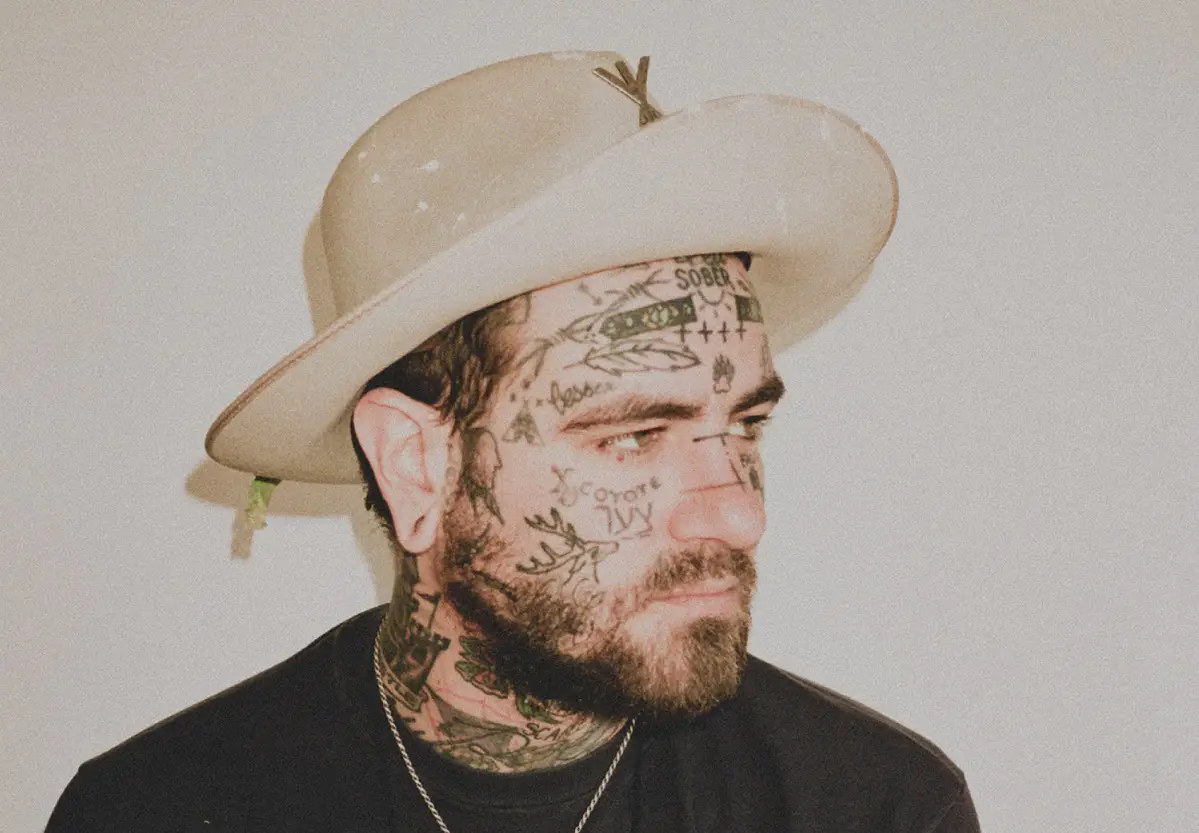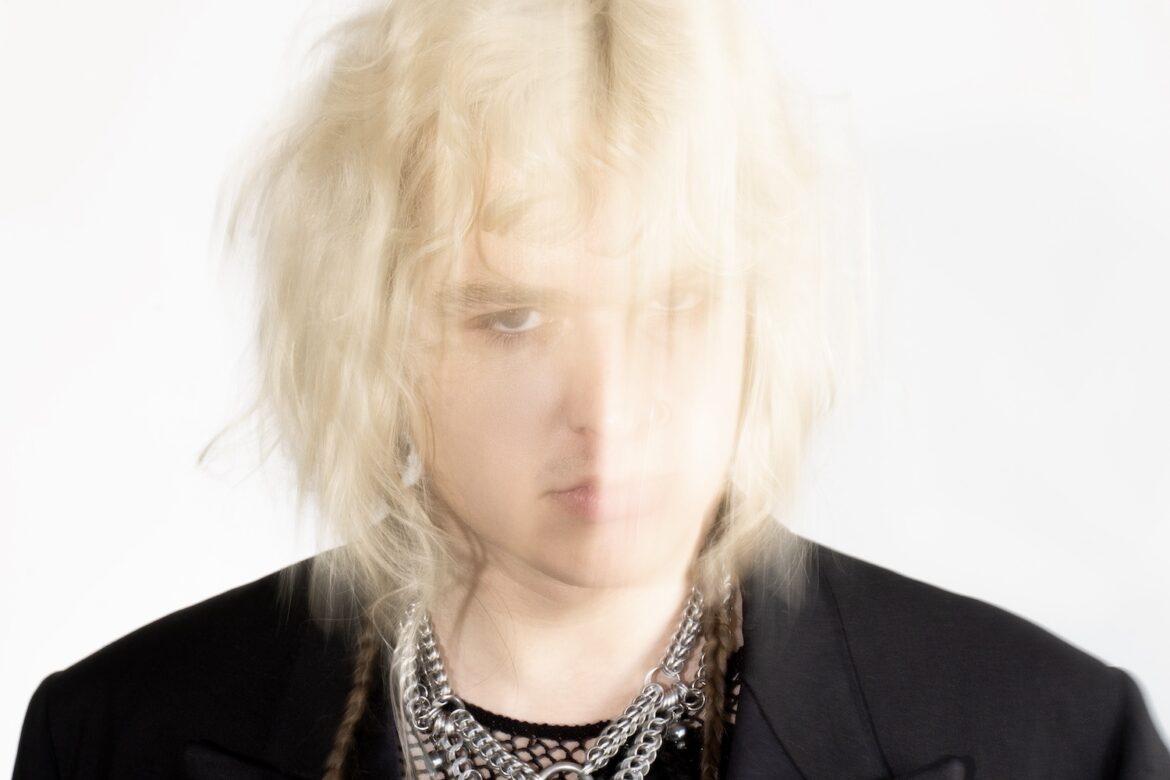
Bold, provocative, and alive, Mothé’s ‘Total Popstar’ redefines what pop music can and should be – turning chaos into catharsis and self-destruction into self-discovery: A defiant soundtrack to feeling everything all at once. In candid conversation with Atwood Magazine, Spencer Fort dives into the making of their unfiltered and unapologetic sophomore album, reflecting on nightlife, freedom, and the radical joy of showing up messy, loud, and unafraid.
Stream: ‘Total Popstar’ – Mothé
“I’m not a rockstar, baby I’m a pop star,” Mothé boldly declares with conviction in their voice and a strut in their step.
The dynamic title track off their sophomore album Total Popstar is big, brash, and unapologetic – a magnetic, intoxicating song that seduces the ears and stuns the heart, instantly winning us over and luring us deep into Mothé’s visionary world. Equal parts satire and celebration, “Total Popstar” is a glittery, electrified anthem of self-mythologizing – the sound of an artist demanding the spotlight on their own terms. “Stop calling me a rock star. That’s the old me, I’m a real total pop star,” Spencer Fort sneers, blurring the line between parody and proclamation.

I’m not a rockstar, baby I’m a pop star
You could sell me spit in a tiny little bottle
Used to be an empath,
now I’m just an asshole
Used to date a nice girl,
now I’m with a model
And I only see my friends
when we’re all f*ed up
And it’s 1 PM and I can’t wake up
When has one more drink
ever been enough?
When I’m back in town
I’m never back enough
I’m a pop star
T-O-T-A-L-L-I-E pop star
Totally a pop star,
that’s why I’m so awful
What’s your name again?
Stop calling me a rock star
That’s the old me,
I’m a real total pop star
– “Total Popstar,” Mothé
Released August 1st via DVG Records, Total Popstar is, in the words of its creator, “incriminating, unapologetic, and loud” – a delirious, high-voltage portrait of nightlife and self-discovery that celebrates imperfection and human chaos in equal measure. It’s a rare, empowering and edgy record that dares you to loosen your grip and let go; to touch grass, to dance alone in your living room, to sweat in a crowd of strangers, to feel something again. Born in Los Angeles’ underground clubs and refined through the lens of its alternative scene, Spencer Fort’s second album as Mothé marks a total metamorphosis – from introspective indie songwriter to all-out provocateur.
“I feel like people should expect things to change often,” Mothé says. “Because I’ll write in a genre and then I’ll tap the well on it, and I’ll get bored and take interest in other genres. So coming into this record was a unique journey for me. I started as an indie project that was just guitars – we were barely using synths – and at this point, there’s maybe two songs on the record with guitar at all. It’s switching from indie music to club music and allowing the project to be culturally flexible… the world evolves too quickly to commit to one thing now.”
The creative moniker of singer, songwriter, producer, and multi-instrumentalist Spencer Fort, Mothé emerged in 2020 as a deeply personal outlet for storytelling and self-discovery. Their debut album, 2021’s I Don’t Want You to Worry Anymore, introduced a gentler, guitar-forward sound – a hazy blend of indie pop and bedroom rock steeped in introspection, yearning, and the quiet tension of identity in flux. Looking back, Fort describes that era as a snapshot of someone still learning to take up space. “It feels like looking at a high school yearbook,” they admit. “I was less comfortable and familiar with being queer, and it felt new. I have to give myself grace and love for that record.” Four years later, Total Popstar finds them pushing far past those boundaries – stepping out of the bedroom and into the club, trading restraint for chaos, control for catharsis, and curiosity for confidence.
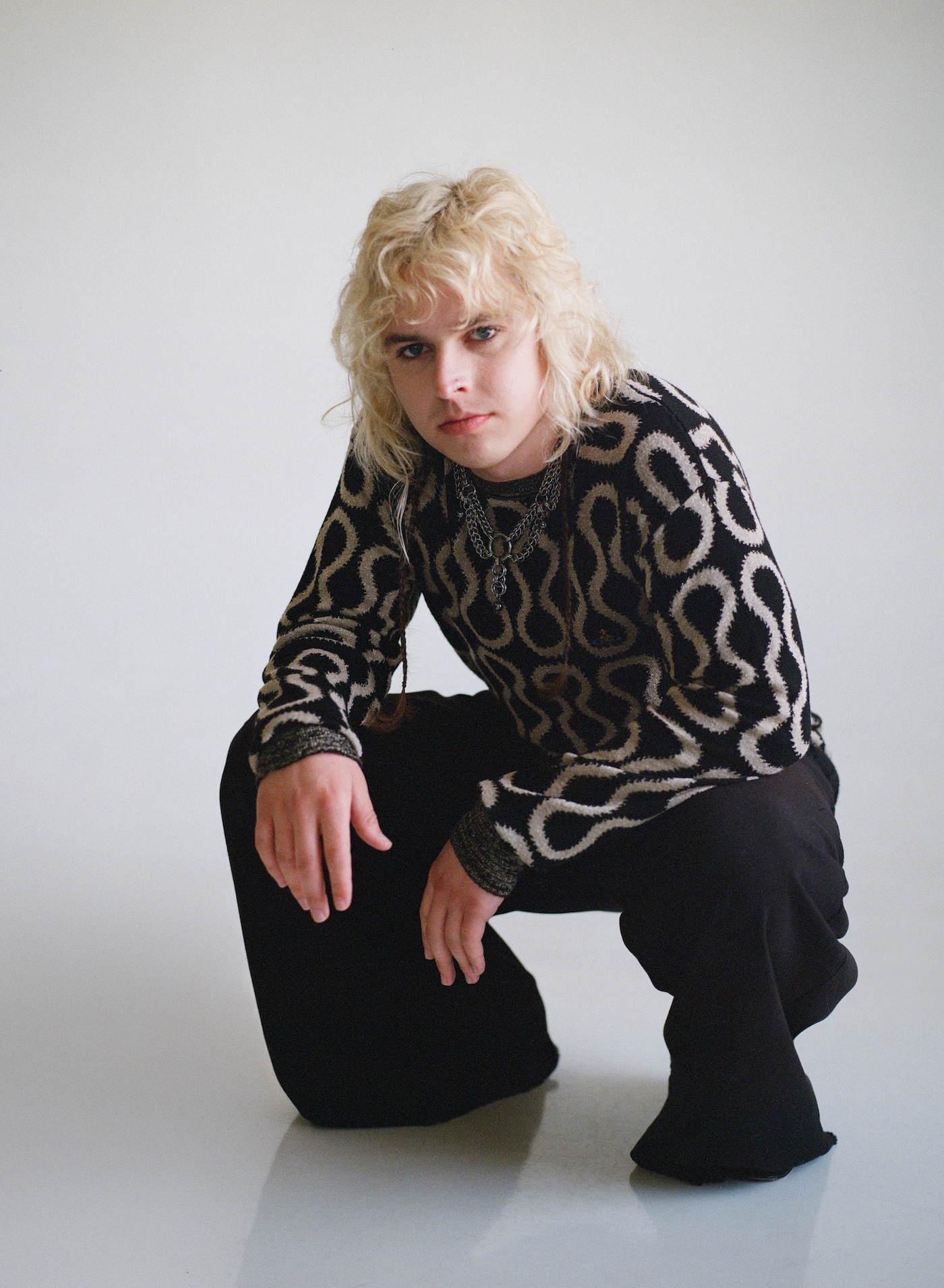
As Fort describes it, Total Popstar was designed to hit with the relentless energy and allure of a DJ set.
After spending much of the past few years producing for other artists and DJing across Los Angeles, Fort wanted to capture the immediacy of a room in motion – the way bodies move, the way music lives. “There were two things that really changed my relationship with music,” they explain. “I was producing for other artists and DJing a lot. That’s when I had to come up against priorities I’d never considered before – how music actually lives in rooms. That’s where I developed Total Popstar. I kind of did it like a DJ set, where I wanted it to be hard-hitting, quick transitions, no ability to stop, no ability for the listener to get out of the world. I wanted the world to suck you in and be forced, the same way dancing in a room does.”
It’s a world Fort describes as “dark, sticky alleys” and “smelling like shit” – smoky, sweaty, chaotic, and alive. “I was DJing sex parties and learning that world,” they say. “I realized how important it is for people to feel freedom in their bodies, in any way – especially in this weird political climate where emotionally, people have locked down constantly. It’s so important to push the boundaries of freedom by staying up late or trying things you’ve been told you shouldn’t do. The world of Total Popstar… it’s trashy, but it’s fun and free. It was the only way I could get through the weight of the world.”
That tension – the line between liberation and collapse – animates the album’s emotional core. “Dreams” opens Total Popstar like a diary entry you never meant to write, a quiet confrontation with longing and loneliness before the lights come on. “I’m mustering the strength to tell you what’s been on my mind, that every dream I’ve ever had was just of you and me inside,” Fort sings, their heavily effected voice churning through a synth-soaked haze. “‘Dreams’ came out all at once,” they recall. “I was in New York, alone for nine days, and I wrote it on the subway in 15 minutes. By the time I got off, the song was there. I liked the idea of opening the record with where I actually was emotionally while doing all this – so that any celebration you hear later can also be seen as a deflection from those feelings.”
“Dreams” doesn’t ease you into Total Popstar so much as it drops you into the aftermath – the hangover before the high. It’s an audacious way to start a record that will soon spiral into club euphoria, and that’s exactly the point: Before Mothé takes us into the night, they make sure we know where the story begins. It’s self-loathing and self-aware, pleading and performative all at once. Fort spills everything in one breathless, intoxicated confessional – a gut-spilling letter to the lover who won’t quite claim them. The song’s swirling pads and distant vocals feel like drowning in your own memories, as if they’re trying to make sense of connection and collapse in the same motion. To open the album here is to admit that the joy to come is survival – that the party isn’t a distraction from the pain, but the only way through it.
You want me in your bed,
but do you want me in your life?
I only wait around
until you wanna spend the night
Now I’m crying on your shoulder
you get so tired of what I’m saying
But god, I need to talk to someone
so I make you tolerate it
I spend a hundred f*ing dollars
on a meal that I can’t eat
Watch a stranger’s tits bounce up
and down I feel like a f*ing creep
And I need to sob in public
so that everyone can see
And now I’m acting like a martyr,
everybody look at me
– “Dreams (Intro),” Mothé
If “Dreams” is the reckoning, then “Total Popstar” is the resurrection – the glitter-streaked, neon-lit answer to its own despair.
The album’s namesake, centerpiece, and self-portrait in full glare, it’s both satire and self-actualization: Mothé reborn in real time. “I had the title picked out before I even started writing,” Fort says. “Advertising has become so interesting. People are constantly labeling themselves – ‘I’m this person, I’m that person’ – and I thought, I want to be seen as a pop artist, I want to be seen as a popstar. So I’m literally going to demand it with the title and write to that feeling.”
The song itself started as a joke between Fort and fellow indie singer/songwriter Anna Shoemaker, born from a conversation about the stagnation of “arms-crossed” indie shows. “We were expressing our grievances with ‘stand-around-and-watch’ music,” Fort laughs. “We were saying, somebody’s got to inject some life into this shit. So after that conversation we just spat out a song about being a popstar. It started as a joke – that’s why we misspelled ‘popstar’ and did all that stuff. It was really just me and Anna having fun, embracing a new friendship in music. Then when I looked back at it, I was like, oh my god, that shit actually happened.”
“Total Popstar” is unfiltered spectacle – ego, humor, and honesty twisted together into a strobe-lit, velvet-clad confession booth. “Had to change my number ‘cause I got a stalker,” Fort sings, their delivery dripping with swagger. “Broke into my house, he’s a freaky little f*er.” Beneath the humor and hedonism lies an artist pushing back against the sterile perfection of modern pop. “The age of the put-together pop artist – it’s just so f*ing done,” Fort asserts. “It’s boring as hell. Nobody can maintain that look in the modern age without a million dollars anyway. So let’s create an album where I’m the one doing things wrong, that’s messing up. Check it out. I’m proud of it.”
I tried to have songs that felt like the inside of the club and songs that felt equally like leaving the club intentionally.
* * *
That rawness extends across the record, where many of Fort’s vocal takes are literal post-club freestyles.
“I put myself on this really intense schedule so that I wouldn’t be able to edit myself,” they say. “Everything had to be done and committed to in the moment. It basically became unfiltered. A lot of the vocals are me getting home from the club at 2:00 a.m. and freestyling into the microphone with autotune on. I’d try to re-record it later, and it just lost the magic. So the vocals you hear are salvage drunk performances. I ended up with an album with the most incriminating lyrics I’ve ever had – but I figured, you can’t really dance until other people around you are dancing. If I can be the dunce, if it gives people extra permission to go out and be messy and feel joy, then that’s worth it.”
Elsewhere, songs like “Your Orbit” and “BEAT, DRUGS, SEX, LOVE” channel that same unfiltered, unapologetic spirit into different emotional registers. “Your Orbit” – a seductive, chaotic anthem co-written with Chris Lyon – blurs pleasure and desperation: “I know you’re not trying to be my lover / We can f* around ‘til you find another.” “That one’s older,” Fort admits. “It almost made Is Anyone Having Fun? but it sounded too clean. I brought it back and made it insanely abrasive. I added that club ending – ‘Got a second house down the road just for f*ing in.’ It’s so desperate, but it’s honest. It doesn’t have to be serious; I’ll consent into whatever you need me to fit into. I’ll be it.”
“BEAT, DRUGS, SEX, LOVE” explodes in a sultry blur of pulse and provocation. “That song was me wanting to make something glitchy and dancey,” Fort says. “If you’re coming to the party, I’m already there. You gotta catch up. It’s self-assured. I never wanted to be an artist that had to apologize for anything. Every album can be a Hail Mary at this point – I’m not going to sit here and worry about how people will take it. You’re not even going to feel like you can ask me to apologize for the work I’m making.”
Toward the end of Total Popstar, vulnerability resurfaces in “Slow Motion,” a haunting refusal to settle down. “You don’t have to love me, I don’t have to love you, I don’t wanna fall into slow motion,” Fort sings, rejecting the comfort of domestication. “In some ways, it’s about being domesticated,” they explain. “Everything feels slow and relaxed and it’s beautiful, but I wasn’t wanting that for my life. I realized I live for the city – I like having to put up with people. Even if they annoy me, I love being around them. That’s what I’m trying to avoid: slow motion. For an entire year, I was only home if I slept.”
The record closes with “Naked in the Hotel Bar,” a delirious, late-night spiral of lust and chaos – and what Fort calls their most f*ed-up vocal performance.” “I was like, should I even rescue this one? It’s insane. I tried re-doing it and couldn’t beat trashy ol’ me. So I put it at the end – a cliffhanger for the hangover.”
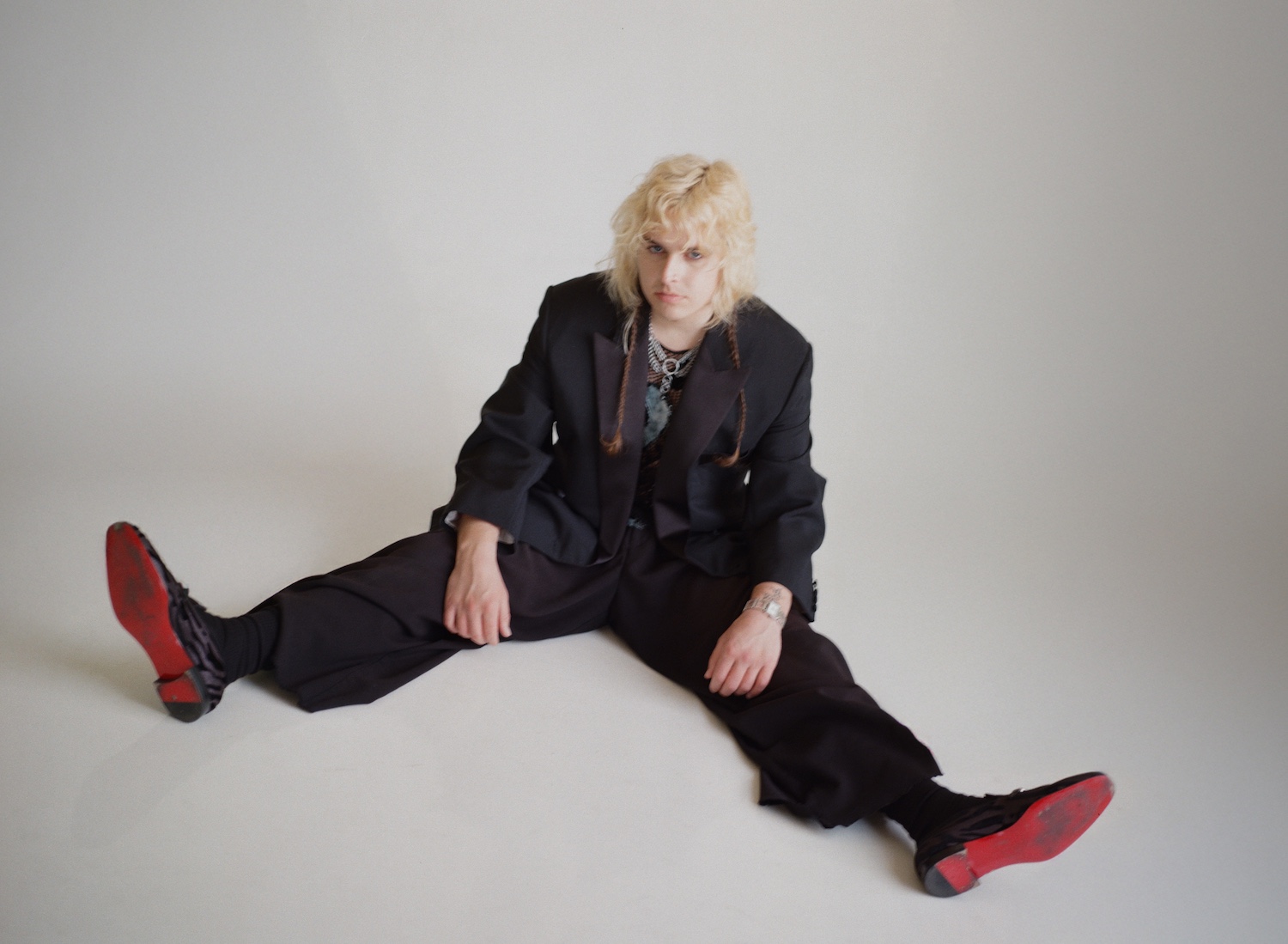
Through it all, Total Popstar pulses with defiance and freedom – a rejection of polish in favor of presence.
It’s a glitter-drenched fever dream and a crash landing all at once: the sound of euphoria laced with self-awareness, of someone learning to dance through their own wreckage. Across the record, Fort makes peace with contradiction – balancing impulse and intention, pleasure and consequence, collapse and catharsis. These songs move with reckless abandon but reveal a surprising tenderness at their core; they’re club anthems that bleed, pop songs that sweat, love letters written in strobe light and cigarette haze. Beneath all the chaos runs an ethos of unfiltered truth – an insistence that art, like life, should never be spotless.
“[When I was younger], polish was cool because it was inaccessible,” Fort reflect. “But now, anybody can keep adding things until a song is big and overproduced and huge. There’s YouTube tutorials for everything. So now the thing nobody has access to is personality. There’s no tutorial for that – you have to actually go live. That’s the new rarity.”
At its core, Total Popstar is a record about being fully alive in a time that rewards detachment – about dancing through the chaos, about showing up messy and proud. It’s a celebration of imperfection and instinct; of letting yourself unravel, get loud, get lost, and still find meaning in the noise. Fort turns debauchery into devotion and confession into communion, creating a world where sincerity and spectacle can coexist – where every flaw, spill, and stumble becomes part of the art itself. Total Popstar doesn’t ask for permission to feel; it demands it. It’s unfiltered, unapologetic, unpolished, and alive – the sound of someone taking ownership of their own contradictions and daring others to do the same.
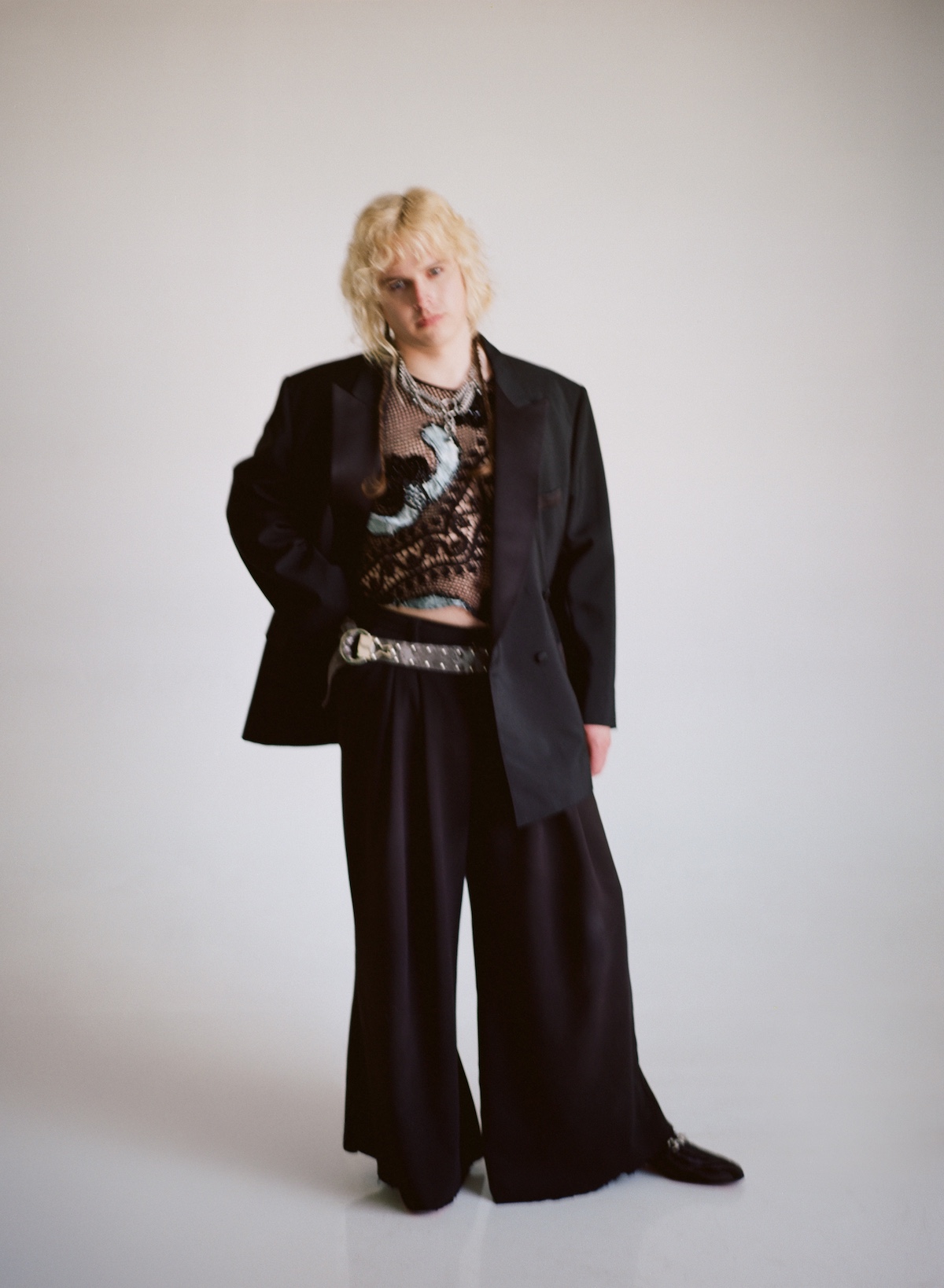
That’s the ethos of Total Popstar: To revel in the mess, to glorify the chaos, and to remind us that being human isn’t about looking polished – it’s about showing up, turning the lights up, and sweating it out together.
Loud, incriminating, and defiantly free, Total Popstar is a manifesto of radical honesty – and a record that makes you want to get up, get out, and feel everything.
“I hope it makes people go outside,” Fort says. “Talk to each other more. Go to the club, do whatever makes you happy. People need to stop being afraid of hanging out and of substances. It really keeps the world going.”
They pause, then add with a knowing smile: “That’s what music’s for.”
Total Popstar is out now. Step into Mothé’s seductive, singular world below, where chaos, candor, and catharsis collide in our intimate and uninhibited conversation. It’s a world of feeling without filter – one that dares you to live a little louder.
— —
:: stream/purchase Total Popstar here ::
:: connect with Mothé here ::
— —
Stream: ‘Total Popstar’ – Mothé
A CONVERSATION WITH MOTHÉ

Atwood Magazine: What do you want folks who are discovering you today to know about you and your music?
Mothé: They should expect for things to change often, because I will write in a genre and then I’ll tap the well on it and I’ll be bored and I’ll take interest in other genres. And so coming into this record is a very unique journey for me, because I started as an indie project that was just guitars and barely using synths – and at this point, there’s maybe two songs on the record that have guitar at all. Switching from indie music to club music, and allowing the project to be culturally flexible, is an expectation that I would love to set with everybody, because I think the world evolves too quickly at this point to commit to one thing now.
We first connected around your debut album, I Don't Want You to Worry Anymore, back in 2021. How has that album grown on you over the past four years since its release?
Mothé: Oh, it’s funny. I mean, because I hear some of these songs, and it can be very interesting to have those tangible chapters of your life documented through your discography like that. So every once in a while, I’ll go back and listen to it, and it feels like looking at a high school yearbook or something because it’s just a literally different person. I was less comfortable and familiar with being queer, and it felt kind of new. I was inspired by different artists back then than I am currently. And it ends up being cute. I think it’s grown on me in a way where I just view it as cute. I almost have to give myself grace and love for that record in a fun way. In hindsight, looking back at it, I would have maybe just put it out as the best six songs and done it as an EP, because there’s the slow songs I thought were going to hit so much harder than they did. But I needed to learn that lesson.
You've released a bunch of music in the years since then. And as you mentioned yourself, you've been experimenting with your sound so much in these ensuing years. How do you feel you and your art have grown since you first introduced this project?
Mothé: So one thing that happened… There’s two things that really changed my relationship with music. I was producing for other artists and DJing a lot. And that’s when I realized, I had to come up against a lot of priorities in music that I hadn’t considered before. Some people would come in and they would really want to make sure that their lyrics were pronounced and clear. Some people would come in, and they wanted it to be really guitar-focused. Other people wanted it to be more focused on the culture that they were living in. And then with DJing, I had to do so much research and learn how different music lives in rooms. I think that changed my relationship with music really permanently, because I had never had to consider these priorities before when I was just making indie music.
And now, it’s literally gathering more experience of how music lives in rooms. And I think that’s where I developed Total Popstar. I kind of did it like a DJ set, where I wanted it to just be hard-hitting, hard-hitting, hard-hitting, hard-hitting. I would go to indie shows. I’d go to two shows a night most of the time. I’d go to indie shows. I’d sit through a 30-minute band, and I can’t watch another second of live music. And then I would go dance to the DJ set for two hours. So, what’s the difference? Why does that work on me and hold my attention, but a live band can’t? So I tried to format the record more like a DJ set that was hard-hitting, quick transitions, no ability to stop, no ability for the listener to get out of the world. I wanted the world to suck you in and be forced, the same way that dancing in a room does.
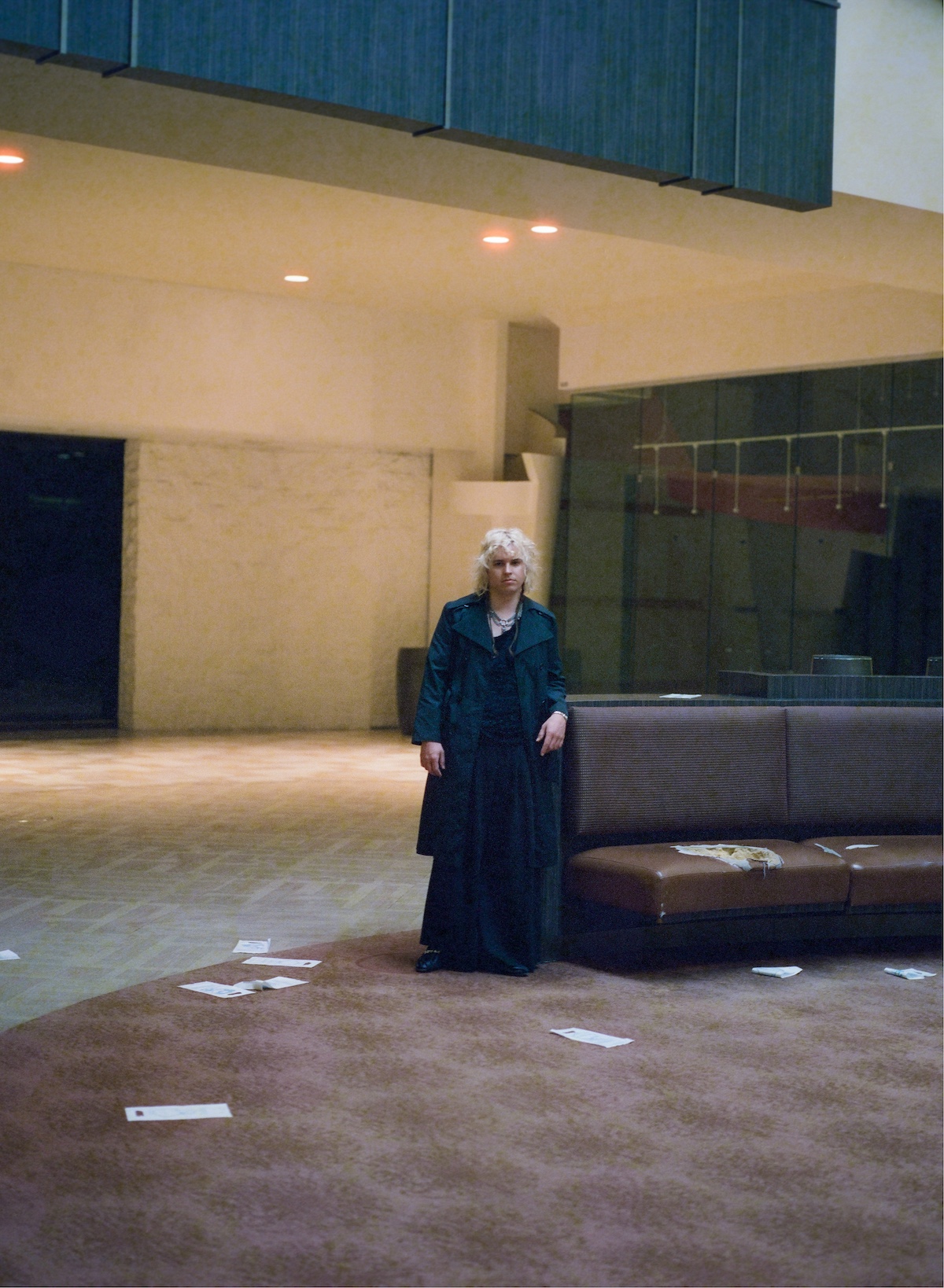
Let's dive right into it then! What's the story behind your sophomore album, Total Popstar?
Mothé: I mean, the story is honestly just, I was partying a lot. One of the things that I found the most interesting about partying was that, in Los Angeles we have all these actors. You can go out and stay out until 9:00 in the morning if you want. It’s super hype, but obviously, you can’t be doing that all the time. So there was always this funny moment where the party was still going, everyone was still having fun, and you kind of have to choose to excuse yourself and go home. And it was when you get home, or when you leave a club like that, like it’s so hype, it’s big, everything is still up, and then you walk outside and it’s just a ghost town, everything is empty, and you’re in the most random area that you’ve ever seen, and nobody’s around. And I felt like that transition had a ton of whiplash to it, and it held a lot of weight for me, of just like the party’s over, but you also have to choose when the party’s over. So I think that the story of the record is mostly about that transition. And so I tried to have songs that felt like the inside of the club and songs that felt equally like leaving the club intentionally.
You've said before that this album catalogs an extremely messy year in your life. Obviously, a lot of that also revolves around a partying lifestyle. I'm not sure if for you there's a linear relationship there, or those are just two things that are true, true, and unrelated. What does the world of Total Popstar look like for you?
Mothé: Oh, they’re totally related. But ‘messy’ is not necessarily a negative word in this case. It’s a relentless celebration, and it’s a radical acceptance of being alive and having free will… That’s kind of what the world looks like. But yeah, so I was just out, and I was DJing sex parties, and I was learning that world. I was dancing a lot and I realized how important it is for people to feel freedom in their bodies, in any way. Especially in this weird political climate, where emotionally, people have locked down constantly, it is so important. I found it important to push the boundaries of the freedom of your body by staying up late or trying things that maybe you’ve been told you shouldn’t do – so the world, it’s definitely dark, sticky alleys and it smelled like shit, honestly. It was super trashy, a lot of cigarettes inside. It was smoky and shitty, but it’s fun and free. And it was the only way I could get through the weight of the world.
While we're talking about partying, you mentioned that you have had a switch in some of the artistic inspirations that, kind of drive your music. What are some of your favorite songs and artists to dance to? And who was inspiring you creatively during this period?
Mothé: My favorite thing is going to a DJ set and not knowing any of the songs yet. Just like kind of these weird… There’s such a culture around archiving dance music. And so these people… It’s just going in and finding vinyl, and there’s a whole rabbit hole on YouTube of just songs that never hit DSPs, and people would go and find them in whatever record shop they were in. And it was just they would bootleg it and put it up on YouTube and it would be unknown, untitled dance song, 135 BPM or something like that. And I thought that was so cool because it reminded me a lot of punk music, and I grew up in punk music. But there’s this really, really deep relationship with archiving music and kind of keeping the history of it somewhere available and keeping it free as well. So, I love that the majority of the dance music that I was listening to existed on free platforms and only were done and only were on those platforms because somebody cared about it.
They put in the effort and the time to find it at the record store. Oh, this is worth documenting, record it into whatever software they have, put it on YouTube, and then make zero dollars for it. They just do it for the love of the craft. So I was going down that rabbit hole, and I was just kind of trying to find everything I could. And then it ended up being much easier to find the music from South America, and music from Japan, and stuff. I ended up going to Japan and going into these, I spent a lot of the nights in the nightclubs. And the thing about Japan is that the trains stop running at midnight, and they start running at 5:00 AM. So everybody rolls up and they get into whatever club they’re going to be in before midnight, and they just dance until 5:00 in the morning. And then the trains come and everybody leaves. But there’s sort of, it’s like a completely uninterrupted party. And they have such a different relationship with rhythm over there than they do over here. And that was something that I wanted to do. Like, most of the culture outside of America are much less quantized. And I intentionally… What I wanted to do was take this kind of dance music, house music, aggressive stuff that would normally be quantized and perform it live on analog synths, which I did. And then it’s got this very loose pocket to it that a lot of dance music in America didn’t have.
You're already segueing into my next question, so thank you for that. You started talking about your vision for the album creatively, using analog synths and everything else. Can you tell me more about that – your creative and musical goals in that world?
Mothé: Yeah, of course. I think the fun thing was, when I did Is Anyone Having Fun, I had put that song out, or I had put that album out like maybe a year and a half after I had finished it. Because of label contracts and like team member switches and all this stuff. And I basically didn’t have a good experience when I did that. I felt like by the time the music came out, the production was already outdated because music moves so quickly now. So I set out to do the opposite thing. And I put the first single of Total Popstar, before… I put it out before the album was done. And I put myself on this really intense schedule so that I would not be able to edit myself. Like everything that I did just like had to be done and committed to in the moment. So it was like, basically became unfiltered at a certain point. And a lot of the vocal performances on the record are just like me getting home from the club at 2:00 in the morning and kind of freestyling into the microphone with the autotune on.
And then I would wake up and try to tweak it or like re-record it, and it just lost the magic. So a lot of the vocals on the album are like salvage, drunk performances. And I think what I was trying to do by doing all of that and by having the first single out and a schedule before the album was finished was just to like push myself to be honest and messy regardless of whether or not I wanted to be. I didn’t really give myself the choice to backtrack anything I was saying. And so I ended up with an album with like the most incriminating lyrics I’ve ever had. But I also figured… One thing I wanted to do was it’s like you can’t really dance until the other people around you are dancing. So I wanted to make an album where I’m like, this is my life. It’s messy. It’s incriminating. Like I will be the dunce if I have to be. If it gives the audience like an extra amount of permission that they didn’t previously have in their life to go out and be messy and feel the joy in the world like that.
You created the music to basically interrupt the standing around at the middle school dance that would force people to get onto the dance floor.
Mothé: Exactly. I mean, I think people are too nice now. Like, I think they need to go out in the world and kind of like be, like, not assholes. You don’t want to be, like, actually… You don’t want to harm anyone. But like, I think we’re all just like, extremely aware. I think everybody’s terrified they’re going to become a meme. Like, every time you step out in public, you’re basically on stage at this point and could go viral for picking your f*ing nose or something stupid like that. And I think it’s just like, as if everybody… If every normal person is going to be recorded constantly, then I think as artists, it’s really important to like, record ourselves in less appealing light so that other people can feel it and be like, okay, like the art is still human. The age of the put-together pop artist, it’s just so f*ing done. It’s boring as hell. And it’s not how anybody lives anymore. And nobody can like, you couldn’t possibly maintain that look in the modern age without a million dollars anyway. So I just don’t think it’s the kind of thing anybody wants to see anymore.
And that’s why I was like, let’s create an album where I’m the f*ing evil one or like, not the evil one, but like, I’m the one that’s doing things wrong, that’s messing up. Check it out. I’m proud of it. I’ve had a lot of fun. Go out in the world and be messy. It’s gonna be like… I don’t know, that’s how I should be told that shit.
You're glorifying a little bit of that decadence.
Mothé: Yeah, absolutely. It’s like, this is funny thing. It’s like, okay, you can’t do it all the time. But like, you wake up and you’re hungover at work. It’s like, mostly so what? Like relax on yourself.
Right. You're never going to regret that extra day at the office.
Mothé: Exactly.
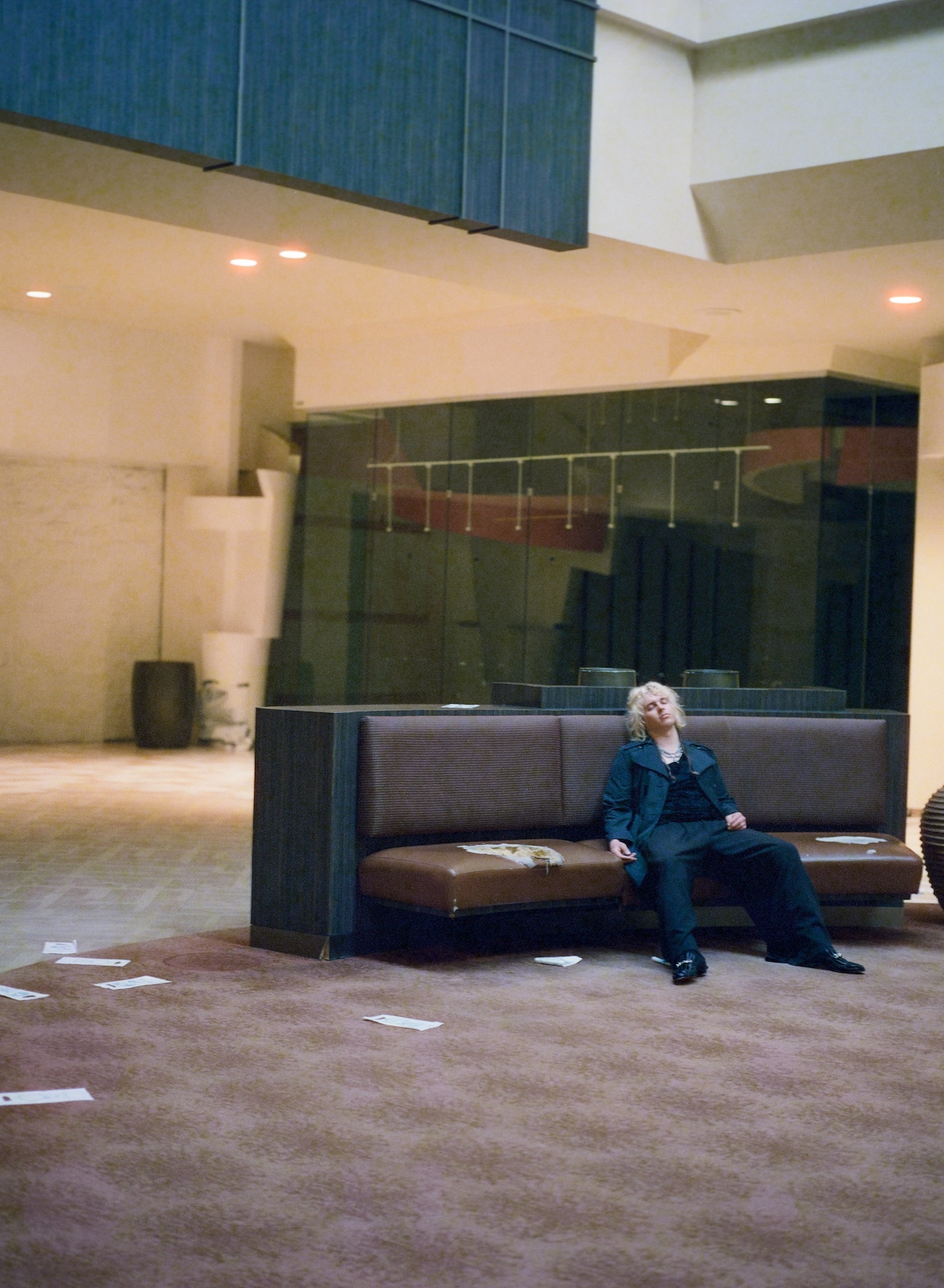
So let's go to the title. What does it mean to be a ‘total popstar’?
Mothé: Oh, I had the title picked out before I even started writing it. I knew… I kind of liked the idea. Advertising has become so interesting. And like, I noticed that a lot of the people in the world are starting to be like, I’m a this person, I’m a that person, or like, even sort of the relationship with neurodivergence was changing and in people that were slightly younger than me, where like, you… People have started using neurodivergence to classify who they were in the world, which I found kind of interesting. And so I became obsessed with this, like, super literal approach to advertising. It’s like, I want to be seen as a pop artist. I want to be seen as a popstar. I’m literally going to demand it with the title. And I’ll write to that feeling.
That is fascinating. You willed it into existence.
Mothé: Yeah, I was like, I want to be seen this way. And I think the easiest way to be seen that way is to go out on the internet and say, ‘This is what I am.’ Like, I’m a total popstar, especially because I was trying… I was kind of interested in the indie genre.
How better to make that change than by declaring it yourself? Like Lady Gaga – she seemingly came out of nowhere, fully formed. And while I'm sure some of that stuff exists, you don't see much of it.
Mothé: Lady Gaga is super cool. You can find some archived early performances on YouTube from her where it’s just her and two dancers, and she’s like doing poker face pre-release for like weird showcases. And it’s still just awesome. And it just feels like old drag shows where the drag is kind of shitty and everybody loves it. It’s so, so good.
Thanks for sharing that. The title track, “Total Popstar,” makes it clear that there's a big difference between popstars and rock stars. What's the difference?
Mothé: I literally think that the difference between a popstar and a rock star is like gender. It’s like the way men act versus the way women act. It’s like, I don’t know how to explain it, but culturally it feels that way to me. But yeah, like I think the popstar thing is a little more just like, my dream is always just to get in an Uber and not know where it’s going and get out of it and get handed a microphone and walk straight on stage. And like, that was kind of the feeling that I wanted to add to that song. Also like weirdly, those lyrics aren’t lies. Somebody did break into my house. I had a good year, and I bought like an old convertible, but like all of these, like they sound like lies, but I was listening back to it the other day, and I was like, holy shit, like actually all of those things did happen.
I want to say I have some special deep cut favorite, but in the interest of transparency, the song “Total Popstar” has been on repeat – and it's definitely my highlight. Where did that song come from, and what is its significance for you?
Mothé: Well, I was with my friend Anna Shoemaker, who’s a fun indie artist, and we were kind of expressing our grievances with… I call it “stand around with your arms crossed” music. You know what I’m talking about?
I know exactly what you're talking about.
Mothé: Yeah, so we were kind of like, oh my God, somebody’s got to inject some life into this shit. And so after we were having that conversation, we got together and just spat out a song about being a popstar. It started as a joke. That’s why we misspelled popstar and did all this stuff. It was really just me and Anna having a lot of fun, kind of embracing a new friendship in music. And then when I was looking back at it, I was like, oh my God, that shit actually happened.
That's really funny.
Mothé: I was spitting this truth on accident.
Another personal favorite is “Your Orbit.” I think just the mix of raw energy and emotion on that song is utterly infectious. Do you mind sharing more about that track?
Mothé: The funny thing is, that track actually potentially would have been on Is Anyone Having Fun?‘ It’s a much older song. But it kind of just sounded like a pop song at first, and I couldn’t get it to be exciting. So I just didn’t do anything with it for years. And then I brought it back, and I just tried to make it insanely abrasive. And that’s when I added that ending, the club ending. It’s like, I got a second house down the road just for f*ing in. Which also is true. I have a second apartment, one two blocks away from my house, that I have a friend living in. And I was like, oh, that’s funny. That could be the f* house. You know what I mean? Yeah. And so it’s sort of like the song started coming from a place of just being like, honestly, don’t care what we are. If you don’t want this to be permanent, I’m cool with it. I just want to be around you. Every guy that you introduce me to that you’re having sex with I think is hot. Put me where you want me, coach. It’s sort of just like, it doesn’t have to be that serious. You don’t want it? I’ll consent into whatever you need me to fit into. I’ll be it. It’s almost like so desperate, you’re just like, I don’t even care what the terms are, I’m signing the contract.
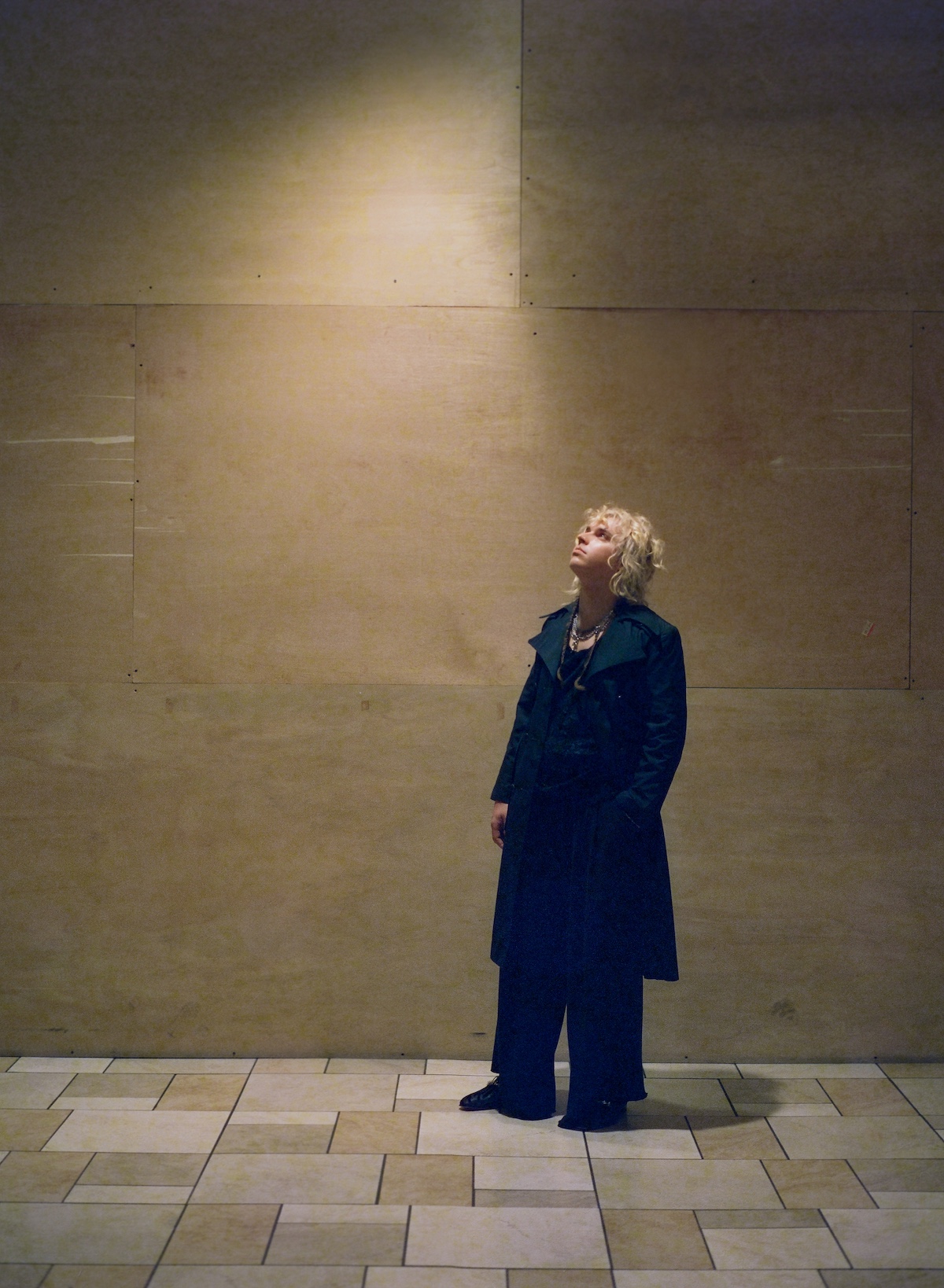
Some of the most intense moments on the album are also the most revealing. “BEAT, DRUGS, SEX, LOVE” stands out not just as hard-hitting, but also, I think, as incredibly vulnerable. Where did that come from?
Mothé: I find it interesting that you perceive it that way, because I think I always felt like maybe it was a cagier song. That song for me was literally just like, I wanted to make a song glitchy dance. And the whole thing is just like, if you’re coming to the party, I’m already there. You guys gotta come catch up. That’s literally it. I don’t think that it was ever meant to be a much deeper meaning to it. But in some ways, I guess it does innately become vulnerable because, it’s pretty self-assured internally.
You know what it is? I think there's also this unapologetic quality to it. There's a lot of confidence and bravado across these songs, but in that one, like you said, there’s a self-assuredness to it that is really refreshing, and you don't really hear that very often within a lot of the music that we consume these days.
Mothé: I never wanted to be an artist that had to apologize for anything. Not to say that I never say sorry or anything, but yeah, as an artist, in the world of art itself, I think that a lot of people are just too concerned about how people are going to take it. And I was like, honestly, I’m just going to make this… Every album can be a Hail Mary at this point, the way music is distributed. So I was like, I’m not going to sit here and be like… I’m not going to be… You’re not even going to feel like you can ask me to apologize for the work I’m making.
”I
Definitely stays true to the total popstar lifestyle.
Mothé: Exactly. I was also traveling a lot, and that’s always super fast-paced. For some reason my brain is just a little bit healthier when I am occupied 24/7. Even touring, I am mentally healthier on tour than I am at home, which is kind of the opposite of most artists. It just works. I used to feel bad about it, and I used to think that there was something wrong with me. And then at some point I was like, well, no, that’s just how you live. And then that was kind of what prompted the lifestyle that total popstar is about is that I just had to accept that that was how my brain worked. And I think now that I’ve gone through this, I’m like 70% of the way to having a normal brain. And that’s the closest I’ve ever gotten.
I've talked your ear off about a couple of my favorite songs on this album. Turning the question back over to you, do you have any definitive favorites or personal highlights off this record, ones that you really hope people listen to or ones that really mean the most to you right now?
Mothé: You know what’s funny? It’s such a cop out to that question, but I really, really tried to look at it as one big piece of work. And that’s why the album’s 29 minutes long. That’s why every song stops and starts so immediately, because I didn’t want there to be a standout track, actually. I wanted it to just kind of live and be accepted as one piece, which honestly, since it’s been out, most people are receiving it that way, which makes me feel really happy. Because I think one song is too short to explain the full scope of the emotion, because it is a very complicated thing to live this way. And yeah, if I had to choose a favorite song, I would feel like the story of the album wasn’t really told in full.
Earlier, you said this album has some of the most incriminating lyrics you've ever had. As a songwriter, do you have any favorite lines that resonate?
Mothé: Honestly, I think “got a second house down the road just for f*ing in” from “Your Orbit” – it is so funny to me. I literally gasped when I wrote it. It’s not because it emotionally means anything. It’s just like… I think it’s just the most fun I had coming up with a line, so because of that, it’s my favorite.
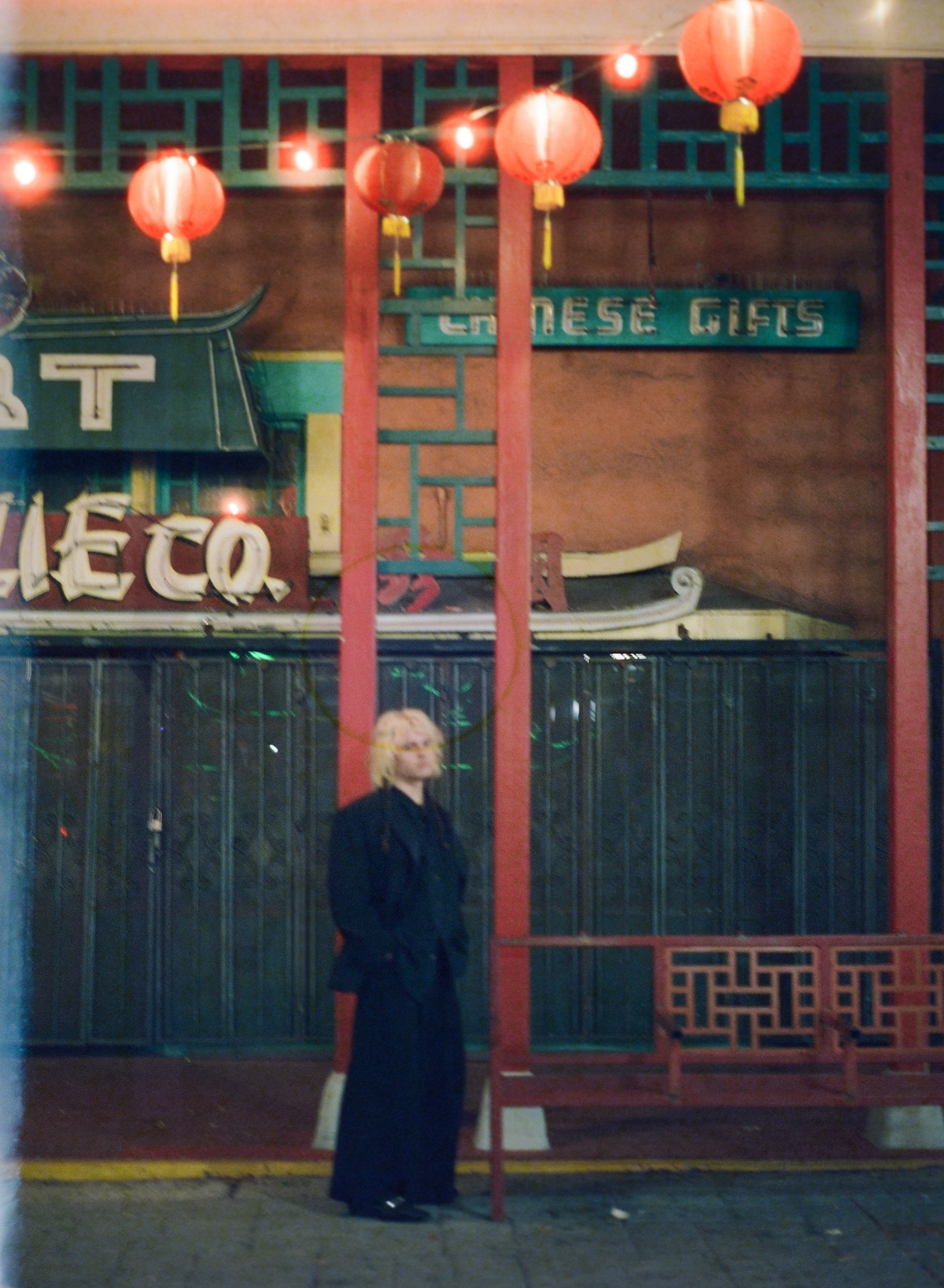
Before we part ways, can you describe this record in three words?
Mothé: Three words? I think incriminating, unapologetic, and loud.
Oh, I love those. Good choices. Now that it's out, what do you hope listeners take away from Total Popstar?
Mothé: I hope they go outside. Everybody needs to go outside. And people like, I work with a lot of younger artists and I had an artist come in one time, and they were like, kind of talking about, you know on TV when people go outside and they like run into their friends at the bars and on the street and stuff, like I really wish that was real. And I was like, it’s so real. What do you mean? Like, that’s my life. I do that every day. And they were like very floored by that. And so I think that especially for people that were maybe coming into adulthood during COVID, they’re not quite in the habit of just like going outside and enjoying things. So that’s pretty much it. I’m like, you listen to the record. I hope it makes you want to go outside and go to the club or like, I don’t know, do whatever makes you happy. But I think people need to talk to each other a lot more. And I think people need to like not be afraid of substances and like hanging out with each other because it really keeps the world going.
So at the end of the day, this record is really all about getting people to spend time with other people again.
Mothé: That’s what music’s for.
Well said. What have you taken away from creating it and putting it out?
Mothé: I guess I learned how to fully just admit to stuff. It is like a weirdly incriminating record. So I’m just being the version of myself and can not hide for the first time. Like that was sort of the problem with the old discography. It’s like, I was a little worried about how people would receive stuff. And at this point, I kind of went into it, and I thought that it would be fun to make a record where at the end of the listen, the listener might actually have to question whether or not I’m a good person. Sort of morally ambiguous music is I guess important because it kind of invokes discussion within your own head about how you feel about certain things. And then it’s like, I don’t think I can sustain being like a clean buttoned-up person anyway. But that’s sort of allowing myself to be that person. Especially being from the South, people are so aggressive in the South. And then I had to like tame myself for Los Angeles. And in some ways, it was sort of like getting that side of myself back.
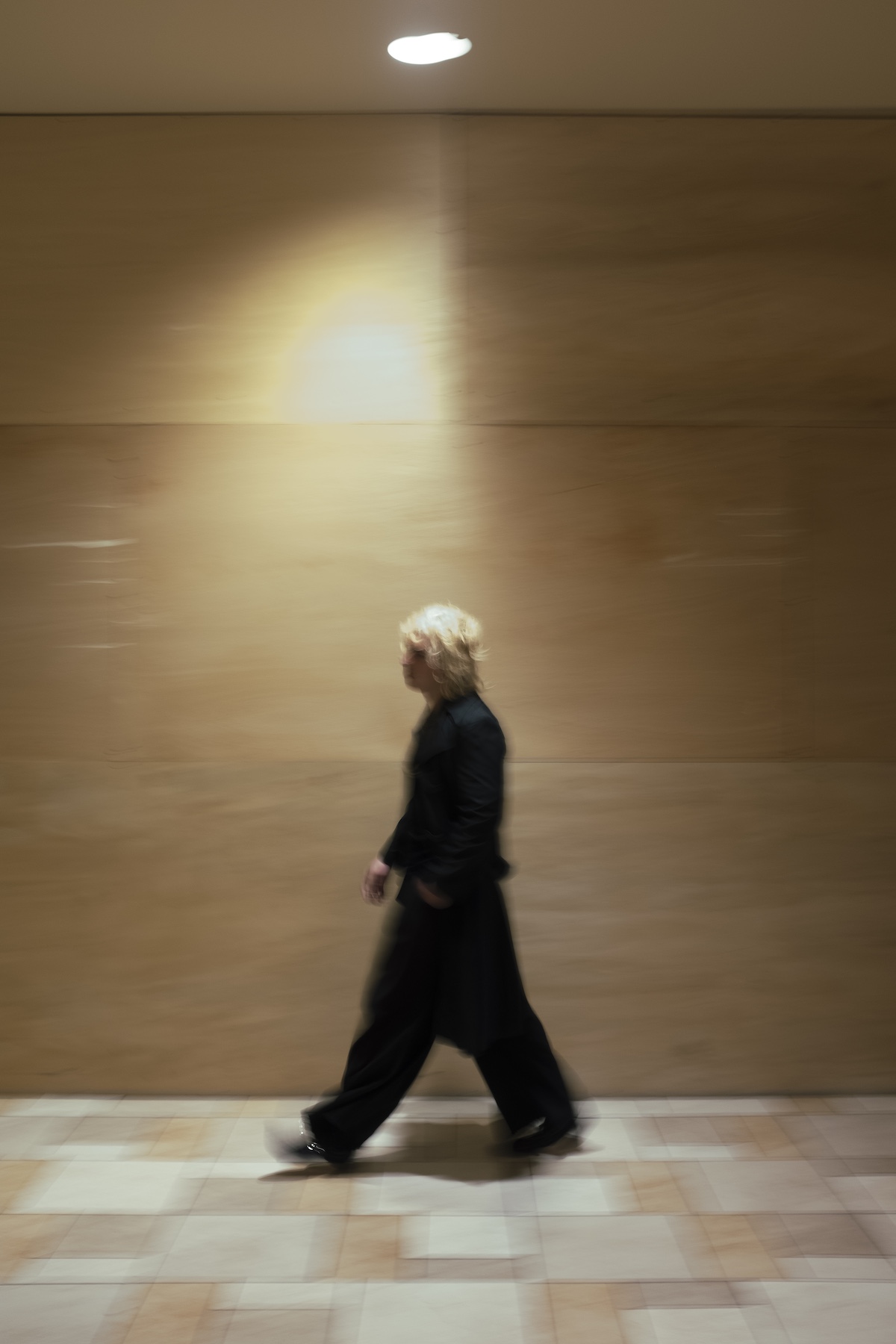
I can respect that. I like that a lot. You mentioned earlier that some of the vocals were just late-night, early-morning, post-club singing. What are one or two examples of that, that we might not know are those vocals?
Mothé: Honestly, almost all of the verses on the album. That’s the situation. That’s why it’s so like kind of shame of consciousness and clumsy in a lot of the verses. Like “Death of the Limousine” was one. Definitely the most f*ed up vocal performance on the album is in “Naked in the Hotel Bar.” With that one I was like, should I even rescue this one? It’s insane. And then when I went and tried to do it again, I couldn’t beat trashy ol’ me.
So you put it at the end.
Mothé: Yeah. I thought it would be a funny way to end it. I was like, again, it’s not morally ambiguous, but if you put the most f*ed up one at the end, then in theory, you’re kind of on a cliffhanger for the hangover.
When we were younger, when you and I were growing up, one of the big things going on in the music industry was overproduction. I feel like this is an antithesis to that kind of music where you're trying to put polish on everything – Total Popstar is kind of like, “f** the polish.”
Mothé: Oh, yeah. Well, the thing is, the reason that the polish was cool when it was because the polish was completely inaccessible. But now, with the developments we’ve had in home recording introduction, just about anybody can keep adding things until a song is big and overproduced and huge. There’s YouTube tutorials on how to make a vocal sound good and all this stuff. So it’s cooked. It’s done. Now the thing that nobody has access to is just f*ing vibing on the microphone and putting it out. That’s where Tyler, the creator, was so inspiring for me because he’s just in the room, SM-58, then he does it, and he’s like, if it feels good, it feels good. And now,s the thing that nobody has access to is personality. There’s no YouTube tutorial for personality; you have to actually go live. It sucks to always be, like, whatever you’re doing artistically has to be ‘anti’ or ‘the norm.’ But then at some point, if you’re not out running it, then what the f* are you doing taking up the space?
— —
:: stream/purchase Total Popstar here ::
:: connect with Mothé here ::
— —
— — — —
Connect to Mothé on
Facebook, 𝕏, TikTok, Instagram
Discover new music on Atwood Magazine
© Sophia Ragomo
 © Sophia Ragomo
Total Popstar
an album by Mothé