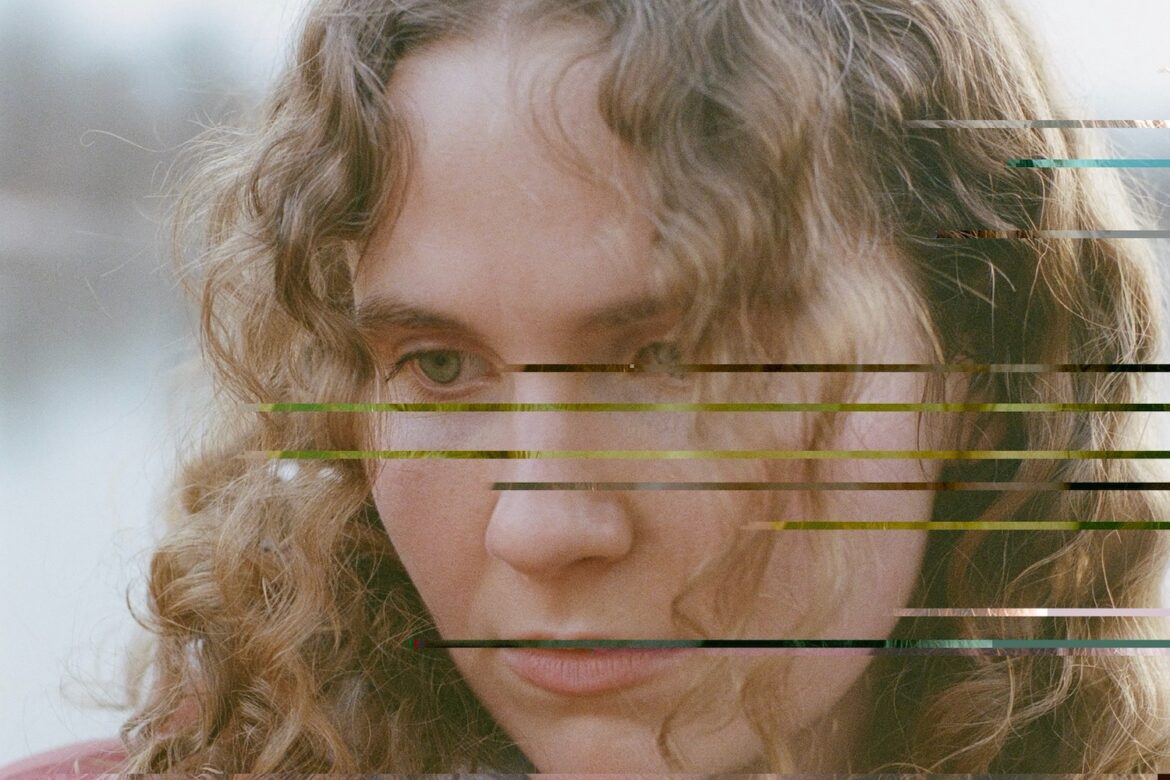
Singer/songwriter Annabelle Dinda pairs razor-sharp lyricism with a fearless, poetic voice, cutting straight to the core of lived experience with wit, precision, and emotional force. Below, she unpacks her soul-stirring debut album ‘Some Things Never Leave,’ an achingly intimate, boldly unflinching collection grappling with memory and identity – the remnants we carry with us long after the moment has passed.
Stream: “The Hand” – Annabelle Dinda
What is a life? It’s only lethal, it’s drowning in mud and shouting, ‘Help.’
* * *
A sharp tongue, a wandering mind, and a pen that refuses to soften the truth – Annabelle Dinda writes songs that interrogate the world as much as they confess to it.
Her soul-stirring debut album Some Things Never Leave circles memory, identity, and the strange, inescapable remnants we carry – the thoughts that loop, the patterns that repeat, the quiet inheritances that shape who we become. It’s a record that asks big, existential questions in plain language, then undercuts them with wit, bite, and startling specificity – lines that linger because they feel both hyper-aware and completely unfiltered, like someone thinking out loud with total clarity and zero restraint.
With a rare clarity of vision, Annabelle Dinda cuts straight to the core – dissecting her lived experience in real time, turning observation into revelation with a voice that feels entirely her own.
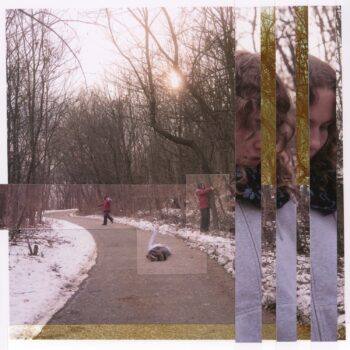
The Brooklyn-based singer/songwriter has been building toward Some Things Never Leave for years – a 25-year-old NYU Gallatin graduate with a deep-rooted instinct for language, she’s spent the past six-plus years steadily shaping and honing her artistry across releases like Nostalgion (2020), Sad Songs for Dancing (2022), and Sixth Sense (2024). That body of work, spanning well over 40 tracks, captures a young artist in motion – curious, prolific, and unafraid to follow a thought to its furthest edge.
Recorded over the course of just two weeks with producer Jacob Portrait (of Unknown Mortal Orchestra), Dinda’s “official debut album” favors immediacy and instinct, bringing together a cast of collaborators including violinist Bobby Hawk, cellist Dave Eggar, James Krivchenia, Jon Nellen, Carter Nyhan, and John Kleek. The result is a record that feels immediate and self-assured, shaped as much by time and experience as it is by quick decisions and faith in the songs themselves.
“A lot of that energetic, raw sound simply emerged from the timespan we gave ourselves to record it,” Dinda tells Atwood Magazine, reflecting back on her time making the album. “It shocked me how much detail we were able to include on the ten songs in that amount of time, but it was also so novel and great – having to make editorial choices and leave some moments open and largely unornamented, relying on the song itself to do most of the heavy lifting.”
It’s that balance – intellect and impulse, precision and play – that makes Dinda’s songwriting feel so vivid, and so vital right now.
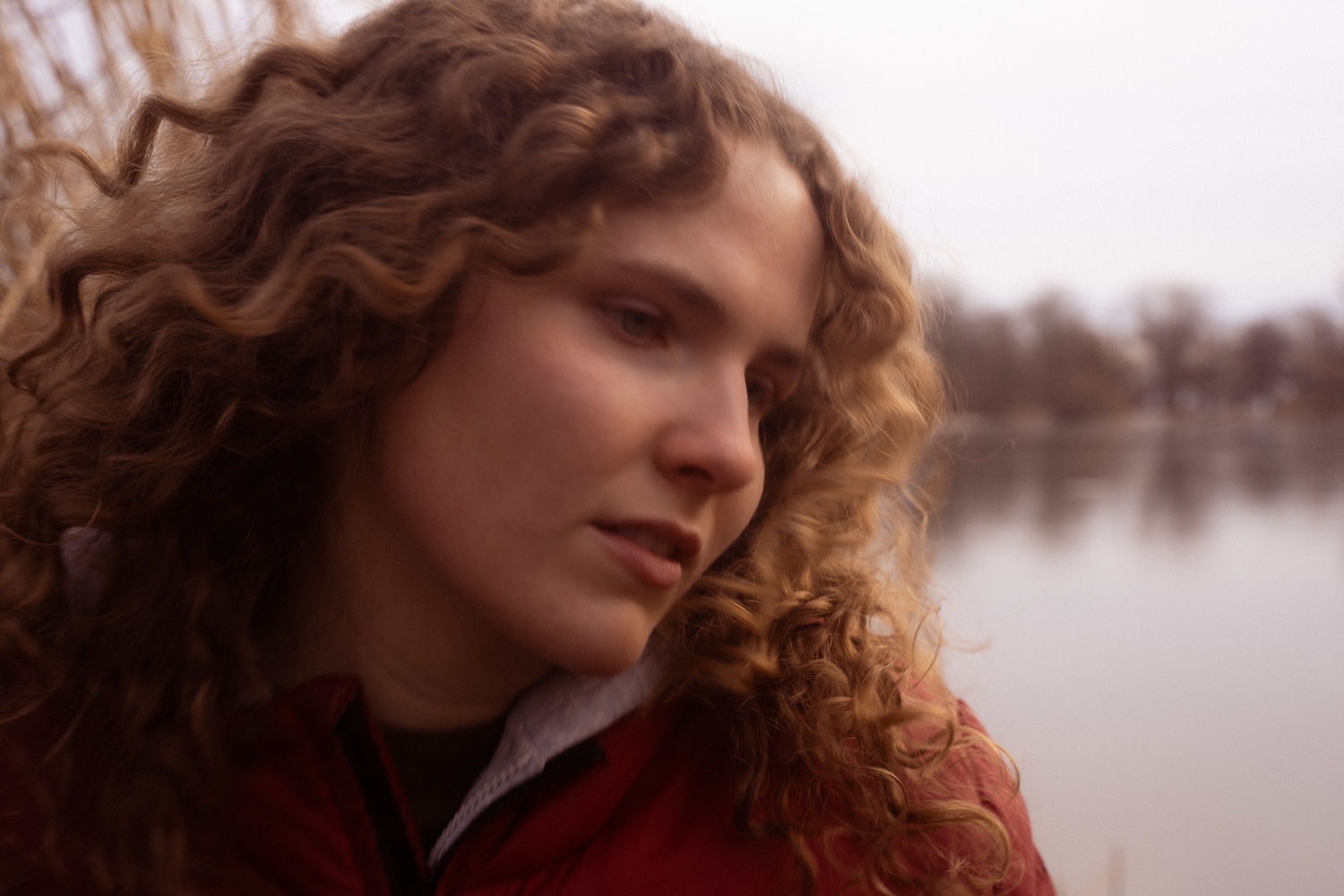
The songs on Some Things Never Leave grapple with what lingers – in the body, in memory, in the quiet corners of the mind we return to whether we want to or not.
Dinda traces the throughlines between past and present with a striking level of awareness, writing about relationships, perception, and selfhood with both intimacy and distance. There’s a constant push and pull between the internal and external worlds: The way the body stores experience, the way thought patterns repeat, the way meaning is constructed and deconstructed in real time. Whether she’s zooming in on personal moments or pulling back to something more expansive and existential, her writing holds both scales at once, grounding big ideas in sharply observed detail. It’s this ability to move fluidly between the microscopic and the universal that gives the album its depth – every line feeling deliberate, every idea part of a larger, unfolding conversation.
That depth comes into sharper focus across the songs themselves, beginning with the feverish, light-spilling-into-the-room opener “Big News Day,” where Dinda’s voice roars and soars with grace and undeniable passion as she skewers social performance and emotional detachment in real time – “So what if I’m callous? I’ll call it a talent and revel in all of the shit you’re ignoring,” she sings, before delivering the cutting refrain, “God, people are boring!”
From there, Some Things Never Leave expands outward and inward all at once: “Cosmic Microwave Background” reaches for something vast and unknowable, tracing existence through language like “I’m breathing in a tempest atomic” and “hear the relic radiation,” while the gently dramatic, stunningly orchestrated “Satellites” turns a fractured relationship into orbit and gravity, warning, “Don’t bite and expect no bruise” as emotional cause and effect becomes impossible to ignore. That same incisiveness carries through the spellbinding “Everyone Likes to Be Forgiven,” where Dinda interrogates connection and self-perception with lines like “Do you hate when people love you or do you not relate to them?” and into the restless, hyper-aware unease of “Gunpoint, Headlock,” where modern life flickers between reality and simulation – “There’s a kid killing soldiers in his video game… they build worlds on the screen, but they leave in the pain.”
Even in its quieter moments, the album never loosens its grip: “The Body Remembers” turns inward, mapping memory onto the physical self until it becomes impossible to separate thought from feeling, past from present – “the body remembers, of course it does” – each line reinforcing the album’s central truth that nothing experienced is ever fully left behind.
Everyone likes to be forgiven
Everyone’s born to be deranged
You cannot teach someone to listen
You cannot teach someone to change
Leaving a note out on the pillow
Riding your bike around the drive
Watching the sun drop through your window
Waiting for night to make you tired
Spending a life on other people
Hoping it bleeds into yourself
What is a life? It’s only lethal
It’s drowning in mud and shouting help
Maybe I’ve gone a tad dramatic
Maybe I lost the point somewhere
More what I mean is things aren’t static
More what I mean is that I care
“The Hand” stands as one of Some Things Never Leave’s most explosive and emotionally charged moments – a song that doesn’t just reveal vulnerability, but insists on it with full force.
Driven by churning violins that pulse and swell beneath her, Dinda leans all the way in, her voice rising with a rawness that feels both controlled and on the brink of rupture. “Every time a guy writes a song, he’s a sailor, a cowboy, holding out the world in his palm like he made it himself,” Dinda sings. “Every time I open my mouth, I think, ‘Wow, what a loud noise,’ still on the soapbox, just hoping I seem underwhelmed.” There’s no distance here, no clever framing to soften the blow – just a direct line into feeling, into memory, into the kind of ache that demands to be named out loud. It’s in this unfiltered release that she becomes undeniable, pushing past observation and into full-bodied expression, where every word lands with weight and intention.
The hand, the pen, the writing again,
the wind around the willow
The felt, the ice, the passage of time,
the melting down the window
The now, the then, the thinking of “when,”
the bottle in the ocean
The strike, the pause, the message
from God forbid she shows emotion
That intensity is exactly what gave the song its life beyond the album, catching fire on TikTok with nothing more than Dinda and her guitar – no theatrics, no overproduction, just the strength of the writing and the conviction in her delivery. It helped set the tone for the record’s unapologetically candid delivery, not by trying to be bigger, but by being more honest, more exposed, more willing to sit inside discomfort and let it ring. “The Hand” doesn’t ask for attention – it commands it, carving out space through sheer emotional clarity and force, and in doing so, crystallizes everything that makes Dinda such a compelling voice.
This isn’t rage, it’s worth a mention
This is a fake internal tension
Sometimes, I spread out one opinion
And stand on its back to gauge attention
This isn’t rage, it’s too specific
I like to hate symbolic limits
This is no statement, I’m complicit
This is a dream, God put me in it
As Dinda herself explains, the unflinching honesty we hear in her songwriting today is hard-won –
– the product of years spent growing, questioning, and learning how to say exactly what she means. “I think the things that forced me to grow as a person also developed my songwriting,” she shares. “Shades of grief, natural maturation, moving past certain insecurities, I can hear all of this retrospectively in the songs I write. They come hand in hand.”
This perspective is, at least in part, what gives Some Things Never Leave its staying power. Dinda isn’t just documenting moments – she’s tracing the ways they embed, echo, and resurface over time, transforming memory into a living, shifting presence rather than a fixed point in her past. There’s a fearlessness in how she approaches it, a willingness to sit with discomfort, contradiction, and uncertainty without rushing toward resolution. In doing so, she captures something deeply human: The realization that growth doesn’t erase what came before, it reframes it. What remains isn’t just pain or nostalgia, but understanding – hard-earned, incomplete, and constantly evolving. It’s that clarity, paired with her unmistakable voice, that makes Some Things Never Leave feel less like a debut and more like the arrival of an artist already in full command of her craft.
Even the title itself feels like a thesis. Some Things Never Leave isn’t framed as a warning or a comfort, but as a simple, undeniable truth – one that runs through every song on the record. Whether it’s the body holding onto past hurt, the mind replaying old patterns, or relationships lingering long after they’ve shifted, these songs live in that in-between space where nothing is fully gone, only transformed. Dinda leans into that permanence, tracing the ways the past exists within the present, not as something to escape, but something to understand It’s a perspective that gives the album its weight – not just in what it says, but in what it refuses to resolve. All told, Some Things Never Leave captures the album’s core idea in a single, unshakable phrase.
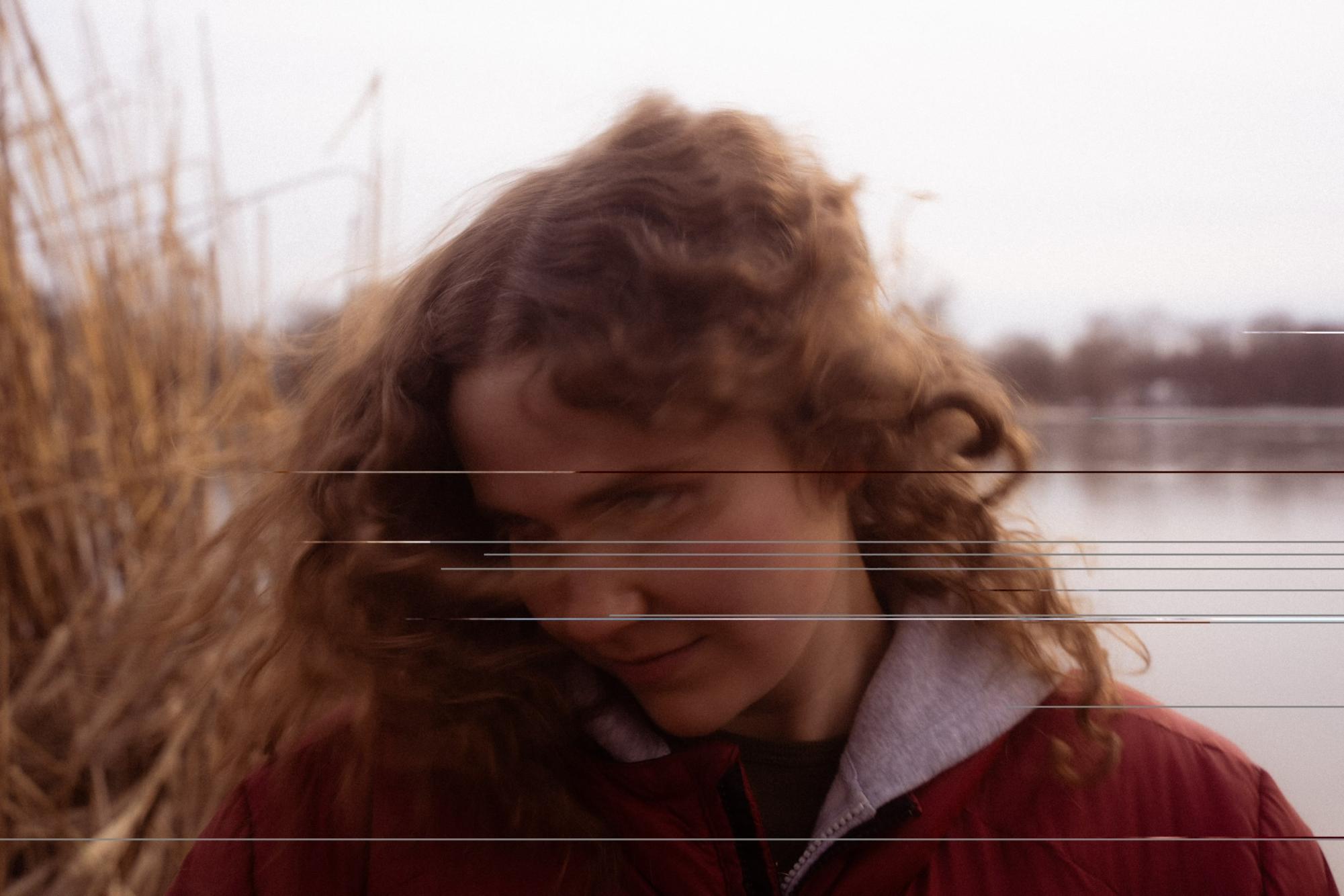
With Some Things Never Leave, Dinda has already carved out a voice that feels unmistakable – one grounded in honesty, sharpened by experience, and unafraid to say the quiet parts out loud.
As she takes these songs on the road this spring and summer, opening for Noah Kahan, they’ll meet audiences in the same direct, unfiltered way they land on record.
Atwood Magazine recently caught up with Annabelle Dinda to discuss the making of Some Things Never Leave and the path that led her here; below, she reflects on how her songwriting has evolved, shares some of the stories behind her songs, and unpacks how the experiences behind them continue to inform the way she writes today.
— —
:: stream/purchase Some Things Never Leave here ::
:: connect with Annabelle Dinda here ::
— —
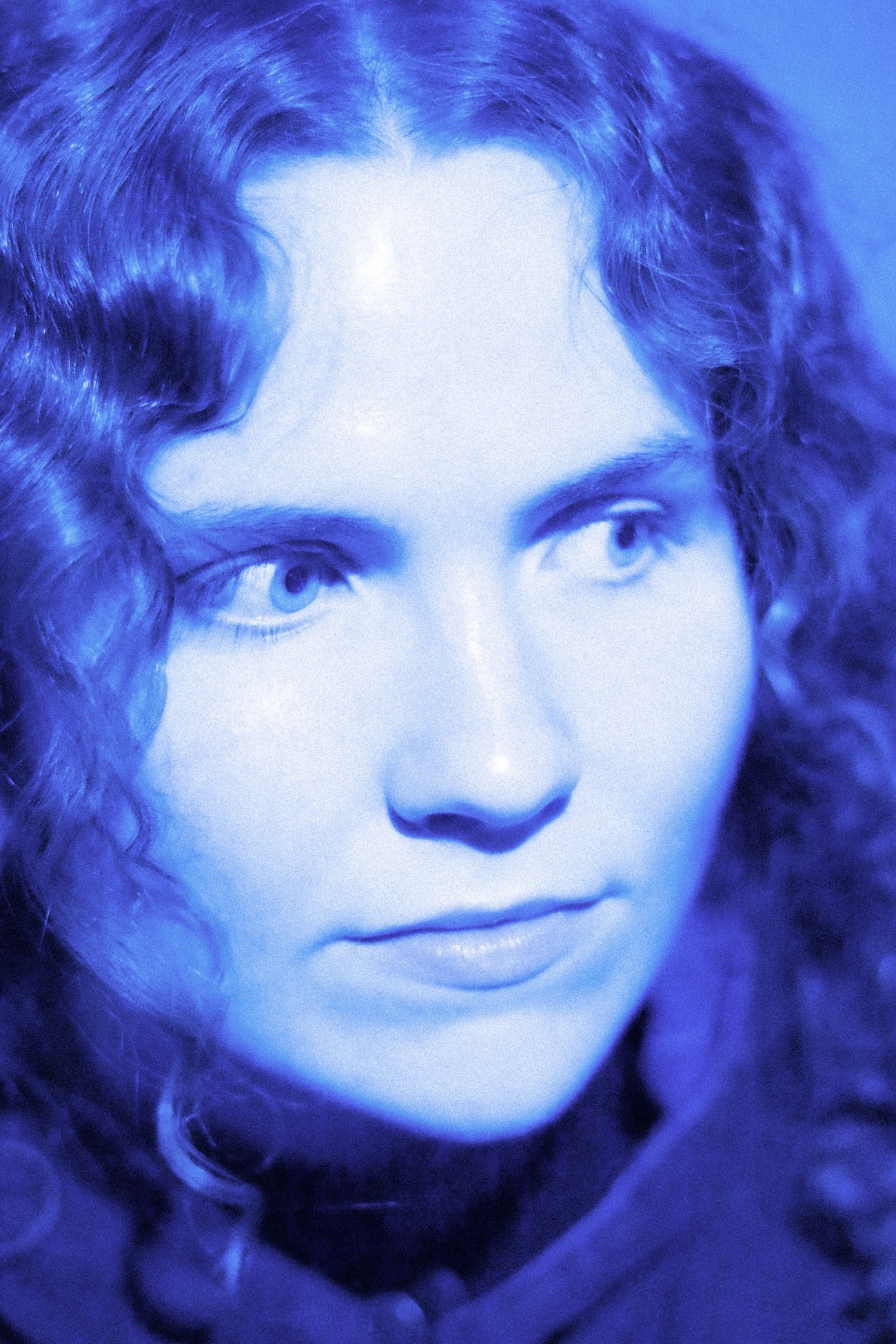
A CONVERSATION WITH ANNABELLE DINDA
Annabelle, it’s great to meet you! Some Things Never Leave is billed as your debut album, but this is by no means your first record! How do you feel you’ve grown over the past 6 years, as a songwriter and artist?
Annabelle Dinda: I’ve been writing songs since I was around 10, and I think I “released” my first EP (which has long been scratched from the universe) when I was 15. You would have no reason to know that, of course, I’m just mentioning it because I think I would have so much less confidence in myself as a writer if I had only started a short time ago. Maybe the only thing keeping me sane in this process is that my desire to write songs has been so long embedded in me that I don’t question it anymore. As far as how I’ve grown: well I’ve been to college and studied a lot of poetry, so that helped. Mainly, though, I think the things that forced me to grow as a person also developed my songwriting. Shades of grief, natural maturation, moving past certain insecurities, I can hear all of this retrospectively in the songs I write. They come hand in hand.
Who are some of your musical north stars, and what are you most excited about the music you're making today?
Annabelle Dinda: I love Sigur Rós and Bowie and Belle and Sebastian and Rufus Wainwright. This is both a predictable and slightly unconventional combined list, but I would call them all some of my north stars in different ways. I’m excited to go more orchestral with music whenever I can, and to also lean into the rock side of things. I expect to be doing full rock operas by 40. (This is a joke but if this was my path I would be very happy, so maybe it’s not a joke.)
There’s an invigorating energy to this record – it’s sprightly, raw, emotionally charged and deeply alive! Can you share a little about the story behind this album?
Annabelle Dinda: Thank you! I think a lot of that energetic, raw sound simply emerged from the timespan we gave ourselves to record it, which was about two weeks all told. It shocked me how much detail we were able to include on the ten songs in that amount of time, but it was also so novel and great– having to make editorial choices and leave some moments open and largely unornamented, relying on the song itself to do most of the heavy lifting. The songs were written in not much more time, it’s basically a sampling of some of the songs I wrote within a three month time period, like a little snippet of life!
What was your vision going into this record? Did that change over the course of recording this?
Annabelle Dinda: This album was my first time in adult life recording in a studio, so mainly my vision was, “wow, it’s so fun to record in a studio.” But Jake (Portrait, who produced this record with me) and I talked a lot about exactly what you wrote above, wanting to present something clear and charged and not too muddy. Our goal for production was to keep it mostly analogue and acoustic – though I wouldn’t exactly describe it as soft. I guess I knew this was most people’s first time hearing me, and I wanted to set a baseline for the kind of music I make before I inevitably experiment some in further albums.
Why the title “Some Things Never Leave”?
Annabelle Dinda: I am terrible at titles and thought of it maybe… two weeks before I released it? Maybe three. Either way it was on a long list, and I kind of just said it out loud enough times that I liked the sound. More deeply, I think it’s true. And it’s an umbrella phrase for a topic to which I often refer in metaphors, this idea of remnants – be they galactic (I just love to talk about space, and that’s obviously been around for a while) or nostalgic (I also love to talk about childhood. To me, they’re kinda the same.)
From a fission in the fabric
From a snap in the spatial elastic
From explosion comes the static
And now the static’s on me
From a default or a small space
From the sound of a voice up the staircase
From an old wound comes a new ache
And I’d forgotten the sting
Hear the relic radiation
Buzzing through the TV station
Did you ever think you’d say
You know what you know
You’ve seen what you’ve seen?
Some things never go
Some things never leave
– “Cosmic Microwave Background,” Annabelle Dinda
“God, people are boring!” Such a dynamic, bold statement channeled through spirited an emotive acoustics. Why did you choose to open the record with “Big News Day,” and what’s this track’s significance for you?
Annabelle Dinda: I like when the first track on an album is kind of boppy. And this is kind of a boppy song. A little funny and chiding, too, and my favorite thing to do when I enter a room is to somehow desperately establish that I am cool and funny. This song is me entering the room.
A few of my personal favorite songs are “Everyone Likes to Be Forgiven,” “Gunpoint, Headlock,” and “The Body Remembers.” Do you have any definitive favorite songs or moments off this record?
Annabelle Dinda: My favorite song is “London Plane Trees Grow In Philly.” I love to toss in a long rambling story song about my family, and that’s this one’s job. I was really proud of some of these lyrics, and they emerged in my favorite way lyrics can come, which is in a jumble, all at once. It’s also a deeply simple song melodically, and no matter how much I love to toss in little tricks and uniquenesses, I always like the simple ones best.
As a lyrically forward artist, do you have any favorite lyrics in these songs? I’d love to dive into a couple of your highlights?
Annabelle Dinda: “Everyone Likes To Be Forgiven” has some more of my favorites. “Do you hate when people love you / or do you not relate to them?” and “Do you hate when people know you / or do you know they never can?”
The other day I was listening to “Gunpoint, Headlock” again, and I had some reflective pride over the lyric: “there’s a kid killing soldiers in his video games / they build worlds on the screen, but they leave in the pain.” Sometimes I’ll write something and I won’t fully get it or like it until a month later.
Can you describe this record in three words?
Annabelle Dinda: girl reflect life.
You’ve been announced as the opener on Noah Kahan’s tour this year - congratulations! What can fans expect from your live show, and how do you plan to bring these songs to life on stage?
Annabelle Dinda: Thank you! I’m so excited. Fans can expect me to do lots of jumpy, disjointed dancing and to forget the occasional lyric (I’m just a girl, after all), but mostly they can expect to rock out. I like to weasel a drumbeat into almost every live song, even some of the ballads, because it makes me feel like an ancient storyteller. And it helps with all the jumping around.
In the spirit of paying it forward, who are you listening to these days that you would recommend to our readers?
Annabelle Dinda: Dan English Sky Record. Put that on and go for a walk, oh my god.
— —
:: stream/purchase Some Things Never Leave here ::
:: connect with Annabelle Dinda here ::
— —
— — — —
Connect to Annabelle Dinda on
Facebook, TikTok, Instagram
Discover new music on Atwood Magazine
© Lia Whitman
 © Lia Whitman
:: Stream Annabelle Dinda ::