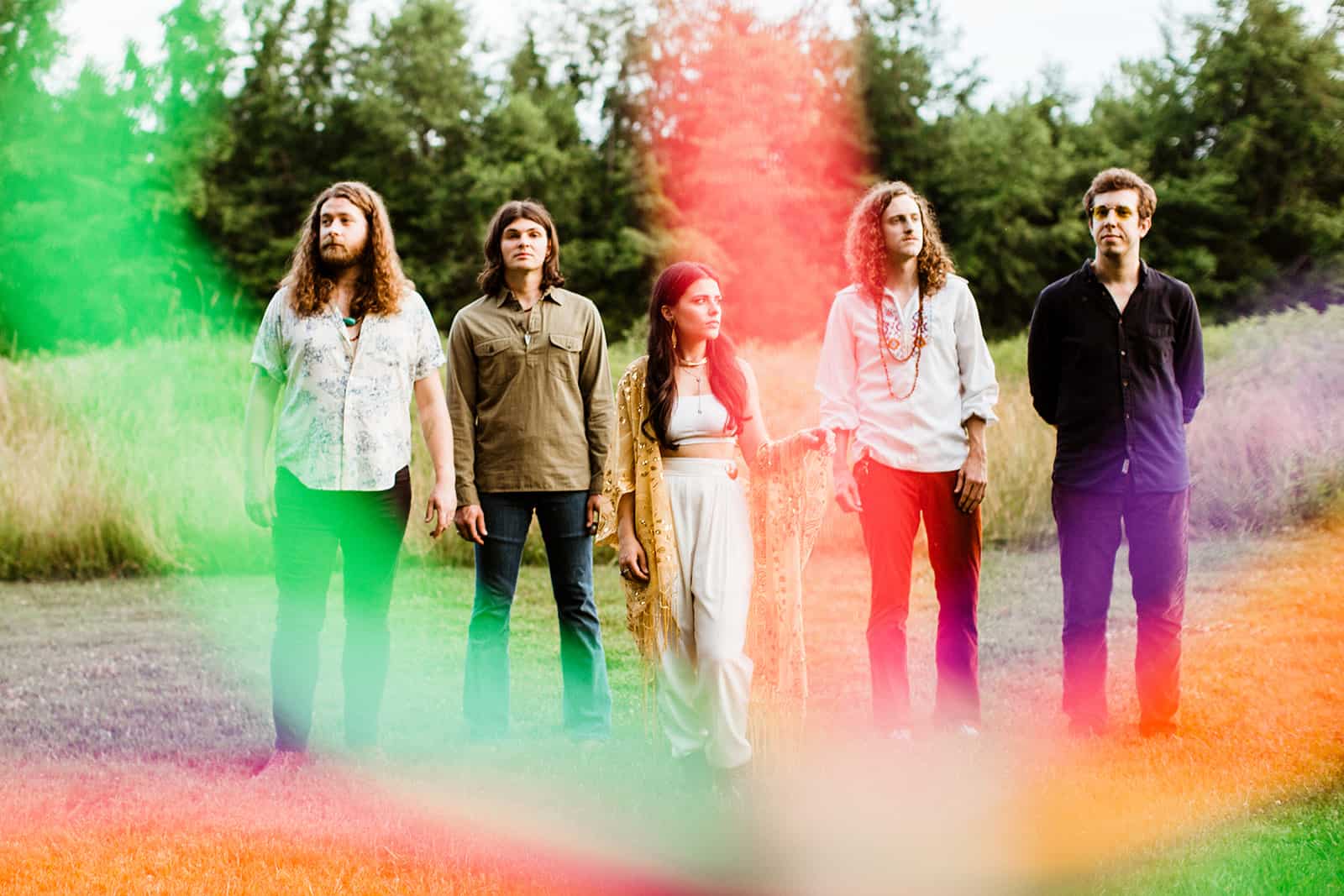
On his breathtaking debut album ‘the death of bobby freemont,’ Toronto singer/songwriter Bobby Freemont transforms grief into something luminous, cinematic, and profoundly life-affirming.
Stream: ‘the death of bobby freemont’ – Bobby Freemont
Toronto singer/songwriter and producer Bobby Freemont has spent over a decade crafting the death of bobby freemont, but the album never feels laboured.
Instead, it carries the weight and patience of lived experience; an artist allowing life to unfold before attempting to translate it into music. The result is nothing short of extraordinary: a deeply affecting concept album that meditates on mortality, identity, love, and the quiet courage required to let parts of ourselves die so that we may continue living authentically.
This is not simply an album about death. It is an album about transformation. About shedding illusion, ego, fear, fractured relationships, and old versions of ourselves that no longer serve us. Written following the loss of his grandparents and a close friend, the death of bobby freemont plays like an intimate dialogue between the living and the departed, with Freemont navigating memory as though it were both sanctuary and burden. Every song feels less like a performance than a private conversation we have somehow been invited to overhear.

For fans of the introspective spirituality of Mac Miller, the intricate emotional landscapes of Sufjan Stevens, and the cinematic ambition of Pink Floyd, Bobby Freemont’s debut feels destined to become a treasured companion.
The opening track, “somewhere by a lake,” immediately establishes the emotional vocabulary of the record. Built upon fluttering piano, delicate strings, and understated grooves, it imagines escape not as a destination but as a state of mind forever just beyond reach. Freemont’s voice is captivating precisely because it refuses theatricality. He sings with remarkable restraint, allowing vulnerability to become his greatest instrument. Co-written with songwriter Nick Ferraro, whose résumé spans artists including Kali Uchis, SiR, Macy Gray, and Earth, Wind & Fire, the song blossoms into a soulful meditation on longing without ever losing its quiet intimacy.
Rather than offering easy resolutions, “somewhere by a lake” lingers in uncertainty. It understands that healing is rarely linear and that sometimes the greatest comfort comes simply from acknowledging the ache. Like ripples across still water, every musical detail feels intentional, creating an atmosphere that is simultaneously peaceful and emotionally devastating.

If the opener represents the dream of escape, “postcards” feels like the emotional correspondence left behind. There’s a tenderness running through the composition that perfectly complements the album’s recurring themes of memory and absence. Freemont has an extraordinary gift for making deeply personal experiences feel universally recognisable, inviting listeners to project their own stories into the spaces between his words.
Among the album’s undeniable highlights is “clementine skies,” a breathtaking centrepiece that encapsulates everything remarkable about Freemont as both songwriter and producer. Beginning almost as a whispered confession, the song gradually unfolds into one of the most emotionally satisfying crescendos of the year. Co-produced alongside Stephen Kerr, its sonic architecture mirrors grief itself, subtle, unpredictable, beautiful, and ultimately overwhelming.
Echoes of 808s & Heartbreak can be heard in its emotional nakedness, while walls of distorted guitar evoke the towering melancholy of The Smashing Pumpkins. Yet these influences never overshadow Freemont’s own artistic identity. If anything, they merely illuminate the uniqueness of his voice. By the time the song reaches its cathartic finale, where guitars bloom into glorious distortion, it feels less like a climax than an emotional release years in the making. It’s breathtaking music that understands sorrow need not be defeated to become beautiful.

Elsewhere, “pretty little decorations” and “five star views” continue expanding the album’s emotional universe. Both songs demonstrate Freemont’s remarkable storytelling instincts, balancing poetic introspection with melodies that linger long after the final notes fade. His writing never reaches for unnecessary complexity. Instead, its brilliance lies in emotional precision. Every lyric feels lived-in, every image carefully chosen, every silence just as meaningful as every chorus.
One of the album’s greatest achievements is its pacing. Despite confronting profound themes of mortality and loss, the death of bobby freemont never becomes emotionally exhausting. Instead, it breathes. Moments of melancholy are continually balanced by tenderness, hope, wonder, and quiet acceptance. Freemont understands that grief isn’t simply sadness – it is memory, gratitude, regret, love, humour, and resilience existing simultaneously. That emotional complexity permeates every second of the record.

The album reaches its emotional summit with “in this ghost town,” one of the most devastating closing statements committed to tape in recent memory.
Remarkably, Freemont carried this song with him for more than ten years before finally understanding how to finish it. That passage of time can be heard in every note.
Beginning with delicate fingerpicked acoustic guitar before gradually introducing lush saxophone, patient percussion, and soaring electric guitar, the song unfolds with cinematic grace. Written from beyond the grave to those left behind, it offers not despair but reassurance. Then comes its final, unforgettable gesture: The recorded voice of Freemont’s late grandmother Stella speaking during her final days. In lesser hands, such a moment could feel manipulative. Here, it feels sacred. It blurs the line between art and memory in a way that is profoundly moving, allowing listeners to experience grief not as absence but as continued presence.
By the time “a day in the life” and the closing “with the planes” bring the journey to its conclusion, the death of bobby freemont has quietly transformed into something much larger than an album. It becomes a meditation on what it means to survive loss without allowing it to define us. It reminds us that the people we lose never entirely leave; they continue speaking through memories, habits, songs, and love itself.

What ultimately elevates Bobby Freemont’s debut beyond excellence is its remarkable sincerity.
In an era where vulnerability is often packaged as aesthetic, Freemont offers something undeniably authentic. These songs were never written to chase trends or algorithms. They were written because they had to be. That necessity radiates from every arrangement, every lyric, every carefully placed silence.
There is something quietly miraculous about the death of bobby freemont. It confronts mortality without surrendering to despair. It explores grief while remaining deeply comforting. It acknowledges life’s impermanence while celebrating the enduring power of love. Most importantly, it introduces Bobby Freemont as one of independent music’s most compelling new storytellers, an artist capable of transforming deeply personal pain into songs that feel profoundly communal.
This is an astonishing debut. Richly cinematic, emotionally fearless, and exquisitely crafted from beginning to end, the death of bobby freemont is the kind of album that stays with you long after it ends. It doesn’t simply ask to be heard; it asks to be felt. And once you do, you’ll find yourself returning to it again and again, discovering new emotional truths with every listen.
— —
:: stream/purchase the death of bobby freemont here ::
:: connect with Bobby Freemont here ::
— — — —

Connect to Bobby Freemont on
Facebook, 𝕏, TikTok, Instagram
Discover new music on Atwood Magazine
© Steph Verschuren
 © Steph Verschuren
the death of bobby freemont
an album by Bobby Freemont