Atwood Magazine is excited to share our Editor’s Picks column, written and curated by Editor-in-Chief Mitch Mosk. Every week, Mitch will share a collection of songs, albums, and artists who have caught his ears, eyes, and heart. There is so much incredible music out there just waiting to be heard, and all it takes from us is an open mind and a willingness to listen. Through our Editor’s Picks, we hope to shine a light on our own music discoveries and showcase a diverse array of new and recent releases.
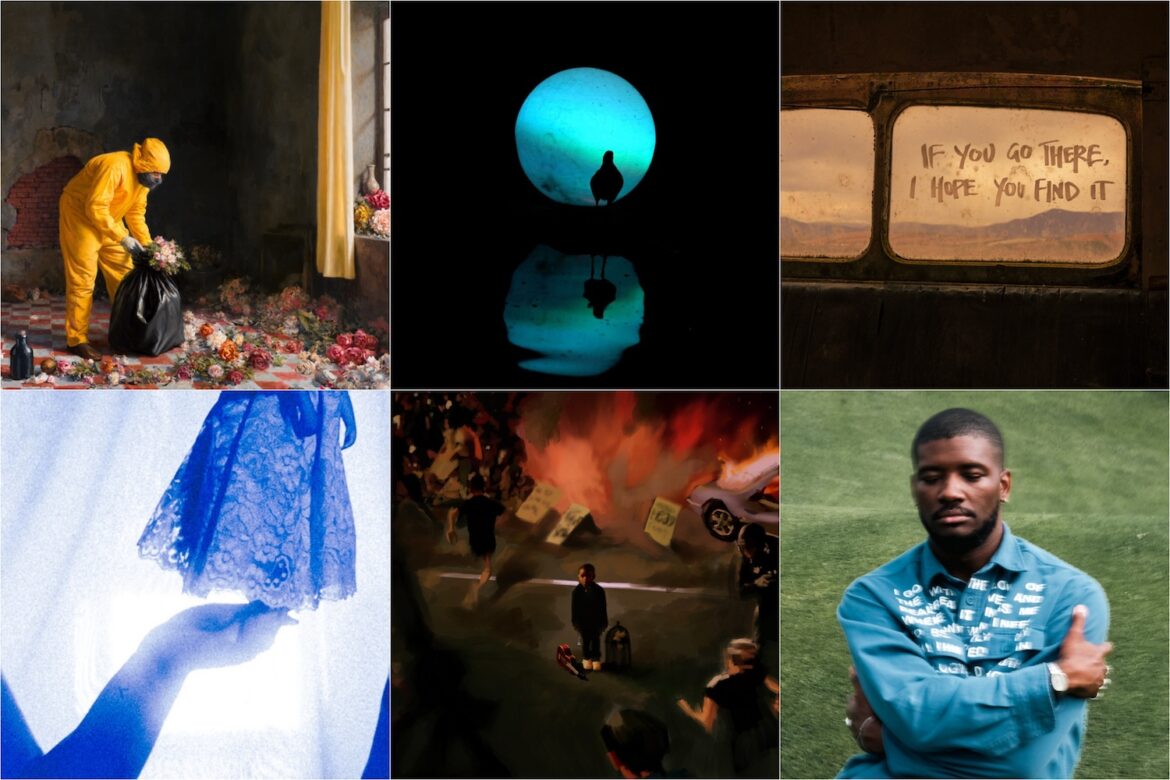
This week’s Editor’s Picks features Amanda Bergman, The Paper Kites, Mon Rovîa, Jade Street, Dollpile, and Elliott Skinner!

 follow EDITOR’S PICKS on Spotify

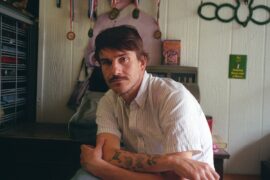
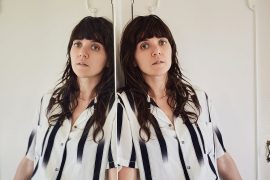
“grasp”
by Amanda BergmanSoft winds, black skies, and the uneasy tremor of a world tilted off its axis. Streets feel lawless and strangely hushed, as if the air itself is holding its breath while harm ripples outward – blood in the seas, blood on their sunny beaches, seeping into everything. Conversations break apart, the wrong people win overnight, and the horizon blurs in a kind of vertigo that’s both surreal and quietly devastating. It is a landscape where dread and tenderness blur – unraveling at the edges, pulling apart at the seams, yet still lit by a faint, stubborn ember refusing to go out – a hope that flickers even when all feels hopeless.
Singer/songwriter Amanda Bergman paints it all with a tenderness that feels both otherworldly and painfully human. “grasp” is haunting in the way only she can be – that slow, smoky ache that wraps itself around you like late–night air, warm and trembling, full of sorrow and seduction. It’s comfort defined, catharsis distilled, a soft flame in a dark room. Her first new single of the year, and her first release since winning two Swedish GRAMMYs for Your Hand Forever Checking On My Fever, “grasp” arrives like sustenance – musical nourishment for a world coming undone. It’s tender and dreamy, bruised and intimate, the sonic equivalent of pulling a heavy blanket up to your chin on a cold night. And beneath its simmering beauty lives something fiercer: A powerful take on the times we’re living through and a refusal to let despair hollow us out.
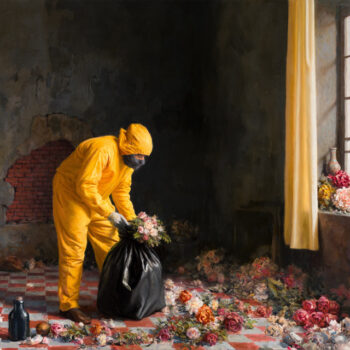
Bergman wrote “grasp” the day after Trump and Elon Musk took over the White House earlier this year – a moment she describes as surreal, dizzying, and destabilizing. “I think I was just trying to make sense of a kind of absurd panic,” she says. It wasn’t simply about them as individuals, but what they represented: “This idea that the world keeps handing the wheel to people who thrive on chaos and spectacle. Who are simply dangerous.” Writing became survival. “I didn’t want to sit in that despair or let it rot in my head,” she explains. “Writing ‘grasp’ was my way of catching that moment mid-fall – turning confusion into something musical instead of just endlessly scrolling and spiraling.”
Recorded largely live at Atlantis Metronome – the old ABBA studio in Stockholm – the track breathes with an almost fragile hum, its natural groove carrying Bergman’s voice in waves. That voice – warm, mysterious, astoundingly expressive – moves through the song like smoke curling upward from a match. Beneath its softness lies a grave knowing. She sings of world-shaking fear with disarming tenderness: “Blood in the seas, blood on their sunny beaches… blood in their tracks…” The imagery is stark, devastating. “It’s about the ripple effect,” she says. “How the actions of a few people in power can shape the lives of millions… The fact that they seem unaware – or indifferent – leaves me with a mix of sadness and fear.”
Yet for Bergman, protest doesn’t always look like shouting. “Protest can be as simple as refusing to go numb,” she says. “Being political is so much more than governments and voting. It’s about how I deal with my thoughts and feelings and beliefs and how that affects my life choices.” In that sense, “grasp” becomes a small but clear act of resistance – naming what feels wrong without letting chaos claim her inner world. “It’s about not surrendering your imagination to the ongoing madness,” she explains. “And still daring to make something meaningful out of it.”
That tension – between dread and clarity, despair and composure – gives “grasp” its hypnotic pull. Bergman describes the emotional world of the song as vertigo: the disorientation of watching familiar structures collapse overnight. “You’re not sure what’s up or down anymore,” she says. “I suppose ‘grasp’ then sits in that freefall – it doesn’t fix it, but it gives it shape.” Parenthood has sharpened that need for equilibrium. “There’s an instinct to be present and ‘in service,’” she reflects. “I want to partake, but these thoughts can’t rule me completely.”
Nine months after writing it, the song only feels more urgent. “I wish the song had aged badly,” she admits. “But the patterns keep repeating – the speed, the spectacle, the disinformation… It’s devastating to witness so much destabilization.” And still, she finds glimmers of light in the people quietly preparing for a better world, the ones turning their wheels “in other directions.”
As heavy as it is, “grasp” is also astonishingly gentle – a reminder that hope isn’t a blaze but a flicker, kept alive through connection, creativity, and the refusal to turn away from humanity. “Hope isn’t this constant flame,” she says. “It flickers a bit. Sometimes it’s just the act of creating something, or sharing a meal, or laughing at how absurd it all is. I think hope is in those small refusals to give up on being human.”
That’s ultimately the gift of “grasp.” It makes room for confusion, grief, vertigo, and fear – but also for clarity, grounding, and the quiet instinct to move forward anyway. Bergman hopes listeners feel “less alone in their confusion,” and to remember that “even if the world is messy right now, it may not be true forever.”
“grasp” holds all of that with remarkable grace. It’s smoke and soul, ache and ember – a song that steadies you even as it mirrors your trembling. In a world that feels like it’s spinning too fast, Amanda Bergman has given us something to hold on to.
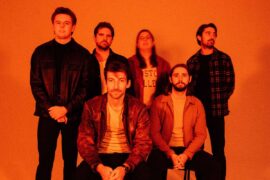
“When the Lavender Blooms”
by The Paper KitesThere’s a warmth The Paper Kites create that feels almost elemental – a soft glow, a familiar hum, a quiet hand resting on the shoulder. “When the Lavender Blooms,” the first taste off the beloved Australian folk rock band’s seventh album If You Go There, I Hope You Find It (out January 23 via Nettwerk), is a reminder of why they’ve remained so treasured for more than fifteen years. It’s cozy and cathartic, intimate and inviting, a song stitched from the same fabric that made States, twelvefour, Roses, and At the Roadhouse so beloved. But there is something even deeper here – a grounded simplicity, a reflective softness – that feels like the band returning home to themselves.
Recorded at Melbourne’s Sing Sing Studios and mixed by Jon Low, “When the Lavender Blooms” moves with an easy, driving warmth. It’s folk rock in its purest, dreamiest, most comforting form – lush guitars, delicate harmonies, and that unmistakable Paper Kites ease, carrying a quiet weight that never overwhelms. The song is tender and brooding, yet deeply hopeful, its melody rolling forward like a long exhale after holding your breath too long. Within the haze, Sam Bentley sings “I wanna kick my heels out again… find some good living when the lavender blooms,” and it lands like a mantra for anyone trying to turn toward the light after a long stretch of shadow.
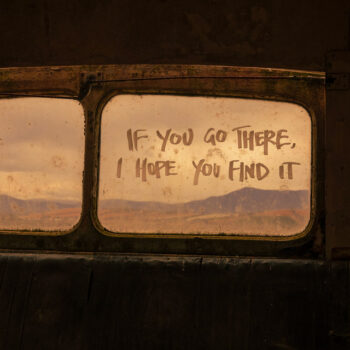
The band describe this new era as a “creative homecoming.” After years of touring and time spent settling into life with families back in Melbourne – school drop-offs, renovations, holidays, the everyday – the five members found themselves writing together again in a way they hadn’t since States. “This album reflects a creative homecoming,” they share. “Just the five of us again doing what we love together and exploring the next chapter of this band’s story.” “When the Lavender Blooms” is rooted in that steadiness, that closeness, that shared life. It’s a song about gratitude, about small moments, about noticing what’s good and letting it in.
“This was one of the first songs finished for the album,” the band say, “and for us it reflects how the album feels. Being thankful for the good things – a kind of stop to smell the roses kinda narrative.” That intention radiates through every line of the track. There’s a meditative patience to the arrangement, giving space to Bentley’s voice as he sings “I know I keep running from the good life I was given… I’m gonna try some good living.” It is soft but strong, a quiet declaration of hope from a band that has spent its career honoring the emotional weight of everyday life.
And that’s always been The Paper Kites’ gift: the way they wrap honesty in gentleness, the way they make space for stillness without losing momentum. Their music has soundtracked thousands of road trips, weddings, heartbreaks, late-night drives, and moments where words fall short. “I can hear the trust and friendship we’ve built together as a band and with our fans over 15 years,” they reflect. “We hope our long-time listeners can feel that connection in the music.”
“When the Lavender Blooms” captures that connection with exquisite clarity. It’s nostalgic without reaching backward, comforting without retreating inward – a song that holds you while nudging you forward. It feels like stepping into sunlight after rain, like grounding your feet beneath you again, like remembering that joy is allowed even when life is heavy. As the chorus opens into that achingly beautiful vow – “I’m gonna try some good living” – it becomes a small act of healing, an invitation to breathe deeper and move toward the things that make life feel meaningful.
With If You Go There, I Hope You Find It on the horizon, “When the Lavender Blooms” stands as a calling card for the album’s themes of hope, meaning, and truth. It’s The Paper Kites at their most human and heartfelt – warm, steady, familiar, and full of the quiet magic only they can make.
“Heavy Foot”
by Mon RovîaMon Rovîa has always sung from the fire and the fault line, but “Heavy Foot” hits with a different kind of force – a protest song that feels warm, inviting, inspiring, and cathartic even as it stares down the fractures of a country in crisis. The Liberia-born, Tennessee-based singer/songwriter, one of Atwood’s 2025 Artists to Watch and now a three-time Editor’s Pick, channels both rage and tenderness into a track that urges listeners not just to witness the world’s wounds, but to move toward healing together. It’s heavy but human, political but rooted in hope – the rare protest anthem that lifts as much as it warns.
“Heavy Foot” also marks a defining early chapter of Mon Rovîa’s forthcoming debut album Bloodline, a project shaped by resilience, memory, and the ongoing work of confronting the world as it is (out January 9, 2026 via Nettwerk). Built on a steady, pulsing rhythm and his rich, resonant vocals, “Heavy Foot” unfurls like a march through the present moment. It is a portrait of everyday injustice painted in sharp, evocative detail: “Do you hear the sound of the bell… times ain’t the same in the neighborhood… guns keep flying off the shelf,” he sings, his voice steady even as the lyrics crack open fear, grief, and generational pain. The weight of the song is undeniable, but it never buckles under its own intensity. Instead, it holds space – offering solidarity, warmth, and connection in the face of systems that seek to grind people down.
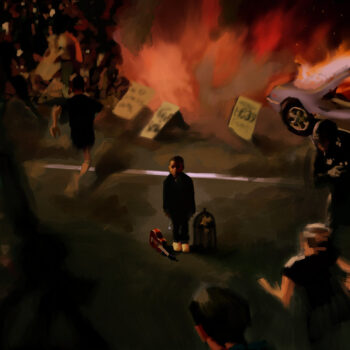
For Mon Rovîa, “Heavy Foot” is a necessary reckoning. “It’s about the moment we’re living in,” he explains. “The difficulties Americans face, the people and the government. It’s a song about joy and resistance, and telling the truth of the matter, and knowing that together we’re stronger. Together, there’s a way to bring about change.” He takes that responsibility personally. “Whether it’s homelessness, the prison system, or the things happening across the world, it becomes personal because we’re all in this world together.”
That expansive empathy fuels one of the song’s most hard-hitting verses – “Do you see the man on the screen, just a puppet but you never see the strings, calling it a war n not a genocide…” Mon Rovîa doesn’t soften the blow; he refuses to. “The government uses propaganda and different things to pit us against each other,” he says. “A puppet was the best imagery for that. I’m trying to pin together the past and the present. The mirroring is similar.” His voice may be calm, but his conviction cuts straight through.
Still, Mon Rovîa insists that the song’s defiance comes hand-in-hand with compassion. “I want history to remember me as someone who, in the moments that were super difficult, was saying something and standing up for those that didn’t have a voice,” he shares. “If I have mine and my freedom, I want to free other people as well.” That mission threads through every line of the chorus as he repeats “Love me now, hold me down,” anchoring the fight for justice in community, care, and human connection.
“Heavy Foot” also marks a defining moment in Mon Rovîa’s artistic journey – one he sees as a signpost for what comes next. “This song prepares the way,” he says. “It shows I’m not afraid to talk about the difficult things that may be hush-hush in public spaces. I hope people get comfortable and can accept the tasks I’ve given myself in writing the things of the times.” That courage – and the tenderness beneath it – makes “Heavy Foot” feel less like a performance and more like an act of service.
Rovîa closes the interview with a truth that feels like the heartbeat of the song: “Boldness is strength upon strength. The love I’ve been given for speaking openly has been super encouraging. For the listener, I want them to realize that they’re here – and living life comes with a responsibility to care for those around you, and to pay attention to the world that can be so fleeting.”
Mon Rovîa carries that same conviction into the song’s final message, offering what feels like the heartbeat of “Heavy Foot”: “Boldness is strength upon strength,” he says. The act of speaking openly – even when it’s risky, even when it’s unwelcome – has been “super encouraging,” a reminder of the community that rises when truth is spoken aloud. And at the center of it all is his hope for listeners: “For them to realize that they’re here – and living life comes with a responsibility to care for those around you, and to pay attention to the world that can be so fleeting.”
“Heavy Foot” embodies that responsibility with electrifying clarity. Fierce yet compassionate, urgent yet full of hope, this song captures everything that makes Mon Rovîa one of the most compelling rising voices in contemporary folk and indie music. It’s a rallying cry, a lament, a hymn, and a hand outstretched all at once – a protest song made not to divide, but to unite. And in Mon Rovîa’s hands, that unity sounds powerful, fearless, and full of heart. As his debut album Bloodline approaches, his message only grows louder: Love, solidarity, and truth will always break through – and they’re never going to keep us all down.
“Satellites”
by Jade Street & Apple Martin“When the rain stops I’ll take you without warning…” With those opening lines, “Satellites” slips into a soft, hazy twilight – the kind of dusky, dream-drenched space where emotion hangs thick in the air and every breath feels suspended. Los Angeles duo Jade Street – Eli Meyuhas and Zachary Zwelling – tap into a quiet, brooding intensity on their third single, a slow-burning, atmospheric reverie that introduces Apple Martin as its lead vocalist. And what a debut it is: a song that feels eerily, beautifully reminiscent of her father’s early Coldplay era – the Parachutes sweep of hushed melancholy, nocturnal glow, and understated ache – yet unmistakably her own.
“Satellites” moves with a kind of weightless gravity, heavy and light at once – its darkness soft, its drama gentle, its emotion warm rather than overwhelming. The duo lean into restraint here, shaping a sound that feels intimate, distant, and deeply felt all at once. Martin’s voice is breathy and evocative, hovering just above the surface of the guitars as she sings “Yeah, you’re breathing me in and pulling me down…” The vocal is calm but charged, tender but edged with tension, and the entire track unfolds like a quiet fall–winter confession whispered into a dimly lit room.
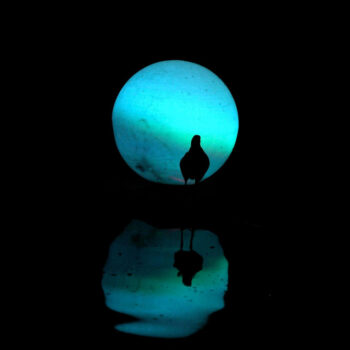
Jade Street describe “Satellites” as the product of pulling back rather than piling on. “We reached ‘Satellites’ after spending a lot of time working on louder, more immediate songs,” they share. “This one came from stepping back and paying attention to space and restraint.” Early versions were denser, layered, heavier. Everything changed when Martin entered the picture. “Her voice immediately reframed it,” they explain. “The openness in her tone created space we hadn’t left room for before. That shift made us reconsider the entire arrangement and approach it with more intention.”
It shows. The finished song glows from the inside – delicate guitar pulses, a soft rhythmic undercurrent, and Martin’s voice drifting through the mix like something caught between longing and release. Jade Street resist assigning the track a single interpretation. “We avoid prescribing a meaning,” they say. “The aim was to capture a tone rather than outline a narrative.” Still, they describe its emotional core as “the space between closeness and distance, where something feels within reach but slightly out of orbit” – a perfect encapsulation of the song’s pull.
In that sense, “Satellites” feels like its own little constellation: bruised but luminous, intimate but expansive, orbiting the edges of longing without ever fully resolving. It’s the kind of song that settles in quietly, deepening with each listen, until its melancholy warmth becomes almost addictive. As Martin repeats “And I want to take you away… I do,” the track tilts into something tender, shadowed, and quietly sublime – a debut performance that feels both surprising and inevitable.
Jade Street may be newly formed, but “Satellites” arrives with the confidence and clarity of a band already discovering its emotional center. And with Apple Martin’s voice at the helm, the result is a beautifully brooding standout – a soft-lit, late-autumn soundtrack made for long drives, dim skies, and the moments we orbit just beyond reach.
“Fake Flowers”
by Dollpile“Setting out fake flowers on the tabletop while you’re mouthing off…” Dollpile open “Fake Flowers” with a quiet sting – the kind that sinks in slowly before the full weight of the song settles around you. The brooding alternative rock duo of Isadora Eden and Sumner Erhard, based in Colorado and newly renamed to reflect their collaboration, craft a sound they affectionately call fuzz folk – a moody, shadowed blend of indie rock, shoegaze, and gothic folk. “Fake Flowers,” the first single off their forthcoming album Someone Else’s Heaven, captures everything that makes Dollpile so arresting: Heavy but tender, intimate but engulfing, raw but warm to the touch.
The song moves like a low cloud rolling over a dark field – dense, humming, and strangely comforting. Its guitars rumble with a slow-burning tension, the distortion wrapping around Eden’s voice like a protective shroud. The weight doesn’t crush; it absorbs. It pulls listeners closer, deeper, until the song feels less like something to hear and more like something to sit inside. Even in its heaviness, there’s a warmth radiating outward – a cathartic, chest-tightening glow that makes the world momentarily still.
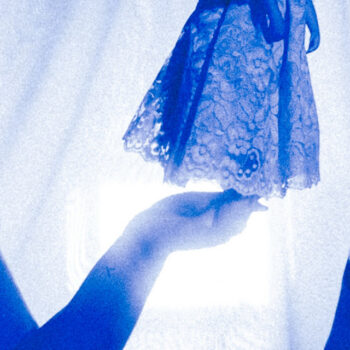
Eden traces the song’s origins to a specific emotional rupture. “Lyrically, it’s about feeling the need to explain yourself and the decisions you’re making to people who you don’t really think deserve your time,” she shares. “Especially when you’re having to say the same things and rehash the same difficult memories over and over again and the other person is not really hearing you.” That exhaustion sits at the center of lines like “I told you what I wanted to say but I can say it again… I’d walk back through it all but I don’t want to do it again.” The repetition becomes its own kind of ache – the dread of reliving something painful, paired with the frustration of never being understood.
The title itself is rooted in real life. Eden recalls fidgeting with small crochet flowers during one of those draining calls. The phrase “fake flowers” suddenly felt too fitting to ignore – a metaphor for apologies, explanations, and gestures that go unrecognized or unreciprocated. A symbol of something offered earnestly, only to be met with indifference.
Musically, “Fake Flowers” bloomed quickly once Eden sent the demo to Erhard. “When I heard the solo demo for the first time I didn’t want to change any of the rhythm guitar or structure,” Erhard explains. Instead, he built a world around it – adding an understated lead line that began as a placeholder but ultimately felt essential, and shaping a drum pattern inspired by Sam Fender’s “Spit of You.” The result is a track that feels lived-in from its first breath, as if its bones were already there waiting to be unearthed.
Dollpile’s sonic DNA is steeped in mood and memory – music for “walking home alone after a party, doom scrolling til the sun comes up, and driving around your abandoned hometown pretending you’re actually going to call your high school best friend,” as they describe it.
“Fake Flowers” distills everything that makes Dollpile such a compelling force in the alternative world – the weight, the warmth, the emotional clarity, the way their songs feel both bruised and strangely comforting. It’s a quiet eruption, the kind that engulfs rather than overwhelms, holding space for the feelings we try not to revisit and the truths we’re tired of repeating. As Dollpile move toward Someone Else’s Heaven, this track stands as an early, undeniable highlight – a testament to their sharpened vision, their collaborative chemistry, and their ability to turn heaviness into something incandescent.
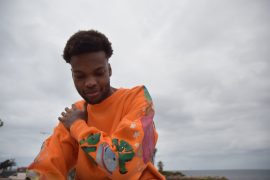
“RECALLING”
by Elliott Skinner“Recalling what you said to me,” Elliott Skinner sings softly, every breath sweetly spellbinding. “I will take care of you I will never let you go.” His voice is so delicate, pure, and soul-stirring that the entire song seems to float warm and weightless within it. Across three serene minutes, “RECALLING” becomes a gentle future-soul meditation – soothing and spacious, quietly cathartic, and carried almost entirely by the ache and luminosity of Skinner’s falsetto. The Texas-raised, Denmark-based artist shapes the entire world of the song with that airy, emotive register, creating something that feels both intimate and expansive, like a whispered revelation meant to settle straight into the chest.
Skinner approaches his craft through lineage, intention, and devotion. “In the tradition of one of the world’s most dedicated musicians – the great D’Angelo, I make Black music,” he tell Atwood Magazine. “I try and practice the traditions of my ancestors – a deep expression as a necessity tool for survival.” That inheritance pulses at the center of “RECALLING,” a song he first wrote in 2018 during a rehearsal session with close friend Zach Mullings, now released in 2025. “We stumbled upon this figure that I fell in love with,” he recalls. “I wrote the lyrics somewhat hastily… but over the course of 6 years and playing it at mostly every show I’ve had, it’s turned into an intensely cathartic mantra.” Hearing audiences chant “I don’t want another fantasy” with him, he says, “releases something good for the soul.”
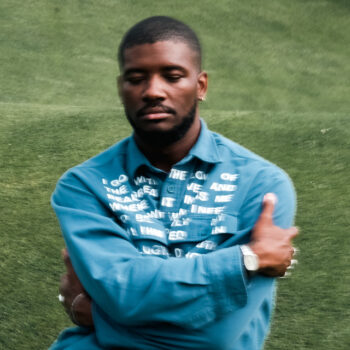
That refrain lies at the heart of the song’s meaning – a plea for clarity, for truth, for the courage to step out of illusion and into a life that aligns with the self. “’RECALLING’ is about not holding yourself to a version of your life that isn’t meant for you,” Skinner explains. “It’s about the pursuit of a better reality.” His writing carries a subtle yet powerful charge, inviting listeners to question the stories they’ve inherited and the structures they’ve been taught to trust. “There’s a big difference between belief and delusion,” he says. “There are a lot of lies being told by people in power – constructs of gender and race that hold us to these outdated views of reality. I believe making impactful change involves understanding those constructs and being able to dream outside of them.”
That sensitivity, depth, and artistic intention radiate through every aspect of Skinner’s music. His songwriting merges tenderness with intensity, and his voice – soaring, vulnerable, alive – becomes a vessel for both personal reflection and collective release. “I love storytelling,” he says. “Some of my favorite music is guitar and voice, and that’s really where I began as an artist. There’s an inherent intimacy in that form of work.” But the purpose runs deeper. He often returns to James Baldwin’s belief that “the role of the artist is exactly the same as the role of the lover.” For Skinner, that means making listeners conscious of what they haven’t yet seen, and offering music that is meant to be sung, lived in, and shared.
After years spent directing, supporting, and elevating other artists – from Chance the Rapper to Leon Bridges, Amos Lee, Nai Palm, Samora Pinderhughes, Jon Batiste, and more – Skinner is stepping forward with an artistic voice that feels fully realized. “It feels less of a ‘stepping into the spotlight’ sort of thing, and more aligning with what I think I do best – and that’s being myself,” he reflects. What he hopes people feel when they hear his work is simple, yet profound: “I hope that people listen to the music and feel something they might not have felt before. But at the same time feel an indescribable familiarity. Like the song was written for you and what you’re going through.”
“RECALLING” embodies that intention with stunning clarity. It is soft but powerful, dreamlike yet grounded, tender yet unflinching in its truth. A meditative chant. A soul-deep cleansing. A quiet reckoning carried by a falsetto that feels like light. Elliott Skinner is building a world meant for connection, liberation, and possibility – and this song is its first beacon.
— — — —

Connect to us on
Facebook, Twitter, Instagram
Discover new music on Atwood Magazine
Editor’s Picks
follow EDITOR’S PICKS on Spotify