
Atwood Magazine is excited to share our Editor’s Picks column, written and curated by Editor-in-Chief Mitch Mosk. Every week, Mitch will share a collection of songs, albums, and artists who have caught his ears, eyes, and heart. There is so much incredible music out there just waiting to be heard, and all it takes from us is an open mind and a willingness to listen. Through our Editor’s Picks, we hope to shine a light on our own music discoveries and showcase a diverse array of new and recent releases.
This week’s Editor’s Picks features Hudson Freeman, Ski Team, Girl Scout, Vienna Vienna, Queen Quail, & Telescreens!

 follow EDITOR’S PICKS on Spotify

“If You Know Me”
by Hudson Freeman“If you know me like you say you do, you’d be humming along, you’d be singing the tunes.” It’s a deceptively simple opening – conversational, almost offhand – but it cuts straight to the heart of Hudson Freeman’s latest, gut-wrenching song. Raw and dusty, achingly impassioned and quietly tender, “If You Know Me” is an alt-folk reverie that’s had me utterly hooked from the first listen. Freeman’s voice is worn, soul-stirring, and unguarded, carrying a heavy weight – the kind that sends a shiver down your spine not because it’s loud, but because it’s true.
This is dusty alt-folk at its finest: Charming and churning, heavy and heartfelt, music that sweats and sways and stirs with emotional urgency. Freeman writes with an openness that feels both bold and fragile, letting feeling spill out without ever tipping into melodrama. Released November 14th alongside a soul-stirring cover of The Rolling Stones’ “Wild Horses,” “If You Know Me” doesn’t posture or perform its sincerity – it simply is, and that authenticity is what makes it land so deeply.

If you know me like you say you do
You’d be humming along
You’d be singing the tunes
If you know me like you say you do
You’d just tell me I’m wrong
You’d just tell me the truth
Hudson Freeman is a Brooklyn-based folk artist – and one who deserves a spot on all music lovers’ radars. For the past decade, he has been hard at work quietly shaping a sound that sits at the crossroads of folk intimacy and alt-rock unease. Born in Waxahachie, Texas, and raised by missionary parents, Freeman’s formative years were marked by displacement – first growing up in North Dallas, then relocating to Eswatini (formerly Swaziland) as a teenager. Homeschooled and far from familiar reference points, he gravitated toward the acoustic guitar early on, explaining that “my special interest became the acoustic guitar… I preferred the acoustic to the electric because the platonic ideal of ‘good tone’ always taunted me and I hate guitar pedals.”
It was during those years abroad that he began writing songs in earnest, eventually releasing his first EP via Kickstarter after returning to the U.S. in 2015. Graduating from college into the chaos of 2020, Freeman eventually landed in New York, where his music began to take flight – rooted in faith, anxiety, belonging, and the uneasy work of becoming yourself online and off.
That decade-long process has also been about sound – about resisting easy categorization. Freeman bristles a bit at genre shorthand, even as listeners gravitate toward what some have dubbed “indie-twang.” “There’s a lot of projects I really adore that I’d put in that category – like Frog or Waxahatchee or Wednesday – that more faithfully bridge that world of country and indie-rock music,” he says. “But I can’t deny the twang in my voice… I also used to work at a Bluegrass shop in the Ozarks that slowly seeped into my brain.” Still, his aim isn’t revivalism. “I’m trying to push the genre production- and visuals-wise and make Americana music a little more left-of-center,” Freeman explains. “The desire is to just write rock music on an acoustic guitar and see what folk elements pop out in the process. Ultimately, I hope genre-f*ery never gets in the way of the songs.”
A smoldering sense of searching hums throughout “If You Know Me.” Written at the tail end of recording his recent album is a folk artist, the song feels like both a continuation and a clarification. Freeman has described it as “kind of like a B-side… lyrically, a sister song to ‘Good Faith,’ in that that’s what it’s about – sincerity of intention between people.” The song circles that anxiety gently but persistently, asking what it really means to be known in a world shaped by algorithms, assumptions, and quiet mistrust – a feeling Freeman articulates plainly: “I’ve increasingly had this feeling since 2020 that everyone is living in parallel realities to me, that our personal algorithms have us all spinning out on frighteningly singular journeys of thought, and that even the people I agree with the most in my life still don’t seem to share the reality I am living in,” he confides.
“I find it all, kind of lonely and terrifying, how suspicious I suddenly am of people I’ve known for years. But the way things play out online, it kind of feels impossible to cut through one another’s passive paranoia and make true pro-social appeals without your intentions being called into question. I think I genuinely feel worried that my friends hate me and think I’m obnoxious, but they’re so spun out in their world that they’re afraid to call me out on mine.”
if you know me like you say you do
if you know me
if you know what i’m about to say
you just cut me off
you just set me straight
if you know me like you think you do
you just tell me i’m off
you just read me the news
There’s a humility baked into those lines – a longing not for affirmation, but for honesty. Freeman isn’t asking to be agreed with; he’s asking to be met. Musically, the song mirrors that plea: spare, warm, and grounded, letting space and silence do as much work as the melody itself. The repetition of the refrain doesn’t feel obsessive so much as searching, like someone turning the same thought over and over, hoping it might finally land.
While “If You Know Me” has drawn viral attention thanks to its instantly recognizable riff – even earning a public co-sign from John Mayer – the song’s power lies in its emotional plainness. It’s not flashy or ironic. It’s a song about wanting the people in your life to really see you, to cut you off when you’re wrong, to set you straight when you drift – and about how lonely it can feel when that connection slips just out of reach.
That commitment to honesty carries through not just lyrically, but sonically. Freeman’s recordings resist polish in favor of texture and feel. “I’ve been recording on a lot of different kinds of mics without very much consistency – some trashy ones like the EV635 and cheap condensers like the Aston Spirit,” he shares. “I’ve honestly enjoyed what I can get out of my handy recorder lately, and I also love just recording the nylon DI.” What listeners recognize as his “sound” isn’t precious gear or pristine signal chains, but character. “The signature sound comes more in the tape processing,” he says – whether that’s SketchCassette II or his mixing engineer Harper James’ “shitty TEAC.” The result is music that feels lived-in and tactile, like fingerprints left behind rather than something sealed under glass.
At its core, “If You Know Me” is a plea for good faith – for conversation that happens face to face, not filtered through screens and suspicion. Freeman has called it “a pre-political song,” explaining that he’s “trying to make the case that we have to get offline and admit our fallibility to one another in order to have good faith discourse.”
“I don’t know if, nostalgically, we ever had ‘good discourse’ in the past, but I know we aren’t going to have it moving forward on these intrinsically anti-social social media platforms,” he adds. Before discourse, before ideology, before sides, there’s the human need to be understood and corrected by people who care enough to stay.
That’s what makes this song linger. It doesn’t resolve its questions or offer easy comfort. Instead, it sits in the discomfort, trusting that naming it is its own kind of release. “I hope listeners take away an excitement for where the project is going sonically – into the mud, grunge folk, whatnot,” Freeman says. “And emotionally, I hope people feel the push to have earnest conversation about our lives offline.” In putting it out, he found something quietly affirming: “I realized that more people than I knew wanted that realized in their own lives too.” Earnest, dusty, and deeply felt, “If You Know Me” is the sound of an artist leaning fully into his voice – and inviting us to do the same, together, offline, where it still counts most.
If you know me like you say you do
If you know me
If you know me like you think you do
If you know me
If you know me like you think you do
If you know me
“Santa”
by Ski Team“I get to talk to Santa himself.” Ski Team opens her latest single with a wink at first – playful, disarming, almost sweet – before revealing the deeper tension humming underneath. Raw and raucous, tender and quietly devastating, “Santa” is achy without being indulgent, polished without sanding down its edges. It feels like the full bloom of a singular artistry coming clearly into focus – dramatic, dynamic, and hauntingly intimate, a diaristic reckoning and reverie that holds confession and catharsis in the same breath. This is a song that blooms slowly and painfully, letting restraint do the heavy lifting.
I get to talk
to Santa himself
He wears a snakeskin belt
He gives me a bump
while I wait for the show
He’s the coolest guy I know
Most songs with “Santa” in their name have a ho-ho-ho and some wintry jingles. This isn’t one of those songs. Released December 3rd, “Santa” was the last song tracked during the making of Ski Team’s forthcoming debut album Burnout/Boys, recorded just days before last year’s Christmas. That sense of timing – end-of-year, end-of-chapter – lingers in the music’s bones. Produced by Philip Weinrobe, the track feels close and human, its sparseness amplifying every inflection in Lucie Lozinski’s voice. There’s levity in her delivery, even warmth, but the emotional undercurrent is unmistakably uneasy, built around longing that refuses resolution.

But sometimes I ache
when he comes around
in the summers he works in town,
but we moved from letters
when I was like ten
Now he calls me in my apartment
To keep me out of trouble
Ski Team is the project of Lucie Lozinski, a lifelong musician and award-winning writer who has spent years learning how to sit with nuance rather than resolve – letting tension, ambiguity, and restraint do the work. Active for the past five years and based in New York, Lozinski has quietly built Ski Team into a space where songwriting, storytelling, and observation intersect. She grew up surrounded by music – writing songs and learning to harmonize almost as soon as she could speak – and sang with major artists before she was ten, later performing in bands as a teenager before turning her focus toward writing. After studying creative writing, literature, translation, and linguistics, and working professionally as a technical writer, Lozinski returned fully to music with a sharpened sense of language and intention. That dual fluency – in sound and sentence – defines Ski Team’s work, where humor and ache coexist and where meaning is often found in what’s held back rather than spelled out.
In her own words, “Santa” is about “having a crush on someone you shouldn’t, like an authority figure. Where it’s not the right time or right dynamic, but the idea is persistent. And the beauty and ache when the other person doesn’t allow it. Blows, but also…thank you… Some sadness and beauty.” That tension – desire meeting a firm, unmoving boundary – is what gives the song its quiet power. Her lyrics don’t dramatize transgression; rather, she meditates on denial, on the strange mix of gratitude and heartbreak that comes with being protected from yourself.
I tell him I met a boy my own age
I tell him the things we say
I feel him tense up and I feel my heart race
He slips up and calls me babe
Penned as a conversation with that “special” someone, “Santa” feels strangely conversational, almost casual, which only makes Ski Team’s implications sharper. The narrator confides, reminisces, flirts, pulls back. Then comes the line that reframes everything: “But you have me marked as nice / to keep me out of trouble.” Musically, it lands in near silence. Emotionally, it cuts deep. Lozinski explains that moment as one of sudden clarity: “Musically, I think it hits hard because the instruments cut out – you get a moment of clarity, alone, nothing, followed by a sharp inhale, then all the instruments and ideas come in harder than ever.”
That pause mirrors the experience of rejection itself. “Before the emotions, there’s a brief moment of nothing,” she says. And that nothingness is where “Santa” lives – not in escalation, but in containment. The line drawn is firm, and whether it’s painful or protective is left unresolved. “Is it a damning rejection, or is it a responsible and kind decision – to preserve a platonic relationship? Is Santa looking out for the narrator? I don’t know that I have answers,” Lozinski admits.
I want you to sneak into my room in July
If it takes a thousand tries
I want to ruin your suit
I want to cross all your lines
But you have me marked as nice
To keep me out of trouble
That ambiguity is the song’s great strength. “Santa” never crosses the line it longs for. Instead, it circles it, returns to it, sits with it. The repeated refrain of “keep me out of trouble” becomes both a plea and a resignation, a mantra for learning how to live with disappointment without letting it curdle into bitterness.
A singular artist with a unique voice and perspective, Lozinski brings a rare precision to her work. “All I want to do before I die is make nice music, and I think I’m starting to do that with this record,” she says of Burnout/Boys. Recorded mostly live in a room together, the album captures “the rawness of live performance and in-room chemistry” alongside what she describes as “a good mix of drama and comedy in the lyrics.”
“Santa” fits squarely into that vision. While Burnout/Boys is, in Lozinski’s words, an album of “burnout and boys,” this song leans into the latter – offering something gentler than closure. “In the overall narrative of navigating early adulthood in the city, I hope ‘Santa’ offers some peace about the things that don’t go your way,” she explains. “A rejection keeps you from more trouble… It may be ‘the right thing,’ but it is nonetheless hard to stomach.”
That hard truth is what makes “Santa” linger. It doesn’t ask you to cheer or cry; it asks you to listen. To sit in the quiet aftermath of wanting something you can’t – or shouldn’t – have. To recognize the strange mercy in being held back. In a season full of noise and excess, Ski Team’s “Santa” feels like a gift wrapped in restraint: intimate, aching, and quietly unforgettable.
… Out of trouble
Keep me out of trouble
Out of trouble
Keep me out of trouble
“Same Kids”
by Girl ScoutSome songs hit hard because of their punch; others land because of the stories they carry. “Same Kids” does both at once, delivering a sharp, buoyant indie rock rush where energy and emotion move in perfect sync. Girl Scout’s latest single is immediate and propulsive, but there’s a tenderness threaded through it too, a wistful undercurrent that gives the song its staying power. The Swedish band know exactly when to let the guitars surge and when to let the feeling sit, and that balance is what makes “Same Kids” feel so special.
I’ve been following Girl Scout ever since their debut single “Do You Remember Sally Moore?” first landed back in 2022, and every release since has only deepened that connection. Across three EPs, each featured in Atwood Magazine in one form or another, the Stockholm-based indie rockers have honed a sound that’s punchy, nostalgic, and emotionally generous. “Same Kids,” the lead single off their long-awaited debut album Brink (out in March 2026), feels like both a culmination and a new beginning – a song that carries their signature charm while opening the door to something bigger.
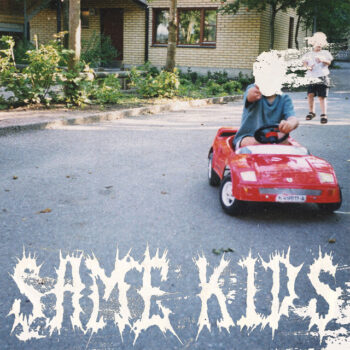
Formed by a group of longtime collaborators and self-described music nerds, Girl Scout have always taken a hands-on approach to their craft. “We’re really just a group of music nerds from Sweden,” the band share. “We write, record, and produce everything ourselves; there’s no laptop on stage or anything. It’s your average, classic 90s-influenced band really. We’d just love for you to listen to the music and see what you think!” That DIY spirit gives their songs a lived-in warmth – nothing overworked, nothing overly precious – just melody, momentum, and feeling.
At its core, “Same Kids” is about kinship – the rare, grounding experience of finding people who feel instantly familiar. “It’s about kinship; discovering twin souls every once in a while,” they explain. “Meeting people you might as well could’ve grown up together because of how similar you are. People you can share stupid niche references with.” The song imagines an alternate childhood shaped by those connections, filled with what-ifs and quiet gratitude for the people who eventually arrive.
I wish I had found
All the same kids
In my town
In a place where nothing ever felt like home
We’re the same kids
To the bone
But I’m happy I have you now
Cut the fake shit
Til we’re grown
Playing records we were always in the zone
We can make it on our own
Those lines land with a bittersweet ache – not regret exactly, but a gentle mourning for the time before you knew where you belonged. And yet, “Same Kids” never wallows. Its driving rhythm and bright melodic hooks keep it moving forward, mirroring the realization that while you can’t rewrite the past, you can still be thankful for who’s here now.
Remember the time
In your basement, we got high
We were one and we could read each other’s minds
And your thoughts they came alive
There are times when I still hear them now
In the breakroom
On the bus
When the neighbor that I hate is coming up
When we’re too loud
Lock the door
Oh to be young and to be bored
The chorus of “Same Kids” hits like a rush of clarity – loud, wholehearted, and deeply felt. As Girl Scout lock in, their big crescendo lands as a declaration of absolute loyalty, the kind you don’t negotiate or overthink. There’s no irony here, no distance – just conviction, shouted from the chest. It’s the song’s emotional release valve, where nostalgia turns into commitment and memory hardens into something you’re willing to stand behind, no matter what.
You can call
You can call in a minute
If you’re there
If you’re in it then I’m in it
Give it up now
Cause I’d gladly take the bullet
If you go I go
Forever
The same kids
That sense of reflection carries through to Brink, a record years in the making and one the band describe as “thirteen tracks caught between apocalyptic anxiety and wistful escapism.” After releasing multiple EPs, Girl Scout saw their debut album as a chance to let their music breathe. “I think we got the chance to really think about which direction we wanted to go through making so many EPs,” they say. “It captures a greater range sonically; it’s calmer, more somber and more chaotic than our earlier stuff. There’s an intro and an outro to the record. That’s the beauty of an album; the music has more room to breathe and take its time.”
As the album’s lead single, “Same Kids” serves as a gentle entry point into that world. “There’s a lot of wistfulness in the album, and ‘Same Kids’ feels very nostalgic,” the band share. “It felt like a good introduction to the record.” It introduces Brink not through bombast, but through feeling – an emotional thesis statement about connection, memory, and the people who help us make sense of ourselves.
When we toed the line
Took the shortcuts
Did the time
Ran in circles that were faulty by design
It was thoughtless, it was fine
It was nothing in a sliver of a life
All the breakdowns
All the fuss
Getting lost in all the details was enough
And it hurts now like before
If we’re not getting better we learn to take more
Ultimately, the song is an expression of gratitude – something the band don’t take lightly. “I hope whoever’s listening has someone in their life they think about when they hear it,” they say. “It was very uplifting making a song about gratitude; I generally find it hard to write happy songs. It kind of turned into an anthem for our band while we were recording it – we definitely have that very special kind of kinship the song centers around.”
That kinship is palpable in “Same Kids.” It’s the sound of shared jokes, shared memories, and shared time – the kind of song that makes you think of the people who’ve stuck around, the ones you’d gladly take the bullet for. As the first glimpse of Brink, it’s a beautiful, bracing reminder of why Girl Scout have remained such a special band to follow: They write songs that move, that mean something, and that make room for all of us who are still figuring out where we belong.
You can call
You can call in a minute
If you’re there
If you’re in it then I’m in it Give it up now
And I’d gladly take the bullet If you go I go
Forever
The same kids
If you go, I go, forever…
If you go, I go, forever…
The same kids
“Idle Hands”
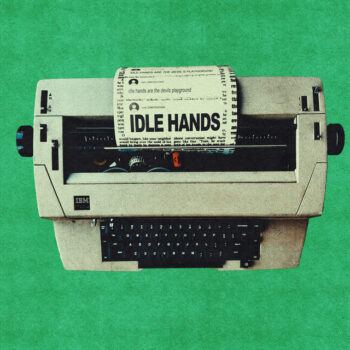
by Vienna ViennaAn electrifying fever dream, “Idle Hands” is a jolt straight to the nervous system – the kind of song that grabs you on first listen and refuses to let go. Fast, fervent, and instantly addictive, Vienna Vienna’s all-consuming single roars and soars with hard-hitting indie pop intensity, its hooks landing like sparks off exposed wire. The LA-based artist makes your pulse race and your brain light up all at once, delivering a high-voltage earworm that thrives on momentum and doesn’t apologize for how loud or alive it wants to be.
Released November 7th via PULSE Records and Pete Wentz’s DCD2 Records, “Idle Hands” hits with the kind of immediacy that feels tailor-made for movement – music that demands to be shouted back in a room full of bodies, sweat, and sound. That instinct is intentional. “I love to perform more than anything and I always make songs with the intention of being best heard live,” Vienna Vienna tells Atwood Magazine. From its pounding rhythm to its sky-high chorus, this track pulses with that live-first energy, engineered for release.
Too bad the bastards got you,
the bastards got you
You’re really gonna stick it to ’em
Hey man, the western fronts you,
the western fronts you
The freedom to get jiggy with it
You know the muse just speaks
and your fingers tweak
And you’re any devil’s plaything
Too bad the bastards got you,
the vampires want you
They want, want, want, want
Active since 2021, Vienna Vienna is the fast-rising project of LA-based singer, songwriter, and multi-instrumentalist “J,” a fiercely expressive, electrifying performer – one carving out a space where spectacle and sincerity coexist. After first catching our attention earlier this year with the radiant queer anthem “God Save the Queens,” Vienna Vienna has continued to build a body of work defined by bold hooks, theatrical energy, and an unshakable commitment to community. With “Idle Hands,” he sharpens that vision even further, channeling movement, connection, and catharsis into one of his most immediate and electrifying statements yet.
The song is a vivid showcase of the artist’s self-described “glimmer rock,” a term that reflects both the showmanship and the catharsis at the heart of his sound. “Glimmer rock is about a few things but ‘loudness’ is the most important,” he explains. “It’s an expression of my flamboyance and boisterousness. Every song I write is cathartic for me and I hope in turn for others. I’m taking inspiration from lots of genres and scenes – art rock, indie, dance punk, emo. A buffet of music I truly love.” You can hear all of that colliding inside “Idle Hands”: glossy synths, distorted guitars, propulsive drums, and a sense of theatrical abandon that turns chaos into something thrilling.
Underneath the song’s gleeful ferocity, though, is a pointed frustration with modern overstimulation. Vienna Vienna wrote “Idle Hands” as a response to digital exhaustion, deliberately grounding the track in tactile sound. “I wanted to be true to my love of the analogue, sticking to the tangible pieces of gear at my disposal,” he says. Built from a Juno, fuzzed-out guitar, bass through a tube screamer, and a mix of live drums, percussion, and drum machines, the song feels physical in the best way – like something you can grab onto instead of scroll past.
One, two, three, everybody do the ketamine
Everybody with the OCD
You did it, you got it
You did it, you got it
My idle hands
Keep me occupied all the time
I fail to launch
But I’m the rocket man in my mind
The chorus captures that tension perfectly: restless energy with nowhere meaningful to land. For Vienna Vienna, the song became a personal call to action. “‘Idle Hands’ is essentially about my frustration with online spaces and feeling like few truly meaningful connections have happened there for me,” he shares. “I needed my own call to action, a push to get my hands in the dirt.” That idea crystallizes in his mantra for the track – change lies at your footsteps, not your fingertips – a reminder that real connection still lives offline, in motion, in presence.
This run of releases marks a period of growth for the artist, following the breakout success of “God Save the Queens.” “I try to learn something about myself when I write and perform,” he reflects. “These songs have been tools for me to grow in many ways. In skill and focus as well as personal understanding.” You can feel that sharpening here: “Idle Hands” is tighter, bolder, and more confident, channeling introspection into propulsion rather than paralysis.
I’m not buying that tiny violin,
they’re gonna give it to me
I love living in a simulation
’cause I can cherry-pick the information
It’s my birthday and I’d like to start again
They’re gonna give it to me
’cause i’m important, I’m so important
And I support it, I, I support it
At its core, the song is about community – not just as an idea, but as a necessity. “I believe community is the most important thing we can have in a divided and individualist period of history,” Vienna Vienna says. “We have to take care of each other, we just have to. It’s the only way to turn the volume down on this ‘shock and awe’ we’re all dealing with.” That belief hums beneath every shout-along hook and glittering breakdown, turning personal restlessness into something collective and galvanizing.
“Idle Hands” doesn’t sit still, and neither does Vienna Vienna. With his Entertain Me EP set to release in mid-January, 2026 is shaping up to be his breakout year. “I’m so grateful to get to do what I do and make what I make,” he says. “I love every second of it.” That joy is contagious. Loud, flamboyant, and gloriously alive, “Idle Hands” is indie pop at full throttle – a song that turns overstimulation into fuel and reminds us that the most meaningful sparks still happen when we show up, together, in real time.
And one, two, three, everybody do the policy
Everybody breaking off their piece
You did it, you got it
You did it, you got it
My idle hands
Keep me occupied all the time
I fail to launch
But I’m the rocket man in my mind
“Southside”
by Queen Quail“Southside” doesn’t warm the room – it heats it. From its first hushed moments, Queen Quail’s song radiates a smoldering intensity that feels almost physical, Kirstin Edwards’ voice close and consuming, the guitars coiled tight beneath her like something waiting to break loose. It’s heavy, hypnotic, and deeply seductive – a slow-burning enchantment that grows from intimate reflection into a hard-hitting fever dream, aching and relentless in its pull.
When I first heard “Southside,” the recording felt so vivid that it was immediately disarming – every breath, every swell, every surge landing with lifelike force. That intensity is what makes it such a standout on Queen Quail’s debut EP Narcissus. The music takes its time, letting its weight settle before breaking open, transforming inward reflection into something towering and immersive. The heaviness here isn’t oppressive; it’s seductive, drawing you deeper the longer you sit with it.

Queen Quail is the project of Berlin-based songwriter Kirstin Edwards, who moved from Milwaukee to Berlin in her early twenties and began writing songs that trace the strange, disorienting expansion that comes with leaving one life behind and growing into another. Her music lives in that charged in-between space – intimate but expansive, gentle on the surface yet unafraid of weight. Across Narcissus, Edwards explores memory, self-doubt, healing, and the slow work of becoming, and “Southside” marks one of the EP’s emotional anchors.
She wrote the song while still in the thick of processing a formative experience. “I wrote this song while feeling overwhelmed by the realization that a particular experience in my life is now a part of my personal history,” Edwards explains. “I was still processing this experience when I wrote the song and felt pretty frustrated that, despite trying to get over it, I still have a lot of healing to do.” That tension – between wanting closure and realizing it hasn’t arrived yet – pulses through every layer of the track.
On the southside met you in a coal mine
In my mind’s eye I thought you were the kind type
In the water turned me into fodder
Turned me outside and left me in the cold night
The lyrics feel like fragments pulled from memory, looping and circling rather than resolving. Edwards has described “Southside” as being about the way experiences can continue to haunt us even after we’ve tried to process and move past them – and for her, the song became a lesson in patience. “I think about me realising that some things, especially healing, just take time,” she says. “And that sometimes you just have to sit with uncomfortable feelings and let them move through you. That process can’t always be rushed.”
That idea is mirrored beautifully in the song’s structure. The central guitar riff repeats almost obsessively, creating the sensation of a thought you can’t shake. “The main guitar riff in ‘Southside’ is intentionally repetitive, almost like a memory looping,” Edwards shares. When she brought the song into the studio with producer David Thornton, they focused on finding a way to let that tension expand rather than stagnate. “That’s where the big explosion at the end came from, this moment where everything that was simmering finally breaks open.”
Thought I left you on the southside
But your west of the borderline
And I wanna be on time
But I’m late to my own life
Thought I left you at the low tide
But you’re way above the waterline
When that eruption arrives, it feels earned – not like a release from frustration, but a pivot toward resilience. “I think that resulted in the song ending in a moment of resilience rather than frustration at feeling stuck,” she reflects. That shift mirrors the larger journey of Narcissus itself. Making the EP pushed Edwards toward collaboration and community, and the end of “Southside” carries that same sense of forward motion. “It starts in introspection and ends in something expansive, almost forward-looking, and that arc feels really true to what the whole project did for me.”
Within the narrative of Narcissus, “Southside” occupies a crucial emotional space. Edwards connects it directly to the myth that gives the EP its name: “‘Southside’ feels like the emotional equivalent of [Narcissus],” she says. “It’s a moment where I was overwhelmed by self-doubt, replaying things, questioning everything, and basically caught looking at my own reflection a little too closely.” It’s a portrait of feeling stuck – not out of vanity, but confusion and longing – and that honesty makes the song hit with particular force.
Talk the big talk, never meant to know ya
Found the soft spot and then you let it harden up
In the glass times forgot how to talk I,
Met a boy there, he thought he was soldier
Ultimately, “Southside” offers something rare: a song that doesn’t rush healing or pretend resolution is immediate. Edwards hopes listeners feel held by it. “I hope people feel held when they listen to it, like the songs give them a safe little container to feel some of the big, complicated, but really important emotions we all move through in life,” she says. Creating Narcissus helped her reconnect – with herself, her community, and her family – and gave her a foundation she didn’t know she was missing.
That grounding is audible in “Southside.” It’s smoldering and intense, heavy and heartfelt, but never hollow. The song doesn’t shy away from discomfort; it honors it, sits with it, and lets it bloom into something powerful. As a centerpiece of Narcissus, “Southside” is a stunning statement of patience and endurance – a reminder that sometimes the most cathartic music doesn’t soothe you right away. It stays with you, burns slow, and trusts that feeling, given time, will find its way forward.
Thought I left you on the southside
But your west of the borderline
And I wanna be on time
But I’m late to my own life
Thought I left you at the low tide
But you’re way above the waterline
“Nothing”
by TelescreensSometimes, feeling nothing actually means feeling a whole lot of something. Maybe an existential crisis is afoot, or maybe it’s ennui – a numbness to the world – but whatever the case may be, that emptiness can hit us harder than we ever expected.
For NYC’s Telescreens, that void doesn’t linger quietly. The second their single “Nothing” kicks in, it feels necessary – a volatile, feverish indie rock eruption that had to get out before it burned a hole straight through the band. Polished yet unvarnished, the song surges with rage, urgency, and kinetic force, turning emotional overload into something loud enough to survive.

your will is gone
call it off
all your friends
have given it up
but something’s left
more to say
am i just chasing
i don’t feel nothing
you don’t feel nothing…
you don’t feel nothing…
Released October 28th via +1 Records, Telescreens’ “Nothing” is ferocious and alive enough to cut straight through your bones. It doesn’t ease you in or ask permission; it explodes on contact. A high-velocity burst of angst and urgency, the New York band’s latest offering arrives scorched with heavy, hot-on-the-mic vocals and roaring, savage guitar lines that feel less like riffs than emotional release valves. This is music as motion – charged and churning, restless and turbulent, all-consuming and impossible to sit still through.
Formed between Manhattan and Brooklyn and active since 2020, Telescreens have built their reputation on turning emotional overload into physical release – channeling burnout, pressure, and disillusionment into high-voltage indie rock made for packed rooms and shared catharsis. Comprised of Jackson Hamm (vocals/guitar), Austin Brenner (bass), Josiah Valerius (keys/synth), and Oliver Graf (drums), the band have made a name for themselves thanks to their dynamic, sweat-drenched live shows – and a slew of bold, brash studio releases that capture that same ferocity on record.
“Nothing” is Telescreens’ first (and likely last) release of the year, following 2024’s critically acclaimed album 7 and their recent signing to +1 Records – an announcement that hints at much more to come. And while some bands might ease their way in for a more tender reintroduction, Telescreens held nothing back in making this one of the loudest, fiercest tracks folks will hear all year. The band sound like they’re chasing something just out of reach, pushing every feeling past its breaking point until it becomes communal, cathartic, and larger than life. It’s raw and unrelenting, but there’s clarity inside the chaos – a sense that this song isn’t just venting rage, it’s burning toward something.
sometimes i call
you up to bawl
a satellite
around your head
so take some time
but hurry up
you’re rushing cause
you don’t feel nothing…
you don’t feel nothing…
The words land blunt and unfiltered, circling the central mantra like a wound you keep pressing on: You don’t feel nothing. The refrain is built to be shouted back – a line meant to leave the singer’s mouth and return multiplied – and when it does, the irony becomes the point – numbness transformed into connection, isolation cracked open by sheer volume. As the band put it simply, those are “simple words that we all wanna scream together. We all just wanna feel less alone. Screaming together is how we feel less alone.”
That communal release is core to who Telescreens are. Asked what they want new listeners to know, their answer is as direct as the song itself: “Rock n roll lives.” There’s no posturing here – just belief in the power of loud music to say the things we don’t know how to articulate quietly. Written in what they describe as “an instant moment. Rage/anger boiling over from a desire to feel,” “Nothing” captures that flashpoint where emotion becomes action.
For the band, the song is ultimately about endurance. “This song is about fighting on. Pushing through what makes you uncomfortable because maybe there’s something better on the other side of that,” they explain. “It’s a relinquishing of control. The comforting moment of bliss that comes with acceptance of not knowing. If people went wild while listening, the song would be doing its job.” You can hear that surrender in the music itself – the way it surges forward without restraint, trusting the momentum to carry it somewhere meaningful.
That ethos is inseparable from being a New York band. Telescreens describe themselves as scoring the city’s constant churn: “We score the rat race. We are a representation of the way people feel in the Mecca. It’s hard to survive. The desire for wealth and glory drives this city. We all crave a moment of clarity, where it all makes sense for a moment. We try to bring people and ourselves to that moment.” “Nothing” feels like one of those flashes – brief, blinding, and deeply human – a moment of clarity inside the city’s constant noise.
where are the creeps
the forgotten sheep
they’re losing house and
they’re losing their minds
so call it off
or call your bluff
you’re rushing cause
you don’t feel nothing…
you don’t feel nothing…
The single arrives alongside two companion tracks, “Gimme All You Got” and “Alcoholism,” each carrying its own weight. “‘Gimme All You Got’ was a premonition,” they share – written months before a tragic event that would later give the song chilling context. “Alcoholism,” meanwhile, is devastating in its honesty: “My best friend OD’d and I had a lot to get off my chest. The whole thing is a freestyle. It was barely edited.” Together, the trio forms a portrait of grief, pressure, and survival rendered without filters.
At its core, “Nothing” is about release – not escape, but expression. “I hope [people] feel better after listening,” the band say. “That’s the whole point of music, to make you feel whatever it is you have to feel. Clean you out, a release.” And that’s exactly what this song does. It doesn’t numb you. It shakes you awake.
As winter settles in, “Nothing” promises to keep our blood moving and spirits lit – a reminder that even in burnout, even in disillusionment, there’s power in sound, in movement, in screaming together until feeling returns. This is indie rock as survival instinct – ferocious, necessary, and very much alive.
— — — —

Connect to us on
Facebook, Twitter, Instagram
Discover new music on Atwood Magazine
Editor’s Picks
follow EDITOR’S PICKS on Spotify