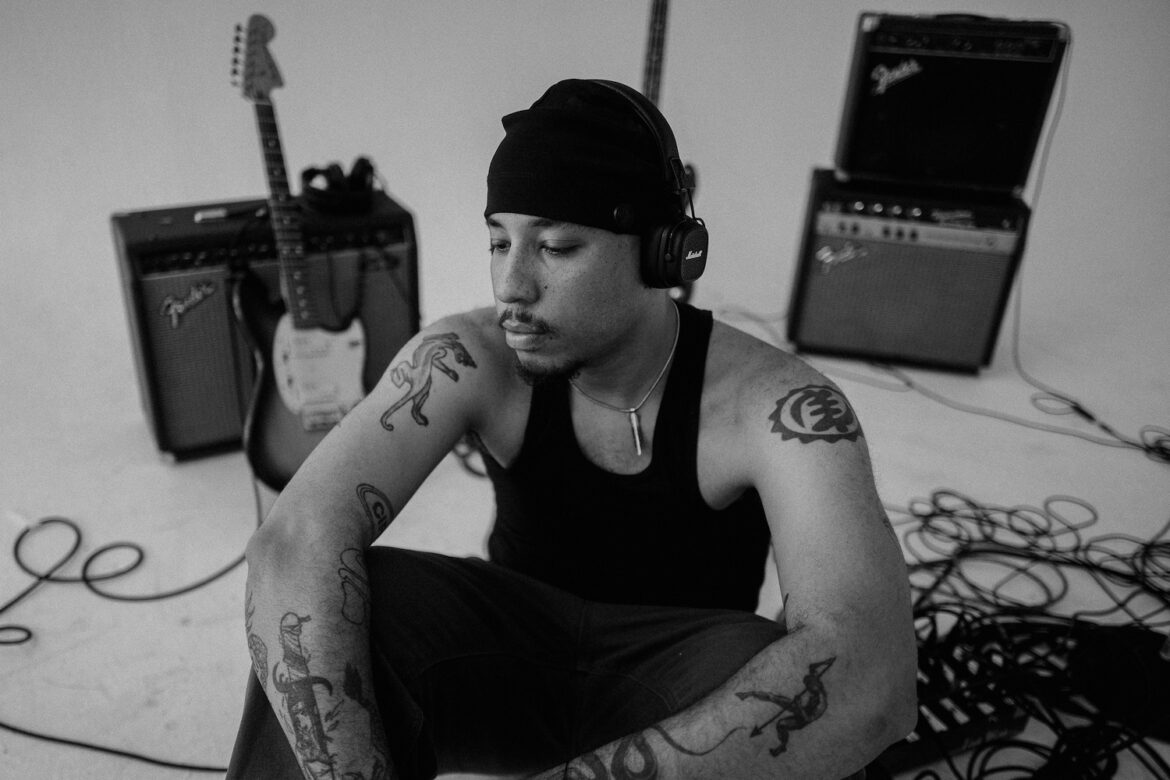
Baltimore-born, NYC-based artist Low.bō invites us inside his breathtakingly brooding debut album ‘husk,’ a raw and immersive alt-R&B portrait of love’s aftermath, the pull of home, and the courage it takes to sit with what remains.
for fans of Dijon, Bartees Strange, Frank Ocean
Stream: “FALLOUT” – Low.bō
Hold on to me for safety, and yet you wave your hand like you’re saying goodbye and yet here you are next to me.
* * *
There’s a particular ache that lives inside contradiction – the moment someone says they’re leaving while still sitting beside you.
On husk, Low.bō builds an entire emotional universe out of that tension: intimacy without certainty, closeness without clarity, love that lingers even as it dissolves. The Baltimore-born, NYC-based artist’s self-produced debut album unfolds like a late-night confession – breathy, bruised, and incandescent – tracing what remains after love slips through your hands.
My days don’t feel the same
unless you’re next to me
put my pride to the side
Guess the truth gonna set you free
My days don’t feel the same
unless you’re next to me
Could go run, could go hide
Doubt there’d be love left to see
– “FALLOUT,” Low.bō
Released September 3, 2025, husk arrives as both an arrival and a reckoning – a raw, immersive portrait of an artist finally stepping fully into his voice. Low.bō has been quietly building toward this moment for years. Raised in Baltimore, he grew up singing in church and initially pursued photography before music became something more urgent – a lifeline during a period of depression and isolation. Self-taught as a producer, vocalist, and multi-instrumentalist, he began shaping a sound rooted in vulnerability and texture, blending alt-R&B warmth with indie haze and grunge-tinged grit.
Early projects like CIRCA (2023) and IMPALA (2024) introduced listeners to his emotive instincts and melodic sensitivity, earning him recognition from Billboard, OVO Sound Radio, COLORS x STUDIOS, and a coveted spot on Spotify’s Vanguard playlist. But husk feels different – not just like a continuation, but like a reckoning.
Musically, husk exists at the crossroads of alt-R&B intimacy and indie experimentation, a space that may resonate with fans of artists like Dijon, Bartees Strange, and Frank Ocean, each known for blurring genre in service of emotional truth. Still, Low.bō’s voice remains unmistakably his own, defined by unflinching honesty, genre-fluid instinct, and a willingness to be fully seen – pouring himself into the art and expressing feeling without filter.
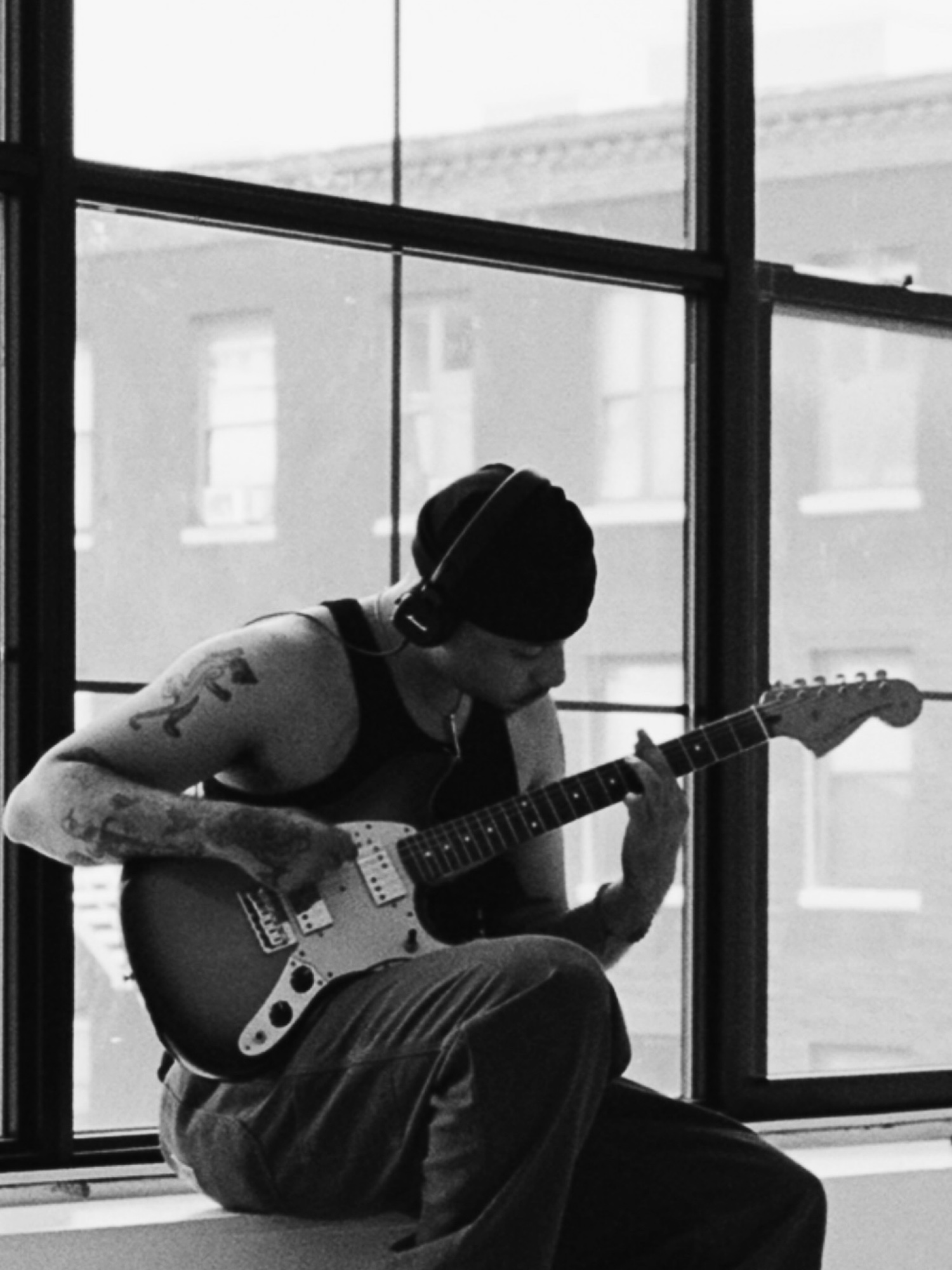
In many ways, Low.bō considers himself an “accidental project artist.”
“A lot of times I’m just writing and recording songs that feel relevant to what’s been going on in my life,” he explains. Still, when he began working on husk, there was an unspoken clarity guiding the process. He knew he wanted it to feel like a step forward – not louder or flashier, but sharper. Better songs. Stronger production. More confident vocal performances. More intention. The result is a self-produced debut that feels both meticulously crafted and emotionally unguarded, as if every sound choice exists to support the truth at its center.
That truth, at least in part, revealed itself in real time. When Low.bō wrote “Aquarius + Leo” (the album’s second track), he watched the events of the song unfold almost immediately afterward. “Everything that happened in the song happened the next day,” he says. “I’m listening to the lyrics and I’m like, ‘didn’t I just write this?’” The experience made him more aware of the power embedded in his words – not just as storytelling, but as premonition. “I’ve been a lot more careful on what I’m writing because I don’t want to manifest some bad shit in my life,” he laughs. It’s a tension that hums beneath husk: The fear of saying too much, and the greater fear of not saying enough.
The album’s title captures that liminal space. A husk is a shell – something left behind after growth, after shedding, after transformation. For Low.bō, it reflects a period of emotional release he didn’t fully recognize until it was already happening. “It felt like the songs I was writing were a lot of letting go of those old emotions or experiences I had felt,” he says. “Like I was holding on to them whether I was aware of it or not.” Rather than chasing closure, husk lingers in what remains: The residue of love, the pull of home, the confusion of connection that never fully resolves.
Sonically, the record mirrors that emotional in-between. Glistening synths and textured guitars melt into one another, grounded by low-lit grooves and punctuated by soaring, harmony-rich vocals that feel both intimate and expansive. There’s heat here – slow-burning and seductive – but also restraint, an understanding of when to leave space and let feeling speak for itself. Tracks like “Eastside” anchor the album in place and memory, while songs such as “c’est la vie,” “Redline,” and “Evil Eye” spiral through the messy cycles of love, miscommunication, and self-doubt. Even at its most self-aware, husk resists resolution, finding beauty instead in uncertainty.
Across husk, Low.bō moves with an acute awareness of how memory, place, and emotion intertwine – how love leaves residue, how home continues to pull even from a distance, and how growth often requires separation before understanding.
The album unfolds like a series of emotional coordinates, mapping where he’s been, what he’s lost, and what still tethers him to earlier versions of himself. Rather than presenting these ideas as conclusions, husk lets them surface organically, track by track, grounding its most intimate moments in lived experience.
That sense of place crystallizes immediately on the opening track, “EASTSIDE,” a personal favorite for Low.bō and a grounding force for the record as a whole. Built around his first-ever sample – pulled from Baltimore legend Lor Scoota – the song functions as both a homecoming and a departure, tracing the complicated relationship between where you’re from and who you’re becoming. “It felt good to incorporate Baltimore elements into my music – especially when that’s not really a big thing,” he says of the decision, underscoring how intentional husk feels in its storytelling and scope.
More than a tribute, “EASTSIDE” wrestles with the emotional gravity of leaving home in order to grow, the quiet guilt of distance, and the fear of drifting too far from yourself in the process. As Low.bō puts it, “It’s more than just where I’m from; it’s where I became who I am… no matter how far I go, Baltimore is still the first place I call – it’s still home.”
From there, husk deepens its grip through a series of standout moments that blur seduction with self-reckoning.
“FALLOUT” arrives as a suave R&B slow burn – as smooth as it is smoldering – drenched in longing, regret, and sweat. Over a simmering groove and aching guitar lines, Low.bō lays himself bare, repeating “My days don’t feel the same unless you’re next to me,” like a confession he can’t quite escape. It’s intoxicating in its vulnerability, capturing the moment when pride gives way to truth and desire becomes inseparable from remorse.
That emotional tension carries into “LIMBO,” a dreamy eruption of yearning driven by an upbeat pulse that belies its uncertainty. The song lives in the fragile space between excitement and hesitation, where new connection collides with old wounds. “Can you tell me if I’m just your castaway / Should I just run away?” he asks, his voice floating between hope and self-protection. It’s the sound of someone wanting deeply, but needing clarity even more – a recurring emotional refrain across the album.
Then there’s “blur,” perhaps the most tender and hazy moment on husk, where warmth and heartbreak exist side by side. With its gauzy textures and restrained delivery, the song captures the ache of missing someone without knowing where you stand, letting small, devastating lines do the work: “Won’t lie, I still think about you / Wish that I could come see you more.” Like much of husk, “blur” doesn’t demand resolution. It simply sits with feeling – honest, exposed, and achingly human.
Low.bō is a lyrically forward artist, unafraid to linger on contradiction or expose emotional fault lines. One of his favorite moments on the record arrives in the hook of “c’est la vie”: “Hold on to me for safety, and yet you wave your hand like you’re saying goodbye and yet here you are next to me.” It’s a line that encapsulates husk in miniature – the ache of being close to someone who’s already halfway gone, and the quiet devastation of accepting that reality without pretending it hurts less than it does.
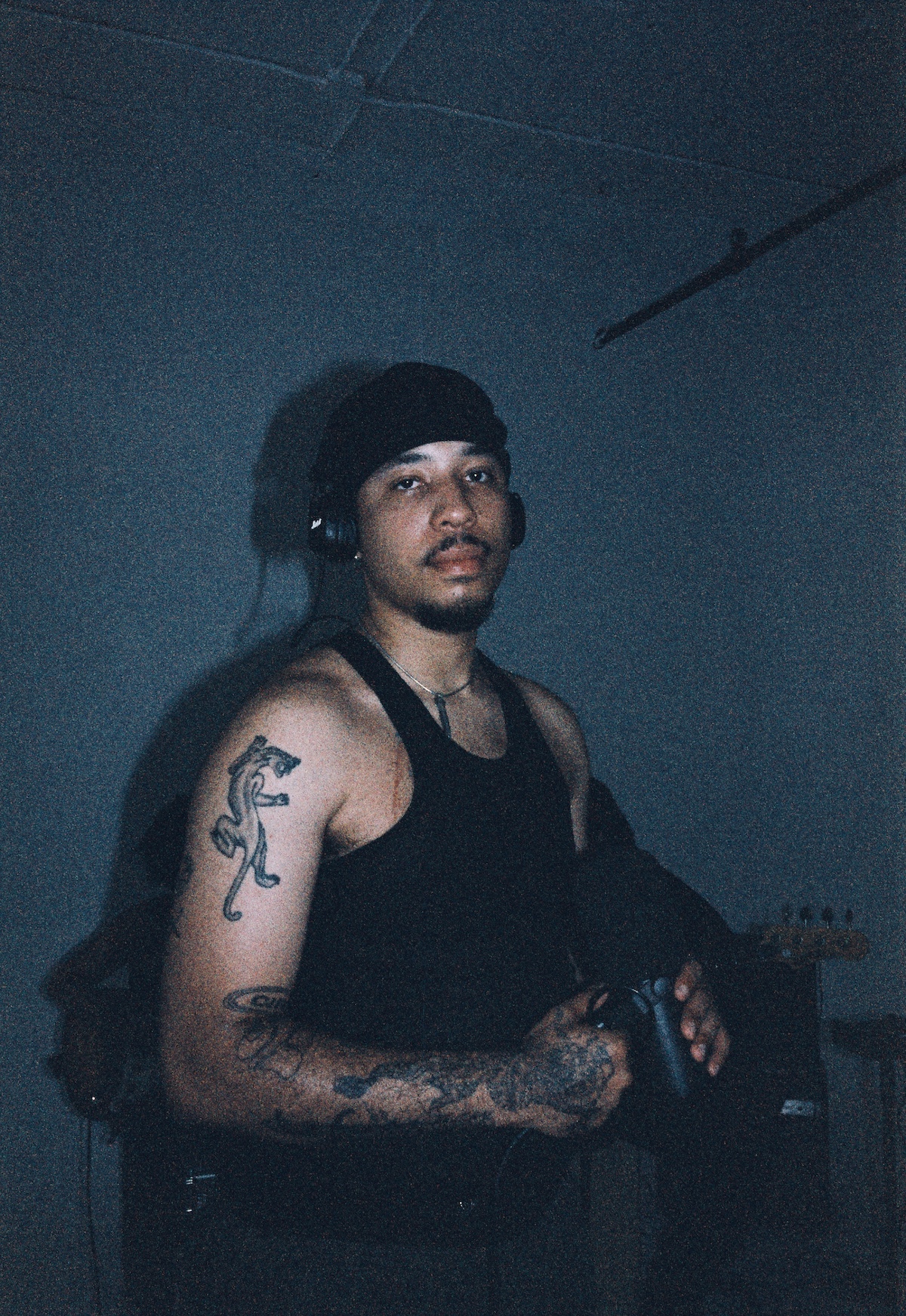
Taken as a whole, husk unfolds like a night spent replaying everything you wish you’d said differently – the love that slipped through your hands, the places that shaped you, the versions of yourself you’ve outgrown but still carry. Across its twelve tracks, Low.bō never rushes toward answers, instead letting contradiction, longing, and self-awareness coexist in uneasy harmony. These songs live in the aftermath: when connection lingers without certainty, when home pulls even from a distance, and when closure arrives only in fragments. It’s a record that finds its power not in resolution, but in presence – in the bravery of sitting with feeling as it is, raw and unresolved. By the time husk reaches its quiet, ambiguous end, what remains isn’t just the memory of love or loss, but the sense of an artist fully inhabiting his truth, unafraid to be seen in the in-between.
For longtime listeners, the album feels like a natural evolution. For newcomers, it’s a statement of range. “For those who haven’t heard of me, it’s a great way to show off my versatility,” Low.bō says. “But for those who have been supporting me since I started, it’s going to feel like a continuation of the first two projects in the best way – seeing the growth in lyrical context and overall sound.” That growth is subtle but unmistakable: A deepening trust in his instincts, and a willingness to sit fully inside discomfort.
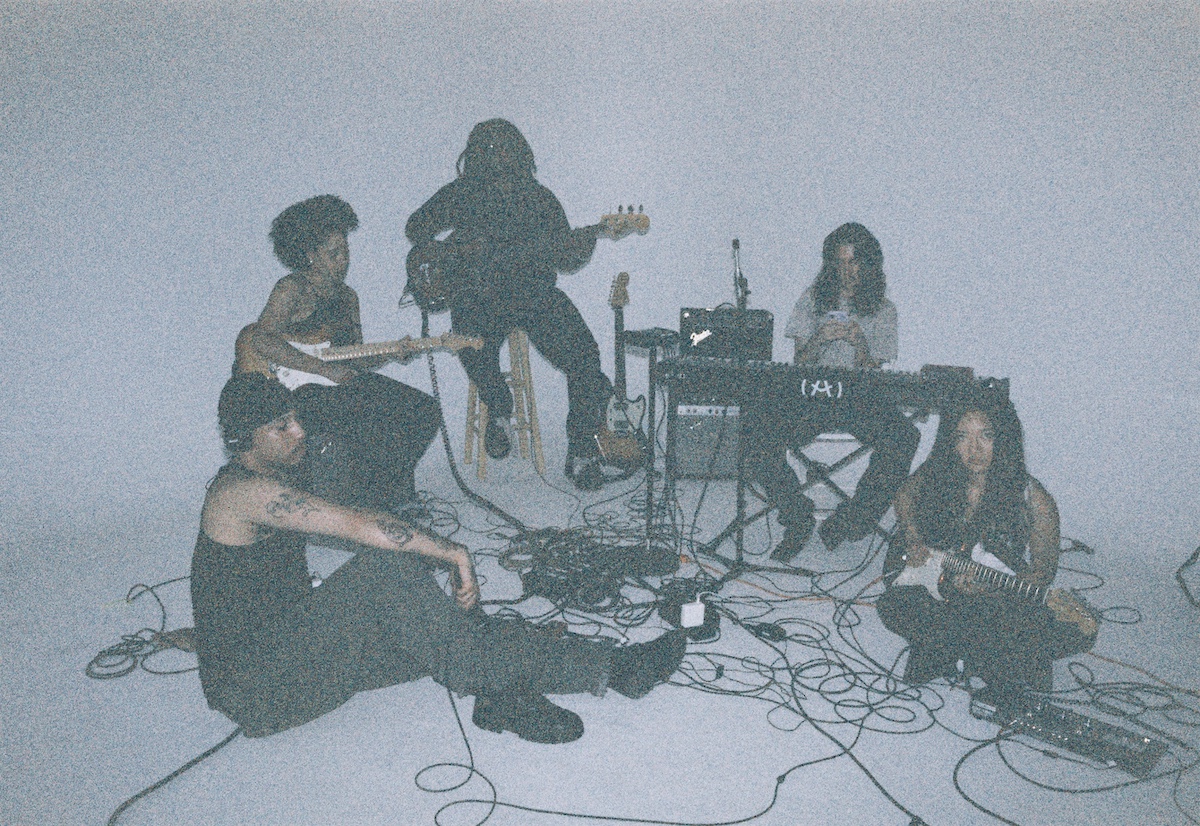
Asked to distill husk down to its essence, Low.bō keeps it simple: “Raw, experimental, definitive.” It’s an unflinching self-assessment that feels earned across a record so willing to sit in discomfort and truth. More than anything, though, husk is an invitation – to see and be seen more clearly. “I just hope people see me a bit more,” he says. “I typically feel jaded because I’m super expressive in my music, but I’m learning how to be that in my personal life as well, so it’s interesting seeing how people react to the songs.”
In putting this record into the world, Low.bō has come to understand the quiet power of honesty – not as catharsis alone, but as connection. “I’ve personally learned how important it is to continue to speak as raw as you can, because someone out there is gonna feel that shit,” he adds. “So the more I push myself to say more, the more someone out there is going to be able to see me.” It’s a sentiment that echoes through every corner of husk – a record that doesn’t just document emotional transition, but stands as proof of what can happen when an artist chooses vulnerability over armor.
husk doesn’t arrive with answers – it arrives with feeling, with memory, with the courage to sit in what’s unresolved. It’s music that rewards presence, asking listeners not to move past the moment, but to live inside it. Experience the full record via our below stream, and peek inside Low.bō’s husk with Atwood Magazine as he goes track-by-track through the music and lyrics of his debut album!
— —
:: stream/purchase husk here ::
:: connect with Low.bō here ::
— —
Stream: ‘husk’ – Low.bō
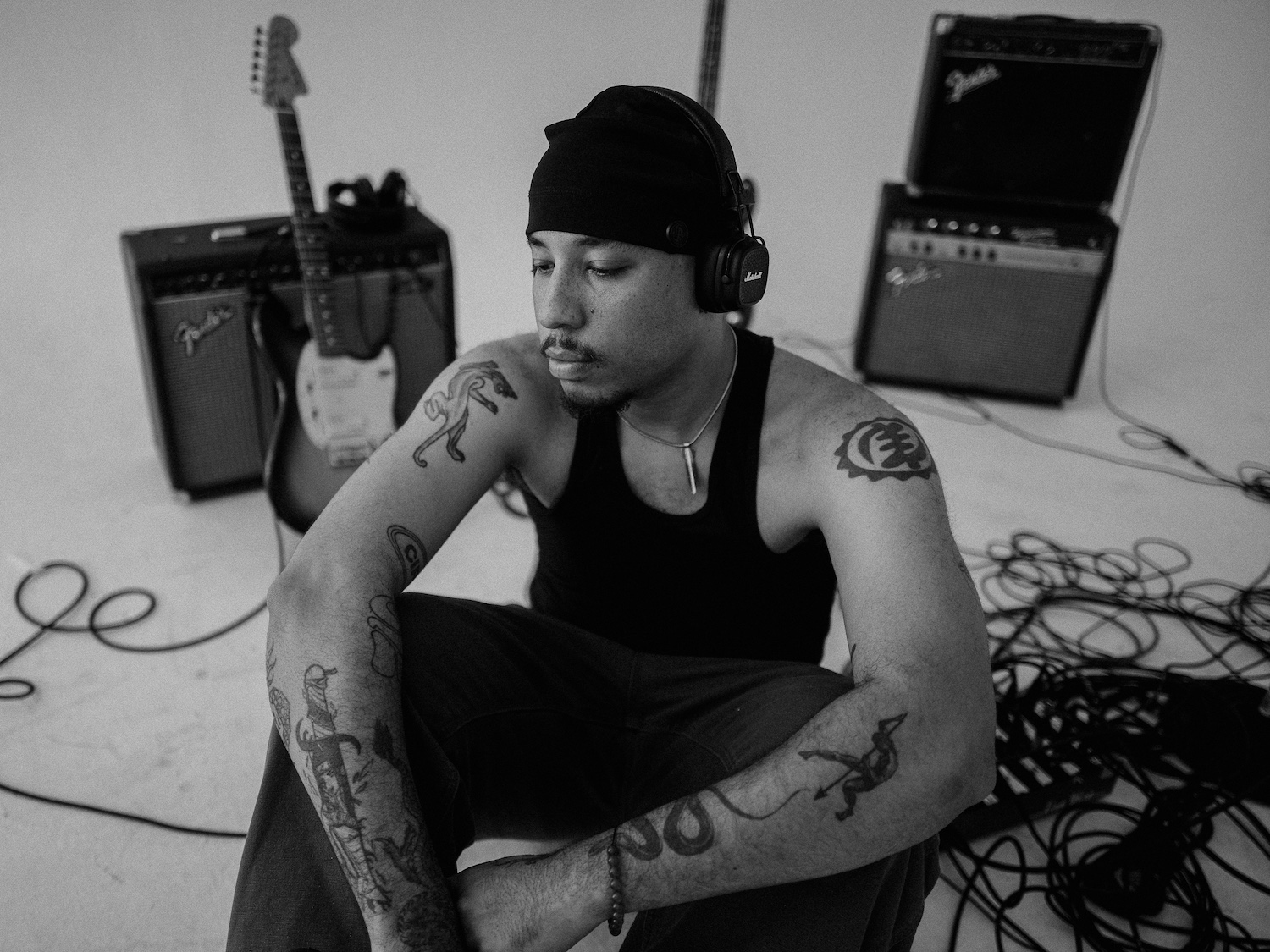
:: Inside husk ::
— —
EASTSIDE
These lyrics reflect how deeply connected I am to Baltimore, especially the Eastside – it’s more than just where I’m from; it’s where I became who I am. I find myself torn between wanting to return to those familiar streets and knowing I had to leave to grow into the person I’m becoming. Sometimes I get lost in my thoughts, questioning whether I still matter or if I’ve drifted too far. But no matter how far I go, Baltimore is still the first place I call – it’s still home.
AQAURIUS + LEO
These lyrics capture the emotional chaos I feel when I’m around someone who knows me in a way no one else does. There’s an intense connection between us – physical, emotional, even spiritual – but it’s also tangled in confusion, control, and unspoken pain. I’m constantly questioning what’s real: are these my feelings, or ones you’ve planted in me? I won’t admit how deep your hold on me goes, but the truth is, you shake my sense of self, yet still, nobody gets me like you do.
EVIL EYE! [CRUZAFIED] ft. Elujay
These lyrics are really about me dealing with someone who was super into astrology – like, to the point where my zodiac sign basically decided how our relationship went. No matter what I said or did, it felt like I was already boxed in because of when I was born. The whole “evil eye” thing is about how she had this way of seeing right through me while still hiding her own feelings behind smooth words and spiritual talk. I cared about her, but it got frustrating feeling like I was fighting not just for the relationship, but to prove someone else wrong.
REDLINE
These lyrics came from a place of real frustration and love that just wouldn’t fade – like on some situationship shit – no matter how much it hurts. I’m talking about someone who keeps popping back into my life, messing with my head like it’s nothing, opening old wounds, and then pulling away again. People have opinions, but I don’t care, because they don’t know what we’ve been through or how deep this goes. I’ve tried to move on, even switched up my whole scene, but somehow we end up back here. It’s a very messed-up thing we’ve all experienced at some point.
husk
These lyrics are me just laying it all out – wondering why the person walked away when I really believed we could fix things. I poured my heart out, especially in those quiet, real moments – like in my old Honda – hoping it meant something, but it didn’t change anything. It’s definitely a moment of realization where all you can say is, damn, this person really isn’t in my life. And even though I miss them in a weird, maybe toxic way, they still played a role in my life.
c’est la vie
This one is definitely a love/hate song. When I was writing it, I was trying to figure out how to be more vulnerable in my experiences, writing about this person who I had wanted. Even though we had always said goodbye to each other, we always ended up here. And even if she didn’t think I cared, I did. Through everything, you still think I don’t care, and it shows in your actions and your words.
FALLOUT
This one was a hard one to write. I had really messed up a relationship with someone I cared about. By not being honest, it spiraled into something I couldn’t control anymore. I think this song is really me having to face myself in the mirror – like, yeah, you screwed up, gang – and it’s all the words I wish I could’ve said. But understanding how I messed up what essentially was good, I had to bite the bullet and just charge it to the game.
party’s over
I feel like this song was probably the most sound design–focused track I’ve ever made. I wanted it to feel like being at a party – you’re arguing with your person or dealing with a situation, but you can’t handle it right then because you’re in the middle of everything. So you go to the bathroom, and you’re just going through this super vulnerable moment in an uncomfortable setting. I wanted the song to feel like that, so I tried to keep it as stripped back as I could. Usually, I’m very big on including vocal layering and stuff like that, but this time I really wanted it to feel like a movie scene — something you’re watching, where you can visualize the colors and everything – but still intimate.
LIMBO
I feel like this is the transitional phase of the project – where you meet someone new, and everything feels like it’s through rose-colored lenses. But you still have hesitation from the previous situation you were in, and you’re like, I really hope this is worth it – but if it’s just a game, let me know. I’ve always been the type of person who’d rather know what’s going on than be blindsided. I think this song really encapsulates that feeling of, I fuck with you, but do you really fuck with me? Or is this just for fun?
blur
“blur” is the most indie song on the project. When I wrote this, I wanted to capture the feeling of meeting someone and sharing a very intimate moment. Now, it’s like, I really miss you, I want to be around you, and I’m trying to really capture that feeling of wow, I really, really like you and I want you to know that. But I also don’t want to make you uncomfortable or rush anything – I want things to feel as easy and natural as they can.
Niya (ft. Estephanie)
These lyrics show me being really vulnerable, admitting that my days just don’t feel right unless you’re by my side. I’m willing to put my pride down and be honest because I know that’s the only way to make things work. I’m scared of messing things up and unsure if I’m the right one, but I’m trying to own my mistakes and say sorry for the hurt I’ve caused. No matter what anyone else says about us, all I care about is you wanting me – even if I don’t know how to fix what’s broken or heal your heart.
Lines
This song is about a situation ending, but even though it’s over, you still have a lot of love for that person. Maybe time has passed, and you’re reconnecting, but now that you’re in such a good place, you wonder: if you reopen that door, is it possible to lose all the work you’ve put into it? That’s why the very last lyric before the voice note part is, “Will I ever get my friend back?” Maybe the situation started out with you as friends, and now that door is open, you’re left wondering, what do we do now? Where do we go from here? Nobody really has the answers, and I feel like that encapsulates a lot of situations that start out that way. I leave it ambiguous because you never really know what could happen next – you could end up back together, or you could go your separate ways. The song’s called Lines because sometimes you end up blurring those lines and not knowing what to do.
— —
:: stream/purchase husk here ::
:: connect with Low.bō here ::
— —
— — — —
Connect to Low.bō on
YouTube, 𝕏, TikTok, Instagram
Discover new music on Atwood Magazine
© Eric Jovel
 ©
© husk
an album by Low.bō