“I Can Make You Want Anything”: MUNA Dance Through Heat, Upheaval, & Survival on ‘Dancing on the Wall,’ Their Most Impassioned & Unapologetic Statement Yet
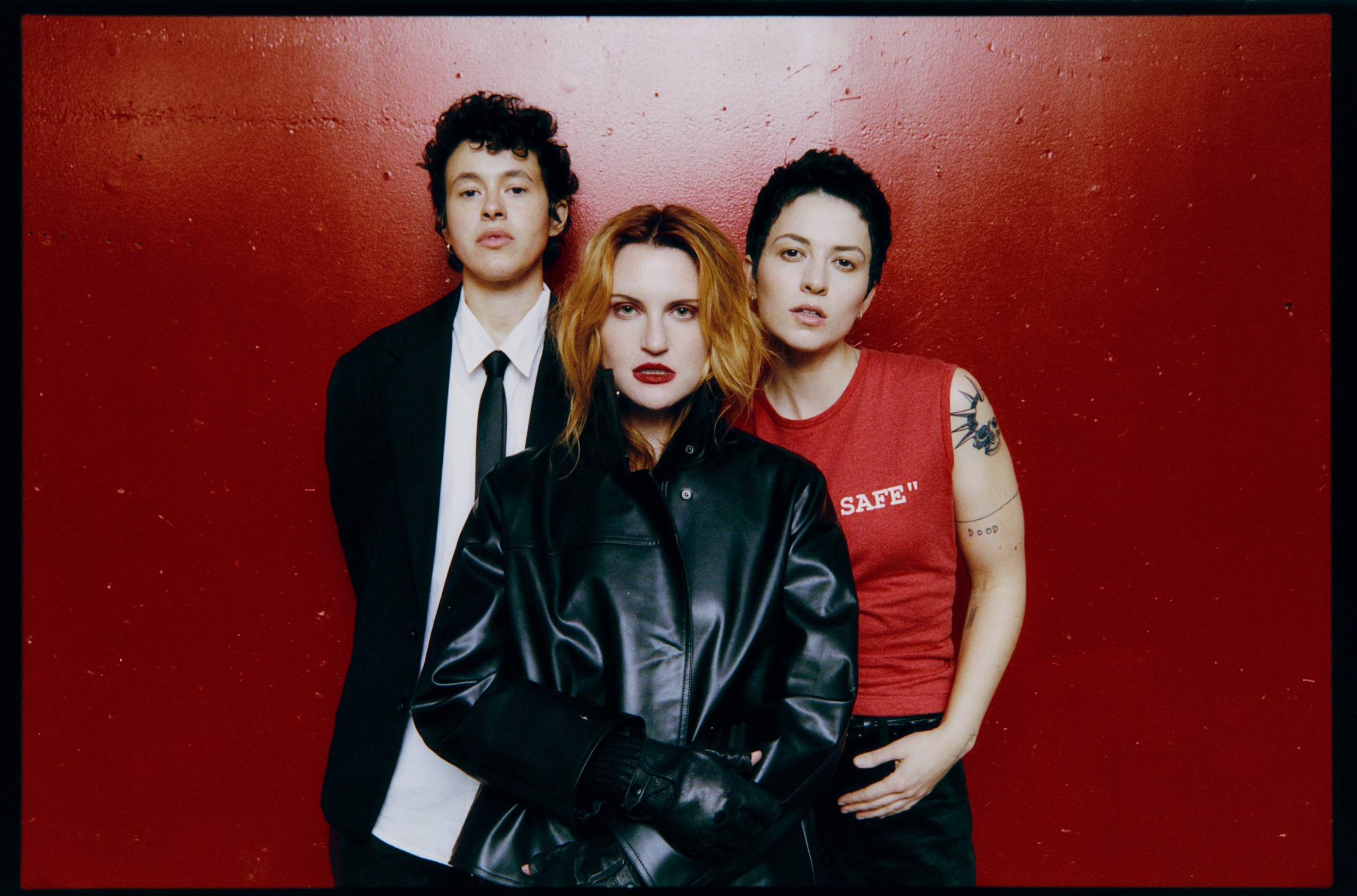
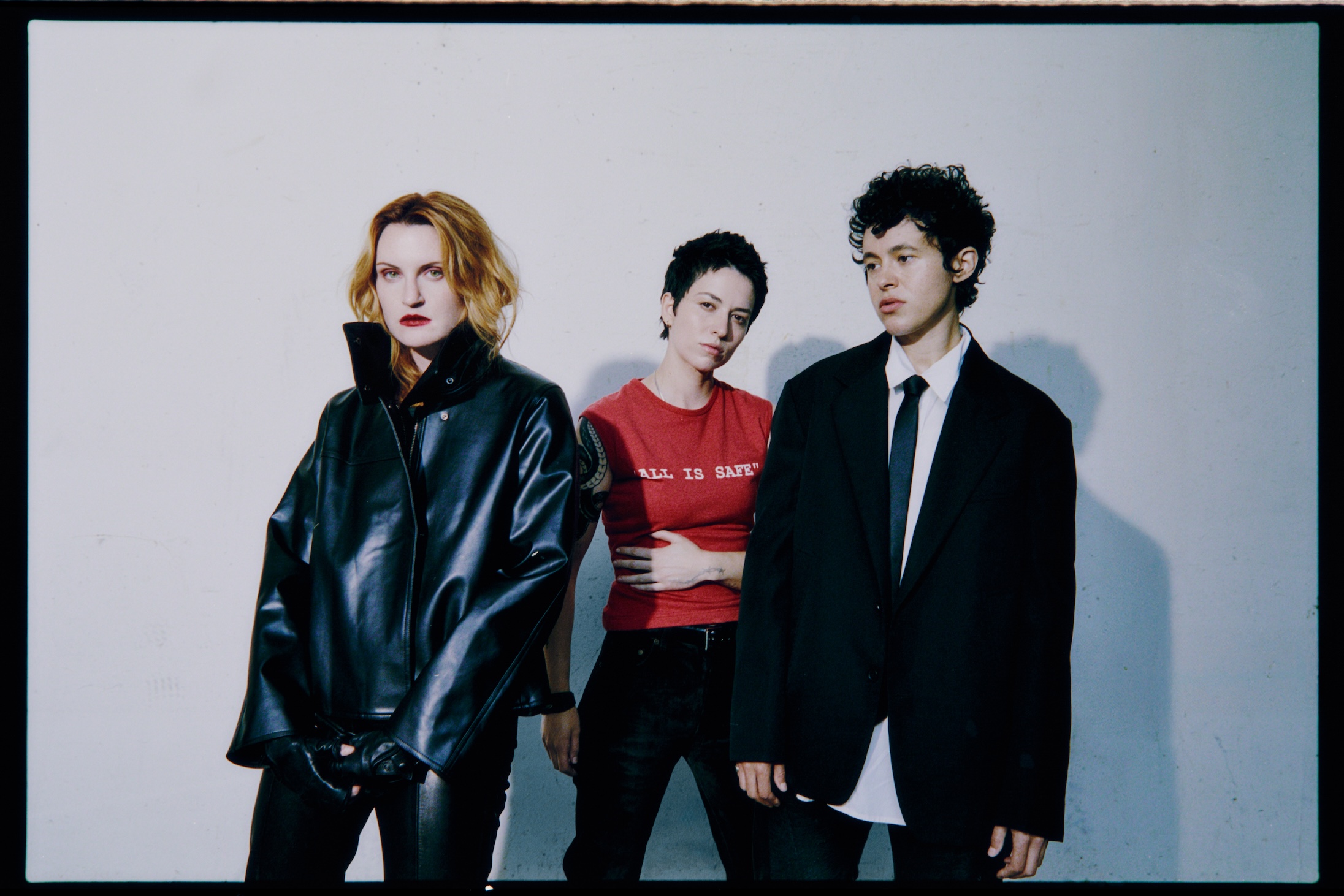
MUNA sharpen their pop instincts and raise their temperature on ‘Dancing on the Wall,’ an impassioned, outspoken fourth album that threads desire, heartache, queer joy, and political fury through some of their catchiest, most cathartic songwriting to date. Across its feverish world – where sweat, longing, fantasy, self-recognition, and release coalesce – the trio refuse to separate pleasure from pressure, delivering a visceral, unapologetic record about what it means to keep wanting, keep dancing, and keep reaching for connection when the world itself feels on fire.
Stream: ‘Dancing on the Wall’ – MUNA
MUNA make desire feel like a live wire on Dancing on the Wall – hot to the touch, impossible to hold, and dangerous in all the right ways.
Their fourth album is an incredible pop record full of pulse and passion, heat and raw visceral emotion: Impassioned, outspoken, and unapologetic in both its politics and its pleasures, it captures a band operating with thrilling clarity, not sanding down their contradictions but amplifying them until every ache, want, grievance, fantasy, and release feels charged enough to light up the room.
Dancing on the Wall – MUNA
You’re the wall that I keep
banging my head against I’m always saying,
“This time, I’ll get through” I end up with a bruise as a consequence I know how to hurt myself on you
So what? I’m calling you up again I’m always saying,
“This time, I’ll get through” I end up all alone as a consequence I’m dancing on the wall
when I’m with you
– “Dancing on the Wall,” MUNA
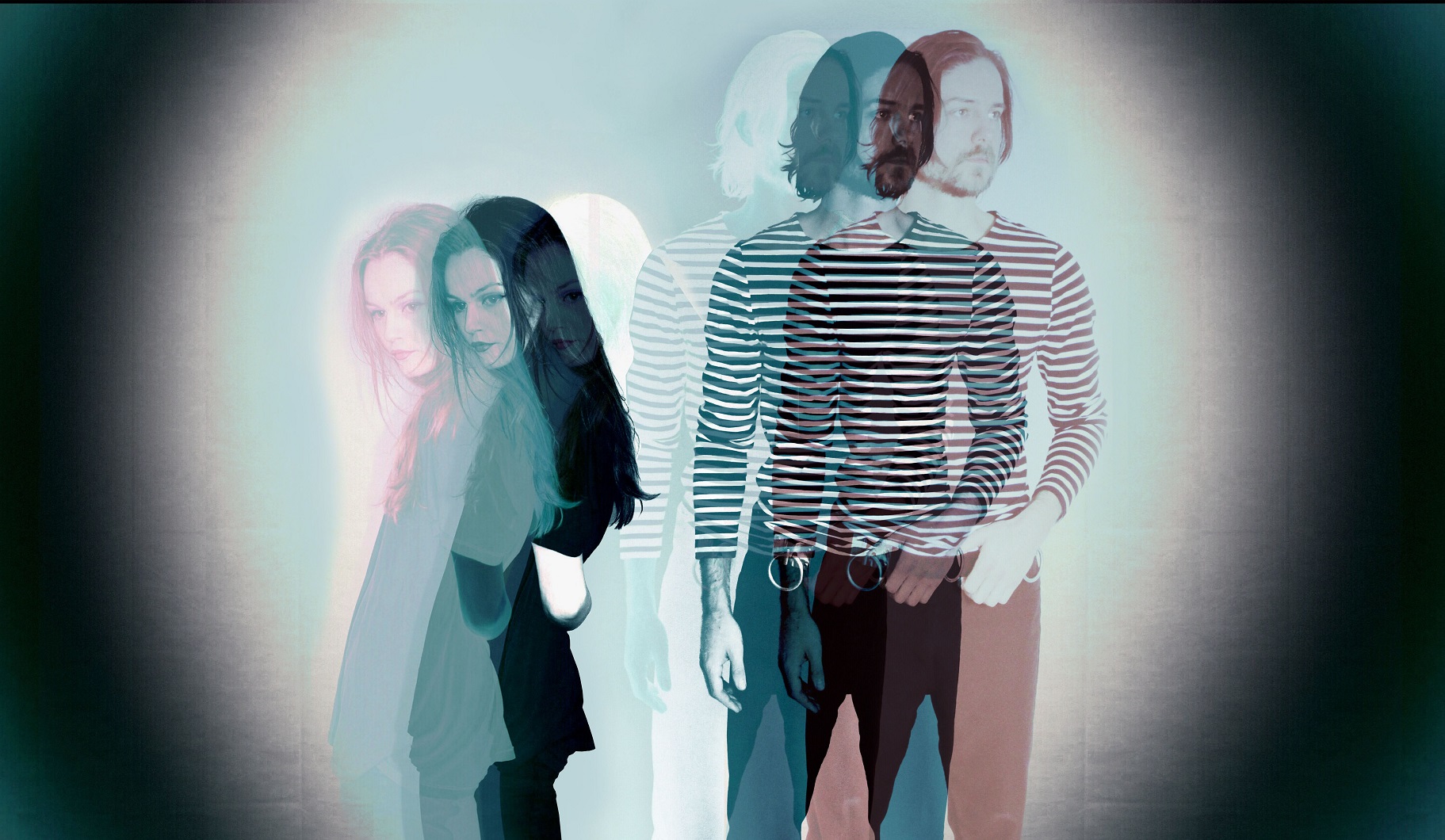
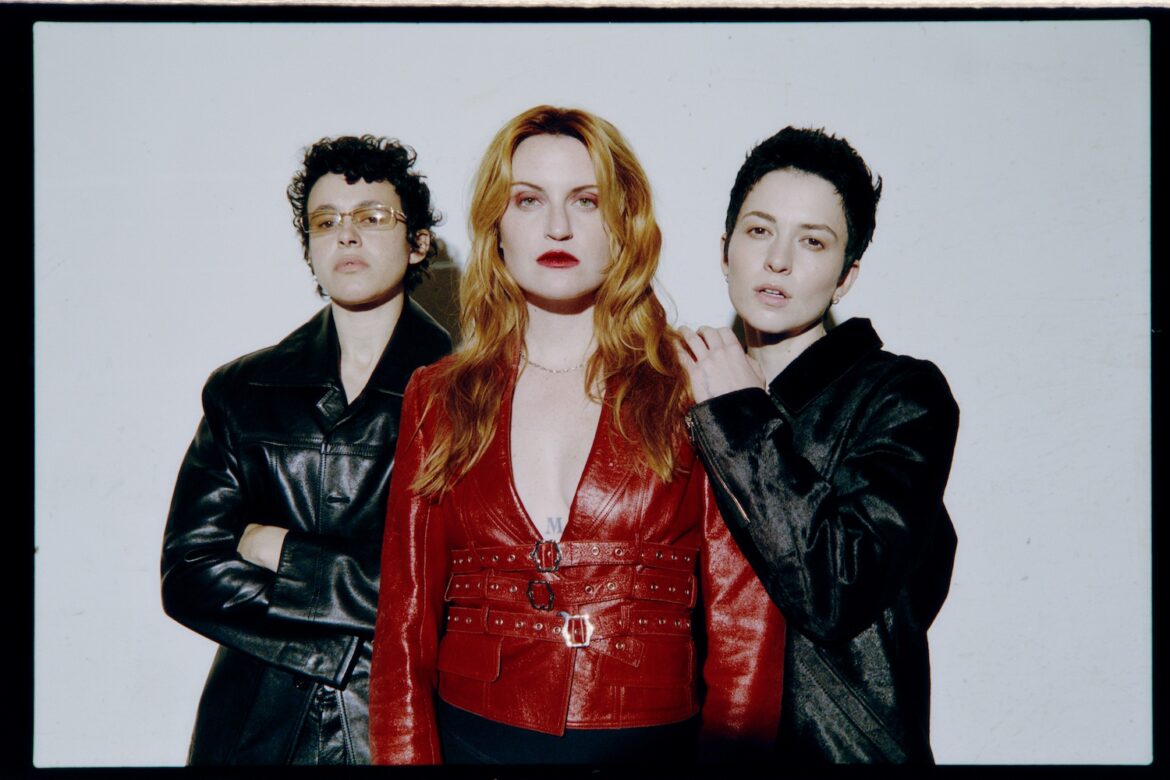
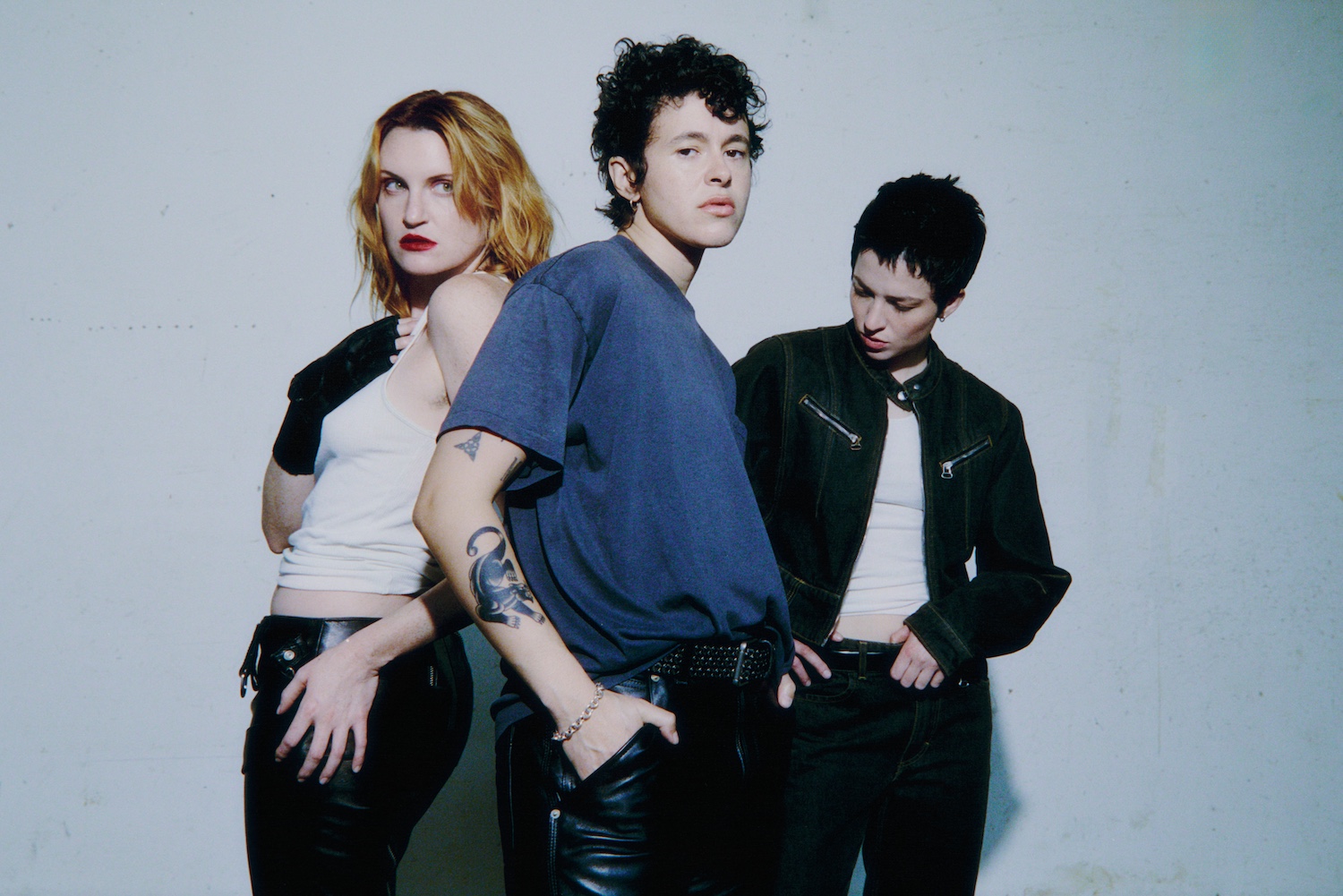
Released May 8th via Saddest Factory Records / Secretly Group, Dancing on the Wall finds Katie Gavin, Josette Maskin, and Naomi McPherson stretching MUNA’s world wider without losing the ecstatic immediacy that’s made them one of contemporary pop’s most vital voices. It’s an album of heightened appetites and exposed nerves, built for the charged space where bodies, politics, dreams, heartbreak, and pure release all press up against each other. Arriving four years after the band’s eponymous third album, Dancing on the Wall extends a conversation MUNA have been having in public for more than a decade: How do you survive the crush of your own life, the state of the world, and the systems that shape desire without surrendering joy, agency, humor, or release?
In 2022, speaking with Atwood Magazine around MUNA, Naomi McPherson described their first two albums as having a “crushed under the weight of your own life and your own shit” quality, while that self-titled third record marked a deliberate turn toward seeking joy, even performing joy, as a means of trying to feel it. Katie Gavin named “agency” as one of that album’s guiding ideas; Josette Maskin spoke to the creative freedom of letting songs dictate their own shape, of the “modern band” as genreless.
“All Killer, No Filler”: MUNA Discuss Joy & Desire on Their Self-Titled Third Album
:: INTERVIEW::
That context matters because Dancing on the Wall does not abandon those ideas so much as it pressure-tests them.
The joy is still here, but it’s sweatier and more complicated; the agency is still here, but it now lives inside bodies navigating fantasy, desire, collapse, propaganda, intimacy, and exhaustion; the genreless freedom is still here, but it feels less like exploration for its own sake and more like survival through motion. If MUNA was the sound of a band choosing joy and agency in real time, then Dancing on the Wall pushes that choice into hotter, messier, more volatile terrain – asking what it means to keep wanting, dancing, and reaching for connection when the world itself feels rigged against softness. It’s a record that lives in the body first – in sweat, friction, skin, hunger, hurt, and the communal release of letting every feeling hit at full volume.
“This is an album about love, heat (literal and metaphorical), horniness, and heartache, grounded in the here and now as we experience it,” the band shared in a statement. “We hope it makes for good company, wherever you are.”
That “here and now” gives Dancing on the Wall its undeniable, inescapable fire. MUNA have always been masters of turning private feeling into communal release, but this album widens the frame: The heartbreak is personal, the heat is physical, the longing is messy and embodied, and the politics are inseparable from the world pressing in on every body trying to love, dance, survive, and be free. Produced by McPherson, the record moves with a feverish command of texture and tension – synths flare, guitars cut, drums snap into motion, hooks arrive like pressure valves – but its boldness comes from how fully it lets pleasure and pain coexist. Nothing here feels passive. These songs sweat, they yearn, they flirt, fight, unravel, and insist.
“It Gets So Hot” sets Dancing on the Wall’s body temperature from the jump, channeling heat into atmosphere, desire, discomfort, and release all at once. “Sun beats down on the concrete / It beats so hot, not even a palm tree,” Gavin sings, placing us somewhere exposed and airless before the song slips into its own irresistible logic: “It gets so hot, so I might as well daydream.” That line could read like surrender, but inside MUNA’s world, it feels more like instinct – a way of making room for fantasy when reality becomes too much to hold. Desire and climate, sweat and survival, lust and pressure all blur together as the opener lays down the album’s central condition: Everything is overheating, so the only way through is motion.
Sun beats down on the concrete It beats so hot, not even a palm tree The house I live in doesn’t have A.C It gets so hot, so I might as well daydream It gets so hot that I can’t even think straight And she’s so hot when
she’s putting on her make-up And she’ll sweat it off
when she’s in the club When we go downtown, dressin’ down
‘Cause it gets so hot It gets so hot Mm, because it gets so hot
The sweat drips off her
down on the concretе It gets so hot down
here on thе concrete The heat turns up,
drippin’ down on the concrete And it won’t stop
drippin’ down on the concrete
The title track takes that motion and blows it wide open into one of MUNA’s great cathartic singalongs.
“Dancing on the Wall” begins in the intimate ache of unreturned devotion – “Bought your favorite ice cream, left it in the backseat / Just another sweet thing you let go bad” – and then sends that feeling outward until it becomes expansive, electric, and communal. It doesn’t sit in loneliness; it explodes past it. What starts as private frustration becomes a radiant surge of passion built for bodies in motion and voices raised together, the sound of letting yourself feel everything at full volume and turning a cycle you cannot quite break into a moment you can fully own, if only for the length of a song.
That contradiction is the track’s emotional engine. The chorus hits like a bruise you keep pressing – “You’re the wall that I keep banging my head against / I’m always saying, ‘This time, I’ll get through’ / I end up with a bruise as a consequence / I know how to hurt myself on you” – transforming longing into impact and repetition into damage. To be “dancing on the wall” is to be present but unseen, caught at the edge of someone else’s story, moving through a connection that looks alive from the outside but leaves you isolated within it. And yet MUNA make that isolation feel shared. By the time the bridge arrives, with lovers dancing in the light and shadows crossing the narrator’s eyes, the fantasy has already begun to fall away – but the song keeps moving, finding power not in closure, but in expression.
That is the title track’s gift: It makes heartbreak feel less like an ending than a body still insisting on release.
“Eastside Girls” keeps that release moving, but loosens its grip into a euphoric, feel-good rush of place, pleasure, and queer recognition. Its tight, quick pulse gives the song a restless, sunlit bounce, while big slap drums and sweet, seductive synths color its Los Angeles fantasy with warmth and swagger. MUNA make the Eastside feel less like a location than a state of being: “Where you don’t even miss the ocean / And if you know then you know, and I know it.” The bridge is its own kind of intoxication, a breathless, list-style cascade that nods to the pop-cultural propulsion of Billy Joel’s “We Didn’t Start the Fire” while building something distinctly MUNA: “L.A., Berlin, haircut, safety pin / Detroit, Tokyo, all things astrological / Nashville, London, negroni with the nice gin…” It’s funny, sexy, communal, and wildly alive, a catalog of scenes, cities, styles, hookups, house shows, rent control, and chosen-world shorthand that only needs a few words to open an entire universe.
“Wannabeher” is slyer, but no less seductive. Leaning harder into the album’s electropop bloodstream, the song rides a dancey beat that feels as enticing as it is compulsive, placing admiration, attraction, envy, and desire in the same overheated room. “I think that I might wanna be her,” the band sing, but the hook never settles into one clean meaning; the wanting keeps shifting shape. Does the narrator want her, want to become her, want to be chosen by her, or want to absorb whatever force makes her so magnetic in the first place? By the bridge – “If I can’t be her, then I wanna be with her / Hopin’ that she’ll rub off on me when I kiss her” – MUNA have located one of the album’s most thrilling tensions: The self as porous, unstable, and hungry for contact, where identity is not fixed so much as charged by proximity, fantasy, and touch.
“So What” brings the album’s thirst for connection into a room full of people and lets the emptiness echo. On its surface, the song glitters with social proof: “The party, the premiere, the opening, I get invited,” Gavin sings, surrounded by black dresses, necklaces, best shoes, free drinks, good reviews, fangirls, critics, and beautiful rooms where everything appears to have worked out. But the refrain keeps betraying the performance. “So what, if you don’t love me” is framed like a shrug, yet it lands more like a bruise beneath the concealer – a wounded mantra repeated until confidence starts to sound suspiciously like denial. MUNA cut through spectacle to reveal the ache beneath validation: All those invitations, all that external applause, and still the one absence loud enough to swallow the room.
“Mary Jane” carries that ache into a different kind of love triangle, one where the rival is not another person so much as a dependency with a name, a scent, and a hold the narrator cannot break. It is another beat-driven indie pop anthem, but its chorus blooms with cinematic force, passion and pain colliding in a wave of jealousy, devotion, and self-erasure: “You know that I would’ve changed my name / Made a home to go up in flames / I gave you love, you just gave me pain / ’Cause you only wanna marry Mary Jane.” The wordplay could be cheeky in another band’s hands, but MUNA make it devastating. The song’s brightness only heightens the humiliation of competing with whatever gets someone higher than you can, and the bridge twists that insecurity into one of the album’s most cutting questions: “What’s she have that I don’t have / Why can’t I get you high like that?”
“Girl’s Girl” keeps the jealousy knot pulled tight, but trades “Mary Jane”’s heartbreak blaze for a pulsing, vibey driver built around gossip, irony, and the humiliation of hearing your own romantic disappointment narrated back to you through everyone else. Its opening reads like a queer social map drawn in whispers – “I heard from Ashley, who’s dating Celeste / Who used to live with Morgan, you were out with her ex” – a dizzying chain of names and half-confirmed details that makes desire feel communal in all the wrong ways. The chorus is funny until it starts to sting: “You’re a real girl’s girl, but the girl ain’t me / Thought of stealing your love, but you give it for free.” MUNA catch that specific ache of being outside the orbit of someone’s affection while still hearing every detail of where it lands, laughing so hard you cry because the alternative is admitting how much it hurts.
The album’s most memorable – and intense – moment arrives with “Big Stick,” an especially striking detonation:
A provocative punk track and overtly political anthem that hits hard and leaves an instant, lasting mark. Where much of Dancing on the Wall channels heat through romance, fantasy, sex, and self-recognition, “Big Stick” brings that same voltage outward, attacking the machinery of manufactured desire and state power with ruthless precision. Its opening lines move through consumer aspiration and gendered image-making – “Make you want a matte lip and a miniskirt / Make you want a big blazer and a collared shirt” – before tightening into a thesis on manipulation: “I can make you want anything that I want you to.”
The song escalates with terrifying logic. What begins as aesthetics becomes ideology; what looks like influence becomes control. MUNA draw a clean, brutal line from beauty standards and domestic fantasy to surveillance, policing, militarization, propaganda, and empire, exposing how want itself can be engineered. By the time they arrive at the bridge – “Make you want to build an army and wage a war / Make you want to show the world what America’s for” – “Big Stick” has shed any illusion of metaphor. It is direct, furious, and unflinching, naming Palestine, apartheid states, weapons, hunger, incarceration, and repression with the urgency of a band unwilling to separate pop music from the crisis outside the club.
Make you want to build an army and wage a war Make you want to show the world what America’s for And how America gives more than America takes We give weapons to dictators in apartheid states We give kids in Palestine PTSD But we’ll never f***in’ ever give them something to eat And if you’ve got a problem with it, you could end up in jail Send you to Louisiana, million-dollar bail
Because I have a big stick I’m not afraid to use So I can make you do anything that I want you to That I want you to, that I want you to I can make you do anything that I want you to
Because I know you like
the back of my hand, it’s true I can make you do what I want you to
That same red-hot, irresistible urgency pulses through Dancing on the Wall, whether MUNA are singing about sex, heartbreak, fantasy, or the ache of wanting to be wanted.
Late in the record, “Why Do I Get A Good Feeling” brings desire back to the place where judgment fails. The song is fierce, playful, knowingly foolish, and deliciously self-aware, with its narrator looking around for misplaced common sense like a coat left in another room: “Must’ve misplaced my common sense, my sense of / Good direction and my / Sense of proportion.” Its dance-pop pull is lighter on its feet than the album’s earlier eruptions, but the stakes are still deeply MUNA: The head knows better, the body does not care, and the feeling itself becomes impossible to argue with. “You and I know there’s no good reason / You and I know we should both be leaving,” they sing, before giving in to the question anyway: “So why do I get a good feeling from you?” It is one of the album’s purest studies in self-betrayal as pleasure – not tragic, exactly, but knowingly doomed and helplessly alive.
“Buzzkiller” closes Dancing on the Wall by pulling the lights down and letting the doubt speak plainly. After an album full of heat, longing, lust, fantasy, and release, the finale sits with the fear of being too much, too difficult, too hopeless, too hard to love once the initial high wears off. “You think I’m so easy to love / Baby, please, you’re just buzzed,” Gavin sings, puncturing romance before it can get too comfortable. The second verse widens that exhaustion beyond intimacy – “I made it to the protest, the speech made me cry / But then I came home, and I still feel hopeless” – and suddenly the album’s private and political pressures collapse into one final ache. Yet the outro refuses total defeat. “No, I / I love you,” she sings at the end, small but undeniable. It is not a clean resolution, but it is a human one: After all the wanting, dancing, sweating, spiraling, and surviving, MUNA leave us with love still trying to say itself.
What makes Dancing on the Wall so essential is the way MUNA refuse to separate the personal from the political, the body from the world, the glitter from the grief.
These songs do not offer escape so much as release: A place to sweat out fear, laugh through humiliation, flirt inside uncertainty, rage against control, and keep reaching for connection even when connection feels compromised by everything around it. It’s an album worth living with because it understands pop as both pleasure and pressure point – a bright, beating space where desire can be messy, joy can be hard-won, and catharsis can carry real consequence. MUNA do not ask listeners to leave their lives at the door; they invite all of it in, then give it a beat big enough to survive inside.
As a chapter in MUNA’s discography, Dancing on the Wall feels like the sound of a band meeting themselves in the present tense after more than a decade of becoming. The self-titled MUNA opened up a new language of joy, agency, and communal release; Dancing on the Wall takes that language into more volatile weather, where freedom has to contend with surveillance, heartbreak, propaganda, exhaustion, longing, and the strange comedy of still wanting so badly in a world this unstable. It’s not a reinvention so much as an intensification: MUNA at their most impassioned, outspoken, and unapologetic, sharpening everything they have always done best into a record that feels rooted in their history while urgently alive to this exact moment.
The band’s fourth album is not escapism, even when it is euphoric; it is release as resistance, pleasure as presence, pop music as a way of telling the truth with your whole body. MUNA understand that desire is never just desire, that heartbreak is never sealed off from the world, that the dancefloor can be both sanctuary and pressure cooker. Their catchiest, most cathartic and charged songwriting and production to date does not ask listeners to look away from the mess of being alive right now. It invites us deeper in – into the heat, into the ache, into the fight, into the company of a record that sweats, shimmers, and refuses to cool down.
On the album’s powerfully pulsing opener, MUNA sing, “It gets so hot, so I might as well daydream” – and that, in its own way, is Dancing on the Wall’s spark, a kind of survival tactic: Making room for release when the world won’t stop burning.

© Dean Bradshaw
 © Dean Bradshaw