
California singer/songwriter Satya makes her spellbinding debut with ‘Yellow House,’ a tender, genre-blurring portrait of childhood, memory, survival, and healing that revisits the rooms of her past, channeling old hurt and unconditional love into an intimate and graceful world of warmth, vulnerability, and hard-won release.
Stream: ‘Yellow House’ – Satya
Rooms often remember what the body tries to outgrow.
They hold the charge of old hurt, the shape of childhood rituals, the prayers whispered before sleep, the doors we close because staying would cost too much. On Yellow House, Satya returns to the place that made her with a voice full of grace, tracing the fragile line between memory and release through songs that feel tender, wounded, and alive with hard-won understanding. Her debut album is a beautifully soul-stirring act of reflection – a luminous introduction to an artist turning inner-child ache into warmth, truth, and healing.

Atwood Magazine is proud to be premiering Yellow House, the spellbinding debut album from California singer/songwriter Satya. Out June 5 via Giant Music, the Oakland-raised, Los Angeles-based artist’s full-length debut blends soul, alt-R&B, folk, blues, jazz, and Americana elements into an intimate and irresistible world of its own: Dreamy and tactile, profoundly vulnerable and wonderfully expansive, rooted in personal history yet open enough for listeners to find their own stories inside it.
Listeners drawn to the smoky soul of Nina Simone, the folky neo-soul ease of Lauryn Hill, the soft-focus intimacy of Corinne Bailey Rae, and the sensual restraint of Rhye will find familiar warmth here, but Satya’s world ultimately moves according to its own rhythm. Across Yellow House, Satya builds both a reckoning and a refuge – a deeply felt portrait of pain, love, survival, and the long road toward peace, rendered with the kind of emotional clarity that makes a first album feel lived-in from the very first listen.

“Yellow House is raw and deeply personal, tracing my journal entries over the past several years,” Satya tells Atwood Magazine.
“This album is dedicated to my inner child. It reflects on what it meant to grow up in an abusive household, and the duality of holding both unconditional love and pain. It explores the inner world I lived in as a child – honoring the darker parts of myself and what I witnessed growing up, and how I carried that pain with me while coming of age.”
In Satya’s hands, that inner world becomes a living place – not merely remembered, but re-entered. Yellow House carries the ache of looking back without turning away, holding childhood as both wound and compass while making room for the person she’s become on the other side of it.
“I began writing the album at the start of 2020, and for the last couple of years I went back and forth about how to share it with the world,” Satya explains. “It never felt completely finished until now – but this year, I realized it was time to release both the album, and the version of myself it represents. My wish is that this work offers connection, release, strength and healing – to myself, and to anyone who listens.”
That final wish radiates through Yellow House. Satya’s debut doesn’t treat healing as a clean arrival point; it honors the mess, the ache, the unfinished questions, and the complicated love that can live beside hurt. The result is an album that feels lived-in and newly opened, full of songs that trace their way through memory with patience, compassion, and remarkable emotional nerve.
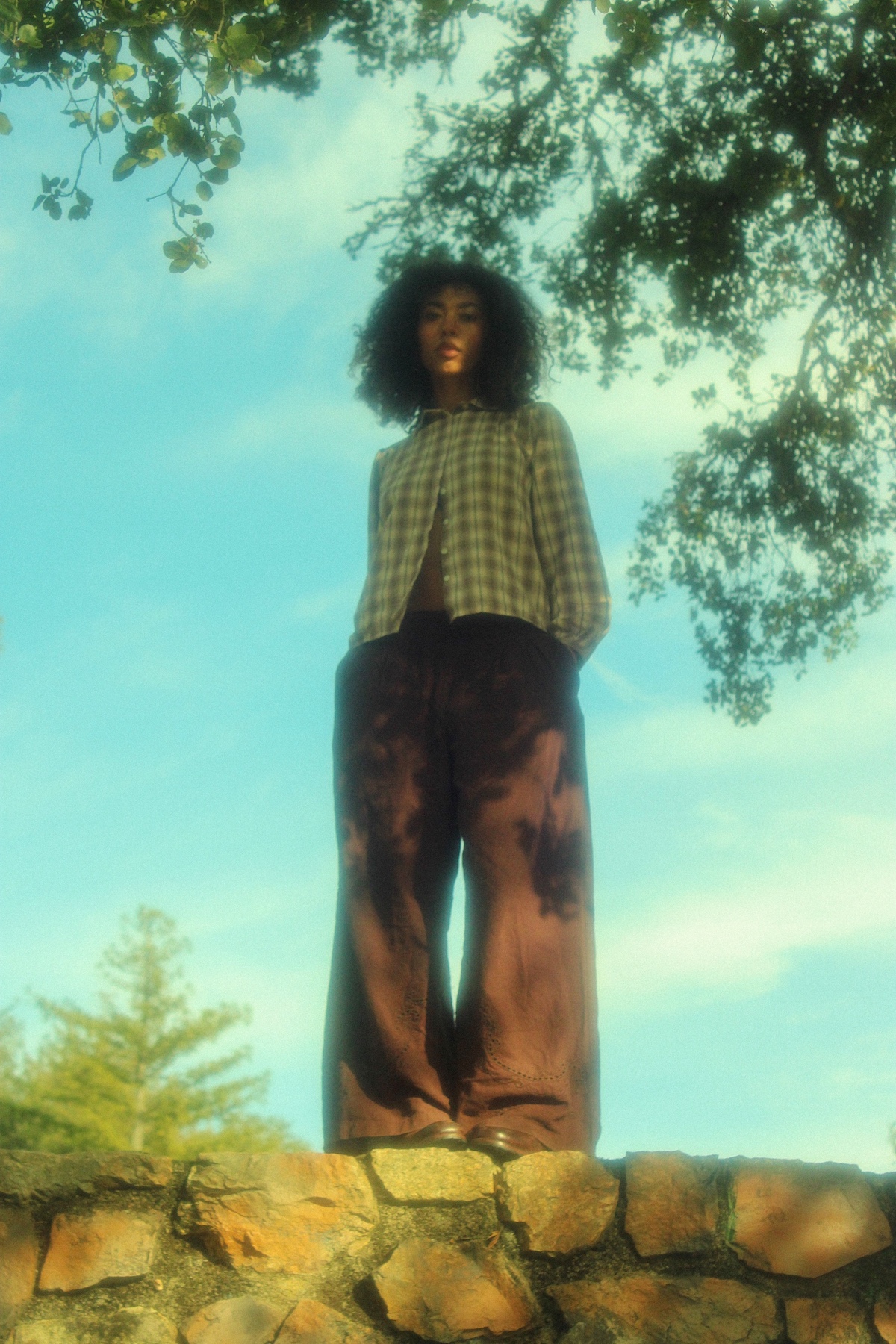
Musically, Yellow House moves like a house full of rooms, each one lit by a different emotional weather.
Slide guitar glows at the edges; organs hum with a worn-in warmth; live drums give the record a human heartbeat; stacked harmonies rise like voices gathering around a difficult truth. Satya’s sound refuses to settle into a single lane, drawing from soul, alt-R&B, folk, blues, jazz, and Americana without ever feeling scattered. Instead, these textures become part of the album’s emotional grammar: The shimmer of guitar can feel like remembrance, the low-end pulse like resolve, the vocal layers like different versions of the self learning how to speak together.
Opener “Project 10” enters with an electric pull, its full-bodied drums and smoldering guitars giving Satya’s inner world a steady, driving force. The song pulses with purpose even as its narrator drifts between grounding and dissociation, singing, “Floating so high / It’s too small down there / To focus on details / Or facial expressions” before the ground rushes back into view: “Who’s gonna hold my hand / When I hit the ground?” Her voice sits at the center with fluid, deliberate grace, turning the refrain “Deep as the sea / Dark as the night” into a mantra for a mind moving through its own depths. And when she sings, “Yes I know / Life can be sweet / Oh then I slip away again / Never to hear from me,” Satya captures the album’s most devastating duality in miniature: the ability to recognize beauty while still feeling pulled toward disappearance.
This tension gives way to a more intimate confrontation on the title track, where Yellow House becomes both address and excavation.
Satya sings, “I’m not going home again / I won’t,” not as a dramatic declaration, but as a boundary finally spoken aloud. The details that follow are tactile and haunting in their specificity – candles, prayers, wooden floors, a lemon tree, dead birds, missing pill bottles – images that turn domestic space into a map of fear, ritual, and survival. Her question, “What do I let go of?” hangs over the song like a hand hovering above an old photograph, unsure whether release means forgetting, forgiving, or simply choosing not to live inside the same room anymore.
All of this is inseparable from the place at the album’s center. For Satya, Yellow House isn’t metaphor first – it’s memory made physical, a real home whose rooms, textures, and lingering energies became the emotional architecture of the record.
“I quite literally grew up in a yellow house,” Satya shares. “I believe spaces hold energy, and while I was writing these songs, I always found myself getting visions of the house and all its little details. It felt like those memories were always present in the room with me. I think a part of me will always linger there, and in many ways, this album was a way of revisiting that space and trying my best to understand what I witnessed, and trying my best to make peace with it all.”
“Circles” deepens that sense of motion and escape, wrapping Satya’s voice in a dreamy, moody R&B glow as she confronts the cyclical pull of another person’s turmoil. “I tried to find you in your own mind / I tiptoed around each dark corner,” she sings, before naming the cost of empathy stretched past its limit: “I became immune to their bite.” The song’s emotional turn arrives in one of the album’s clearest moments of self-rescue – “I’m in your whirlpool, you’ve got me by a limb / Reciting your circles, but this time I intend to swim” – a line that carries exhaustion and agency in the same breath. “Circles” doesn’t simply describe being caught; it captures the charged instant when staying becomes impossible, and survival begins to sound like movement.
Elsewhere, Yellow House opens its windows wider without losing its intimate center. Satya’s cover of Lucinda Williams’ “Fruits of My Labor” is especially intoxicating: Tender and sun-sunk, with grooving, swaggering guitars that smolder beneath her voice as she leans into the song’s sensual imagery – “Tangerines and persimmons / And sugarcane” – and lets desire feel earthy, fragrant, and lived-in. “Seven” turns inward with a softer, more protective spirit, its richly layered harmonies cradling the childhood self at the center of the album as Satya sings, “Honey how could you have known / Only seven, seven years old.” That line carries no easy answer; it lands instead like a hand placed gently on the shoulder of a younger self who had to learn too much, too soon. And near the record’s close, her take on Grateful Dead’s “Box of Rain” feels like a benediction, its familiar promise – “A box of rain will ease the pain / And love will see you through” – settling naturally into Yellow House’s world of memory, devotion, and repair.
Then comes “Cicadas,” the album’s breathtaking finale and one of Satya’s own personal favorites. Built around friendship, care, and the kind of love that steadies a person when the world feels impossible to hold, the song glows with gratitude from the inside out: “The one that I call / When there’s good news / When it’s bad too / My moonlight my inner life.” Recorded with rain from New Orleans woven into its background, “Cicadas” carries the warmth of real atmosphere – weather, room tone, companionship, relief – as Satya sings of golden hearts, wide smiles, cross-country movement, and arms strong enough to catch her mid-collapse. As the final track, it offers the album’s most open-hearted exhale: Not closure as an ending, but as a place to rest, surrounded by voices that sing with you.
That’s part of what makes Yellow House such an enriching listen. For all its emotional gravity, the album never feels closed-off or difficult to enter; it welcomes us in with sweetness, groove, texture, and melody, letting catharsis arrive through beauty rather than force. Satya’s songs are unguarded, but they’re also inviting – easy to sink into, full of warmth and motion, carried by performances that feel achingly personal without ever becoming insular. The record’s genre-blurring spirit is just as essential as its storytelling: Soul, folk, alt-R&B, blues, jazz, and Americana don’t sit beside one another as influences so much as they breathe together, forming a sound that feels instinctive, spacious, and entirely her own.
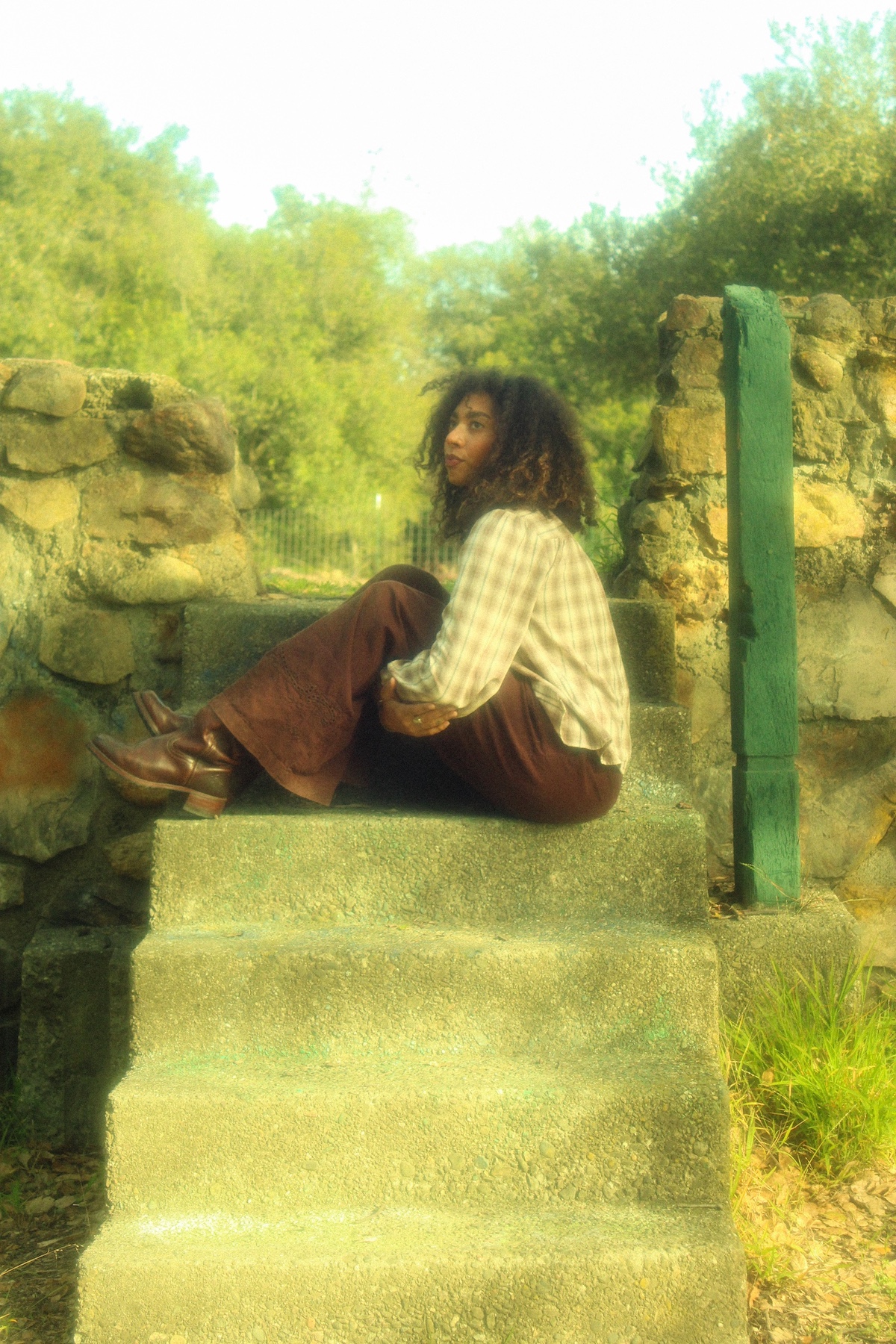
For Satya, that freedom is inseparable from the album’s purpose.
Yellow House introduces her as an artist led by feeling rather than formula – a singer/songwriter with a clear emotional compass, a fearless relationship to vulnerability, and a voice that can turn lived experience into a shared space.
“My wish is that this record encourages people to embrace vulnerability and honesty in their lives,” Satya shares. “I also hope it encourages people to stop trying to put everything into a genre box. I think it’s beautiful that we were able to weave in so many different elements throughout the album. More than anything, I hope people are able to connect their own stories to mine.”
Stream Yellow House exclusively on Atwood Magazine, and dive deeper into the album in our intimate interview below as Satya opens up about childhood, healing, musical freedom, and the memories that continue to live inside the rooms we leave behind.
By the end of Yellow House, those rooms hold a new kind of presence. They’re still there – charged with history, softened by song, and transformed by the voice of an artist brave enough to return to them on her own terms. Satya doesn’t ask us to forget what shaped us; she invites us to listen closely, hold it with care, and step forward carrying a little more light than we had before.
— —
:: stream/purchase Yellow House here ::
:: connect with Satya here ::
— —
Stream: ‘Yellow House’ – Satya
A CONVERSATION WITH SATYA

Atwood Magazine: Satya, for those who are just discovering you today through this writeup, what do you want them to know about you and your music?
Satya: I grew up listening to a wide mix of music, soul, alternative rock, shoegaze, blues, and country, and all of it has seeped its way into my own writing. I always try my best to be as honest as I can in my lyrics. I love exploring darker topics, and also exploring the topic of love, not just romantic love, but love in all its forms. I like my music to feel raw, full and expansive.
Who are some of your musical north stars, and what are you most excited about the music you're making today?
Satya: I love Prince, Nina Simone, Corinne Bailey Rae, Rhye, Stevie Wonder, and Raphael Saadiq, to name a few. My friends are also my north stars. Being around people who are dedicated to learning and expanding their art is incredibly motivating. I’m excited about the new songs I’ve been working on. Working on my last album taught me to trust my ear and my intuition when it comes to songwriting, so I’m excited to see how these new songs take shape. Also can’t wait to bring in all my favorite musicians to track.
Can you share a little about the story behind Yellow House?
Satya: I began writing Yellow House in 2020, the first song I wrote was “Circles.” Around the start of the pandemic, I finally had the time and space to reflect on my upbringing. The album follows my heartbreak and the duality of holding both unconditional love and deep pain tied to that period of my life. Making the album had a lot of trial and error, along with going back and forth on how I wanted to release it. It was definitely a vulnerable process. The album feels like a marker of a specific time and place in my life. It’s dedicated to my inner child, and anyone who feels they have a similar story.
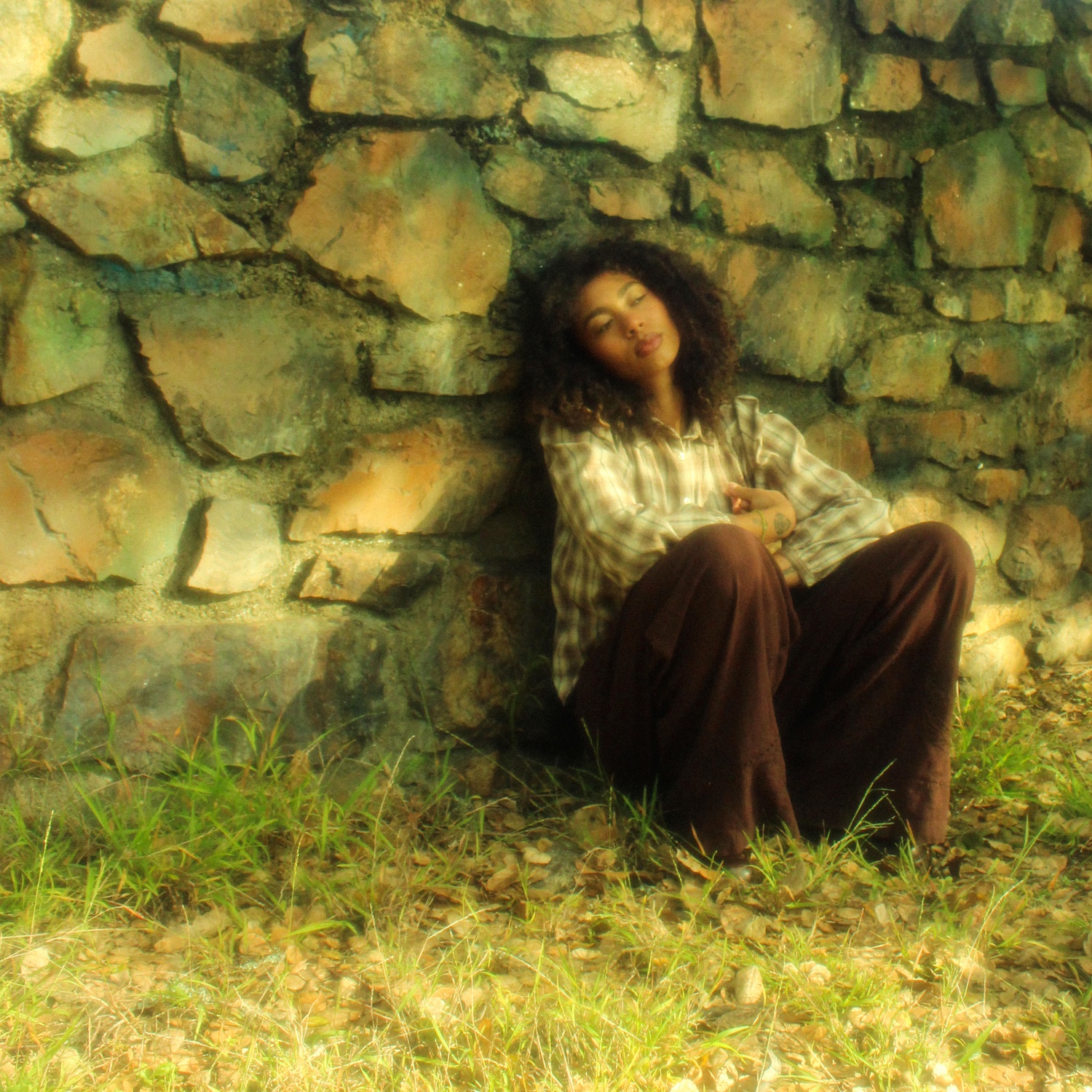
Why the title ‘Yellow House’?
Satya: I quite literally grew up in a yellow house. I believe spaces hold energy, and while I was writing these songs, I always found myself getting visions of the house and all its little details. It felt like those memories were always present in the room with me. I think a part of me will always linger there, and in many ways, this album was a way of revisiting that space and trying my best to understand what I witnessed, and trying my best to make peace with it all.
How do you feel Yellow House introduces you and captures your artistry?
Satya: I wasn’t too concerned with structure or whether the songs fit the expected “radio” length. Creating from a place that feels honest and natural to me and trusting that process has always been what motivates my music. I think Yellow House represents that sense of freedom. The album incorporates slide guitar, organ, live piano, stacked vocal harmonies, and a wide range of textures that just felt good to play. I think Yellow House helped remind me, and others I don’t fit into just one genre, I like making what feels good.
As a lyrically forward artist, do you have any favorite lyrics in these songs?
Satya: “Project 10” is definitely one of my favorites on the album. “It’s deep as the sea, it gets dark at night, I’ll only see stars when I turn out my lights,” is one I really love. To me, it speaks to those moments when I’m in a low place, acknowledging that feeling and allowing myself to slow down or turn off. It helps me go inward and connect with my inner world. I wanted to show that you can find your own sense of peace in the darker moments.
Do you have any definitive favorites or personal highlights off this record?
Satya: I love my song “Cicadas.” I recorded the rain coming down in New Orleans and added it into the background of the track. My interlude “At Tal’s House” is also really special to me, it’s just a voice memo I recorded on my phone with Tal Ariel, the original producer behind some of the songs. I love being able to hear the room in the background and all the little imperfections that come with it.

Can you describe this record in three words?
Satya: Honest, raw, closure.
What do you hope listeners take away from Yellow House? What have you taken away from creating it and now putting it out?
Satya: My wish is that this record encourages people to embrace vulnerability and honesty in their lives. I also hope it encourages people to stop trying to put everything into a genre box. I think it’s beautiful that we were able to weave in so many different elements throughout the album. More than anything, I hope people are able to connect their own stories to mine.
In the spirit of paying it forward, who are you listening to these days that you would recommend to our readers?
Satya: I love Lyla George, Noa Jamir, August Lee Stevens, St. Panther. Loving Widowspeak’s newest song, absolutely gorgeous!!!
— —
:: stream/purchase Yellow House here ::
:: connect with Satya here ::
— —
Stream: ‘Yellow House’ – Satya
— — — —
Connect to Satya on
TikTok, Instagram
Discover new music on Atwood Magazine
© Lola Lankford
 © Lola Lankford
:: Stream Satya ::