
Atwood Magazine is excited to share our Editor’s Picks column, written and curated by Editor-in-Chief Mitch Mosk. Every week, Mitch will share a collection of songs, albums, and artists who have caught his ears, eyes, and heart. There is so much incredible music out there just waiting to be heard, and all it takes from us is an open mind and a willingness to listen. Through our Editor’s Picks, we hope to shine a light on our own music discoveries and showcase a diverse array of new and recent releases.
This week’s Editor’s Picks features Green Gardens, Casper Sage, MUANH, Filiah, Lockimara, and Widemouth!

 follow EDITOR’S PICKS on Spotify

“Greeting”
by Green GardensLonging has a way of bending the world until every road leads back to the same place. Green Gardens’ “Greeting” lives inside that distortion – the loop of wanting things to be different, wanting to rewind, wanting control over a self that keeps slipping out of reach. Hypnotic and glistening, the Leeds indie-rock outfit’s latest single moves like a half-remembered dream caught on warped tape: Twangy guitars circle and shimmer, drums lock into a mantra-like groove, and Chris Aitchison’s emphatic vocals rise through the fog with a strange, magnetic urgency. “I had longed so / I ran right off the edge,” he sings at the start, and the image is immediate and devastating – desire pushing the body past its limit, only to return him to the same ground, the same hurt, the same unresolved ache.
I had longed so
I ran right off the edge
And as the dirt retracted
I was stood back where I belonged
Walked out of thick fog
And greeted by the dogs

Released March 4th via Tiny Library Records alongside its companion single “I Am Kind,” “Greeting” marks Green Gardens’ first new music since last September’s sophomore album Thistlesifting. The four-piece have spent the past several years building a world of intricate indie rock songs that “value tenderness and extremity in equal measure”: Lo-fi guitars, warm drums, field-recording intimacy, and the tension of friendship, loss, care, and euphoria all moving through the same room. Their 2023 debut album This Is Not Your Fault gave the band what they describe as direction and purpose, while Thistlesifting widened their scope into something more tactile and charged – honest songs written in private and realized as a collective, plugged straight in with no room to breathe.
“I would say we are an indie rock band as a broad generalisation,” Green Gardens tell Atwood Magazine. “We listen to a lot of lo-fi music and field recording music. We write lo-fi songs in our bedrooms and then record them together as friends. It’s hard to say, the music does that for us.”
That bedroom-born intimacy is part of what makes “Greeting” so entrancing. The song doesn’t bloom outward so much as tighten around itself, each repetition dragging the listener deeper into its spell. The guitar work is dreamy and seductive, but there’s a jarring edge to the way it glints and loops – soothing in texture, unsettled in spirit, like light flashing through thick fog. That push and pull gives the track its pulse: It comforts and agitates at once, wrapping personal frustration in a groove that feels impossible to escape. “Everyone saw / the way my eye had changed,” Aitchison sings, and suddenly longing becomes visible, physical, almost animal – a private inner fracture caught by everyone around him.
Everyone saw
The way my eye had changed
And as the songs were sounded
They were all of them the same
Walked out of thick fog
And greeted by the dogs
Walked out of thick fog
And greeted by the dogs
According to the band, “Greeting” is a song of “longing and wanting. Wanting things to be different, wanting to go back, wanting more control,” Aitchison shares. “I saw all of these feelings within myself and realised how easy it can be for them to distort reality and obscure the beauty of just being. Before you know it, you’re in a loop. Like a tape skipping and dragging you back over the same ground. I wanted to put this frustration into a song to help force myself out of it, that’s really what ‘Greeting’ is.”
“It’s really about wanting to go back, wanting control of myself,” he adds. “Longing for that, and it being trapped within personal and emotional aggravation. Hurt in cycles.”
This cyclical hurt lives in the song’s structure as much as its lyrics. “Greeting” feels built out of return: The same phrases, the same pulse, the same fog, the same dogs at the edge of consciousness. Green Gardens understand repetition not as stasis, but as pressure – the sound of a thought turning over until it either breaks you or breaks open. “Part of the song is about feeling trapped, often within yourself and own failures/limitations,” the band explain. “There’s this feeling of mantras spread across the two songs, one frustrating and boiling over, and the other a release.” That’s why “Greeting” and “I Am Kind” make sense as a double-single: One circles the wound; the other chants toward repair. Together, they become a compact but complete body of work, ten minutes of music that asks us to sit with frustration, then search for a way through it.
“We don’t want to be blunt with how we release music,” Green Gardens say. “It would’ve been easier to have two separate singles and keep the train rolling for a bit longer, but it also would feel like we’re being bullied by the streaming bastards. To release two songs you can get your teeth in to feels important. As much a body of work as you can have for 10 minutes of music.”
“I hope people connect the dots between the two,” they continue. “I often don’t know what songs mean until a year or two after the fact. It’s not for me to say what something is about, in fact I often specifically try to avoid that because it can kill it. People call us a sad band and people call us a tree-hugger band and people call us this and that, and it’s all true and none of it is true either. It’s our job to enable whatever people would like in our music.”
For me, “Greeting” has been one of those songs that keeps changing shape with the season: A winter companion, a spring fever dream, a summer shimmer that still carries the damp chill of fog in its bones. It’s magnificent because it resists easy explanation. It doesn’t resolve the ache of longing, and it doesn’t pretend wanting is simple; instead, Green Gardens turn that emotional loop into a living, breathing soundscape – hypnotic, haunted, strangely beautiful, and deeply alive. “Greeting” is a song for the part of us that keeps circling the same ground, waiting for the fog to lift, hoping this time we might step out of it changed – greeted by the dogs.
“Change your mind”
by Casper SageLove asks different questions when life won’t stop moving. Casper Sage’s “Change your mind” lives in the tender, terrible space where devotion meets uncertainty – where one person wants to hold on, but knows the version of love they can offer might not be enough. The highlight off his new EP PATINA begins in a soft, intimate hush, Sage’s voice floating through warm production like a thought he’s almost afraid to say out loud. “Can’t tell what’s approaching / what I’m losing / I just can’t slow it down,” he sings, and the ache is immediate: Time rushing forward, the ground shifting underneath him, a relationship caught inside the blur.
Then the song opens. What starts as a close, bedroom-lit confession blooms into a cathartic, breathtaking refrain – soul-stirring melody, smoldering warmth, and arms-wide-open release as Sage turns his heartbreak into something generous, graceful, and quietly devastating.
Can’t tell what’s approaching
What I’m losing
I just can’t slow it down
Waves of motion
Perusing
I’m just nulling them out
Reaching down to pull me up
Floating, seeking, going numb

Out now via Warner Records, PATINA finds the Oklahoma-born, Nashville-based singer, songwriter, producer, and multi-instrumentalist expanding the dreamy alt-R&B world he’s been building across projects like 2025’s SAGEhaven – a record he once described as “a bridge between a dream and real life” and “an emotionally overloaded evergreen blur.” Where that EP marked a turning point in Sage’s voice and vision, PATINA feels like a widescreen deepening: Seven songs about romantic and platonic love, memory, aging, nostalgia, and the strange beauty of realizing that time changes everything it touches.
“I’m a big picture thinker for the most part,” Sage tells Atwood Magazine. “So it really is just an authentic time capsule of different situations surrounding romantic and platonic love, and my relationship with the past. The stories are romanticized but autobiographical, tracing the moments that feel the most memorable.”
“I don’t think too much about it,” he says of his music. “I find it most fulfilling to be devoted to a lifestyle that’s conducive to art I enjoy, and putting it out knowing that those who need it will find it.”
That devotion comes through in “Change your mind,” a song whose beauty lies in its push and pull. The verses feel suspended in slow motion – hazy, tender, almost weightless – while the chorus arrives with the force of a window thrown open. “Give me room to go and fly / I’ll give you room to change your mind,” Sage sings, offering freedom even as the heart still wants to stay tethered. It’s a stunningly intimate line because it holds two truths at once: I love you enough to let you leave, and I still want there to be a door back in. There’s no bitterness in it, no grand accusation; only the bruised generosity of someone trying to make peace with what they can’t control.
Give me room to go and fly
I’ll give you room to change your mind
If you want to, want to
You’ll always be a guest of mine
Give me room to go and fly
I’ll give you room to change your mind
If you want to, want to
You’ll always be a guest of mine
“Uncertainty is the backbone of so much of the human experience,” Sage shares. “I was in a relationship and my life was changing so rapidly that it was testing what I thought it meant to love someone. That song is just saying, ‘I won’t blame you when you don’t want to do this anymore.’ I can’t be here that often and am so riddled with stress and anxiety that I know I can’t be the partner you dreamt of when you were younger. So it was either watch your dream of love die, or make peace with the fact that I’m not the person who will fulfill no matter how bad I want to.”
That confession gives the song its brutal tenderness. “Change your mind” isn’t just about a breakup, or the possibility of one; it’s about the grief of recognizing your own limitations inside someone else’s dream. Sage doesn’t frame love as failure because it changes shape. Instead, he writes from the crossing point between vulnerability and agency – the same tension he sees running through PATINA as a whole. “PATINA isn’t a concept album in that way,” he explains. “It’s just about coming of age and the experience of growing. Tattoos taking on new meanings. The push and pull between vulnerability and agency.”
Sonically, that coming-of-age tension glows in every corner of the song. Sage draws from the lush, emotional backbones of R&B and the gleaming textures of the ‘80s – Prince, Michael Jackson, the Isley Brothers, Phil Collins, Stevie Wonder, Lionel Richie – but “Change your mind” never feels like imitation. It feels handmade and lived-in, a modern alt-R&B reverie with bedroom intimacy and widescreen lift. The production is warm enough to crawl inside, yet the chorus hits with undeniable pop force: Catchy, expressive, invigorating, and still heart-wrenchingly close to the skin. “I wanted to see how my affinities fit in that context,” Sage says of PATINA’s sonic world. “It was mostly just experimenting and I struck gold a couple of times. I have never loved listening to my own music like I have while making PATINA.”
Like I’m fleeing from
pleading from something
Need re-re of the green when I suffer
Losing steam when my
dreams losing colors
EMT feed morphine for the bummers
Keeping clean, I still fiend for the summer
But I got to keep moving
Running from motion, uh
Ground keep moving
And they still reaching down to pull me up
Floating, seeking, going numb
That self-enjoyment matters because you can hear the freedom in the music – the ease, the shimmer, the way the song lets pain move instead of pinning it down. “Change your mind” is tender enough to feel whispered and bold enough to feel shouted from a rooftop, a breakup anthem that refuses to harden the heart it’s breaking. In Casper Sage’s hands, letting go becomes an act of care, memory becomes a living thing, and uncertainty becomes a doorway rather than an ending. “Give me room to go and fly / I’ll give you room to change your mind” – that’s the ache, the grace, and the quiet miracle of this song: Love loosening its grip without ever closing the door.
Give me room to go and fly
I’ll give you room to change your mind
If you want to, want to
You’ll always be a guest of mine
Give me room to go and fly
I’ll give you room to change your mind
If you want to, want to
You’ll always be a guest of mine
“already know”
by MUANHThe first almost-I love you can feel like its own language: wordless, charged, and already understood. It lives in the glance you hold a second too long, in the safety of someone moving around the kitchen, in the almost unbearable sweetness of knowing before anything has been said. It’s the soft ache of wanting the moment to last exactly as it is – before a name, before a promise, before reality has the chance to change its shape.
MUANH’s “already know” lingers in that fragile beginning, when intimacy has arrived before definition and two people are living inside the feeling rather than naming it. The second single off her upcoming debut EP hush is achingly intimate and dream-lit – a soft, smoldering alternative reverie that turns early love into warmth, wonder, and suspended time.
We waited way too long
You think you can take your shirt off?
See, I‘d look you right in the eyes
But I’m still a bit shy
You need a shoulder to cry on
I need somebody close
We never said those words before
But we already know

Hamburg-based artist Anna Anh Petry has been making music as MUANH for four years now: Quiet, slow-burning songs that unfold gradually rather than demand attention, carried by intimate vocals, minimal textured production, and a deep pull toward mood, nuance, and emotional ambiguity. “As pretty and cliché as it sounds, I’ve always turned to music for comfort,” she tells Atwood Magazine. “The songs I make don’t try to solve anything. If they do anything at all, I hope they make people feel a little less alone inside whatever they’re feeling.” That impulse is everywhere in “already know,” a song that seems to lower its voice in order to draw us closer – all brooding guitar, featherlight percussion, and atmosphere you can sink into.
“I think it’s for people who sometimes get overwhelmed by how loud everything is,” MUANH says of her music. “I love a good pop melody, but I also need a song to create a world around me. Something you can sink into.”
That world opens gently here. Inspired by late ‘80s and early ‘90s romance, as well as recent visionaries like Mk.gee, Dijon, and The Marías, “already know” glows with a hushed, alternative R&B touch: Angular guitar flickers through the dark, soft percussion hovers like breath, and MUANH’s voice pours light into the room without ever breaking the spell. The song is dreamy and lush, but its tenderness feels raw – not polished into distance, but alive with the human shyness of wanting to be known. When she reaches the refrain, “Your heartbeat rushing through my bones,” the whole song seems to surrender: A moment of longing met, closeness felt in the body, two people quietly recognizing what neither has yet said aloud.
How long ’til we can let it show?
You know that I already know
Your heartbeat rushing through my bones
I know that you already know
“‘already know’ was written pretty retrospectively,” MUANH shares. “I remember feeling really safe at home around my partner who was cooking dinner or lunch (don’t exactly remember anymore). I found myself thinking back to the early stage of our relationship that I sometimes miss (don’t we all?), when you can already feel that something between two people is becoming deep and meaningful, even though a lot still remains unspoken. There’s already a sense of safety and familiarity there, so nothing really needs to be defined yet.”
“To me, the song sits somewhere between longing and fulfillment,” she adds. “There’s a strong yearning for the other person, but unlike a lot of my songs, that longing is actually being met. It’s probably one of the warmest songs I’ve written emotionally.”
That warmth makes “already know” stand apart within the world of hush. Due out this September, MUANH’s debut EP traces unresolved feelings, relationships, letting go, and the slow return to self – a cycle of pouring love and care into someone else before eventually learning to offer some of that same kindness inward. Its lead single, “u wanna have it,” opened the door with softness, restraint, and a darker tension underneath; “already know” exists before the cracks, before the difficult realizations, before love has had to defend itself. “It’s actually the beginning of the journey,” MUANH explains. “It’s the feeling of ‘I love you’ before you’ve actually said it. Everything still feels possible and you’re living more in the feeling than in reality.”
You greet the morning like a friend,
I hide beneath the sheets
But the air I breathe is turning cold
When you’re not next to me
you need a shoulder to cry on
I need somebody close
we never said those words before
but we already know
“I wanted the song to feel warm and suspended in time, like it’s holding onto that moment for just a little longer,” she continues. “It’s the escape and procrastination of staying in possibility before reality catches up. Sometimes those early feelings are so beautiful that you don’t want to move forward because saying things out loud means risking that something could change.”
That suspended feeling carries into the song’s production, which began with a simple acoustic guitar loop and later transformed as MUANH built out the track’s strange, delicate sound-world. “I actually wrote most of the lyrics and melodies within around two hours while sitting on the couch with a simple acoustic guitar loop from Splice,” she says. “Later on, I started experimenting more inside my DAW and eventually asked the band to record additional parts.”
How long ‘til we can let it show?
You know that I already know
Your heartbeat rushing through my bones
I know that you already know
How long ‘til we can let it show?
You know that I already know
Your heartbeat rushing through my bones
I know that you already know
“One of my favorite details in the production is the intro guitar sample,” she adds. “It actually comes from an outtake of guitarist Lars Cölln casually warming up before recording. When I went through the takes at home later, something about it immediately stood out to me. I pitched it down, chopped it into different parts and turned it into the intro of the song. That was also the moment I completely abandoned the original acoustic guitar loop I had written the song to.”
This detail matters because “already know” feels born from exactly that kind of instinct: A stray fragment caught, lowered into shadow, reshaped until it becomes a doorway. MUANH says hush is “the most honest introduction to who I am as an artist right now,” and that honesty comes through in how fully she trusts softness – not as limitation, but as atmosphere, power, and identity. “For hush I really tried to stop worrying about whether something was too soft, too dreamy, or not cool enough,” she reflects. “I just wanted to make the music I genuinely wanted to hear.” The result is a song that feels fragile but deliberate, angsty but deeply held, a piece of dream-pop intimacy with a pulse warm enough to feel alive under the skin.
Uhhh
When you touch me like you mean it
Time folds into you
Uhhhh
And our shadows hit the curtain
In all shades of blue
“already know” is a song about the innocence before the question, the safety before the label, the sweetness of standing at the edge of change and not stepping forward yet. Its ache comes from knowing the moment can’t last forever; its beauty comes from holding it anyway. MUANH turns that in-between into a world of breath, shadow, blue light, and bone-deep feeling – intimate enough to feel whispered, lush enough to feel endless.
“How long ’til we can let it show?” she asks, and for one suspended, beautiful instant, the answer doesn’t matter. They already know.
How long ’til we can let it show?
You know that I already know
Your heartbeat rushing through my bones
I know that you already know
How long ’til we can let it show?
Your heartbeat rushing through my bones
“This Is Not Fun”
by FiliahRage doesn’t disappear just because we learn how to smile through it. Filiah’s “This Is Not Fun” begins at the mirror, with the sink spilling over and anger filling the room – a pressure-cooker portrait of what happens when humor, politeness, and self-protection can no longer hold the self together. Dramatic, dynamic, and delightfully untethered, the Austrian artist’s song channels suppressed fury into an indie pop fever dream: Tender in its confession, explosive in its release, and devastatingly alive in the moment it finally stops pretending everything is fine.
I thought this rage would pass
as I was getting older
Staring at the mirror
while the sink is spilling over
Fills up the room just like you do
I never could, I can’t move
Woke up, the fever had me turning
Don’t know who I am
I just don’t wanna be a burden
I say it’s fine, I say I’m good
I practise lines, it’s understood

Released as a double-single alongside the softer, snowbound “It’s Always Winter (Until It Is Not),” “This Is Not Fun” arrived earlier this year as a visceral preview of Filiah’s forthcoming sophomore album A Deep Breath Out, out June 5th via Ink Music. The project follows 2025’s Sad Girl With A Punchline EP and builds on a catalog rooted in radical honesty, delicate force, and what Filiah describes as music that allows people “to feel everything, and to take up space while doing so.” An Austrian artist whose work weaves intimate storytelling with what she calls “indie folk with a glittery sparkle of pop,” Filiah (aka Nina Schwarzott) has long turned vulnerability into something empowering – but “This Is Not Fun” feels like a breakthrough in real time: A song that cracks open, catches fire, and still somehow winks through the smoke.
“I make music as a way of understanding myself and the world around me,” Filiah tells Atwood Magazine. “It’s a space where I can be completely honest, playful and vulnerable at the same time. My songs are very close to me, but I think they often come from feelings that a lot of people share but might not always have the words for. If there’s one thing I’d want people to take away, it’s that they’re allowed to feel everything, and to take up space while doing so.”
That permission sits at the heart of “This Is Not Fun,” a song Filiah wrote from the charged place where coping mechanisms stop working. Her lyrics move like raw poetry with a wink and a kiss: “Lay it down for a moment / and tell myself I’m not broken,” she sings, trying to talk herself into calm even as the room floods around her. The production mirrors that unraveling with finesse – controlled at first, synth-heavy and restrained, then slowly loosening its grip as guitars, atmosphere, and percussion rise into a beautiful eruption of fire and fury. Filiah’s vocal performance is breathtaking: Softly serene and evocative one moment, visceral and wide-eyed the next, carrying the ache of someone who has been practicing the line “I’m good” for so long that it has started to sound like a lie.
Lay it down for a moment
And tell myself I’m not broken
And get the taste off my tongue
Hang up an image and break it
To lose the memory’s weight
I call it my kind of fun
“I’ve used humor to cope for as long as I can remember,” she shares. “With this song, I’m finally addressing rage, especially female rage, which, growing up, I was taught to keep inside and mostly to myself. I was quite a shy kid and spent a lot of time in my own imaginary world. Growing up in the countryside, people naturally made fun of me, and not wanting to start conflict, I mostly just let things happen, trying to be as invisible as I could. Over time, that suppressed anger turned into anxiety about being seen, taking up space, and generally just being myself without trying to please everyone. The lines in the song about saying ‘it’s fine, I’m good,’ and the urge to dissolve, to be no one, all reflect a kind of loss of identity that comes from masking and not wanting to be a burden or ‘too much.’”
“Songwriting has always been my outlet,” Filiah continues. “It acts like a mirror. Up until a few years ago, I didn’t even have access to my rage, which is probably why I mostly wrote very sad music. Finding out who I am over time has slowly cracked me open. It can be painful, but I can’t help being honest in music anyway, so I just hope that someone else might feel understood in the way I once needed.”
This cracking open becomes the song’s shape. “This Is Not Fun” ebbs and flows like a body trying to regulate itself, each section pushing closer to the admission at its core. The garden image in the second verse is especially striking – “I would sink into a patch of grass / and feel myself dissolving” – because it gives the song’s anger a second face: The desire not only to explode, but to disappear. Filiah isn’t romanticizing rage here; she’s tracing what happens when a person has been taught to swallow too much of themselves. By the outro, when she finally cries, “I’ve been no one / this is not fun,” the line lands with brutal clarity. The punchline is gone. The performance is over. What’s left is the self, aching to be seen.
Last night I dreamt
I had a garden of my own
I would sink into a patch of grass
And feel myself dissolving
I’d be the air, I’d be the wind
Or just for once,
Not anything
“I wanted to really capture what suppressed anger feels like for me,” Filiah says. “In general, I love songs where the production complements the lyrics and I tend to do that in subliminal, playful ways as well. For ‘This Is Not Fun,’ we (Thomas, my co-producer, and I basically share a brain) had a really clear vision about the sound and I knew exactly what colour I wanted it to be. We had lots of fun trying things out, throwing paint at a wall and navigating through these different parts. It was the last song we wrote for the album and to me it really felt like the last puzzle piece to complete this body of work.”
That body of work sounds like it will be a reckoning. Filiah calls A Deep Breath Out exactly that: a release, an exhale, a passage through old patterns, fear, outgrown selves, and the difficult work of letting go. “This Is Not Fun” sits at one charged end of that spectrum, the moment when everything pushed down finally reaches the surface; “It’s Always Winter (Until It Is Not)” offers the other side, a quieter portrait of numbness, anxiety, and waiting for light to return. Together, they introduce an album concerned with healing as a nonlinear process – painful, liberating, messy, funny, and impossible to fake. It also marks a bold expansion from For Someone, Filiah’s self-written, self-recorded, self-produced debut album, into a fuller, more colorful world built with the people she now calls her “little village.”
“This is the phase where I will gladly start to spoil things: the album will be called A Deep Breath Out and that’s exactly what it feels like to me,” she says. “Both songs sit at very different emotional points within the record, but they’re connected in terms of what the album is trying to process. ‘This Is Not Fun’ is that moment where everything you’ve been holding in finally reaches the surface. It’s quite confrontational and messy. ‘It’s Always Winter (Until It Is Not)’ on the other hand, is more quiet, like the voice in your head that sits with the heaviness. The album as a whole moves through different stages of letting go, whether it’s of old patterns, fear, or versions of myself that I’ve outgrown. To me, these two songs represent opposite ends of that spectrum and together, they really capture the emotional range of what the record will be.”
“This Is Not Fun” is Filiah at her most thrillingly awake: Emotionally charged, beautifully alternative, and bursting with the kind of honesty that feels both unruly and precise. It’s a song for anyone who has ever smiled through the rupture, joked through the ache, or practiced being fine while the sink kept filling and the room kept closing in.
In its final eruption, Filiah doesn’t just let the rage out – she gives it shape, color, humor, melody, and breath. She makes it sing. She makes it ours. And in doing so, she turns a breaking point into a breathtaking act of self-recognition.
Always thought I’m impatient
But I’m just tired and jaded
And nothing else can be done
Hang up an image and break it
Only to try and replace it
I don’t believe this is fun
I’ve been no one
This is not fun!
“December”
by LockimaraWinter has a way of making finality feel cinematic. Lockimara’s “December” lingers in the frostbitten aftermath of a goodbye – the door finally closing, the heart still ringing, the body trying to move forward through snow, static, and shock. Glitchy, wistful, and wonderfully dynamic, the New York-by-way-of-Toronto artist’s song transforms heartbreak into a dazzling alternative reverie: Dreamy and driving, intimate and expansive, slick and seductive as it aches toward release.
Wrote this song for December and
Back and forth
This heart not yours
I hope it sets me free
Spent this year in a cycle of
Looking for
My truth not yours
And I just wanna sleep

Out July 24th via Play Dead, Only Sun, Only Moon is the sophomore album from Lockimara – the project of songwriter, producer, and multi-instrumentalist Nicholas Gay. Written and produced entirely by Gay, the record draws from years of upheaval, loss, movement, and transformation: Leaving a job in social work in Vancouver, relocating to Toronto to reconnect with old bandmates and revive Lockimara’s live presence, releasing 2025’s debut album A Vision Again, then moving again to New York to pursue a master’s degree in music production as a long-term relationship came to an end. Across nine songs, Only Sun, Only Moon blends acoustic delicateness, experimental textures, and dance-forward electronics into something unstable yet determined – a genreless body of work shaped by fear, risk, uncertainty, and awe.
I broke your heart in November
I’ll cry for you in December
“My music is genuine and vulnerable,” Gay tells Atwood Magazine. “And it all takes a lot of work! Even though my music can be cryptic or feel abstract, it’s still how I’m choosing to express myself, and I hope that people are able to find me in that and connect with it.”
This vulnerability sits right at the surface of “December,” even as the song surrounds it with a constantly shifting web of sound. Buzzing bass, big bold drums, spirited piano, and kaleidoscopic production pull us deeper and deeper into Gay’s winter world, while his voice and Carolina Smith’s backing vocals move together like two memories circling the same wound. The song keeps expanding, contracting, and reappearing in new color – until everything drops away for that naked refrain: “I broke your heart in November / I’ll cry for you in December.” It’s simple, stark, and devastating, the kind of line that turns a season into a reckoning.
New York hit like a cannon and
So far from home
A fuse has blown
I miss you when I sleep
“This song is the most vulnerable on the album,” Gay explains. “I usually veil my emotions and life in stories and fiction, but I was going through a difficult goodbye with someone I loved in November and I felt like it deserved the respect of honesty and candidness in expressing how I felt, even through song.”
His candor makes “December” hit with unusual force. Gay describes the song as emerging from an extended breakup with a long-term partner, when “that door finally closing” brought a long period of pain to “simultaneous climax and ending.” You can hear that ending in the track’s strange momentum: It’s not still, even when it’s sad. The drums keep pushing, the piano keeps glinting, the production keeps fracturing and reforming, as if the song itself is trying to process an emotional truth faster than the body can. “December” is a breakup song, yes – but it’s also a migration song, a New York song, a song about distance, disorientation, and the brutal clarity that arrives after months of not knowing where the hurt is supposed to go.
“At the time, I had been going through kind of an extended breakup with a long-term partner. The song came about from that door finally closing and that long period of pain coming to simultaneous climax and ending. I think I don’t usually like to make my songs literal or even discernibly autobiographical, but with this, I didn’t know how else to express it.”
Just like snow this winter you
Never come
I’ve gone and done
Something I can’t undo
I broke your heart in November
I’ll cry for you in December
I hate I’m not who you remember
I found my heart in December
That line – “I hate I’m not who you remember” – cuts straight through the song’s glittering surface. It speaks to the emotional core of Only Sun, Only Moon, an album Gay hopes feels like “a logical and relevant progression” from A Vision Again: Poppier, deeper in electronic production and sampling, yet still challenging, interesting, and increasingly genreless. His north stars make sense in that context – the Postal Service for their balance of electronic, alternative, and pop, Broken Social Scene for the raw and driving energy of You Forgot It In People. “December” feels like a marriage of those impulses, which is precisely why Gay chose it to open the album’s world. “It’s electronic, it’s driving and fuzzy, but it’s also acoustic and intimate,” he says. “Because of that, it seemed like a great opening into where the album is going to go.”
And what an opening it is. “December” is beautiful and haunting, but it’s also exhilarating – a song that makes heartbreak move, sparkle, stutter, and surge. Its magic lives in contradiction: Icy and warm, candid and abstract, deeply personal and endlessly immersive. Lockimara turns a final goodbye into a dream you can dance through, a wound refracted through glitch and glow, a winter anthem that finds the heart not in spite of the cold, but inside it. “I broke your heart in November / I’ll cry for you in December / I hate I’m not who you remember / I found my heart in December” – and there it is, the whole song in miniature: Loss, guilt, distance, memory, and the faint, wondrous pulse of something still alive beneath the snow.
“No Gasoline”
by WidemouthAvoidance has a sound when it finally stops working. It’s the hum of a car pushed too far past empty, the cold air on your face when you finally have to get out, the sick little clarity of realizing the problem was visible long before it became unavoidable. It’s pacing around a room looking for proof that love might still be salvageable, knowing deep down that motion and control aren’t the same thing.
Widemouth’s transcendent “No Gasoline” turns a stalled car in a freezing Chicago intersection into a shiver-inducing portrait of denial, heartbreak, and the moment every ignored feeling becomes impossible to outrun. Dusty, tender, and quietly monumental, the title track off the Chicago band’s debut album No Gasoline is a gentle giant of raw emotion – folk-inflected indie rock that aches inside and out, channeling personal collapse into something communal, cathartic, and brutally beautiful.
Honey’s not gonna rot, baby
I been driving around
‘cause I’ve been so down again lately
You’ve got daddy’s jeans
and tattered sleeves, mama
I’ve been letting you in and then
out and then down again lately
No gasoline
Fourteen degrees
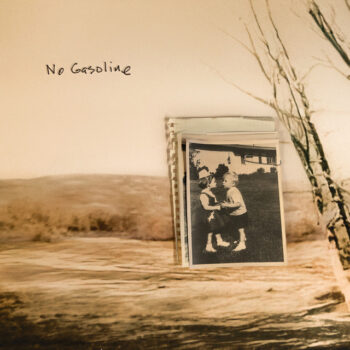
Out now via Urban Scandal Records, No Gasoline introduces Widemouth as one of the Midwest’s most soul-stirring new bands: Raw and refined, churning and charming, unfiltered and full of heart. Led by songwriters, vocalists, and guitarists Mak Carnahan and Jamie Eder alongside drummer Lily Mitchell and bassist Pat Pilch, the band began when Carnahan and Eder started playing Paul Simon and Big Thief covers in the basement of a Northwestern University dorm in 2023. Recorded entirely live in a rural Indiana barn turned “bare-bones but extremely cozy” studio, the album captures the sound of four friends finding a shared language in family, memory, love, loss, fear, grief, anger, and care.
“We are an indie band playing (a lot) around Chicago,” Carnahan tells Atwood Magazine. “We are also four super close friends who love to create and play music together. I think we’re less interested in landing on any clear statement and more in leaving some space in the music. Allowing it to be something you can step into, rather than something that tells you how to feel. Mostly we just make songs that are fun for us to play. That’s really what it comes down to. When a song is fun to play it’s easy to believe in.”
This balance – care, openness, and a little bit of joyful stubbornness – feels foundational to Widemouth’s whole world. “We’re a new band but we’re not new to writing songs or playing shows,” Eder adds. “We met in college, via a flier. We work hard. We are consistent about eating dessert. We’re ‘students of the game’ – says Jack Henry. We’re extremely collaborative in our writing process, even though that can be miserable. We meditate before every show. We hope to be doing this for a long time.”
This belief courses through “No Gasoline,” whose beauty lies in how gently it devastates. Carnahan’s voice is instantly memorable, a made-for-indie-folk instrument that seems to carry every syllable with secondhand smoke, cold pavement, and the ache of a long, slow breakup sitting heavy in the chest. Around her, Widemouth move with stunning restraint: Acoustic warmth, slow-burning electric textures, a touch of steel, and harmonies that widen the song’s emotional world without ever overpowering its intimacy. Like Phoebe Bridgers, Big Thief, Waxahatchee, and the other modern songwriters who make small life’s moments feel gigantic, Widemouth understand how to let a quiet song hit with monumental force.
Eder traces the song back to a real moment from college: “Me, Mak, and Levi all wrote this together in a room, and didn’t discuss any sort of plot or character,” he recalls. “We just went with what felt good. In that way, I think it’s a sort of collage of interconnected little images, that all share a feeling of heartache.”
“But yes, it is at least kind of literal,” he laughs. “A few years ago, in college, I ran out of gas in the middle of an intersection in Chicago. I rolled to the side of the road, jogged to a gas station, bought a little jug of gas, and jogged back. It was freezing. There’s simply no reason any lucid adult person should be running out of gas in the middle of a city. I could see the little gas meter going down to zero, past zero. It’s a choice, to run out of gas.”
That last line unlocks the whole song. “No Gasoline” is about a car running empty, but it’s also about the choices we make when we refuse to look directly at what hurts. Eder describes himself as avoidant, and the song carries that ache without judgment: The desire to delay, deny, keep driving, keep pacing, keep looking for some perfect word or proof that things might still be okay. The chorus lands like an open wound: “I want you to promise me / I want you to say it out loud / your armchair apology, honestly I’ve been / pacing around.” It’s helplessness rendered with devastating clarity – the body still moving because the heart doesn’t know what else to do.
I want you to promise me
I want you to say it out loud
Your armchair apology
honestly I’ve been
Pacing around
To Eder, the chorus captures the helpless rituals of a slow breakup: “For me, it’s the feeling of helplessness at the end of a relationship, the kinds of things I was doing when my now-ex was living abroad and we were going through a long, slow breakup. I would obsess over little things she said, try to make just the right plan or just the right joke, look everywhere for some kind of proof that we’d be ok. I wanted to do something, feel some semblance of control, and all it really amounted to was pacing around. Like, ‘Don’t you think you could at least get out of your armchair and help me pace.’”
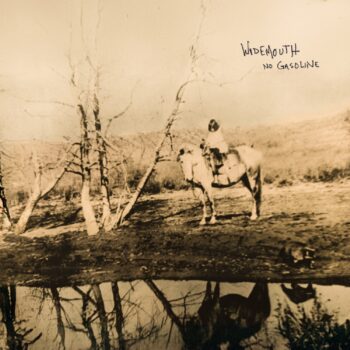
What makes No Gasoline so affecting as an album is that none of this pain exists in isolation. Widemouth’s debut is steeped in heartbreak, childhood, sobriety, family, grief, and the growing pains of early adulthood, but the record’s true foundation is friendship – not as a soft backdrop, but as an active force. These songs were written together, arranged together, recorded live together, and carried by a band whose chemistry makes every hard feeling feel held. From the breathtakingly evocative opener “I Wish You Passed On a Little Anger” and the soft, glistening warmth of “Pinecone,” to the ragged churn of “Hotel Pool,” the hushed, harmony-rich pull of “Raincoat,” and the tender, haunting weight and stillness of “The Wind,” No Gasoline unfolds like a lived-in house full of memory, ache, motion, and weather. Its title track aches because it’s honest, but it heals because it’s communal; every tremor of loneliness is answered by another voice, another instrument, another friend staying in the room.
Sarah don’t say you wrote a love song
You got holes in your heart,
your Sonata won’t start in the winter
I’m not sure I ever let you see me
I’ve got things I don’t say,
I’ve got music that plays from the TV
No gasoline
Fourteen degrees
Carnahan sees friendship as the reason the record exists at all. “I think friendship is the reason this record exists at all, or at least the way that it is,” she shares. “A lot of these songs come from places that are uncomfortable to sit in. I don’t think we would’ve been able to sit in some of these feelings without the support and love we got from each other, and I don’t think the songs would be as fully realized and expressive as they turned out to be.”
“It is very healing to make music about loneliness, grief, heartbreak, etc. while actively in community with one another,” she adds. “So if a song was about fear and loneliness (‘Hotel Pool’) or heartbreak (‘No Gasoline’ or ‘Cattle’), or dissociation (‘Raincoat’), it was still made in the presence of the people I love and feel safe with.”
That presence is the soul of “No Gasoline,” and the reason it feels like such a breathtaking introduction. Widemouth don’t just write about running out of fuel; they write about what happens after – the cold air, the walk to the station, the humiliation of being seen, the strange relief of finally having to stop. Their debut album is a document of young adulthood at its most bruised and beautiful, but this song stands as its aching center: Sublime, serene, raw, finessed, and alive with brutally human grace. “And I’d never tell you, but there’s nobody else / my last lonely winter, from what I can tell” – a final shiver from a band already making music that feels built to last.
I want you to promise me
I want you to say it out loud
Your armchair apology,
honestly I’ve been
Pacing around
And I’d never tell you
But there’s nobody else
My last lonely winter
From what I can tell
— — — —

Connect to us on
Facebook, 𝕏, Instagram
Discover new music on Atwood Magazine
Editor’s Picks
follow EDITOR’S PICKS on Spotify