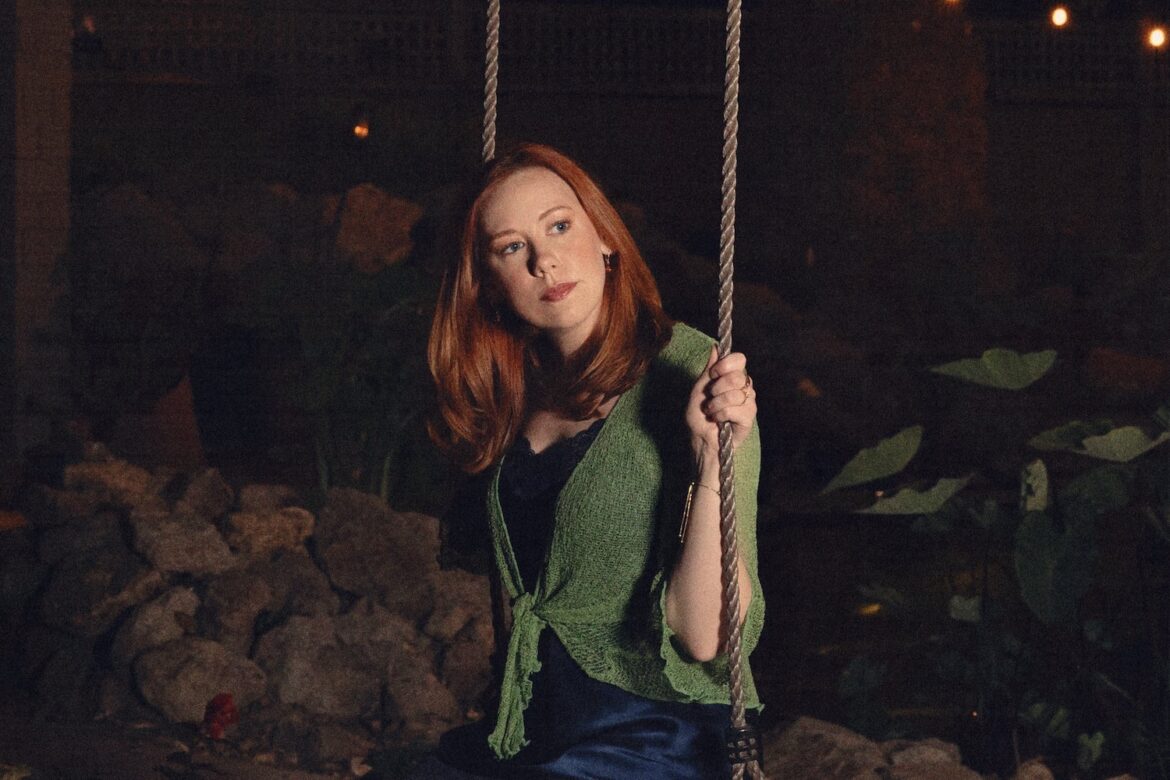
On ‘The Other Side of Hell is a Heaven So Delicate,’ Heddy Edwards carries listeners through five tracks of grief and gratitude.
Stream: ‘The Other Side of Hell Is a Heaven So Delicate’ – Heddy Edwards
When Heddy Edwards released “cherry picker” in 2022, she posted the audio with photos of Kate Bush, looking for the crowd of people who became re-entranced with the ’80s musician from the popular show, Stranger Things.
Edwards found the right crowd quickly, spiking to 67k monthly listeners at her peak who were drawn to her ’80s pop sound, vintage voice, and ability to curate an impeccable vibe. Four years later, she’s releasing an EP, The Other Side of Hell Is a Heaven So Delicate, which dials up the strengths she showed in her early work. Ever the more spellbinding, the new EP captures a synth heavy awe, like a single bright star in a dark night.
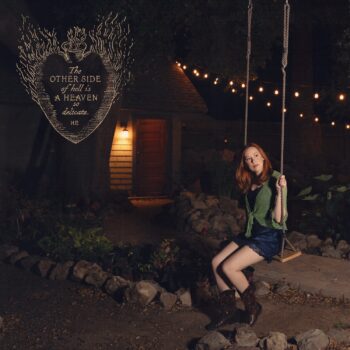
The EP began in 2024, when she released the first single, “Black tunnel,” which repeats the line: “Can’t shake me / can’t shake the blues.” In her interview with Atwood at the time of its release, she explained that “making any kind of art” was akin to “pulling out a piece of your psyche to let people walk through and experience it.”
Now, with the EP at 5 tracks, it’s clear that this walk is a long one – straight through the valley of the shadow of death. When I called Edwards to discuss the EP, I began by inquiring about the title. “I think this is my first time really leaning into heaven or hell as a concept and what that means to me,” she explained, “You know, I grew up Catholic and kind of got away from that. But I would say I’ve always been spiritual, in a woo-woo sense. I love, you know, stories about witches, stuff like that. I’m very into astrology, everything cosmic.”
An embrace of superstition in her lyrics prove this true – in “Black tunnel,” she sings stick that needle in my eye as a command, seemingly gesturing to the popular playground rhyme about crossing one’s heart and hoping to die as a testament to the truth. In the second track, “The other side of town,” I feel immersed in particular by the lines: “Spend half of my days fading into the night, on a lonely highway at the speed of light / Crashing into the curtains of parallel lives, you call to me from the other side.” There’s a sense of fear and comfort in this couplet, and the heavy reverb in the production emphasizes an echoing search for something that must be followed but may not be found.
It conjured images in my mind from Lost Highway, a 1997 David Lynch film. Half noir, half Patricia Arquette, the film blurs people together, eroding the boundaries of the self. Edwards has spoken before about her love of David Lynch in various TikToks and interviews, so it didn’t surprise me when she cited Lost Highway as her favorite. “I really love duplicity like that, and liminal suburban Gothic themes,” she explained. “There’s a lot of highway themes on this album. And I felt like it came from the first time I watched that movie.”
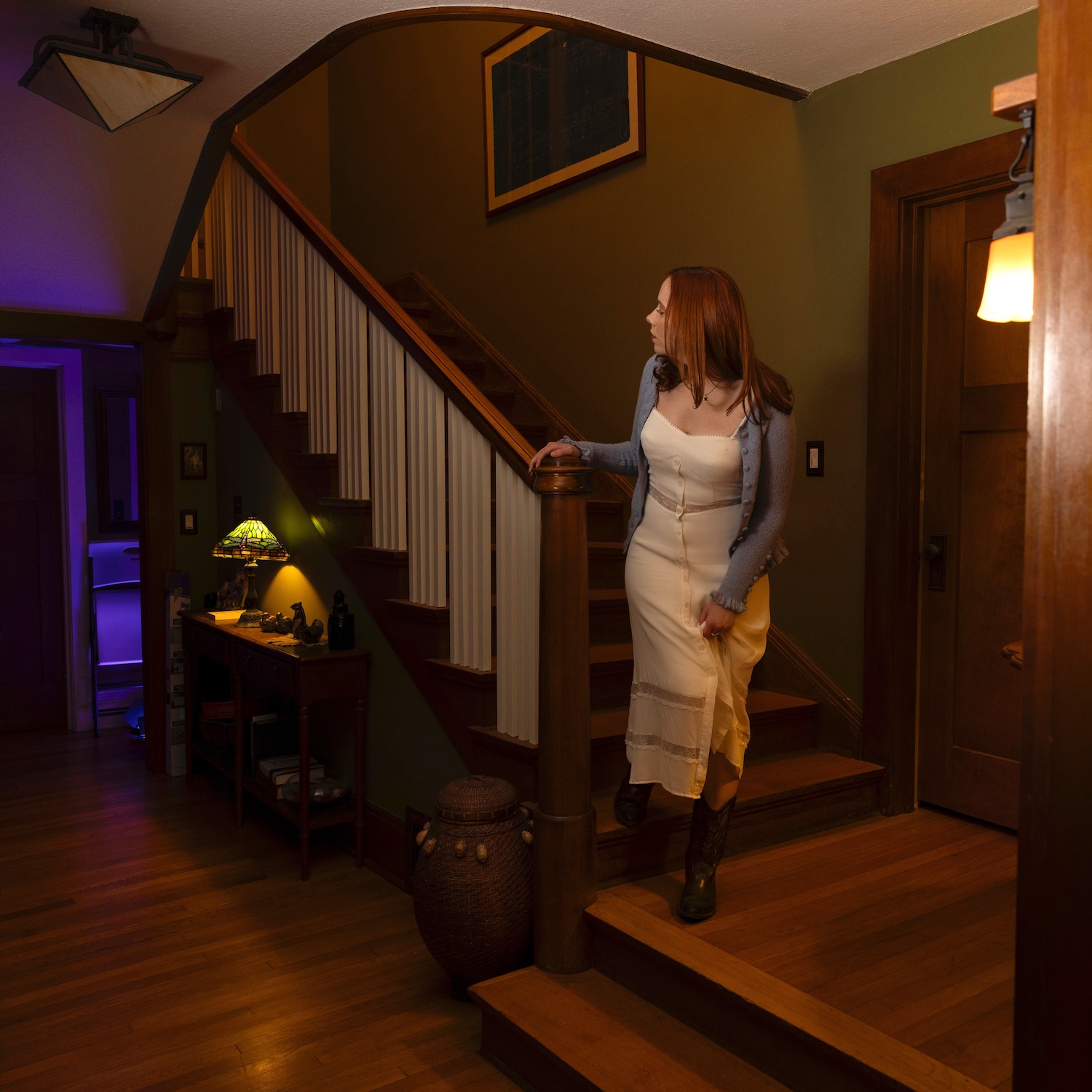
Indeed, in the third track, aptly titled, “Cinematic vision,” she cites the roadways again: Where does this highway end, I’ll never know/Maybe that’s not the point. The song also has the titular line, the other side of hell is a heaven so delicate.
“My family and I were losing a loved one to a terminal illness,” she explained, as she described the day in which she wrote this lyric that ended up being paramount to the project. “It was one day when we were caring for them. My husband and I drove away to fill up the car with gas and it was feeling especially heavy. It was my first real experience with grief and losing someone I was very close to. And I’m also someone who suffers from depression. But as I watched my husband fill the car with gas and just listened to the rain come down, I just felt this wash of gratitude for daily life.”
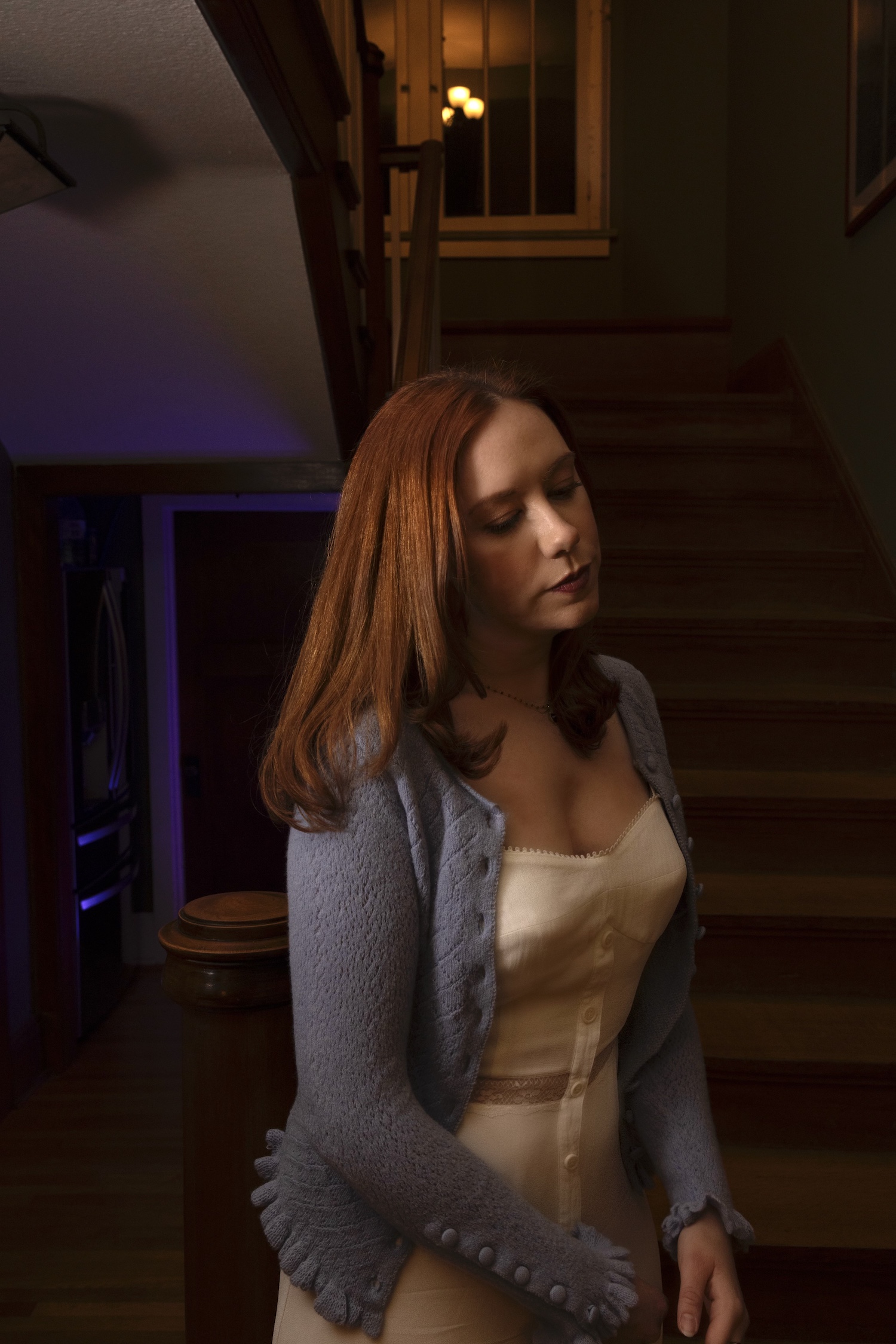
“I think my lyrics tend to be more abstract in most cases,” she explains of the phrasing. “I don’t think I’m as diaristic as some of the artists that I also listen to.” Yet it seems to me that this adds to the experiential nature of her music, where listeners are equipped to piece together their own struggles in the cosmic space where all lost things go, that hinterland of grief that contains our shared pasts, swirling together, out of reach. Still, there’s a way to look at this in awe instead of in need, and that seems to be the heaven that Edwards reaches as the EP comes to a close.
The penultimate track is “Fever, can believe it,” and Edwards says that the old Hollywood movie, Holiday, was the spark for it. It reminds me on some levels of Zella Day, but it also is reminiscent of Ethel Cain, dance-worthy in the same way that “American Teenager” is. I find it to be the track that sounds the most celebratory, and to me this is the lesson of the journey – that even through the darkness or the loss, we can always follow the compass of genuine amazement with the ordinary and mundane.
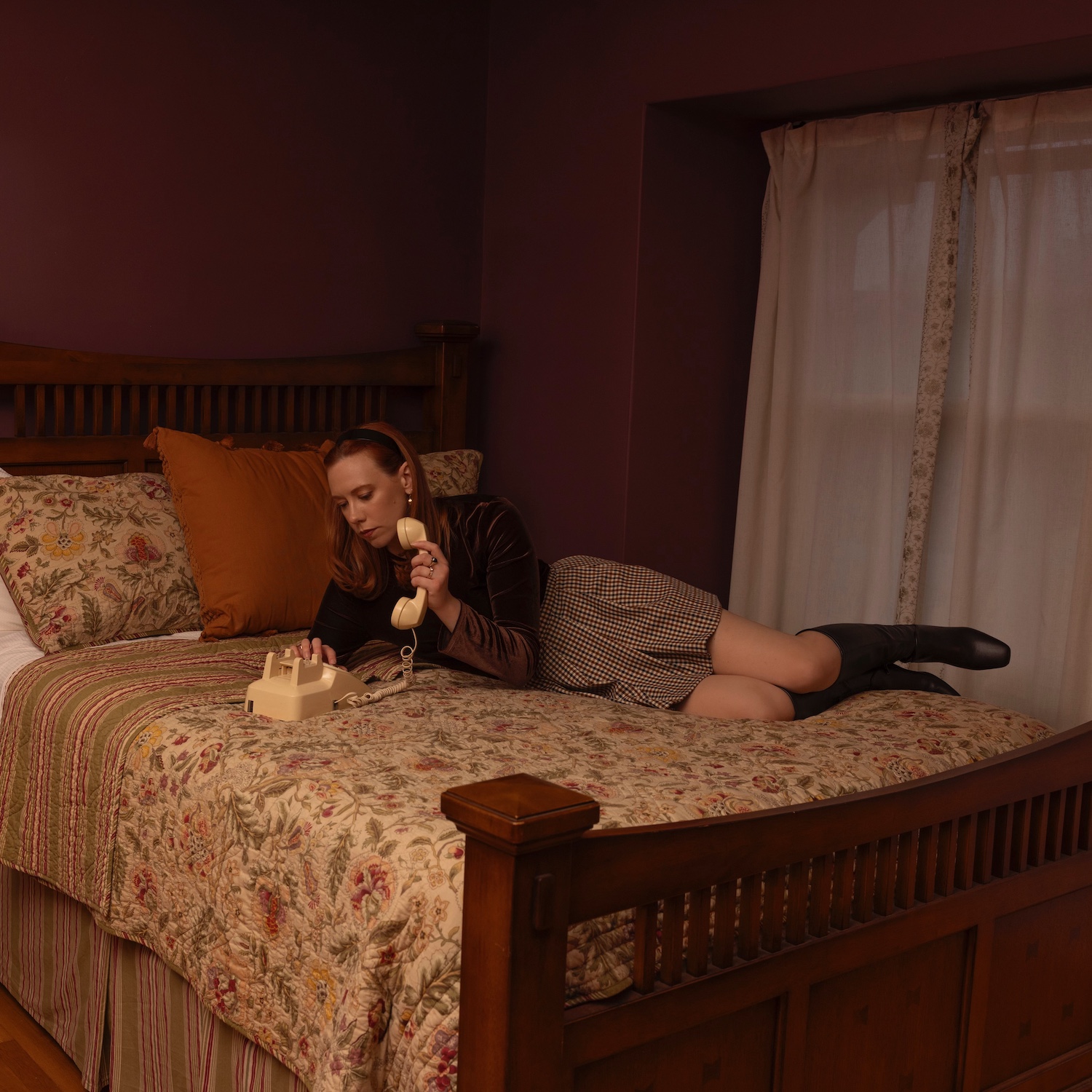
Edwards wants listeners to take this lesson from the project.
“The big thing I would say is that I came to terms with mental health issues in adulthood – which was challenging. I have OCD and depression and realizing that and trying to heal that as an adult has kind of defined my life. And so I think this EP, which I’m releasing my first full project in my early thirties, is about mental health struggles and getting to the other side of that.”
The final track, Dreamcast, is a coda to this thesis. Open my mouth to speak, but just can’t make a sound, she sings, referring to the muteness that so many of us know from our nightmares. There’s all these phantoms in my mind/Stealing fate, killing time, the lyrics continue. But in the mirror, they have my own eyes. Surprise! It suggests that we have the power within us to either stare back or turn away, a lesson on internality and agency that is apt for the central subject matter of moving through grief or getting oneself through existential obstacles.
“A lot of the mental hell on these tracks, like on ‘Black tunnel’ and on ‘The other side of town,’ hell is being angry. Angry with myself, angry with others, angry with my situation. When I stay angry, I stay stuck,” she tells me. “When I move through that and I’m able to accept it and laugh at it and process grief, I just find that life is much more colorful.”
— —
:: stream/purchase The Other Side of hell… here ::
:: connect with Heddy Edwards here ::
— —
— — — —

Connect to Heddy Edwards on
Facebook, TikTok, Instagram
Discover new music on Atwood Magazine
© Grace Gioiello
 © Grace Gioiello
:: Stream Heddy Edwards ::