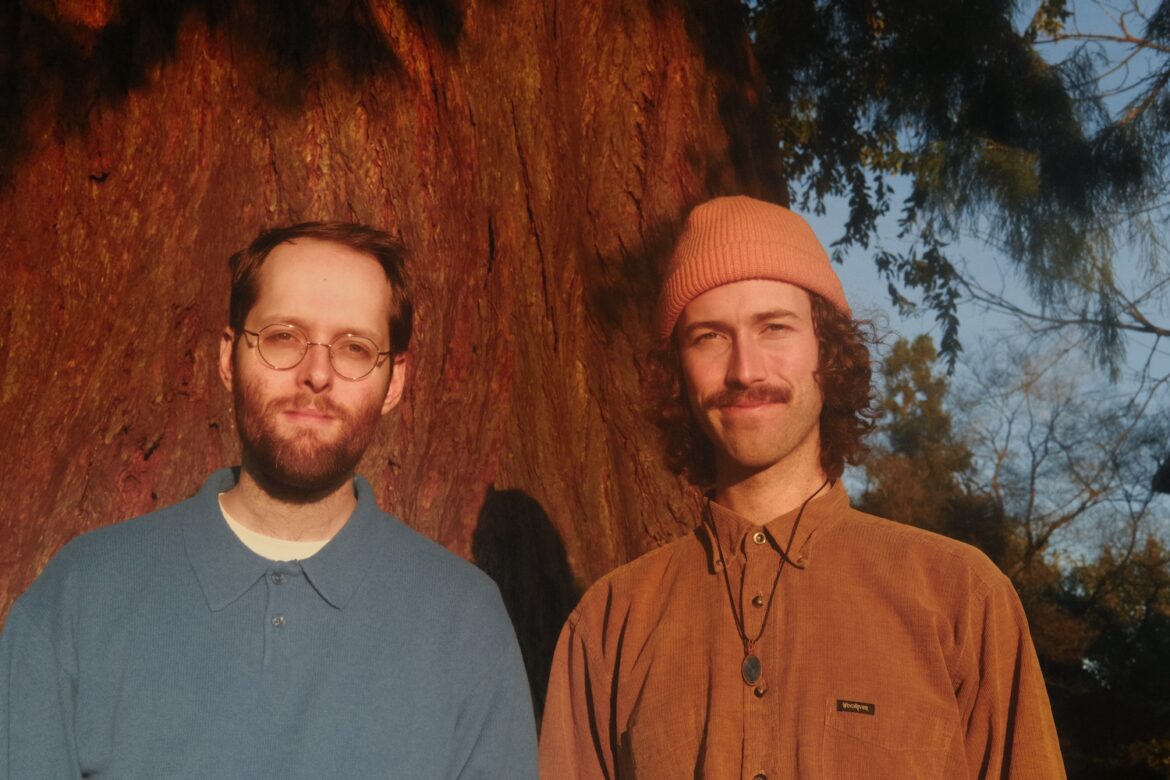
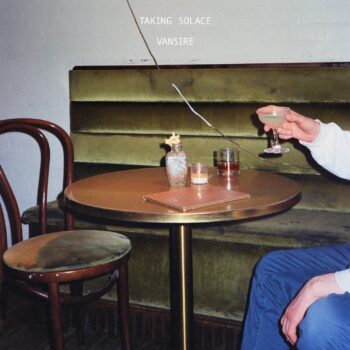
On their expansive 21-track album ‘Taking Solace,’ Vansire transform everyday uncertainty into a warm, quietly moving meditation on the small comforts that keep us grounded. In conversation with Atwood Magazine, Josh Augustin and Sam Winemiller open up about the long road behind the record, the stories woven through its songs, and the meaning of taking solace as they look toward what’s next.
Stream: ‘Taking Solace’ – Vansire
Taking solace as a political act, as a social act, as a community-building act, we just see as having restorative and political power.
* * *
The idea of taking solace brings a rare sense of peace in a world full of everyday anxieties.
While it’s layered, taking solace can simply be described as finding comfort or relief in something. But for musical duo Vansire, there’s much more meaning behind the practice. To them, the act of taking solace is positive, valid, and political. It also happens to be the inspiration behind the title of their latest record, Taking Solace. It’s a collection of 21 tracks that use love as their anchor as the two musicians navigate life.
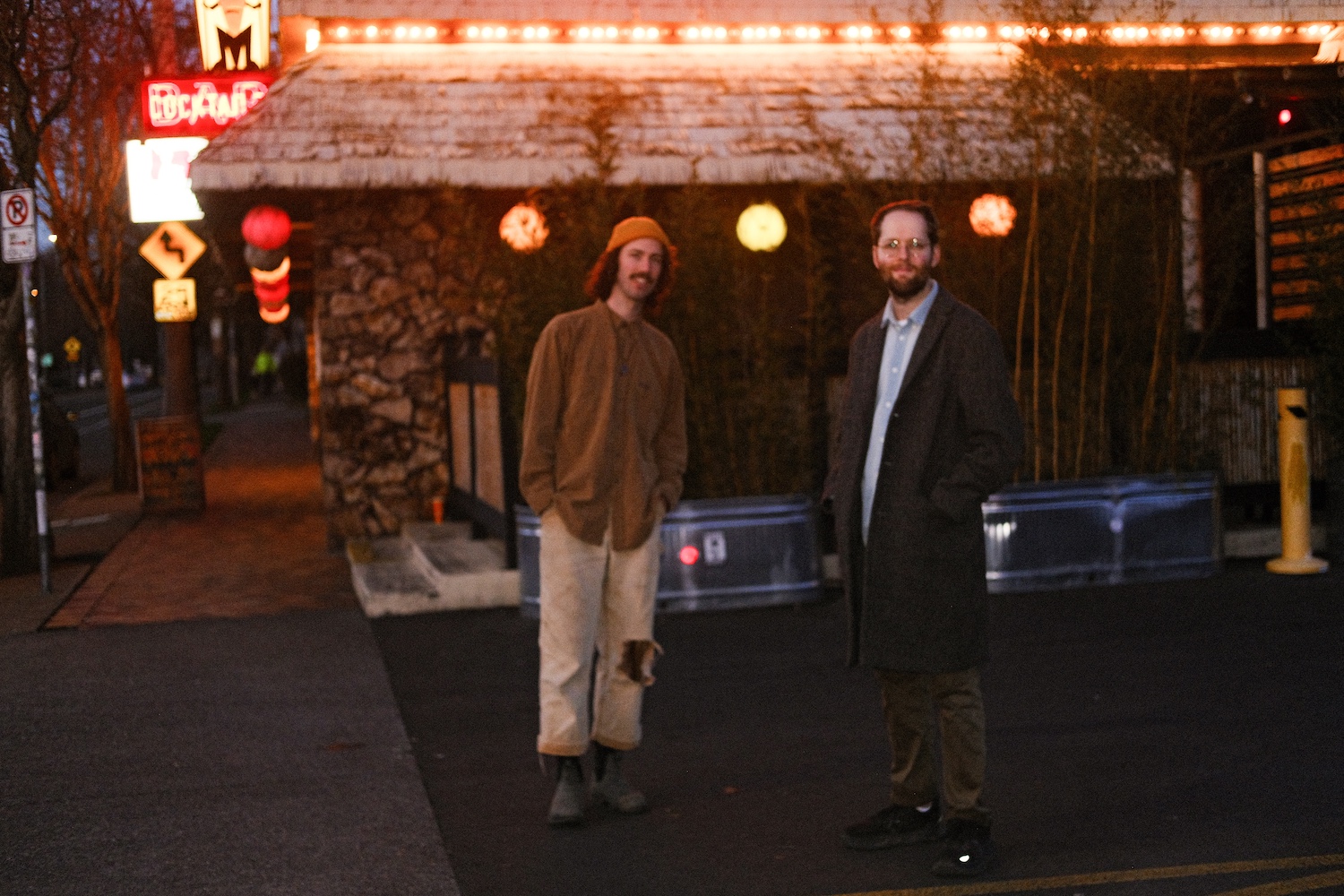
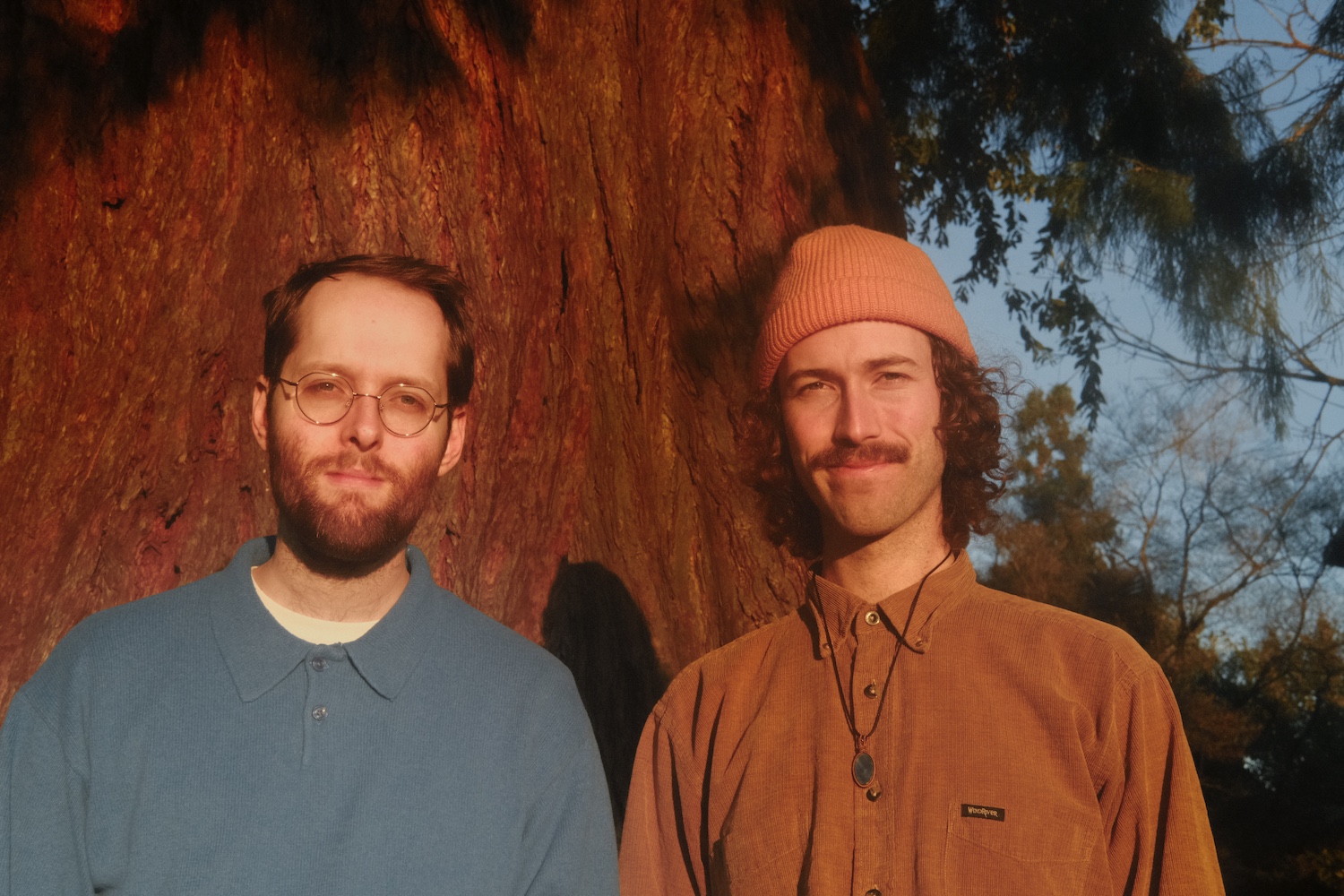
Josh Augustin and Sam Winemiller of Vansire have a long history together. They’re originally from Minnesota, where they met in drumline and began making music with each other. Throughout their years of high school and college, they became masters at creating songs in their bedrooms.
Well, really anywhere in a house – including living rooms and basements. Their music comes straight from their homes to yours, which explains why it feels so intimate and personal. Taking Solace is no different, as its layers of adoration and appreciation shine through.
There’s love everywhere if you really look around –
whether it’s love for the people in your corner, the animals you’ve grown up with, or the view that feels like home. Vansire wrap all of these moments into one album with carefully crafted songs like “Atmospheric River” featuring singer/songwriter Eliza McLamb.
“‘Atmospheric River’ was recorded at Winemiller’s studio in Portland, Oregon in the midst of an actual ‘atmospheric river,’ a strong band of water vapor carried from the Pacific Ocean to the west coast that delivers a Mississippi River’s-worth of rain,” Vansire tell Atwood Magazine. “It felt like a nice moment to lean into some Pacific Northwest imagery in the lyrics, with a pastiche of end-times philosophizing, community-building and messages of love that characterize most of this album. The second verse felt like it could use an additional voice, so we had our friend Eliza record her part in my Brooklyn studio (making it the first Vansire feature ever recorded in person!). In her appearance she brings more beautiful descriptions of nature, the uncertainty of our current time, lots of gravitas, and some lovely harmonies to the song.”
Sunbeams come to me obscured
through leaves across my face
Funny how I only see
through shadows in this place
Everything I know
How to recognize
Shifts in a new light
Changing all the time
Have you heard the news
There’s an atmospheric river
running through
And it brings me back to you
Back until we’re close to home
where we oughta stay
Pigeons fly and preachers oughta pray
But he can’t stop the rain
When the world gets washed away
“Atmospheric River” gave listeners a preview of Taking Solace, and now that the full album is out, there’s so much more to explore.
All of the tiny details in this album are what make it whole: The features throughout the LP, the interludes, and all of the fun stories behind each track. “Love That You Try” brings BERÜ into Vansire’s orbit through a chance connection years in the making, while “Inside Loop” finds PawPaw Rod adding another unexpected voice to the duo’s world. Elsewhere, “Reflection No. 9” continues a tradition that has become its own guidepost in Vansire’s catalog, and “Most Dogs” closes the record from the perspective of Sam’s family dog, Charlie – a tender reminder of the love, loss, and appreciation woven throughout the album.
Atwood Magazine recently caught up with Vansire ahead of the album’s release to learn more about the slow-blooming process behind Taking Solace, the restorative power of music and community, the stories behind the album’s collaborations, and why this chapter has left them ready to keep moving forward.
Read our full conversation with Vansire below, and take solace in their reflections on love, creativity, connection, and the small comforts that make this album feel so whole.
— —
:: connect with Vansire here ::
:: stream/purchase Taking Solace here ::
— —
A CONVERSATION WITH VANSIRE

Taking Solace is your first album since 2022, and it features some of your most mature songwriting yet. How did you refine your sound and songwriting process during this time period?
Sam Winemiller: It was a very long process. I mean, some of the songs go back to very old demos, maybe like five years old, six years old. But most of it was recorded over like a year and a half period, maybe some of it two years, a little bit. So it was a long, slow process, which gave us a lot of time to listen to the songs over and over and kind of decide what we wanted and what we didn’t like and just grow with the songs, let them grow next to us as we matured. We took our time, which hasn’t always been the case. We’ve always been kind of slow workers, but I feel like this one we really gave ourselves the space to breathe with the songs and make them how we want them.
Josh Augustin: Yeah, I don’t even think it would have originally ended up being this long. But since our last album like you said, which was in 2022, there were varying points over the years where we thought we would put out an EP. But we’re bad at sitting on tracks that are finished and we want to share. And so we kept sharing singles and the vision of the EP kept changing. At a certain point, we’d shared enough music and enough time had gone by that we just felt like coming in with a completely new collection of songs was going to be the move. And like Sam said, some of them are a good bit older, but most of them probably are from within the last year or so. And so I think any kind of maturity in the songwriting that shines through is just a result of the fact that the longer we do this for, the more we have a better sense of what we like and what we like to listen to, as we improve with time. I think it would make sense that with the amount of time spent on this album and the amount of time we’ve spent together as songwriters and producers that I feel like we have a great sense of what we’re looking to do and how we’re looking to do it at this point.
The act of taking solace can be positive, yet political for you. How do you take solace, and what does it truly mean to do so? Why did you decide to name the album after this action?
Josh Augustin: I think when we were looking for an album name, our last album name was pretty long, and we were like, “Let’s shorten it up this time. Let’s do something that rolls off the tongue a little better.” And we thought maybe a title from a lyric that’s not the song title itself would be cool. Taking solace as a political act, as a social act, as a community-building act, we just see as having restorative and political power. And also, I think when you boil it down, music is just helping us get through the day right now. And it frames the things we’re talking about in these songs against a backdrop of unrest, but it allows us to kind of lean into the good feelings that these songs conjured and how lucky we’ve been to build a musical community out of the work that we do. It kind of felt maybe at the end of the day, like it was the only title that really worked for this collection of songs. To be making music that sounds kind of happy at a time like this, I feel like there could be some disjunction between the way the music is presented and experienced in the world. So our hope is that it can kind of resolve the contradiction there, because music to us feels like one of the best things we’ve got going, and we just want to keep it going.
Sam Winemiller: Yeah, that pretty much sums it up. I mean, music’s always been a solace for both of us, and art in general. And I feel like taking solace, those two words. I remember coming up with a name for Angel Youth, and we saw the words Angel Youth and we were like, “Oh, that just feels right.” And I feel like taking solace just felt right at a certain point, and it was like, “Oh yeah, that just kind of sums this up.” But Josh really put it eloquently there.
Taking Solace is a 21-track album that captures the listener throughout. The album never drags on, and each track is generally under 3 minutes. Why did it feel like the right move to add more songs at a shorter length? Would you say this is a pattern you follow when it comes to your albums?
Sam Winemiller: Yeah, we’ve always been a fan of transitional moments in albums and creating like one experience. I think both of us are kind of album guys, and we always have respected the long format. As Josh said earlier, we had multiple opportunities to create EPs or shorter works. But it’s always been a feat to create an album, and I think in today’s ever-decreasing short-form content world, it’s tougher to get people’s attention. It’s kind of a balance, I guess, of creating stuff that people are going to listen to and have the attention span for, but then also string it all together into a bigger thing that is maybe a little more meaningful and lasting.
Josh Augustin: I think there’s also maybe like a little bit of a misperception sometimes that we ourselves are just huge fans of short songs because our most popular song is less than a minute long. And that just kind of happened randomly. That wasn’t really an intentional thing. It’s cool that it happened, but that is to say we love a good interlude. And like Sam said, we love constructing a full-length album, and we feel like that entails interlude moments. I think the layout of a full-length album is a lot more interesting to me when you have some smaller morsels in there mixed in with the longer ones. And on this album in particular actually, the longer it goes on in the track listing, the longer the songs tend to get by the end. It feels like things kind of settle into a rhythm and maybe the last like four songs or so are all clocking above three minutes, which for us is kind of on the longer side, I would say.
“Atmospheric River” with Eliza McLamb was your first-ever in-person feature. Can you tell me a little more about that process? Do you think you’ll continue to do in-person features, or have virtual ones historically been easier?
Josh Augustin: Yeah, it was great. It just worked out really well that we were looking for someone to sing on that second verse. Eliza is a good friend, and she lives in Brooklyn as well. And it was just sort of happenstance. It hasn’t been an intentional thing over the years that most of our features have been over the web. That’s kind of just been a function of us casting a pretty wide net, and hitting up anyone whose music inspires us and whose music we enjoy. This is just kind of a funny coincidence that I live in the same city as this person we featured. But definitely yeah, I think we hope to do more of that, and we hope to continue doing more online stuff too. It’s just a really special thing to be able to work with people in any capacity like that; it opens up exciting new avenues for us as songwriters as well.
There’s a variety of features on the album that showcase different genres and languages. How did you decide on who to collaborate with?
Sam Winemiller: I think it’s really just if we like their music. A big part of it now is who’s available. I feel like it’s harder to get in touch with people. Back in the day when we were starting, it was a lot easier to reach out and get someone’s attention to feature or whatever. If you’re like just cold calling someone in their DMs or something. I feel like if a feature needs to happen, it will and there’s a mutual respect that you have for each other as artists. All the features on this album actually came about in very unique circumstances. Each one is like some random connection that just kind of happened. I feel like they were kind of destined to be together on this one.
Josh Augustin: Yeah, totally. It’s not like detracting from any previous features we’ve had, but it does kind of feel like the online bedroom pop heyday that we sort of came up in, that moment has passed a bit. And so there is less of this completely online collaboration. Like Sam said, every feature on this one, not that we knew everyone on this album going into it, but there are much more specific and funny stories about how they all came to be. There’s not quite as many features as some of our previous couple albums, but each one feels really special to me. And like Sam said, when it needs to happen, it happens. And sometimes it just grows out of a track that feels like it would sound good with someone on it. Sometimes we have someone in mind, but it does feel kind of fated in a certain way.
Do you have any of those funny stories that you might want to share?
Josh Augustin: Yeah, there are a few good ones. I mean, the Eliza one is cool just from knowing her in person. But one to highlight, the singer BERÜ on the song “Love That You Try.” Her real name is Kalumba, she’s from Mexico. We came across her work because we did an interview a year or two ago for this blog, and we were like, “Oh, I don’t think it ever got published.” And we were looking on their website, searching Vansire to see if it got shared, and it never had been shared. But in this other interview, Kalumba had cited our album Angel Youth as an inspiration. And I saw her band was partially based in Mexico City, and we were playing a show in Mexico City, so I messaged her, and she and her boyfriend came to the show. And we all really hit it off and had a lovely time, and she showed us around Mexico, and then we had this track and ended up sending it to her. So that’s kind of the funny way that came about just by total coincidence out of this one blog.
The song featuring WiFiGawd is kind of a funny one because that’s like a beat from many years ago that we’ve tried to get rappers on, and we’ve been ghosted several times. A bit of a cursed track over the years. And then WiFiGawd was the first one after many years who finally followed up on it and we really loved his verse, so that worked out great.
PawPaw Rod, who’s on “Inside Loop,” my girlfriend’s dad was a big fan of his. He saw him play in St. Paul, and then I listened to his music and really fucked with it. So we hit him up, and he knew of us, and he was down. So yeah, just a lot of like funny little connections, how the features shook out on this album. And I’m such a fan of everyone’s work.
Sam Winemiller: Wanna tell her the Roseland story?
Josh Augustin: You can tell that one, yeah, that’s crazy. It’s not technically a feature, but it still is named after her.
Sam Winemiller: Yeah, kind of an interesting story on that. We were making the drive from Dallas to Phoenix, and we went through a town called Marfa, Texas. And there’s a place there called El Cosmico, it’s like a little campsite. Very like woo-woo, kind of fun spot.
We were sleeping in this little teepee, and there was a little radio by the bedside, and it was playing this really like spooky music. And it’s this late-night radio show on Marfa Public Radio called No One’s Listening. And there was like this creepy, kind of like ambient music and this old lady talking and telling this story about how she was sick. I don’t know, it was just this very surreal-sounding, like David Lynch kind of vibe. I was recording it on my phone, and then we traced that story back and found out who that lady was through a series of radio DJs. And we got in connection with her and then got her approval to use that same recording in a track. So yeah, Roseland, she’s 97 or something and lives like in the hills of rural desert Texas on the border. It’s an interesting place, Marfa.
Collaborations seem to be an important part of your previous albums. How have they shaped the way you create music?
Josh Augustin: I think for us it’s an exciting excuse to dabble in a lot of different styles of musical approaches in a way that hopefully doesn’t feel forced or out of left field. I always felt like in the earlier days of doing Vansire, if nothing else, if it ended up being a vehicle to work with cool rappers, then I would feel like the life’s mission was accomplished. It’s an exciting thing to have music that resonates with people who make a lot of different kinds of music. I think feeling like we can freely pull from whatever inspires us and whatever sounds we find cool is a big part of our approach, and having a wide collaborative swath kind of enables us to do that.
Sam Winemiller: Yeah, I think it’s just really fun. Because other people bring so much different energy and do stuff that you can’t do. And that’s just so exciting when you’re combining multiple things and then creating pieces with new colors that you just can’t access. Only that person can bring that particular flair to a track. So yeah, it’s just really exciting, and like Josh said, it’s just kind of an excuse to dabble into new genres and open up our creative process, I guess.
Josh, you mentioned wanting to work with cool rappers. Who are your favorite rappers and who would be like your dream rapper to work with?
Josh Augustin: Oh, wow. Well, now that MF DOOM has passed away, that dream dies with him. He’s probably my favorite rapper of all time. But I would say current dream rappers to work with, I love Roc Marciano, everything he does is really impressive to me, I would love to someday. Mos Def and Talib Kweli were probably my entryway into hip-hop. Black Star, I love what they do. Jadakiss is one of my favorite rappers of all time. Anyone who ever wanted to work with us, basically, I would take them up on it. But there’s actually not so much rapping on this album, interestingly. I think the WiFiGawd verse is like the only rap verse, which is kind of a pivot actually. And he comes from more of a kind of like trap drill sort of background, whereas we’ve had a lot more like underground boom-bap kind of rappers on our stuff in the past. But it’s cool to be mixing it up.
This record has elements of love, but it also explores death a little bit. Why did it feel important to you to add both sides of the spectrum?
Sam Winemiller: I don’t know. I guess it’s just life and as we go through life, you experience a little bit more loss of people you love, and animals you love. You know, all sorts of stuff. We haven’t really overtly gone into that realm. And so I feel like it felt good to kind of include a little bit of that gravitas of like the fleetingness of life and the preciousness of love and enjoying and taking moments to appreciate life and love and music and art.
Josh Augustin: Yeah, I think that’s just the breadth of our life experience slowly expanding and the scope of our world slowly expanding, and that just will naturally include death.
There’s a beautiful song on the album called “Most Dogs,” which was written from the vantage of Sam’s family dog, Charlie. What was it like to write a song through his eyes?
Josh Augustin: I credit the idea to Sam. We were working on the instrumental, and he had a vision for a song that was from a dog’s perspective. For me, writing the lyrics and such, I feel like it wasn’t too tricky, honestly. I love a challenge, and an opportunity to write from someone else’s vantage point. Whether it’s a real or fictional thing. I feel like Charlie the dog’s own mythos kind of mirrors our own. He passed away pretty recently, and he lived a great long life. I feel like the wise vantage point of an old dog was the perfect way to kind of wrap up this album thematically, because a lot of it deals with anxieties of time passing or feeling like you’ve missed certain moments and worries about the people or animals you may be losing. And then I thought it’s kind of interesting to spin it back from the animal’s perspective, where simply spending time with them and knowing that the love was felt was enough. So it was a very fun opportunity to write from that perspective, and I feel like it wraps up the album thematically quite nicely.
There are so many moments of appreciation in this album, from “Atmospheric River” to “Most Dogs.” What have you come to appreciate the most during the process of making this album?
Josh Augustin: It’s an amazing privilege to be able to create something that can move people when you boil it down. And I myself felt very moved, and continue to feel moved by a lot of this music. I think at the end of the day, that’s where our gut instinct is best as music makers. It’s a magical feeling that I really don’t take for granted at all. And I feel it very strongly on this album. So just having that reminder and having that opportunity is always an amazing thing.
Sam Winemiller: Yeah, I was going to say, each album process is different. You’re at a different stage of life every time you try to create something. And this one has been so unique because I’m on the West Coast now, Josh is on the East Coast. It’s been fun, it’s been a lot of work to travel back and forth. Now that I’m thinking about the album process, it is something that I appreciate. Being able to travel and go and drop into the New York world, and then come back here and have a session here. And bringing people in from the internet realms, like wherever they are, communicating with them, and just that whole process is something that I’m going to look back on and appreciate. It’s a special thing and probably won’t ever happen like that exactly again, because each one is different.
Reflections have been a regular part of your albums from the beginning, and this record is no different with “Reflection No. 9.” How did this tradition begin?
Sam Winemiller: It began with reflection number one.
Josh Augustin: Yeah, I don’t even think that one had a number at the time. The series was TBD.
Sam Winemiller: Well, probably Reflections and Reveries was the first reflection. And then… yeah, it just pretty much became a tradition to kind of put it in there with every release. We’ve done reflections with singles, like “Metamodernity” has a reflection with it. Done them with EPs and yeah, I don’t know how that started, I guess. Do you remember the first reflection?
Josh Augustin: The first one, the song “Reflection” on Reflections and Reveries is like a one-minute voice memo of you playing piano that I slowed down and reverbed a bunch. And then the next one was like a mash of an ambient piece I had made for a college class. And then segueing into an early cassette demo I had recorded of “Eleven Weeks.” And I think with that track, we just both love ambient music. Not that all reflections are ambient per se, but it was becoming enough of a theme that it’s worked out kind of well as a guidepost and a grounding moment in our music. And now it’s sort of like a fun opportunity to come up with creative approaches to them. I think listeners have come to expect it too, so for anyone who engages with our catalog as a whole, it’s kind of an interesting inroad to it.
As you reflect on Taking Solace and your journey as a group, what have been the best moments of this season and what do you look forward to in the future?
Josh Augustin: Once we knew we had an album on our hands, that was a thrilling feeling. I would say that once we made the decision to have entirely new music on this album and not pull from any of the previous singles, it was an exciting jolt of creative energy, and I loved that feeling. I loved leaning into that and finishing a bunch of new music.
Sitting on a trove of unreleased music is not something we do often. Like I said, we tend to put stuff out kind of fast. So it’s an exciting stage where we have this relationship to the music, and we have yet to send it out into the world. It’s a very exciting time, and I’ve loved that feeling.
Do you think you'll sit on unreleased music more now that you've done it once?
Josh Augustin: I don’t know, maybe not. I kind of like just releasing stuff sooner.
Sam Winemiller: I think that’s what I’m looking forward to actually, is not doing that. There’s something to both. Waiting and sitting on things has its own merits, and I feel like you try to create something more lasting and timeless. But it feels better to us, I think, to just put stuff out as we make it and move a little quicker. It just feels like it’s more current to you, you know? If a song sits too long, it’s like almost that part of you that made that thing, you don’t relate as much to it or something.
It's like old news.
Sam Winemiller: Yeah, it’s like old news in your own news cycle. But I’m looking forward to making new tunes, and you know, we’ve talked about that and there’ll be more, and just getting back in the studio and chipping away at whatever comes.
Are you guys going to tour soon?
Josh Augustin: Yeah, we’re gonna be hitting the road later this year, probably around the late fall. The album, it’ll be out for like a little bit, like some months before we hit the road. So I’m excited to see what songs kind of resonate most with people and what we end up incorporating into the live set.
— —
:: connect with Vansire here ::
:: stream/purchase Taking Solace here ::
— —
— — — —
Connect to Vansire on
Facebook, 𝕏, TikTok, Instagram
Discover new music on Atwood Magazine
© Caroline Alkire
 © Caroline Alkire
:: Stream Vansire ::