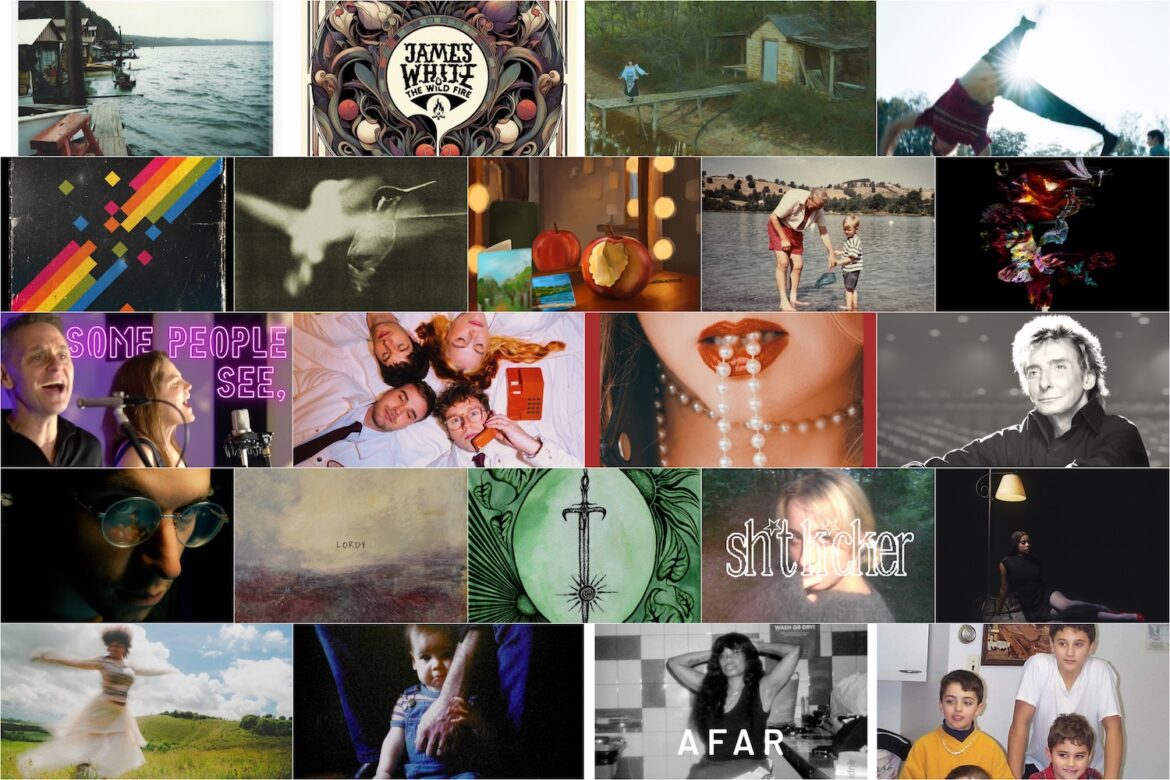
Every Friday, Atwood Magazine’s staff share what they’ve been listening to that week – a song, an album, an artist – whatever’s been having an impact on them, in the moment.
This week’s weekly roundup features music by Ruti, Houndmouth, Dogviolet, Barry Manilow, Javier Reyes, Ngaiire, horse, Caddy Callaghan, James White & The Wild Fire, al coffey, Dani Offline, Kiki Holli & The Remedy, Bear Grass, Lucy Frost, Tender Claws, Chris Pannella, Deco, Doctor Noize, Noah Villeneuve, onelinedrawing, Wings of Desire, and Frowning Hours!
•• •• •• ••
 follow WEEKLY ROUNDUP on Spotify


•• ••
:: “FLOWERS” – Ruti ::
Mitch Mosk, Beacon, New York

Summer blooms in full color on Ruti’s “FLOWERS.” Dreamy, sun-soaked, and soul-stirring, the UK artist’s latest single is pure warmth in motion: An intoxicating R&B-pop wonder filled with light, love, and the kind of sweetness that feels less like escape than arrival.
I don’t care
Just take me where there’s flowers
I got something we could share
And if you dare it’s ours, it’s ours
Released July 9th, “FLOWERS” glistens as the next step in Ruti Olajugbagbe’s flourishing new chapter. Written with Theo Hutchcraft and produced by Will Bloomfield, the song leans into a freer, brighter side of their artistry without losing the vocal depth and emotional presence that make them such a captivating performer. Ruti’s raspy-yet-clear powerhouse voice remains the anchor, but here it moves through shimmering pop textures and a vibrant beat with a rare sense of ease, as if the whole song is opening its windows to let the day in.
“I think the flowers represent someone you love,” Ruti explains. “I could romanticise anywhere if the one I love is there with me. It feels breezy and light and lovely. My songs often carry a lot of emotional weight but this one feels like a weight off my shoulders and free.”
That freedom radiates through every line. “I don’t care / Just take me where there’s flowers, flowers,” Ruti sings, turning romance into a place you can step inside, carry with you, and return to whenever the world gets heavy. Even the tears here transform: “I cried so many tears / But they divide into rainfall,” they offer, letting sorrow water the ground until “one more little life is starting to bloom.” It’s a simple image made radiant by the feeling behind it – love as renewal, love as shelter, love as the weather changing for good.
Everytime I show myself in the blue
Everytime I throw myself into you
One more little life is starting to bloom
One more little life is starting anew
Every time you nurture more than the sea
Every time I harvest more then I need
Doesn’t matter where we blow in the breeze
Doesn’t matter where we’re going
I don’t care
Just take me where there’s flowers
I got something we can share
And if you dare it’s ours, it’s ours
As bright and breezy as it is deeply felt, “FLOWERS” captures Ruti in a moment of real momentum, and it sounds like summer defined. This is not a song about pretending the weight was never there; it’s about finding the person, place, or feeling that makes it lift. Light pours in, the beat keeps moving, and Ruti lets the whole thing blossom.
:: Lordy – Houndmouth ::
Mitch Mosk, Beacon, New York

Houndmouth’s Lordy is the sound of a man dragging himself back into the light. The Indiana band’s first album in five years aches and churns with soul, sun, and sweat – a painfully wrought, achingly raw collection of rock and Americana made for long summer nights and the mornings after, when the noise has died down and all that remains are the thoughts you could not outrun. Matt Myers has never sounded more vulnerable, but he has also never sounded more sure of himself, allowing each crack, rasp, and ragged edge to carry the weight of a life broken open and pieced together anew.
For two years, Myers could barely finish a song. A relationship ended, another began, and new love arrived with enough force to leave him overwhelmed rather than inspired. The breakthrough came after reconnecting with producer Brad Cook, whose encouragement helped Myers stop chasing perfection and follow instinct instead. Much of Lordy began at home in daylight, clear-headed, with Myers strumming his Martin guitar as sunshine crossed the kitchen – a far cry from the nighttime sessions and liquid courage of years past.
“I was all raw emotion,” Myers says. “I was feeling so much that I just couldn’t write anything.”
That emotional overload pours directly into “Hard Being Lovers,” whose bruised opening traces the wreckage two people leave inside each other: “The good, the clean, the spiteful things / We both did and didn’t mean.” Guitars simmer beneath Myers’ worn delivery as blood, coffee, poison, and honey mingle in the aftermath, every sweet memory edged by the harm that followed. It is an unguarded entrance into an album preoccupied with survival – not as triumph, but as the daily work of living alongside what still hurts.
From there, Lordy moves through heat, humor, fatigue, and hard-won resolve without forcing them into a neat recovery arc. “Never Gonna Die” sways with unruly optimism, its easy hooks and country-rock warmth making immortality sound less like a promise than a dare. “Rodeo” turns escape into a dusty daydream, while “Heavy Eyes” piles roadside characters, burnout, hot dogs, sunsets, and desperation into a cinematic portrait of people pushing onward despite running on empty. “Battery,” meanwhile, reduces denial to one devastating refrain – “Even then, if I wasn’t, I’d say I was / But I’m alright” – until reassurance begins to sound like a survival mechanism.
“I let unfiltered emotion inform the words,” Myers explains. “With several songs, I learned to be okay with just letting some syllables line up, and letting the emotion behind it all do the talking.”
That loosened grip serves him well. “Carbondale” is all lived-in charm and understated devotion, its crooked humor giving way to the plainspoken confession, “If I hadn’t met you / then I’d probably cease to be.” “Varmints” turns guilt into a wiry, restless rocker haunted by bad timing and roads not taken, while “Don’t Wanna Talk” bounces between scaled-back verses and shimmering singalong release. Its refusal to dwell is not emotional avoidance so much as self-preservation – the recognition that the past can only dominate the future if we keep feeding it.
The title track sits near the album’s end like a crooked grin after the storm. Written quickly while Myers walked around with a guitar, “Lordy” pairs conversational ease with simmering social critique, taking aim at judgment, inherited wealth, and people who mistake cruelty for conviction. “You act like you’re poor / kid sitting on fortunes / and all that your grand mommy mined,” he sings, letting exasperation, humor, and contempt share the same breath. The closing “Holy Moses” then lowers the temperature without diminishing the stakes, reckoning with mortality, aging, love, and the hope that tenderness might survive whatever pulverizes the rest of us.
For all the record’s soul-stirring highlights, “Tiger Blood” remains its most electrifying eruption. Previously featured in Atwood Magazine’s Editor’s Picks, the track is the album’s feral center – a sweaty, ragged folk-rock release where Friday-night impulse, childhood recklessness, and buried pressure snap into motion. Its guitars bite, its drums charge, and Myers howls with his whole body as the song climbs toward its glorious, screaming finish. He calls it the record’s “I want to go out and be bad for a sec” moment, but within Lordy, that abandon carries deeper significance: It is the sound of an artist who spent years unable to move finally breaking into a run.
Produced by Cook and strengthened by a circle that included Caleb Hickman, Phil Cook, Sam Beam, and MJ Lenderman, Lordy never confuses support with polish. These musicians do not erase the strain in Myers’ voice or smooth away the songs’ frayed ends; they help him carry them. That generosity can be heard throughout an album built from one-take acoustic foundations and expanded only as far as each moment demanded.
Lordy is not a comeback to an earlier version of Houndmouth. It is the arrival of a band older, clearer-eyed, and more alive to the value of imperfection. These songs smolder and sway, roar and retreat, carrying the dust of back roads and the heat of kitchen-window sunlight in equal measure. Houndmouth have made a record for anyone learning that rebuilding does not mean returning untouched – it means finding enough nerve, humor, and heart to keep going while the scars are still tender.
:: “Daughter” – Dogviolet ::
Danielle Holian, Galway, Ireland

Dogviolet’s latest single “Daughter” is a striking statement of intent, showcasing a band unafraid to channel deeply personal themes into something sonically powerful and emotionally arresting. Taken from their forthcoming debut EP Wilting, the track captures the London outfit at their most immediate and uncompromising, balancing the spectral beauty that has become central to their identity with a newfound intensity. Rooted in the pressures and expectations associated with being the eldest daughter within a family, the song transforms frustration and emotional weight into a cathartic musical experience. Biting guitar lines cut through pounding rhythms, creating a sense of urgency that continually pushes the track forward while retaining an undercurrent of tension and vulnerability. It is a compelling example of how Dogviolet merge personal storytelling with expansive, immersive sound design.
Produced by Ella Patenall and recorded and mixed alongside Tom Hill, “Daughter” thrives on its dynamic contrasts. Naz Toorabally’s vocal performance is particularly captivating, drifting through the verses with an almost dreamlike fragility before erupting into a more forceful and confrontational delivery during the chorus. Around these shifting vocal textures, the band constructs a rich atmosphere of haunting harmonies, memorable hooks and layered instrumentation that draws equally from goth, grunge, shoegaze and alternative rock traditions. Echoes of bands such as Warpaint, The Cranberries and Siouxsie & The Banshees can be felt throughout, yet Dogviolet avoid sounding derivative by filtering these influences through a distinctly modern lens. The result is a song that feels both familiar and uniquely their own; dark yet melodic, abrasive yet beautiful. As a preview of Wilting, “Daughter” reveals a band confidently refining their sound into something emotionally resonant, sonically ambitious and impossible to ignore.
:: “Sun Shine” – Barry Manilow ::
Charlie Recksieck, San Diego, CA

Hear me out. I feel like that’s the kind of thing I have to say when trying to tell you about a new song from an 83-year-old Barry Manilow. The single from his What A Time album that I’m loving so much is “Sun Shine.”
The lyrics aren’t going to knock anybody’s socks off. I would say it’s the kind of simple, pleasant, earnest love song that anyone would love for their musician boyfriend to write and record for them.
But the music is striking in how much this sounds like vintage 1960s Burt Bacharach if recorded in a first-class 2020s studio. Barry is almost incapable of writing inferior pop music. This toe-tapping 4/4 charmer might feel deceptively simple, but the time stops, mid-song key modulations and is way more inventive than it needs to be.
It’s a good song, not one of Manilow’s best 25 but his best 25 songs can go toe-to-toe with anybody not named Paul McCartney, and I’m including the McDonald’s and State Farm Insurance jingles he wrote. Instead of pretending that all of us will have this on our playlists this summer, I can tell you that this is the song that you tell your mother or grandmother to put on her iPad, or wherever she somehow listens to new music.
By the way, Barry Manlow underwent lung cancer surgery last year and while it may have taken a nick out of his voice (and keep in mind that he’s 83), I can’t recommend enough that you go to Las Vegas and see his stage act at the Westgate, in the same showroom that Elvis made famous during his Las Vegas residency in the 1970s. I saw him there a couple of years ago, and it was truly an incredible showcase for a great performer who primarily thinks of himself as a songwriter.
:: Shark – Javier Reyes ::
Emily Weatherhead, Toronto, Canada

As a huge fan of Post Animal, I was excited to see a new solo project from guitarist and vocalist Javier Reyes. Shark is a dynamic alternative album composed of an eclectic mix of tracks, each of which uniquely showcases Reyes’s spontaneous creativity. A concise burst of energy, Shark is made up of 10 tracks that unfold over the span of 27 exciting minutes. While Reyes’s sound is all his own, you can hear the influence of his roots with Post Animal (especially as he collaborates with Post Animal drummer Wes Toledo and Iron mixing engineer Adam Thein across several tracks.)
Shark winds through several different moods, from the angsty, synth-heavy “Bud or Amor” that opens the album to the stripped back, vulnerable “Never Follow You,” which ends with a cascading electric repetition of the lyric “I’ll wait here for hours.” “King Galore” is one track where Reyes’s skilled musicianship is on full display. It’s a beautifully layered song, with rich guitar and banjo lines that support Reyes’s longing vocals. The lyrics are equally impactful: “See what love can do for your eyes / Your Smile / You have been broken / And to keep it all alone inside is not the way we want it all to go.”
Reyes’s passion shines through on every track on Shark. It’s an album that takes bold swings and experiments within the alternative genre, whether you’re exploring its dissonant chord progressions or its made-up words (yes, even Reyes has said he doesn’t really know what “Might Just Take the Oor’s” “siquatic body” lyric means.) While it’s the type of project where you never really hear the same sound twice, all of its pieces fit together to create a sonic mosaic that is somehow both cohesive and wonderfully chaotic. It’s the kind of album that reminds you of the power of creation for creativity’s sake, taking you on a wonderfully wild ride that leaves you somewhere you never expected.
:: “Afar” – Ngaiire ::
Mitch Mosk, Beacon, New York
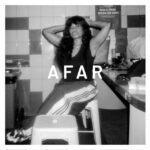
Unfinished love rarely disappears; it changes the weather. Ngaiire’s “Afar” lives in that altered atmosphere – a dreamy, lush alt-R&B enchantment where longing turns ordinary life kaleidoscopic. Electronic future-soul, gospel warmth, and silken alt-pop textures drift together beneath her voice, creating a song that feels suspended between memory and possibility, the body rooted in place while the heart wanders elsewhere.
Ngaiire writes from the dangerous comfort of mutual recognition. “Now I’m looking at you looking at me / and she’s looking at the both of us,” she sings, capturing the instant an old connection reenters the room and every settled boundary begins to blur. The chorus softens that tension into a slow, radiant sway – “Maybe we’re two shadows / dancing round the table / I will always love you / even from afar” – but distance offers no real protection. Desire remains dark, delicious, and close enough to touch.
“Everyone has unfinished business, that sliding doors moment – the ones that you never got to explore that you’ll always think about,” Ngaiire shares. “And in some ways it’s better left unfinished because some things are meant to propel and not ground you.”
Written with bandmates Andrew Bruce and Tully Ryan, “Afar” emerged from Ngaiire’s desire to capture the chemistry they already shared onstage. “This is a world that was conjured up in our happy place – just jamming,” she explains. “It’s not attached to anything. It’s merely an emotional breath in the whole world of Ngaiire.” That freedom gives the track its intimacy: It does not need to resolve the relationship or force its lovers together. It only needs to inhabit the ache long enough for the fantasy to become real.
“When the song started to take form it sounded like that limerence dream state you can get to doing everyday menial things like your laundry or grocery shopping,” Ngaiire adds. “It’s delicious, dark and desperate but also intoxicating to the point that an overcast day can appear like a kaleidoscope of possibilities. It feels like where the heart drifts but the body stays.”
“Afar” understands that some loves survive precisely because they remain unfinished. Ngaiire lets fantasy, regret, and devotion circle one another until the song’s final plea erupts – “Ruin me to kingdom come / rattle me until I break.” She never mistakes distance for detachment. Instead, she transforms the ache of what might have been into a transportive reminder that certain people do not leave our lives; they keep moving through them from afar.
:: “Under Your Sun” – horse ::
Mitch Mosk, Beacon, New York

horse turn jealousy’s ugliest impulses into a radiant, full-body rush. “Under Your Sun” aches in all the best ways, its churning, angular guitars wrapping raw resentment in a catchy, cathartic rush. The Newcastle/Mulubinba five-piece drive the song forward with propulsive drums, textured keys, and vocals that sound caught between accusation and surrender, creating an intoxicating sway that keeps tightening until the whole track seems ready to break open.
That tension lives in the song’s central image. “Trust in friends you love, they just want to fuck / I’m just impressed you let them give you the best of us,” Mason Cappiello sings, watching intimacy become communal property while he remains trapped in another person’s orbit. The repeated “They’re under your sun / I’m under your sun” turns devotion into dependence, its warmth increasingly difficult to separate from the damage it inflicts.
Featured on horse’s debut EP Ask me again next year, out July 10th, “Under Your Sun” captures the collision of garage rock, post-punk, and midwest emo at the center of the band’s sound. Formed in late 2024, horse have moved quickly, earning a BIGSOUND appearance, triple j support, and a growing reputation for live performances far more assured than their short history would suggest. Here, that confidence comes through not as polish, but as control – every jagged guitar line and rhythmic surge sharpening the song’s emotional unrest.
“Under Your Sun” is charming because it never cleans up its mess. Love, lust, jealousy, and humiliation all remain tangled together, and horse let that friction power the track’s radiant release. By the time the final refrain arrives, the song is no longer asking whether this connection can be saved. It is reveling in the catharsis of finally naming what it has become.
:: “Sweet Fool” – Caddy Callaghan ::
Joe Beer, Surrey, UK
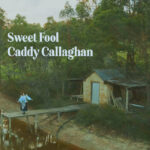
Caddy Callaghan wears her heart on her sleeve in new single “Sweet Fool,” a wholesome, feel-good pop-rock track built around organic instrumentation, with piano, guitars and percussion providing the foundation for soaring, soulful vocals filled with emotion. Written during her time as a primary school teacher, the single reflects the mixed emotions of juggling everyday responsibilities with the desire to pursue a lifelong creative dream. As Callaghan explains, “The song is a calling to follow your true dream and inspiration. I could see where my heart wanted to be, but I also knew I had to walk back into the classroom when the bell rang. It was about holding onto that vision, even when it felt far away.”
Recorded in Nashville with fellow Australian artist and producer Rick Price, “Sweet Fool” is an honest and melodic song that proves to be an instant ear-worm. The track gives us a hint of what to expect from Callaghan’s upcoming debut solo album There You Are, which is said to detail the songwriter’s own journey, as she navigates family life and her all-encompassing love of music.
:: How To Replace Anxiety With A Broken Heart – James White & The Wild Fire ::
Danielle Holian, Galway, Ireland
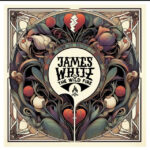
On How To Replace Anxiety With A Broken Heart, James White & The Wild Fire deliver their most cohesive and compelling collection of songs to date, distilling the emotional intensity and musical adventurousness that have steadily defined their rise since forming in 2019. Across five carefully crafted tracks, the band explores themes of uncertainty, longing and personal reckoning with a sense of honesty that never feels self-indulgent. Instead, the EP thrives on its ability to transform inner turmoil into something uplifting and deeply engaging. While its title suggests emotional conflict, the music itself is remarkably vibrant, driven by infectious melodies, spirited performances and an undeniable sense of momentum. It is a record that feels both introspective and expansive, drawing listeners into its world with ease.
The EP’s sequencing reveals a band increasingly confident in their artistic identity. Opening track “Trolitunga” immediately establishes the record’s blend of roots authenticity and psychedelic ambition, while “The Girl From Fort Worth” and “The Ballad of Jimmy Blanco” showcase James White’s gift for vivid storytelling and memorable melodic construction. Throughout, the musicianship is exceptional without ever becoming showy, with each performance serving the songs rather than competing for attention. “Lysander Hayes” continues to broaden the emotional and sonic landscape, highlighting the group’s ability to weave atmospheric textures into arrangements that remain firmly grounded in Americana and bluegrass traditions. There is a natural fluidity to the EP, with every track contributing to a larger narrative while maintaining its own distinct character.
Perhaps the record’s greatest achievement lies in how seamlessly it balances experimentation with accessibility. The band’s psychedelic folk-rock leanings are more pronounced than ever, yet they never overshadow the warmth and immediacy at the heart of the songwriting. Closing track “Bonfire” serves as the perfect culmination of this approach, unfolding with patient restraint before blossoming into a stirring emotional release that lingers long after the final notes fade. It encapsulates everything that makes How To Replace Anxiety With A Broken Heart such a rewarding listen: rich arrangements, heartfelt performances and a genuine emotional core. By successfully capturing the energy of their live performances while expanding their studio sound into more adventurous territory, James White & The Wild Fire have produced an EP that feels both ambitious and inviting, marking a significant step forward for a band confidently forging their own path through contemporary roots music.
:: “nice meeting you, again” – al coffey ::
Danielle Holian, Galway, Ireland

On “nice meeting you, again,” London-based artist al coffey transforms a deeply personal experience into a moving and universally resonant piece of songwriting. Inspired by the heartbreaking reality of watching a beloved grandparent slip into cognitive decline, the single approaches its subject matter with remarkable sensitivity and restraint. Rather than relying on overt sentimentality, coffey allows the emotion to emerge naturally through carefully observed lyrics and an intimate vocal performance that feels disarmingly honest. The result is a song that captures the quiet devastation of becoming unrecognisable to someone whose presence helped shape your life, while also celebrating the enduring power of memory and connection. It is a delicate balancing act, and one that coffey navigates with impressive maturity.
“nice meeting you, again” is equally affecting with its intriguing production. Built around gentle piano lines, understated synth flourishes and immersive atmospheric textures, the arrangement creates a soft, cinematic backdrop that perfectly complements the song’s emotional core. Producer GETH exercises admirable restraint throughout, allowing space and subtlety to become as important as melody, while gradually building a soundscape that feels both expansive and deeply personal. Coffey’s voice remains the focal point, carrying each line with warmth and vulnerability as the track unfolds at an unhurried pace. The accessibility of the songwriting ensures its themes remain immediate, while the layered production adds depth and nuance with every listen. In tackling a subject that is profoundly painful yet widely relatable, al coffey has crafted a single that is both emotionally devastating and quietly beautiful, offering a poignant reminder of the bonds that persist even when memory begins to fade.
:: “weary soul” – Dani Offline ::
Mitch Mosk, Beacon, New York

Dani Offline makes loneliness sway. Released June 26th, “weary soul” wraps lovelessness and exhaustion in a warm, breezy groove, its laid-back ‘70s radiance disguising lyrics that cut with mounting desperation. Live drums, vintage guitars, jazz-inflected harmony, and soft Juno-106 textures keep the song light on its feet, even as Offline wonders whether everyone else has found the intimacy still eluding her.
“I wrote ‘weary soul’ using direct quotes from my diary,” Offline shares. “I remember sitting at the piano and being surprised by how well the words fit to music, and ultimately wanted to write a song that feels really honest and vulnerable, kind of like a message in a bottle.”
Inspired by an essay Offline wrote examining weariness in Black music, the song treats fatigue not as surrender, but as an emotion that can still carry resistance, longing, and momentum. That tension lives in the gap between its radiant arrangement and its exposed refrain: “I’m sick with wanting / someone to hold me / someone to carry my weary soul.” Her voice remains composed, but the repetition keeps pressing against that composure until desire begins to sound less like a confession than a plea.
“In terms of the instruments, I love when a happy song has sad, introspective lyrics, and wanted to kind of ‘fake out’ the listener,” she explains. “I wanted to make a song that feels laid back, warm, and breezy, but with lyrics that are kind of biting, maybe even a little desperate.”
That contrast gives “weary soul” its seductive spell. The song feels good in the body even as its questions refuse easy comfort, from “Is everyone falling in love without me?” to the final, devastating “Did you ever know me?” Its closing haze of tape-recorded harmonies and Rhodes arpeggios leaves Offline suspended between wanting and knowing, still reaching for proof that love might arrive before weariness settles in for good.
“I guess my favorite thing about this song is that it feels good to sing along to it, to shout the chorus and feel like I’m wearing your heart on your sleeve,” Offline says. “I listen to it in the car a lot, and when I play guitar during live shows, I get to put some of my frustration into the hits, and that feels good.”
That release is exactly what makes “weary soul” so exceptional. Dani Offline has made a song that cradles heartbreak without softening it, transforming diary-page vulnerability into radiant, exquisitely arranged soul-pop catharsis. Every choice lands – the easy swing, the vintage warmth, the desperation tucked inside the melody – yet the song never feels overworked. It simply opens its arms, invites us to sing, and leaves us lighter for having carried its burden together. “weary soul” is a tremendous achievement: Deeply thoughtful, utterly human, and impossible to shake.
:: “Something About You” – Kiki Holli & The Remedy ::
Chloe Robinson, California

Kiki Holli & The Remedy’s “Something About You” is a dark, hypnotic, slinky piece that captivates from the moment it begins. Her lush, haunting layered vocals caress you like a soft whisper in the ear. Holli’s single is an intimate exploration of love, vulnerability, and truth, unfolding like a late-night confession of emotional transparency. The song is off of Kiki Holli & The Remedy’s EP of the same name. The offering dives deep into themes of passion, longing and uncertainty. Every release on the 5-track collection hooks you with an otherworldly quality, with this title track serving as a spellbinding introduction to Holli’s mesmerizing creation.
Southern California singer-songwriter KiKi Holli constructs a bold fusion of indie pop and rock. After receiving her BFA in voice and theater, Holli rose to prominence through her work co-creating and starring in Forever Dusty: The Dusty Springfield Musical, which debuted off-Broadway. Her theatrical training serves as the heartbeat of her artistry, allowing each composition to become a fully realized narrative brought to life through her voice. With KiKi Holli & The Remedy, Holli steps into a new creative chapter, taking her talents to new heights.
:: “Shake Me” – Bear Grass ::
Mitch Mosk, Beacon, New York
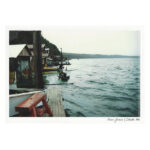
A life can look complete long after it stops feeling like your own. Bear Grass’ dreamy “Shake Me” lives inside that rupture – the moment when the future begins closing in and staying put feels more frightening than stepping into uncertainty. Released April 17th, Katie Hammon’s urgent indie folk anthem finds her asking to be jolted awake before habit hardens into fate: “There’s a girl inside me / that wonders who she’ll be / Is she not the person that she thought she’d see?”
“‘Shake Me’ came the winter after I left a career and stepped into my own world,” Hammon shares. “I could feel time moving in a way I couldn’t ignore anymore. I had built a life that looked full from the outside, but internally I felt disconnected from it, like I was playing a role I had outgrown.
“I wrote the beginning of the song during a songwriting workshop with Laura Veirs. At the time, I was thinking a lot about how often I move through life without fully inhabiting it. There’s a tension between the path you’re on and the one you quietly know is yours, and the longer you wait, the harder it becomes to step off. There’s also a weight that comes with that choice, stepping away from something visible and defined into something of your own, and I felt that pressure from many directions.”
The third song off Bear Grass’ six-track collection Distance (out next month), “Shake Me” is the project’s most rhythmic and physically insistent moment. Ryan Stewart’s keys and Ian White’s drums create a restless pulse beneath Hammon’s poised delivery, while Jack Frerer’s string and trumpet arrangements widen the track without eclipsing its exposed center. When Hammon cries, “Shake me, wake my eyes / I want to feel the current,” awakening becomes both an internal demand and a bodily sensation – a need to reenter her own life before time moves beyond her reach.
“The song became a kind of interruption,” she explains. “A way of asking myself to wake up inside my own life. To recognize the patterns I was repeating and to question whether they were actually leading me anywhere I wanted to go. I thought about who I had been, what my younger self might see in me now, and how I wanted to move forward with more intention.”
That personal alarm gradually expands beyond Hammon herself. Water, time, and an unstable horizon give “Shake Me” a second life as a song about collective inaction, where the patterns awaiting disruption are not only private routines but the damaging systems we continue to sustain. Its urgency comes from refusing to separate those scales: The same courage required to abandon an inherited version of yourself may also be needed to confront a future being shaped in real time.
“I’ve always been drawn to the duality of lyrics, how they can shift depending on where you’re standing,” Hammon says. “While I wrote the song from a personal place, it also began to take on a broader meaning. The imagery around water, time, and urgency started to reflect something larger. The rising sea, the instability of what comes next, the quiet ways we participate in what’s unfolding around us.
“It mirrors that same feeling. That we are on the edge of something we can still influence, if we choose to see it. That there is a moment, both personally and collectively, where we have to wake up and step outside the patterns we’ve been living in.”
“Shake Me” does not offer reinvention as a clean break or an instant triumph. It captures the frightening interval where awareness has arrived but certainty has not, and asks us to move anyway. “So we can break the patterns / So we can feel alive,” Hammon sings, transforming doubt into a reason to act rather than an excuse to wait. As she puts it, “It’s less about having an answer and more about allowing yourself to feel the urgency of the question.”
:: “Sh*t Kicker” – Lucy Frost ::
Mitch Mosk, Beacon, New York

Bad decisions rarely arrive with this much charm. Lucy Frost’s “Sh*t Kicker” is a sarcastic indie-pop rush built for the exact moment attraction overrides judgment, all tight percussion, churning momentum, and guitar work that keeps the track kicking forward. Frost sounds completely in on the joke, delivering every line with an emphatic wink as she romanticizes a man whose appeal seems directly proportional to the number of warning signs surrounding him.
The result is intimate, propulsive, and instantly smile-inducing. Frost’s vocal phrasing snaps against the beat, giving the verses a conversational looseness before the chorus tumbles into a hilariously specific character sketch: “He’s a shit kickin’, toolbox fixin’ / Drop-out Christian, right like Nixon.” Pedal steel adds a country twang without softening the song’s post-punk bite, while the repeated “I’ll make you mine” turns infatuation into a stubborn little mantra. She knows exactly what she is signing up for. That only makes her want it more.
“A while ago I was watching a Bob Dylan documentary and at one point, Dylan refers to somebody as a ‘Shit Kicker.’ I immediately had to put it in a song,” Frost says. “I’d already had this raunchy, kind of country-sounding thing, so it came together fast. To me, ‘Shit Kicker’ is about romanticizing all of the bad, imperfect, bum-like qualities of a guy. It’s Wet Leg with a pedal steel, post-punk meets Role Model’s Saint Laurent Cowboy, and is chock-full of sarcasm and dark humor that I hope everyone will be shouting by the end of the summer.”
Released July 8th as the final single ahead of Frost’s forthcoming summer album, “Sh*t Kicker” finds the Boston-born, Los Angeles-based singer/songwriter leaning fully into the wit beneath her darker pop instincts. A Berklee-trained multi-instrumentalist with a background in film scoring, Frost knows how to make every detail pull its weight, from the clipped guitar accents to the groove that practically demands a head nod. The craft is meticulous, but the song never loses its reckless grin.
“Sh*t Kicker” understands that desire is often funniest when we stop pretending it is logical. Frost does not redeem her deadbeat heartthrob or warn herself away from him. She lets the fixation run wild, turning every flaw into another reason to lean closer. It is a sharp, intoxicating portrait of wanting the wrong person and enjoying every second of the fall.
:: “Twinge” – Tender Claws ::
Danielle Holian, Galway, Ireland

Tender Claws continues to carve out an unmistakable identity with the striking new single “Twinge,” a bold and emotionally resonant preview of her forthcoming debut EP, Tear Him To Pieces. The Belfast-born, North West England-based artist, Tess Corr, has built a sound that effortlessly balances abrasive alt-grunge intensity with ethereal atmospherics, and “Twinge” may be her most immediate and compelling release yet. Produced by Ben Harper, the track surges forward on a fuzz-drenched bassline, relentless percussion, and towering guitars, while shimmering synth textures provide a cinematic backdrop that elevates its emotional impact. Corr’s captivating vocal performance remains the centrepiece, delivering melodies that are both hauntingly memorable and refreshingly accessible without sacrificing the song’s alternative edge.
“Twinge” transforms the familiar sting of heartbreak into something empowering, capturing the bittersweet rush of memories that can be sparked by a photograph, a song, or a place tied to someone once loved. Drawing inspiration from the likes of Queens of the Stone Age, PJ Harvey, Nine Inch Nails, and Chelsea Wolfe, Tender Claws expands her sonic palette with confident post-punk influences that inject fresh urgency into her signature gothic aesthetic. The result is a cathartic anthem that embraces vulnerability while celebrating the liberation that can emerge from loss. With its infectious energy, immersive production, and fearless emotional honesty, “Twinge” not only raises anticipation for Tear Him To Pieces but also firmly establishes Tender Claws as one of the most exciting independent alternative artists to watch in 2026.
:: “Holdin’ On” – Chris Pannella ::
Danielle Holian, Galway, Ireland

There is a quiet confidence at the heart of Chris Pannella’s “Holdin’ On” that separates it from many contemporary singer-songwriter releases. Rather than leaning on grand gestures or heavily polished production, Pannella places unwavering faith in the power of honest storytelling. Inspired by the sudden loss of his close friend Thomas, the single unfolds as a deeply personal meditation on grief, memory, and the invisible threads that continue to connect us to those we’ve lost. What makes the song particularly compelling is its refusal to dramatize emotion for effect. Instead, Pannella allows the weight of the narrative to emerge naturally, trusting listeners to meet him in the spaces between the lyrics. That restraint gives “Holdin’ On” a rare authenticity, transforming an intensely personal experience into something universally recognizable.
The composition mirrors the emotional subtlety of its subject matter. Reflective melodies, understated instrumentation, and a measured vocal performance create an atmosphere that feels intimate rather than theatrical. Every creative decision serves the story, allowing the songwriting to remain the emotional centerpiece. Pannella demonstrates an understanding that the most affecting songs often leave room for listeners to bring their own experiences into the music, rather than dictating exactly how they should feel. His lyricism captures both the devastation of unexpected loss and the quiet gratitude that accompanies remembering someone whose influence continues long after they’re gone. The result is a song that explores grief not as a singular event but as an evolving relationship with memory itself.
“Holdin’ On” ultimately succeeds because it speaks with sincerity instead of spectacle. In an era where emotional vulnerability can sometimes feel performative, Chris Pannella offers something refreshingly genuine; a tribute built not on dramatic declarations but on thoughtful reflection and lived experience. The song establishes him as an emerging songwriter with a clear artistic identity, one rooted in emotional intelligence, careful craftsmanship, and an unwavering commitment to authenticity. More than simply commemorating one friendship, “Holdin On” becomes a poignant reminder of music’s enduring ability to preserve the people who shape our lives, ensuring that their stories continue to resonate long after the final note fades.
:: “You’re So Beautiful” – Deco ::
Mitch Mosk, Beacon, New York

Deco know exactly what summer should sound like. As undeniably invigorating as it is utterly irresistible, “You’re So Beautiful” is big, sweaty, bold, and catchy – a dreamy, pulsing indie-pop anthem soaked in warmth and sunlight. Released July 3rd, their latest single arrives with the easy charm of a song built to make people smile, but its sweetness never feels weightless. Beneath the gleaming synths and heart-forward rush is the dizzying recognition that another person has become essential to your life.
The Nottingham band stretch that realization into pure physical release. “You’re So Beautiful” moves with an infectious beat and a chorus wide enough for festival fields, growing brighter and more euphoric until its closing stretch erupts into a full-blown dance party. Soaring saxophone, spirited keyboards, and radiant synths work in tandem, each new layer pushing the track further into ecstasy. By the end, Deco are no longer describing joy – they are generating it.
“‘You’re So Beautiful’ captures the rush of realisation that hits when you finally understand how important someone is to you,” frontman Max Kendall says. “At its heart, it’s a song about an emotional breakthrough. We wanted to take that feeling and turn it into something uplifting and euphoric that people could share together.”
The third single off Deco’s forthcoming sophomore album, Dreamhouse, “You’re So Beautiful” follows its title track and “Weekend,” further illuminating a record driven by escapism, renewed creative confidence, and a desire to chase pleasure without apology. Arriving October 23rd, the album follows a breakthrough stretch that saw the siblings and lifelong friends tour with Nile Rodgers & CHIC and Sophie Ellis-Bextor, land their debut album Destination: I Don’t Know in the UK’s Top 10 Album Sales chart, and earn endorsements from both Rodgers and Elton John. Yet “You’re So Beautiful” does not sound like a band protecting their momentum. It sounds like one chasing a larger, freer version of themselves.
That expansion came through the only outside collaboration on an otherwise self-contained album. After reaching a point where the band needed fresh air, Kendall headed into the studio with Bombay Bicycle Club’s Ed Nash, whose shared love of Caribou helped push Deco’s romantic instincts toward emotive electronics and widescreen dance-pop grandeur.
“The only time we stepped out of this internal process was when we wrote the 3rd single ‘You’re So Beautiful’, with Bombay Bicycle Club’s Ed Nash,” Deco explain. “I definitely felt the need for an external collaborator and a change of scenery at the point in time – so I headed to Ed’s studio to start something from scratch with him and we came out with this song after bonding over our love of dance artist Caribou, which I think you can hear a little bit in the track.”
The exception only underscores how decisively Deco took ownership of Dreamhouse. Where their debut drew strength from a wide network of writers and producers, its successor finds the band folding those lessons into a process shaped almost entirely by their own instincts. “There’s something about this ‘Dreamhouse’ that feels like a real progression for us,” they say. “I think producing it ourselves, fully, for the first time, really helped us realise and achieve something we’ve always wanted to.” That control was not about proving they could handle every detail alone. It gave them permission to approach the record as listeners first, measuring each choice by whether the music offered the same transportive rush they sought from the artists they loved. “It sounds really obvious for an artist to want this – but we really felt strongly about making something we’d genuinely listen to as fans of music and not just as musicians that are proud of what they’ve made,” they continue. “An album that helps us escape as a listener, in addition to the actual process of making it.”
“We spent a lot of our first album doing writing sessions with others and working with a variety of different producers – and it felt right to go almost completely internal with this album,” Deco add. “There hasn’t really been that much outside influence at all. And I think the hyper collaborative process of album 1, made us want to go it alone – but we couldn’t have done this without everything we learnt doing the first one.”
That newly concentrated process gave Dreamhouse a reason to exist beyond the simple urge to keep creating. Deco were building shelter from the noise around them, not by ignoring reality, but by making a world vivid enough to restore their appetite for it. “The album reflects everything we’ve been through and listened to over the last 3 or 4 years. The need for escape and positivity,” the band share. “The world is a noisy place at the moment – and for us, the process of making ‘Dreamhouse’ took us out of it, which I think really comes across.” The joy running through “You’re So Beautiful” therefore carries intention: Its brightness is not decorative, but restorative. “It’s a fun, and vibrant record and it all stems from its purpose when making it,” they continue. “I don’t think that’s really happened before. We’ve always just written music because we love doing it – but this album had a real purpose for all of us and it made us feel great.”
That purpose also became tactile. Vintage Juno-6 synthesizers pulled Deco away from predetermined ideas and back toward discovery, allowing the physical act of playing to steer the record before habit could intervene. “Sonically, a lot of the inspiration came from the instruments we bought before we started to write new music, which eventually became the album,” they explain. “Both JD & myself both bought Juno 6’s – straight out of 1982. And it’s probably the best synthesizer that we’ve ever bought.” Its immediacy helped keep spontaneity alive: “There is something so intuitive about them, to the point that whenever we sat down to have a play, a new song would almost always come out of it. It just happened. They’re also incredibly diverse – so it kept things fresh throughout the process of writing – without getting stuck in the rut of using the same sounds for the sake of it.”
Life on the road widened that palette further. “In the lead up to starting to write after the release of our first album, we were touring so had a constant rotation of music in the van. Bands like Nation Of Language, Everything Everything, Talking Heads, Hot Chip,” Deco recall. Those records encouraged them to roughen the immaculate surfaces of their debut, drawing guitars and richer textures into the synth-pop foundation beneath them. “I think listening to all of these bands on tour left a desire to make something slightly more interesting, textured and indie/alt pop leaning as opposed to our very clean & polished synth pop debut,” they add. “This lead to experimenting with things we hadn’t done before and bringing a bit more guitar back into our music – and I think it’s resulted in a real hybrid of what we would see as our signature sound blended with the influences of the bands we love.”
“You’re So Beautiful” captures the promise of that evolution in one intoxicating burst, but its dazzling scale never eclipses the vulnerable confession underneath. “I think that you should know / that you’re not ordinary / but do you hear me talk?” Kendall sings, locating the song’s tenderness in the distance between loving someone and making sure they understand it. Deco have made an anthem about recognizing love, but also about voicing it before admiration becomes another thought left unshared. By the time the saxophone rises and the final beat takes hold, escape no longer feels like running away. It feels like arriving exactly where you want to be.
:: “Some People See But I Don’t” – Doctor Noize ::
Chloe Robinson, California

Coinciding with Disability Awareness Month, hailed family music creator Doctor Noize shares his newest single, “Some People See, But I Don’t.” Many individuals are often quick to judge others for their limitations when compassion and kindness are what truly matter. This powerful piece reminds us that obstacles don’t define a person’s ability to live a full life and that people with disabilities are no different from anyone else. Blending pop components with bold funk rhythms, the anthem offers a glimpse into his wife Janette’s experience living with blindness. Lines like, “When my husband is driving me places, I help remember the directions. My daughter helps me shop. I make the family healthy food to eat,” highlight the value of mutual support. Rather than focusing on what may be perceived as a constraint, Doctor Noize’s song celebrates independence, connection, and the everyday moments that shape a person’s life.
Doctor Noize’s artistry extends well beyond the world of children’s music. With a background that spans Stanford Music, a Master of Recording Arts, entrepreneurship, education, writing, public speaking, app development, studio ownership, and community leadership, he has created a multifaceted career centered on imagination, empathy, and meaningful bonding. After experiencing profound loss as a child and finding solace through music during the most difficult year of his life, he made it his mission to share that same sense of healing, joy, and inspiration with others. This track is another profound single that also motivates others, encouraging persistence, acceptance and love.
:: Songs of Noah Villeneuve – Noah Villeneuve ::
Danielle Holian, Galway, Ireland
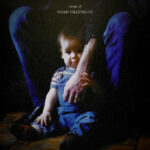
Noah Villeneuve’s Songs of Noah Villeneuve arrives as a quietly commanding debut, the kind of record that reveals its depth not through spectacle but through accumulation. Across ten tracks, the Canadian-born, Bristol-bred, London-based songwriter crafts an emotionally precise study of heartbreak, sobriety and self-reckoning. There’s a literary quality to his writing that recalls Leonard Cohen at his most unflinching, while the emotional candour and melodic fragility often nod toward Elliott Smith and the reflective indie-rock contours of The National. Yet Villeneuve never feels like a composite of his influences; instead, he filters them through a distinctly personal lens of lived experience.
The album’s opening stretch sets the tone with striking clarity. “Kneejerk” and “Buzzcut” establish Villeneuve’s gift for balancing intimacy with melodic immediacy, their understated arrangements allowing his voice, fragile yet assured, to carry the emotional weight. Absentee deepens the sense of emotional displacement, while “Surfacing” feels like the first tentative breath of air after prolonged submersion. There’s a subtle shift in energy as “Saboteur” introduces internal conflict with sharper edges, its lyrical self-interrogation echoing the emotional volatility found in early Bon Iver or Waxahatchee’s more confessional work. Throughout, Josh Gallop’s production at Stage 2 Studios in Bath remains restrained but richly textured, ensuring every lyric lands with clarity.
As the record progresses, Villeneuve widens his sonic palette without losing cohesion. “Moonbeams” and “Gilded” lean into warmer Americana tones, evoking the understated sweep of artists like MJ Lenderman or even early Sufjan Stevens, while Tanlines introduces a fleeting sense of sunlit melancholy that feels deliberately deceptive in its brightness. The closing pair, “Symphony” and “Lacunae,” are where the album fully crystallises its emotional intent, less about resolution than acceptance. The former swells with restrained grandeur, while the latter strips everything back to a quiet, lingering ache that feels both unresolved and strangely peaceful.
Songs of Noah Villeneuve succeeds because it understands restraint as its own form of intensity. Villeneuve’s songwriting doesn’t chase catharsis so much as inhabit it, allowing listeners to sit within the unresolved spaces of memory, regret and recovery. Drawing from the emotional clarity of Elliott Smith, the poetic weight of Leonard Cohen and the widescreen melancholy of The National, he shapes something unmistakably his own: a debut that is understated yet deeply affecting, and one that lingers long after “Lacunae” fades out.
:: “This Is a Warning” – Onelinedrawing ::
Mitch Mosk, Beacon, New York
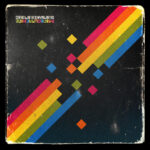
“Is my world falling apart / and if I don’t care, when should I start?” Panic rarely sounds this invigorating. onelinedrawing’s “This Is a Warning” is a full-body freakout set to an anthemic emo rush, feverish in its emotion and unrelenting in its infectious energy. Guitars surge, drums drive hard, and Jonah Matranga sings as though every answer has vanished at once, turning disorientation into a chorus built to be shouted back.
Released June 18th via Iodine Recordings, “This Is a Warning” opens RAINBOWMACHINE, onelinedrawing’s first full-band rock album in more than 20 years, with Matranga joined by Marcos Nova, Paul DeBenedictis, and Nico Magone. Produced by Jay Maas, the track gives years of unease a widescreen outlet without sanding down the intimacy at its center. “There is no clock, there is no ticking, we are just on the move,” Matranga sings with a sinister edge at the start, before the song’s central dilemma bursts open: “Am I supposed to go dark, or let my light shine?” The question is existential, but the delivery is pure ignition.
There is no clock, there is no ticking
We are just on the move
I don’t give a fuck about all of this picking
There is no thing to choose
Is my world falling apart
And if I don’t care, when should I start?
Is this a warning? Is this a sign
Am I supposed to go dark,
or let my light shine shine shine
Is this a nighttime or a morning
Is this a warning, is this a warning
“‘This Is A Warning’ is, on its face, just a song about freaking the f*** out, not knowing which way is up,” Matranga says. “Given the state of the world these days, it feels all too fitting, and I knew it had to be on the album. That said, the song was written for a character, or as a character, I guess. Someone more troubled than me, really. Someone who’s been through much worse than me, and never sought help.”
“I’ve had a book or a movie or a show or something in my head about this person for over ten years now. We tried to make a short film years ago that didn’t quite work out, and it taught me a lot, and it birthed ‘This Is A Warning.’ That said, I don’t know when the world will get to meet the character more fully, if ever. For now, there’s ‘This Is A Warning,’ and at least one more from the album. That one’s called ‘Failures Virgin,’ and it’s a whole other level of madness. I’m grateful to all the voices in my head. They teach me.”
What makes “This Is a Warning” hit so hard is the way it refuses to choose between collapse and catharsis. It captures the vertigo of not knowing which way is up, then converts that confusion into forward motion. The world may be falling apart, but onelinedrawing make the freakout feel communal – a delirious reminder that sometimes letting your light shine begins with admitting you have no idea what comes next.
Is my world falling apart
And if I don’t care, when should I start
Is this a warning? Is this a sign
Am I supposed to go dark,
or let my light shine shine shine
Is this a nighttime or a morning
Is this a warning, is this a warning
:: “The Way You Feel” – Wings of Desire ::
Charlie Recksieck, San Diego, CA
British indie rock band Wings of Desire has a great song worth checking out, “The Way You Feel.” If you don’t know them, they surfaced in 2023 with one album and a steady output of singles and videos. They can appear on “shoegaze” playlists, but I think it’s preferable to say that they have the 80s synth/orchestral feel of a-ha or Alphaville but closer to CHVRCHES in a modern context.
The lyrics are oblique but inspirational – You don’t have to feel this way / No you don’t have to feel this way / The way you feel. They have a similar sound to Arcade Fire without the baggage – a couple of permanent figures and multi-instrumentalists, with a collective now built around them to get a BIG sound when they need it. The video looks like something from the 2020s harkening back to an 1980s sensibility: great footage from a Gaelic celebration, big arrangements, moody exuberance, kinda 80s, kinda ancient, and kinda Midsommar.
:: “The Orchard” – Frowning Hours ::
Mitch Mosk, Beacon, New York

We have never had more ways to reach one another, and yet isolation keeps winning. Frowning Hours’ “The Orchard” meets that contradiction with compassion rather than resignation, tracing how judgment hardens into distance and how empathy might lead us back. Warm folk textures and buoyant melodies keep the track reaching outward even as Ger Kelly sings of language that wounds, assumptions that flatten, and private battles no outsider can fully see.
The Irish singer/songwriter and actor launched Frowning Hours in 2024 after more than 15 years onstage, and that storytelling instinct is everywhere here. Kelly writes with the precision of someone alert to the damage a line can do: “Compassion turned its cheek / Compassion fell asleep / And never woke up.” Later, the song’s central image opens into an invitation – “If you move closer to the orchard, you will find” – suggesting understanding begins not with certainty, but with the decision to come nearer.
But that violence
Is like nothing you have seen.
You talk about that violence
Like it’s something
You have seen.
“The meaning of this song changes for me now and again, actually,” Kelly says. “But ultimately, I think it’s a song about the resuscitation of a sense of community that seems to be lost these days. It’s a call for compassion and understanding. It’s very strange to me how, in the golden age of communication, there’s so much isolation. I guess I’m trying to say, ‘hello in there,’ like John Prine advised. But not just to the old. To anyone who needs it x”
Conversations
As the days unfold.
Sifting through the lies
In what we’re told.
Choose your savior:
Bibles or benzos.
Ageless angel wasted
Claims that we’re alone.
We’re alone.
“The Orchard” never pretends community can be repaired by a chorus alone. Its power lies in asking listeners to look again, listen longer, and resist the urge to mistake an opinion for understanding. In a culture fluent in instant judgment, Frowning Hours offer a more demanding kind of hope – the belief that compassion can still be practiced, person by person, until isolation loosens its grip.
— — — —

Connect to us on
Facebook, 𝕏, Instagram
Discover new music on Atwood Magazine
:: Weekly Roundup ::
follow WEEKLY ROUNDUP on Spotify
:: This Week’s Features ::