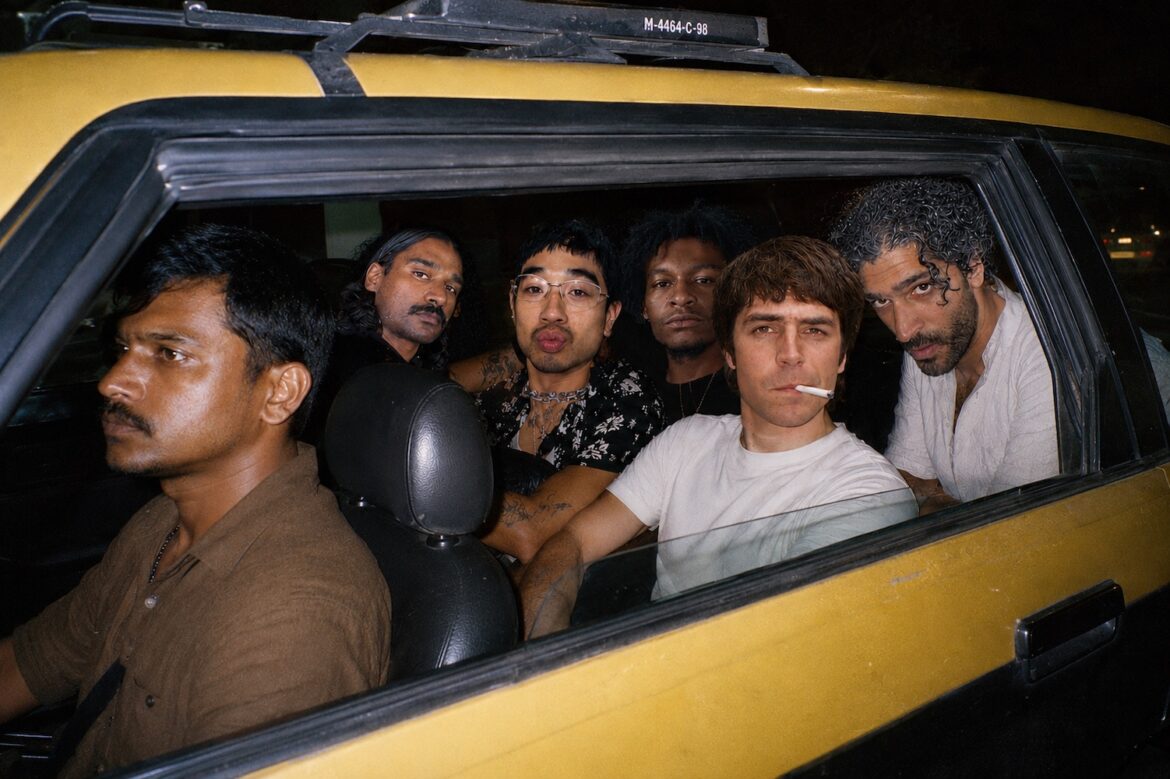
Anti-algorithm and anti-outcome, New York City art-punk collective Saudi Oil channel the psychic whiplash between solitude and sensory overload into “Wires,” a feverish, unapologetic cry for help that lets the city’s danger, humor, and beautiful disorder rip through every jagged hit.
Stream: “Wires” – Saudi Oil
Sometimes, the distance between total isolation and total overload is no wider than a front door.
Jagged, feverish, and beautifully volatile, Saudi Oil’s “Wires” tears into that brutal threshold, channeling the disorientation of leaving an empty apartment and stepping straight into Canal Street’s relentless crush. Angular guitars scrape against sudden rhythmic blows while Christopher Al-Jumah’s voice burns at the center, each collision mimicking a nervous system shorting out in public.
A riot act from inside the spiral, “Wires” carries both the thrill and terror of losing control.

My wires are tangled
I can not seem to keep em out
My wires are tangled
Can someone please help me out
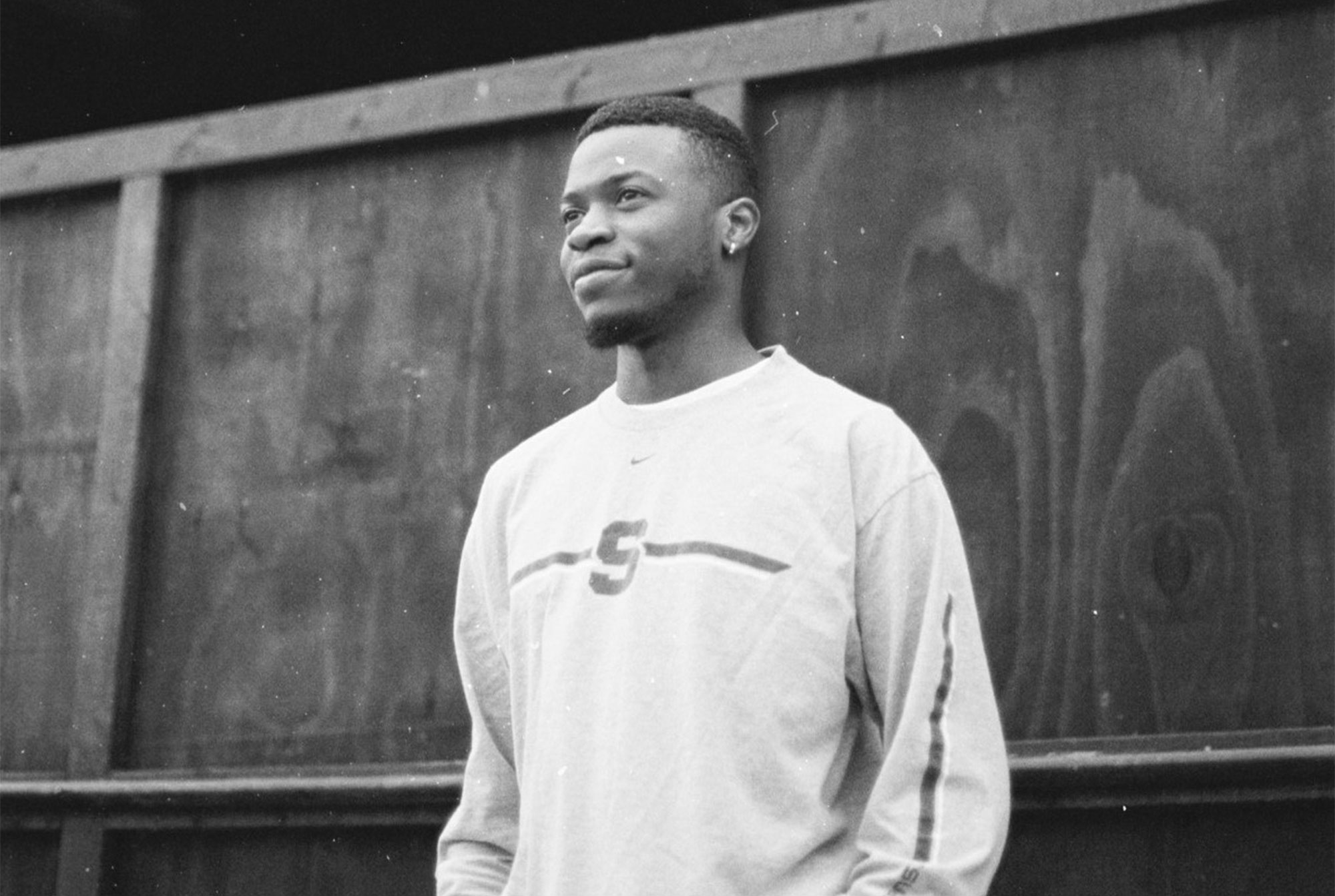
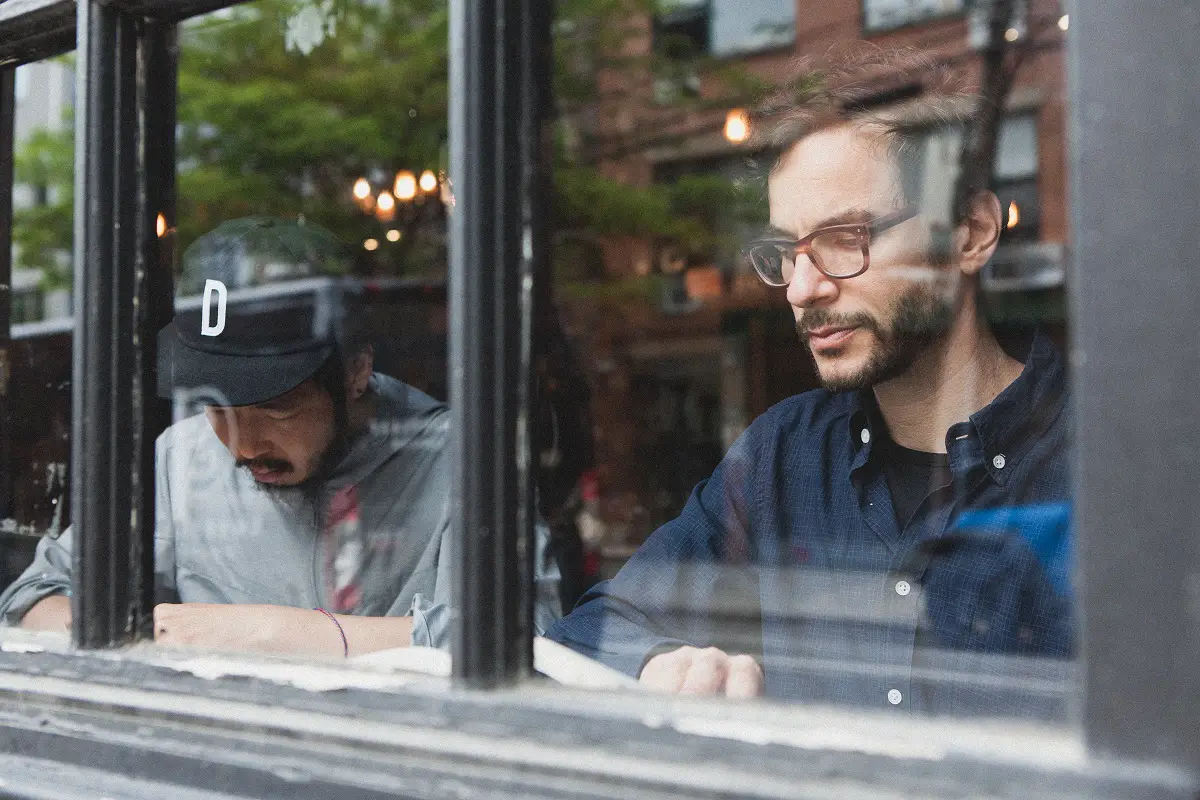
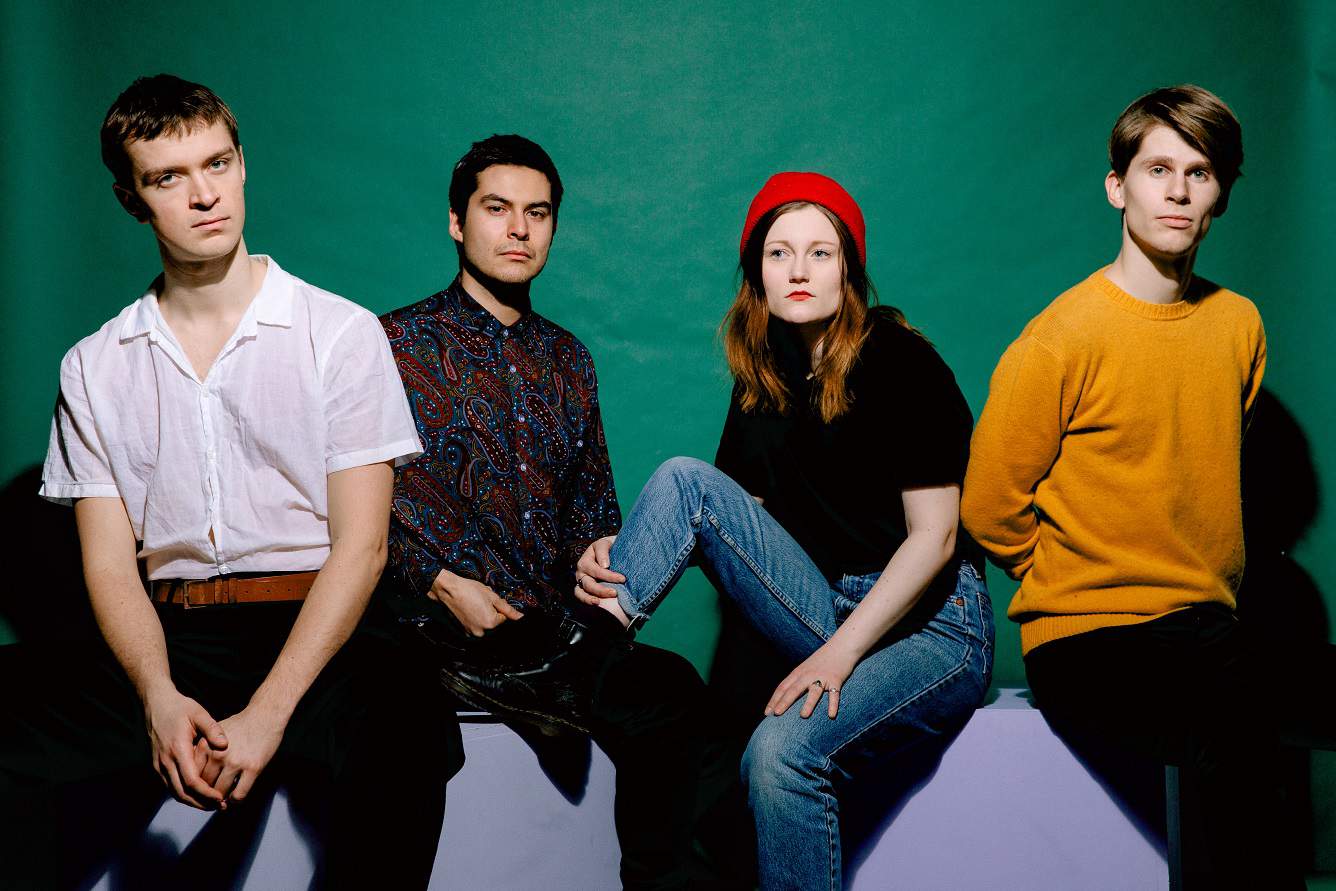
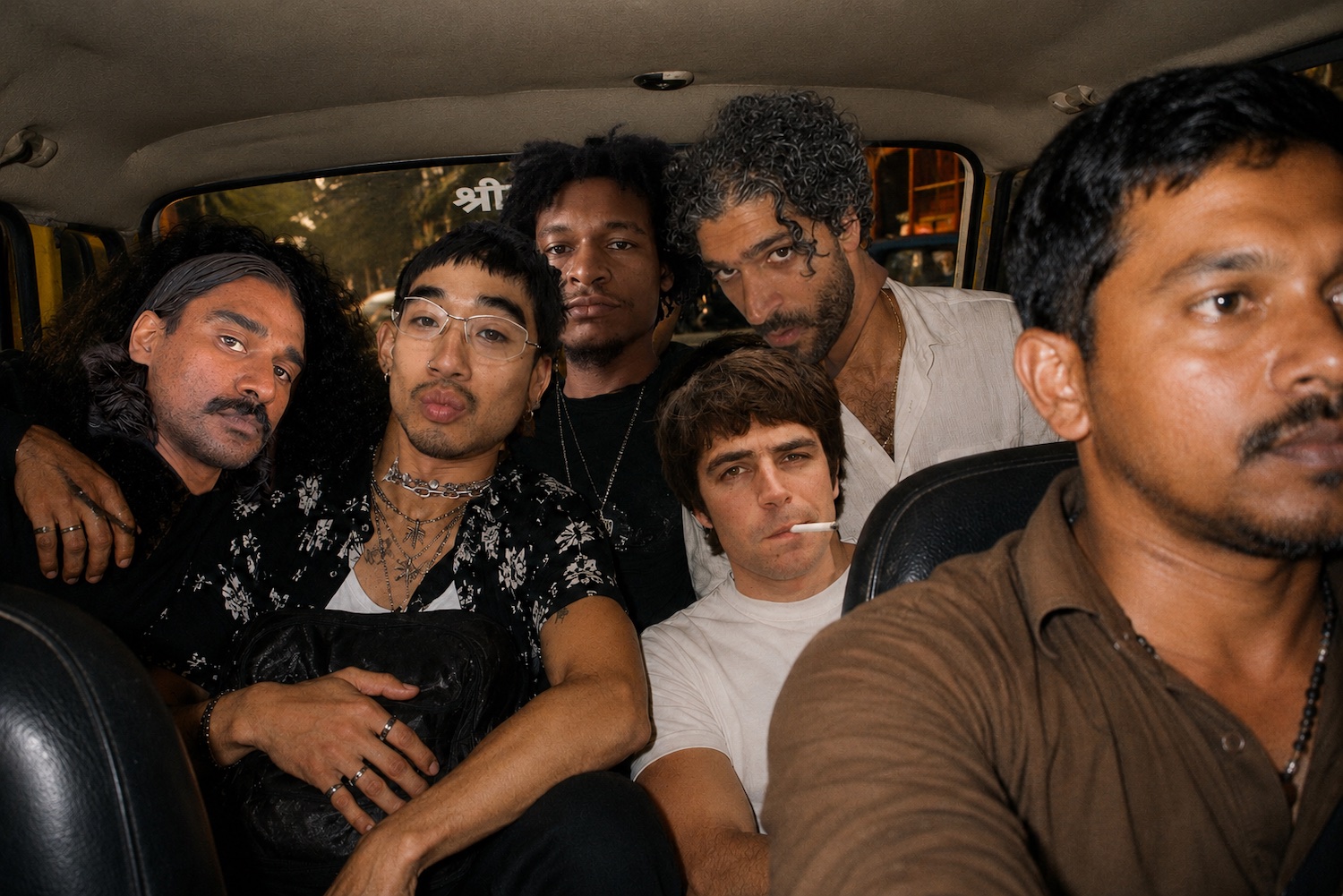
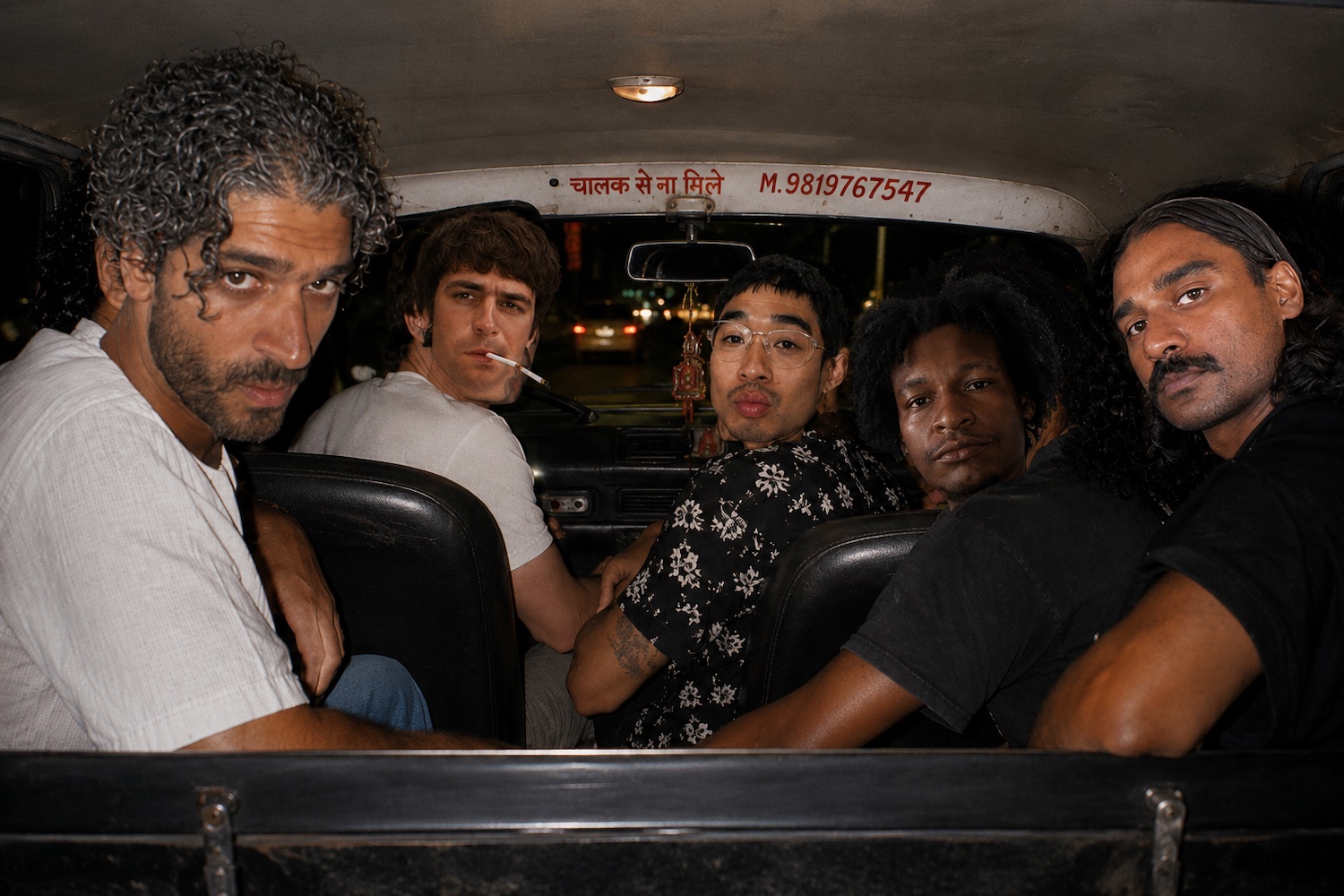
Atwood Magazine is proud to be premiering “Wires,” the incendiary fourth single from New York art-punk band Saudi Oil. Set for release July 22, 2026, the track follows “Cracked Window,” “Noisy on Canal,” and “Hair In My Shower Drain,” widening the unruly musical world the band are building ahead of a forthcoming record. Self-proclaimed industry plants clearly having as much fun making their music as we are listening to it, Saudi Oil are Christopher Al-Jumah and Rayan Mustafa on vocals and guitar, Raphael Fineberg on drums, Derrick Cheung on bass, and occasionally Laura Searles-Mohales on synth – an irreverent, fast-rising New York City collective whose music channels the city’s sensory excess through post-punk abrasion, new wave momentum, and proudly unvarnished indie rock.
What began with an audacious contractual stunt has quickly taken on a life of its own. While designing indie label Partisan Records’ former venue Mews, Al-Jumah – an architect by trade – slipped a clause into his agreement requiring the label to listen to his six-song EP once the space was complete. As the story goes, “The venue opened, the EP was played, and the band was born.”
One performance led to another, and Saudi Oil soon spilled beyond Mews into Baby’s All Right, Nightclub 101, and various DIY rooms across the city. Their rise has been fast, instinctive, and proudly resistant to the machinery that usually smooths young artists into marketable shapes. As Al-Jumah puts it, Saudi Oil are “anti-algorithm” and “anti-outcome oriented” – less concerned with fitting a lane than making work alive enough to rupture one.
“Wires” captures how quickly isolation can become overload, and how either extreme can leave a person equally disconnected from themselves.
For Al-Jumah, that fracture begins at home, where his personal solitude ends the instant lower Manhattan comes roaring through the other side of his apartment’s front door.
“‘Wires’ is a song about spiraling out in isolation,” the Saudi Oil frontman tells Atwood Magazine. “I live alone right on Canal Street, and there’s this insane tension where I go from wholly alone to immediately thrust into an environment with hundreds of people the second I open my front door. That became the core theme of the track – the franticness of not feeling like yourself but being thrust into a chaotic environment. Sonically, the song centers around a sped-up version of a guitar riff me and my childhood best friend Larry used to fiddle around with (shoutout Fan Club).”
My wires are tangled
I can not seem to keep ’em apart
My wires are tangled
I think I need to give them a start
Can someone please help me out
The song opens as though that door has already been kicked in. Tense electric guitars arrive at full volume, their serrated attack grinding against Raphael Fineberg’s hard-struck drums as the arrangement churns forward without room to settle. Derrick Cheung’s bass line gives the turmoil its pulse, and Al-Jumah enters alongside it, his voice cutting through as the only human signal inside the noise. He sounds exposed and tightly wound, holding the verses together even as the music presses in from every side.
“My wires are tangled,” he repeats, reducing the spiral to a plainspoken image of crossed signals and internal disorder. The line is simple enough to resemble a diagnosis, but repetition steadily strips away its composure. When Al-Jumah reaches “Can someone please help me out?” the guitars surge back into the frame, and the plea becomes more urgent with every pass. What first lands as a request soon resembles a distress call caught in a loop – louder, faster, and increasingly unable to reach anyone beyond itself.
That escalation gives “Wires” its visceral power. The band recreate overload’s pressure through dynamic hits, angular riffs, and a performance that always threatens to outrun its own structure. Cheung’s bass gives Al-Jumah a narrow line to follow through the opening verse, but each guitar reentry crowds that path until his voice is pulled fully into the fracas. Fineberg’s drums strike in clipped, forceful bursts, driving the music forward while sharpening its sense of instability. The arrangement keeps shifting between anchor and attack, making the listener experience the same disorientation Al-Jumah is trying to name.
My wires are tangled
I can not seem to keep em apart
Can someone please come them a start
My wires are tangled
When Al-Jumah later sings, “Watch me conjure my haunt / Overflows the cup,” the imagery confirms that the breaking point has already arrived. His lyrical references to tunnel vision, spirits, and conjuring a haunt push deeper into a mind losing its grip on the room around it. The music follows him there: Guitar lines scrape against one another, the rhythm section tightens its hold, and the vocal performance grows increasingly consumed by the pressure gathering around it.
Over flows the cup
Auto, so natural
I follow
The path the spirits pray on
Tunnel vision
Watch me conjure my haunt
Overflows the cup
My wires are tangled
Tangled, tangled, tangled…
The riff at the center of “Wires” had already survived more than a decade before Saudi Oil accelerated it into its present form. “We try to record live as much as possible and capture the energy of the track, maybe that’s where some of the rawness comes from,” Al-Jumah explains. “The song’s rooted in a guitar riff me and my best friend Larry have been kicking around for almost 12 years. I’m glad it finally found a home in this song.”
Speed transforms that old musical shorthand into an engine of panic. As the riff cycles beneath Al-Jumah’s plea, familiarity becomes compulsion, and every repetition tightens the song’s grip. Saudi Oil use recurrence as escalation: The words remain the same, but the person singing them sounds less capable of containing their meaning each time. The live recording preserves every collision between the players, allowing the drums, bass, guitars, and vocals to press against one another without sanding away their friction.
That volatile immediacy belongs to a broader creative philosophy built around resisting predictability and refusing to let outside expectations determine the work.
“The kids crave artistry,” Al-Jumah says. “They’re tired of short form content bullshit.”
“Wires” makes Saudi Oil’s conviction audible. It chooses impact over polish and tension over resolution; its repeated chorus traps the listener inside the plea rather than guiding them safely beyond it. The song’s sharp edges remain exposed because they carry the emotional truth – isolation has already tangled Al-Jumah’s internal circuitry, and the city’s relentless motion sends another surge through the system.
By the final cries of “tangled, tangled, tangled,” language itself has begun to fray. The word no longer explains the condition – it enacts it, folding back on itself as the band drive their central riff deeper into the song’s fevered circuitry. “Wires” thrives in that collapse, capturing a private crisis colliding with a city too loud and crowded to notice. Saudi Oil force that alienation with volume, friction, and a furious demand to be heard – making the spiral impossible to ignore.
Directed by Kevin Lombardo and edited by Tomás Tomás, the “Wires” video carries the song’s central metaphor onto the streets of New York City, where stranger after stranger wrestles with the same small but maddening indignity: a hopeless knot of earbud cords. Tangled wires become the great equalizer, uniting passersby across generations in mounting irritation. Some pick patiently, others yank and curse, and a few finally scream, throw the mess onto the concrete, and walk away in disgust. Interspersed with shots of Saudi Oil playing their hearts out against a blinding white backdrop, the footage gives the song’s internal panic a playful, painfully recognizable physical form. “Director of the century Kevin Lombardo really had a vision on the video, and I think he captured the frantic yet playful qualities of the song so perfectly,” Al-Jumah says.
That frustration eventually turns on the camera itself. One by one, the video’s subjects notice the person filming and charge from every direction, transforming a street-level joke into a visceral chase. The camera retreats through the city and back into an apartment just in time, opening the door on Al-Jumah and his bandmates letting it rip inside. The ending brings “Wires” full circle: The room that first represented isolation becomes a sanctuary of collective noise, and the band waiting inside offer the only release that makes sense.
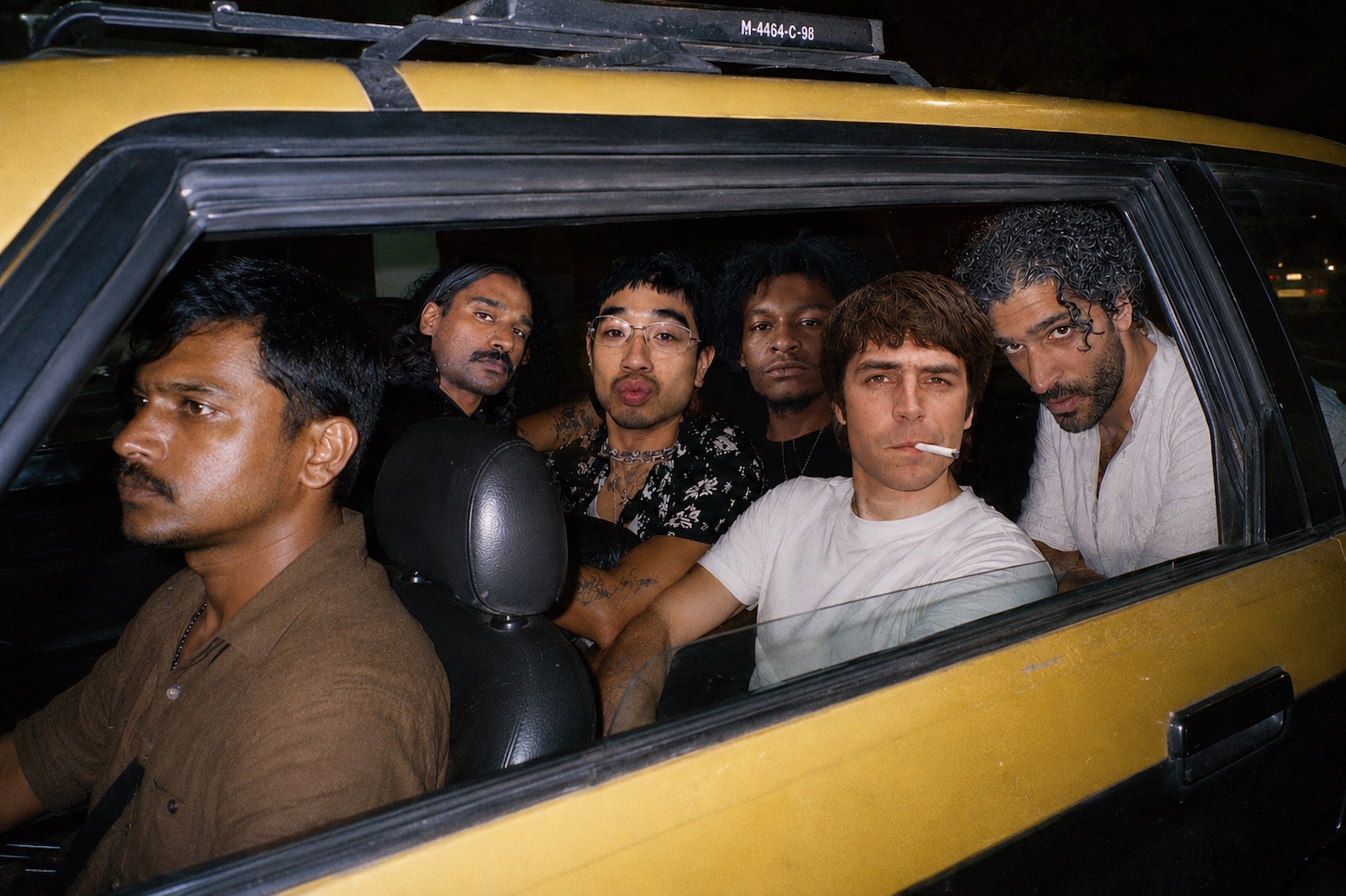
Saudi Oil are a breath of fresh air in a rock landscape too often sanded smooth.
They’re a badly needed jolt to the system, bringing back the danger, humor, and intoxicating disorder that modern acts too often polish away. Their music is theirs alone; they’re not asking for permission from anyone, and they really don’t care what you or I think. They carry New York City’s irreverent, unapologetic ‘f-you’ spirit into the mid-2020s without reducing rebellion to a pose, pairing scuffed-up grace with the grit of a band who came to play before anyone could tell them how.
That indifference to approval gives their music its undeniable, inescapable freshness. “Wires” makes no bid for tidiness or easy categorization; it lunges, bites, and leaves its mark. After years of rock being perfected into tasteful, algorithmically-sound shapes, Saudi Oil are kicking the edges back in.
“Wires” leaves the front door wide open on a band still becoming in real time – impulsive, unpredictable, and entirely on their own terms. Saudi Oil’s fourth single arrives everywhere July 22, 2026, but its charge is already loose in the city, rattling through the walls and daring anyone within earshot to step closer. Watch Kevin Lombardo’s frantic, playful video exclusively on Atwood Magazine, and let Saudi Oil pull you headfirst into the fray.
— —
:: stream/purchase Wires here ::
:: connect with Saudi Oil here ::
— —
Stream: “Wires” – Saudi Oil
A CONVERSATION WITH SAUDI OIL

Atwood Magazine: Saudi Oil, hello and thank you for your time! For those who are just discovering you today through this premiere, what do you want them to know about you and your music?
Saudi Oil (Christopher Al-Jumah): We are industry plants and we look forward to proving that in the coming months.
What’s the story behind the name ‘Saudi Oil’?
Saudi Oil: Saudi Aramco (Arabic: أرامكو السعودية ʾArāmkū as-Suʿūdiyyah), officially the Saudi Arabian Oil Company, is a majority state-owned petroleum and natural gas company, and the national oil company of Saudi Arabia.
Saudi Oil apparently began after Christopher slipped a clause into his contract while designing Partisan Records’ venue Mews, requiring the label to listen to a six-song EP. That’s one of the better band origin stories I’ve heard in a while. How did that actually turn into a real band?
Saudi Oil: The plan was honestly to just play that one show, but it ended up going better than expected, then we got asked to play another one, then another one, and you know, here we are.
You’ve built this world around chaos, provocation, instinct, and not overthinking things too much. How would you describe Saudi Oil’s creative philosophy?
Saudi Oil: It’s very anti-algorithm, anti-outcome oriented. The kids crave artistry; they’re tired of short form content bullshit.
Who are some of your musical north stars, and what are you most excited about the music you’re making now?
Saudi Oil: Taylor Swift, Bad Bunny, Drake, The Weeknd, Ariana Grande, Ed Sheeran – we’re most excited about adding to the world these pioneers have built sonically.
You’re a New York band in a way that feels very specific: DIY shows, strange rooms, art-punk energy, jokes that become real, and a lot of beautiful mess. How does the city shape what Saudi Oil sounds like?
Saudi Oil: I appreciate the question – we really try to interact with the city itself beyond the typical venue experience. NYC is such a chaotic mess of a city in a truly beautiful way. And I know that sounds very NYU freshman of us to say, but it’s true – and it feels appropriate for the art to respond and mirror that same chaos and rebellion against routine and rigor.
Today we’re premiering “Wires,” a song that feels intimate and unpolished, but still steady and alive. What’s the story behind this track?
Saudi Oil: We try to record live as much as possible and capture the energy of the track, maybe that’s where some of the rawness comes from. The song’s rooted in a guitar riff me and my best friend Larry have been kicking around for almost 12 years. Glad it finally found a home in this song.
How did you want “Wires” to sound and feel compared to songs like “Cracked Window,” “Noisy on Canal,” and “Hair In My Shower Drain”?
Saudi Oil: We’re a little “genre-less” when you look at those three songs we’ve released so far – it’s easy to put it under an ‘Art Rock’ label, but what does art rock even really mean? With “Wires,” our goal was to add another genre to the catalogue and tee people up for our record coming out, which really puts the singles into a more coherent context.
The “Wires” video has been described as a DIY epic. What did you want the visual world of the song to bring out?
Saudi Oil: Director of the century Kevin Lombardo really had a vision on the video, and I think he captured the frantic yet playful qualities of the song so perfectly.
You’ve already made a lot of noise in a short amount of time. What can you tell us about where Saudi Oil are headed next?
Saudi Oil: We’ve been really going all-in finishing this record – I’d love to put it out this fall, but we’ll see!
What do you hope listeners take away from “Wires,” and what have you taken away from creating it and now putting it out?
Saudi Oil: Real people living in New York City making really home-grown interesting music. That’s my hope anyways.
In the spirit of paying it forward, who are you listening to these days that you’d recommend to our readers?
Saudi Oil: Dolly Parton.
— —
:: stream/purchase Wires here ::
:: connect with Saudi Oil here ::
— —
Stream: “Wires” – Saudi Oil
— — — —
Connect to Saudi Oil on
YouTube, Instagram
Discover new music on Atwood Magazine
© courtesy of the artist
 © courtesy of the artist
:: Stream Saudi Oil ::