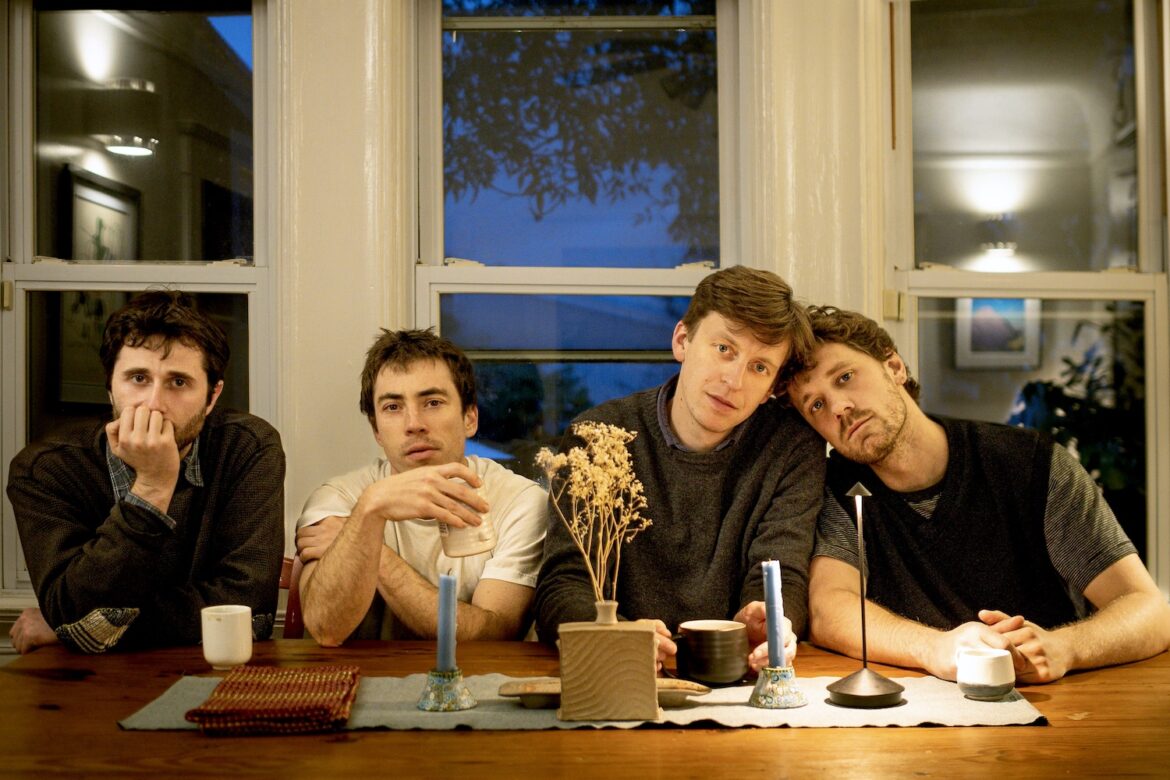
Oakland indie rock band Mildred transform the strange poetry of ordinary life into “Fish Sticks,” a scrappy standout from their debut album ‘Fenceline’ that makes the overlooked feel gently addictive, emotionally resonant, and unforgettable. Across the record, the four-piece turn kitchens, rooftops, workdays, old books, summer heat, and half-remembered conversations into one of the year’s most quietly special debuts – a homespun world worth getting lost in and returning to again.
 follow our Today’s Song(s) playlist


Stream: “Fish Sticks” – mildred
The beauty of everyday life lingers in its smaller moments – the passing conversations, half-formed thoughts, and quiet rituals that stitch one moment to the next.
Mildred’s “Fish Sticks” lives inside that in-between, turning workplace monotony, late-night drives, and shared meals into a sprawling, heartwarming indie rock meditation. Crunchy and loose yet deeply intentional, the Oakland quartet’s lead single from their debut album Fenceline hums with a smile-inducing warmth – equal parts brooding and buoyant, reflective and restless – as it traces the fragile line between obligation and escape, solitude and togetherness.
It’s a song about pushing through the static of daily life and finding meaning in the exchanges that pass us by, the comforts we cling to, and the fleeting connections that end up defining us.
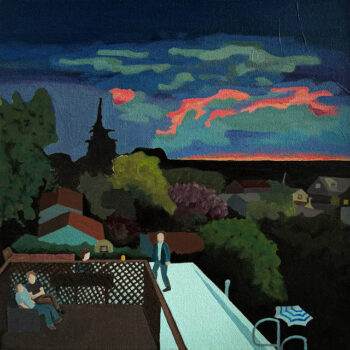
Windows down just in time
Pistol finger, wrinkled eye
Heaving notes, making rhymes
All is scattered I’m just pushing
Fish Sticks, the lemon rind
I could eat ‘em any time
The moon rose like a pickup line
Here’s what matters I keep pushing
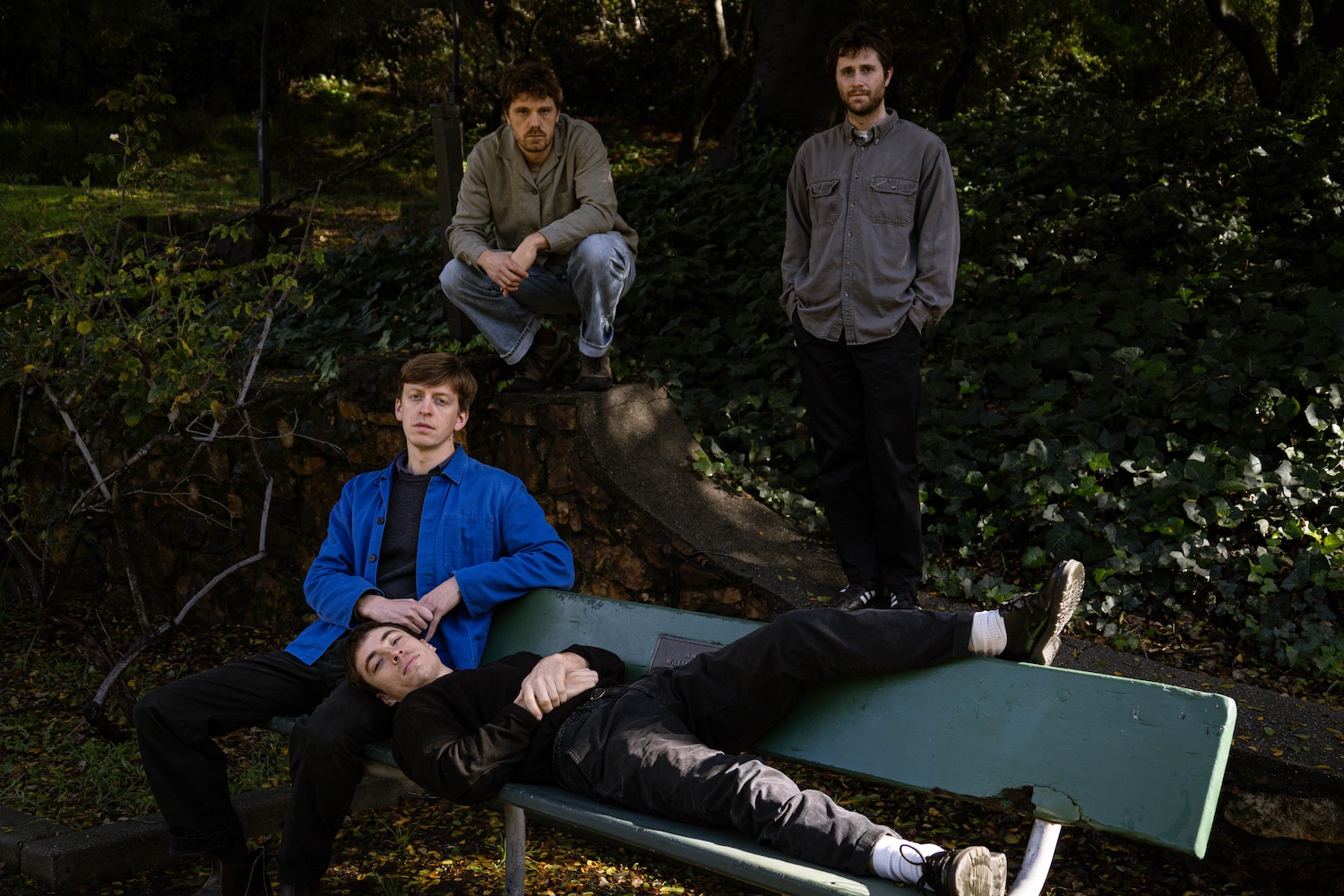
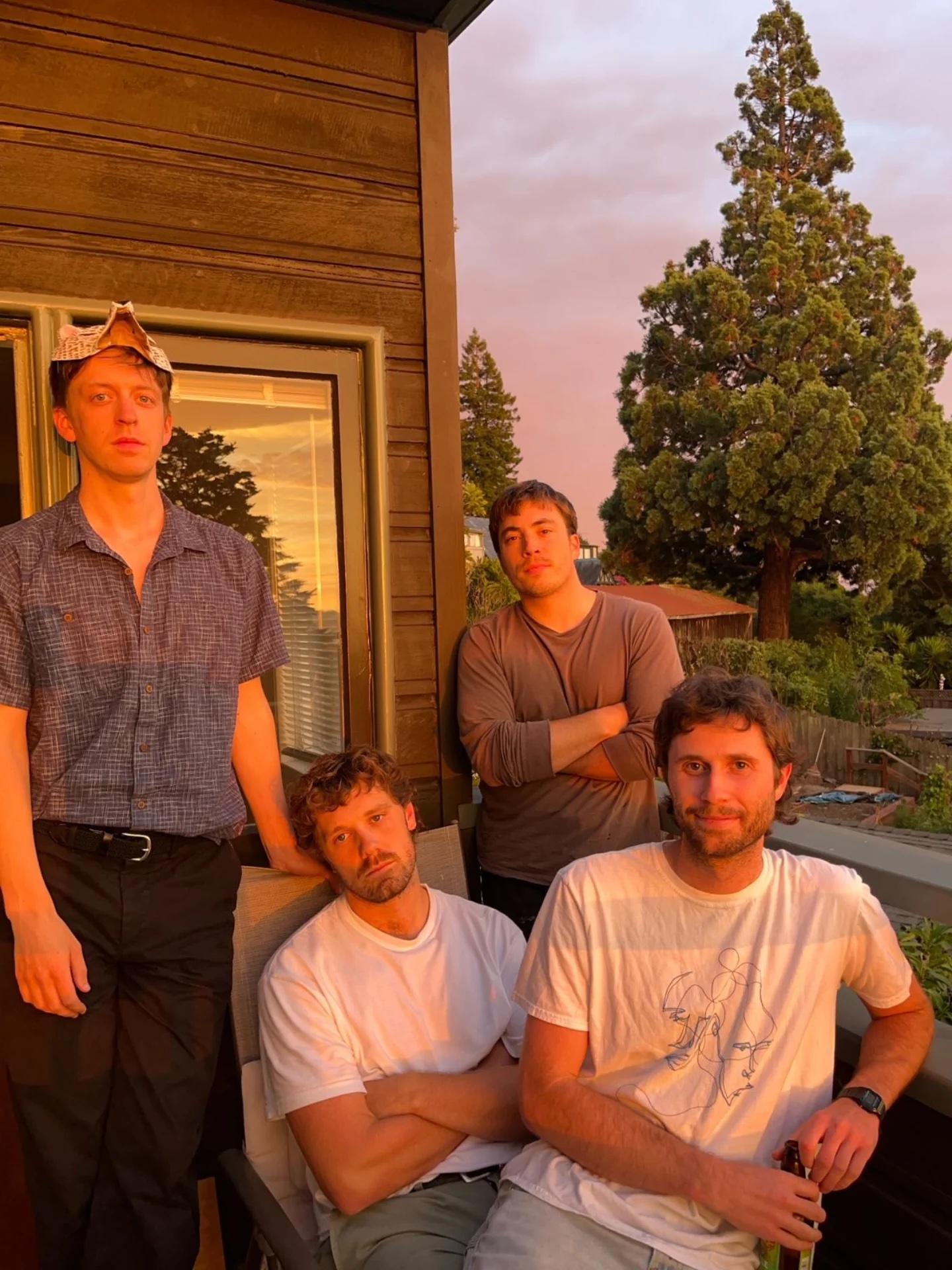
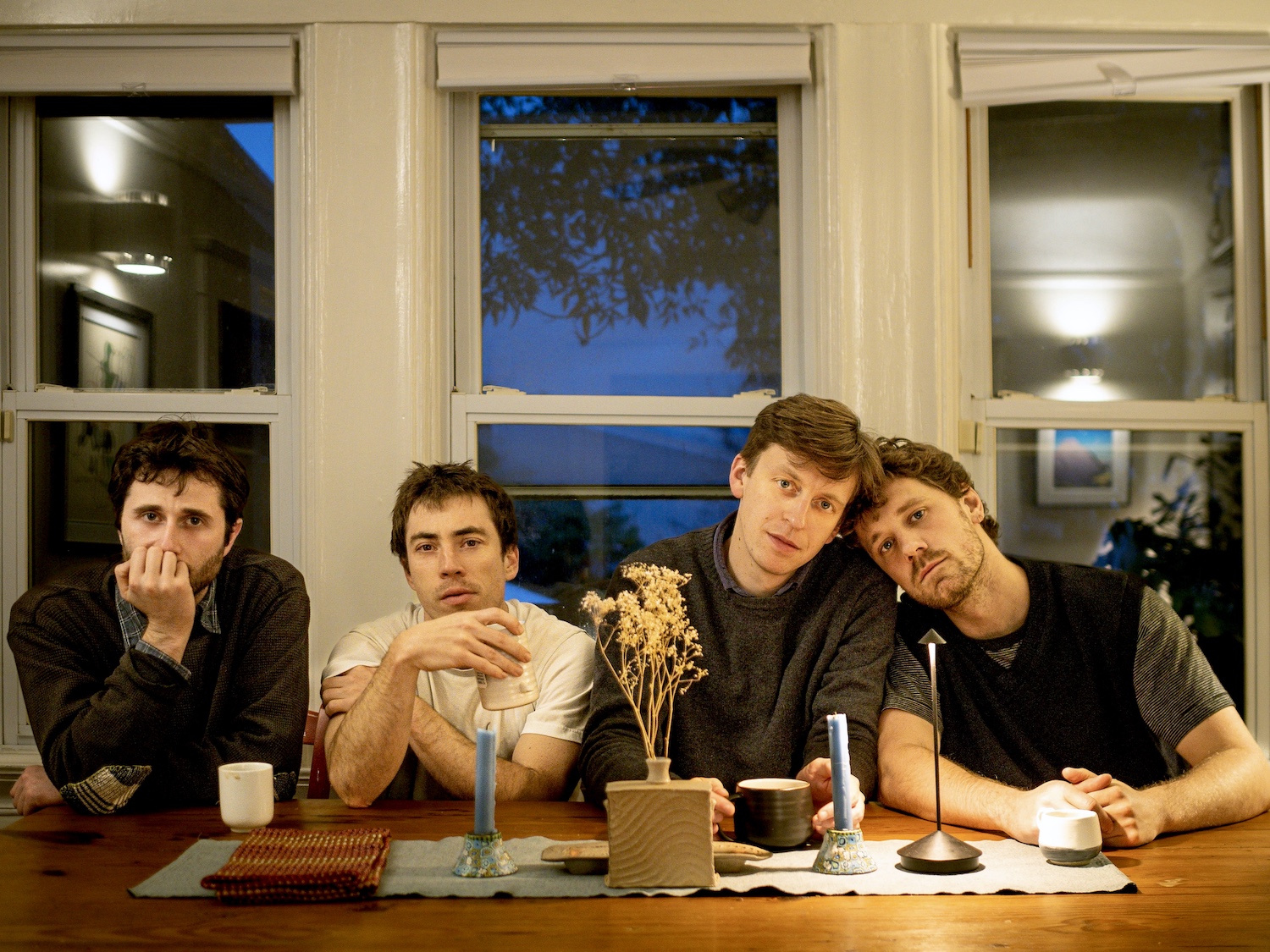
The world Mildred build on Fenceline feels less like a collection of songs and more like a place you can walk through – a shared, human space shaped by four distinct voices moving as one. The Oakland, CA quartet – Henry Easton Koehler (vocals, guitar), Jack Schrott (vocals, guitar), Matt Palmquist (vocals, bass, woodwinds), and Will Fortna (drums, production) – operate without a singular focal point, their songs passed between hands, reshaped, reimagined, and ultimately claimed by all.
That creative democracy is the heartbeat of their sound: Unruly but never careless, ramshackle yet remarkably precise, steeped in indie rock but dusted with folk, Americana, and a poetic, almost literary sensibility that lets their music linger long after it fades. It’s the same spirit that made last year’s dual EPs mild and red such a soul-shaking introduction – what we described as a “softly spellbinding alt-country reverie” that lived “in the fog between memory and change” – and it carries through here with even greater confidence and clarity.
Born out of shared spaces and shared lives – kitchens, rooftops, garages, long afternoons that blur into evenings – Mildred’s music reflects the rhythm of real connection, but more importantly, it’s what gives “Fish Sticks” its natural pulse.
The song doesn’t feel constructed so much as gathered – a collage of passing thoughts, small frustrations, and fleeting joys stitched together in real time.
You’re too cool, buddy, that’s a fact
Pick up the change I’ll pick up the slack
Mr. Stern forgive what my brain does lack
Two cents was all I asked
Feeling in tune
A feeling so fine
You just pay the piper
back from time to time
“‘Fish Sticks’ is a song of scenes from two worlds. Conversations with your boss. Acute workplace mediocrity. Riding home and eating fish sticks with your friends,” the band explain, framing the track as a series of snapshots rather than a singular narrative. That duality runs deeper across Fenceline, too – an album about conversations with old friends, little cousins, ceaseless piles of dust in your crumbling duplex, loves and theologians and their books.
“Fencelines mark two places but belong to neither. Neither nor, either or,” they share – a sentiment that lingers in the song’s push and pull between detachment and warmth, routine and release. Within that space, “Fish Sticks” becomes more than a moment; it becomes a feeling – one shaped by proximity, by memory, and by the continuous act of living alongside one another.
Stern sits with stony eyes
I won’t get on any fight
Move so slow, and whittle lies
Two years can just blow right by
Pilling pulling at my sides
Tugging at my focussed mind
Drinking coffee, passing time
Cooped up wrapped in chicken wire
A churning, off-kilter indie rock jam, its crunchy, ever-present guitar line cuts through the mix like a restless thought you can’t quite shake. There’s a scrappy propulsion to it – a sense of forward motion that never feels rushed, just constantly in motion, mirroring the song’s fixation on pushing through the blur of everyday life. Lines like “Fish sticks, the lemon rind / I could eat ’em any time” land with a disarming simplicity, grounding the song in the tangible before it drifts back into abstraction – “The moon rose like a pickup line” – where humor, poetry, and mundanity collide. That balance is where Mildred thrive: The push and pull between the literal and the lyrical, the mundane and the quietly surreal. As the song moves, so do its textures – guitars chiming, voices weaving in and out, rhythms tightening and loosening just enough to keep everything feeling alive. It’s unpolished in all the right ways, a little frayed at the edges, but that’s exactly what gives it its spark – a living, breathing energy that captures the quirks, the charm, and the restless spirit that make Mildred burn so bright.
And maybe that’s the tender triumph of “Fish Sticks” – the way it transforms the overlooked into the unforgettable, not by elevating it beyond recognition, but by sitting with it long enough to understand its worth. Mildred don’t chase grand statements or easy resolutions; they find resonance in the in-between, in the half-lit spaces where life actually unfolds. In doing so, they offer a comfort that feels both grounding and expansive – a reminder that meaning isn’t always found in the big moments, but in the accumulation of small ones.
Writing my findings in a science almanac
Feeds the fodder, then folds the facts
Too much caution, little tact
Please just send it back
Voice coming through the shower glass
Like wind on a bottle, then it cracks
Riding home the sky goes black
Two turns and then I’m back
That same instinct for making meaning out of ordinary weather, labor, mess, and conversation stretches across Fenceline.
The band’s debut album plays like a whole neighborhood of Mildred scenes, each room opening into another. Kitchens lead to rooftops, rooftops spill onto roads and orchards, and somewhere beyond them are crumbling houses, strange errands, old books, and afternoons that seem to stretch past the edge of memory. If “Fish Sticks” is the record’s side door – grad-school haze, boss talk, fish fingers, and the relief of coming home – Fenceline keeps opening rooms around it, each song another place where the band’s loose communal magic sharpens into story.
“UPS Brown” begins with rain on the tarmac, a postponed pickup, and leaves the color of delivery trucks; by the time its narrator slips into a house dripping wet, the song has already turned minor disappointment into a small, cinematic act of noticing. As an opener, it sets Fenceline’s terms immediately: Mildred build worlds out of sidelong details, letting loose guitars, easy harmonies, and plainspoken images accumulate until an ordinary day starts to feel mythic. “Charlie” follows that instinct into softer, folkier terrain – a gorgeous, soul-warming reverie that recalls The Band in its rich, radiant multipart harmonies, where every voice seems to lean into the others until the whole song glows from the inside out. Beneath that glow, the song lingers with almost parental patience around a person caught between uncertainty and becoming. Its most quietly devastating line, “To be undecided makes plenty of sense in the context,” captures Mildred’s gift for making confusion sound less like failure than evidence of a life still unfolding.
From there, Fenceline keeps widening its field of vision without losing its eye for the smallest possible detail. “Cobwebs” stays close to home, listening to coffee cups, dust, garbage trucks, home appliances, and Walter the walnut tree until domestic clutter starts humming with life. “Fleet Week” spills out into San Francisco, where sailors, earthquakes, poblano spread, Sisyphus, and Eurydice crowd into one long afternoon that feels funny, overfull, and strangely profound. Together, the two songs capture Mildred’s gift for scale: The kitchen sink and the whole city, the private mess and the public weather, every stray detail alive with the possibility of song.
The brooding, gentle title track gives that world its organizing image. Lovingly and colorfully, “Fenceline” tries to file time into order – “I’m keeping track of all this time baby, yea / I’m erecting a fenceline” – as if memory could be enclosed, painted, planted, and claimed before it slips away. Mildred describe the song as a response to time’s refusal to behave: “I’ve never been good at keeping track of time. It bleeds, blurs and tangles no matter how much I try to corral and chapter it. This song is about that – attempts at filing experience into order.” You can hear that beautiful futility in the music itself: A gentle breeze of a song, warm and spellbinding, “Fenceline” drifts forward with the soft-focus patience of a daydream, its harmonies and unhurried guitars making the act of remembering sound both impossible and worth attempting anyway. It’s Mildred at their most quietly devastating – a band trying to build a border around the passing days, then letting the song glow in the space where the border fails.
I’m keeping track of all this time baby, yea
I’m erecting a fenceline
To house the days and all the nights
With you by my side
So when I go there it’s enclosed
“Aquinas” carries that glow somewhere even softer and more existential, moving from morning panic toward faith, fruit, and the sudden shock of still being alive. The song opens in a fragile in-between state – “I just came alive, I was thinking about dying / I had a morning panic, that left me almost crying / I thought the light was leaving from me / But I’m not ready” – where dread doesn’t arrive as drama so much as weather, passing through the body before the day has fully begun. Koehler and his bandmates sing over a hushed, glistening arrangement that feels like late-day summer haze – lightly burning embers, honeyed harmonies, and melodies warm enough to slip away inside. As the song lands on “It’s hard to believe that there’s already / Fruit on the apple tree,” the panic has softened into wonder, and Mildred make the act of staying alive sound like a soft summer seduction: Not a grand revelation, but a slow return to the world’s sweetness.
I just came alive, I was thinking about dying
I had a morning panic, that left me almost crying
I thought the light was leaving from me
But I’m not ready
It’s hard to believe that there’s already
Fruit on the apple tree
It’s juicy and sweet, it’s falling at my feet
But I’m not ready, I’m not ready
I was reading Aquinas
Learned it’s not the actions,
but the mind that defines us
The thinking not the thought
The faith, and the feeling
And this gives me solace, this gives me solace
I just came alive, I was thinking about dying
The record’s back half deepens that sense of Mildred as both diarists and collectors, a band drawn to the scraps life leaves on the table.
The five-and-a-half-minute “Mumblecore Melody” turns long-distance correspondence, government forms, invasive weeds, and golden ginkgos into a sprawling reflection on care and attention. It moves like a long exhale after too many half-answered messages, circling the fragile difference between showing up and performing closeness: “Now that I have seen the difference / Between effusiveness and care / I have lost some of that courage / To extend something sincere.” As the song stretches out, its patient melody turns ordinary maintenance into emotional philosophy – “Pulling invasives / To make room for flowers” – before landing on one of the album’s most quietly luminous refrains: “Nothing’s so important / As to keep the leaves from growing.”
“Pitch Boats” drifts back toward childhood with a gentler, more impressionistic touch, capturing the way family places and half-buried scenes can blur into myth the older we get. Henry Easton Koehler wrote most of its lyrics in his head while driving back from a weekend at his grandparents’ house in central Oregon, later admitting he was initially hesitant because the song “had this nostalgic feeling I wasn’t necessarily aiming for.” And yet, that earnest, wistful tenderness is exactly what gives “Pitch Boats” its pull: Flaming pinecones, gopher traps, Goodwill VHS tapes, and the ghost of a kid sneaking sodas from the shed all weave together as Mildred let memory behave the way memory actually behaves: Part image, part atmosphere, part family lore, part feeling you can’t quite place until a song gives it shape. The song wears history lightly, letting each detail arrive as texture rather than sentimentality. Its low-register harmonies, steady drums, and slightly broken-sounding guitar and piano figures lend the song the quality of an old family story being pieced back together by hand – funny, poignant, faded, and gently glowing around the edges.
By the time “Hardcore of Beauty” closes the album by urging us to “Remain close to the thing itself,” Mildred have given Fenceline its clearest thesis. These songs keep close to the thing itself: The workday, the errand, the conversation, the lunch break, the room, the friend, the song that starts as a mumbled line and becomes everybody’s favorite part once someone else touches it.
The ditch is dried up
They put the water underground
We used to make pitch boats out of pine cones
Light them on fire float em down
Setting gopher traps fifty cents a paw
Filling in the cracks
of a tennis court that’s dried up
Ring the bells it’s lunchtime, it’s lunchtime
They took the VHS to the goodwill
And that brand new 64 Dodge
not so brand new anymore
Distant relatives in oil paint,
And I’m a ghost of some little kid
sneaking sodas from the shed
For all its scrappy ease, Fenceline is the sound of Mildred growing more deliberate without sanding away the mess that makes them magnetic.
“I think we were much more intentional and confident in writing, arranging, and recording these songs, compared with those on the EPs,” the band share. “The songs on the EPs were recorded over a series of weekends and evenings but with Fenceline we recorded them all together (with the exception of ‘Fish Sticks’), so there’s just much more of a natural sonic cohesion – same room, same microphones, instruments positioned in the same parts of the studio, etc. Whereas the EPs came from songs and bits and pieces of melodies laying around, these songs came together in the context of the band and with the band in mind, and as such feel more cohesive as a grouping.”
You can hear the focus of that process, but Fenceline never sounds sealed off or overworked. It still breathes like a house full of friends leaving dishes in the sink, talking through a lyric after dinner, walking upstairs to the roof, watching the weather change, and letting the night decide what the song needs next. Recorded largely with Luke Temple in Echo Park, with “Fish Sticks” given its own second life in Bristol with Jack Ogborne aka Bingo Fury, the album carries the character of its rooms without becoming beholden to them. Its beauty lives in the handoff – one writer’s line, another player’s harmony, a guitar part someone else imagined, a drum pattern that suddenly makes the whole thing make sense.
It’s a record for all weather, really, but Fenceline feels especially made for late summer: Open windows, sun-warmed rooms, sweat on the back of your neck, the slow golden hour stretch of a day that doesn’t want to end. Mildred make music for that suspended state between motion and stillness, when the world feels both exhausted and impossibly alive.
With Fenceline, and with “Fish Sticks” at its heart, Mildred prove that even the most unassuming scenes can carry profound emotional weight – if you’re willing to stay present long enough to feel it. Atwood Magazine caught up with Mildred to step inside Fenceline’s beautifully unruly world of rooftop conversations, workplace malaise, shared instincts, fish fingers, fractured guitar solos, and songs that become more themselves the more the band passes them around. Read our conversation below, and let “Fish Sticks” pull you through the fenceline – into one of the year’s most endearing, homespun, and quietly radiant debut albums.
That could be cool, that could be nice
Well the more I think about it I’m just doing fine
That could be cool, that could be nice
Well the more I think about it I’m just doing fine
— —
:: stream/purchase Fenceline here ::
:: connect with mildred here ::
— —
Stream: ‘Fenceline’ – mildred
A CONVERSATION WITH MILDRED

Atwood Magazine: Mildred, how are you carrying the spirit of mild and red into 2026?
Mildred: Mild and Red capture the early stages of our band. We built up the songs on those EPs just by playing together and screwing around on bits and pieces we had laying around. That is still basically the way we operated for the new songs on Fenceline. Something about believing in the organic process of trying on a new song together, not forcing initial ideas about what a song ought to sound like, and not revising too much once a feel has emerged seems to have carried through from the EPs.
Who are some of your musical north stars, and what are you most excited about the music you're making today?
Mildred: Collectively there are so many artists we admire and follow closely. Some all-timers are Bob Dylan, Lucinda Williams, Silver Jews, Pavement, The Replacements… The distinction between north stars – like, musicians you’re creating a bearing with – and musicians you’re huge fans of is interesting and not always the same. Sometimes it’s surprising doing a retrospective on which artists are marking the bearing you’re on. The music you make winds up being an overlap in the Venn-diagram between what you admire, what’s ingrained, and what feels honest to write from your own voice, and the result can be unexpected. I’m not sure how easy it is to locate the artists above in our songs, but we love them!
You've said this is a song of scenes from two worlds – “acute workplace mediocrity” and “eating fish sticks at home with your friends.” What's the story behind this song?
Mildred: Originally we were playing around in practice with the riff at the beginning of the song. It’s over-the-top and theatrical which is fun to sink into. I was singing, “fish sticks, lemon rind… moon rose like a pickup line…” At some point we had the idea to record demos for what would eventually become Fenceline, and we tried to flesh it out. It ended up being a song about being bogged down in grad school, which is an experience that has supplied me with the best of times and the worst of times. The song was finished the morning we recorded the demos with Will sitting on the couch with me, helping me figure out some lines at the end of the second verse, an outro, and envisioning the fractured guitar solos that Henry styled, which are my favorite parts of the song.
What’s this song about, for you personally?
Mildred: Hmm, the song reflects on the very familiar feeling (to me) of having a hard day at work and blowing off steam playing music, so I think that’s where it takes me when we play it.
How does this track fit into the overall narrative of Fenceline?
Mildred: In some ways this song is an outlier from the rest of the album in that it was recorded elsewhere and has more overtly country things going on than the rest of the album. Lyrically it touches on ideas that feel core to the album; the tension between working life and being in a band. It is an ever-present logistical battle for Mildred, so it makes sense that it works its way into the music.
How do you feel Fenceline introduces you and captures your artistry, especially compared to your first two EPs?
Mildred: I think we were much more intentional and confident in writing, arranging, and recording these songs, compared with those on the EPs. The songs on the EPs were recorded over a series of weekends and evenings but with Fenceline we recorded them all together (with the exception of “Fish Sticks”), so there’s just much more of a natural sonic cohesion – same room, same microphones, instruments positioned in the same parts of the studio, etc
Whereas the EPs came from songs and bits and pieces of melodies laying around, these songs came together in the context of the band and with the band in mind, and as such feel more cohesive as a grouping.
What do you hope listeners take away from “Fish Sticks” and Fenceline, and what have you taken away from creating this music and now putting it out?
Mildred: We hope people enjoy the new songs. We learned a lot making the record and recording with Luke Temple. I think we’ve left the process with a bigger appetite than ever for writing new songs and putting out new material.
In the spirit of paying it forward, who are you listening to these days that you would recommend to our readers?
Mildred: Naima Bock, The Cindys, Luke Temple, Whitney K, Eliza Niemi, Coral Grief, Dog Eyes, Paul Spring
— —
:: stream/purchase Fenceline here ::
:: connect with mildred here ::
— —
Stream: “Fish Sticks” – mildred
— — — —
Connect to mildred on
TikTok, Instagram
Discover new music on Atwood Magazine
© Kevin Herhusky
 © Kevin Herhusky
:: Today’s Song(s) ::
follow our daily playlist on Spotify
:: Stream mildred ::