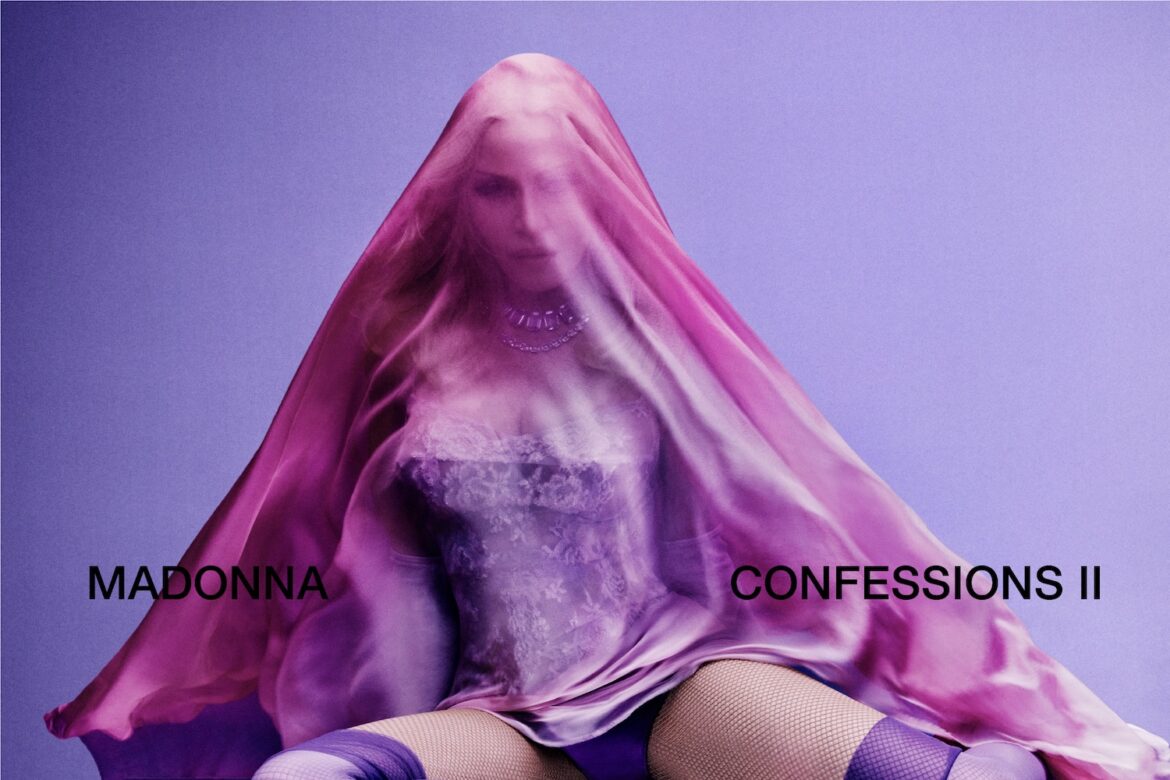
Atwood Magazine’s writers dive into Madonna’s hypnotic and exhilarating fifteenth album ‘Confessions II,’ a modern house-pop homecoming that rekindles her love affair with the dancefloor – unpacking its seamless, club-ready production, its celebration of New York nightlife’s rich history, and her enduring belief in dance as a source of liberation and belonging.
Featured here are Atwood writers Andrew Lamson, Ashley Littlefield, and Josh Weiner!
— —
To start, what is your relationship with Madonna’s music?
Ashley: My earliest memory of Madonna was watching MTV’s ’80s music videos. She has such an iconic look and sense of style that have influenced the way we see ’80s fashion and how it is represented when we look back on that time. I remember hearing “Hung Up” when I was growing up. During that time, Moulin Rouge! was one of my favorite movies, and her song was featured in it, which added to the drama of her expression and the art she expresses through her music. It wasn’t until her latest album, Confessions II, that I pre-saved and listened to her dancefloor-driven release!
Josh: I’m an early 2000’s kid, so the music Madonna released during that period was my earliest introduction to her. First, there was the American Life album in 2003 – the title track was one of the first times I can remember hearing a song with curse words; my parents had to cover my ears a bit hehe– and then I got a fuller impression of her via 2005’s Confessions on a Dance Floor. The music videos for “Hung Up” and “Sorry” were on pretty heavy rotation on MTV back then, so I got plenty of exposure to them, and 13-year-old me was hungry to discover her older stuff as well. In the following years, I did what I could to dig up her back catalogue – the easiest way of doing so was to access the neatly packaged greatest hits collection from 1990, The Immaculate Collection – while also listening continually to her newer releases as well. I’m glad to be proudly continuing that trend with Confessions II.
Andrew: I can’t remember pop music without Madonna. I was exposed to the internet at an early age, and her name was littered throughout pop forums as the gold standard. While I never personally owned any of her music, each family party would transition to different Madonna eras as holidays welcomed the night. In my adult years, I’ve grown deeply in love with her 1980s catalogue, and embrace her shifting styles in the modern millennium. Lastly, and selfishly, my perception of music changed when she appeared with Avicii at Ultra Music Festival 2012 to open the set with a remixed “Girl Gone Wild.”
What are your initial impressions and reactions to Confessions II?
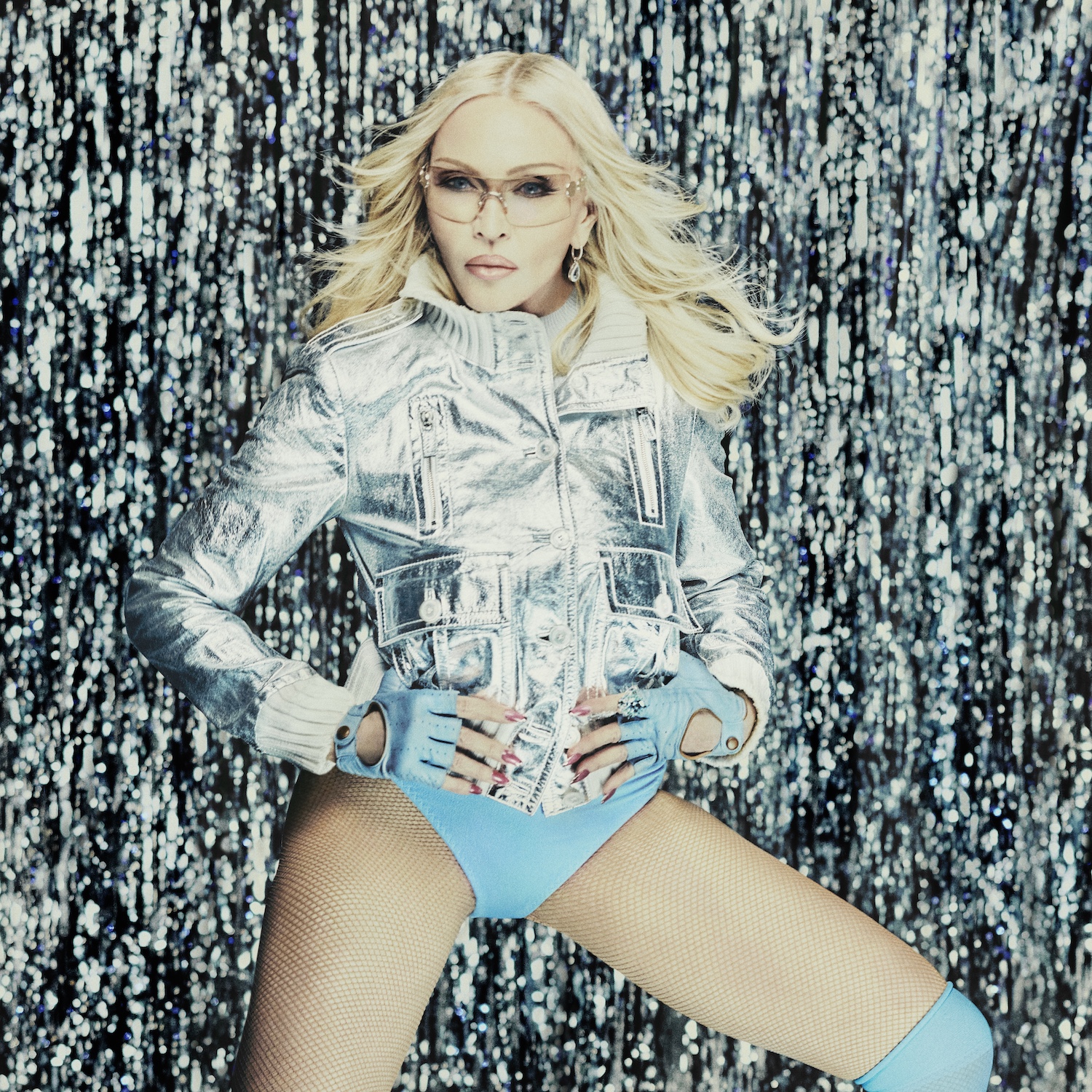
Ashley: Iconic, hypnotizing, and electronic textures that are so refreshing and emotionally charged in her lyrics. Confessions II is a new dance anthem album for an intimate confessional, a conversation with your mind, and movement, surrounded by shimmering hi-hats and soothing, grooving melodies that can shift perception into a free range of personal expression. The collaboration with Sabrina Carpenter on “Bring Your Love” is a seductive, fun track to add to the dance party, and the additional collaboration with Martin Garrix on “Bizarre” adds an electrifying layer to the record! Confessions II captures the magic of dancefloors, the glamour as Madonna brings us into the world of her history, connected to the Studio 54 era of freedom, bright lights, rhythm, and disco soundwaves.
Josh: I’m a big fan! It’s a compelling and engaging listening experience all of the way through. I’m glad that Madge has so much life in her yet, even after doing this music-making thing for about a half-century now. Ashley captured a lot of positive sentiments that I agree with, and I feel like this is a very solid return to form for Madonna after a seven-year album hiatus.
Andrew: You can’t kill house music. You gotta have house music. It’s innate in all of us. If you like to dance, you will one day learn to love house music. Confessions II is a love letter to the groove, to dance, and to house. It’s meant to be listened to as your night out starts and just before the sunglasses drape your eyes in the club. I’m always weary of album sequels, but was deeply impressed with the overall quality of the experience.
How does this album compare to 2019’s Madame X – what are the most striking similarities or differences?
Ashley: In Madame X, there are more South American musical influences, especially in tracks like “Medellín,” “Batuka,” and “Faz Gostoso.” In production, there are also more drum sequences, but it still has electronic dance influence for a unique blend. In “Medellín,” the vocals have a similar production style to Confessions II. I find both albums strikingly different and fresh, reflecting her focus and inspiration in 2019.
Josh: I’m sorry to admit it, but Madame X flew under my radar when it first came out in 2019. I only listened to it for the first time earlier this week. While they’re both fun albums, Madame X and Confessions II don’t sound particularly alike. I agree with Ashley that the former has much more South American influence, not only in the music but also in the occasional Spanish and Portuguese-sung lyrics. I read online that Madame X was a product of Madonna’s expatriate life while she was living with her son in Portugal for a while he was at a soccer academy. Now that that period of her life has wrapped up, it makes sense that her new record would head in a different thematic and sonic direction.
Andrew: Madame X to Confessions II is like papa guisada to a vodka redbull. They’re entirely different things and represent entirely different aspects of pop music. Madame X feels global and international, while Confessions II is meant for only the most innate of rooms. Additionally, the former feels exceptionally political and deeply theatrical. The only theatrics I’ve uncovered on Confessions II are the most uninhibited dances made in living rooms.
Madonna reunited with producer Stuart Price on Confessions II, returning to the musical world they created together on 2005’s Confessions on a Dance Floor. How does the new album build on or depart from its predecessor?
Ashley: The new album builds on the previous 2005 Confessions on a Dance Floor, yet in the latest production it translates to the current electronic music production sounds of today. The songwriting themes of Confessions on a Dance Floor, as in “Hung Up,” serve as a yearning or commentary on infatuation, desire, and the inescapability of love. Yet Confessions II more so describes the place where love is connected to her, while contributing to the place that has shaped her creativity or sense of identity.
Josh: I still remember (and probably still have stored somewhere in my attic) the issue of Rolling Stone with Madonna on the cover which came out around the same time as Confessions on a Dance Floor in 2005. The headline memorably read, “How She Got Her Groove Back,” which I think summarizes that era for her well – although I personally enjoyed her 2003 album American Life, I know it was met with uneven critical reception, making the more positively received and commercially successful follow-up a certified “comeback.” Similarly, I think that line can be applied to the new Confessions II era a generation later – after limited output for much of the 2020’s decade, Madonna is back and has “gotten her groove back” with some seriously fun new dance music.
Andrew: We can be honest – Confessions II doesn’t reach the same high as “Hung Up” or “Sorry,” both of which can stake their own claim to the best in Madonna’s catalogue. Both songs have almost outgrown Confessions on a Dance Floor as an album experience and became pop culture defining classics. It’s easily forgotten there are a solid selection of songs lost to the sands of time if listened to as a true album experience. Our most recent edition modernized her own sound with selector-grade production. Confessions II is meant to be heard as a true mix, with songs shifting as easy as the seconds between breaths. It’s paced like an album, meant to be listened to like an album, and will all likelihood be remembered as one.

Madonna said, “People think that dance music is superficial, but they’ve got it all wrong. The dance floor is not just a place, it’s a threshold. A ritualistic space where movement replaces language.” Does this statement capture the spirit of the album, and where do you hear or feel it most?
Ashley: “One Step Away” carries a poetic reflection within this question earlier on in the album. Yet, the opening song, “I Feel So Free,” is not only a personal favorite but also conveys the freedom that accompanies the euphoric feeling of the dance floor. “I feel so free / I can’t explain.” Madonna sets an atmospheric expression behind the rhythm of the song and gives it an interpretation of the heightened experience of moving freely. Additionally, in “Good For The Soul,” the downtempo, sustaining organ-like keys evoke the inner experience of movement through dancing, as in the song’s opening lyrics: “everything begins with consciousness.” Madonna emphasizes experiences that go beyond the surface of dance music and culture throughout Confessions II.
Josh: Well yeah, didn’t Madonna express pretty much that very sentiment all the way back on 1990’s “Vogue”? (“I know a place where you can get away, it’s called the dancefloor, and here’s what it’s for… [to] let your body move to the music”). All these years later, it’s great to see her uphold her steadfast admiration of the dancefloor as a place of liberation and self-discovery by means of the highly danceable music on Confessions II.
Andrew: Dance is one of humanity’s great joys. It expresses emotion deeper than most words can describe. It’s innate in all of us. No moment can you hear how ‘ritualistic’ the dance floor is greater than the transition and escalation between “I Feel So Free” and “Good For the Soul.” Madonna’s words are gospel – let the hair down, breathe, and move your body between the rolling drums.
Which song(s) stand out for you on the album, and why?
Ashley: The songs that stand out to me are “I Feel So Free,” “Bring Your Love,” and “Danceteria.” These tracks transport my mind to the dance floor. I was instantly drawn into “I Feel So Free” for its atmospheric scene-setting through listening—it’s softer and more immersive, and the low frequencies take the introduction into a new reality. I enjoy her duet with Sabrina Carpenter because it adds a fresh perspective and insight to Madonna’s song, with their shared songwriting about love and desire. Lastly, “Danceteria” is an avant-garde song that references history vital to the roots and spirit of disco, and to how artists and people, especially within marginalized communities, felt free to represent and express themselves!
Josh: Like Ashley, I quite enjoy “Bring Your Love.” Pairing up with Sabrina Carpenter is such an awesome bridge between generations of pop stars. On top of it being a cool matchup on paper, they complement each other well vocally and ride out the dance-pop beat together to great effects. It was a smart choice for a lead single, and I’ve enjoyed hearing it on the radio regularly these past few months.
Andrew: Confessions II’s intro run is unbelievable. Pressing play on “I Feel So Free” can easily turn into a 20-25 minute groove-fest as the songs blend endlessly together. The end of “One Step Away” is unforgettable, embracing light aspects of ’90s dub and house melodies. “L.E.S. Girl” is also a remarkable ballad that brings Madonna exceptionally close in a mostly loose album. “Love Sensation” continues to blow me away. The chorus is explosive, the drums are punchy, and Madonna rolls across the modern production like she was born with it.
Do you have any favorite lyrics so far? Which lines stand out?
Ashley: In “Danceteria,” the lyrics are sultrier, and I enjoy her line, “Everyone here is a work of art,” also paired with the Studio 54 community she shares in her history, “This is how we start the party / There’s Fab Five Freddy and Basquiat / Keith Haring and Kenny Scharf.” The song is such a fun groove and reflects her connection to disco and the dance floor through the people who have added to her relationships, while sharing the love or influence that people can redirect or change your life.
Josh: Madonna has been making great dance music for much longer than I’ve been alive, and I love how she’s able to calmly summarize her motivation for doing so on “I Feel So Free,” where she sings: “It’s really hard for me to trust people. Can you blame me? I never know what people like me. That’s why I like to go dancing. Safety in numbers.” Ah… safety in numbers. Now it all makes more sense.
Andrew: “Danceteria” is hilarious. It’s easily the most memorable part of the album lyrically. It was laugh-out-loud funny on my first listen, especially on a song where the chorus demands “Everyone get up and dance!” Some of the gems Madonna put on here include, but certainly are not limited to: “We see the line, it’s way too long. Cut to the front, there’s Haoui Montaug” – “He’s a DJ, hide the cocaine.” – “Puerto Rican boys, they make me crazy.” – all of this is in the midst of her naming local NYC legends and institutions long forgotten by post-COVID clubbers. It’s an extended history lesson of a New York dance culture that has been overridden by table services, main stage beats, and dance floor texting.
Where do you feel Confessions II sits in the pantheon of Madonna’s discography?
Ashley: Confessions II builds from her 2005 record, Confessions on a Dance Floor, but with a modern take on sound and her history. It’s interesting to hear about the shift in electronic music production from 2005 to now, in 2026. There were more transitional fades and subtle shifts in effects and synth stabs, reflecting the deck’s control, compared to the more modern electronic textures with rinsing hi-hats and melody in electronic music today. I would absolutely say that Confessions II is a reclamation of the space she inhabits and offers to share her on the dance floor for all to share!
Josh: Oh man, Confessions II sure faces some stiff competition! Madonna has many classic albums to her name (Like A Prayer, Ray of Light, Confessions on a Dance Floor, etc.) so it’d be hard for Confessions II to somersault over all of them at once. But it’s a very well-crafted record and has been greeted with widespread critical favor, so I imagine it’ll fare well within Madonna’s massive 15-album collection once the proverbial dust settles.
Andrew: With my unbiased ears, I understand modern listeners being unkind to Madonna’s ’80s catalogue of “classics.” That’s no excuse to skip over 1992’s Erotica and the 4th song on its tracklist, “Deeper and Deeper.” It’s proof of concept that music, as a medium, is worth it. Madonna, akin to house music, can only stay down for so long. She’s reinvented herself more times than I can count – Ray of Light (1998), Confessions on A Dance Floor (2005) and, for a select few even MDNA (2012) counts.
14 years and two other albums later, and she’s brought new life into her music once again. Confessions II is great; it really is. The first half is great enough to be an unforgettable portion of Madonna’s catalogue, and the Afterhours Edition kindly offered a few higher energy remixes from fabled producers. House music’s existence is an act of resistance. It’s the sound and movement of communities trampled by capital and unjustly forgotten by the same institutions that proudly claim allyship. Many house producers and labels have benefited from the sound without the history lesson Madonna’s authored. There is a world where Confessions II forces the new generation of pop stars to remember where they came from, and re-discover the innate fun in pop music.
— —
:: stream/purchase CONFESSIONS II here ::
:: connect with Madonna here ::
— —
— — — —
Connect to Madonna on
Facebook, 𝕏, TikTok, Instagram
Discover new music on Atwood Magazine
© Rafael Pavarotti
 © Rafael Pavarotti
CONFESSIONS II
an album by Madonna