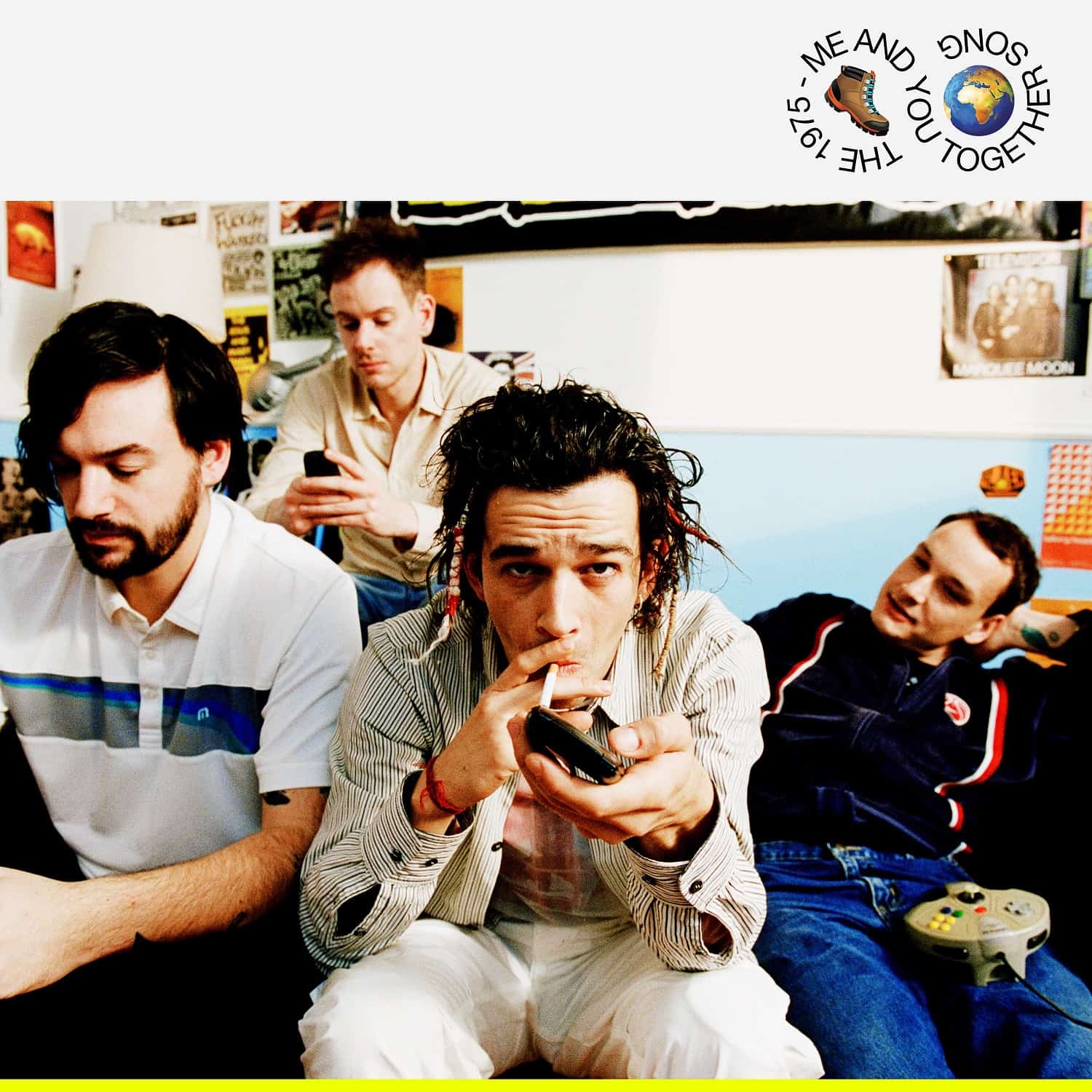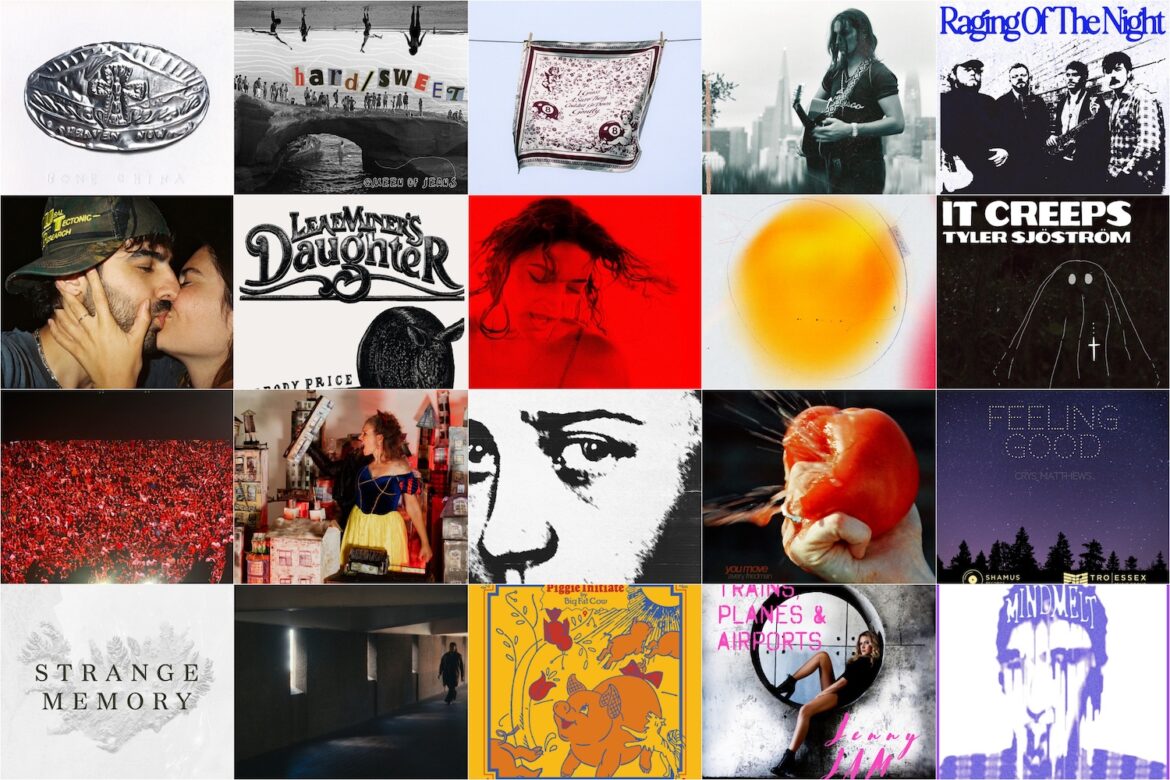
Every Friday, Atwood Magazine’s staff share what they’ve been listening to that week – a song, an album, an artist – whatever’s been having an impact on them, in the moment.
This week’s weekly roundup features music by Oh Wonder, Dylan Flynn and the Dead Poets, Queen of Jeans, Rachel Bochner, Rainbow Body, Tyler Sjöström, Rose Wallace Goldaline, OK MICKEY, Big Fat Cow, Avery Friedman, Dutch Mustard, Crys Matthews, Samuel Virgo, Kitschen Boy, Bone China, Anthony Arya, Antje Duvekot, Niamh McKinney, Makeshift Art Bar, Jenny JAM, and Brody Price!
•• •• •• ••
 follow WEEKLY ROUNDUP on Spotify


•• ••
:: “Mad World” – Oh Wonder ::
Mitch Mosk, Beacon, New York
Oh Wonder have written a love song for a world on fire. Four years after their last new music, the beloved British indie pop duo return today with “Mad World,” a breathtakingly beautiful, soul-stirring anthem that looks straight into the chaos of our times and dares to believe that love and hope will see us through. It’s an achingly sincere, open-hearted embrace of life at its most frightening and uncertain – a song that acknowledges just how overwhelming the world has become, while holding on for dear life to everything that still makes it worth living.
And what a glorious return it is. “Mad World” is classic Oh Wonder, reuniting Josephine and Anthony Vander West’s unmistakable dual vocals with dreamy piano, a gentle, shuffling drumbeat, and glistening strings that sweep through the arrangement with an almost overwhelming sense of grace. The production is immaculate, every instrument carefully placed and given room to breathe, the bass lending a reassuring weight to the song’s airy, ethereal atmosphere. There’s a heartbeat running through it all, a steady pulse beneath the existential turmoil, while their voices move together in that familiar, extraordinary unison – two people singing as one, finding strength in their shared conviction. It’s radiant, organic indie pop at its finest, exquisitely arranged and brimming with the kind of wonder that first made this band so special.
And it hits home in a deeply personal way. I’ve followed Oh Wonder for over a decade, having first interviewed them back in 2015 – before they’d even played a single live show, when they were completing their remarkable year-long project of releasing one song every month. Back then, Josephine described Oh Wonder to me as “a vehicle to comfort people,” a sentiment that has remained true throughout their career. From the introspective intimacy of their self-titled debut to the life-affirming exuberance of Ultralife and the self-reflection of No One Else Can Wear Your Crown, their music has continually sought to understand what it means to be alive, to love, and to care for one another. Eleven years later, “Mad World” carries that same spirit into a considerably more troubled world.
A lot has happened in the years since their last new music, both for the band and for the rest of us. Oh Wonder have continued building a life together, expanding their creative world even as the music took a back seat.
“It’s been a hot minute (4 years) since we’ve released new music. In that time we’ve had our daughter, built a studio, celebrated 10 years of our first album, toured across Europe and North America and… made some new music,” the duo shared in a recent message to fans.
They also happen to own NOLA Coffee in Peckham, London, making them perhaps indie pop’s most caffeinated duo. And I suppose it’s only fitting that their comeback has such a lovely handcrafted, single-origin story: Two people sitting down at a piano, rediscovering the simple joy of creating together, and trying to make sense of a world that seems increasingly determined to lose its mind.
“Writing it was the first time that we’d sat down at a piano together, for ourselves, in a long time, and it was written as a response to headlines of AI, war and climate change,” the band explained upon the song’s release. “In true mad world spirit, we’ve woken up to news of flying cars and facial recognition cameras being installed down our road.”
Those headlines are impossible to escape. Russia’s ongoing war in Ukraine. The devastating violence and humanitarian suffering in Gaza and across the Middle East. The rise of neo-fascism and far-right nationalism, the demonization of immigrants, and the frightening sight of ICE agents patrolling American streets as families face detention and separation. Meanwhile, climate disasters grow increasingly severe, powerful billionaires exert extraordinary influence over public life, and artificial intelligence threatens to upend our relationship with creativity, labor, and even truth itself. We are living through an age of extraordinary technological advancement and profound moral failure, where the future often appears to be racing ahead of our ability (or our leaders’ willingness) to comprehend it.
“For us, the last few years have felt increasingly strange,” Oh Wonder write. “The threat of AI spins quietly in the air, with data centres and robots making their way into the edges of our lives to slowly erase the value of art and challenge our humanity. Tech billionaires are more powerful than ever, as war, genocide and natural disasters steal human lives.”
“It’s easy to feel scared and full of doom. But music and art is always the antidote. So we ran towards our instruments and wrote ‘Mad World.’”
The song meets this uncertainty head-on. Its opening verse imagines a world desperate for heaven to return, haunted by bullets and the growing impossibility of simply covering up the cracks in everything around us. Later, the lyrics confront the suffering of strangers caught in the crossfire, and the unbearable image of a mother separated from her child. These are painfully specific glimpses of the people living inside our headlines, the lives behind the statistics and political rhetoric. Oh Wonder understand that the weight of the world ultimately rests on individual shoulders, in the lives of parents, children, lovers, and strangers whose futures are bound together whether we recognize it or not. That awareness gives “Mad World” its urgency, its compassion, and its deeply moving sense of purpose.
The music carries that purpose with extraordinary care. Josephine’s piano remains the song’s emotional anchor, its delicate chords providing a place to rest as the song gradually opens outward. Freddy Sheed’s drums and Yves Fernandez’s bass give the track its graceful, gently insistent momentum, while Josephine’s string arrangements, performed by Will Harvey, Freya Goldmark, Fran Gilbert, and Sergio EKA, enrich the atmosphere with sweeping orchestral color. Recorded under the roof of the duo’s Highwater studio, the song is an exquisite example of what Oh Wonder do best: Marrying intimate songwriting with lush, expansive production, allowing the smallest musical gestures to carry enormous emotional weight. Every swelling string and carefully placed beat serves the song’s central plea, as the two singers reach for comfort amid the chaos.
“It was a joy to make, with no rules and no limitations,” the duo share. “We made everything under our roof.”
And then comes the chorus, where all that uncertainty gives way to an astonishingly simple invitation: When the sky is on fire and the darkness stretches endlessly around us, crawl into the arms of love. Their choice of words is sublime. Crawl. There’s exhaustion in it, an admission that we may be frightened, overwhelmed, and barely able to carry ourselves forward. Love becomes a place of shelter, a refuge we can offer one another when the world has left us with precious little else. The chorus blossoms around this idea, the melody lifting as Josephine and Anthony sing with the conviction of people who understand how difficult optimism has become, and how desperately we need it anyway.
“I know we’re gonna find a way”
It’s a deceptively simple declaration, but repeated against such a troubled backdrop, it carries tremendous weight. The song’s greatest achievement lies in how naturally its radiant music and existential anxiety coexist. The piano carries our worries, the strings lift our spirits, and the gentle rhythmic shuffle keeps pushing us onward. The arrangement seems to breathe with us, inviting us to acknowledge the fear and then loosen our grip on it, if only for a few minutes. Hope emerges as an act of courage, a conscious decision to believe in the possibility of a better tomorrow even when the evidence around us gives us every reason to doubt.
“Without sounding saccharine, what no one can take away from us is hope. ‘Mad World’ is the running towards hope and love and the belief that everything will be ok,” Oh Wonder share.
Maybe that’s what I love most about this song, and what I’ve always loved about Oh Wonder. Their music understands how complicated being alive can be, how easily our anxieties can overwhelm us, and how much courage it takes to keep opening ourselves up to the world. Back in 2015, they wanted to comfort people through music; eleven years later, they’re still doing exactly that, only now the stakes extend far beyond our individual lives. “Mad World” is a stirring reminder that compassion remains within our reach, that art can help us process the things we struggle to understand, and that choosing love in the face of cruelty is an act of resistance all its own.
We can’t know what tomorrow will bring. The headlines may get worse before they get better, and there will surely be days when hope seems impossibly far away. But Oh Wonder have returned with a song that insists we keep reaching for it anyway – together, with open arms, and with the belief that even in this mad, mad world, we’re going to find a way.
And after four years away, how wonderful it is to have them back.
:: “piece of the sky” – Dylan Flynn and the Dead Poets ::
Mitch Mosk, Beacon, New York
The whole world isn’t much of a consolation prize when the person you love is on the other side of it. Limerick’s Dylan Flynn and the Dead Poets capture that heartbreaking contradiction on “Piece of the Sky,” a radiant, spirited indie rock reverie that channels the frustration of long-distance love into a full-throated plea for closeness. Their music races ahead even as the song’s narrator remains stuck, caught between the life he’s living and the person he longs to share it with.
And what a rush it is. Pulsing basslines and driving drums propel the song forward, while raucous guitars surge beneath Flynn’s impassioned vocals and soaring saxophone lines brighten the atmosphere with irresistible bursts of color. There’s a thrilling, almost celebratory energy to the arrangement, a sense of urgency that grows with every passing measure. It’s the kind of song built for a crowd to sing at the top of their lungs, even as its lyrics speak to the loneliness of being separated from the person who matters most. The contrast is intoxicating: A song weighed down by doubt, but powered by the exhilarating desire to close the distance.
“And if I could take a piece of the sky
And put it inside of my room
Then I would see the whole world
But I wouldn’t be with you”
That central image is as poignant as it is imaginative. Flynn envisions bringing the entire sky into his room, only to realize that even the most extraordinary view would leave him longing for the person he loves. The chorus’ repeated “I wanna be there” broadens that yearning beyond physical closeness: He wants to see the world through his partner’s eyes, understand what they’re experiencing, and reclaim his place in their everyday life. There’s a painful specificity to that desire, the wish to be present for all the ordinary moments distance keeps stealing. And as the memories pile up, so does the uncertainty of whether the relationship can survive.
“‘Piece of the Sky’ is a song about two lovers on opposite sides of the world,” Flynn tells Atwood Magazine. “Both questioning their decision to be apart, they are ultimately searching for a way to close the gap between them, both physically and emotionally.”
“I was in a long-distance relationship for quite some time,” he explains. “When you are separated like that, you spend a lot of time reflecting on the time you spent together, and that wears on you more than anything. The nostalgia and memories that you hold so dearly, are the thing that eat you up the most. The track definitely leans into a more rock driven sound, which was something we wanted to experiment with – but it’s not a total departure, the songwriting is the same at its core – and of course, there’s still some saxophone in there.”
First unveiled in August, “Piece of the Sky” now opens the band’s newly released five-track EP Raging of the Night, which arrived October 9 via Nettwerk Music Group. The record marks another exciting chapter for the fast-rising Irish indie rockers, following last year’s self-produced I’ve Been Living Life the Wrong Way EP, a string of sold-out shows, and support slots with Maroon 5 and Bastille. “Piece of the Sky” also marks the band’s first collaboration with an outside producer, Richie Kennedy, who recorded, produced, and mixed the track at London’s Perry Vale Studios. The result is an exhilarating step forward for a group whose music continues to grow in confidence and scale, amplifying their signature blend of widescreen rock ambition and intimate, deeply relatable songwriting.
By the outro, Flynn’s repeated “I wanna be there” gives way to an even more urgent plea: “Let me in.” The words tumble out with mounting desperation, as though each repetition might somehow bring the two lovers closer together. And the band match that intensity, their surging instrumentation carrying the song toward a rousing, open-ended finish. “Piece of the Sky” understands how cruel distance can be, especially when the memories we cherish most become the very things that keep us awake at night. Yet its irrepressible energy refuses to surrender to that pain. There’s a whole world between these lovers, and Dylan Flynn and the Dead Poets sound determined to bring them back together.
:: hard/SWEET – Queen of Jeans ::
Jimmy Crowley, New York

Philly indie rockers Queen of Jeans muse about growing up on their excellent new album hard/SWEET. Following 2024’s All Again, the band’s often all-encompassing sound often sees songs expand from sparing instrumentation into lush, energetic, and dreamy soundscapes. One of the album’s standout songs is “Rush,” which accurately details what it’s like to fall into the excitement of a new relationship, as the song begins with just piano before building up to a full-blown rock song. It perfectly captures how one can fall from cautious excitement to the mania that a rushed-into relationship brings. On the track, singer Miri Devora sings:
Deep down, we know this love will fall apart
If we name it
In hindsight, any way it flies
Knows I was always gonna chase you down
Just as the band incorporates new instruments throughout the record (like the banjo on the album opener), so much of hard/SWEET reflects on how we continue to be students to life as we get older. On “Still Learning,” Devora perfectly summarizes this feeling as she reaches the chorus. Even though some songs touch on romantic love, the record mostly seems to focus on self-love, getting older, and there’s a lot of self-awareness there. In the penultimate track “Wait & See,” Devora sings, “I’m gonna wake myself up/I’m gonna get better at lovin’ me.” This is ultimately a record about looking inward.
Despite primarily focusing on the self, the moments that do break into love are incredibly fun. “Common Condition” is another standout track, but the song “Love Like Mine” is possibly one of the best depictions of developing a crush that you’re unsure where it will go that has come across in recent years.
:: I Guess A Sure Thing Couldn’t Go Down Gently – Rachel Bochner ::
Joe Beer, Surrey, UK

Brooklyn-based singer/songwriter Rachel Bochner isn’t afraid to shy away from her emotions on her new album, I Guess A Sure Thing Couldn’t Go Down Gently. Written in the wake of a long-term relationship coming to an end, the 12-track record finds Bochner navigating heartbreak, guilt and a growing understanding of her queer identity. The album succeeds in capturing the strange human experiences that come with mourning a relationship whilst also feeling the excitement and freedom of discovering who you really are.
One of the album’s standout tracks, “Fault Line” sees the songwriting exploring the temptation to simply cast herself as the problem. She points to feelings of self-doubt and how it can be easier to blame yourself for the downfall of a relationship, rather than realize that sometimes things can fall apart without any one person being the cause. Despite its heavier themes, “Fault Line” manages to turn that self-criticism into an infectious indie pop anthem, proving that Bochner knows how to make even her most uncomfortable thoughts sound irresistibly catchy.
:: “Strange Memory” – Rainbow Body ::
Mitch Mosk, Beacon, New York

The road goes on forever, and the past refuses to take the exit. Rainbow Body’s extraordinary debut single “Strange Memory” is a sweltering, six-and-a-half-minute ride through the wreckage of a relationship, where old love lingers long after its light has gone out. Bluesy, bold, and gloriously groove-heavy, the song introduces a phenomenal new force in rock music – an ensemble of seasoned players whose first outing together already sounds as distinctive as it does electrifying. There’s an irresistible tension running through it all, as the music surges ahead while the memories threaten to pull everything backward.
And damn, what a sound. “Strange Memory” is a delicious, slow-burning rock reverie, its deep, muscular groove giving way to searing guitars and rich, psychedelic textures that seem to stretch endlessly into the distance. The rhythm section locks into an intoxicating pulse as the guitars curl, snarl, and blaze across the arrangement, channeling the sweltering spirit of classic blues rock through a restless, contemporary lens. There’s swagger in the playing, but also extraordinary sensitivity – the musicians giving one another space to wander, respond, and build upon each other’s ideas. The result is radiant and all-consuming, a song whose sprawling instrumentation carries the same uneasy momentum as the thoughts racing through its narrator’s mind.
“Memory
Stay away from me
I’ve got things to do
That can’t involve you”
The opening lines immediately establish the song’s central conflict: The desire to move forward while the past keeps demanding our attention. Goldsmith’s songwriting is evocative and wonderfully impressionistic, conjuring flashes of lightning, falling stars, and a midnight ride through a landscape haunted by remnants of love and betrayal. “We were the candle / We were the flame,” he recalls, before insisting, “I never want to see that light again.” It’s a striking contradiction, remembering the intensity of a connection while desperately wishing to escape its aftermath. The more he tries to push those memories away, the more vividly they seem to return, leaving him suspended between nostalgia and the desperate need for a fresh start.
“‘Strange Memory’ takes place on a highway that doesn’t end,” Taylor Goldsmith explains in the band’s announcement. “When you can’t remember what you’re running from and you can’t remember what you set out to find.”
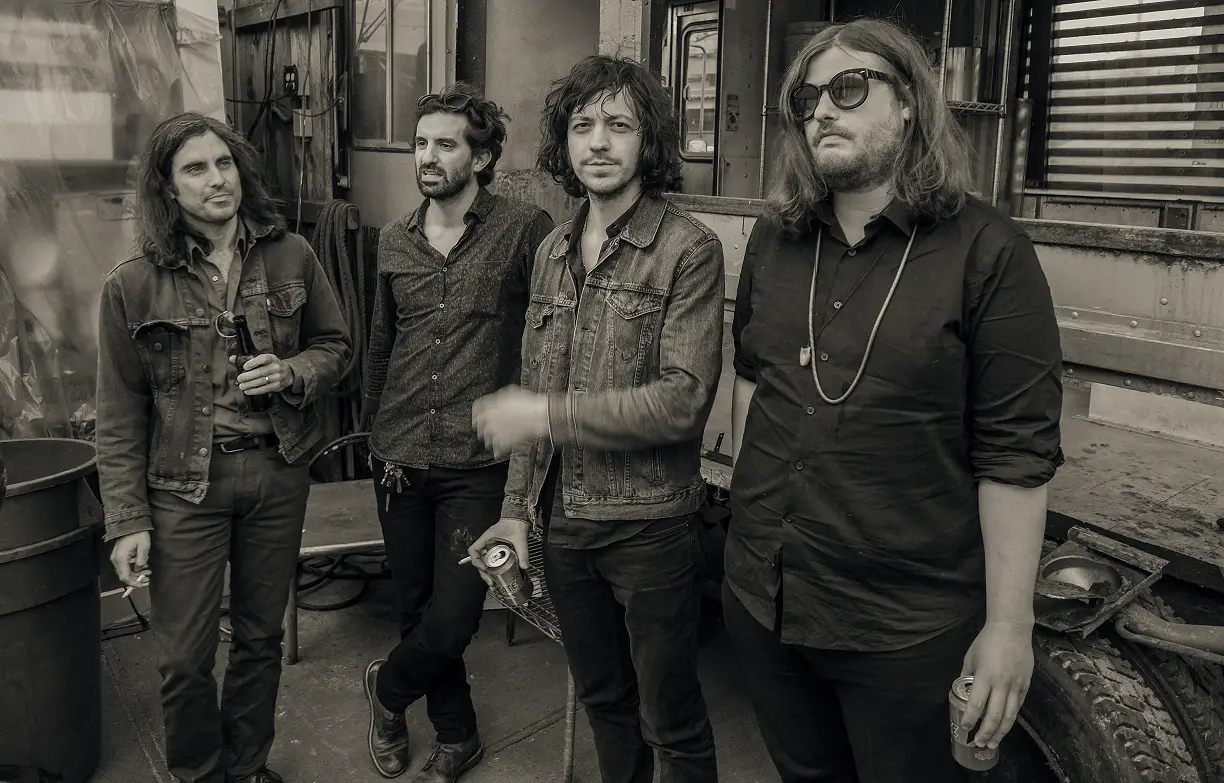
Remarkably, Rainbow Body are only just getting started. The formidable collective brings together Dawes’ Taylor and Griffin Goldsmith, Goose’s Rick Mitarotonda, Eric Krasno of Lettuce and Soulive, Ross James, and Adam MacDougall, with special appearances from Nicki Bluhm and Oteil Burbridge. The musicians first gathered in California’s Topanga Canyon in January before continuing their creative journey at Flóki Studios in the remote landscapes of northern Iceland, developing a sound shaped by their shared instincts and wildly varied musical backgrounds. Their self-titled debut album, Rainbow Body, arrives October 23, with proceeds benefiting the North Atlantic Salmon Fund. A lineup this stacked promises fireworks, but the real surprise is how naturally these individual talents come together as a band.
“A singular DNA of a band is hard to come by. It often takes a long time to sound uniquely like itself,” Goldsmith tells Atwood Magazine in an exclusive statement. “I feel like we skipped that incubation period and that this song is proof.”
He’s absolutely right. “Strange Memory” is a remarkable first impression, a song that revels in its own musical possibilities while remaining grounded in the unresolved turmoil of its central story. Every blazing guitar passage and hypnotic rhythmic flourish adds another layer to its restless atmosphere, carrying the listener deeper into a world of lingering memories and unanswered questions. For all the uncertainty haunting its lyrics, there’s nothing tentative about the band playing them. Rainbow Body sound like they’re having the time of their lives getting lost together, and the result is an exhilarating reminder of what happens when extraordinary musicians discover a common language. The road may stretch on forever, but with music this good, who’d want the ride to end?
:: “Call Me Sweet” – Tyler Sjöström ::
Mitch Mosk, Beacon, New York

Tyler Sjöström’s love story moved quickly, and life wasted no time testing it. Rooted in the tumultuous beginnings of his relationship with his now-wife, “Call Me Sweet” is a stirring, soul-baring folk rock ballad about the courage it takes to let another person see you completely, even when you’re bruised, afraid, and unsure of what comes next. It’s an achingly sincere expression of love at its most exposed, capturing the fear of opening yourself up to another person alongside the extraordinary comfort of knowing they’ll be there to catch you when you fall.
And the music is absolutely breathtaking. Sjöström’s rich, gravel-edged vocals rise from a bed of delicate fingerpicked acoustic guitar, his voice carrying every ounce of the song’s yearning and devotion. The arrangement gradually blossoms around him, with graceful piano, subtle organ, and glistening electric guitars creating a radiant, enchanting atmosphere that grows increasingly dramatic as the song unfolds. Drums add a stirring sense of momentum, while the electric guitars swell and roar, filling the air with glorious waves of sound. Recorded at Dog Days Studios in Tulsa, Oklahoma, the production is impeccable, balancing the close intimacy of a whispered confession with the exhilarating release of a full-bodied rock anthem. Sjöström sounds phenomenal, his passionate performance anchoring a song that seems to grow more powerful with every passing second.
There’s a wonderful honesty to his songwriting, too. “Call Me Sweet” draws on the earliest days of Sjöström’s relationship, when two people fell hard and fast for one another before encountering the difficult realities of grief, depression, and separation. His lyrics wander through memories of traveling to Mexico and swimming in a dark underground swimming hole, capturing the strange beauty of a relationship still discovering its depths. But beneath those memories lies a more pressing concern: What happens when the person you love sees the parts of yourself you’d rather keep hidden? Sjöström confronts that question with a disarming vulnerability, acknowledging his imperfections while gathering the courage to ask for love anyway.
“But if you’ll have me broke
Flawed beyond a joke
Well I’ll muster up something brave”
Originally from the Chicago area and now based in Virginia’s Blue Ridge Mountains, Sjöström has long been a distinctive voice in independent folk and Americana, blending deeply personal storytelling with an earthy, richly expressive musicality. Following a period away from his namesake project to focus on family and other creative work, he’s returned with a renewed sense of purpose, sharing a steady stream of songs since late 2025. “Call Me Sweet,” released June 26, stands among the most affecting of these new offerings, its title carrying a particularly meaningful invitation. The repeated chorus, “Hold my hand / And call me sweet / Call me anything,” captures a relationship where being together matters far more than having the perfect words to describe it.
“Sometimes what we need most is simply another person who will stay, listen, and see us even in the parts that feel broken,” Sjöström shares in the song’s press release. “Call me sweet, call me anything. In the end, it does not matter what we go through, as long as we are together.”
By the final chorus, “Call Me Sweet” has grown from a delicate admission into an exhilarating outpouring of devotion, its soaring instrumentation giving full voice to the love and uncertainty woven throughout the lyrics. The guitars blaze, the rhythm surges, and Sjöström sings with the conviction of a man who knows just how much is at stake when we give ourselves to another person. There’s a profound sense of release in those final moments, as though the very act of asking to be loved has given him the strength to face whatever comes next. And perhaps that’s the song’s greatest gift: The recognition that love asks us to be brave, to be honest, and to trust another person with the parts of ourselves we’re still learning to accept. Sometimes the sweetest thing in the world is simply knowing someone will hold your hand through it all.
:: “a drop in a dream” – Rose Wallace Goldaline ::
Danielle Holian, Galway, Ireland

Rose Wallace Goldaline, turns towards reflection and personal accountability on “a drop in a dream,” a contemplative release that considers how the weight of an experience can shift with time. Built around the idea that moments which once felt insurmountable may eventually become little more than fragments of a much larger existence, the song explores the distance between how we experience events in the present and how we understand them in retrospect. There is a quiet maturity to this perspective, acknowledging the intensity of difficult experiences without allowing them to define everything that follows. His central idea is particularly compelling in its recognition that looking back requires more than simply revisiting old feelings. It also means confronting our own reactions, accepting responsibility and reconsidering the significance we attach to certain moments. The title reinforces this sense of impermanence, evoking an existence that is elusive, unpredictable and impossible to fully comprehend.
Produced by himself, “a drop in a dream” continues to establish Rose Wallace Goldaline as a project concerned with the complexities of the inner world. Rather than presenting the past as something that can be neatly resolved, the song considers how perspective gradually reshapes our understanding of it. Its underlying sentiment rests on the distinction between dismissing an experience and recognising that it forms only a small part of a much wider story. This gives the track a thoughtful emotional foundation, balancing introspection with the possibility of moving forward. There is no need to frame personal growth as a sudden revelation or definitive breakthrough. Instead, his approach suggests that clarity can emerge slowly, through the willingness to revisit uncomfortable memories with greater honesty. With “a drop in a dream,” Rose Wallace Goldaline offers a reflective meditation on the fleeting nature of experience, finding meaning not in having all the answers, but in learning to see the past from a different perspective.
:: “gay allegations ft. my girlfriend” – OK MICKEY ::
Annaliese Baker, Chicago

If you’ve scrolled through Instagram Reels or TikTok sometime in the last month, you’ve likely heard a synth underlying the lyrics: “My boyfriend’s always dancing / He loves to shake his ass / He’s twerking on the tables and he’s got a sideways hat / My boyfriend is a diva / We kiki and we laugh / Some people may not get it but I like my boy like that.” The song is the first track from OK MICKEY, the artist name for accomplished producer and musical artist Mickey Brandolino. As a musician, Brandolino is best known for playing guitar in the band Valley until 2024, when he left to focus on producing. He’s worked with the likes of Mercer Henderson, MICO, Kevian Kraemer, ELIO, Knox, and more as a producer.
“Gay Allegations” (stylized “gay allegations”) first made waves on TikTok as an audio Brandolino added to one of his videos; its catchy, dance-able nature makes it an obvious earworm. The comments began to flood with questions about where to find the song, to which Brandolino revealed it was an original demo he’d made. Soon after, the audio began to populate in other videos, bringing them to Brandolino’s page to ask for the full track. Slowly but surely, Brandolino began to post updates about the track’s production as more people asked for the demo to be released as a full, finished song. As the audio continued to go viral, Brandolino revealed he didn’t even have an “artist name. His social media handle, OK MICKEY, eventually led him to his name.
The lead vocals provided on “gay allegations” are from his real-life girlfriend, Eliana Arian. She regularly sings songs on the spot, with the viral verse to “gay allegations” starting as one she sang while waiting with Brandolino at the airport. Although Brandolino already has an extensive career in the music industry, it’s thrilling to see him emerge as OK MICKEY. In a world where there’s a lot of negative connotations with virality and social media, Brandolino’s debut single is proof that there’s still talent online that cultivates community offline.
:: “Love Song” – Big Fat Cow ::
Mitch Mosk, Beacon, New York
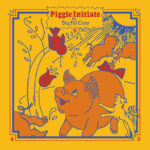
Big Fat Cow’s idea of a love song comes with dirt under its fingernails and fire in its veins. The Kansas City rockers lay themselves bare on “Love Song,” a searing, sweltering declaration of devotion that embraces all the messiness and madness of loving another person. It’s a song about stripping away our illusions, confronting the ugliest parts of ourselves, and finding the courage to become better for someone we adore. And in true Big Fat Cow fashion, the whole thing arrives in a roaring, gloriously unhinged blaze of indie rock passion.
“Love Song” is a visceral, all-consuming collision of bluesy rock swagger and fuzz-drenched indie rock, its guitars snarling and soaring through an arrangement that grows increasingly feverish as the song unfolds. There’s an unrestrained energy to the performance, with the band’s ragged edges and dramatic flourishes giving the music a thrilling sense of immediacy. The guitars burn, the rhythm section drives relentlessly forward, and Noah Cassity’s impassioned vocals rise above the beautiful chaos with an almost spiritual intensity. It’s dreamy and dramatic, seductive and explosive, a spellbinding musical fever dream that pulls the listener deeper into its delirium with every passing measure.
And beneath all that glorious noise lies a strikingly philosophical vision of romance. Cassity’s lyrics reach for the cosmic and the divine, imagining a lover whose eyes reveal entire worlds of color and contradiction. Religious imagery collides with intimate confession, as the song wrestles with the difficult work of acknowledging our own imperfections. Its central refrain is particularly affecting, a plea for grace amid the beautiful disorder of being alive:
“And in this mess, I call on this
Hallelujah
Come back to bed, the imperfect
Hallelujah”
Based in Kansas City, Missouri, Big Fat Cow have been cultivating their wonderfully eccentric brand of “cowpoke fuzz” since 2022, fusing their folk roots with adventurous, increasingly ferocious rock arrangements. “Love Song” appears on their forthcoming four-track EP Piggie Initiate, arriving October 23, a project the band recorded themselves using an old TASCAM four-track tape recorder. That analog approach is deliberate, embracing the static, distortion, and imperfections of the recording process as a creative stand against artificial intelligence and the increasing sterilization of art. It’s a fitting philosophy for a band whose music revels in unruliness, and for a song so deeply concerned with the difference between the versions of ourselves we present to the world and the truths we carry underneath.
For lead vocalist and guitarist Noah Cassity, aka Gary Bovine, that tension lies at the very center of “Love Song.” His explanation is every bit as vivid and uncompromising as the music itself, a wonderfully strange, deeply earnest manifesto on what it means to give ourselves over to love.
“‘Love Song’ is both exactly what it sounds like, and nothing at all what one would expect of a romantic confession,” Cassity tells Atwood Magazine. “This is the process of ritual disassembly taken by the self in an attempt to embody the partner’s affectionate and cultivating vision; a lover must see themselves at their own worst worm-like state to progress. In a world careening towards instantaneous gratification and promises of orgasmic superfluous joy, to suffer in the name of selfless betterment is a stick in the cog of a great many damnations hounding the heart. We owe it to those we claim to adore our most honest airs, for we are given the grace to live within a mind that is rubber with malleability. By this same token, we are swollen with sins of artifice. Dancing around us as gilded leafing on the inside of an iron cage, the trappings of the illusion fill the individual with sugar and empty promises. Love is a key given to us by the very fabric of our being, a tool with which we may seek and share our innermost truths with the universe as it vies to live within us in return.”
“This song is just one of a million love songs written by one of the trillion slimy little creatures begging to fill the hole with the Platonic form. Love is the only weapon, the only way in or out, and the only thing more stubborn than bodies we wage it with. My wife, my keeper, my best friend, this song is for Quinn.”
There’s real affection beneath all that wild-eyed philosophy, and “Love Song” is all the more compelling for the contradictions it embraces. Its ragged, feverish intensity reflects the difficult work of becoming the person we want to be, while its soaring melodies offer a glimpse of the love that makes that work worthwhile. Big Fat Cow have crafted a gloriously strange and exhilarating ode to devotion, one that embraces every flaw, every uncomfortable truth, and every possibility for growth. Love, after all, asks us to see another person completely. The real challenge is finding the courage to see ourselves with the same honesty.
:: “You Move” – Avery Friedman ::
Mitch Mosk, Beacon, New York

Avery Friedman was beginning to wonder if she’d lost her songwriting spark. Then the words came tumbling out, and she had the good sense to leave them alone. Her breathtaking new single “You Move” is a dreamy, intoxicating indie rock reverie that embraces the thrill of the unknown, finding fresh possibilities in the places where uncertainty and desire meet. There’s a wonderful sense of freedom running through it all, as the Brooklyn singer/songwriter gives herself over to the moment, trusting the strange, exhilarating magic of an unexpected connection. It’s an invitation to loosen your grip, open yourself up, and get swept away.
Friedman’s radiant vocals glide over a lush, sweltering arrangement of glistening guitars, pulsing drums, and saxophone lines that curl through the music with irresistible warmth and swagger. The song practically breathes with its own momentum, its layered textures and playful synthetic flourishes creating an immersive atmosphere that’s as intimate as it is exhilarating. There’s a glorious push and pull between the earthy, full-bodied energy of the live band and the airy, almost weightless quality of Friedman’s singing. Produced by James Chrisman, with Felix Walworth on drums and Seth Paris on saxophone, “You Move” is impeccably arranged, each instrument adding another splash of color to a sound that grows richer with every passing measure. It’s the kind of song you can lose yourself in completely, allowing the music to carry you wherever it wants to go.
That openness extends to Friedman’s evocative lyricism, where the uncertainty of new beginnings becomes fertile ground for romance and renewal. Images of soil, roots, and a rooftop garden weave through the song, suggesting a connection that’s still taking shape, its future unwritten but full of promise. There’s a lovely intimacy to the way she approaches desire, savoring the possibility of what might grow between two people as they learn to trust one another.
“We comb our fingers
through the soil.
And there’s a garden on your roof,
there’s a yellow
to your eyes
when we’re watering
our wanting.”
The phrase “watering our wanting” is especially striking, capturing desire as a living thing that needs patience and care to flourish. Friedman understands that new love can be both thrilling and frightening, asking us to relinquish control even as we hope for the best. And her chorus, with its repeated “Something in the way you move,” captures that intoxicating moment when attraction defies explanation. She doesn’t need to know exactly where this connection is headed to recognize its power. The melody circles around those words with growing conviction, transforming an instinctive observation into a joyous celebration of possibility. Remarkably, that same spirit of surrender shaped the song’s creation.
“I wrote ‘You Move’ during a time when songs weren’t coming to me as freely as they had in the past. The opening lyrics “have I lost it all/to the driest spell?” speak to this. I actually intended to change most of the initial lyrics in this song, as the bulk of them rolled out in the 20 minutes or so that I was sitting down to (try to) write. But as the song’s themes revealed themselves to be about surrender and levity, I was inspired to let myself keep these instinctual, unfiltered lyrics. Musically speaking, the song is largely consistent with these themes, too, as it is built around an energetic live band take, and accented by some playful synthetic elements and saxophone overdubs. My hope is that listeners can find themselves lost within a track that is both contemplative and anthemic – even if they pressed play from a less-hopeful place,” Friedman tells Atwood Magazine.
It’s an exciting new chapter for the Cleveland-born, Brooklyn-based artist, whose acclaimed 2025 debut album New Thing introduced a songwriter with a remarkable gift for capturing the beautiful, bewildering contradictions of becoming. Friedman only began writing songs in 2023, but her music has already earned widespread acclaim for its candid explorations of identity, longing, and self-discovery. Released October 9 via Audio Antihero, “You Move” is her first new single since that debut, offering an enticing glimpse into her forthcoming sophomore album, expected in 2027. It also arrives ahead of her first UK and European tour, another milestone for an artist whose sound continues to grow in confidence and ambition. Where New Thing often wrestled with the anxieties of self-discovery, this new offering revels in the possibilities that open up when we allow ourselves to embrace the unfamiliar.
By the time “You Move” reaches its final refrain, Friedman’s repeated declaration has become an exhilarating release, her voice floating above the band’s swelling instrumentation as the guitars, drums, and saxophone gather into one glorious rush. There’s a freedom in that repetition, a willingness to remain in the moment and savor it for all it’s worth. And perhaps that’s what makes the song so irresistible: Its creator allowed herself to follow her instincts, and the result is music that encourages us to do the same. “You Move” celebrates the joy of discovering that even after the driest spell, life can surprise us with new things to nurture, new people to love, and new reasons to dance. Sometimes all it takes is a little surrender to discover just how much room there is left to grow.
:: “Hear Me Out” – Dutch Mustard ::
Mitch Mosk, Beacon, New York

Dutch Mustard has one request: Listen. Really listen. The Dutch-born, London-based artist channels the frustration of going unheard by someone you love into her exhilarating new single “Hear Me Out,” a dreamy, feverish indie rock anthem that surges from grungy desperation into sweet, soaring release. There’s real heat beneath its ethereal atmosphere, a restless urgency that gives every guitar swell and impassioned vocal line a greater sense of purpose. It’s an intoxicating collision of tension and tenderness, capturing the exhaustion of trying to reach someone who seems unwilling to meet you halfway.
“Hear Me Out” begins with a gritty, tremolo-soaked guitar and driving beat, its darker textures establishing an atmosphere of mounting unease. Sarah-Jayne Riedel’s airy vocals drift through the distortion, her delivery almost deceptively delicate against the growling instrumentation. Then the chorus arrives, and the whole song seems to throw open its windows. The guitars surge and the melody rises, transforming all that pent-up frustration into a glorious, cathartic rush. It’s an irresistible blend of ’90s alternative rock grit, shoegaze haze, and dream pop sweetness, with each successive wave of sound carrying a little more urgency. And after all that heat and upheaval, the arrangement gradually settles back into intimacy, giving the song’s final moments room to breathe.
The lyrics are as direct as the music is dramatic. Riedel begins by asking whether the person she’s addressing is even listening, before the chorus repeats her plea with increasing insistence. There’s a painful familiarity to that repetition, the exhaustion of having the same conversation over and over, desperately hoping this time might be different. But the song’s most devastating admission arrives in its simplest refrain:
“I wanted to love you,
I wanted to love you,
I wanted to love you,
I wanted to love you”
The past tense says everything. Beneath the frustration lies the grief of a relationship that once held so much possibility, and the recognition that love alone cannot overcome another person’s unwillingness to listen. Riedel’s repeated declaration carries the weight of all the conversations that went nowhere, all the moments when understanding might have changed the course of things. The song’s swelling choruses give that disappointment a thrilling sense of release, as though finally saying everything aloud offers its own liberation.
“This song is one of those moments, where it just falls out of the sky,” Riedel explains. “Lyrically it talks about wanting to be seen and heard by a loved one. Not only because we should all be heard in a relationship (of any kind), but because it can save the relationship. Hear Me Out sonically travels through more stripped back moments, at the start of the song, then builds into a whirlwind of emotion and chaos. Ending in calm intimacy. This is a song for those who deserve to be heard.”
Released September 15 through her own DM Records, “Hear Me Out” is Dutch Mustard’s first single of 2026 and another striking showcase of Riedel’s talents as a songwriter, multi-instrumentalist, and producer. Following her earlier EPs An Interpretation of Depersonalisation and Beauty, she’s continued refining a distinctive musical identity that marries the atmospheric allure of shoegaze with the visceral energy of alternative rock. Entirely self-produced, the new track reflects an artist increasingly confident in her creative instincts, allowing the arrangement’s contrasts to speak as forcefully as her lyrics.
By the end, the storm has subsided, but the song’s central plea still hangs in the air. “Hear Me Out” captures the peculiar loneliness of loving someone who won’t truly listen, and the remarkable sense of freedom that comes from finally giving those frustrations a voice. Dutch Mustard channels that hurt into a gorgeous, guitar-scorched release, allowing the music to soar even as the relationship at its center threatens to unravel. Listening may be the simplest thing we can offer another person, but sometimes it’s also the thing they need most.
:: “Feeling Good” – Crys Matthews ::
Chloe Robinson, California

Nina Simone is a true icon. Her tracks “I Put A Spell On You” and “Don’t Let Me Be Misunderstood” stand as enduring classics, displaying her unmistakable artistry and timeless appeal. Another one of those bold standouts is “Feeling Good.” The song is known for being a big, commanding, emotional piece packed with so much raw power. Crys Matthews breathes new life into the masterpiece with a rendition worthy of Nina Simone’s legacy. Her voice balances astonishing strength with a delicate, deeply poignant quality.
Crys reveals, “Written by English composers Anthony Newley and Leslie Bricusse for the 1964 musical The Roar of the Greasepaint – The Smell of the Crowd, the song was first performed by a character simply called ‘The Negro.’ He sings the song after winning a ‘ruleless game’ against two white characters. The struggles of racial and socioeconomic inequality in 1960s Britain (the premise of the musical) paled in comparison to its American equivalent. As a fellow Black southerner, I don’t have to imagine how deeply that resonated with Nina.” She explains how that “game” continues to be played today. Beneath its capitalist façade lies a system rooted in white supremacy, one that was never designed to give Black or working-class people a fair chance at success. This is why “Feeling Good” is a freedom cry, providing hope to those desperately seeking change. “Feeling Good” is off of Shamus Records’ new album Holidays & Evergreens showcasing innovative new interpretations of beloved tracks from TRO Essex Music Group’s catalog.
A strong voice in the world of socially conscious music, Nashville-based Matthews is helping shape a new generation of artists unafraid to speak their truth. An award-winning lyricist and composer, she brilliantly blends together Country, Americana, Folk, Blues, and Bluegrass, pairing the warmth of traditional melodies with thoughtful, unfiltered songwriting. Her music speaks directly to the world we live in today, making her artistry feel especially relevant to the times.
:: “The Word” – Samuel Virgo ::
Joe Beer, Surrey, UK

Sheffield-born, London-based artist Samuel Virgo recently released a new track, “The Word,” demonstrating his genre-blending approach to music. Drawing inspiration from the likes of Arctic Monkeys, Bloc Party and Master Peace, the song explores just how much power language can hold, and how something as simple as a single word can completely alter a situation.
With its guitar-driven instrumentation, indie-alt-hip-hop influences and Virgo’s laid-back, spoken-word style vocals, “The Word” also marks the closing chapter of Virgo’s latest EP, Virgo II. Combined with last year’s Virgo EP, the artist completes his eight-track album titled Laughing in the Wilderness. The release also includes tracks “Slip Away,” a melancholic look at losing yourself in the highs and lows of love, and “ICU,” which questions how easily the truth can be distorted and manipulated. Together, the songs offer a glimpse into Virgo’s versatility, both musically and lyrically.
:: “Mind Melt” – Kitschen Boy ::
Mitch Mosk, Beacon, New York

Kitschen Boy are looking to Orion’s Belt for answers. Evidently, this relationship has gotten seriously out of hand. The Naarm/Melbourne quartet capture the dizzying frustration of trying to understand someone who sees the world completely differently on “Mind Melt,” an entrancing, wonderfully off-kilter indie rock reverie that channels romantic miscommunication into a hypnotic spiral of doubt and disbelief. It’s a deliriously catchy descent into the madness of questioning your own reality, where the more desperately you search for clarity, the further it slips from your grasp. And somehow, Kitschen Boy make the whole experience sound downright irresistible.
“Mind Melt” churns with grit and grace, its jangling guitars weaving through a darker, driving rhythm that keeps the song moving with deliciously restless energy. There’s a playful, almost mischievous quality to the music, with bright melodies cutting through the murkier textures as Dylan Baddeley’s vocals navigate the turmoil with an increasingly frazzled urgency. The guitars swirl and collide, their hypnotic repetitions pulling the listener deeper into the song’s peculiar atmosphere, while the rhythm section holds everything together with infectious momentum. It’s a marvelous collision of dreamy indie rock and dark-leaning jangle pop, at once enchanting and unsettling, with the band’s gift for irresistible hooks giving even their most troubled thoughts a surprising sense of exhilaration.
The lyrics capture the disorienting experience of an argument that seems to have escaped all logic. Baddeley questions whether he’s lost his mind, caught in an endless cycle of misunderstanding as his partner’s words leave him increasingly uncertain of what to believe. The chorus introduces a wonderfully strange image, looking toward the heavens for reassurance when the person standing right in front of you has become impossible to understand:
“That’s the mind melt
Orion’s Belt
Staring at the sky for help”
The celestial imagery gives the song an almost cosmic sense of absurdity, as a painfully ordinary relationship conflict becomes a full-blown existential crisis. But there’s real anguish underneath the song’s infectious energy. The repeated demands to stop, listen, and reconsider capture the exhaustion of two people trapped in competing versions of the same reality, each struggling to make sense of the other’s perspective.
“‘Mind Melt’ paints the picture of someone pushed to the point of questioning their own sanity, begging for celestial intervention in search of reassurance that they have not lost their mind,” the band tell Atwood Magazine. “The track speaks of desperately seeking out any possible explanation for the torment of misunderstanding between partners, asking oneself how two people can possibly see things so differently. It’s the fear of teetering on the edge of a psychotic break and being gently nudged towards the event horizon.”
Released May 1, “Mind Melt” offers the first glimpse into Kitschen Boy’s forthcoming debut album, following two EPs and several years spent building a devoted following through energetic live shows across Australia and New Zealand. The four-piece, comprising Baddeley, Carlos Tinsey, Lewis Hentschke, and Ted Mitchell, have already amassed more than six million streams, and their latest single finds them pushing further into the darker corners of their sound. Written during a spontaneous session in Sydney with longtime friend and producer Fletcher Matthews, the track retains the freshness of its earliest creative instincts, its restless musical energy reflecting the spontaneity of the collaboration.
“The recording process was unique in the sense that it was our first time working with our old friend Fletcher Matthews, who has become a heavy-hitting producer in the Aus scene – working with acts such as Dear Seattle, Trophy Eyes, and STUMPS. Dylan and Fletcher had a writing session in Sydney over the course of a couple of days and came out with ‘Mind Melt.’ It was cool to see that not many changes were made from their first instincts. We hope the friendship shines through.”
“Inspiration definitely draws from Dylan’s life experiences and relationships, which he often uses music and lyric writing to make sense of. That said, he writes in a way that allows people to draw their own meaning from it, steering clear of too many literal phrases.”
That openness is part of the song’s appeal. “Mind Melt” leaves enough room for listeners to bring their own experiences of confusion and miscommunication into its swirling world, while its exuberant instrumentation offers a delicious escape from the very anxiety it describes. The guitars keep churning, the melodies keep circling, and Baddeley’s increasingly desperate pleas become an exhilarating outlet for frustrations that so often leave us speechless. Kitschen Boy have crafted a wildly addictive, wonderfully disorienting indie rock anthem about the point where communication breaks down and reality starts to wobble. The stars may not have the answers, but at least the soundtrack to losing your mind sounds this damn good.
:: “Heaven Now” – Bone China ::
Mitch Mosk, Beacon, New York
Bone China have set an outrageously high bar with their very first single. The south London duo’s “Heaven Now” is a stunning, smoldering alternative rock reverie that burns with the bruised intensity of ’90s grunge, its haunting intimacy giving way to waves of searing, distortion-soaked release. It’s the kind of debut that immediately commands your attention, drawing you into its dark, feverish atmosphere before sending shivers down your spine with a vocal performance that sounds positively possessed. For anyone with a soft spot for the gritty, emotionally charged sounds of alternative rock’s golden age, this one’s an absolute knockout.
The song’s power lies in its extraordinary dynamics. Ben Anthony’s guitars brood and simmer beneath Luke Lovekin’s exposed, aching vocals, gradually gathering weight until the music erupts in great, glorious waves of distortion. There’s a gorgeous tension between the song’s stripped-back passages and its heavier outbursts, with each moment of restraint intensifying the impact of what follows. Lovekin is phenomenal, his voice carrying a raw, almost desperate urgency that can sound intimate and subdued one moment, then fiercely impassioned the next. Even at its loudest, “Heaven Now” retains an unmistakable melodic pull, its rough edges and lo-fi textures lending the performance a visceral immediacy. It’s dark, dramatic, and utterly engrossing, a thrilling collision of grunge’s bruising force and the aching beauty of a great rock ballad.
The title alone invites a bigger question: What does salvation look like when you’re searching for meaning in the middle of your own uncertainty? There’s an almost spiritual intensity to “Heaven Now,” an underlying sense of searching that courses through its restless arrangement. Lovekin’s delivery sounds like a man working through his thoughts in real time, wrestling with the weight of an experience he hasn’t quite found the words to explain. The song’s emotional charge comes from that uncertainty, from the friction between longing for an answer and learning to live with the questions. And the circumstances behind its creation are every bit as fascinating as the music itself.
“It’s based on an unusual encounter,” vocalist and lyricist Luke Lovekin explains. “This guy called Isaac ran across the road, walked and talked with me till I reached my street in Forest Hill; his final question was, ‘What’s your relationship with God?’ The song just fell out of me. I’d been in a prolonged period of solitude; I’d just moved to London and appreciated the organic encounter. 90% of the vocals are first take, and the lyrics were written in a session of subconscious exfoliation while Ben put his instrumental in front of me. We tried polishing certain parts, as I can be precious over the writing, but it just couldn’t beat the delivery of the original.”
That phrase, “subconscious exfoliation,” is particularly striking, and it speaks to the remarkable immediacy of the finished recording. “Heaven Now” has the urgency of a thought being articulated for the very first time, with Lovekin’s performance capturing the hesitation, conviction, and sudden surges of feeling that make great rock vocals so affecting. The production embraces those instincts, allowing the song’s imperfections to become part of its personality. Recorded between Lovekin’s flat and a makeshift studio in Hackney, the track sounds wonderfully unguarded, its grainy textures and explosive guitar work preserving the electricity of two musicians following an idea wherever it leads. There’s real artistry in knowing when to leave well enough alone, and Bone China’s decision to trust their original instincts pays off spectacularly.
Released April 21 through Blitzcat Records, “Heaven Now” introduces Lovekin, originally from Stoke-on-Trent, and guitarist Ben Anthony, from Hertfordshire, as one of the most exciting new partnerships in British alternative rock. The pair first met at university in Chester before reconnecting in London, where casual writing sessions gradually evolved into Bone China. Their musical foundations draw from the restless spirit of ’90s alternative, with influences ranging from Soundgarden and Radiohead to the deeply expressive songwriting of Jeff Buckley, Elliott Smith, and Tom Waits. Those reference points help explain the breadth of their debut, but the chemistry between Lovekin and Anthony is what gives “Heaven Now” its own identity. Their interplay has a remarkable sense of purpose, each surge of distortion and exposed vocal passage deepening the song’s emotional stakes.
For a first offering, “Heaven Now” is astonishingly assured. Bone China understand the particular magic of alternative rock at its most evocative, when a guitar can communicate volumes through a single sustained note and a singer can sound utterly exposed even as the music roars around them. Their debut captures that exhilarating balance of fragility and ferocity, building an entire world of tension and release from an instinctive encounter between two creative minds. The song lingers long after its final moments, leaving behind the unmistakable impression of a band with enormous promise and an already formidable musical identity. Bone China have come out swinging, and the future looks awfully exciting from here.
:: “The Dress” – Anthony Arya ::
Chloe Robinson, California
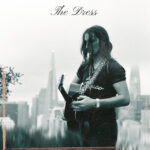
An article of clothing can hold a surprising amount of meaning, often becoming a vessel for memories, emotions, and the people we associate with them. From Weezer’s “Undone,” which uses the unraveling of a sweater as its central metaphor, to Taylor Swift’s “Cardigan,” which likens a forgotten garment to the feeling of being overlooked and rediscovered, music has long found ways to transform ordinary objects into something deeply personal. Anthony Arya’s “The Dress” follows in that tradition, finding a poignant story within a single piece of clothing. His warm, emotive vocals glide across delicate acoustic guitar, creating an intimate, honest atmosphere that captures the lingering ache of a past partnership and the memories that remain long after it has ended.
San Francisco-based musician Arya draws on the rich legacy of classic folk rock while carving out a sound of his own through modern indie pop influences. His music brings together vulnerable storytelling and melodies shaped by the complexities of everyday life. Rooted in personal experiences, his songs explore the lasting impact of relationships and the highs and lows he has experienced living in the city. This latest release captures the same Laurel Canyon indie folk rock essence fans love.
:: “No” – Antje Duvekot ::
Chloe Robinson, California

There is something about the word “no” that is deeply liberating. We often say yes to things out of fear of disappointing others, even when doing so means putting aside our own wants and needs. The admired artist Meghan Trainor came out with a pop banger entitled “No” rejecting arrogant men. Antje Duvekot carries that message of empowerment forward, reclaiming her own sense of strength and control. Her track also titled “No” marks the start of regaining personal power: Refusing to diminish oneself, appease others, or remain endlessly agreeable. Her warm folk vocals evoke the likes of Jewel, while the country-esque soundscape adds a nostalgic charm that beautifully complements her distinct style of storytelling.
After moving from Germany to the United States as a young teenager, Duvekot began seeing the world through the distinct perspective of two cultures. Her interest in songwriting took shape when she picked up a guitar in high school, eventually finding inspiration in the unfiltered lyricism of folk artists Dar Williams and Ani DiFranco. Their influence helped her recognize the power of sharing even the most intimate parts of herself through music. Since then, Duvekot has remained committed to writing with honesty and openness, turning her own experiences into songs that speak to the emotions and experiences we all share.
:: “Discipline” – Makeshift Art Bar ::
Mitch Mosk, Beacon, New York

A soldier tells himself he’s serving the greater good. Makeshift Art Bar make the collapse of that belief sound like a full-blown musical thunderstorm. The Belfast quartet’s incendiary single “Discipline” is a relentless, feverish assault on the senses, a blistering collision of industrial noise rock and post-punk fury that confronts the horrifying consequences of blind obedience. It’s music that seethes and convulses, its droning guitars and punishing rhythms generating an almost unbearable sense of pressure. Every second is charged, every sound bristles with tension, and the whole thing threatens to boil over at any moment. This is confrontation in its most visceral musical form, and it’s absolutely electrifying.
“Discipline” is cold as machinery and hot enough to scald. Its rigid, industrial beat hammers away with merciless precision, while distorted electronics and grinding, angular guitars scrape against one another in a mounting frenzy of noise. The textures pulsate and shift, sometimes collapsing into one great wall of distortion, sometimes pulling apart just enough to expose the unease underneath. Joseph Sweeney’s vocals cut through the commotion with feverish intensity, his delivery increasingly agitated as the music bears down around him. There’s an almost physical weight to the arrangement, a claustrophobic churn that gets under your skin and refuses to let go. It’s abrasive, hypnotic, and utterly intoxicating, with the band’s extraordinary command of tension giving the performance the force of a storm that seems to rage in every direction at once.
The lyrics are just as disturbing as the sound. “Discipline” inhabits the mind of a soldier who has followed orders, committed terrible acts, and begun to recognize the lies that justified his actions. “I’m the greater good,” he tells himself, parroting the assurances of the man in the suit on television. “It’s not for nothing,” he insists, repeating the phrase like a desperate incantation, as though saying it enough times might absolve him of responsibility. The song’s brutal repetition mirrors the machinery of propaganda itself, where slogans replace thought and obedience becomes a convenient substitute for morality. But cracks are beginning to appear in the soldier’s convictions, and the realization that he’s been manipulated carries its own devastating consequences.
“Fed with lies and temptation
Western absolution fought till dissolution
This deserves
Discipline”
“‘Discipline’ is an illustration of the effects of propaganda on an individual within the military-industrial complex,” the band explain in their release announcement. “It is horrifying when stripped back to its pure action and not cunningly hidden away as a euphemism. Exposure to this truth is necessary, igniting a flame of moral destruction within this individual, having abandoned his true morals and becoming a cog in the machine of war.”
The title becomes increasingly provocative as the song unfolds. Discipline is what the soldier has been taught to uphold, the unquestioning obedience that allows the machinery of war to function. But it’s also what he now confronts as his conscience begins to rebel against everything he’s been told. Makeshift Art Bar give that internal conflict a frighteningly tangible sound, the mechanical insistence of the rhythm colliding with the unruly violence of their instrumentation. The music seems to be fighting itself, straining against the very structures holding it together. Produced by Gilla Band’s Daniel Fox, the track revels in its own textural brutality, processing every instrument through distortion until the boundaries between guitars, electronics, and percussion begin to dissolve. It’s oppressive by design, and utterly thrilling in execution.
The song’s accompanying video takes that discomfort in a wonderfully unexpected direction. Directed by Colin Peppard and filmed in Benidorm, Spain, it follows a genuine Harry Styles tribute performer, Sean McNicholas, as the boundaries between his public persona and private identity begin to unravel. The bright, saturated colors and kitschy holiday atmosphere offer a striking visual counterpoint to the track’s bleak industrial soundscape, yet the underlying questions are remarkably similar. What happens when someone becomes so consumed by the role they’re expected to play that they begin losing sight of themselves? The video extends the song’s fascination with identity and control into an entirely different world, adding a surreal, darkly entertaining dimension to its psychological intensity.
“‘Discipline’ was largely focused on sound design. Most of our energy during recording was spent processing and layering sound, which is always the most exciting aspect of recording for us,” Sweeney tells Atwood Magazine. “The visuals for the release were equally as important for us, though, with the bright and saturated video, directed by Colin Peppard, serving as an extreme contrast to the more bleak imagery within the track. Our approach to the EP as a whole was that of wanting to create a vivid atmosphere that swallows you in. Ultimately, we want to create an experience that defines us in our current state.”
That ambition extends across Marionette, the band’s extraordinary sophomore EP, released June 26 via Heist or Hit. Following their 2025 debut Lackluster Writing Makes Fundamental Reading, Makeshift Art Bar have refined their ferocious musical identity into a four-track exploration of power, control, and the psychological toll of living under forces we struggle to understand. Opener “Chocolate” tackles social anxiety through a volatile mix of hyperactive electronics and abrasive guitars, while “Crows” wrestles with guilt and digital culture amid increasingly paranoid instrumental textures. Closer “Servant” explores religious imagery and the frightening disconnect between self-awareness and the ability to change one’s actions. Together, these songs form a deeply unsettling portrait of people caught in systems, beliefs, and behaviors that threaten to consume them.
The Belfast four-piece, comprising Joseph Sweeney, Callum McGuigan, Alleyah Boulaich, and Callum Sweeney, have emerged as one of the most provocative forces in contemporary underground rock, channeling elements of post-punk, grunge, electronica, and industrial music into a fiercely uncompromising sound. Their music thrives on friction, its strange rhythms and serrated textures creating an atmosphere of perpetual unease. Marionette captures that restless experimentation at its most fully realized, each track pushing against the boundaries of what the band have already established. There’s a remarkable confidence in their willingness to embrace discomfort, to create music that challenges the listener as forcefully as it excites them. The EP’s central image of the marionette is particularly apt: Its characters are struggling against invisible strings, desperately searching for some measure of agency in a world determined to pull them apart.
And therein lies the exhilarating power of “Discipline.” Makeshift Art Bar have crafted a piece of music that practically demands a physical response, its relentless sonic downpour refusing to offer shelter from the difficult truths buried within. The band’s fury is purposeful, their noise an act of confrontation that gives shape to the anger, anxiety, and frustration so often left simmering beneath the surface. They hold absolutely nothing back, and in doing so encourage us to confront the things we’d rather ignore: The stories we’re told, the systems we uphold, and the uncomfortable responsibilities that come with recognizing our own complicity. “Discipline” is a ferocious reminder that questioning authority can be an act of liberation, and that confronting the truth is often an ugly, painful, necessary process. Makeshift Art Bar are here to shake us awake, and they’re making one hell of a racket doing it.
:: “Toy Proof” – Jenny JAM ::
Julius Robinson, California

Jenny JAM unpacks the harsh reality of self-deception and dashed expectations with her single “Toy Proof.” The track draws from a period of profound personal anguish, capturing the heartbreak of a relationship ending just as the artist learned that her mother’s leukemia had returned. Lyrics like “why would I lie to myself, keep telling these things to myself, saying you care, hoping you’re there” reveal her regret over ignoring the truth and the deep pain it has caused her. As well though, lines such as “you shot me, but I won’t fall” provide a strength and determination that is truly inspiring to hear. Navigating a breakup while supporting your mother through a medical crisis is an enormous weight for anyone to carry. “Toy Proof” is the ultimate fight song, displaying JAM is ready to lift that weight no matter how difficult things get.
Jenny JAM is a London-born, Los Angeles-based soul-pop artist whose music explores the intersection of heartache, healing, and self-belief. Blending soulful melodies with elements of pop, jazz, and classic rock, she delivers a sound that is both emotionally raw and effortlessly expressive. From her early days in London’s musical theatre scene to recording across the globe, her experiences have shaped an immensely vulnerable approach to songwriting. That intimate storytelling is felt so fiercely within “Toy Proof.”
:: “Not That Bad” – Brody Price ::
Mitch Mosk, Beacon, New York

Brody Price keeps telling himself “It’s not that bad,” and the guitars sound like they’re trying to shake the truth out of him. The Dallas-based singer/songwriter confronts the ugly realities of addiction and denial on his blistering single “Not That Bad,” a gritty, gut-wrenching collision of alternative rock and alt-country that captures the psychological toll of refusing to face your own demons. It’s a song caught between self-awareness and self-destruction, where every attempt at reassurance sounds increasingly desperate against the music’s bruising intensity. And beneath all that glorious distortion lies the devastating admission of a man who knows just how far he’s fallen, even as he struggles to acknowledge it.
The music is absolutely ferocious. Brutally distorted electric and baritone guitars grind and growl through the arrangement, their thick, ragged tones colliding with searing pedal steel that cuts through the noise like an exposed nerve. There’s a punishing weight to the performance, a heavy, unsettled churn that captures the exhaustion of being trapped inside your own head. Price’s voice sounds worn and frayed, his delivery carrying a mixture of resignation and barely contained anguish as the instrumentation bears down around him. It’s a thrillingly abrasive sound, channeling the restless spirit of ’90s grunge through the weathered soul of Americana. The guitars rage, the pedal steel cries, and the whole performance sounds like it’s coming apart at the seams. Which, given the song’s subject, is precisely the point.
Price’s lyrics reveal the cruel mental gymnastics of denial, the way a person can recognize their own deterioration while simultaneously convincing themselves that everything is manageable. He sings of hollowing out his sorrow, watching someone walk away, and wishing he could become a different person entirely. The most painful moment arrives when he acknowledges that his partner’s disappointment is a judgment he shares:
“You’re wishing I was someone else
You don’t have to say it, I’ve been here before
And I’ve been wishing it myself
Babe I wouldn’t blame you I’m so frayed and torn”
There’s a crushing honesty in that confession. Price understands the damage his behavior has caused, but recognizing the problem and confronting it are two very different things. Every return to “It’s not that bad” reveals another layer of desperation, the refrain becoming a defense mechanism against a reality that’s growing harder to ignore. The song’s distorted, almost suffocating atmosphere captures that internal struggle with frightening precision, and its roots reach back to a particularly difficult period in Price’s life.
“A few years back, the band and I did a run of shows through the South with Brennan Wedl. We ended the run with shows in Texas where we performed Nirvana’s In Utero record in its entirety. That was an absolutely monstrous undertaking for everyone involved. That record was pretty much the only music I consumed for about 6 months. This song came around in the wake of that season. I was having a tough go at things and was really not taking care of myself. I was drinking really heavily and let a lot of bad shit pile up in my life… Deep down, I knew that the state of my reality wasn’t good, but instead of facing things head-on, I fully disengaged. That state of existence requires so much mental and emotional gymnastics, swinging between ‘it’s not that bad’ and ‘oh shit… it actually is that bad.’ The reality doesn’t change based on one’s own willingness to confront it. I guess this song is how my head felt when I was not confronting reality,” Price explains.
“Not That Bad” appears on Price’s newly released album Leaf Miner’s Daughter, which arrived October 9 via Gar Hole Records. Following 2022’s Win a Trip to Palm Springs, the record offers an unflinching portrait of a particularly turbulent chapter in the songwriter’s life, tracing his struggles with alcoholism alongside the complicated process of recovery. Rooted in the streets and experiences of his Oak Cliff neighborhood in Dallas, its ten songs move through shame, grief, and the difficult work of putting a fractured life back together. “Atrophy” confronts the necessity of leaving destructive patterns behind, while “Breathing Again” recounts the trauma of a shooting outside Price’s home. Throughout, his experimental approach to alt-country gives these intimate stories extraordinary musical depth, with overdriven guitars, dissonant acoustic passages, and heavy grooves reflecting the instability of the experiences that inspired them. Having since embraced sobriety, Price brings a hard-earned perspective to a record that documents just how difficult that transformation can be.
“Not That Bad” is especially affecting because Price allows us to hear the lie from the inside. The song’s abrasive textures and strained vocal performance capture the terrible exhaustion of maintaining a version of reality that’s already falling apart, while its deceptively simple refrain reveals how easily self-preservation can become self-deception. There’s no neat resolution waiting at the end, no sudden moment when everything magically gets better. Instead, Price leaves us with the sound of a man struggling against the truth, and the understanding that confronting it is often the first, most difficult step toward change. Sometimes the words we repeat to reassure ourselves are the very ones we most desperately need to stop believing.
— — — —

Connect to us on
Facebook, 𝕏, Instagram
Discover new music on Atwood Magazine
:: Weekly Roundup ::
follow WEEKLY ROUNDUP on Spotify
:: This Week’s Features ::