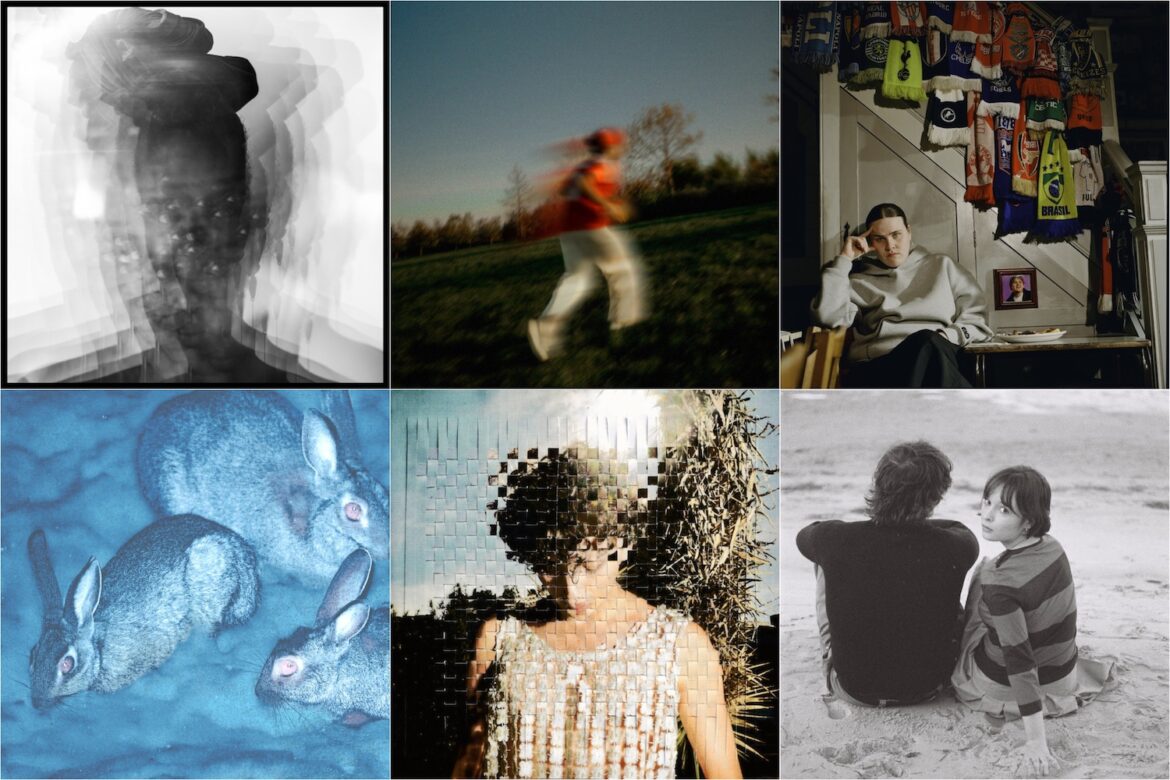
Atwood Magazine is excited to share our Editor’s Picks column, written and curated by Editor-in-Chief Mitch Mosk. Every week, Mitch will share a collection of songs, albums, and artists who have caught his ears, eyes, and heart. There is so much incredible music out there just waiting to be heard, and all it takes from us is an open mind and a willingness to listen. Through our Editor’s Picks, we hope to shine a light on our own music discoveries and showcase a diverse array of new and recent releases.
This week’s Editor’s Picks features Kam Franklin, Laz Lo, SOFY, venbee, Lottie McLeod, and Damin Tyler!

 follow EDITOR’S PICKS on Spotify

“A Heathen's Hymn”
by Kam FranklinYou can do everything they tell you is right and still discover that righteousness was never a guarantee of safety.
You can pray, behave, go to church four or five nights a week, sing in the choir, show up for vacation Bible school, listen to every sermon, and try your hardest to be the “good girl” you were taught to become. None of it can bargain with what other people choose to do to you. None of it can stop a nervous system from remembering. And eventually, after enough years spent carrying what should never have been yours to carry, you may find yourself asking a question nobody else can answer for you:
If I put my trauma on the record
Will that make it go away? Away!
If I put my trauma on the record
Will that make it go away? Away!
Kam Franklin does not whisper around that question on “A Heathen’s Hymn.” She walks straight into it.
Soulful, breathtaking, and stunning in both its beauty and its brutality, the Houston artist’s latest single is part smoldering soul song, part rap/spoken-word chant, part absolute heater – a feverish, raw, aching confrontation with the past that grows darker and more intense the deeper Franklin digs. The production is lush without ever becoming comforting, enchanting without softening the song’s edges, intoxicating even as it leaves the body unsettled. Franklin’s voice can sound almost impossibly controlled one moment and utterly exposed the next, while whispers, breaths, percussion, keys, guitar, oud, and layers upon layers of vocals turn the track into something haunting in the most beautiful way. “A Heathen’s Hymn” is soul-stirring and dramatic, unapologetically human and relentlessly in your face. It refuses distance. It refuses polish as protection. Most of all, it refuses to pretend that healing has made any of this neat.
Franklin designed that uneasiness into the song from its first breath. There is no bass guitar anchoring “A Heathen’s Hymn” – an absence she chose specifically because she wanted the track to somehow register as both “bottomless and heavy.” Layered breathing opens the recording before a word is sung, creating a nervous tension that never fully dissipates. At least eight vocal layers stack through the verses; whispers crowd the edges; the beat keeps pressing forward as though the song itself cannot sit still. Even the arrangement seems to carry trauma physiologically, its atmosphere tightening and multiplying around Franklin until every voice in the room sounds like another thought refusing to leave.
“That tension was fuel that helped drive the beat of the song in addition to the layered breathing that opens the track,” Franklin tells Atwood Magazine. “I wanted the listener to feel a subtle sense of uneasiness before the vocals even began. It’s also the reason I chose to leave bass guitar off the track. I wanted the song to feel bottomless and heavy at the same time, reflecting the weight of experiencing something like this.”
For Franklin, that weight stretches back to childhood. She began singing gospel at five years old and spent much of her youth immersed in Missionary Baptist churches and competitive choirs before eventually becoming the hard-driving frontwoman of Houston’s The Suffers. But “A Heathen’s Hymn” reaches beneath the public voice and into memories no amount of church attendance could exorcise. Franklin is a survivor of childhood sexual abuse and subsequent assaults, and the song grew out of years spent reckoning with the consequences – not only what happened to her, but the people-pleasing, shame, religious conditioning, bad therapy, and self-blame that complicated the work of surviving it.
“Between the ages of 5-16, I used to go to church four to five nights a week,” Franklin says. “None of the sermons in the world could have prepared me or my nervous system for the costs that would come with being a sexual abuse survivor as a child, being overworked and underpaid as an adult, all while being a Southern Black independent female artist trying to survive in America. We all hold some sort of trauma whether we address it or not. This song is me dealing with mine, so that I get to take my power back.”
That distinction – dealing with it rather than making it disappear – sits at the center of “A Heathen’s Hymn.” Franklin began therapy at 18 but eventually fired her first therapist, whose approach, she says, included slut-shaming, racism, and scripture rather than the tools she actually needed. A later therapist changed the trajectory of that work, helping her identify how deeply she had internalized the belief that behaving correctly might somehow protect her from cruelty beyond her control.
“It turns out that a life of people-pleasing, church-going, and being a ‘good girl’ won’t protect you from abuse, gaslighting, and things beyond your control,” Franklin explains. “‘A Heathen’s Hymn’ came from that realization. This song is about grieving the belief that righteousness guarantees safety and discovering that healing doesn’t come from perfection. It comes from honesty, self-compassion, doing the work, and forgiving yourself.”
And then comes the line that detonates the entire song:
If trauma were a person I would beat they ass
If trauma were a person I would beat they ass
If trauma were a person I would beat they ass
For trying to steal my joy from me
It is blunt. Furious. Funny. Devastating. Cathartic as hell. Franklin repeats it until the sentence stops functioning merely as a lyric and becomes a chant – part threat, part mantra, part fantasy of finally getting to confront an enemy that usually has no single body or face. Against the track’s dark, feverish momentum, those words hit with astonishing force. The repetition is almost ritualistic, yet this is no hymn asking for deliverance from above. Franklin is claiming the release herself.
The line originally came from a post-therapy journal entry, and its almost comical directness is part of what makes it so powerful. Healing, Franklin points out, can be brutal work; by the time she found a therapist who could help her process the abuse, she also needed help undoing damage inflicted by previous therapists. Putting a body around “trauma” gave her, however briefly, something she could imagine fighting back against.
“That entry that eventually became ‘A Heathen’s Hymn’ helped me take my power back,” she says. “When I sing this song live, I strip the layered voices so my lyrics can be heard. I want people to envision what beating their own traumas’ ass looks like. The sentence is kind of silly, but the idea of it is temporarily satisfying.”
What follows is even more unflinching. Franklin starts interrogating the fantasy embedded in her opening question: If she puts everything on the record, what exactly could a record possibly undo? Could it take back the abuse she endured in 1993? Silence the gatekeepers who made her question her worth? Reverse racist degradation, sexual shame, lost trust, anxiety, heartbreak, or the horror of living in a country where mass shootings have become horrifyingly familiar? Each new question widens the wound from the personal into the social, until “A Heathen’s Hymn” is reckoning not only with what happened to Franklin, but with the exhausting impossibility of living untouched by a world capable of inflicting so much damage.
Put that trauma on a record, they say! They say!
But if my trauma is on the record,
will that make it go away ?
Will it take back all the hands
that those boys put on me?
In the middle of the day, Autumn 1993!
Will it silence the gatekeepers
that worked hard to keep me out?
Questioning my whole existence!
Filling my head up with doubt!
Will it take back all the times
they called me ***** to my face?
Tried to make me feel like shit
for simply taking up some space.
Will it take back all the shame
I got for merely living life?
God forbid I man or woman
’til the morning light.
The answer, of course, is no. Putting trauma on a record does not erase it. Franklin knows that now.
“So, did putting my trauma on the record make it go away? No, but it has made me feel less alone,” she shares. “It made me feel like there was no longer this burden that I had to hold on my own, and it made me feel heard without blame or generalizations being thrown at me.”
That may be the most moving transformation “A Heathen’s Hymn” performs. Franklin begins by asking whether art can make pain disappear, but the song gradually proposes a more complicated and ultimately more meaningful possibility: Art can make pain shareable. It can give shape to what lived silently inside the body. It can turn shame into language, isolation into witness, and helplessness into the agency of saying exactly what happened without softening it for anyone else’s comfort.
Franklin reinforces that point through one of the track’s smartest production choices. Rather than ending on some grand revelation or clean emotional release, “A Heathen’s Hymn” closes amid canned therapeutic advice – Maybe you should go talk to a therapist. Yeah, just do the work. You just need to heal – before the voices deliver the ludicrous punchline: Congratulations! Congrats! YOU’RE HEALED!
The sarcasm is vicious because Franklin knows how insufficient those phrases can sound once divorced from the messy reality of the work itself. Healing is not an instruction somebody gives you. It is not a box checked after enough appointments, exercises, journals, prayers, or well-intentioned advice. Franklin wanted those overlapping voices, whispers, breaths, and recycled therapeutic clichés to make the entire recording sound “on edge” – less a container for frustration and exhaustion than a place where she could finally release them.
Will it take back the infidelity
that ended my first love(s)?
Will it soften my defenses,
make me easier to hug?
Will it bring back all the trust
I lost in humans as a whole?
Shooting babies up in schools,
grocery shoppers as they stroll?
Will it make me feel like there’s
a place on Earth that’s really safe?
‘Cause most days it feels like
us against an army fueled by hate.
Will it take back my anxiety
or bring back all I lost.
Will it give back all they stole from me,
and if so at what cost?
“I more so looked at the song as a place of release for me rather than a vessel for holding all those emotions,” Franklin explains. “The layers of whispers and breath to mimic anxiety. The inclusion of all the copy/paste advice I got from not-so-great therapists early on at the end of the song. My insistence on the layered verses. All of this was to get a result that makes the song feel like it’s on edge.”
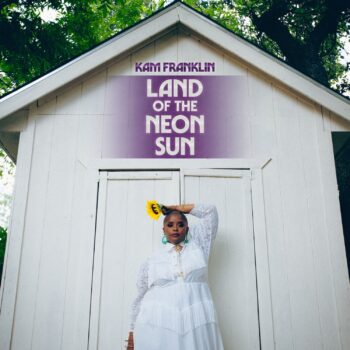
That fearless honesty is central to Franklin’s forthcoming debut solo album, Land of the Neon Sun, out August 28. After 15 years fronting The Suffers – a band celebrated for towering horn lines, high-energy performances, Gulf Coast soul, and enormous arrangements – Franklin wanted her solo work to expose another part of her creative brain. She calls it “me time”: A chance to drive the boat herself, follow songs wherever they led, and make a record that belonged completely to her own vision. The resulting album wanders through Americana, country, folk, soul, blues, hip-hop, psychedelic gospel, and more, co-produced by Franklin and Margo Price and featuring collaborators including Kevin Morby and Jackie Venson.
Franklin spent years developing it – more than 30 demos, repeated periods of doubt and reinvention, recordings made between Houston and Nashville, her own savings, grants, and ultimately a successful Kickstarter campaign helping carry the fully independent project across the finish line. What emerged was an album she describes as lyrically fearless and emotionally releasing, one where nearly four decades of lived experience gave her little interest in euphemism.
“There is no hesitation. There is no sugar-coating,” Franklin says. “If I felt the urge to say the thing on this album, I said it loudly.”
“A Heathen’s Hymn” may be the purest expression of that promise. It is breathtaking because Franklin refuses to confuse beauty with prettiness; stunning because its beauty comes from confrontation. The song smolders, chants, lashes out, aches, breathes, laughs bitterly, and keeps digging. Its soulfulness never neutralizes its rage. Its lushness never cushions its blows. Its haunting atmosphere draws us closer to words that might otherwise make us recoil, while Franklin’s performance – alternately sung, spoken, stacked, whispered, and practically hurled into the room – makes the whole thing feel intensely alive.
After years of contributing to other people’s visions, Franklin has finally made the record she once feared she might never finish. She describes completing Land of the Neon Sun as “a hug from my younger self” – the younger Kam who was afraid to follow her own ideas because other people’s opinions carried too much weight. “A Heathen’s Hymn” answers that younger self with something even more powerful than reassurance. It gives her the microphone.
This is a hymn for anyone who discovered that obedience could not protect them, that healing would not happen on command, and that surviving does not require pretending the damage never happened. Franklin cannot take back what was stolen from her. But she can name it. She can put it on the record. She can make something soulful, raw, dark, intoxicating, human, and devastatingly beautiful out of it.
And she can take her power back.
If trauma were a person I would beat they ass
If trauma were a person I would beat they ass
If trauma were a person I would beat they ass
For trying to steal my joy from me!
“Homestretch”
by Laz LoThe cruel thing about leaving is how beautiful everything gets right before you go.
The streets look warmer, the people you love suddenly become impossible to take for granted, and even an ordinary goodbye can carry the weight of a last one. Departure does that – it pulls the future closer while making everything behind you glow. You can be ready for what comes next and still ache at the thought of everything you’re about to leave behind.
She said let’s go out this week
Told her I prefer mes amis
I hope I’m not being mean
I hope that you’ll leave me alone
‘Cause I don’t really wanna dwell
You know I’m leaving for a long time
And my heart’s starting to tell me
Because I’ve been
saying these goodbyes
Goodbye
Laz Lo lives inside that suspended moment on “Homestretch,” a smoldering piece of alternative R&B that seems to heat by degrees until it finally spills over. A deep, glistening bassline moves beneath a heavy pulse, while atmospheric production gathers around his gentle vocal like rising steam. Lo sings with remarkable delicacy – intimate, tender, almost weightless at first – but the song keeps swelling around him, drums pressing forward and textures thickening until restraint gives way to something far more visceral. By the chorus, “Homestretch” has become an emotional heatwave: Lush, aching, and utterly intoxicating, the kind of melody that demands to be sung even as its words are trying to hold a goodbye together.
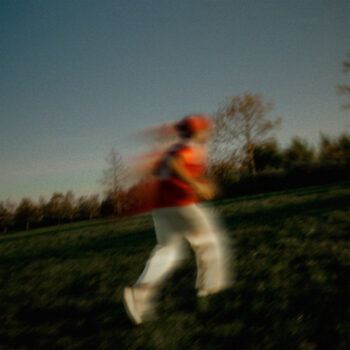
He starts from a far more guarded place, trying to keep the weight of the goodbye at arm’s length. The opening verse hides all that emotion inside casual gestures – declining plans, preferring mes amis, hoping to be left alone – while a glistening bassline hums beneath his delicate vocal and the beat holds to a low, insistent pulse. But the music won’t let him stay contained for long: The atmosphere thickens, the drums gather momentum, and Lo’s tenderness begins to burn hotter as the reality of leaving catches up with him. By the pre-chorus, that composure is already starting to crack:
I’ve done my suitcase, wow
I got to go, yeah,
but I’ll run back like Usain Bolt
If you need me by your side
I’m in mood mellow
Yeah, that’s that homestretch looming
I think that you should know
How much I love you so
And damn, that chorus. Lo doesn’t simply arrive at it; he opens the floor beneath the song. The melody blooms outward, his voice lifting from close-mic tenderness into a soaring release, while the rhythm section keeps a steady current underneath. It is breathtakingly controlled and wildly affecting – private enough to sound like a promise meant for one person, expansive enough to make you want to sing it with a roomful of strangers. Few slow-burning R&B songs this understated manage to hit this hard:
We share the same things
Relation maintained
We came a long way
Immigrant songs played
We don’t let go now
This is a goodbye, goodbye
Call you the whole time
And I’ll Snapchat the whole trip
Originally from Paris and now based in New York, Laz Lo (aka Laszlo Feher) makes music at the intersection of alternative R&B, soul, and experimental hip-hop, writing through relationships, politics, community, belonging, and the shifting meanings those ideas acquire as life changes around us. “Homestretch” was quite literally born in his own final stretch before moving to New York – a new musical chapter approaching as he looked back at the people and place he was preparing to leave behind. What began as a song about one departure eventually widened into the organizing idea behind his three-song EP Homestretch: Home as something elastic, capable of moving, expanding, and changing shape without disappearing.
“‘Homestretch’ is the first song on the EP because I literally wrote it during the last stretch before moving to New York and start a new chapter in my musical life,” Lo tells Atwood Magazine. “At the same time, I was looking back at everything I was leaving behind in Paris. The title started to take on another meaning for me too: the idea that home isn’t necessarily a fixed place. I’ve never felt entirely clear-cut about where I’m from, and I don’t really think identity has to be fixed either. It can stretch, change shape, and take on new meanings as you move through life.”
That changing definition of home comes beautifully into focus in the song’s deceptively simple bridge:
Breathe in a new city life
New things to seek out there
New ways to breathe out
New things to seek out there
The section is only four lines, but it shifts the song’s gaze. After spending so much of “Homestretch” looking backward, Lo finally lets the new city enter the frame as breath itself – not a replacement for Paris, but room to inhale differently. That repeated new carries its own little rush of possibility: New surroundings, new discoveries, new air in the lungs, all without surrendering the life that came before.
That tension – wanting to move forward while refusing to sever what came before – gives “Homestretch” its ache. Lo never treats leaving as a clean break. His promise to “run back like Usain Bolt” if somebody needs him is playful enough to make you smile, yet the tenderness underneath is unmistakable. Distance may alter the logistics of love, but it does not erase responsibility, memory, or attachment. “I think there’s a particular beauty in departure – especially in that feeling of wanting to leave while desperately not wanting to let go,” he explains. “The song came from wanting to express, wholeheartedly, that I’ll still be there for the people I love whenever they need me, even when distance makes that complicated or seemingly impossible.”
We share the same things
Relation maintained
We came a long way
Immigrant songs played
We don’t let go now
This is a goodbye, goodbye
That phrase – “immigrant songs played” – opens the song beyond one person’s move. Lo grew up in Paris surrounded by close friends who were children of immigrants, where conversations about family histories, cultural backgrounds, and inheritance were woven into everyday life. His own political awareness around immigration began young through his father’s activism and criticism of Nicolas Sarkozy’s immigration policies. Those histories sit softly inside “Homestretch,” making its idea of home richer and less fixed: Home can be where you were born, where your parents came from, where your friends gathered, or the values and stories you keep carrying when geography changes.
Paris is already inside the song’s language before Lo ever begins defining home: “Told her I prefer mes amis” slips naturally into the opening verse, while the chorus places “immigrant songs played” only a few breaths away from “I’ll Snapchat the whole trip.” That collision of inheritance and everyday modern life is quietly wonderful. Lo doesn’t make belonging into an abstraction; it lives in language, music, friendship, phone screens, and all the little ways we keep one another close across distance.
“A lot of the music I was listening to around that time was connected to artists exploring their parents’ journeys as immigrants,” Lo says. “But more directly, most of my close friends growing up in Paris are children of immigrants, so conversations around immigration, cultural backgrounds and what we inherit from our families were always part of our lives. We explore those stories together.”
The rest of Homestretch follows that movement outward. “Ooh Oui” leaves the cocoon and begins testing new wings – a groovier, more kinetic song about becoming your own person – before “Some Love” widens the frame again toward community, solidarity, and what Lo describes as “resistance through love.” Across all three tracks, departure gives way to becoming, and becoming eventually returns to connection. “There’s leaving home and the people you love, longing for home and those people, and then there’s the desire to escape something that no longer feels like home,” Lo explains. “And underneath all of that is connection. That’s probably the thing that matters most to me in these songs.”
“Homestretch” is the song that makes that connection physically palpable. Lo wanted this EP to be rawer, more vulnerable, and more emotionally exposed, and you can hear that intention in every rise of his voice and every swell beneath it. The song begins almost close enough to whisper and gradually becomes too full to contain itself, its chorus glowing hotter with every return. Leaving may be inevitable, but letting go is another matter entirely. In Laz Lo’s hands, the homestretch is not the end of home at all – it is the point where you finally understand how much of it you are taking with you.
“DooYaa”
by SOFYSmile for the hype machine. Kiss the ring. Sell the pasta. Try not to scream.
When you are working two jobs to keep your music alive while watching other people glide past on connections, labels, and carefully manufactured buzz, resentment can start to acquire a rhythm of its own. Maybe you swallow it. Maybe you laugh. Or maybe you ask the same question again and again until it stops sounding like a question at all: Do you like that? Do you like that? Do ya?
Hang me out to dry,
it’s faster than scrubbing it clean
Tried and tried and tried
but I’ll never know what it means
To be the top of your food chain honey
You’re taking all you can eat
I fed the fountain with all my money
For the economy seats
Do you like that
Do you like that
Do ya?

SOFY makes frustration sound absolutely intoxicating on “DooYaa,” a dreamy, dramatic, breathtakingly beautiful blast of indie rock that practically vibrates with pent-up energy. Glistening, wiry guitars flash around an insistent pulse; spirited drums keep pushing forward; synths and low-slung bass give the track a hypnotic undertow. And at the center is SOFY’s vocal – radiant, elastic, and utterly commanding, moving between sweetness, exhaustion, flirtation, and a sneer with enough charisma to make every barb land twice. “DooYaa” is angry, but it is also ridiculously fun. Its tongue is pressed so firmly into its cheek that even the most bitter lines arrive with a wink, SOFY transforming years of frustration into something enchanting, invigorating, catchy, and cathartic enough to scream back at the world.
Bet you love the way
I don’t like my face anymore
Touching yourself while
I’m hurling the sink at the wall
King of the castle man I’m so lucky
To kiss the dirt from your feet
Your singing dancing performing monkey
I’ll do whatever you need
Do you like that
Do you like that
Do ya?
“I love ‘DooYaa,’ it’s one of my favourite songs I’ve ever written. Its strength is definitely in its sarcasm,” SOFY tells Atwood Magazine. “It was written at a time where I was, for want of a better phrase, throwing an inordinate amount of shit at the wall but none of it really seemed to be sticking.”
She continues, “I was working two jobs to support music and jumping through every hoop possible to keep my foot in the door and feeling really frustrated at seeing others with industry connections and on major labels appearing to glide along effortlessly without even breaking a sweat, with help from the hype machine. It’s a feeling that used to really get me down and make me wonder where I was going wrong to not be a part of it. I also feel like the music industry at the moment is powered by people who are just wanting to further their own image and profile by talking about stuff that will get clicks, rather than on merit.”
“I felt really frustrated seeing others handed opportunities through nepotism, industry connections, or major labels. So this song is a huge two fingers up to the hype machine.”
That two-finger salute had been building for a while. The Leicester-born, London-based artist wrote “DooYaa” while maintaining two jobs to support her music and doing everything she could to keep momentum as an independent artist. From the outside, SOFY’s career already contained plenty of enviable milestones – Glastonbury appearances, sold-out shows, a FIFA soundtrack placement, and support slots with artists including Sabrina Carpenter, Liam Gallagher, and Kasabian – but underneath those successes were burnout, pressure, and the nagging suspicion that merit was losing ground to access, virality, and whoever could command the most attention. “DooYaa” takes that imbalance personally, then makes a spectacle out of it.
The funniest detail may also be the bleakest: One of those jobs involved selling pasta subscription boxes in the street on commission. SOFY initially thought the work might function as “rejection exposure therapy.” Instead, repeatedly approaching strangers without knowing whether she would earn anything only deepened the desperation already feeding the album. “This song was such a release for me,” she says.
You can hear that release everywhere. The opening verse is all humiliation and hierarchy – being hung out to dry, sitting at the bottom of the food chain, pouring money into a fountain for “economy seats” – but SOFY refuses to let the people above her dictate the song’s emotional temperature. Her sarcasm gives her control. King of the castle man I’m so lucky is devastating precisely because nobody could mistake the gratitude for genuine; your singing dancing performing monkey / I’ll do whatever you need makes compliance sound grotesque enough to expose the system demanding it. Then comes that chorus, endlessly circling the same three words until Do you like that? becomes taunt, dare, flirtation, accusation, and release all at once.
SOFY laughs at the suggestion that the repetition might contain some elaborate conceptual trick. “Haha i’d love to say there was some super meta meaning behind it and it was about the repetition of artists promoting music or something but honestly i wasnt really thinking that deeply about it, i just liked the line – so nice you wanna say it twice!”
That instinctiveness matters. “DooYaa” became a breakthrough in the writing of SOFY’s forthcoming debut album, How To Perform Magic, helping her realize she could channel her anger at the music industry into songs that reached beyond it. “Everyone has had that boss or that relationship or that friend who makes them feel like they’re never enough,” she explains. Suddenly, the hype machine becomes only one version of a much broader power struggle: The person above you who expects gratitude while taking everything they can get, then wonders why you are angry.
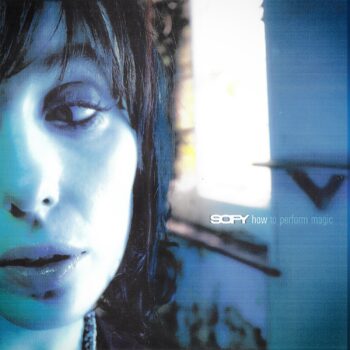
The same widening perspective shapes How To Perform Magic, out September 25. Written and recorded in Camden with longtime collaborator and bandmate Edward Denholm and mixed by Nathan Boddy, the album moves through trip hop, indie rock, alternative pop, Britpop, and breakbeats while drawing emotional fuel from burnout, anger, depression, jealousy, imposter syndrome, disillusionment, and the strange instability of approaching 30. SOFY was listening heavily to Massive Attack, Radiohead, and early The xx, but she and Denholm found that chasing reference points too deliberately kept leading them into dead ends. Instead, they followed instinct, allowing each song’s emotional needs to dictate its sound.
“It’s a very introspective record, I feel like i learnt loads about myself when i was making it,” SOFY says. “It touches on a lot of themes, self destruction, burnout, anger, depression, jealousy, imposter syndrome, lack of identity, disillusionment, and it can be quite sardonic and vindictive at times but there’s also a lot of hopefulness and humour in there. The debut album is such a line in the sand and a cornerstone of an artist, so I wanted to make sure I got it right. I genuinely feel as though this record captures not only who I currently am as an artist and person but also the times we’re living in – i’m dead proud of it.”
The magic in the title is not whimsical escapism so much as transformation under pressure. Its namesake song finds SOFY joking, I’m a magician, and for my favourite trick, I’ll ruin everything / it’s quite incredible, turning self-destruction itself into a punchline. She was burned out enough during the album’s creation to question whether years spent pursuing music had been a catastrophic mistake – whether she even wanted to continue at all. Rather than force herself toward the music anyone expected from her, she decided to write exactly where she was.
“Honestly, whether i wanted to keep going or not,” SOFY says of what she was trying to understand. “Because when I started this album I was feeling so burnt out, uninspired and basically ready to call it a day, but I didn’t wanna do that without having written an album. So I thought I’d just write my feelings, without having any regard for what people would want or expect me to make, and see what came out, and as if by magic I was able to recapture some of that early excitement and belief I had in myself in the beginning.”
“DooYaa” sounds like that belief roaring back. SOFY takes exhaustion, envy, humiliation, and rage and refuses to let any of them remain dead weight; she electrifies them instead, wrapping the ugliness in glistening guitars, pounding drums, a hypnotic pulse, and one of those choruses that burrows deeper every time it comes around. The sarcasm keeps its teeth sharp, the beauty keeps drawing us closer, and that irrepressible wink keeps the whole thing exhilarating. SOFY describes How To Perform Magic as a way “to turn darkness into something different,” and “DooYaa” performs that trick in real time – frustration transfigured into three irresistible words, shouted until the power changes hands: Do you like that?
“not my day”
by venbeeFirst the taxi drops you half a mile from where you meant to be.
Then the sun is brutal, you’ve forgotten your headphones, you’ve got no money for the trolley, and the checkout queue barely moves. Just when it seems the day has exhausted every possible way to annoy you, your card declines.
venbee makes that accumulating chaos utterly magnetic on “not my day,” a pulsing, intoxicating reverie built from the ordinary indignities of a day slipping sideways. A heavy, insistent pulse throbs beneath her spoken-word performance, while her cool, conversational delivery draws us ever deeper into the scene. She doesn’t simply recount what happened; she creates a whole world around it, each mundane detail adding another layer to an all-consuming aural experience. The result is immersive in the truest sense: For a few hypnotic minutes, we are right there beside her, sweating through a heatwave and watching one minor inconvenience tumble helplessly into the next.
Was feeling a bit bougie today,
so I went to Asda instead of Aldi
Got a taxi up there,
a man was bumping out Lewis Capaldi
It’s that one song, that one song
that gets you in the feels
Man went sick on that beat,
and I’m telling you now, man went ill
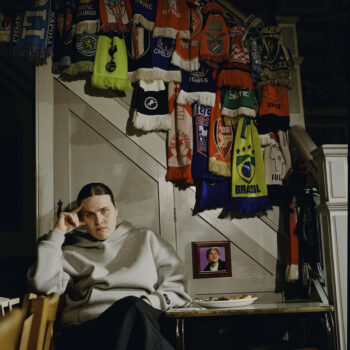
Released in late March, “not my day” arrives at the beginning of a freer chapter for venbee, who spent the past year evolving her sound and stepping into full creative independence after breaking through with “Lowdown” and the Double Platinum “Messy in Heaven.” That freedom matters here. Rather than chasing the emotional weight of her earlier work, venbee lets humor, observation, and sheer personality carry the song, opening the door to a broader musical world shaped by the many sides of her own taste.
“With this project I wanted to have fun and have music that felt a little less heavy but was still relatable,” venbee says. “‘not my day’ is about a day that didn’t quite go to plan. I wanted to make something out of completely normal, everyday life things.”
That lighter direction came with a newfound sense of freedom. “After being dropped by my label, I no longer felt the pressure of writing to please other people,” venbee explains. “So I started making music that felt care free, fun and more like me because I felt that I had nothing to lose and that’s kinda where ‘not my day’ came from.”
That freedom has also given venbee room to push beyond the sound people already know her for. “Going into a new sound can sometimes feel risky but I feel like now is the right time to take the risk and create music that makes me excited,” she says. “I’m enjoying just writing in this new world, it feels like a pressure has been taken off.”
He dropped me right outside
that road chicken shop, SFC?
It’s about half a mile away
from where I’m actually meant to be
But that’s alright, I still paid the guy fifteen quid
Thought it was a bit muggy though
when he turned ’round and asked me for a tip
It’s the first week of May in the UK
and right now it’s the hottest day
I’m sweating one out right now
and I’ve got sun cream all over my face
I forgot my headphones, I guеss
I’ll just hold my phone to my ear
But that’s alright, I’ll just play
something еveryone else wants to hear
There is wonderful specificity everywhere she looks. A supposedly bougie trip to Asda instead of Aldi begins with a £15 taxi ride and a Lewis Capaldi soundtrack; forgotten headphones force her to hold her phone to her ear; the lack of a pound coin turns a trolley into an increasingly painful shopping basket; half the things she needs never make it inside before an endless queue culminates in the ultimate indignity: zero pounds in her Santander account. venbee delivers it all with such irresistible nonchalance that the mounting frustration becomes darkly funny. This is true worldbuilding on the smallest possible scale – an ordinary afternoon rendered so vividly that every pavement, checkout line, and bad decision seems to materialize around her.
And I’m walking past the tavern,
it’s not too early, is it?
Maybe on the way back,
cause it’s summer, innit?
I just got to Asda, I ain’t got
a pound for the f*ing trolley
Who carries cash these days?
And I had nothing on me
I guess I’m using
one of them baskets instead
I hate when they get heavy,
don’t you hate when your
arm starts feeling dead?
“Yes, ‘not my day’ is simply about having a very normal day not go to plan because everyone at some point in their life has had a day like that,” venbee tells Atwood Magazine. “But for me that song feels quite freeing and like a new season because it was such an unconventional song.”
That unconventionality extends to its creation. For all the track’s hypnotic intensity, there was no grand sonic blueprint behind it; its strange alchemy came from venbee and her friends following the moment wherever it led.
“The song happened so naturally, I honestly can’t even sit here and say I had a vision,” she shares. “It was mostly me and my friends making some music and the song happened quickly because we were all just having fun.”
That spontaneity is exactly what makes “not my day” so alive. The pulse keeps tightening its grip while venbee remains almost impossibly composed, the contrast between that enveloping intensity and her matter-of-fact narration making every inconvenience somehow more cinematic and more absurd. She hopes the song helps people “see the light in really annoying daily problems,” because “when you say it out loud in a song, it’s quite comical.”
Anyway, I choose to proceed,
I’ve got half of the stuff I actually need
I’m making my way to the check out,
but f* me have you seen the queue?
I’m gonna be here for a while,
I can’t push in front, cause that’s f*ing rude
It’s been about half an hour
and I’m finally about to pay
My card has just declined,
and today’s just not my day…
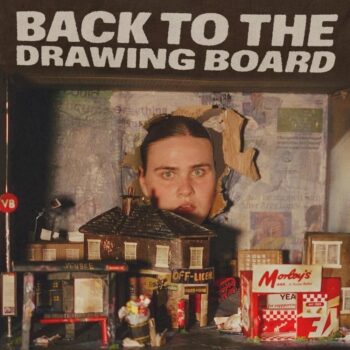
venbee’s newly announced EP, back to the drawing board, arrives September 4, extending that creative reset into a wider collection rooted in everyday experiences rather than heightened emotional confession. If “not my day” is any indication, stepping outside herself has opened up an entire world of stories waiting to be told.
“not my day” transforms the mundane into its own fully inhabited universe – so vivid and hypnotic you can practically feel the sun on your face, the basket cutting into your arm, and the stomach-drop of watching your card decline. A bad day has rarely sounded this intoxicating.
And I’ve just left my shopping
with the geezer behind the till
And I’ve just checked my Santander there,
why the f* does it say nil?
I’m looking through my transactions,
it’s at fifteen quid on the taxi
Now all I wanna do
is listen to Lewis Capaldi
“Wednesdays at the Waterloo”
by Lottie McLeodThere are worse ways to lose pub trivia than staring at the prettiest person on your team.
One missed question becomes two, then three, and suddenly winning matters far less than getting another Wednesday night beside them. By then, you’re already hoping nobody notices exactly why you keep getting the answers wrong.
Dreamy, intimate, and utterly enchanting, Lottie McLeod’s “Wednesdays at the Waterloo” wraps that helpless little crush in a golden, glistening wash of indie pop. A gentle pulse carries banjo, flute, pedal steel, and softly layered instrumentation beneath McLeod’s especially resonant voice, giving the song the lush glow of late-afternoon sunlight while preserving the awkwardness underneath. She is smitten enough to lose concentration, embarrassed enough to know exactly how ridiculous she looks, and still secretly thrilled by all of it. Sweetness and ache move hand in hand here, making “Wednesdays at the Waterloo” a radiant ode to the humiliating joy of letting one person occupy far too much of your brain.
Honey
you know I can’t keep doing this
spending Wednesdays at the Waterloo
I keep missing the questions
you’re so cute
I made us lose
please forgive me
can you blame me
the game is over now
we’ll get ’em next week baby
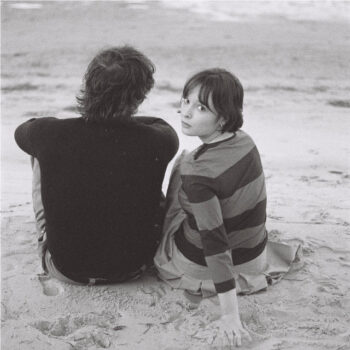
Released July 23 via ABC Music, “Wednesdays at the Waterloo” is the final single ahead of McLeod’s sophomore EP, The Boathouse, out September 25. The Brisbane-based singer/songwriter is approaching 21 after five years of making music, and the new seven-track collection follows last year’s deeply personal debut EP Bug. Where that project carried McLeod through first love, grief, and major early-career milestones, The Boathouse captures a young artist learning to trust her judgment, use her voice, and walk away when preserving her own wellbeing demands it. “Wednesdays at the Waterloo” gives that coming-of-age story a welcome flash of levity – proof that growing up also includes getting hopelessly distracted by a cute friend at trivia.
“I want people to listen to this song and feel joyful – it’s so nice to do something light,” McLeod tells Atwood Magazine. “‘Wednesdays at the Waterloo’ was written about the very serious topic of doing terribly at trivia because you’re too busy crushing on someone in your group. Look, I have a lot of crushes and it’s all very harmless and this person is actually my friend, so I’m sure he will find it amusing when he hears it!”
She continues, “I have a good mate here who is also a musician and we’ve known each other for a few years, and he’s just very cute. It’s always been completely platonic, but I just took this one night we went to trivia, me and my best friend and him and his friends and took it to a tongue in cheek romcom place in my brain while in a writing session with my producer! I’m usually so serious in my writing so it was actually so fun just to approach a song with nothing but the fun, awkward and joyful side of a crush.”
McLeod commits beautifully to the bit. “I feel like I am missing out / on something I don’t even know about,” she admits before revealing the real problem: She is missing out “simply just looking at your mouth.” Later, the fantasy grows bolder – “I have never tasted you / ’cause Zac is always in the room” – yet the song never loses its bashful grin. Attraction keeps disrupting ordinary life until a weekly trivia night becomes romantic theater, every wrong answer buying another excuse to return. Even the chorus lands as both apology and flirtation: You’re so cute / I made us lose / please forgive me / can you blame me? McLeod knows how absurd the predicament is. That self-awareness only makes the crush sweeter.
“I personally resonate so much with a song when I hear it and feel like someone has literally been in my head and managed to articulate the feeling so I was just really wanting reflect how much fun it is to have a crush on someone and how life is all of a sudden worth living hahaha,” she shares. “Saying that I feel like when the person starts to take up lots of brain space and you start to almost block out the world around you… Like when you start not hearing the trivia questions because you’re looking at them.. How humiliating that can feel you know? I think this song captures the exciting/smitten part of having a crush as well as the embarrassing and slightly painful part as well!”
That mix of pleasure and embarrassment is embedded in the production. Written with producer Josh Beattie at Brisbane’s 4000 Studios, “Wednesdays at the Waterloo” floats on crisp drums and softly intermingling acoustic textures, with banjo, flute, and pedal steel adding flashes of color around McLeod’s voice. The arrangement pulses without pushing, creating a sun-soaked reverie whose lightness carries just enough longing to keep the sugar from overwhelming the song. McLeod deliberately pushed herself toward comedy and playfulness here – territory that does not come as naturally to a songwriter accustomed to heavier emotional material. The result has all the giddy momentum of a romantic comedy before anyone has confessed how they feel: McLeod is hopelessly smitten, trying to play it cool while her attention keeps drifting across the table.

Leaning into that lighter side was freeing, but it also pushed McLeod outside her usual songwriting instincts. “I went into the session with the intention of writing something lighthearted because it’s something that doesn’t come naturally to me,” she explains, “and I’ve found sometimes when I try to write any form of love song I always end up cringing half way through and stop!” Laughing, she continues, “Some of my favourite songs are ones that are a little comical, that was also something I wanted to try and achieve. I’m an absolute die-hard ‘90s rom-com lover and it has this energy for me, so I hope that’s what others get from it also!”
Its place on The Boathouse gives all that sunshine extra meaning. “Wednesdays at the Waterloo” follows “Important To You,” the EP’s heaviest track, and McLeod sees it as a necessary release – a reminder that grief, heartbreak, growth, and pleasure do not wait politely for one another to finish. “Two things can be true,” she says: We can carry difficult emotions and still have fun. That freedom glows through one of her sweetest songs yet. “Wednesdays at the Waterloo” lets a crush remain gloriously unserious without treating the joy it creates as trivial – a gentle, lovestruck little marvel about missing the question, losing the game, and already counting the days until next Wednesday.
“Real Man”
by Damin TylerWe never forget the first person who made us want them with our whole body.
Maybe it was the way they looked at you, or the dangerous thrill of realizing they wanted you back. For a little while, wanting them could be enough to rearrange the whole world.
Dreamy, intimate, and soaked in desire, Damin Tyler’s debut single “Real Man” reads like a diary entry set to a glistening ‘90s soft-pop slow dance: Echoey guitars gleam beneath Tyler’s close, unguarded vocal, the whole song swaying like two bodies underneath mirrorball light. Tyler sings from inside the wanting, with no distance between attraction and confession, letting lust, tenderness, and yearning spill freely into one another. Beneath all that hunger lies a beautiful coming-of-age revelation – the discovery that being wanted by another person can unlock a deeper, more authentic understanding of yourself.
he’s got that look in his eyes
gets me so high everytime
he smells like denim and sex
rough hands and marlboro reds
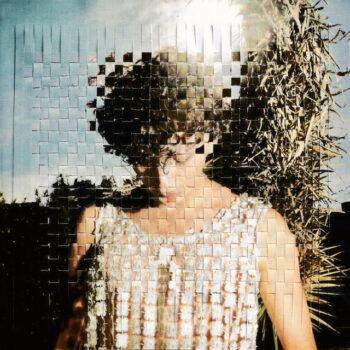
Released June 16 and produced by Richie Quake, “Real Man” introduces a Florida-born, New York–based queer singer/songwriter who has spent years figuring out exactly what he wants to say. Tyler moved to New York at 19 after growing up in the small town of Spring Hill, Florida, and his forthcoming debut EP, On Your Side, traces the queer experience of losing a first love and discovering who remains afterward. Across music rooted in organic instrumentation and dreamy alternative pop, Tyler writes directly from his own life – love, heartbreak, identity, and the unfinished work of becoming.
As Tyler explains, “Real Man” felt like the most honest way to introduce himself – an invitation into his world. “The song came from reflecting on a relationship that changed my life,” he tells Atwood Magazine. “Growing up queer in a small town, finding someone who made me feel truly seen was rare. Looking back, I realized how much that relationship shaped who I am today.”
The phrase “real man” carries generations of expectation on its back, but Tyler handles it with startling softness. There is no chest-beating performance of masculinity here; confidence arrives through closeness. And Tyler makes that attraction wonderfully physical: “He smells like denim and sex / rough hands and Marlboro Reds,” he sings, later remembering a car ride with his lover driving “with one hand on my heart” before laying him down in bed. These details give “Real Man” a lusty pulse – sweat, smoke, strength, touch – while exposing just how much emotional surrender lives inside the desire. Its chorus aches in the most revealing way: Tyler wants this person desperately, but what makes the desire so affecting is how completely it opens him. Even “if it’s just this time,” one night of connection becomes enough to illuminate a version of himself he wants to inhabit.
he makes me feel like a real man
he makes me feel like a real man
all I want is him tonight
even if it’s just this time
“I wasn’t really trying to make a statement about masculinity,” Tyler explains. “I was writing about a feeling. Someone made me feel confident, understood, and comfortable being myself. The phrase ‘real man’ came naturally from that experience. To me, it’s about becoming the most authentic version of yourself and feeling safe enough to share that with someone else.”
Richie Quake’s production gives that revelation the haze of memory. Tyler wanted “Real Man” to sound “nostalgic and cinematic, like looking back on a memory that’s both beautiful and painful at the same time,” and the track carries precisely that suspended quality: Its echoing guitar lines shimmer at the edges, the rhythm glides rather than pushes, and Tyler sings close enough to make every confession seem intended for one person alone. The softness never dulls the appetite underneath. By the bridge, physical hunger has deepened into near-total devotion: “I’ll give you my all / there’s nothing I wouldn’t do,” he admits, imagining himself alone beneath a dark-blue sky, still consumed by the person who changed him. This is a song reaching toward another body and another self simultaneously, letting sensuality, yearning, and emotional exposure occupy the same dimly lit room.
oh there’s something ’bout you
like a dream that just came true
oh, ill give you my all
there’s nothing I wouldn’t do
and when its late at night
And I’m all alone
And the sky turns dark blue
Ill stay thinking about you
you make me feel like a real man
you make me feel like a real man
“Because that’s what love feels like to me,” Tyler says of holding tenderness and desire together. “The emotional and romantic parts aren’t separate. The relationships that stay with us usually hold both, and I wanted the song to reflect that.”
Then, near the end, Tyler closes the remaining distance. The refrain shifts from “he makes me feel like a real man” to “you make me feel like a real man,” and suddenly the diary entry becomes a direct address. One pronoun collapses the space between memory and confession. The person who has hovered inside the song is now standing directly in front of him. It is a tiny grammatical change with enormous emotional consequence – desire shedding its final layer of remove as Tyler looks his subject in the eye.
For a debut single, “Real Man” is remarkably exposed: A beautiful coming-of-age confession from a young artist already willing to put lust, softness, identity, and longing on the table without flinching. Tyler says the best art comes from “telling the truth, even when it’s uncomfortable,” adding, “If I’m not being completely raw in my music, then I don’t really see the point.” “Real Man” makes that promise on day one – and leaves the door wide open for wherever he goes next.
all I want is him tonight
even if its just this time
he makes feel like a real man
he makes feel like a real man
all i want is him tonight
even if it’s just this time
— — — —

Connect to us on
Facebook, 𝕏, Instagram
Discover new music on Atwood Magazine
Editor’s Picks
follow EDITOR’S PICKS on Spotify