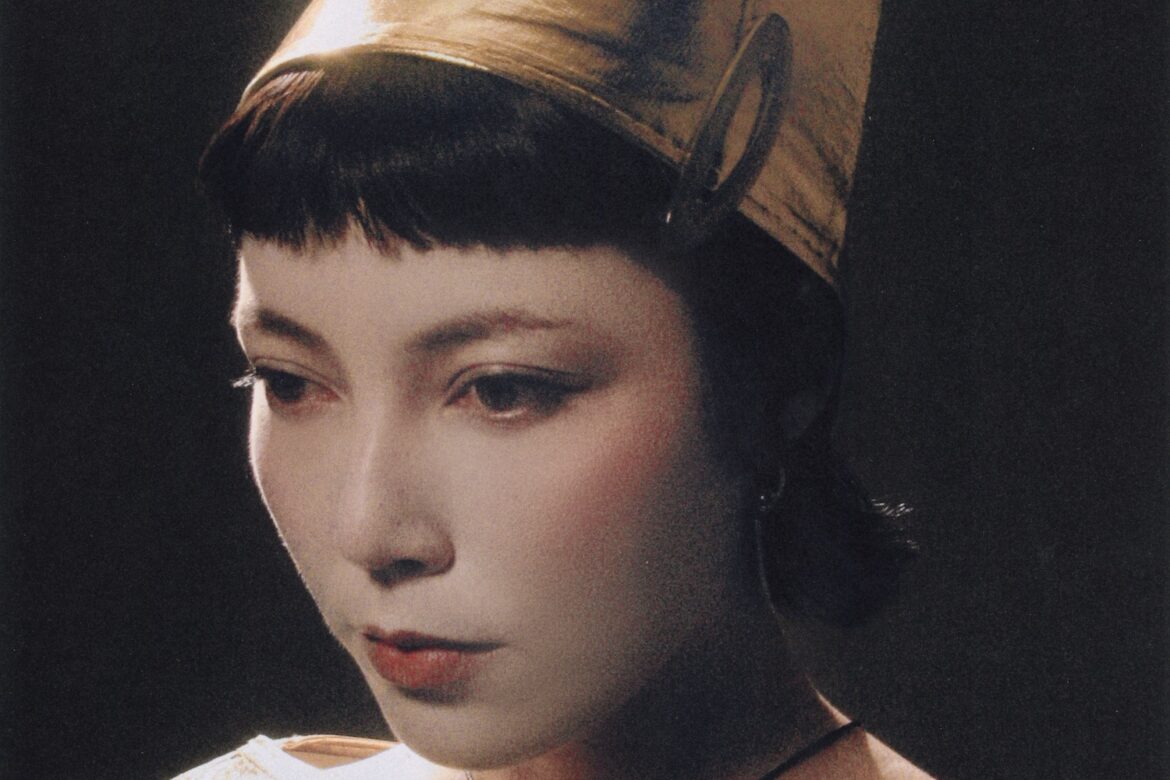
Gloriously eccentric and defiantly original, Laila Smith’s ‘Something Dreadful Is Going to Happen’ is a breathtakingly beautiful, fiercely imaginative debut EP whose spellbinding art pop songs and surreal interactive world explore the disorienting aftermath of sexual violence with extraordinary emotional depth. In an intimate conversation with Atwood Magazine, the Los Angeles-based artist discusses grief as performance, beauty as a strategy for being heard, and the uncompromising creative vision that distinguishes her as one of the year’s most compelling artists-to-watch.
‘Something Dreadful Is Going to Happen’ – Laila Smith
Laila Smith sings like she’s casting a spell, and writes like she’s trying to break one.
The Los Angeles-based artist possesses a breathtakingly beautiful voice, capable of drawing listeners into even her most unsettling stories. Her songwriting is equally captivating, revealing a rare gift for articulating the complicated, often contradictory emotions that accompany grief, trauma, and survival. There is remarkable intelligence behind her words, and a deeply affecting sensitivity in the way she delivers them. Smith understands the seductive power of beauty – how a gorgeous melody can draw us closer to a painful truth, and how a fantastical world can give shape to experiences that might otherwise remain impossible to express.
On her extraordinary debut EP, Something Dreadful Is Going to Happen, those instincts come together in dazzling, dramatic fashion. Released July 24 via slowplay, the five-track project is a spellbinding, meticulously imagined, and emotionally devastating work of art pop that explores the aftermath of sexual violence through the shifting stages of grief. Across its songs, Smith navigates denial, bargaining, anger, and a complicated form of acceptance she calls tenderness. Each song is an enchanting, all-consuming world unto itself, but together they form an even greater achievement – a richly layered, psychologically intricate portrait of a young woman reckoning with what happened to her, what it cost her, and what it means to reclaim herself.
Flash flood you drown
But it’s the ocean inside of my head
I feed the mountain
My affirmations are avalanches
And it’s so not me to want it to bleed
But there’s something sweet
There’s a ledger they’ll
make with your name
Will I do anything?
I’ll do anything
– “I’ll Do Anything,” Laila Smith
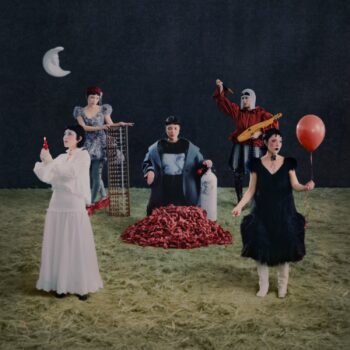
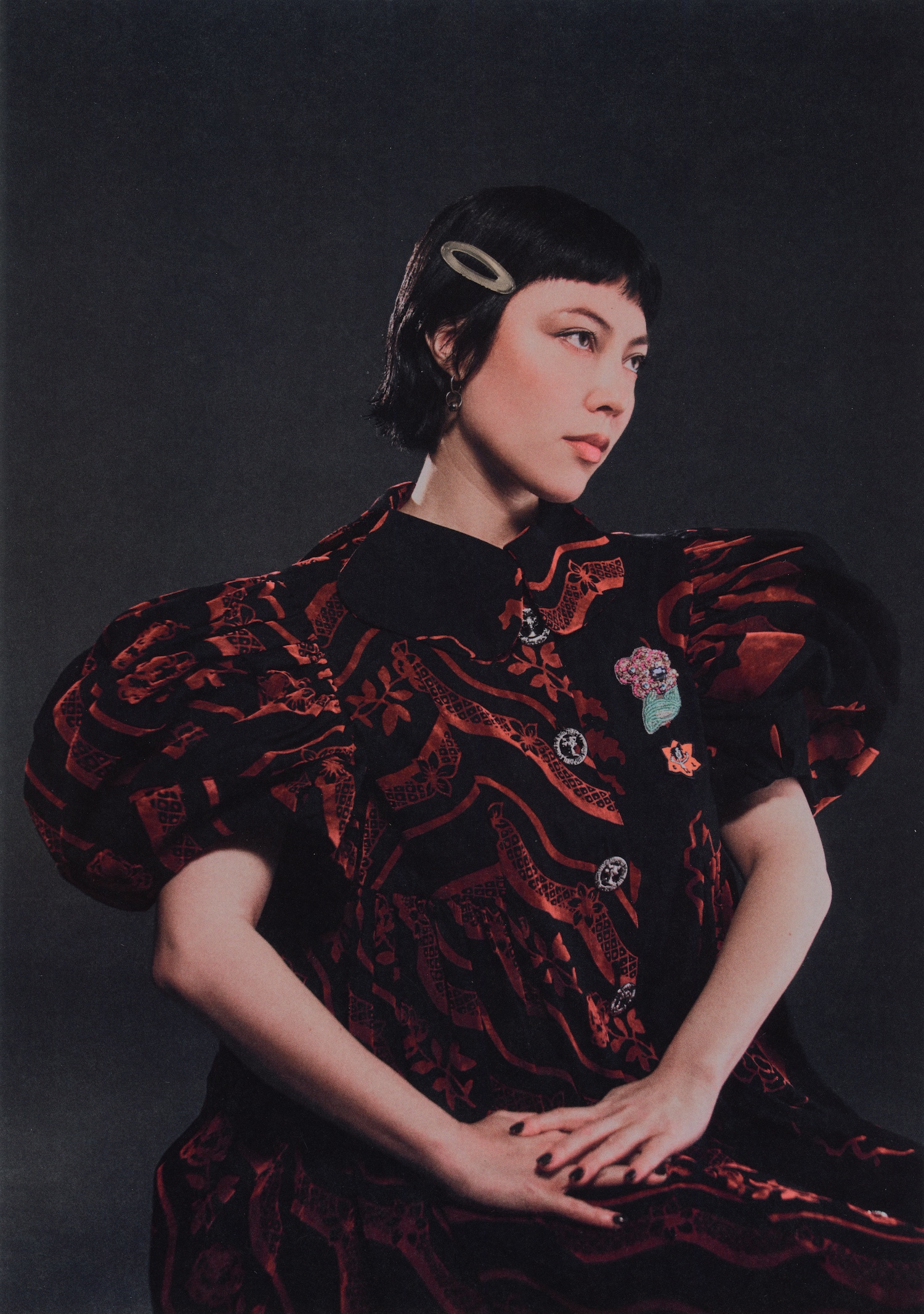
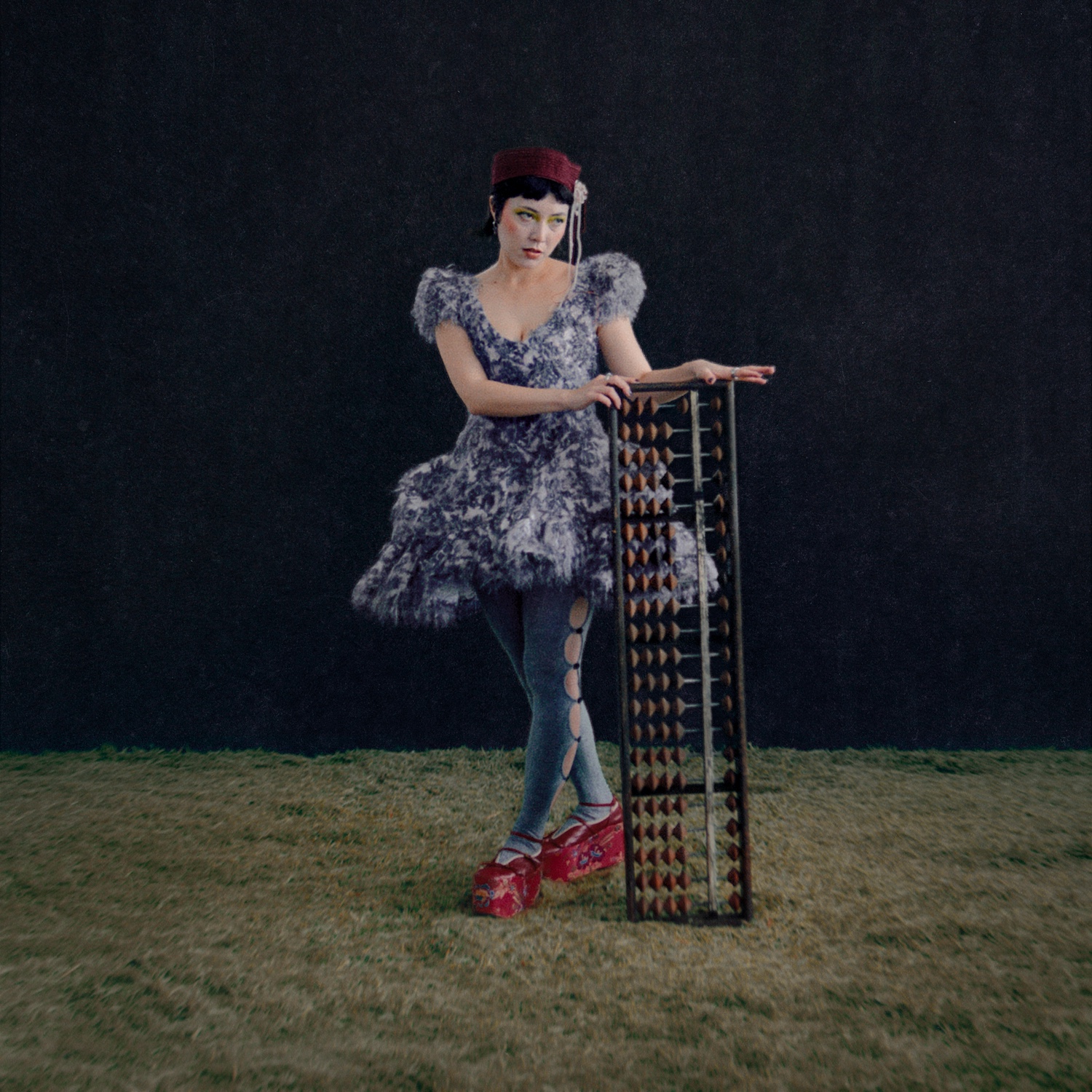
“The inspiration is a period when the categories I’d taken for granted – truth, time, a coherent sense of myself – stopped working, and I needed some way to understand what was happening to me,” Smith tells Atwood Magazine. “Because I felt like I was experiencing a death unto my own body, the phases of grief were the system I settled on, so each song on the EP is a phase, and each phase is represented by a feminine archetype. The album art is a tableau of all of those archetypes in one frame. I think that was what I was chasing this whole time: To see the whole of it collected, the causal links between the phases mapped and made beautiful.”
Smith brings an unusually expansive creative imagination to her music. A former jazz prodigy who has performed at the Kennedy Center and New York’s Blue Note, the Harvard graduate has carved out a distinctive artistic identity at the intersection of experimental music, conceptual art, and immersive storytelling. Her previous releases have arrived alongside pop-up exhibitions, playable video games, and even a restored yellow payphone inviting strangers to leave anonymous confessions. With Something Dreadful Is Going to Happen, she takes that multidisciplinary vision further than ever before, transforming her folk- and pop-laced songs into an elaborate visual and interactive universe populated by mythic feminine archetypes, surreal costumes, and familiar games that behave in unfamiliar ways. Inspired in part by the imagery of filmmaker Sergei Parajanov, the world she creates is as beguiling as it is unnerving – an arresting expression of an artist determined to make every element of her work count.
“The songs are my more vulnerable place, the games and installations and companion pieces are my more assertive place, but they’re the same impulse articulated from opposite ends,” Smith explains.

The music itself is every bit as fascinating as the world surrounding it.
Opening track “I Don’t Think of You” introduces denial with a deceptively breezy, folk-leaning ease, its inviting melodies carrying a narrator determined to convince herself that life has gone on as usual. Smith sings of clean white shirts, morning coffee, and places to be, ticking through the mundane routines of everyday life as though ordinary motion might keep an extraordinary hurt at bay. But cracks begin to appear in the performance: “And it’s almost like you died / Like I killed the version of you that I needed to survive.”
Elsewhere, the image of something rotting in the pantry suggests that the past has merely been shut away, left to decay behind closed doors. Each repetition of “I don’t think of you” becomes a little less convincing, until the refrain sounds like an incantation she needs to believe more than anyone else. It’s a brilliant piece of songwriting, capturing the exhausting labor of pretending an experience has lost its power over you.
And it’s almost like you died
Like I killed the version of you
that I needed to survive
But I never wonder why I cry
‘Cause I don’t think of you
Every night
I’m staring back at me
There’s nowhere left to hide
And I don’t think of you
In the pantry
Something’s rotting
Let’s just leave it all outside
There’s nothing left to do
– “I Don’t Think of You,” Laila Smith
If denial offers an illusion of control, “I’ll Do Anything” captures the desperation of losing it altogether. One of the EP’s most breathtaking moments, the song begins with gently plucked acoustic guitar and Smith’s utterly captivating voice, its dreamy, intimate atmosphere gradually giving way to crashing drums and surging electric guitars. The effect is exhilarating, even as the lyrics describe a world coming apart. Flash floods, avalanches, and dry hurricanes become expressions of an emotional upheaval too enormous for one person to contain. “Flash flood you drown / But it’s the ocean inside of my head,” she sings, transforming the magnitude of her inner turmoil into an image of natural catastrophe. And yet, amid all this devastation, there is an almost irresistible sweetness to her delivery, particularly in the playful, wordless melodies that punctuate the song. Smith draws us into a beautiful, intoxicating world before revealing just how much of herself she’s willing to sacrifice within it.
The song’s central refrain, “Will I do anything? / I’ll do anything,” carries that contradiction to its breaking point. A question becomes a declaration, then an increasingly troubling promise. The more Smith offers, the further she drifts from the person making the offer. Her voice remains mesmerizing throughout, lending even the most desperate pleas a strange, seductive grace.
“Bargaining requires you to leave yourself. You can’t make those offers from inside a person who values herself. So the refrain is measuring a distance. Now I hear it as a question about self-abandonment, and the self-awareness is the part of me that stayed standing where I left it, watching,” Smith explains.
Apologize
I never wanted to scare you
A winded sigh
Dry hurricanes all around the truth
And it’s so not me to want it to bleed
But there’s something sweet
There’s a ledger they’ll
make with your name
Will I do anything?
I’ll do anything
That image of a self left behind follows us into the EP’s darker reaches.
After the brief, disorienting interlude “Foregone Conclusion,” “I Needed You to Know” confronts anger as an invasive force, creeping through the body until the boundaries between victim and perpetrator, control and helplessness, begin to blur. The song’s spectral atmosphere provides an unsettling backdrop for Smith’s increasingly disturbing imagery: a growing larva, a parasitic presence, a wilderness into which she seems compelled to disappear. “I’m sitting here in the underbrush / Tiny embers coming up,” she sings, her words suggesting a fire gathering strength beneath the surface. By the song’s end, those embers have given way to the aftermath, and Smith finds herself with a smoking gun behind her back. It’s an especially haunting expression of anger – one that collapses inward, feeding on itself and leaving its host unsure where the destruction began. The refrain “I needed you to know” becomes increasingly urgent, a plea to be seen and understood even when the emotions demanding recognition have grown frighteningly difficult to explain.
The EP’s emotional resolution arrives with “The Heat Goes Down,” a stunning, deeply affecting finale that gathers the record’s musical and psychological threads into its most ambitious arrangement. Working with close collaborator Gabe Gladstein, Smith draws together expressive strings, experimental electronics, and a saxophone choir, allowing the song to unfold with a richness and scope that reflect the complexity of its emotional terrain. Here, the anger has begun to subside, but the wounds remain. Gratitude and resentment coexist in the same breath, exchanging places across the song’s verses as Smith wrestles with the impossible task of making peace with what happened to her. One lyric cuts especially deep: “18 years old, I had to hold me gently by the hand.” In those few words, she captures the heartbreaking responsibility of having to care for oneself at an age when such care should never have been necessary. The song’s beauty lies in the way it holds these conflicting truths together, allowing tenderness to emerge without demanding that everything be forgiven or forgotten.
I could blame your dad
I think I understand
He took all that he wanted
So you tried to take me
You never made amends
But it wasn’t yours to end
18 years old, I had to hold
Me gently by the hand
“Acceptance is something I have to show up for every day,” Smith reflects. “We treat it as the composed phase, the one where you can finally stop being embarrassing. I called this song tender for a long time, and I still think that’s the more accurate word. Tender has been my shedding process: Being as tender with myself as I’m trying to be with the world, in all of its complexity.”
There’s a part of me that could hate you
For emptying out my head
But there’s another the same
That thanks you for it
But honestly I can’t keep up
The burning in my blood
So they say with time the heat goes down
Across Something Dreadful Is Going to Happen, Smith’s gift for musical storytelling is inseparable from her refusal to simplify the experiences behind these songs.
Her melodies can be disarmingly lovely, her arrangements adventurous and unpredictable, her lyrics startlingly precise. Each composition inhabits its own emotional reality, yet the record’s cumulative power comes from the ways those realities overlap and contradict one another. Denial contains the knowledge of what it suppresses. Bargaining conceals a devastating loss of self. Anger disguises itself as obedience, while acceptance carries traces of everything that came before it. The result is an intimate and profoundly affecting portrait of grief as a living, unruly experience, one that rarely follows the rules we expect it to obey.
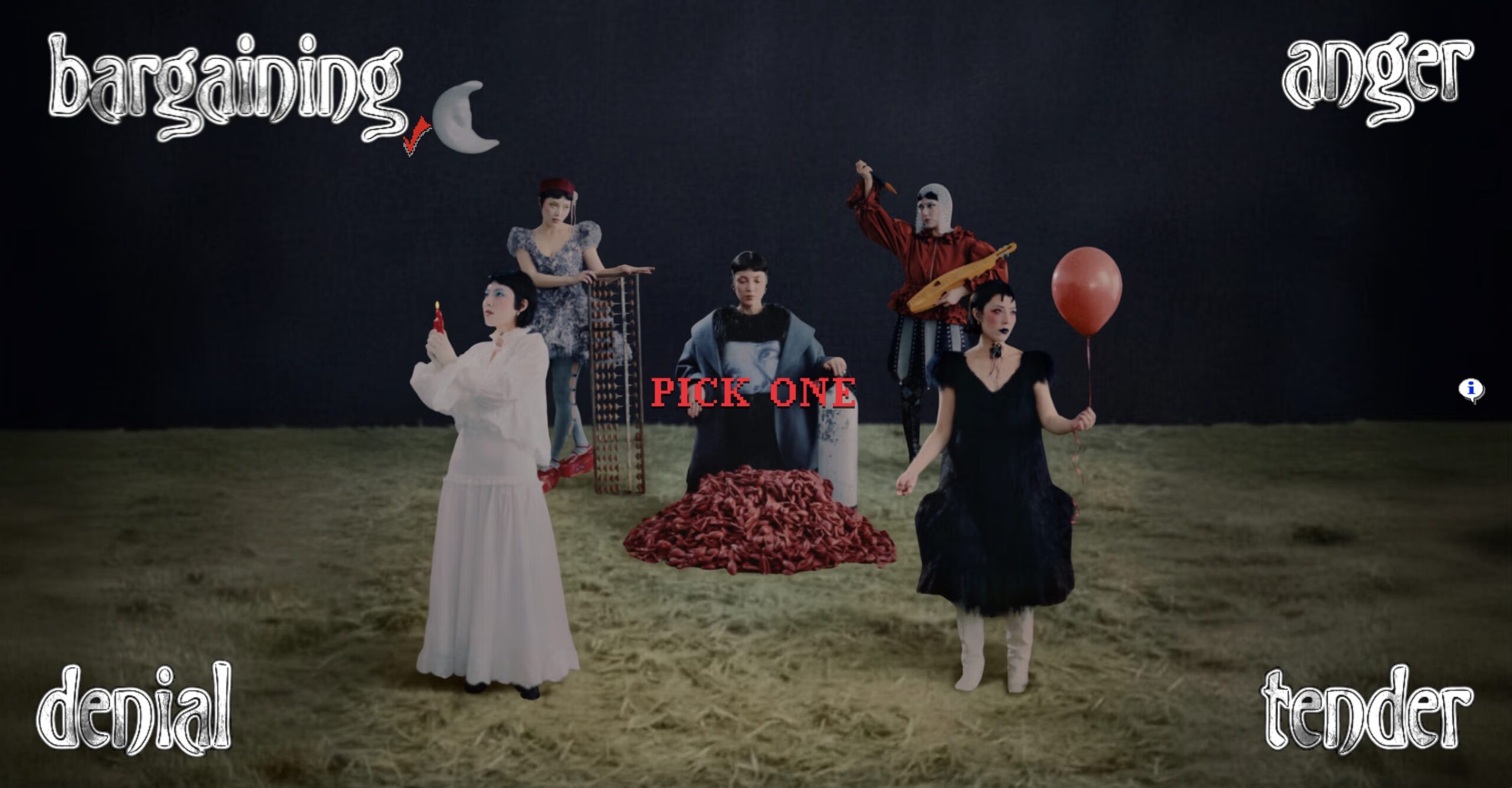
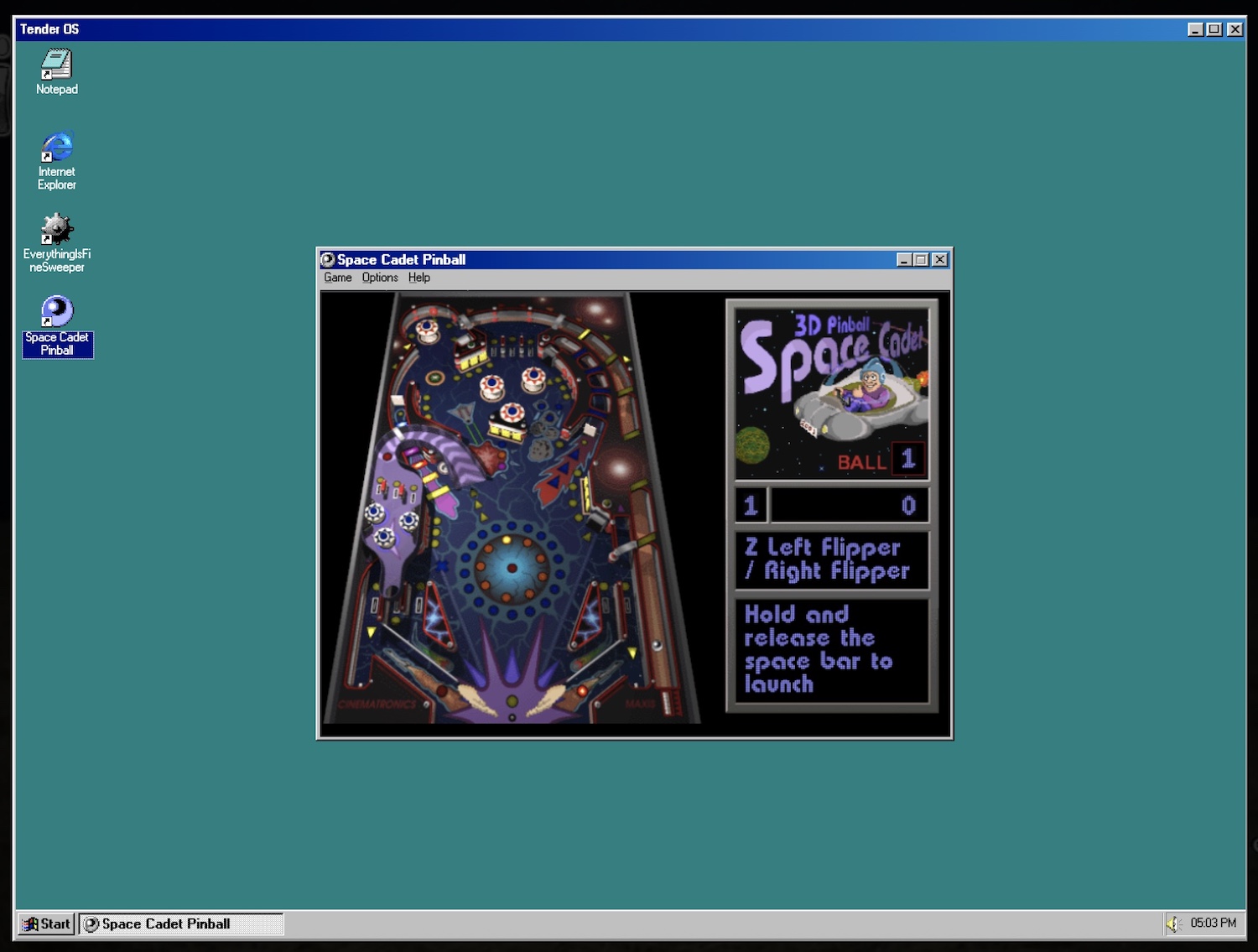
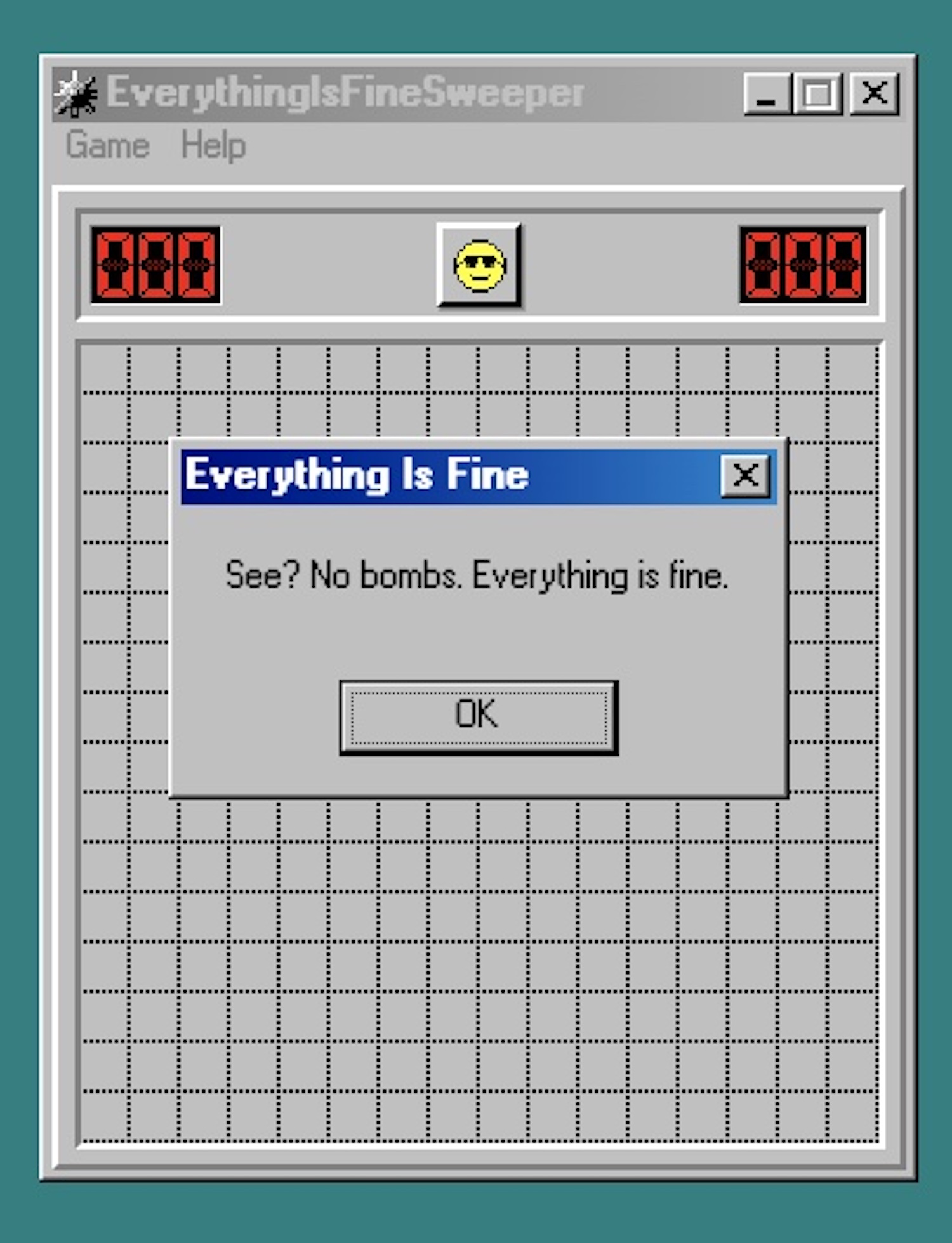
Those rules become even more interesting when Smith invites us to break them ourselves. The EP’s accompanying interactive website, created with Andrew Boylan, gives listeners the opportunity to enter its emotional universe through a series of surreal, playful experiences. Visitors choose among denial, bargaining, anger, and tenderness, each pathway offering its own strange encounter with the logic of grief. In one corner of this world, an early Windows-style desktop houses familiar games that have been subtly, sometimes hilariously reimagined. Space Cadet Pinball becomes an exercise in protection, its bumpers holding the ball rather than sending it flying, while “Everything Is Fine” Sweeper offers the comforting illusion of a mine-free game. These playful inversions are as clever as they are affecting, challenging our assumptions about winning, losing, and what happens when the objectives we’ve spent our lives pursuing suddenly cease to serve us.
“The site exists to give you a position inside something that otherwise only happens to you, which is why it opens with a choice,” Smith says. “Grief doesn’t offer one. You don’t choose it or its order, and every obstacle it puts in front of you is necessary, so there’s nothing to consent to. A game is the one form where you volunteer for obstacles, and that’s the inversion the site performs: it takes what grief imposes and makes it something you elect.”
There is a remarkable generosity in that idea. Smith has taken an experience defined by the loss of agency and built an environment in which others can experiment with the act of reclaiming it.
The games invite curiosity, offer moments of humor, and reward a willingness to abandon expectations. Their whimsy creates room for difficult emotions to surface without overwhelming the experience. The same instinct runs through the EP’s extraordinary visual language, where elaborate costumes and carefully composed tableaux give psychological turmoil an almost mythological grandeur. Every color, character, and curious detail serves the larger story, and every beautiful surface invites us to look a little closer at what lies underneath.
Smith understands the complicated relationship between beauty and suffering, particularly when a woman’s painful experiences become the subject of public scrutiny. Her artistic choices reflect a keen awareness of how stories are received, whose voices are taken seriously, and how appearance can shape our willingness to listen.
“I guess I think the emotions and the content are actually sort of ugly. It’s hard for me to look at or think about too long without feeling horrible. So the beauty is a strategy,” she says. “I think rendering yourself synthetic, making yourself into an object, an image, a costume, is a very old feminine strategy for being seen and heard at all.”

In Smith’s hands, beauty becomes a means of confrontation, a way of holding our attention long enough for more difficult truths to emerge.
Her artistry operates on multiple levels at once, with the immediate pleasure of a gorgeous song or fascinating image gradually revealing deeper questions about identity, power, and self-perception. It’s an approach that demands an extraordinary degree of intention, and the care with which she has constructed this project speaks volumes about the kind of artist she’s becoming.
Perhaps that’s what makes Laila Smith so compelling in 2026. We live in an era of seemingly limitless musical abundance, where algorithmic familiarity and an ever-growing flood of AI-generated slop threaten to make originality harder to recognize amid the noise. Even beyond the rise of synthetic music, the pressure to conform to recognizable sounds, aesthetics, and identities has created a cultural landscape where countless artists seem to be chasing the same elusive ideal. To her credit, Smith moves in an entirely different direction. Her music is inimitable and gloriously idiosyncratic, her imagination wonderfully eccentric, and her creative instincts guided by an unmistakable sense of authorship. Every element of Something Dreadful Is Going to Happen bears the fingerprints of a person who has thought deeply about what she wants to say and how she wants the world to experience it.
“When I first started putting out music under my government name (I’ve only ever been in bands up to this point), I promised myself that the only direction I could follow was my own, as uncompromisingly as possible, which in practice meant pushing myself to be as thoughtful and rigorous as I could stand,” Smith shares. “I don’t know, everything is empty and weird and sad. Rigor and intensity and a fully thought out, complete world is my antidote to that.”
And what an antidote it is.

An Atwood Magazine artist-to-watch, Laila Smith is a singular, extraordinarily gifted singer/songwriter whose debut EP introduces a creative voice unlike any other.
Her work resists easy categorization because it springs from an imagination that refuses to settle for the familiar. She is an artist with an extraordinary capacity to connect ideas, make unexpected emotional associations, and find beauty in places where others might hesitate to look. In a culture increasingly crowded with imitation, her originality is a powerful reminder of what music can achieve when an artist follows her own instincts all the way to their most uncompromising conclusion. There is only one Laila Smith, and Something Dreadful Is Going to Happen offers a thrilling first glimpse into a world that could only belong to her.
And yet, for all its singularity, the world she’s created makes room for other people to find themselves inside it. She trusts us to follow a gorgeous melody into discomfort, to surrender to a game whose rules have changed, and to sit with contradictions that resist easy resolution. In that trust lies the EP’s most generous gift: An invitation to meet the parts of ourselves we struggle to understand with the same curiosity and care Smith brings to her art.
By the time the EP reaches its final moments, the spell Smith has cast has taken on a different meaning. Its beauty has drawn us into the very experiences she is working to understand, giving shape to the memories and emotions that once threatened to consume her. And in doing so, she begins to loosen their hold, reclaiming the power to tell her own story in her own extraordinary voice.
Atwood Magazine recently caught up with Laila Smith to discuss the deeply personal experiences behind her debut EP, the artistic imagination that brought its immersive world to life, and the complicated, often surprising ways that beauty, creativity, and self-expression can help us confront what we most fear.
— —
:: stream/purchase Something Dreadful… here ::
:: connect with Laila Smith here ::
— —
‘Something Dreadful Is Going to Happen’ – Laila Smith
A CONVERSATION WITH LAILA SMITH

Atwood Magazine: Laila, hello and thank you for your time! For those who are just discovering you today, what do you want them to know about you and your music?
Laila Smith: When people ask me about my project, I say that I’m interested in the lineage of feminine hysteria: the women across millennia who have carried that specific something behind the eyes, the divine madness, and found a way to vocalize what would otherwise have rotted inside them. It’s something both heavenly and mundane, domestic.
When I talk about the lineage, I can hear myself treating it as an intellectual interest, but it’s also something personal and innate to me. Insanity as a mode of legibility, the desperate impressing of one’s interiority on the world, for good and for bad, until what’s real, and who gets to say so, comes undone. That’s the instability I’m always chasing.
Who are some of your musical north stars, and what are you most excited about the music you’re making now?
Laila Smith: Right now, there are two ways of approaching music I’m especially drawn to.
The first, which I’ve been interested in for a while now, is when the lead (vocal or otherwise) blurs the line between non-musical emotional utterance and conventional “singing.” I first heard it in jazz (Abbey Lincoln and Nina Simone come to mind), but I came across it in its literal form studying Berio’s Sequenza III, written for Cathy Berberian. Highly recommend checking out the score; it’s a graphically notated list of emotional behaviors, laughing, muttering, gasping, whimpering, and it’s a wonderful thing to look at. I love Yoko Ono for this too, in all of her wailing and disquiet. Perhaps I don’t enjoy it aesthetically all the time, but I’m extremely drawn to it as an approach. It stirs something in me beyond the pleasure of a good sound. I also think “The Leanover” by Life Without Buildings (“if I lose you, if I lose you, if I lose you uh huh uh huh uh huh mmmm”) is doing this, blurring non-musical and musical vocalization. I mean, these are all just categories, but they’re useful for creating a shared understanding.
And then the second thing I’m drawn to is when elements relate to each other in unexpected yet beautiful ways. Blake Mills is a master of this, but I first got into it through experimental improvisers: Ornette Coleman, Albert Ayler, Anthony Braxton. All of these people have specific approaches you could spend a lifetime studying (see Braxton’s “language types”).
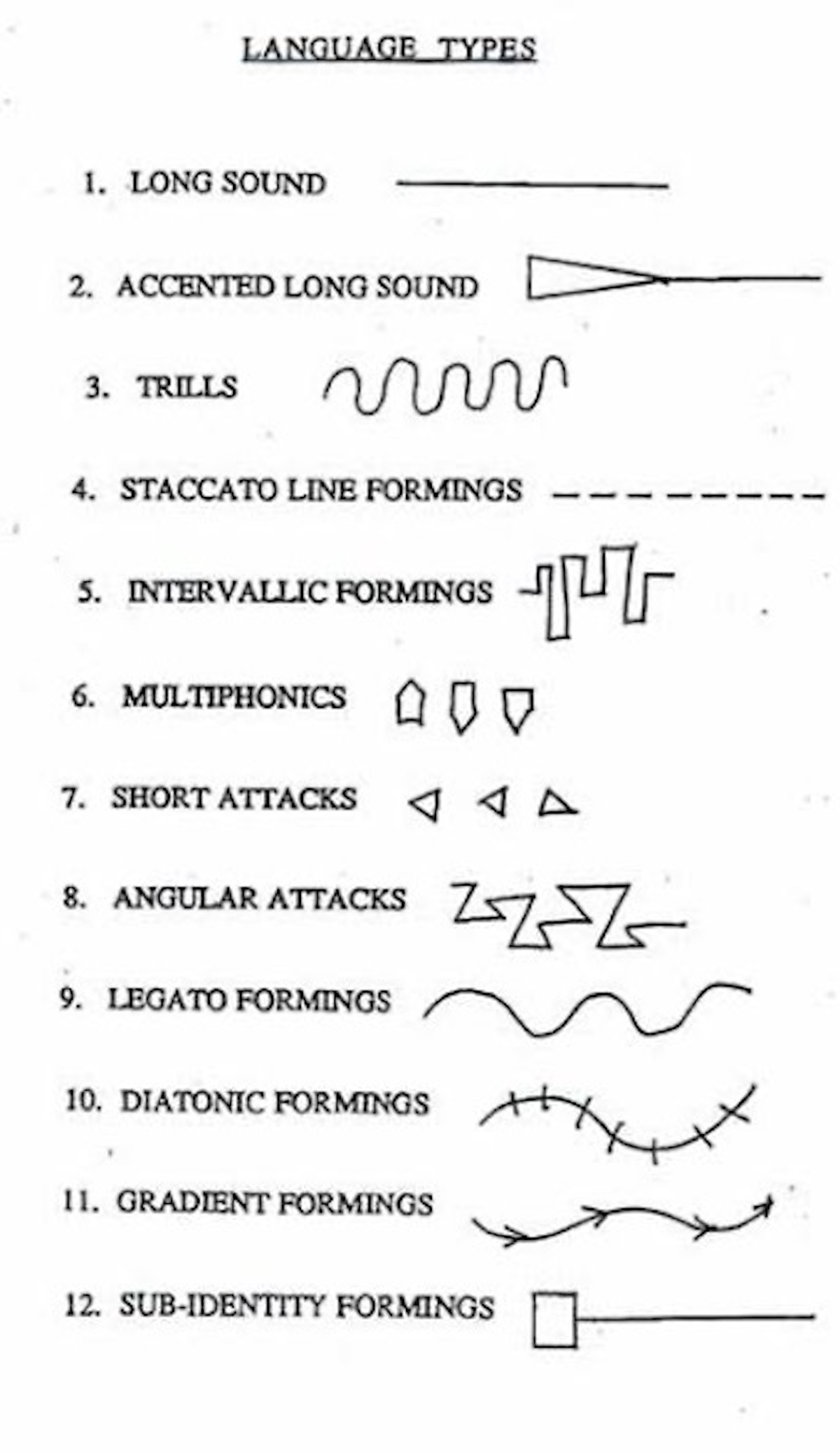
Both of these, I suppose, are about relation, between the body and the form in the first case and between the parts in the second.
Other artists in this world for me: Fiona Apple, Björk, Laurie Anderson. I can’t stop talking about Fiona Apple and Björk in particular. I’m exploring all of this on what I’m making next!!
Your debut EP Something Dreadful Is Going to Happen is music, visual world, website, game, ritual, and art installation all at once. How do you feel this project introduces you and captures who you are as an artist?
Laila Smith: When I first started putting out music under my government name (I’ve only ever been in bands up to this point), I promised myself that the only direction I could follow was my own, as uncompromisingly as possible, which in practice meant pushing myself to be as thoughtful and rigorous as I could stand. I don’t know, everything is empty and weird and sad. Rigor and intensity and a fully thought out, complete world is my antidote to that.
What does the title Something Dreadful Is Going to Happen mean to you?
Laila Smith: I spent a lot of time making the EP and then a lot of time thinking about what to call it. One day listening through, that lyric jumped out at me, and I realized dread is the feeling that carries the whole project. That’s what happens to your body. You live in a state of temporal irrationality; there is no present, only ever something very bad is coming. You’re caught between past and future without a present to moor yourself to.
You’ve framed the EP around dread, memory, grief, and the aftermath of sexual violence. Can you share a bit about the inspiration for this record, the story behind its songs, and your vision for the world it ultimately became?
Laila Smith: The inspiration is a period when the categories I’d taken for granted – truth, time, a coherent sense of myself – stopped working, and I needed some way to understand what was happening to me. Because I felt like I was experiencing a death unto my own body, the phases of grief were the system I settled on, so each song on the EP is a phase, and each phase is represented by a feminine archetype. The album art is a tableau of all of those archetypes in one frame. I think that was what I was chasing this whole time: to see the whole of it collected, the causal links between the phases mapped and made beautiful.
“I Don’t Think of You” represents denial, but the song feels like denial as performance: going through the motions, staying efficient, keeping the memory just out of frame. What’s the story behind this song – and why start the record with it?
Laila Smith: Oh, to me denial is all about performance. That’s what’s so incredibly complicated about it: you know it (consciously or subconsciously), and yet you disavow it. You force yourself to live in another reality, which requires an impeccable performance, because the person you most need to convince is you. Denial is the only phase of grief you can be good at.
Also it’s the first phase of grief, and I love a system.
I love the line, “it’s almost like you died / like I killed the version of you that I needed to survive.” What does that line evoke for you today, and what were you trying to capture there?
Laila Smith: THANK YOU. I think it’s about the complexity of authorship and trauma. The person who hurt me was real, and so was the cost. What’s harder to admit is that even after it ended, even while I was grieving it, some part of me stayed attached to my own suffering, because I’d learned to survive as the traumatized version of myself and that version had started to feel necessary. Judith Butler says something like this: we become passionately attached to the very thing that subordinated us, because it’s the condition under which we came to exist at all, and the psyche can’t afford to recognize the attachment, so it denies denies denies. But what’s lost doesn’t get let go of; it gets taken inside and becomes part of you, which is why releasing it later feels like sacrificing a piece of yourself. Thus, the line reverses. It says I killed the version of you, and what actually had to die was the version of me that needed you to be that.
“I’ll Do Anything” embodies bargaining, and its language feels almost apocalyptic: flash floods, avalanches, dry hurricanes, pain too big for one body. What’s the story behind this song?
Laila Smith: The song is bargaining with reality. I wish this could be anything else, and what am I willing to give up for it? In the world of this record, bargaining is the Siren. When you’re socialized as feminine you inherit an extensive repertoire for negotiating from a position of non-material power, charm, availability, the promise of yourself. So when the Siren pleads with something as large as death, she pleads the way she was raised to, but it doesn’t work, because death can’t be charmed. What I understand better now, at least from my own experience, is that the bargaining has no floor. When what you’re pleading with doesn’t answer, the only move left is to offer more, and the offer keeps escalating until you’re offering the whole of yourself.
The refrain “Will I do anything? / I’ll do anything” feels both desperate and self-aware. What does that question mean to you now?
Laila Smith: The question is really, how far am I willing to go? And underneath it, how far away from myself do I have to get in order to go that far? Bargaining requires you to leave yourself. You can’t make those offers from inside a person who values herself. So the refrain is measuring a distance. Now I hear it as a question about self-abandonment, and the self-awareness is the part of me that stayed standing where I left it, watching.
“I Needed You to Know” explores anger, but not as an outward explosion – more like something parasitic, internal, and impossible to shake. Why did you want to dive so deep into this emotion?
Laila Smith: This was the phase I understood least. One expects anger to be loud and outward – Audre Lorde’s version, loaded, as she says, with information and energy. What I got was more like hypoarousal, collapsing inward, and the sense that something else was operating me. The image I kept coming back to was cordyceps. Something takes you over, walks you into the woods, and, by the time you notice the woods are burning, you can’t tell if you lit them or got there too late. I wanted to write that version because feminine anger so rarely gets to be a fight. It becomes a fever, or a silence, or being very good at whatever you’re supposed to be doing.
“The Heat Goes Down” closes the EP in tenderness and acceptance, but it still feels sore to the touch: “there’s a part of me that could thank you… but there’s another the same that hates you for it.” Why did this feel like the right final song?
Laila Smith: I wrote and rewrote this song a million times. Acceptance is something I have to show up for every day. We treat it as the composed phase, the one where you can finally stop being embarrassing. I called this song tender for a long time, and I still think that’s the more accurate word. Tender has been my shedding process: being as tender with myself as I’m trying to be with the world, in all of its complexity. The line you quoted has both in it, the thank-you and the hatred, and that’s my version of a resolution.
The interactive website begins with four choices in the corners – bargaining, anger, denial, and tender – and asks the listener to “pick one.” What kind of journey are you hoping people go on when they enter that world?
Laila Smith: The site exists to give you a position inside something that otherwise only happens to you, which is why it opens with a choice. Grief doesn’t offer one. You don’t choose it or its order, and every obstacle it puts in front of you is necessary, so there’s nothing to consent to. A game is the one form where you volunteer for obstacles, and that’s the inversion the site performs: it takes what grief imposes and makes it something you elect. Each pathway is a small agency you try on, its wants and moves predetermined and none of them yours to keep, inside a container where the usual consequences are suspended.
I used games everyone already knows because a familiar game creates a particular stillness when it stops behaving the way it should. You notice the gap between what you expect and what happens, and in that gap the games can talk back. What they say in this case is what grief says: you must accept your new reality, you must let go, you must allow yourself to move on. Games are also the one art form that asks you to fail. You play something designed to make you feel inadequate and keep going because the game promises the inadequacy is temporary and yours to fix. Grief never makes that promise, so the site makes it for you, in a setting that’s flexible, safe, and a little camp. I think that’s a nice and unusual way to hold material this heavy.
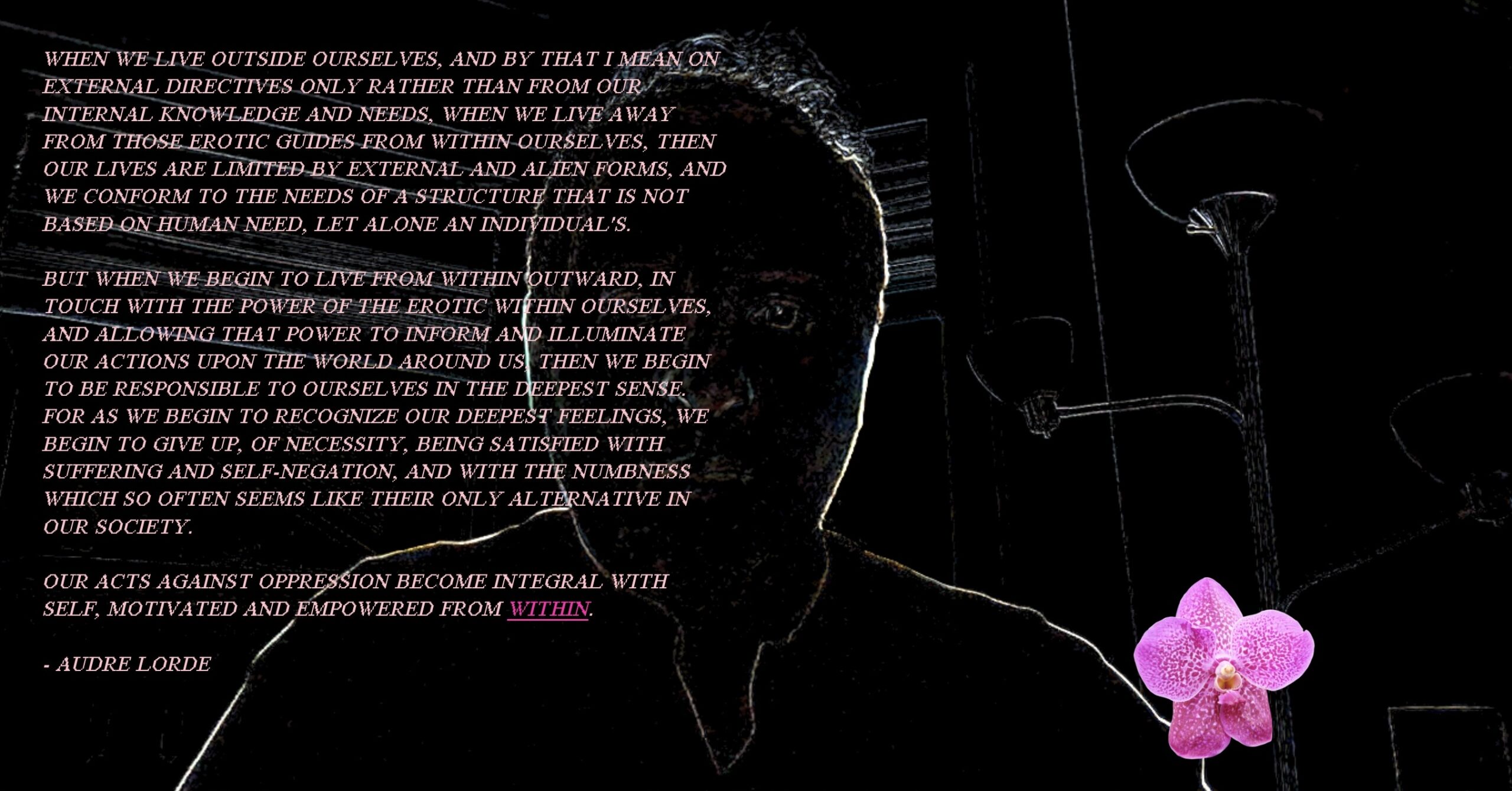
Can you tell me more about the Audre Lorde quote you pulled for denial?
Laila Smith: I kept thinking about Audre Lorde through this whole project because of how she weaves biography, fiction, analysis, and poetry into one thing (biomythography, as she called it). Denial was the hardest phase for me, and I needed her to slap me in the face with the truth before anything else could start. The passage is from Uses of the Erotic, a talk she gave in 1978, and the part I pulled is where she describes living on external directives, efficient, numb, conforming to a structure that has no interest in you. I think that’s denial. Her larger argument is that the erotic, the deep feeling that knows what you actually need, is a resource, and that every oppression has to corrupt that resource in order to survive. Denial is that corruption done to yourself, by yourself, which is why it’s so difficult to see from the inside; it uses the same mechanism as what you’re surviving.
For tender, you literally recreated an early version of Windows, complete with Space Cadet Pinball whose bumpers hold the ball and keep it safe, a fully functioning internet explorer, and an “Everything Is Fine” Sweeper – a version of minesweeper where there are no mines (most of the time). I’m truly at a loss for words. Can you tell me more about your vision for tender, and what this experience is intended to offer?
Laila Smith: First of all, thank you. I love my little games so much. What I’m trying to show you in tender is that the objectives you thought you had maybe aren’t the ones your current situation calls for, and that you have to accept the new state of reality before you can put down your baggage and walk around. These games are rigid, one rule set, one way to win, and trauma makes a person rigid in the same way, one objective, survive. Moving past it means relearning flexibility, which is what I think the games ask for in the ways they toy with you. I’m sure there’s more here I’m not capturing. This is one of those things I knew was right for the work instinctively, and I can’t entirely articulate why.
The website is so much more than a companion piece; it changes how the music is experienced. How do you think about the relationship between the songs and the interactive world around them?
Laila Smith: Chasing the articulation of a very particular feeling is at the root of everything I do, and the interactive pieces are just a different part of me. I need both. The songs are my more vulnerable place, the games and installations and companion pieces are my more assertive place, but they’re the same impulse articulated from opposite ends.
You’ve said the beauty in this project – the costumes, colors, and sound – is deliberate, because it keeps people looking past the point where they might turn away. How did you think about beauty as a way into this material?
Laila Smith: I guess I think the emotions and the content are actually sort of ugly. It’s hard for me to look at or think about too long without feeling horrible. So the beauty is a strategy. I think rendering yourself synthetic, making yourself into an object, an image, a costume, is a very old feminine strategy for being seen and heard at all. Anne Cheng writes about this in Ornamentalism, the idea that a person can be made out of ornament, that objecthood can be a way into personhood rather than the opposite of it.
What do you hope listeners take away from Something Dreadful Is Going to Happen, and what have you taken away from creating this music and now putting it out?
Laila Smith: This is probably inappropriate to say, but I’ll say what I actually want to say. I learned that I’m nuts, in a mostly controlled way, and that that’s okay. I think a lot of people are like that. What I hope listeners take away is roughly the same thing, that being irrational for entirely rational reasons is a real condition, and you can make something very precise out of it.
In the spirit of paying it forward, who are you listening to these days that you’d recommend to our readers?
Laila Smith: A few things: I just discovered the Stina Nordenstam album And She Closed Her Eyes and am loving it. Everything by Kaitlyn Aurelia Smith. Charles Griffes’ Roman Sketches Op. 7, No. 4, “Clouds” because I’m using it as inspiration for something. Bjork’s “Hyperballad” at least once a day. And oh my god, Moondog. I really love a good eccentric.
— —
:: stream/purchase Something Dreadful… here ::
:: connect with Laila Smith here ::
— —
— — — —
Connect to Laila Smith on
Facebook, TikTok, Instagram
Discover new music on Atwood Magazine
© courtesy of the artist
 © courtesy of the artist
Something Dreadful Is Going to Happen
an EP by Laila Smith