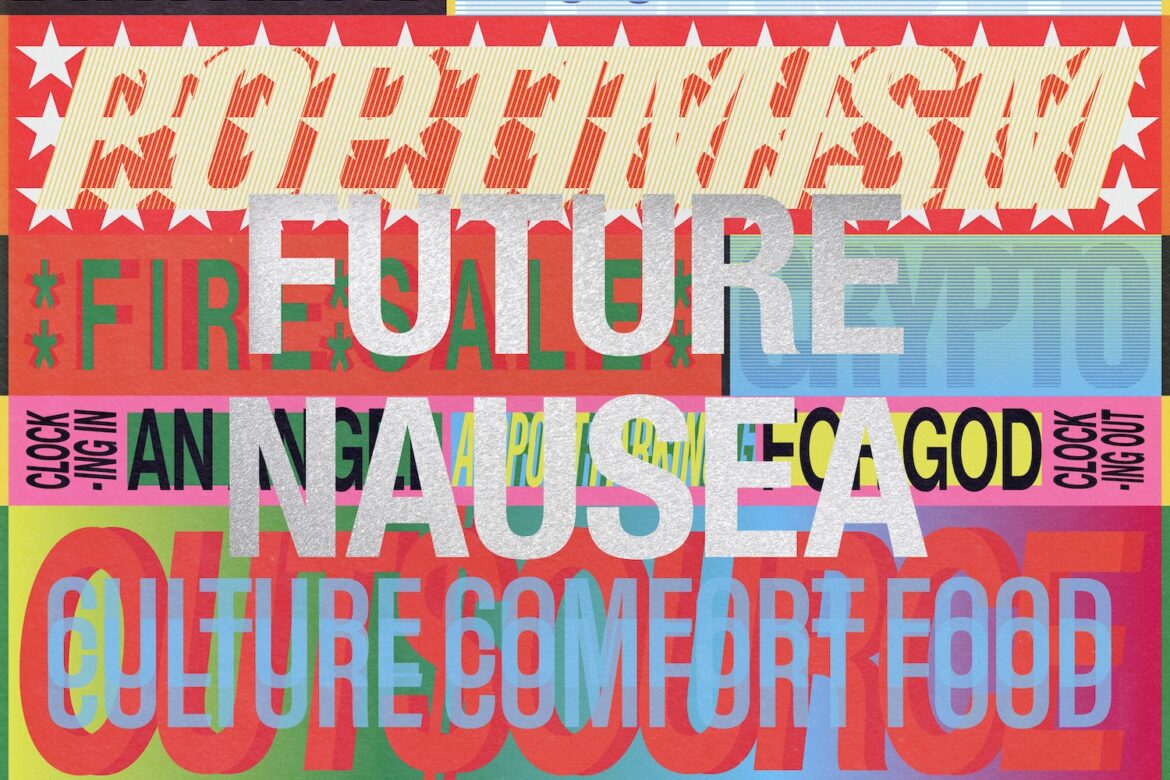
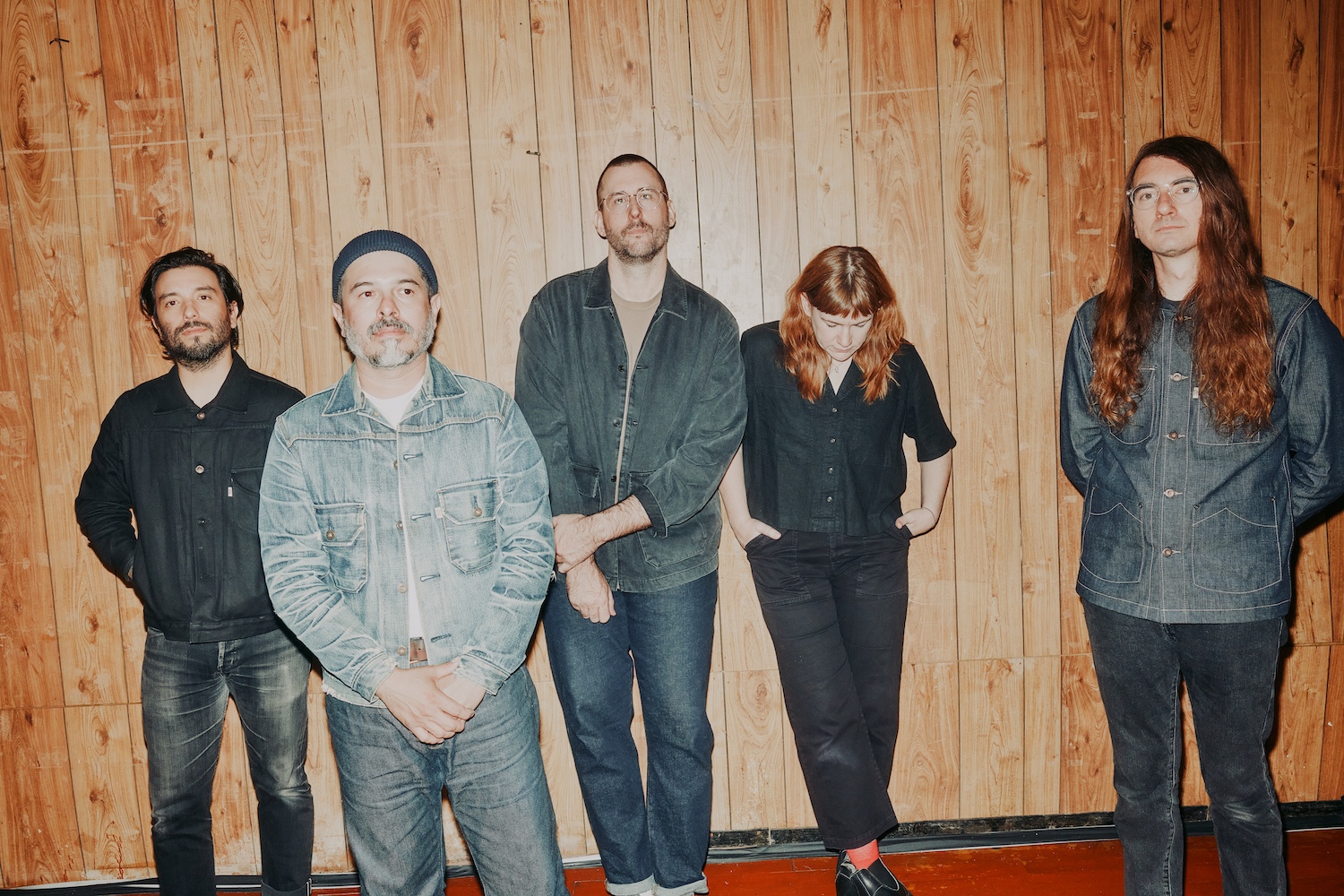
On their scathing, anthemic fifth album ‘Future Nausea,’ Spanish Love Songs contend with disappointment, disillusionment, and the death of the American Dream.
Stream: ‘Future Nausea’ – Spanish Love Songs
And I ask you this. Have you ever really let go? Even for just a moment. A second. Brief. Fleeting. Wondrous.
Have you ever surrendered yourself to something?
Not even something larger than yourself. But just something.
A feeling. An experience. Overwhelmed and compelled and in that moment, that second, and no longer concerned with what it might look like, or sound like, to another that might witness it.
Have you been moved? Understood the propulsion, and the desperate need to cling to this feeling.
This moment in time that hangs perhaps just a second or two longer than it feels like you are worthy of. This experience. And, like, a decade ago, I was in Portland, Oregon for less than 24 hours and I got a tattoo on my left forearm. “How Much I’ve Lived Without Having Lived.” It’s a quote from The Book of Disquiet. Because there is a difference between living and being alive. I wonder if you understand. And this is something that I am so fascinated with. Preoccupied with. The separation between two things that are perhaps to you not all that dissimilar. What exists then in the space that forms between two points. We live, and there is this rhythm of our lives. A banality that you have maybe found yourself in. But what if there is something else. What if there is something more. And what if even just for a few seconds. For a moment. You feel something and you can really just let go. And it is beautiful and raw and human.
I watch the band Spanish Love Songs play an opening set at the Varsity Theatre in Minneapolis. It’s June. A Sunday. Father’s Day. They are the second supporting act, on tour with the headlining band, Armor For Sleep. I don’t know Armor For Sleep. And I won’t know them. I leave the venue after Spanish Love Songs has finished their set, given enough time on stage to rip through nine songs before the house lights come back up, and the dull roar caused by the chatter amongst those in the crowd grows louder.
Spanish Love Songs vary the songs in their set night to night on the tour, but they often open with the slow-burning, visceral “Routine Pain.” The first track from their 2020 album, Brave Faces Everyone. It’s a song that, in the bleakness, and deprecation explored in its lyrics, musically, it plays with these enormous extremes of give and take. Of tension and release. A building up until there is a final break. One last moment of catharsis. An exasperated, desperate gasping howl. And I arrive at the venue early. After the doors have opened, but well before the first band on the bill has gone on stage, I try to be patient through their set as I stand against the barricade, waiting for the moment. Because I have lived without having lived. There is a difference between being alive, and living. And I continue to try. I find myself, as I am able, in these instances when I want to feel something.
There is a moment, after the halfway mark of “Routine Pain,” where almost all of the elements recede, before it starts to build itself back up again. A kind of thrashing, and stabbing towards something. “I’m so sick of treading water,” Dylan Slocum, the group’s lead vocalist and principal lyricist, exhales, before the band begins to gain momentum underneath him as he asks, “Am I gonna be this down forever? Am I gonna be this dumb forever? Am I gonna be this gone forever? Am I gonna be this numb forever?”
And I ask you this. Have you ever really let go? Have you found yourself in a moment. On the cusp of something. A surrendering of yourself to something. A feeling. An experience. Overwhelmed and compelled. Moved. You feel this surge. Because there is this enormous build, and then this cathartic, explosive release as “Routine Pain” reaches its conclusion. “Have you ever felt lower than everyone else?” Slocum bellows. The music behind him becomes torrential in how it crashes. “I’m feeling lower than anyone else. ‘Cause everything’s lower than everything else – I wanna see how much lower I can go.”
I ask you this. Have you let go. In a moment. How much have you lived without having lived because on a Sunday night. Father’s Day. In Minneapolis. I could feel this well of emotion that was inevitably going to break. You let go. You don’t care what it looks like, or what it sounds like, to anyone that might witness it and in that torrent, I scream. My voice something that I no longer had control over. Out of key. Awkward in how it sounds. How it lands. You just don’t care though in that moment and that’s the thing. Why it is beautiful. I put every ounce of my being into it. Thrusting myself forward, against the barricade. I screamed the words I have screamed in my head and screamed in my car so many times. Have you ever felt lower than everyone else? Have you. Tell me. Please. You let go. Just for a moment. Fleeting and wondrous. Have you lived without having lived? Have you ever felt lower than everyone else? I wonder if you have. If you understand.
* * *
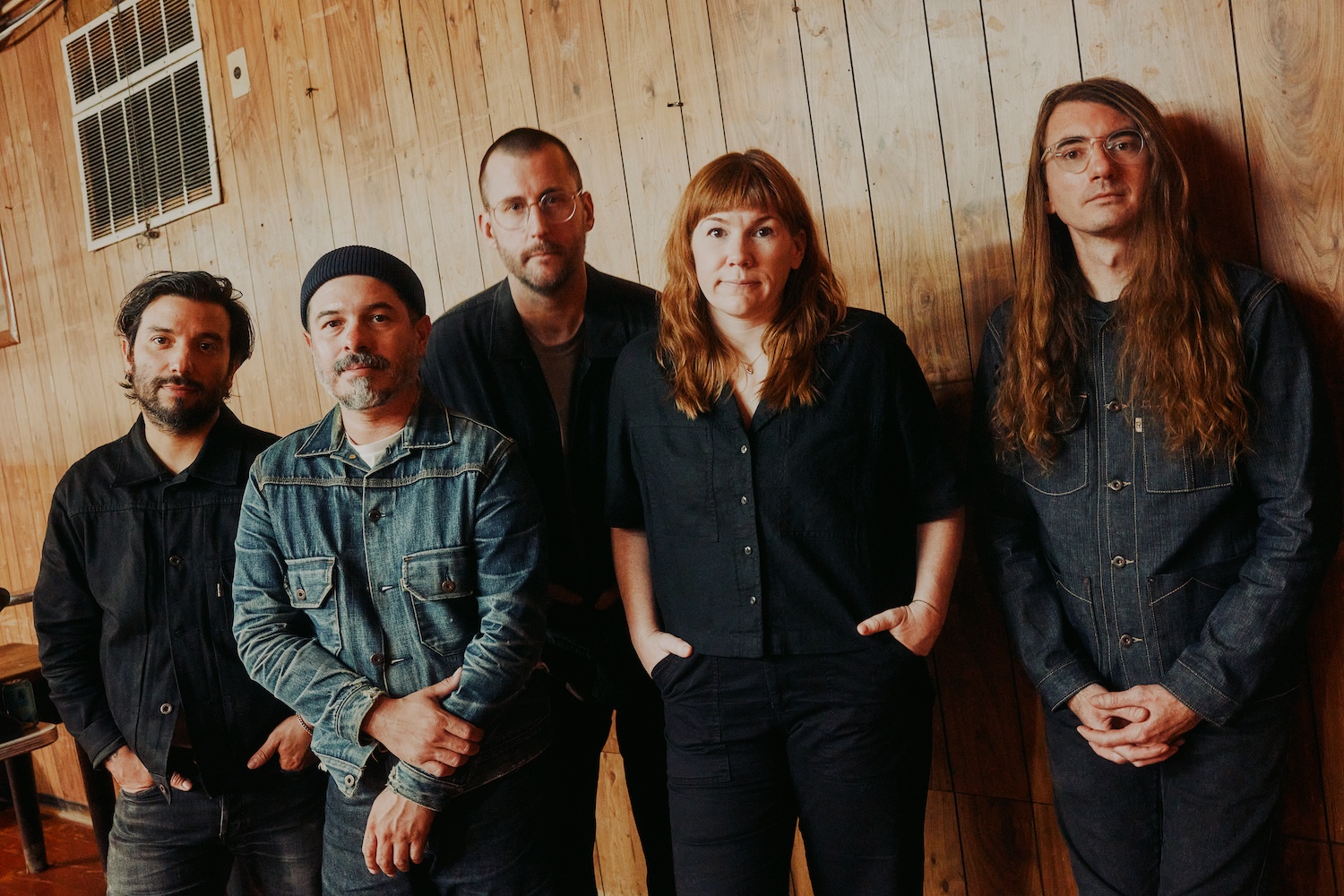
And there is something about the way the line is snarled.
The hint of ferocity. A rising. A flash. It’s scathing. The exhaustion and the anger weigh heavily on it. The line in the chorus of “Good American” – the first single released in advance of Future Nausea, the new full-length album from Spanish Love Songs. The line, “Brought you home to die out in the street.” Dylan Slocum hits this feeling. This snarl. On the word “die” and then he carries it through the rest of the lyric – cresting on how he holds and bends the inflection of “street.” The absurdity of it. The inhumanity that is part of the human condition.
One of the impressive, and admirable things about Slocum’s writing process is how many ideas, or phrases, ultimately inform a song. There is a loose narrative, or a through line, yes, but the way that is constructed comes from a number of different places – moments. Memories. Experiences. He annotated “Good American” shortly after it was released on the band’s Substack, Doom Tripping, and explained that the lines in the chorus originally began with a phrase he had written down – “Brought you up to practice what we preach like a Good Samaritan. Then left you to die out in the street, like a Real American.”
“It sat like this for a month or two and I continually tried to crack it to no avail,” Slocum said. “And then by chance, as I was scrolling through the news app, I found a story about the experiences of trans soldiers in the military right now. Their stories reminded me of the vets I had delivered pizza to at the VA hospital in college. All of these stories made the words click into place.”
But there is something. In the way the words seethe, and are almost barked. Snapped. “Die out in the street.” The way they hang. The weight they carry. And yes I understand that once a song is out in the world, it does have this life of its own. Coming to mean many different things for anyone who might listen. Who may connect with it in some way. I think about the way these words resonate because there is still this shadow, you see. The long, unforgiving, blisteringly cold winter. Operation Metro Surge – the presence of I.C.E. agents in the Twin Cities, and beyond. Renee Good, shot three times, and killed, by an I.C.E. agent. She sat behind the wheel of her car. Die out in the street. In the street. And in the street people march. They protest. They make signs. You can still see the anti-I.C.E. graffiti on the side of buildings. On overpasses. It may never wash away. It may never wash away like the blood on the hands of people who support this. Who voted for this. Who want this or are okay with this. These are people who unfortunately you may know and in time it becomes harder and harder to reconcile their beliefs with your own.
And four days after Renee Good is shot and killed by I.C.E. agents, I get into an argument with my mother, on the telephone, because when she asks me how I am doing, I tell her that I am not doing well. That I am upset because a woman was killed. Die out in the street. In the street. My mother tells me she heard about this, but that what is happening right now in the Twin Cities – I shouldn’t let it bother me, or upset me, as much as it is. And I lose my temper with her, and I say how I am not supposed to let it bother me when it affects me. It affects everyone. I say how am I not supposed to let it bother me when, in December, there was an I.C.E. agent in an idling car, parked in front of my house for over an hour, on a Wednesday morning. But who are they looking for, she contends, and when I say why does that matter, she asks again – and she says everyone in your neighborhood has lived there for a long time. And I tell my mother she is backing herself into the corner of a conversation about race, and it is a conversation I do not think she is really prepared to have with me – and during this argument, on the telephone, when my mother asks me if I have gone to any of the marches or the protests in the wake of Renee Good’s death, I tell her no, that I haven’t, and she breathes a sigh of relief and tells me she worries I am going to get mixed up in all that.
And when I ask her to explain what she means by that – mixed up in what exactly, she is unable or unwilling to answer me, and when I ask her why she worries my voice rises and I ask her, “Are you worried I am going to get shot in the face by an I.C.E. agent.” Are you worried I am going to die out in the street. In the street. Alex Pretti is killed just a few weeks later, in Minneapolis. Out marching. Protesting. Acting as a Constitutional Observer. He is armed and he has a permit to conceal and carry and his hand is nowhere near his weapon when he is shot multiple times by an I.C.E. agent. He’s holding his phone, filming what is happening on Nicollet Avenue. A real Samaritan. He dies out in the street. In the street.
* * *
Do you think that we’ll out run it – get past the pain of simply being?
And this is a question that Spanish Love Songs asks in the opening track on No Joy, from 2023. The kind of lyric that stops you in your tracks. It’s not upsetting. Not exactly. But, it is so honest. Visceral. There is no cure for the human condition and yet we try. The band has so many moments like this. On No Joy and Brave Faces Everyone. Lyrics that surprise in how relatable they are. In the understanding they offer you.
I am admittedly late in arriving at Spanish Love Songs. And what I will confess to you is that I fear I am perhaps making up for lost time. Because if I had been aware of the band, in February of 2020, when Brave Faces was released, I would have, without question, made that record my entire personality for the remainder of that year, and into the next one. Because if I had been aware of this band, as summer surrendered to autumn, in 2023, when No Joy arrived, I would have found comfort, and solace, in it, as I attempted an understanding of how, and why, my mental health was failing. I would have seen countless, unflattering reflections of myself in it.
I am admittedly late in arriving at Spanish Love Songs – in truth, connecting with the band after Hanif Abdurraqib (and take a drink every time I mention Hanif in something I’ve written) announced the title for a new collection of poetry he is putting together. I’m Always Looking Up, And You’re Jumping. A line borrowed from the song “Brave Faces Everyone.” Abdurraqib has spoken often about Spanish Love Songs – near the end of last year, he said something about the band, and specifically No Joy, that I haven’t been able to stop thinking about. About why it’s such an impactful record. It’s because it complicates the sad thing. “It is so easy to sell people on sadness or melancholy as primary feelings without complication,” he wrote on Instagram. “People will likely never tire of being told to look at The Sad Thing, but No Joy is an achievement for how it complicates the primary feeling and says, ‘This world is not tenable for me or my brain or my heart, but I have chosen, despite this, to stay alive. I would like to not subtract myself from the world, even though I don’t always know how best to survive in it.’”
And I have chosen to stay alive. This world is not tenable but what I want to believe is that there is hope on the other side. This is something I keep coming back to. Every day my best friend and I practice an exchange of gratitude – it’s something she introduced as 2025 was coming to an end. It’s often exchanged on the phone. We both ready ourselves by taking deep breaths and then, as best as we can, repeat in unison, “There’s so much to be grateful for.” And without overthinking it, we rattle off the things, for that day, for that moment, we are grateful for. The small, good things we continue searching for. When we find them, we cling to them tightly.
I am always thinking about how a band, or an album, will find you when you need them. Or it. How a song will meet you where you are.
And I do not think I am exaggerating when I say that everything feels bad right now. In this moment. Today, in traffic, I was behind someone with a decal on the back of their car that said, “Defund The Media.” You throw up your hands exasperatedly or you wave them around to indicate the gravity of the larger issues surrounding us but you see something like that on a Wednesday afternoon and all you can think is What Are We Doing Here. I am always thinking about how an album will find you when you need it. How songs can meet you where you are. And I tell you all of that to tell you this. With Future Nausea, Spanish Love Songs are meeting the moment.
To call the album enormous, or gigantic, does undersell its magnitude. It is just a huge record. In sound and in scope. Exuberance and excitement course through it, yes, but what is most compelling about it, and what makes it such an important record for right now in this moment, are the unflinching observations and reflections it offers you when you listen. Because this cannot be it. There has to be something on the other side of this.
Spanning a dozen tracks, Future Nausea, in terms of its lyricism, and themes, is far more expansive than its predecessors. Brave Faces and No Joy, anecdotally anyway, are more personal albums – turned inward. There are of course the larger concerns that loom just outside, but those records felt, at least for me, in how I have listened and how they have continued to meet me where I am, as the sound of someone trying to both understand and reconcile with themselves. Future Nausea is, in turn, by no means an impersonal record. But it is pointed outward, and in that, it is an album that antagonizes because of how it rightfully confronts injustices and the despair that does underscore the human condition.
* * *
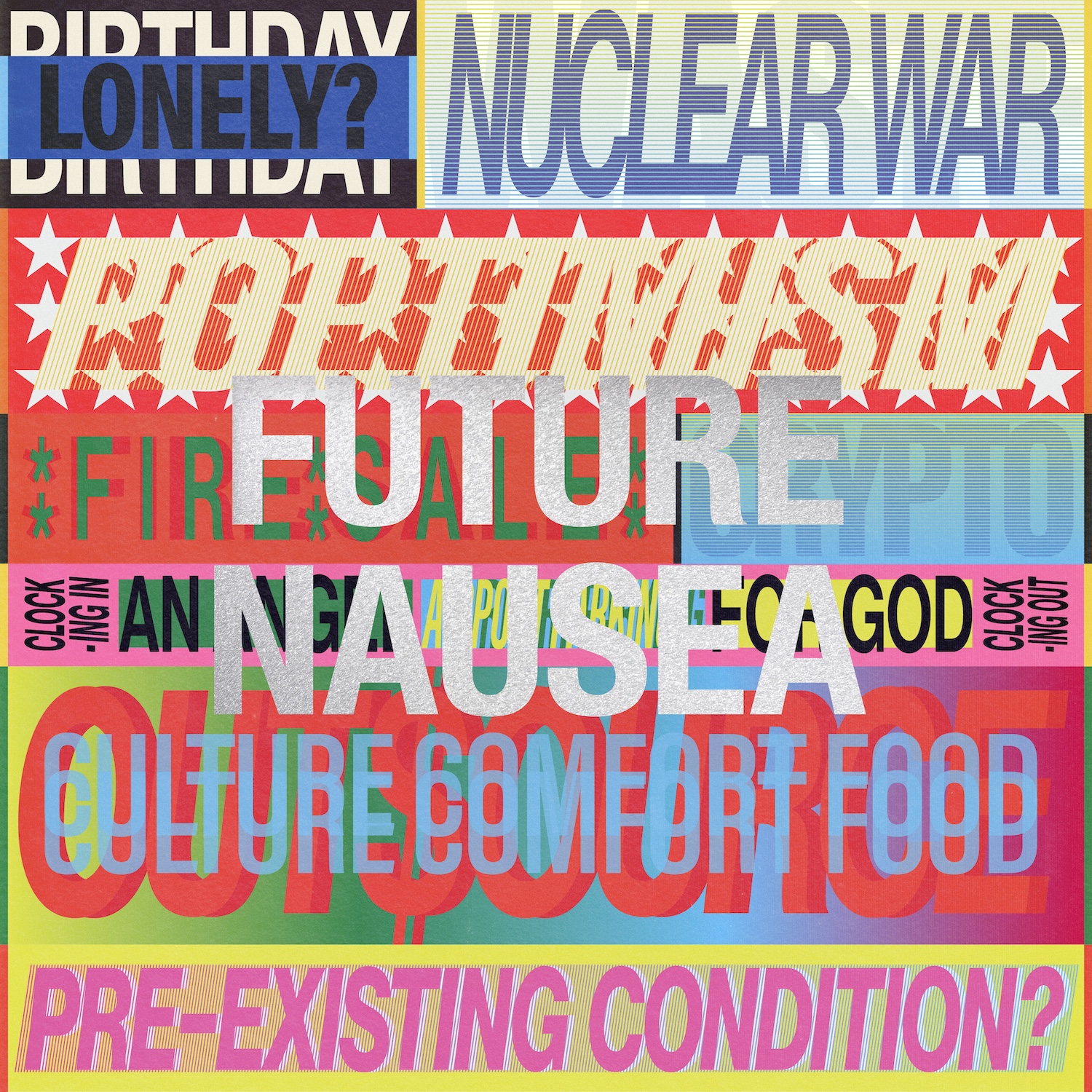
In the press materials for Future Nausea, the phrase “Heartland Rock” is used – a vivid, and accurate description of not only how the album sounds, but also the feeling.
How it lives. And within my first listen, I was not even halfway through the first side when I wrote down, “E Street Band bombast.”
Future Nausea is an enormous swing. An album where the stakes feel unbelievably high. There is a desperation to that, of course. This want, or desire, for something more. Something bigger. What is propelling us forward through our days. In how buoyant and jubilant it sounds, from beginning to end, it is truly electrifying. It is a record that very much feels alive every time you sit down with it. And that is intentional, I think. This urgency. It has to do with the way the album as a whole is organized in terms of tone and momentum, but also the way each song is given the chance to breathe, and to play with the idea of tension and release. How much, or how long, does the band allow a song to build until it explodes. Or is it gently assisted into a place of resolve?
It’s impressive. Astounding, really. How intelligent this record is. The ways in which the themes introduced are strung together throughout. The way other ideas are introduced and developed. The towering heights it will bring us, as listeners, to, as it tries to make sense of what it is experiencing. A scathing indictment of the world we find ourselves in – biting and sardonic. Laughing when it is able, because what is the alternative. Doing all of this while, still, trying to grasp onto the hope that is just slightly out of our reach. The small good things. Sometimes that is really all we have.
In how it is organized, Future Nausea hits a flawless run of five songs as it thrashes and careens towards the halfway mark – sonically, the band continues, with each record, to mature, and evolve in the sound they wish to achieve, or at least the feeling they wish to evoke. The kind of raucous, ramshackle nature of Brave Faces Everyone is not long gone, but it has grown up, and that energy, or exuberance, has been redirected. You can hear it rippling through the record. The excitement. It’s fascinating, really, the deliberate contrasts Spanish Love Songs create. The band knows how to write a well-assembled pop song – often excelling at it. The emphasis on a huge, sing-a-long chorus. The breathlessness of the verses to get you to that point of exhalation. But in this boldness, the juxtaposition comes in Dylan Slocum’s writing. The songs on Future Nausea are not “less sad” in comparison to his lyricism on No Joy. No. Not really. They are just sad, or bleak, in a completely different way. Honest and stark. A difficult reflection to reconcile with because it is not really your own reflection but one of systems that continue to fail, and how impossible it feels, at times, that there is a way out.
There is a propulsion from the moment the album begins, with its title track. The way the sound of the keyboard flutters. Spirited as it plunks. It’s the sound of something already in motion and the sound of something that wants to build towards something much larger, with Slocum’s voice coming in with the opening line, on cue, above the strum of the guitar and some percussive clattering. It simmers. “Future Nausea.” One of the songs, like many on the record, that is so intelligently structured. It knows exactly what it’s doing. How to compel you. How to keep you captivated with the way it slowly adds to itself. Nearly every song shows some kind of display of how the band plays with tension and release, or a build until it is going to break – the opening track though, in setting the tone, continues to gain momentum until it hits a truly jubilant stride prior to when it will recede near its conclusion – the little self-aware vocal ticks from Slocum, throughout the song, as well as the deliberate shifts in the intensity of the drums, both serving as the real indicators of how rollicking the band can be, and often wishes to be, and the deliberateness they thrive within. The album, only one song in, brimming with a startling liveliness as it then offers little if any breathing room between tracks. The momentum is sustained as it launches itself into the anthemic, bright punches of the first single, the snarling and sardonic “Good American.”
“Good American,” in the way it seamlessly moves with a kind of give and take, was meant to be a single. Meant to grab your attention. It’s an enormous, connective swing – the same way a song like “Clean Up Crew,” from No Joy is. One that knows how to smolder and grow during the verses, then absolutely explode with something anthemic, and towering, in the chorus. A thrilling, voluminous shout-a-long moment that you cannot help but get pulled into the fury that it conjures. It’s a song that, and I mean a number of the album’s dozen are like this, too – but it is a song that is tightly wound. You can feel it, yes, but it is something you can hear if you listen carefully. There’s a meticulousness to how Future Nausea, as a whole, sounds. No Joy was enormous, and in its enormity, there was a kind of gloss, or sheen, over it. It dazzled as it continued to climb higher and higher. It is not to say that the band did not sound like it was working organically, but here is this tightness, and liveliness that surges throughout these songs. At times the liveliness is very literal – with production techniques that make it appear as though you are in the room with the band. You can hear the way the guitar, or Slocum’s voice, echoes cavernously in the space it was recorded. I think here it comes from the way Meredith Von Woert’s synthesizer contributions are incorporated – the textures they create, and the way Rueben Duarte’s drums sound. The drums, specifically, never overpower the mix, helping to sustain this kind of restlessness, or looseness, the album has from top to bottom.
The band, in their enthusiasm, manages to stretch this electrifying feeling over much of the first half of the record, and even into the second – this momentum though does shift. The kind of raucous nature of the first two songs slips into a bouncy shuffle on “Welcome to Hell,” which continues on with the real “E Street Band bombast” they’ve tapped into on this record, and perhaps always had in them, but it is most apparent here, within the emergent nature of the song. As it assembles itself, a synthetic, sharp keyboard tone offers up the melody, with these huge electric guitar strums thrusting it forward into something triumphant, and anthemic. On “New Fears,” which opens with a blippy, fluttering from the keyboard, Spanish Love Songs careen into more jangly, or brighter-sounding territory – the appearance of the tambourine, of course, contributing to the jangle-pop slant, but the tone of the electric guitar does as well, as long as the melody it finds itself strumming out in its opening chord progression.
Future Nausea features production from both Sarah Tudzin – of the group Illuminati Hotties – and from former Death Cab For Cutie guitarist Chris Walla. It’s a record that is, of course, of the moment. A reflection of this time we are in, right now. You and I. A reflection of where the band is. There is a real tightness to their musicianship. Even with how horrific and bleak the lyrical content on the record is, it is the sound of a band that seems to be having an absolute blast playing together, and working together. You can feel that in the enormity of these songs. I am remiss to call them instances of reprieve from the otherwise breathlessness or breakneck pace the record pushes itself ahead with, but there are these places where things recede slightly. Or there are opportunities for the band to experiment, slightly, in sound and in tone, which becomes more apparent as it reaches the halfway point. “January666,” the album’s shortest track, serves as a sort of interlude between sides – featuring instrumentation that is not included elsewhere, like an accordion, the rumble of an organ, and the twinkle of a xylophone, it’s incredibly clattery. The percussion is pushed up towards the top of the mix. Disorienting, which is the point, of course, with the quivering electric guitar pulses rippling throughout, and overlaid vocals that feel like they are being bellowed from another room – picked up on the microphone, but intentionally stuffed under the other layers.
Future Nausea doesn’t lose its momentum after arriving in its second side, though there is a tonal shift – the songs, still broad in what they are about, take a little more of an inward turn. There’s a feeling of sorrow and restraint, even in the steadiness and wonky, whimsical keyboard melody of the album’s second single, “Doom Tripping.” Just this cloud that hangs above it, casting a shadow it is not concerned with getting out from underneath. Elsewhere, as the album continues towards its stunning and haunting conclusion, Spanish Love Songs continue to toy with different textural elements from the synthesizer. The opening to “Future Nausea Pt 2” is so giddy and joyous that it sounds like it was pulled from a video game, before the song starts to assemble itself with sharper, pristine percussive elements, and a kind of shimmery, slightly delayed guitar punch that slices through it all. It’s one of the few moments the band sheds some of that bombast from the earlier half, but it is still a song that is really striving towards something larger in consideration.
The album ends with its most spectrally constructed song – “Until The Sun Explodes,” and it, like “January666,” is simply remarkable in how it is recorded. How it sounds sure but also how it feels. How it lives and breathes and is so intimate, and hushed, which itself offers such an incredible contrast to the vibrancy of the 11 songs that came before it. With minimal other accompaniment, the song slowly tumbles with the creaking flicks of the acoustic guitar – played in a cavernous space that seems like it is never going to end in terms of the reverberation it provides, with a tenderness, or softness, then to the natural rise and fall of Slocum’s voice. The song, providing a sort of afterword following the explosive and cathartic nature of the rest of the album, in the way it is presented so skeletally, asks us to sit with, and reflect on the conceit of this record, yes, and everything it is rallying against, but also that there is this quiet hope, or assurance we hold onto. Always the small good thing.
* * *
And it is hard to know where to begin with all of the ideas, or themes, that present themselves in Slocum’s writing across Future Nausea.
Because many of them recur throughout the album. A tightly knit collection of songs exploring what is, among other things, a slow death of the “American Dream” – whatever that might look like for you. It’s an album that is exhausted, and frustrated. It’s angry. At times, in what it reflects on, it feels on the verge of hopelessness. What do you do with those feelings. There’s no right or wrong answer. And that’s the thing about Spanish Love Songs. The thing that worked so well about No Joy that also works so well here. It is easy to point at any number of horrible things happening in the world right now, and lament about them. It is easy – all too easy, honestly, to feel hopeless. Despair. But, what the band, and what Future Nausea challenges us with is the complication of this horrible thing. It complicates our hopelessness by reminding us that yeah, everything is very bad right now. But. There has to be something better on the other side.
Slocum, as a lyricist, especially on this record, serves as an observer. A critical eye on the world, and on the atrocities of the human condition. Both for himself, and for others. “I’ll fall on my birthday and break my femur – lie down in the show, look like an angel for god,” he begins, in the opening line to the title track. “When that doesn’t work,” he scoffs, “I’ll pay surge for a ride share – talk radio driving me to the ER. They’ll call all my pills a pre-existing condition. Shrug me off onto the ‘Pray For It’ Plan. Asking why’d I let myself get this old, and waste all these years.”
“Scathing indictment” doesn’t really articulate the way broken, or failing systems, are depicted across Future Nausea. The health care industry appears elsewhere, in an aside early on in “New Fears” – “Dollar General branded health insurance”; and later, on “Doom Tripping,” Slocum sardonically quips, “I’m coming off my meds today, and it was only sort of accidental. Big man has some bills to pay – and my boss doesn’t even cover dental.”
In all that it details, “Future Nausea” serves as a sort of thesis for what is to come on the album – a grand swath across any number of injustices, before they are returned to, or explored further, later on. Anger and unrest towards the federal government, resentment over reliance on technology, fear of the climate crisis, concern for public health – “The news cycle is repeating,” Slocum sings late in the song. “Another civilian shooting. Another animal that’s gone extinct. More statistics from a new plague. A beach appears beneath our feet. Making wishes in the sixty-watt sunlight – don’t dare tell me that we can’t do it again,” he continues before remarking, “I see how it all has to end with our pain commodified.”
Perhaps it is the Heartland Rock aesthetic, or the E Street Band bombast, but there is also this very blue-collar nature to some of the lyrics, and considerations, on Future Nausea. A concern for fair labor and a living wage. An understanding of just how down and out someone can get, and the desperation they might turn to as a result. “Every day is a question when you were born in the age of decline,” Slocum sneers in the second verse of “Good American.” “Trip over piss jugs in your van to pull boxes on that warehouse line.”
Later, on the smoldering, stirring “No Dreams,” he decries, “Every ten years the new build jobs dry up, and an El Niño storm sends the rest down to the hall. Until the anti-union scabs have you drinking every sip from their cup and you’re getting turned away from work down at the mall.” Or, in “New Fears” – “While my boss is checking on my movements, nothing can keep us from what god wants to sell. Says I best get my ass back to the office – convince myself this isn’t hell.”
I think about this line from “Pendulum,” from No Joy, where Slocum absolutely howls, with a kind of resigned sorrow, “I hold onto your hand as the waves start to try, and think about how our fathers tried, and tried, and tried, and tried, to give us a better life.” Because that is the thing that is at the core of Future Nausea. The dream of something potentially wondrous that a generation was sold, or believed to exist, and the difficult understanding, or acknowledgment, that the dream doesn’t exist. And what we, then, do with that information. How do we live. How can we live. “Our fathers dreamed of rockets,” Slocum sighs near the very end of the album, on “See You on The Way Out,” before resigning, bleakly, “We just hope it’s painless.” “The Future Nausea’s taking off again, like back before the dream of the rocket died,” he sings in the opening track. “Kill your sense of sonder before it kills you, and we all move on – ain’t no futures wonder when the dream of the rocket it is gone,” he muses before the chorus on “Welcome to Hell.”
The word “dream” itself appears the most on the record – specifically in this kind of context where it is this thing. Something bigger. Something we strive for. Desire. A want. Just out of reach. A little ambiguous, maybe. But just this need for something more. And in the word “dream” appearing so many times, in this context, on Future Nausea, it is followed by the realization that the dream, whatever it is, is not going to happen. Maybe it never was. Maybe it could have, but the hand that you have been dealt in this life is preventing it. There are so many barriers and broken systems that keep people in a specific place. In a specific life they no longer want. Maybe they never wanted. “The bank will come and repo all my dreams,” Slocum laments in a harrowing exploration of the past on “Shadowlands.” “I am one with the universe if I just don’t dare move, and if I don’t dare myself to dream of the things that we wanted and lost,” he confesses on “Future Nausea Pt 2.”
“I’ve got more debts than any honest man should have,” he sings, in a nod to Bruce Springsteen on “See You on The Way Out.” “And the interest keeps compounding. From when I was young enough to buy into their pitch and they were wholesaling my dreams.”
The most deliberate, or apparent, use, appears twice. “There’s no dreams for the dreamers in the night, if I don’t sleep,” he says on “New Fears,” which is echoed and expanded upon in the aptly titled “No Dreams. “There’s no dreams,” he bellows in the chorus. “No dreams for the dreamers.”
And I have contended for a while now that there is a difference between a love song and a song about love. There are places where they can and often do overlap, but I think that each of them truly implies something different, if not in opposition to one another. I tell you all of that to tell you this. On stage, in Minneapolis, on Father’s Day, near the end of the band’s set, Slocum introduces the song “Haunted,” from No Joy, as a love song – a little bit of a wink, or smirk, I think, to the audience. And yes I suppose it could be, but more accurately, it is a song about love. About affection or admiration for a person. But also the difficulties or frustrations that come with that. The same I think can be said for the final two songs on Future Nausea, which break slightly from the overall themes or ideas of the album, and are more personal, and introspective, in what they offer.
There’s vivid imagery from the moment “See You on The Way Out” begins – “There’s a darkness sweeping across the plains of Eastern Iowa,” Slocum explains. “I hear the sirens at dawn. Should we turn back and head downstairs, or race out to meet it head on?” he continues, allowing his words to ease into the surprising bounce the song’s rhythm creates. “Every wrong move – I swear we can make it. You’ve got your ear pressed against the pane. Every wrong move – until you finally shake it and we’re standing out in the rain.”
The song becomes less hyper-focused within this specific moment in time – a bad storm across the Midwest – and more about human connection. The bond you form with another, in time. The way you continue to show up for one another, or meet the other where they are. The way you try to understand. The way you may never quite see yourself in the same light someone else does.
“Every wrong move, I still believe I can make it,” Slocum continues in the second half of the song. “Would I be happier if I were dumb? Upload my pain, I never learned how to fake it – always off time, beating this drum.”
And for as self-effacing as his portrayal of himself in “See You on The Way Out” is – the chorus, especially, offers a very downcast reflection – there is a tenderness that is revealed near the end, surprising in just how earnest it is. “When I met I didn’t know how to ask for help – still I don’t know if I do,” he resigns. “But when I was feeling lower than everything, every wrong move led me to you.”
Hushed and somber in how it feels, and cavernous and intimate in how it sounds, there is an inherent bleakness to the final song on the album – “Until The Sun Explodes.” Though even with that kind of stark imagery in its title, it too is a song about love, and is placed on the record that offers another moment of tenderness, and a kind of gentle assurance.
“You don’t have to worry,” Slocum sings, softly, against the resonant strums of the acoustic guitar, reverberating out in a way that just seems infinite. “I’m not budging until the sun explodes,” he continues, adding later – eyes still on the sky, even though the dream of the rocket has proven itself long over. “Telescopic calculus – a distant being catches our reflection in a mirror ten light-years away. And when they freeze that frame, I’m hanging on you until the sun explodes.”
I have spent such a large portion of the last year thinking about this – and I am certain that I will continue to spend a large portion of the years to come thinking about it, too. Giving consideration to something, finding glimpses of it in what I listen to, and wish to write about, and then how that goes on to inform what I am writing. How I am thinking about an album. About a song. About how those things live within us. I think about the idea, or the notion, of perception. The way we wish to be seen, by another. The way we want to be understood. For someone to continue meeting us where we are as we change, or grow. I found so much of that with the amount of time I have spent listening to No Joy. And I find this brief, poetic, brilliant flash of it as Future Nausea comes to an end.
“Repetition until there’s a stillness in my mind. Run the gamut – I feel the sadness in your eyes. You’re the cipher to my madness – I don’t ask why you hold the bucket while I set myself on fire.”
* * *
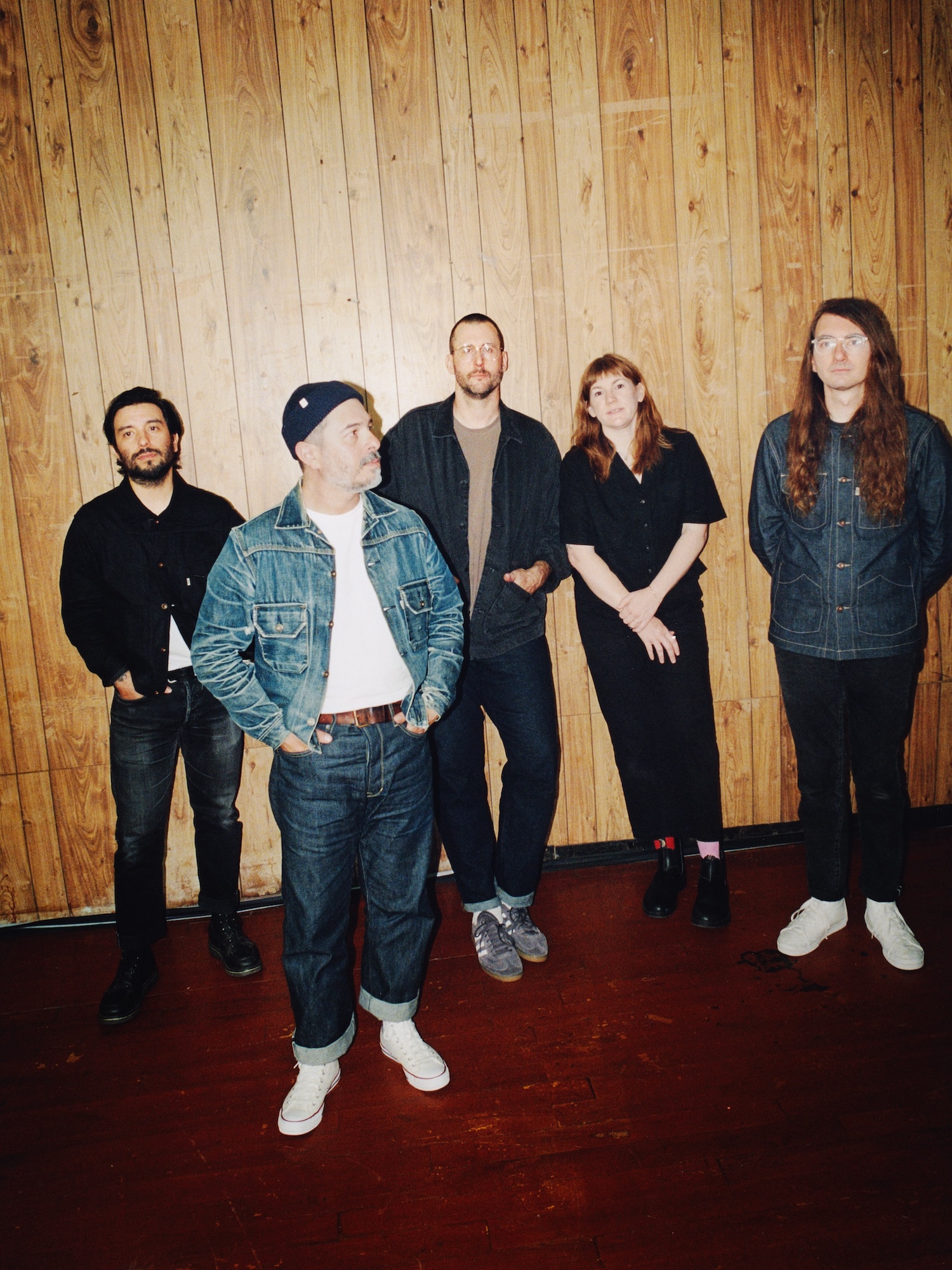
And I am always looking for the reflections of myself in things.
However small. Brief. Almost always unflattering. And I suppose that is the thing about contemporary popular music. It can mean one thing for the songwriter – be about their experience, but once it is out in the world, it no longer entirely belongs to them. There is the life of a song. There is how a song lives. How we try to live, as we are able to, within it.
I am always looking for the things that are upsetting. The songs that ask me to consider something I have perhaps been hesitant to confront, or acknowledge. I am always listening for a song that is going to hurt my feelings.
And there are of course so many phrase turns, or ideas, throughout Future Nausea that resonate. That speak to the larger human experience. The dissatisfaction with the rhythm of our lives these days. The ways with which we feel like we have perhaps failed – others, yes, but also ourselves. But because it is an album that is structured around such a large scope, or so many themes, the connection to specific depictions, or instances, is not as immediate. But I am always looking for the reflection of myself in things.
There’s a song that comes near the halfway mark on Future Nausea. “Living Blues.” In how it’s arranged, it ultimately finds this space in between – the propulsion and urgency of the E Street Band-inspired bombast, and towering heights that are ascended to with ease, and this kind of melancholic, inward-turned shuffle. Not a matter of tension and release really in how they are balanced, but rather a natural give and take in how it rises, and then recedes.
Future Nausea is an album that is about so many things. Many of them are difficult. Or bad. Questions that have no answers easy or otherwise, but what I keep thinking about is how Spanish Love Songs, as a band, work to offer this complication of something larger. The Sad Thing. The Bad Thing. This kind of understanding, and assurance. “We were born in the living blues,” Dylan Slocum explains in the chorus, while these triumphant melodies from both the electric guitar and the synthesizer swirl and dance around him with such a sense of jubilance. Playful, almost, in how loose it feels. How big of a swing it takes. “This hurt is what accumulates around me and you,” he continues, before tenderly adding, “Don’t let it break your heart into a million pieces.”
Because that’s the thing, isn’t it. What I keep coming back to and what I have continued returning to. This notion of small good things. And how we are always grasping, our arms outstretched, clutching onto this hope. However fleeting. That’s the thing, isn’t it. I keep coming back to it. The idea of hope as an act of refusal. That there is something more. Something better. On the other side of this.
And I have this flimsy relationship with mortality. Sometimes my best friend will tell me how much she worries about me and I tell her that yes I have promised her I am not going anywhere but the world is not tenable but I have chosen to remain in it but sometimes everything feels impossible to me and perhaps you understand what I mean by that, because I think about time, and about life, and I think about where and how those intersect. Because you can try so hard, in the complication of the sad thing, or the bad thing. You can offer hope as an act of refusal. The small good things. And maybe you understand how hard it can be to hold on and to specifically hold onto the belief that there is something more or something better or that it isn’t always going to feel like it does now. The rhythm of our lives these days.
And there’s this juxtaposition that occurs in the bridge to “Living Blues.” Remarkable, really in how it unfolds. Again, really speaking to just how intelligent and how thoughtful a record Future Nausea is, and the time and care the band has taken with these songs. After the second chorus, the instrumentation recedes, and the song takes a breath – the wash of the synthesizer, and the strum of the electric guitar. “I can’t hold it together,” Slocum explains, as the song begins to build. The ripple of the bass guitar. The steady pounding of the bass drum which then welcomes, in time, the ping of the snare. Urgent and nervy in its momentum. And in this – a careening towards something enormous. Anthemic. The contrast comes in the admission Slocum makes at the end. This resignation. The hand that we’re dealt. No dreams for the dreamers. What do we then do with that. And how do we see the way out. I have this flimsy relationship with mortality. And I am always looking for reflections of myself in something. However small. Brief. Unflattering. This acknowledgment. “Clocking in and clocking out,” Slocum sings, and while the music continues to swell beneath him, there is something so very human. So very real. Fragile. A kind of exhaustion that comes from time and life and where those intersect that I cannot only hear but I can feel in his voice and in hearing and feeling, I understand. Because maybe you understand this too. “Dream of a life at sixty-seven,” he continues. “But I know I won’t get there alive, and I’m not on the list in heaven.”
There are no dreams for the dreamers, and part of what makes Future Nausea such an enormous and exhilarating album is how it is the sound of a band pushing itself or challenging itself. It is bold, and exciting to listen to. It sustains itself and thrives within this desire to scale to these towering heights. It’s a powerful statement, of course, lyrically, but musically too. Part of that power comes when the band is not afraid to take a song elsewhere. It isn’t the centerpiece of the album, but it is the culmination of everything it has been clawing at – staggering in how it simmers and unfolds with a kind of dramatic flair that, yes, it knows exactly what it is doing, but every song on here knows exactly what it is doing, but it is so earnest, and visceral, it completely manages to avoid a kind of insincerity and arrive in a space of transcendence that another less capable or thoughtful band would simply not be able to execute with such graciousness.
There are no dreams for the dreamers. It’s what Dylan Slocum returns to, howling it, as the song “No Dreams” intentionally churns and simmers underneath him. It’s one of the album’s moodiest tracks, in aesthetic, simply because of the instrumentation it uses, and how it is arranged. A momentary step back from the enormity and bombast and exuberance of the record, favoring these huge, sustained notes that just hang and hang and hang in the air until the next one finally arrives. The song is built around this contemplatively strummed-out guitar progression – banged away on the acoustic guitar, while these flourishes weave themselves around it. Dramatic punctuations from the piano and this restrained percussive rhythm that builds but never rises above a certain level of intensity. Fascinating and uncharacteristic background vocal arrangements that flutter in for this added emphasis on the stakes within the world of the song. The blare of a saxophone within its final, breathless moments.
Recently, I came to understand that there is a difference between anger and anguish. They are, of course, often tethered to one another. And they are not in opposition. But they do not originate from the same place. There is a space that forms, though. And that’s the thing isn’t it. I am always looking for these convergences. The place where two things intersect and what happens in the center. “No Dreams,” and the thing that it keeps working towards, both in its arranging, and in the point Slocum is trying to get across – truly just bellowing, and howling, by the end, with a kind of exhaustive desperation – it is a song that exists within the discomfort of that convergence. In that center. “No dreams,” he concedes. “No one should have to take this on.”
“No dreams – I tell myself it’s where we’re from. No dreams for the dreamers. No one should have to take this all.”
No one should have to take this all and oh my god there has to be something on the other side of this. There has to be something else. Something more.
* * *
And I wonder if you have ever really let go even for just a moment.
A few minutes. Brief and fleeting and wondrous. This feeling. You surrender yourself to something. Not even something larger. But just something else. This feeling. An experience. You are overwhelmed and compelled, and in this moment you are no longer concerned with what it might look like or what you might sound like to another who may witness this. Have you been moved. Do you understand what this propulsive feeling is like. How desperately you want to cling to it. There is a difference between living and being alive. I wonder if you understand what I mean by that. The separation between two things that are perhaps to you not all that dissimilar but there is this distance from one to the other. What exists in that space. What if there is something more and what if even for just a few minutes on a Sunday night in June you feel something. You really feel it. You are literally and figuratively moved. You scream and you cry and you surrender to something beautiful and human.
Have you ever lived without having lived.
Have you ever felt lower than everyone else.
“I’m coming off my meds today,” Dylan Slocum confesses in the opening line to “Doom Tripping.” “And it was only sort of accidental.” And in the days since I began writing this, I discontinued taking my antidepressant. The medicine cabinet, in time, becomes a cemetery for failed trials. The names – generic, or name brand, it doesn’t matter. They all sound the same, after a while. A strange, creeping familiarity to them when your provider begins rattling them off, asking if you, at any point in your life, had tried this one. Or that one. Did you see any relief from your symptoms. What side effects, if any, did you experience. I’m coming off my meds today. Auvelity. Recently prescribed to me and perhaps not given enough of a chance to see if, in time, it might provide some respite. An adverse experience in the middle of the day. Spacey and fuzzy. Jittery. I feel it in my eyes. This strange distance from myself. How aware I am of it all. On the phone with my best friend I tell her I feel like I am having an allergic reaction in my brain. “I wonder if you understand what I mean by that,” I say and she tells me, “Yes, I think I know what you mean but you need to call your doctor. I’m worried about you.”
I’m coming off my meds today. The days turn into a week without the pharmaceutical safety net I have spent so much of my life floating above. There is a space that exists between feeling everything and feeling nothing and sometimes it seems impossible to find the balance.
And I do not think I am exaggerating when I say everything feels bad right now. In this moment. Today, in traffic, I was behind someone in a large pickup truck with a decal on their back window – a Punisher-style skull filled in with the American flag, next to text that simply said: “Come and Take It.” You throw your hands up exasperatedly or wave them around to indicate the gravity of the larger issues surrounding us, but you see something like this while you are at a stoplight on a Tuesday afternoon, and you laugh because what is the alternative, and you think What Are We Doing Here. How did it get like this. How long is this going to last. In the opening and titular track to Future Nausea, Dylan Slocum sings the line, “Nazi raids in mid-October – cowards wearing masks to cover the fear in their goddamn eyes.”
I think about how less than a year ago in my small Minnesota town, 40-something miles south of the Twin Cities, weeks before Operation Metro Surge officially began, a man named Adan Nunez Gonzalez – a resident of this community for over a decade, was stopped by I.C.E. agents on his way to work, and abducted. Violently extracted from his vehicle. One of the agents involved wearing a patch on their tactical vest saying the word “Deplorable.” The stop and the abduction happened .2 miles from my front door. I think about Gonzalez and his family. If you search his name on the internet, you find birth announcements for his children – born in the hospital in this town. I think about the argument I got into with my mother at the start of this year and I think about the conviction in her voice when she, bewildered by why there would be an I.C.E presence on my street, told me that everyone in my neighborhood had lived there for such a long time and how the length of time you have been a member of a community like so many things right now does not matter.
I am not exaggerating when I say everything feels bad right now. In “Welcome to Hell,” Slocum sneers, “It’s all a big dumb ending and we can read it in real time.” There has to be something on the other side of this.
I am not exaggerating when I say everything feels bad right now. Nazi raids in mid-October. Apropos of nothing, Donald Trump makes a statement on social media specifically singling out Somali immigrants in the state of Minnesota. Days later, the Washington, D.C., residence of Ilhan Omar – a Minnesota congressional representative, was searched by Homeland Security.
Everything feels bad right now. A firing squad execution of Nidal Hasan will be publicly live-streamed. Christa Pike, a woman sentenced to the death penalty, survived the lethal injection she was given at the end of September, and was hospitalized as a result. At the beginning of October, the last statement of Jamaal Howard, executed in the state of Texas, began circulating on Twitter.
“Hey, enjoy life, and peace to y’all,” he says towards the end of his sentiments. “Warden. That’s it. I’m ready, Warden.”
Enjoy life. I’m ready.
There is a difference between living and being alive. How much I have lived without having lived.
Recently, my spouse returned from a work trip and brought home a postcard – she saw it, and thought of me. “Hope is being able to see that there is light despite all of the darkness.” A quote from Desmond Tutu. Hope is a dangerous thing for someone like me to have but I have it. Don’t let this break your heart into a million pieces. The human condition. You can complicate The Sad Thing and The Bad Thing, even though sometimes it feels impossible. There has to be something on the other side of this, you see. Do you see. The small good things that we hold onto. Clutching them tightly. There is so much to be grateful for there is so much to be grateful for there is so much to be grateful for.
— —
:: stream/purchase Future Nausea here ::
:: connect with Spanish Love Songs here ::
— —
— — — —
Connect to Spanish Love Songs on
Facebook, 𝕏, TikTok, Instagram
Discover new music on Atwood Magazine
© 2026
 © 2026
Future Nausea
an album by Spanish Love Songs