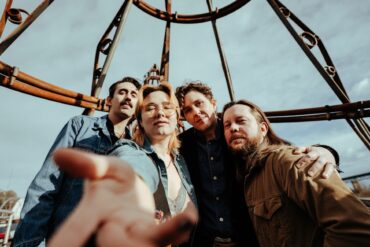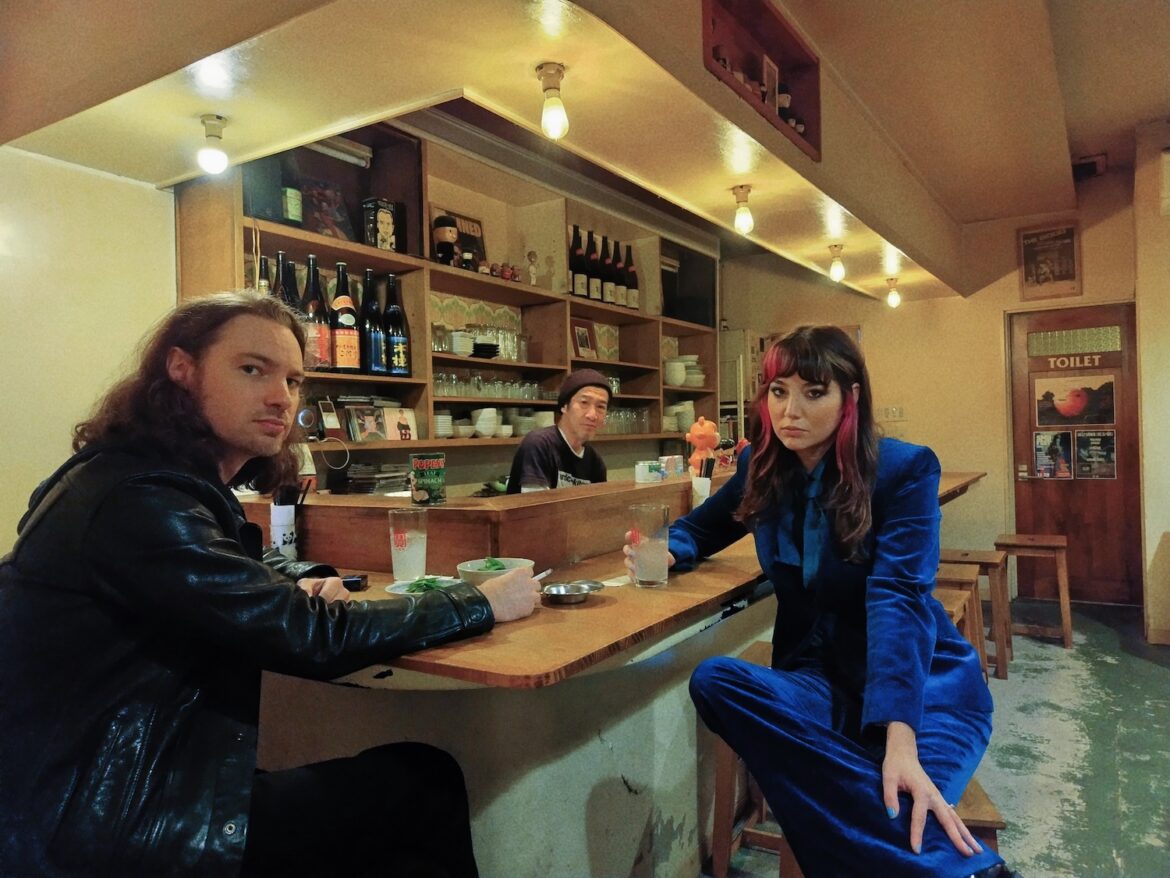
On their self-titled fifth album, Los Angeles indie rock duo Livingmore explore the beautiful complications of being alive, embracing love, uncertainty, and the courage to begin again.
Stream: “Hurting” – Livingmore
Life has a way of taking us in directions we never imagined.
We make plans, fall in love, change our minds, and discover possibilities we never knew existed. There are things we desperately want to hold onto, others we struggle to release, and moments when all we can control is how we respond. Somewhere amid this unpredictability, we continue searching for happiness, sometimes finding it in the most unlikely places.
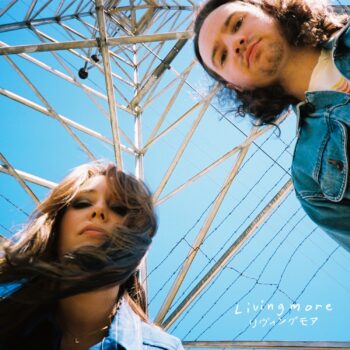
For more than a decade, Los Angeles duo Livingmore have explored these paradoxes through captivating melodies, colorful guitar work, and an eclectic range of influences. Alex Moore and Spencer Livingston share an undeniable musical chemistry, developed through years of writing, performing, and sharing a life together. Moore’s expressive voice can sound wistful one moment and playful the next, while Livingston brings warmth and melodic charm to his performances. Their harmonies reveal an intimacy that has become one of Livingmore’s defining qualities.
Taking inspiration from rock, psychedelia, folk, vintage pop, and Americana, the pair create material that highlights their eclectic musical tastes. Their enthusiasm is apparent in everything from distorted guitar riffs to delicate folk-inspired flourishes, demonstrating the creative curiosity that continues to sustain their partnership.
When Atwood Magazine interviewed Moore and Livingston earlier this year, Moore addressed the misconception that Livingmore are primarily a feel-good band. “More than ‘the power of positivity,’ our message has always been about holding light and dark at the same time,” she explained. “Even our feel-good songs come from resilience – or just holding onto a good day for dear life.”
Released independently on August 21, 2026, their self-titled fifth album explores pain, personal freedom, and the challenge of accepting circumstances beyond our control. Its eleven tracks move between spirited rock and intimate reflections, with Moore and Livingston bringing humor to their frustrations and sincerity to their more vulnerable moments.
— —
:: stream/purchase Livingmore here ::
:: connect with Livingmore here ::
— —
Stream: ‘Livingmore’ – Livingmore
:: Inside Livingmore ::

— —
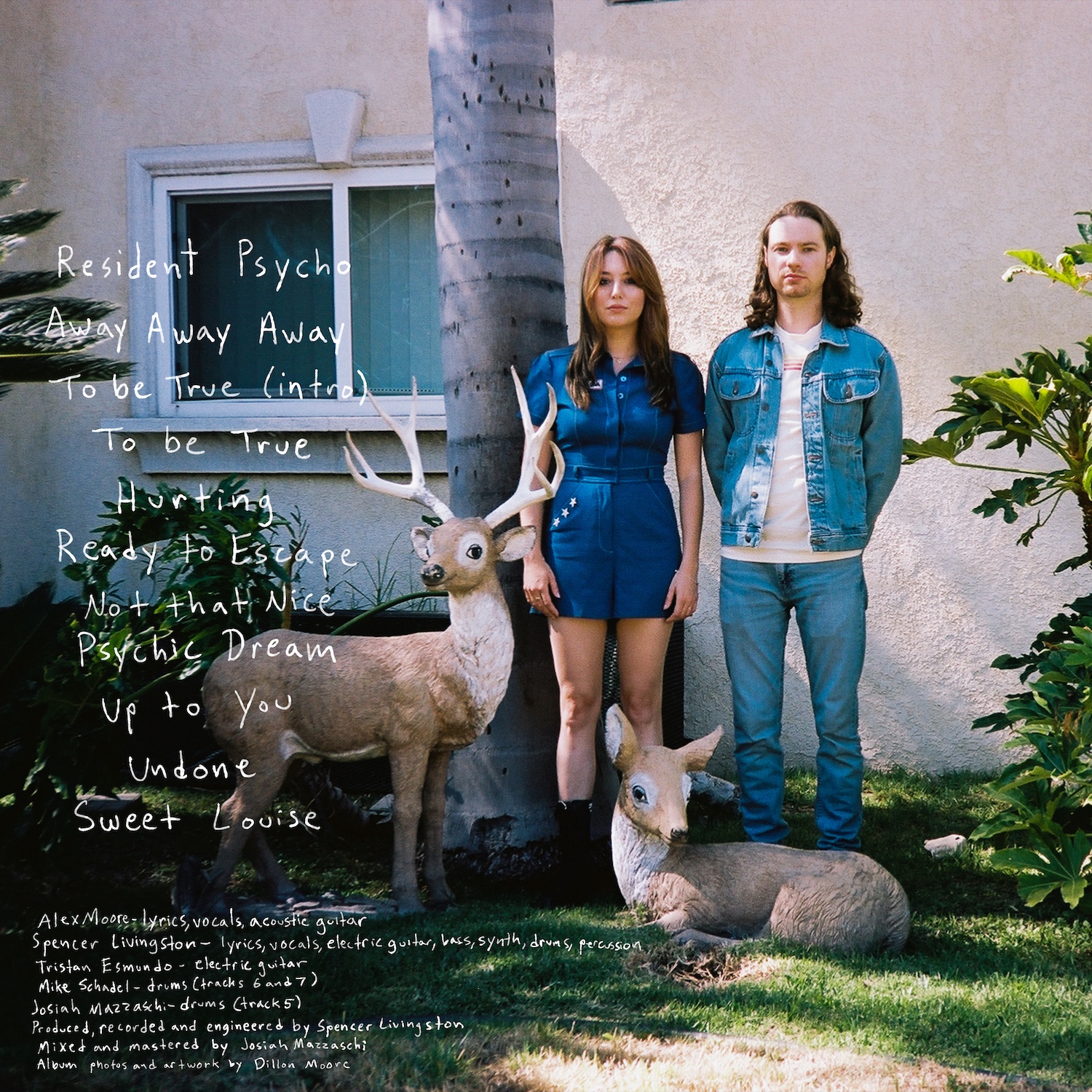
Resident Psycho
Livingmore open the album with the gritty psychedelic rock of “Resident Psycho,” inspired by strange noises the duo heard around their apartment. Their imaginations took over, and their shared love of horror movies helped bring the song’s eccentric character to life. Distorted guitars and a driving rhythm give the track a raw, vintage rock sound reminiscent of the 1970s, while Moore’s vibrant vocals add to its playful sense of mischief.
At just under two minutes, the song races toward a lively guitar jam, with Livingston taking center stage during the instrumental finale. He has spoken fondly of performing the song in Japan, recalling how much he enjoys playing the closing section whenever it appears in their set.
Resident psycho
Feel the breeze on my skin where my skin go
Resident psycho resident psycho
Hear the pound on the wall make your skin crawl
Resident psycho resident psycho
It’s the state I’m in a final spin
The way it is taking up the oxygen
Ahhhh
It’s the state I’m in a final sin
the way it is taking up the oxygen
– “Resident Psycho,” Livingmore
Away Away Away
One of the album’s most irresistible songs, “Away Away Away” bursts with bright, chiming guitars and an effervescent rhythm. Its exuberant melodies recall the simple pleasure of turning up a favorite song and letting yourself get carried away by it. Moore’s spirited vocals are complemented by Livingston’s warm backing harmonies, their voices coming together in a chorus that practically begs to be sung aloud.
“Know it all can fade away / Refill my glass, take the day / Just be alive,” Moore sings, celebrating the present with an appreciation for how fleeting life can be. Her playful acknowledgment that she never had beginner’s luck, followed by an invitation to roll the dice, suggests an adventurous outlook and a willingness to embrace uncertainty. Moore describes “Away Away Away” as the album’s most Japan-inspired song lyrically, explaining that it emerged from an internal desire for a fresh start. The recurring refrain and lively momentum evoke the excitement of leaving familiar circumstances behind and discovering what else life might have in store. It’s a glorious, infectious piece of pop-rock that captures the exhilaration of embarking on a new chapter.
“Pick you up at a quarter to three
Feels like you are just like me
A little lost but not hard to find
Know it’s hard to suck it up
Gotta power move
Use your pick-up truck
And I’ll use my mind
Away away away..
Away away away away
I’m gonna go, go away from this
I’m gonna go, go away from this
I’m gonna go, I’m gonna go
I’m gonna go, go away from this
Make a joke and cover it up
I never did have beginners luck
So I’ll take my time
Listen baby life ain’t fair
Was destined to be without a care
And just roll the dice”
– “Away Away Away,” Livingmore
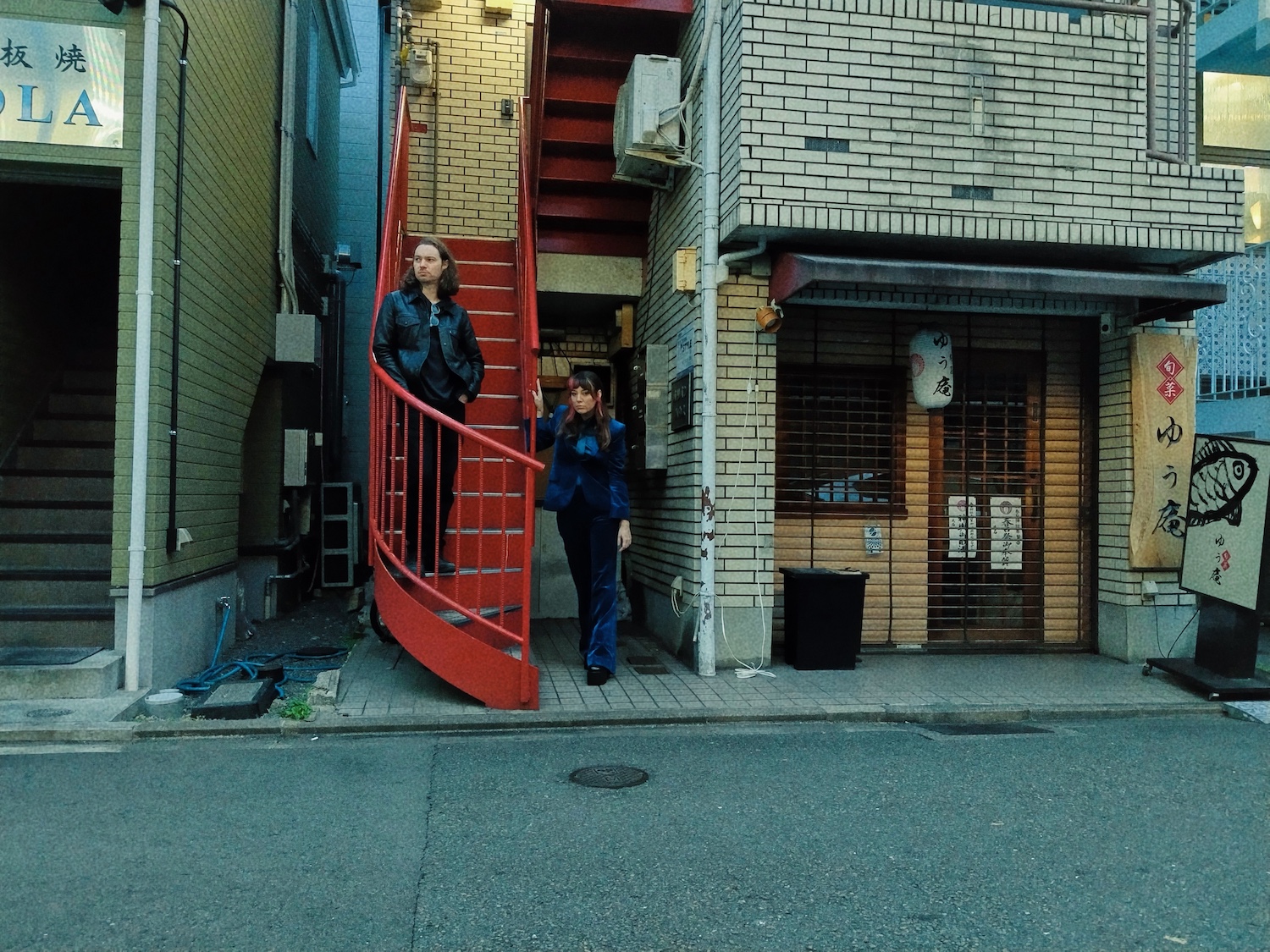
To Be True Intro
At just 21 seconds, “To Be True Intro” provides a brief orchestral interlude between the cheerful pop of “Away Away Away” and the contemplative folk-rock that follows. Sustained strings gradually swell, their delicate harmonies introducing a sense of melancholy before “To Be True” begins.
To Be True
One of my personal favorites on the album, “To Be True” has a wistful quality, with its gentle, lilting melody and old-fashioned folk-rock charm. The steady, easygoing rhythm complements the melody’s nostalgic character, giving the music a sense of ease that suits its introspective subject matter. Moore’s ethereal vocals are especially appealing here, her voice rising into a higher register as she reflects on accepting circumstances beyond her control.
Her admission, “I already faced what’s there / Just gotta lie in it too,” speaks to the aching distance between facing the truth and finding a way to inhabit it. Moore explained that the song reflects her growing ability to sit with painful emotions and accept uncertainty, trusting that life can change if she remains open to new possibilities. By the closing verse, she begins to imagine life beyond her present circumstances, singing, “When it’s gone / There is a way / A new path to go through.” The words suggest a tentative hopefulness, an acknowledgment that endings lead to new beginnings. Her intimate delivery gives the reflection a deeply personal quality.
Feel like I’m aimlessly moving
can’t tell what to do there’s no tears to
exit an end just an endless pursuit
I can’t believe this happened darling
but gotta face what I knew
sometimes some things are meant to be true
– “To Be True,” Livingmore
Hurting
One of the album’s finest moments, “Hurting” has an appealing melancholy beneath its bright, jangling guitars and sweetly melodic character. Its nostalgic blend of Americana and folk-rock recalls Tom Petty and the Heartbreakers, while the steady percussion gives the song an easy, natural momentum. Livingston sings with a weary sweetness that makes his admission, “It’s hard to be on my own side,” sound disarmingly honest. The line captures the painful experience of being one’s own harshest critic, while “I try to understand / What can’t be understood” speaks to the frustration of searching for answers that may never come.
Livingston has said that he considers the song a meditation on pain and has always been attracted to cheerful-sounding music with sorrowful lyrics. Here, that combination gives “Hurting” its bittersweet appeal, allowing the melody’s warmth and the sadness of his words to coexist.
I’m hurting and I don’t know how else to say it
I’m hurting don’t leave me here in pain
By myself, by myself
All the time you were feeling bad
Funny things can make you sad
And I try to understand
What can’t be understood
I’m hurting and there’s no one else to blame
I’m hurting give me something to kill the pain
To forget, to forget.”
– “Hurting,” Livingmore
Ready To Escape
“Ready or not, I’m ready to escape,” Livingston sings with an assurance that makes his determination impossible to miss. One of the album’s most invigorating songs, “Ready To Escape” has a distinctly Americana character, with bright electric guitars and shimmering synthesizers giving its melodies a colorful, uninhibited energy that suggests the promise of somewhere better. It’s another example of Livingston’s fondness for pairing cheerful melodies with heavier lyrical themes.
The repeated admission “I couldn’t get away” reveals the frustration behind his desire for change, while his passionate delivery suggests a growing confidence in his ability to alter his circumstances. Near the end, Moore joins him for the repeated refrain of “Any way, any way out,” bringing an almost euphoric rush, as though imagining an escape has already made the world feel a little wider.
couldn’t make it up
I couldn’t make it down
Was it always like that
Were you always around
Right from the start
I wanted to escape
I tried to make it out you wouldn’t let me go
I couldn’t get away I couldn’t get away
Ready or not I’m ready to escape
I couldn’t get away
To a better place
– “Ready To Escape,” Livingmore
Not That Nice
Moore has little interest in appearing agreeable on “Not That Nice.” “If you really know me well, I’m not that nice,” she declares in an almost spoken cadence. Snarling guitars and a brisk, punkish beat accompany her confrontational delivery, with jagged instrumental accents following the emphasis in her words. The chorus brings a burst of melodic exuberance, its catchy hook giving the song an irreverent charisma. There’s a playful sense of mischief in Moore’s performance, as though she’s relishing the opportunity to expose a less accommodating side of herself.
References to authority and the majority suggest an impatience with conformity and social expectations. She recalled the rapturous response “Not That Nice” received in Tokyo, describing its live energy as “fun” and “slightly menacing.” It’s easy to imagine an audience enthusiastically joining in, finding their own small rebellion in its unapologetic refrain.
Hey miss authority
Can I relate
I’s like I’m wide awake
Not up for debate
If you really know me well
If you really know me well
If you really know me well
I’m not that nice
Miss California
Can you relate
Cause now I’m wide awake
And up for debate
Everyone has their own hell
Maybe I like your hell
If you really know me well
I’m not that nice
– “Not That Nice,” Livingmore
Psychic Dream
A hypnotic psychedelic reverie, “Psychic Dream” combines fuzz-drenched guitars with a danceable pulse, as Moore and Livingston exchange short vocal phrases. “Are you lost?” one asks, followed by the answering phrase “Over here,” both repeated with an insistence that adds to the song’s surreal atmosphere. The recurring plea, “I want your psychic dream to be real,” suggests a longing to turn something imagined into reality. A brief guitar solo reminiscent of 1960s psychedelic rock precedes a momentary lull. When the full band returns, the guitars surge back to the forefront, bringing the song to an exhilarating conclusion.
Follow my voice
Over here, over here, over here
I want your psychic dream to be real
To be real
Listen to us, come here
Over here, over here, over here
I want your psychic dream to be real
To be real
– “Psychic Dream,” Livingmore
Up To You
A commanding bass line and fuzzy electric guitars give “Up To You” a gritty garage-rock character, while Moore’s playful, wordless vocals add a mischievous charm. The repeated “Up, up, not up to you” becomes a rhythmic hook, with the emphasis on each syllable giving the chorus an appealing punch. Beneath the song’s lively exterior is a conversation between two competing perspectives.
Moore has explained that its stream-of-consciousness lyrics illustrate one voice determined to see the world differently and another questioning whether such hope is foolish or naive. “You must’ve hit your head again / If you think I just play pretend,” she sings, bringing those conflicting perspectives into focus. Yet the recurring declaration, “I chose to look up” carries a sense of resolve that feels especially meaningful, recognizing how much courage it can take to remain hopeful during life’s darkest moments.
Try to be rational
Kick and scream my light to dark
Try to be functional
Floating through a bleeding spark
I don’t care but I still say
F*** it because we’re here anyway
Up up up
Up up not up to you
And when it all comes crashing down
I swear I will not drink it down
I’ll just look around
– “Up To You,” Livingmore
Undone
There’s a seductive, almost dreamlike quality to “Undone,” where Moore’s breathy vocals drift over hazy electric guitars and a pulsating bass line. A measured drumbeat establishes an inviting groove, while layered harmonies add to the song’s hypnotic atmosphere.
“Something happened when you kissed her,” she sings, introducing a lyric she has described as intentionally ambiguous. That adventurous impulse carries into the line, “In a world that’s wound so tight / You need a risk to make things right.” The words suggest a willingness to embrace the unknown in pursuit of something meaningful.
As the repeated invitation to “Make it happen” becomes more emphatic, the song captures the excitement of surrendering to a possibility that, once embraced, cannot be undone.
Something happened when you kissed her
Feel the thunder, God is in her,
Take the passion, now you’re under,
Light a candle, can’t be undone.
In a world that’s wound so tight,
You need a risk to make things right.
It’s too good, it haunts the night.
When it all feels like a pattern,
Break the cycle, Make it matter.
Take the passion, Feed the hunger,
It’s forever
Can’t be undone.
What do you have to lose?
There’s nothing left to do.
Sparks fly up to the moon.
– “Undone,” Livingmore
Sweet Louise
Livingmore close the album with “Sweet Louise,” a poignant cover of a song written by their friend Dawn Hummer. After losing her home and belongings in the 2018 Woolsey Fire, Hummer found refuge in the former home of a woman named Louise, who had moved into assisted living due to dementia. Surrounded by Louise’s possessions, Hummer recognized the similarities between their experiences of loss. “A favorite coffee cup / A cool old pair of shoes / All the stuff you love and save / Eventually you lose,” she wrote, reflecting on the impermanence of the things we spend our lives collecting and cherishing.
Moore and Livingston share the lead vocals, their voices coming together in beautiful harmony and bringing an aching sincerity to Hummer’s words. “And we are in the same boat after all / A different circumstance created the fall,” they sing, acknowledging the connection between two women whose lives were changed by circumstances beyond their control. The closing track offers a moving reflection on loss and the difficult process of accepting changes we never wanted.
And we are in the same boat after all
A different circumstance
Created the fall
And now and then you’re dealt a lousy hand
I heard it said
Home is where you land
Staring at the history on the wall
Wondering who came before the fall
of sweet Louise
Who lived here before me
And though she’ll never see
Her home again like me
– “Sweet Louise,” Livingmore
* * *
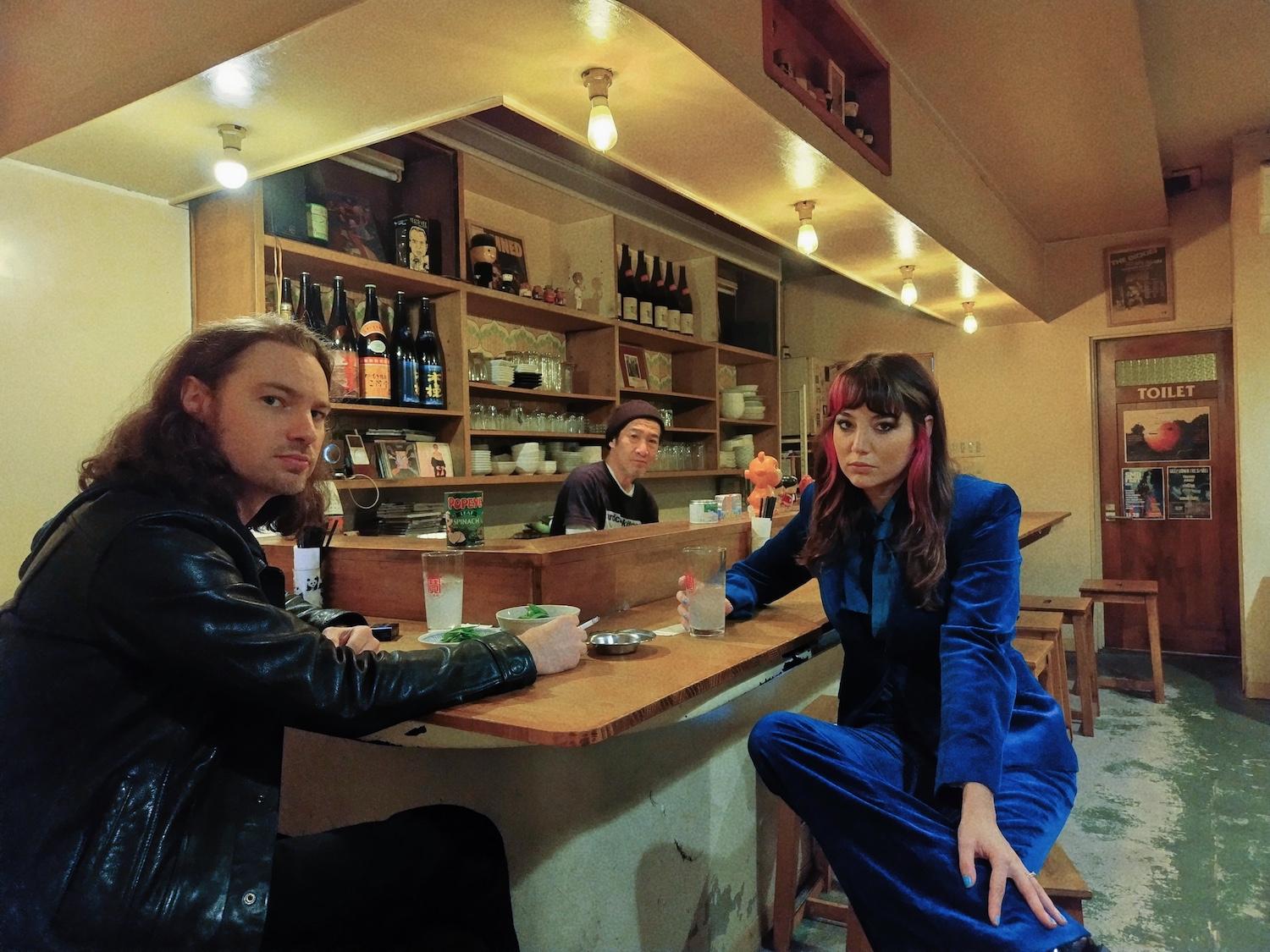
One of Livingmore’s greatest strengths is their ability to bring such a wide range of musical influences together.
Their gift for songwriting is evident in the irresistible choruses of “Away Away Away” and the wistful folk-rock of “To Be True,” while songs like “Psychic Dream” and “Undone” reveal their adventurous instincts. There’s an appealing spontaneity to their performances, and the ease with which they play off each other makes the music a pleasure to listen to.
Livingmore is a testament to the deepening creative bond between two musicians who continue to find joy and inspiration in each other’s company. Moore and Livingston have a gift for recognizing the poetry in life’s complications, transforming moments of frustration, longing, and uncertainty into songs that feel beautifully human. The intimacy of their music reflects years spent learning to see the world through each other’s eyes, lending their music a deeply personal quality.
Their self-titled fifth album celebrates twelve years of shared experiences, the beauty of growing together, and the extraordinary possibilities that remain when two people continue to inspire one another, resulting in a record that is as resonant and profound as it is enduring.
— —
:: stream/purchase Livingmore here ::
:: connect with Livingmore here ::
— —
— — — —
Connect to Livingmore on
Facebook, 𝕏, TikTok, Instagram
Discover new music on Atwood Magazine
© courtesy of the band
 © courtesy of the band
Livingmore
an album by Livingmore