Every Friday, Atwood Magazine’s staff share what they’ve been listening to that week – a song, an album, an artist – whatever’s been having an impact on them, in the moment.
This week’s weekly roundup features music by Victoria Bigelow, Becca Caffyn, ARI LEE, Flax, JAWWAAD, Thierry Larose, tommy oeffling, Last Chance Anthem, Getdown Services, Buboy, RETRIEVER, Eva Pagán, Madeleine Mayi, Heather DeSanctis, Capital Soirée, Dead II Society, and eleveneleven!
•• •• •• ••
 follow WEEKLY ROUNDUP on Spotify


•• ••
:: “lullaby” – Victoria Bigelow ::
Mitch Mosk, Beacon, New York
Sharing a bloodline is a far different thing from sharing a childhood. Hauntingly beautiful and hypnotic, Victoria Bigelow’s “lullaby” dwells in the complicated space between familial love and estrangement, giving the grief of all those missed years a dreamlike musical home. Bigelow sounds better than ever here – utterly assured in the looseness of her delivery, her voice floating freely through a mesmerizing interplay of ambient electronic textures and acoustic instrumentation.
An Atwood favorite since the release of 2020’s To Everyone I’ve Loved Before, the Arizona-based singer/songwriter has spent the past six years cultivating an extraordinary capacity for making her most private struggles resonate far beyond her own life. Released independently November 20, “lullaby” follows “The Rot” as the second single off her forthcoming EP, due in April 2027. Where much of her earlier work, including her sister EPs Songs for No One Vol. 1 and Vol. 2, was rooted in the familiar textures of folk and Americana, Bigelow is now exploring the more experimental possibilities of alt-pop and folktronica alongside longtime collaborator and producer Devan Skaggs. Her renewed independence has brought with it a rediscovery of her love for creating.
“I think I’ve gotten back to the reason I started making music in the first place,” Bigelow tells Atwood Magazine. “Not because I think it’s going to save me or turn into something enormous, but because I genuinely love doing it. There’s freedom in that.”
That freedom is palpable throughout “lullaby,” whose arrangement possesses a beautifully elusive quality. The acoustic elements give the song an earthy intimacy, while its electronic textures cast an almost otherworldly veil over Bigelow’s singing. Having begun incorporating production into her own songwriting process, she is increasingly able to shape the emotional character of her music from its inception. Inspired in part by Oklou’s “blade bird,” Bigelow envisioned a sound reminiscent of a childhood memory distorted by the passage of time.
“Sonically, I wanted the music to feel dreamlike, almost removed from any particular time or place,” she explains in the single’s accompanying press materials. “I was drawn to the contrast between the softness of a lullaby and the weight of what I was trying to communicate lyrically. There’s something beautiful to me about putting a very human, vulnerable sentiment inside atmospheric, somewhat inhuman-sounding production. I didn’t want the arrangement to simply illustrate the lyrics. I wanted there to be some distance between the two.”
Written after reconnecting with her mother following nearly six years of estrangement, “lullaby” addresses Bigelow’s complicated relationship with her half-siblings. The oldest of five children, with eighteen years separating her from the youngest, she grapples with the knowledge that the people who constitute her family have experienced vastly different versions of it. “We share a bloodline and a nose / A shame we never got to know / Each other more than just by name,” she sings, before expressing an especially heartbreaking yearning to be understood: “But if your memories mirrored mine / You’d understand the shape I’m in.” Those words capture the loneliness of carrying a history that the people closest to you have little frame of reference for.
“I’m sure so much of my past and decision-making has lived within the family lore, but in my group of siblings, nobody went through the things I did,” Bigelow says. “I’m the oldest of five, I’m from my mom’s first marriage, and there are 18 years between me and the youngest.
“If they could see inside my memories just for a second, maybe they would have a greater understanding of my decisions or some of my darker moments.”
Bigelow is just as conscious of the gaps in her own understanding of her siblings’ lives.
“Ultimately, I think ‘lullaby’ is about the peculiar permanence of family,” Bigelow reflects. “The way people remain part of your life, and part of your understanding of yourself, even when you’ve spent years living separately from one another. There is the childhood you remember, the childhood you only hear about, and whole versions of the people you love that you’ll never really know. I think the song came from sitting with that realization, and with the knowledge that loving someone doesn’t necessarily mean having been there for everything. Our shared sense of loss has become part of our relationship, something that connects us in a way our childhoods never quite could.”
The song’s most affecting passage arrives in its bridge, when Bigelow briefly takes on the comforting role of an older sister: “Hush now / It’s all right / I’m gonna sing you a lullaby.” Coming between choruses in which she struggles to access her own tears, those words of reassurance are all the more poignant. She extends to her siblings the comfort she herself is still searching for. Spellbinding in its delicacy and devastating in its emotional clarity, “lullaby” is among Bigelow’s most accomplished songs to date – a compassionate offering to the people she loves and the children they once were. Their childhoods may have unfolded worlds apart, but there is still time to get to know one another.
:: “Caroline” – Becca Caffyn ::
Mitch Mosk, Beacon, New York

Sometimes the hardest person to disappoint is the person you used to be. Smoldering, dreamy, and achingly intimate, Becca Caffyn’s “Caroline” explores the complicated emotions that arise when growing into yourself means abandoning the future you once imagined. Glowing guitars envelop her breathtaking vocal performance, their warmth drawing the listener into every confession. It’s a soul-stirring indie folk reverie that lingers long after its last note fades.
Released September 25, “Caroline” is the first single off the New Zealand-born, London-based singer/songwriter’s forthcoming third EP, Isn’t It Romantic?, out December 4. Solo-written by Caffyn and produced by Will McGillivray, the song brought an end to a two-and-a-half-year spell of writer’s block following her 2024 EP, Hallways. Recorded on a vintage Gibson J45 acoustic guitar, “Caroline” captures the spellbinding intimacy of Caffyn’s songwriting, with her voice so close to the microphone that even the smallest inflections carry tremendous emotional weight.
“‘Caroline’ was written a few months after the conclusion of my first long-term relationship (of almost three years),” Caffyn tells Atwood Magazine. “Despite the breakup, I was feeling pretty good. I was healing, unexpectedly falling in love again, having fun with my friends, figuring out what things I liked doing with my time, but I felt like I should have been walking around like a grieving widow. It felt like I owed it to the version of myself that was deeply in love with the person I’d broken up with to carry around this sadness, like the love didn’t mean anything if it was something I could get over. I had this perception that I would feel incredibly guilty for ever moving on, regardless of if that meant simply feeling okay again or moving on with another person, so it felt conflicting when that wasn’t what I was experiencing.
“Even though I was content, I felt like my life was at odds with what a younger version of myself expected it to be, like in ending that relationship, in becoming more myself, in letting myself move on, in pursuing the things I wanted to, I was betraying past versions of myself and the hopes that I had back then. The song just kind of fell out when I sat down to write one day, like I had finally found a way to put into words this feeling of disapproval from myself that I’d been carrying around with me. Writing the line ‘I’m so disappointing to the girl I’ve outgrown’ was so cathartic. ‘Caroline’ was me letting myself feel okay with the fact that sometimes becoming who you are means letting go of who you aren’t anymore.”
The devastating brilliance of “Caroline” lies in Caffyn’s ability to articulate the guilt of feeling no guilt at all. “I thought I’d feel guilty / I’m sorry I don’t,” she sings, apologizing for the happiness she’s found in the arms of another. Her delivery is so tender that those admissions sound almost like an apology whispered to her younger self. By the time she repeats the words “I’m so disappointing,” the distinction between the end of her relationship and the loss of her former identity has come into focus. The heartbreak running through this song belongs largely to the girl who once believed her life would unfold differently.
Comforting, exposed, and utterly enchanting, “Caroline” offers a compassionate perspective on the growing pains that accompany personal evolution. Caffyn’s music holds space for the sincerity of the promises we once made and the people we’ve since become. The love we once shared deserves to be cherished on its own terms, and its significance exists independently of how long we spend mourning its loss. We can honor who we were and still give ourselves permission to be happy with who we are today.
:: What Happens When You Fall In Love In Stepford? – ARI LEE ::
Rachel Leong, France

ARI LEE’s What Happens When You Fall In Love In Stepford? is a question to who we are, and who we’re trying to be. As 2026 wraps up, I find myself asking myself this question more and more – but wouldn’t you, if you fought so hard to get out of the suburbs, only to realise happiness may have been in front of you all along?
Those are the questions ARI contends with in her sophomore EP. The fictional “Stepford” she names is a place representing tradition, binaries, and expectations. After fighting tooth and nail to get out, she falls in love on the way out, putting everything in a spin.
The EP tracks 5 chapters of this relationship and self-realisation, drawing on indie pop and alt rock sounds. ARI’s distinctive velvety vocals sit atop these productions to create something that feels deep and playful all at the same time. Conceptual in its lyrics, like how “Olympics” nods to how having a crush is basically a full time sport, to confessionals in “Please, Maybe” – it feels like ARI takes one step forward each time, coming more and more into herself each time.
:: “Amnesia” – Flax ::
Mitch Mosk, Beacon, New York
The desire to forget can be every bit as consuming as the memories themselves. New Zealand’s Flax give that desperation a thunderous voice: Brooding, bruising, and emotionally charged, their single “Amnesia” channels the anguish of a past that refuses to loosen its grip. It’s a radiant alternative rock anthem steeped in the grit of grunge and the fervor of emo. Soaring electric guitar licks and spirited vocal harmonies give the song’s inner turmoil a breathtaking melodic lift, as the band pour every ounce of themselves into its resounding chorus.
Released October 23, “Amnesia” is the second single off the Auckland (Tāmaki Makaurau) five-piece’s forthcoming EP, Teething, out December 5. Formed in 2019 under the name Flaxxies, the band spent years touring across Aotearoa before taking a year away from the stage to write and record with producer Dave Rhodes. Following October’s “Barricades,” their latest single introduces a more emotionally exposed side of their evolving artistry – one informed by the painful consequences of living in excess.
“I was getting into a bit of trouble,” Flax tell Atwood Magazine. “Losing good people I didn’t want to lose. Something had to change, but I didn’t know how. I’d spend my nights living so deeply in the moment, always chasing more of whatever was in front of me. Whatever could make the night bigger, better, or take it to that next level. There was always this feeling of wanting more, and never really knowing when enough was enough.”
Churning overdrive and pounding drums lend a visceral urgency to a song about losing control, with the chorus bearing the full weight of that realization. “I hope one day I wake up with amnesia / Reality’s lost / Memories gone,” the band sing, before exposing the devastating contradiction at the center of their longing: “And I’m hoping one day maybe I won’t need ya / But I’m still holding on / Am I too far gone?” The music surges with all the tension between wanting to escape the consequences of your actions while desperately clinging to what those very actions have cost you. Flax’s feverish intensity is matched by the beauty of their melodies, and those impassioned harmonies give a deeply personal struggle the emotional scale of a communal outpouring.
Amid all that heat, the song’s bridge offers an especially moving moment of compassion: “Don’t kill it for shame / You’re worth more than they say.” Those words carry tremendous significance in a song so consumed by regret, acknowledging the possibility of change even when forgiveness feels impossibly far away. Rousing and cathartic, “Amnesia” gives voice to the difficult work of reconciling who you’ve been with who you hope to become. A life can be worth rebuilding even when the past is painful to remember.
:: Myth & Logic – JAWWAAD ::
Josh Weiner, Washington DC

It’s always nice to savor the latest produce of the fruitful relationship between jazz and hip-hop that has lasted around 40 years now, dating back to the early De La Soul and Tribe Called Quest records from the 1980s. A highly worthy addition to that remarkable fruit basket emerged on November 13th: The album Myth & Logic by Jawwaad Taylor, who uses his first name in all caps as an onstage pseudonym.
“Myth & Logic is about resiliency – against all odds,” Taylor says. “My intent was to take us on a journey through fear, failure, acceptance, and joy for the sake of protecting and preserving all that you love.” To channel all of these powerful feelings through music, JAAWAAD will be making full use of his remarkable gifts on the trumpet and keyboard, as well as valuable guest contributions from far and wide – including as far away as the Øra Studio in Trondheim, Norway, where he traveled in hopes of “expanding the album’s sonic vocabulary” and succeeded marvelously thanks to his Norwegian creative allies.
For a little glimpse of the musical prominence, check out this track from the new album, “Silver & Gold” – which definitely provides plenty of the latter when it comes to deft trumpet-playing and jaz-rap fusion!
:: Le X du Y – Thierry Larose ::
Oliver Crook, Montreal

It’s always been clear that Montréal’s Thierry Larose was deeply talented. His last album 2023s Sprints, was a huge step in securing his signature sound. But this year’s offer, Le X du Y, it’s clear it’s now Larose’s world and we’re just living in it.
It’s piano-driven indie rock, but feeling like something new: It’s lighter, with a whimsy inherent in French music. Larose is never taking themselves too seriously, even though it’s clearly life and death. Standouts like “J’en said rien” and “Conversation dans le noir” stand above the others, but it’s clear this is an album best taken in as a whole. Whether you speak French or not is just a bonus!
:: “Psycho” – tommy oeffling ::
Mitch Mosk, Beacon, New York

The longer you shut the world out, the louder your own thoughts can become. Fuzzy, feverish, and fiercely melodic, tommy oeffling’s “Psycho” captures the suffocating intensity of isolation in a surge of distorted indie rock. Its understated verses give way to an explosion of guitars and emotion – a chorus that aches, roars, and soars.
Released September 30, “Psycho” is the final single off Neighbors, the Chicago-based, Illinois-raised singer/songwriter’s eighth studio album and first with a record label, released October 30 via 22TWENTY. Having self-released seven albums by the age of 20, Oeffling set out to challenge his songwriting habits, drawing inspiration from the stylistic versatility of Yo La Tengo and the literary realism of James Joyce’s Ulysses. Written, performed, and recorded by Oeffling himself, Neighbors follows the rhythms of a single Saturday in Milwaukee’s Avenues West neighborhood, with one creative stipulation: “Every song had to be in a different style, but still had to sound like I made it.”
“Joyce wanted to depict every aspect of human life at that time in one book,” Oeffling explains in his album biography. “Everybody is alive and going through stuff, and what unites us is those mundane stretches of nothing. Depicting settings or events in my neighborhood in that romanticized way was so fun and something I hadn’t really done before. It’s like slowing down time.”
Oeffling approached the album’s recording process with a perfectionist’s attention to detail. “I was super busy between touring, student teaching, and classes, but it made finding time to make this album feel that much nicer,” he recalls. “Every time I returned to a song, there was a lot of adjusting lyrics and changing structure. The album had to be airtight. So whenever I had time, I was working on these songs over and over and over.” Amusingly, the sheer ferocity of “Psycho” owes much of its character to the spontaneity of its initial recording. The guitars come crashing down with an almost overwhelming force, their distortion amplifying the desperation in Oeffling’s singing until the entire arrangement sounds on the verge of combustion.
“The album version is the first recording I ever did of the song; it was so blown-out and so funny I thought it had to be the final recording,” Oeffling tells Atwood Magazine. “We are completely unable to play this song live and it doesn’t sound good at all. Maybe it’s a bad song and it’s only good on the album because it’s obliterated with distortion. Who knows?”
Beneath that exhilarating din lies a portrait of someone gradually disengaging from life. “Having the time of no one’s life / You’re barely alive,” Oeffling sings, his clever inversion of a familiar expression capturing the emptiness of days spent retreating further into oneself. Even the smallest domestic details carry emotional weight: The reluctance to speak to anyone, the dishes left uncleaned. Oeffling’s character inhabits a world that’s getting progressively smaller, yet the music surrounding them grows enormous. The visceral power of “Psycho” lies in that contradiction – in giving an overwhelming physical presence to the pain of someone who’s all but disappeared from view.
:: “High On This Feeling” – Last Chance Anthem ::
Mitch Mosk, Beacon, New York

Being alive is worth singing about at the top of your lungs. Exuberant, euphoric, and bursting with brightness, Last Chance Anthem’s “High On This Feeling” is an irresistible indie rock anthem that channels the dramatic dynamism of The Killers and the infectious buoyancy of Walk the Moon and American Authors. Its soaring melodies practically demand to be sung with both arms in the air.
Released October 16 via Grade One View Music, “High On This Feeling” introduces a band whose very existence is a celebration of second chances. Last Chance Anthem bring together longtime songwriting partners Justin Busch of Orange County, California, and Dave Tough of Nashville, Tennessee, with Cris Cron on vocals. The project’s origins stretch back to 2008, when Tough was placed in a medically induced coma while battling stage-three lymphoma. Busch, who had already lost his father to cancer, was inspired by their experiences to pursue medicine alongside his career in music.
“To chase two dreams like that, the passion truly has to be in your blood,” Busch recalls in the band’s biography. “I was exchanging things like food and sleep for time. All that mattered to me was music and medicine, nothing else.”
Eight years later, Tough found himself fighting for his life once again, this time awaiting a heart transplant in Vanderbilt’s ICU with Busch by his side. “It’s crazy because suddenly the big things just seem small, and the small things seem non-existent,” Tough recalls. Having survived both cancer and heart failure, the songwriter emerged with a renewed appreciation for the time he had been given. After more than two decades of writing music together for other artists, television, and film, the two friends decided to form a band in 2026 and put that perspective into songs of their own.
“One day you’re thinking about how things will be without you around, trying to say your goodbyes to your family, and then you’re given the gift of a second chance at life,” Tough says.
“There’s just so much sadness and loneliness out there. Dave and I have been through hell and back together. That’s why we are writing this uplifting music. If this is our one shot to say something, we just want to give the world joy, positivity, and unity. We want to show people you can emerge from the darkness with a light that shines even brighter than before.”
“We were given this last chance,” Tough adds. “These are the anthems.”
The conviction behind those words gives the unbridled optimism of “High On This Feeling” extraordinary weight. “This is our time / Just one life / Gotta feel everything,” Cron sings, his spirited vocal performance carrying the song toward an exhilarating chorus built for communal celebration. The song’s most meaningful lyric is a question: “What would it take / To raise everyone up, up, up?” Last Chance Anthem’s enthusiasm for life extends far beyond their own circumstances; they want everyone to experience the elation coursing through their music. And in an age when so much of life is spent worrying about what tomorrow might bring, their debut is an invigorating invitation to embrace the possibilities of today.
:: “Stop Living” – Getdown Services ::
Anna Madison, Columbus, Ohio
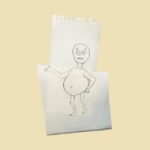
Bring post-punk and art-disco together with a little bit of pub humor and social satire, and you’ve got the song “Stop Living” from Getdown Services, a Bristol-based British duo consisting of Josh Law and Ben Sadler. The band released their second album Massive Champion on August 14th of this year which consists of driving basslines, repetitive grooves, and rhythms, making the album unconventionally danceable alongside the deadpan vocals, synth-driven textures, sardonic lyrics, and production that borrows from club music.
Drawing comparisons to artists such as T. Rex, LCD Soundsystem, and Fat White Family; Getdown Services still bring their own sound to the Bristol scene. “Stop Living” is one of the most danceable songs off the album, so danceable you might find yourself choreographing an entire routine. But when you pay attention to the lyrics it’s not as happy as the instrumental sounds. The song touches on the stressors of life like work, exhaustion, and dissatisfaction, making the music existential dance-punk for people who are having a terrible time but still want to dance.
Law has discussed the song in terms of work related misery and persistent emotional struggles, rather than presenting it as a literal autobiographical account of suicidal intent. That’s worth preserving when interpreting its deliberately dark language. “Stop Living” is the strange experience of being simultaneously grateful for your life and exhausted by the experience of living it.
:: “Cross Your Promise” – Buboy ::
Mitch Mosk, Beacon, New York

Potential can be a terrible thing to live up to. Buboy wrestles with the fear of wasting his own on “Cross Your Promise,” a jangly, angsty indie rock gem that’s as utterly infectious as it is disarmingly self-deprecating. Its surging guitars and effortlessly catchy hooks make the prospect of an existential crisis sound considerably more fun than it has any right to.
Released October 28, “Cross Your Promise” is the lead single off the Gainesville, Florida singer/songwriter and producer’s sophomore EP, Posture that kills, due in January 2027. Drawing on the scruffy melodicism of ’90s alternative rock and the intimacy of bedroom pop, the 21-year-old artist expands upon the sound of his debut EP, Sixteen. Behind the song’s scrappy exuberance lies a particularly difficult question for a young musician: How do you build a career out of the thing you love while preserving the joy that drew you to it in the first place?
“I was in a year-long period of burnout and creative frustration after releasing my first project and touring,” Buboy tells Atwood Magazine. “I think my slump was a combination of juggling expectations, struggles with my creative identity related to making music in a white-dominated alternative space, and self-worth problems with comparing myself to other artists. After a pretty long break from writing/producing and only playing a couple shows here and there, I wrote ‘Cross Your Promise’ after I turned 21 and decided to try to ‘return’ to myself in fundamental ways – going outside, reading books, drawing pictures, watching movies. ‘Cross Your Promise’ is about trying to stay afloat in a burnout work culture and finding inspiration in struggling as an artist.”
Buboy has a delightfully sardonic sense of humor, and his lyrics are full of the absurd little indignities that accompany his bigger anxieties. “Cut up my wallet for cat food,” he sings, before declaring, “My natural calling’s the trash chute.” The juxtaposition of mundane financial worries with such an exaggerated indictment of his own worth gives the song much of its personality. Buboy is simultaneously his own harshest critic and his own cheerleader, egging himself on in a chorus whose two alternating lines capture the tension between ambition and authenticity: “Swinging for the fences, can you do it? / Cross your promise, you’re a puppet.”
The charm of “Cross Your Promise” lies in how freely its music moves through all that internal friction. Buboy’s knack for melody gives his frustrations an outlet, and the pleasure of getting lost in his guitars speaks to the very joy he’s been trying to rediscover. In a culture that encourages people to measure their passions in productivity and personal achievement, his experience offers a refreshing perspective on creative fulfillment. Sometimes the best thing an artist can do for their art is spend a little more time simply living.
:: “Bonifacio” – RETRIEVER ::
Mitch Mosk, Beacon, New York

The thrill of falling for someone and the fear of losing them dance side by side on RETRIEVER’s “Bonifacio.” Dreamy, seductive, and irresistibly catchy, the song is a golden-hued indie pop escape that captures the dizzying intensity of romantic longing. Every note seems to catch the sunlight, and at the center of it all is an enchanting vocal performance that takes the breath away.
Released September 11 via IKI Records in collaboration with French singer/songwriter Blondino (Tiphaine Lozupone), “Bonifacio” brings the Paris-based French-Swedish-Belgian trio’s distinctive fusion of West Coast pop, cool jazz, and French Touch into focus. Writing, arranging, and producing their own music, RETRIEVER have cultivated a sound that draws as much of its personality from the fluidity of its rhythms as it does from its melodic sensibilities. A pulsating bassline and popping drums give “Bonifacio” an infectious sense of movement, while effects-laden guitars send sparks of electricity through the arrangement and keys unfurl in lush, colorful patterns. The music practically dances around Blondino’s glistening vocals, whose sweetness belies the uncertainty of the words she sings.
“‘Bonifacio’ is no other than a love story,” RETRIEVER tell Atwood Magazine. “But the song was born from the fascination with places that seem to exist somewhere between memory and reality. There is something incredibly evocative about the name itself – it immediately conjures images of the Mediterranean, the Corsican coastline, endless horizons, warm air, summer romance and the particular melancholy that comes with being somewhere beautiful and feeling that time has momentarily stopped.
“The idea was to capture that feeling rather than simply describe a place by creating something cinematic. We wanted to collaborate with Tiphaine Blondino because we knew that her sultry voice would enhance the sensation of a journey unfolding in slow motion.”
Set against the idyllic backdrop of Bonifacio, a coastal town on the southern tip of Corsica, the French-language song unfolds through images of morning light, an abundance of blue, and figures moving across the sand. Yet paradise offers little consolation to someone losing sleep over a lover whose affections are waning. “Je sens bien que je m’attache / Je m’attache,” Blondino sings – “I can tell I’m getting attached” – before acknowledging that the other person is growing tired of the relationship. The emotional stakes come into focus in the chorus: She’s afraid to open up, yet desperate to hear her lover say they still believe in what they share. All the splendor surrounding her only accentuates the distance growing between them.
Part of what makes “Bonifacio” so captivating is the sheer pleasure RETRIEVER draw out of such an emotionally fraught experience. The buoyancy of their grooves and the yearning in Blondino’s melody create a cathartic tension, giving romantic uncertainty a rhythm worth getting lost in. Even as the future of this relationship hangs in the balance, the music revels in the intensity of the present. Love can be as disorienting as it is exhilarating, and RETRIEVER capture the bittersweet rush of being completely swept up in it.
:: EP2 – Eva Pagán ::
Josh Weiner, Washington DC

As 2026 wraps up, and we all engage in our mental year-in-review overview, my spring break trip to Puerto Rico stands out as a major highlight. Music by Puerto Rican artists helps take me back to that whirlwind week of castillos, rainforests, sea turtles, toucans, flamenco dances, and more. But even if I’d still have yet to set foot on La Isla del Encanto, I’d surely find much to appreciate in Eva Pagán’s oeuvre, most of all her remarkable vocal abilities and bountiful resources in the electropop production department.
All of these are on vibrant display on EP2, a follow-up to (betcha can guess the name!) last year. Currently based in Los Angeles – where she came for law school at USC and has stayed true to her musical side passions the whole while – Pagán has been producing tunes since her debut single, “I’ve Never Written a Song About a Boy,” dropped back in 2020. Her music throughout that time has channeled her distinct Puerto Rican identity, including by shifting between English and Spanish, as many PR natives do on the daily, and promoting the electronic music widely popular on this party-friendly island.
EP2 provides a healthy 16-minute stash of this much, with lyrics that celebrate the independent lifestyle with fervor. “I do so much, I can’t get any sleep,” she sings. “I could fall in love if I wanted to be… I can do anything. I love it. It’s so scary.” Maybe so, but it’s certainly a lot of fun for us listeners to hear about it, especially with the enrapturing beats generated by her all-female production team, featuring Sabrina Song, Amanda Joy, and Pagán herself. “All of the songs are inspired, in one way or another, by the independence of being a girl in my mid-20s living in a big city and chasing my dreams,” she says of EP2. Go get ‘em, Eva!
:: “just a girl” – Madeleine Mayi ::
Mitch Mosk, Beacon, New York

Growing up means getting to know our parents all over again – seeing them as people with entire lives and dreams of their own, just as we begin to make sense of ours. Dreamy and achingly intimate, Madeleine Mayi’s “just a girl” is a tender, breathtaking indie folk reverie that captures the beauty and heartbreak of that revelation. Her acoustic guitar moves with a gentle deliberateness, leaving room for a soul-stirring melody and a voice that sends shivers down the spine.
Released May 8 following a brief hiatus, “just a girl” marks a welcome return for the Santa Barbara-raised California singer/songwriter, whose gift for disarmingly honest songwriting has endeared her to me for years. Where her stirring 2022 EP what happens when it hurts explored the ways we respond to personal pain, her return extends the scope of that introspection across generations, tracing the contours of her mother’s life alongside her own.
Mayi takes us back to a time when her mother was twenty, living in the mountains with snow on her tongue and a whole world of possibility stretched out before her. A summer visit home leads to a romance, and soon the years are flying by: “by 30 you’re married / by 40 you’ve got mouths to feed.” The second verse mirrors those milestones from Mayi’s own perspective – “by 30 I’m married / by 40 we’ll have to see” – and the uncertainty in that last line is what makes it so affecting. Mayi is standing where her mother once stood, coming to appreciate how much of adulthood is spent figuring things out as we go.
“‘just a girl’ started out as a letter to my own mother, but ended up as a much more broad take on girlhood, adulthood, and perspective,” Mayi tells Atwood Magazine. “Just like I don’t know what 30 is going to feel like, my grandmother doesn’t know what 90 is going to feel like. It’s so easy to view the people that raised you in their role in relation to you; my mother is always my mother in my mind, but that’s not all she is. She is a partner, a daughter, a friend… a girl.”
She continues, “I think a part of growing up is decentralizing yourself from every story, and that’s what this song is doing. I am not the center of my mother’s world, I am just a piece – in a different timeline we could have been school friends.”
“And I need you / like I used to / but I need to build my own world,” Mayi sings in the song’s closing moments, giving voice to the bittersweet push and pull of growing older while still needing our parents. The spellbinding simplicity of her performance gives every word room to settle, and I’m especially moved by the compassion at the core of her refrain: “life doesn’t give out answers for free / but you’ve tried your best to find them for me.” What a beautiful gift we can give our parents as we come into our own – the grace to be imperfect, the freedom to keep growing, and the love they’ve spent so much of their lives giving us.
:: “Whiplash” – Heather DeSanctis ::
Mitch Mosk, Beacon, New York
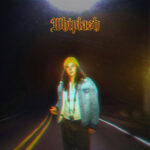
Getting played by the same person three times over deserves a song this cheeky. Sun-kissed and irresistibly groovy, Heather DeSanctis’ “Whiplash” is a bluesy, soul-infused pop confection with a wicked sense of humor. The Florida singer/songwriter has every reason to be bitter, yet her music is practically impossible to listen to without cracking a smile.
Released November 13 via Sample Road Records and distributed through AWAL, “Whiplash” showcases the playful personality of an artist who’s spent much of her life performing. Originally from Longwood, Florida, and now based in Daytona Beach, DeSanctis booked her first paid gig at 15, went on to hold residencies in Costa Rica, and has since performed across more than 20 countries as a solo guitar vocalist aboard Disney Cruise Line ships. With more than 15 original songs to her name, she brings a seasoned performer’s ease and a songwriter’s candid wit to her latest single.
“‘Whiplash’ is my lyrical coming to terms with the fact that the person sitting in front of me is not, in fact, who I made them out to be in my head,” DeSanctis tells Atwood Magazine. “Three times over and my neck hurts.”
The song’s deliciously dismissive chorus – “It’s giving whiplash / No need to get back at the fact that you’re trash” – is a far cry from the more complicated emotions DeSanctis navigates in her verses. She still cares for this person, even going so far as to protect their name, but affection and forgiveness can only go so far when someone keeps disappointing you. “I’m here for you / But you still need to leave and lock the door,” she sings. Beneath the song’s sunny disposition lies a hard-won sense of self-respect, and every little “la da di da da” sounds like another ounce of resentment slipping away.
“Creating this song took 10 mins to write and over a year to fully flesh out,” DeSanctis shares. There’s a satisfying parallel between the patience it took to bring “Whiplash” into the world and the personal growth its lyrics celebrate. DeSanctis has come out the other side of a painful romantic pattern with a song worth dancing to, and the joy coursing through her music is infectious. Sometimes the sweetest revenge is getting back to enjoying your own life.
:: “shakedown” – Capital Soirée ::
Annaliese Baker, Chicago

There’s something addictive about a harmonized electric guitar and bass hook; Capital Soirée have mastered this in their latest single “shakedown,” returning with precision and perception. The band consists of four musical multi-hyphenates, including lead singer and guitarist James Kourafas, also a guitarist for Friday Pilots Club, and drummer Dean Sinclair, also the drummer for Worry Club.
The narrator relays an unhealthy cycle of receiving, responding, and engaging in late-night and early-morning conversations from a previous partner in “shakedown.” Kourafas’ raspy vocals create a sense of urgency, but their hushed, hurried tone makes it feel more like a confession than a tell-all. Backed by a consistent, quick, and gripping blend of guitar, bass, and drums, “shakedown” by Capital Soirée is a song you play on repeat for days on end, finding new ways to absorb upon each listen.
While the band tends to fall under the “pop” category amid the backdrop of Chicago’s music scene, “shakedown” surpasses genre by invoking elements of their hits mixed seamlessly with elements of rock and punk. Fans of Is This It by The Strokes and Whatever People Say I Am, That’s What I’m Not by Arctic Monkeys will find thrilling comfort in the instrumentals; the vocals are a masterclass in sharing a familiar narrative in an electrifying new way. In a never-ending sea of social media content, the opening guitar hook stops your doom-scrolling to listen to a song so novel yet so nostalgic. Capital Soirée’s “shakedown” marks an exciting point for the band; it’s impossible not to tune in.
:: “Lean On” – Dead II Society ::
Mitch Mosk, Beacon, New York

Asking for help can take every ounce of strength we have. Dead II Society’s “Lean On” is a rousing, big-hearted rock anthem that hits hardest when you imagine a room full of people singing it to one another. Armed with the punch of punk rock and the melodic might of an arena-sized singalong, the band channel life’s hardships into a rallying cry for companionship.
Released November 11, “Lean On” is the second single from the Northern Ontario outlaw punk rock band, whose vocalist and guitarist Buzz conceived the project while isolated at home in Chelmsford during the pandemic. Joined by bassist Torg, guitarist Yak, and drummer Chuck, the former Garden of Bedlam frontman introduced Dead II Society with the blistering “Dead and Buried.” Their follow-up embraces the wide-open sound of arena rock – a fitting musical evolution for a band born out of a period of profound isolation.
“The meaning behind ‘Lean On’ is that when life kicks you down, or even when you have a terrible day, you can always depend on your friends to ‘Lean On’ and pick you back up,” Buzz tells Atwood Magazine. “It’s inspired by a rough upbringing and lessons learned over time: when you have people in your life who care about and love you, you can always reach out to the people you can ‘Lean On’. It took me a long time to figure that out.”
The contrast between the song’s despondent verses and its spirited chorus is what gives “Lean On” its emotional weight. “Destined for pain and heartache / I’ll just keep walking on my own,” Buzz sings, resigned to a life of loneliness before the chorus bursts through that darkness with an emphatic declaration of solidarity: “Friends they never let you fall / They’ll pick you up when you need to crawl / And find you when you think you are lost / Cuz we all need love to lean on.” The shift from “I” to “we” is particularly moving; the song’s very structure pulls its narrator out of his solitude and into the company of others.
“Never hesitate to reach out and talk to someone if you are having a rough time in life,” Buzz continues. “That’s what your loved ones are for. And honestly, most good, kind folks would rather hear from you than not. So reach out, talk, hug and ‘Lean On’ your loved ones! We only get one go at this crazy life.”
The real challenge comes after the song ends, when the words we’ve been singing at full volume have to come out in conversation. Dead II Society give us the courage to be a little more forthcoming about our struggles and the encouragement to show up for those fighting battles of their own. Sing it loud, and remember those words the next time you’re wondering whether to pick up the phone – for yourself or for someone you love.
:: “Confident” – eleveneleven ::
Mitch Mosk, Beacon, New York

Imagine being so comfortable in your own skin that the rest of the world simply melts away. Dreamy, lush, and utterly intoxicating, eleveneleven’s “Confident” aches for that kind of freedom, enveloping us in a hypnotic haze of atmospheric alternative rock. The synths engulf the senses, but it’s the haunting warmth and unguarded intimacy of Clem Grimmett’s voice that pull me under.
Released November 11, “Confident” introduces eleveneleven’s forthcoming self-titled EP, eleveneleven, out January 11, 2027. Formed in Detroit in 2022, the trio of vocalist and lyricist Clem Grimmett, guitarist and synth player Madeline Smith, and multi-instrumentalist Marco Aziel now operate between Michigan and North Carolina, having reconvened in 2025 to write and record their five-track EP. The song’s ethereal sound belies its decidedly unglamorous origins.
“‘Confident’ was born on March 12th, 2022, in a mostly abandoned strip mall in Redford, MI, inside an old building filled with cheap rooms that bands could rent as studios that smelled like old carpet, mildew, and weed,” Grimmett tells Atwood Magazine. “Madeline Smith and I had been sending demos back and forth and periodically recording shoddy music together for a few months, but on that day we met Marco Aziel (of kissyourfriends) at the aforementioned studio and, after messing around for a while, stumbled into what we considered a good idea and what is now known as ‘Confident’. The demo was entitled ‘dance song’ and referred to as such for many years before being called ‘Just For a Minute’ and ultimately landing on ‘Confident’. It was the first song written with the three of us, and started off as a bass riff Marco ripped from Travis Anderson (of kissyourfriends), a drum machine, and a MicroKORG.”
For all its seductive textures, “Confident” is a painfully exposed portrait of self-consciousness. “I can only dance when nobody’s watching / you always dance like nobody’s watching / but we are,” Grimmett sings, establishing an intimate tension between admiration and envy that runs throughout the song. Images of phosphorescent light and neon signs illuminate the object of Grimmett’s fascination, whose uninhibited movements embody everything the narrator longs to experience firsthand. The simplest image is the most poignant: Someone dancing with their eyes closed, so immersed in their own pleasure that they’ve forgotten how they might look to anyone else.
“I don’t have any remembrance of writing the lyrics; they just showed up in my iPhone notes one day,” Grimmett shares. “The song speaks about the qualities I see portrayed in this archetypal person (based on Madeline Smith) and wishing I knew what it was like to navigate life with the ease that this perceived confidence provides, instead of the state of constant self-appraisal and self-consciousness that I have always carried with me.”
“I wish I could be you / just for a minute,” Grimmett sings, articulating a desire that cuts so much deeper than wanting what someone else has: Wanting to know what it’s like to exist outside the confines of your own mind. The sheer delicacy of Grimmett’s singing gives those words an almost devastating sincerity, even as the music beckons us further into its spell. And for four minutes and 39 seconds, eleveneleven give us a chance to experience precisely the freedom their song yearns for: To close our eyes, surrender to the music, and forget who’s watching.
— — — —

Connect to us on
Facebook, 𝕏, Instagram
Discover new music on Atwood Magazine
:: Weekly Roundup ::
follow WEEKLY ROUNDUP on Spotify
:: This Week’s Features ::