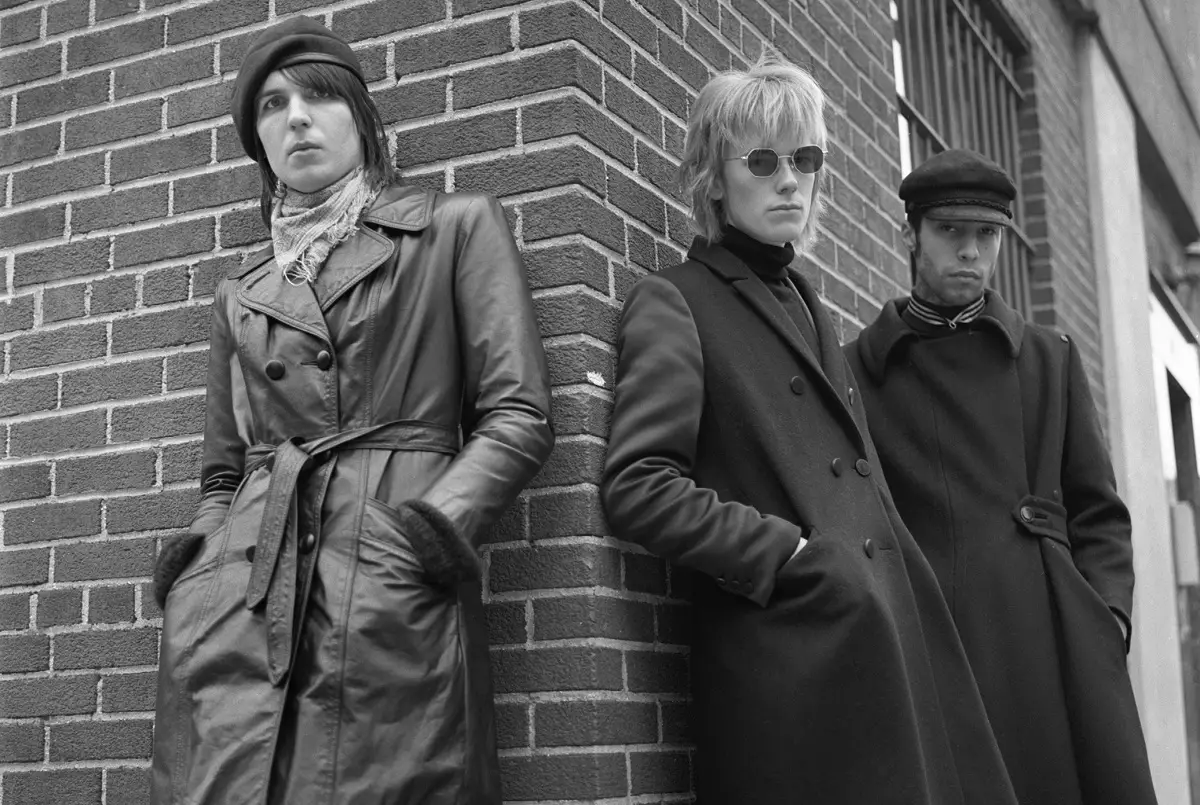
Singer/songwriter Carol Ades opens up about shame, self-perception, creative pressure, and the moments that shaped her cathartic, achingly human EP, ‘Worst Person in the World.’
by guest writer Esther Akinborewa
Stream: ‘Worst Person in the World’ – Carol Ades
I think I’ll die on the hill that I’ve never had an original thought ever, but I’m so obsessed with being perceived as wildly original… and at the same time, I want to experience what everyone else is experiencing.
* * *
There’s a certain dramatic essence that comes with being the “worst person in the world” –
shame holding you back as tears well up in your eyes, reliving the moment that contributed to your demise. Soothing vocals and gritty guitar accompany a dampening walk, “merry go round” replacing the self-deprecating spiral.
It’s easy to feel like the worst person when you expect perfection in your humanity. Releasing shame from normal feelings, Los Angeles-based singer/songwriter Carol Ades tells Atwood Magazine, “I think the creative process came from the feeling you’re describing… it can seem so grandiose, that you kind of want to treat it. You get to take a bit of power back, like, maybe I just need to say it plainly as it is, maybe I need to hear myself say I feel like the worst person in the world, to soften the harshness of it all.” By taking back her power, Ades found ease in the songwriting process, giving a home to those grandiose feelings.
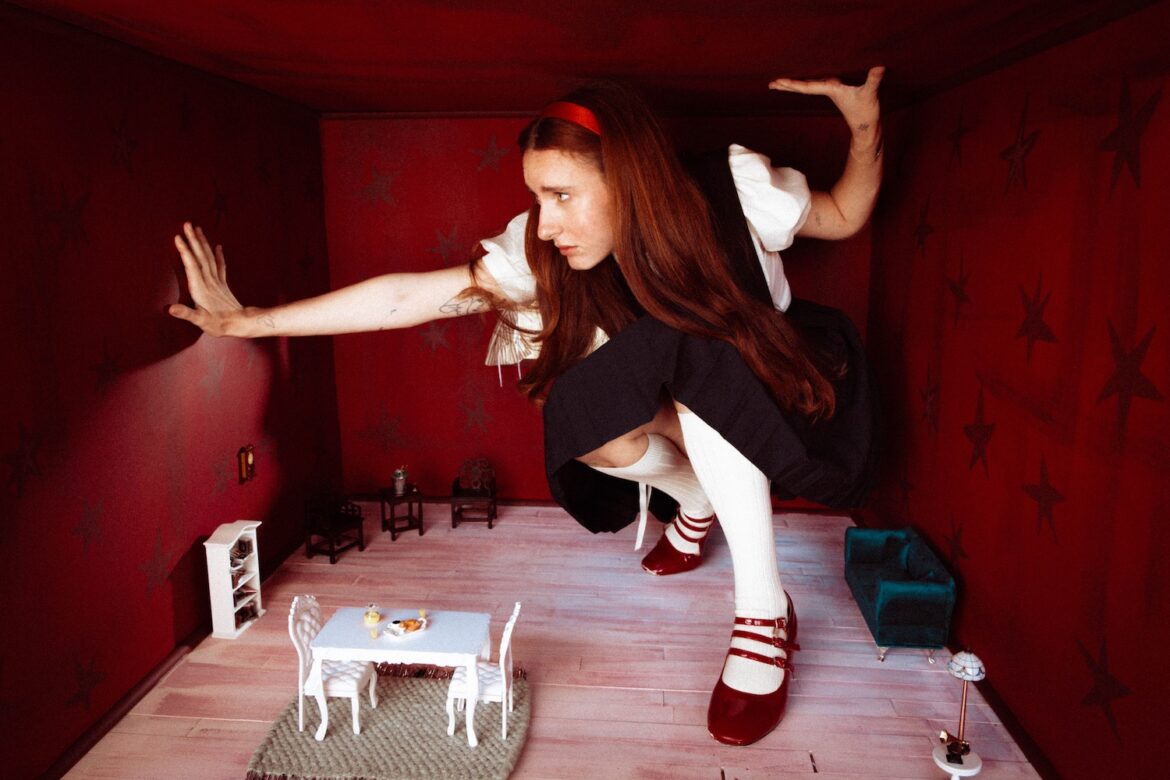
Released March 6 via Forge Records / broke, Worst Person in the World is Carol Ades’ six-song reckoning with shame and the stories we tell ourselves when self-perception starts to warp. Across songs like “Merry Go Round,” “Normal Feelings,” and “Turns Out I’m Amazing,” Ades pairs diaristic confession with theatrical, guitar-laced production, turning harsh inner thoughts into something more open and human.
Leaning into some of those “normal feelings,” the EP’s fifth song serves as a reminder that we’re not all that different; difficult moments are a reminder of the unified human experience. When reflecting on the lyricism of the song, Ades confesses, “Honestly, they just felt like lines from my journal entries; I think I’ll die on the hill that I’ve never had an original thought ever, but I’m so obsessed with being perceived as wildly original…and at the same time I want to experience what everyone else is experiencing.”
In reference to the line “having thoughts that no one else has had yet,” she continues, “like ‘worst person in the world,’ it’s just kind of making fun of itself, because that’s impossible.” Mirroring that revelation, worst person in the world displays a journey of acceptance as Ades weaves thoughtful lyricism into the theatrical, gritty production.
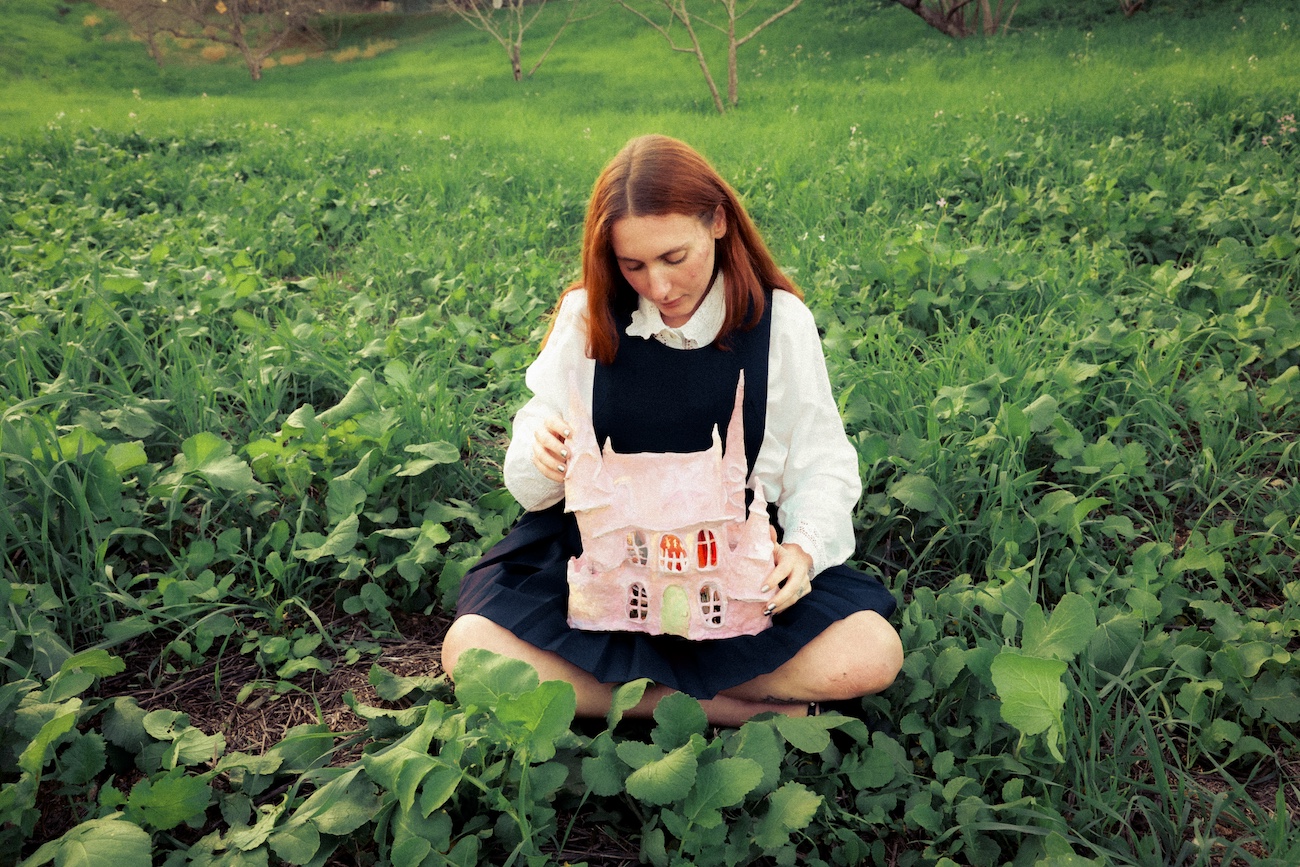
Autonomy is the greatest companion of freedom from the constraints of others, and the constraints of your mind.
For Ades, that freedom comes through letting go of the expectations that once made rebellion feel necessary. Looking back on her early twenties and prior, Ades admits, “I think being in that first phase of growing up, I definitely had a lot of rebellion inside of me, where I was like ‘I just want to do something different… I want to piss my parents off, and I wanna get hurt a little bit; like high risk high reward. Life is long… it makes it even more beautiful to land in a full circle moment that maybe everyone else can see coming…you just have to let go of these expectations for yourself.” The beautiful rebellion across the EP removes that pressure of perfection, as Ades shows that it is okay to own the good and the bad.
Oftentimes, expecting perfection from yourself can lead to more heartbreak and a lack of self-trust, fear of perception too difficult to bear, as the desire to be taken seriously becomes greater than the ability to exist. Pursuing a nonlinear career like music can come with insecurity and fear. With time, Ades has learned that the feeling she has about a song before anyone else hears it can be its own kind of evidence. When asked for advice to other artists, she reflects on her past experiences.
“Maybe it’s… amongst other things, just getting older and having done it for a long time, but I’ve just needed less and less outside approval to feel good about my work. I saw someone say; it was probably a TikTok or something; I saw someone say, ‘that song is as good as it was the day you felt best about it.’ If you have that feeling once, you can trust it, you have the evidence. I think we’re all just floating around, looking for proof that someone’s listening.” The hope is to have at least one person relate to what you create in those moments of self-sabotage, a reminder to musicians that their work means something to someone, anyone.
Overfamiliarity with oneself can often create a kind of amnesia around positive traits and achievements.
When self-trust flickers, Ades keeps reminders close enough to return to – a practice that currently helps her. “I have a folder of nice things people have said to me,” she says. “Like, I have a folder of comments that really spoke to me, a folder of messages that I’ve gotten, messages to myself, feelings after shows; all these really positive big and small moments where I’m like, this is important, what I’m doing matters, this is working and happening. I go to them all the time ‘cause I need… I need proof. I’m like a goldfish, I forget every five seconds ‘cause I’ve spent so much time being so hard on myself.” Those constant reminders became a motivator, comments from supporters and friends replacing the internal judge throughout the writing process.
Self-pressure can come from a lot of things in our personal lives, even the labels placed on things of importance to us. Ades opens up about her distaste for viewing her art as a career. “It always left such a bad taste in my mouth,” she shares. “There’s so much pressure attached to it, when really career is like a term of reflection. When I’m 80 I can look back on my career, but right now I’m building something. I don’t need to check where every brick is laid every second of the day, that’s like a total waste of time. I can do that later, in 80 years; I’ll be 110.”
By detaching from that label, Ades removed the pressure she had placed on herself while creating, as she learned to lean on songwriting to reflect on what was truly important.

Time is a reflection of the moments spent with the self, a reflection of the internal dialogue we subject our inner child to.
For Ades, that inner dialogue becomes easier to question once it is treated as something separate from the self. Discussing a recent book she finished, Ades talks about how she implemented it into her daily life. “I forget what the book is called, but it focuses on the concept of your inner roommate. If your roommate all day was like ‘get off the couch you lazy piece of shit’ or ‘I hate your outfit, you look really stupid and everyone can see how hard you’re trying.’ After a while I’m gonna be like, ‘hey, you’re kind of a bitch, I’m gonna move out.’ I started treating that inner voice like my roommate and stopped trusting that negative voice. I think ‘Turns Out I’m Amazing’ really embodies that, cause it’s kind of saying out loud ‘that’s not me. I’m not saying that, because it doesn’t matter to me.’” Through the bittersweet arrangement, “Turns Out I’m Amazing” embodies that coming-of-age, as Ades emphasizes the message of positive self-perception.
There’s a power in knowing you don’t have to be tied to a box. That power becomes clearest when Ades describes the pressure of believing there is only one way forward. The pressure can become overwhelming when your mind shifts from doing things for experience, to doing things to prove you’re worthy of something. Finally freeing herself from that invisible barrier, Ades goes deeper into the mental turmoil that shaped the process of her EP.
“It’s always important to remember you always have that option. I was just talking about this the other day; one direction is this big cinder block, and that’s the only thing standing between me and everything I want; my dream life, my dream career, and all I have to do is move this giant, unmovable, stone hedge, heavy ass rock by myself, and I can’t, I just can’t do it. I’ve spent so many years beating myself up, like, f***, I have to move this rock today. I forget; which I’m realising now; I can turn to the left, where there’s this beautiful path that also has everything I want. I don’t have to move the rock. I don’t have to prove to anyone that I can move this giant ass rock. Like, I don’t need to prove anything to my parents, or to the younger version of myself.” As she stepped into the creative headspace during the production phase, Ades was able to project those frustrations through the melodies and lyrics she was shaping, each one reflecting her internal state at the time.
Age doesn’t have to be a deterrent for joy, or an excuse to lose yourself. Giving her grandma the opportunity to be a girl again, Ades featured her as the lead actress in the vulnerable and playful music video for “Turns Out I’m Amazing.”
“It was so special, even just seeing her in that outfit,” Ades smiles. “She transformed into this little girl, and I saw so much of myself in her, and so much willingness from her to revisit these old parts of herself. It made me so excited to get older…. I think I’ve always been scared to lose parts of myself, lose my younger self, lose joy, for just shitty adult things. She really embodied in that moment that that doesn’t have to be true.”
Choosing to live in the moment, Ades expresses joy for her “worst person in the world” tour.
“Those songs kind of make this little world, and we’re just elevating it. I just want it to be really fun; there’s going to be some fan interaction moments that I feel really good about, and I’m playing bigger venues than I ever have. I got a lot of new fans since the last time I went on tour, so I’m really excited to give them, and fans who have been coming to my shows for years a new experience to a Carol show.” The tour served as a reminder that life could be lived and enjoyed regardless of age, a reminder that the inner child never left, but had only been hidden for survival. Countless souls with their own stories could immerse themselves in the heartfelt world of worst person in the world and let go of self-sabotage for the night.
The relatability of a heartfelt project often requires the artist to go through the rollercoaster of life. Power is taken away from the pain as it becomes an instrument in the creative process, a rhythmic beat backing the lyricism.
Ades remembers that emotional messiness not as separate from the production process, but as part of what eventually gave the songs their shape. “Since the subject matter was so negative in a way, the production process was such a bitch, because I was being such a bitch,” Ades reflects. “I was just in a bad place, I was in a bad mood, and feeling so negative. I couldn’t let go of this shit, and I really wanted to get through it. All my friends I worked on the project with were just like, ‘I don’t know how else to tell you you’re being a bitch all the time.’ Being around people who know you really well, and accept you as you are is so important.”
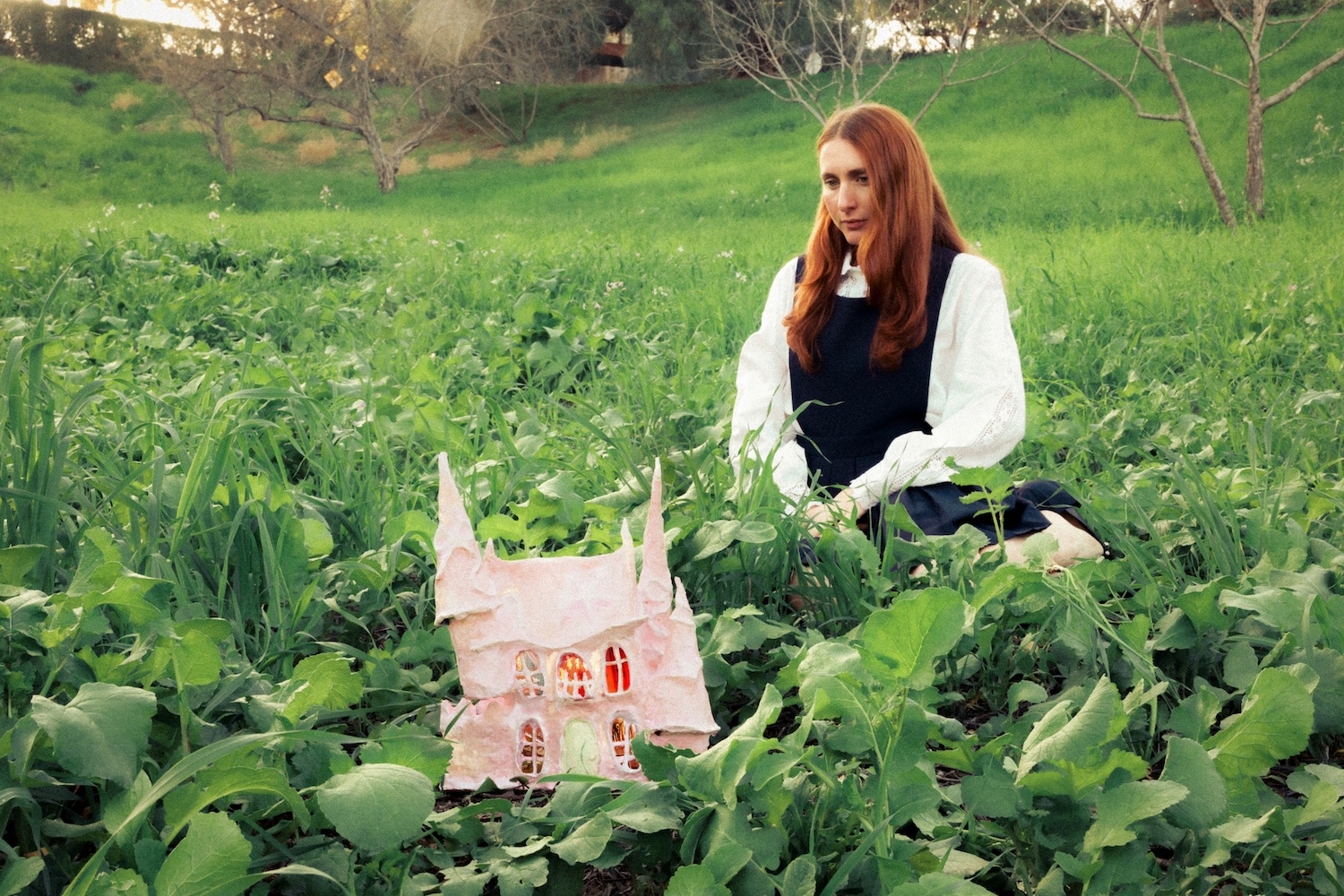
Going deeper on the production process, Ades offers a feel for how the upbeat sound came about.
“Once we finally found the vibe, we wanted to offset that with a more theatrical, playful production. I tried a different approach by writing parts of the song at a time, and then working on production a little bit at a time, and I learned that I… that’s not what I should do, so, yeah, it was a bit of a learning curve.” Despite the ups and downs of production, Ades, alongside her team, created something that resembled that uncertainty life offered, a project that brought meaning to the uncomfortable aspects of being human.
Looking back on her growth as an artist, Ades expresses how important songwriting is to her artistry and in her personal life. “I’m the type of person who asks other people a lot of questions,” she admits. “I think a lot of the time it’s really easy for me to forget to ask myself questions, and writing literally saved my life. It’s the one place where I get to really know myself, and there’s something about the pressure of putting it into a three- or four-minute medium that just really clicks for me. Even when I get frustrated with other parts of this… it’s a no brainer, I was born to be a writer, and I wouldn’t be here without it. I would be like a little speck of dust, it’s the only reason I know myself.” Turning those feelings into a collection of words offered ease, a safe space for vulnerability without judgment.
On letting the EP out into the world, Ades explains, “I think this is a project you can go back to whenever you get in this place. The point isn’t to never be there, or to finally let go and be free from it.”
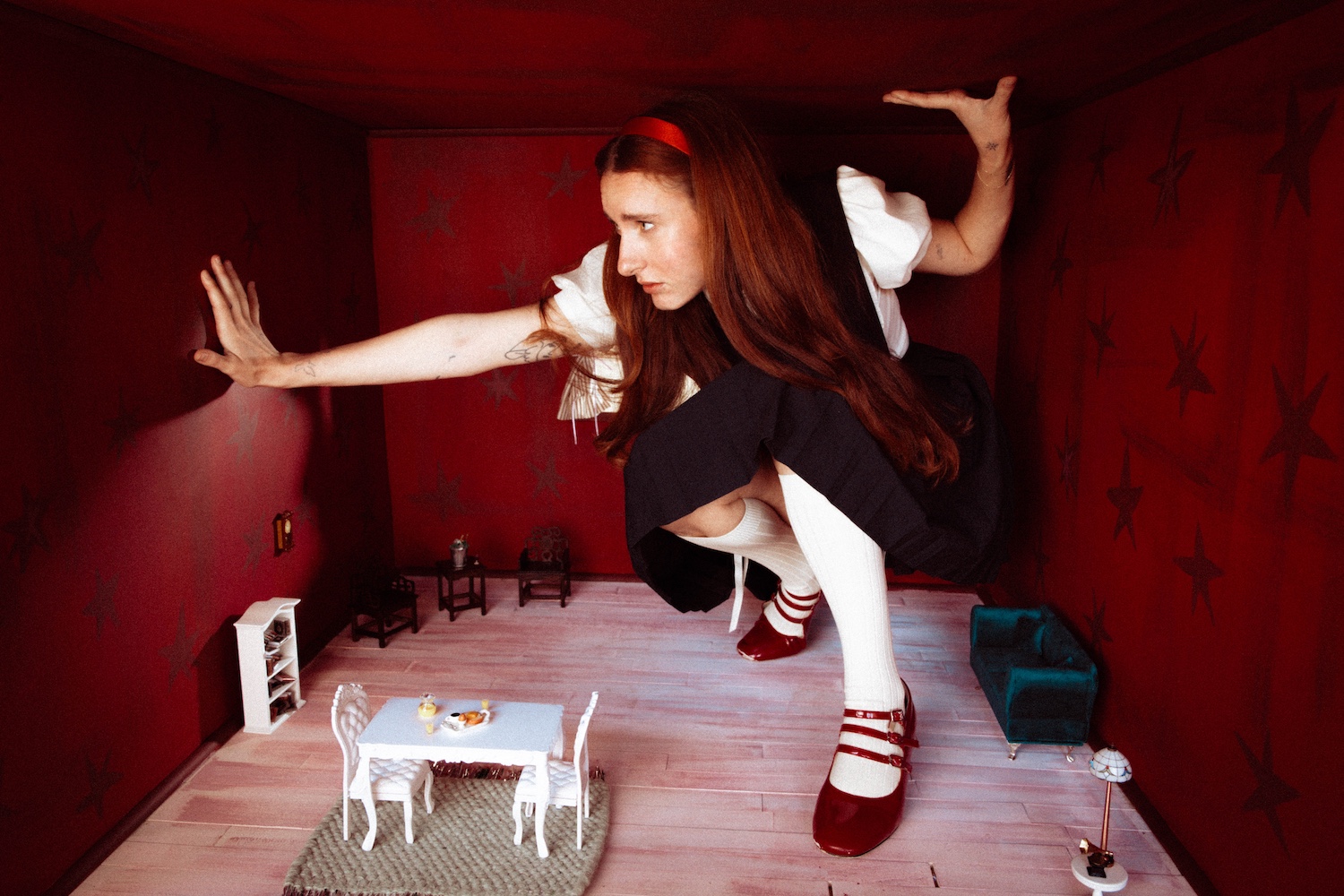
For Ades, accepting that hard times come and go feels more freeing than assuming it will all magically end.
“It’s meant to be listened to when you need it. I think all…most of my music is… it really has a purpose. It’s out there in the world for you, so if anyone hasn’t listened to it yet, there will be a time where it makes sense for them to.”
That sense of timing feels central to Worst Person in the World: It is not an EP about curing shame once and for all, but about meeting it with enough honesty that it starts to lose its power. In naming the ugliest thoughts plainly, Ades makes them feel less isolating, turning self-criticism into connection and giving listeners a place to return when they need to hear that being human was never the same thing as being the worst person in the world.
— —
Based in the Irish Midlands, Esther Akinborewa got into journalism craving for a space to share her enthusiasm for the people behind the art. Her goal has always been to create a place for passion without restraints. As a writer of fiction, her writing style is an ode to her love of literature and desire to understand the human experience through melodies and words. Reflecting her love for music playing instruments was inevitable starting out with piano, and later venturing into guitar and violin (whilst running away from music theory). On most days you’ll find her putting on a good CD (probably Nothing But Thieves – Broken Machine), and writing a Substack draft she’ll forget about and then post a couple months later.
— —
:: stream/purchase Worst Person in the World here ::
:: connect with Carol Ades here ::
— —
— — — —

Connect to Carol Ades on
Facebook, 𝕏, TikTok, Instagram
Discover new music on Atwood Magazine
© Lauren Kim
 © Lauren Kim
:: Stream Carol Ades ::