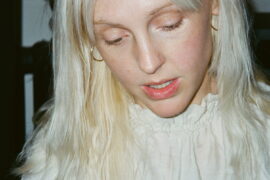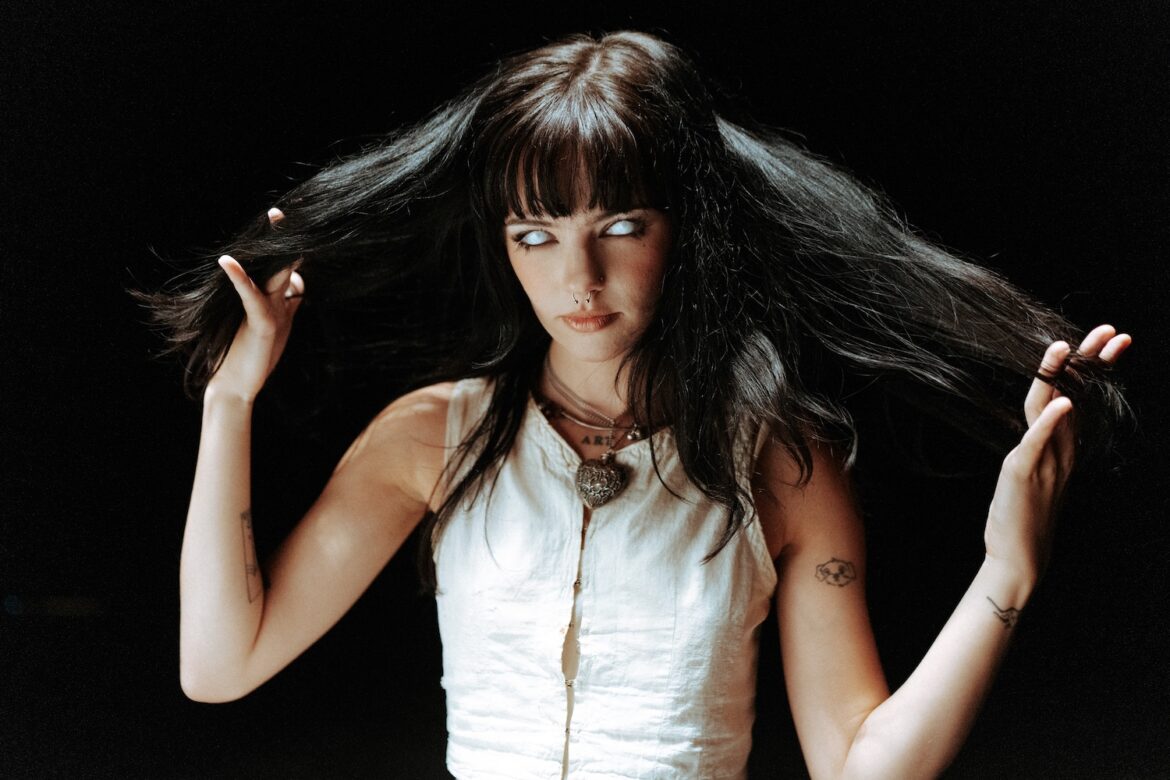
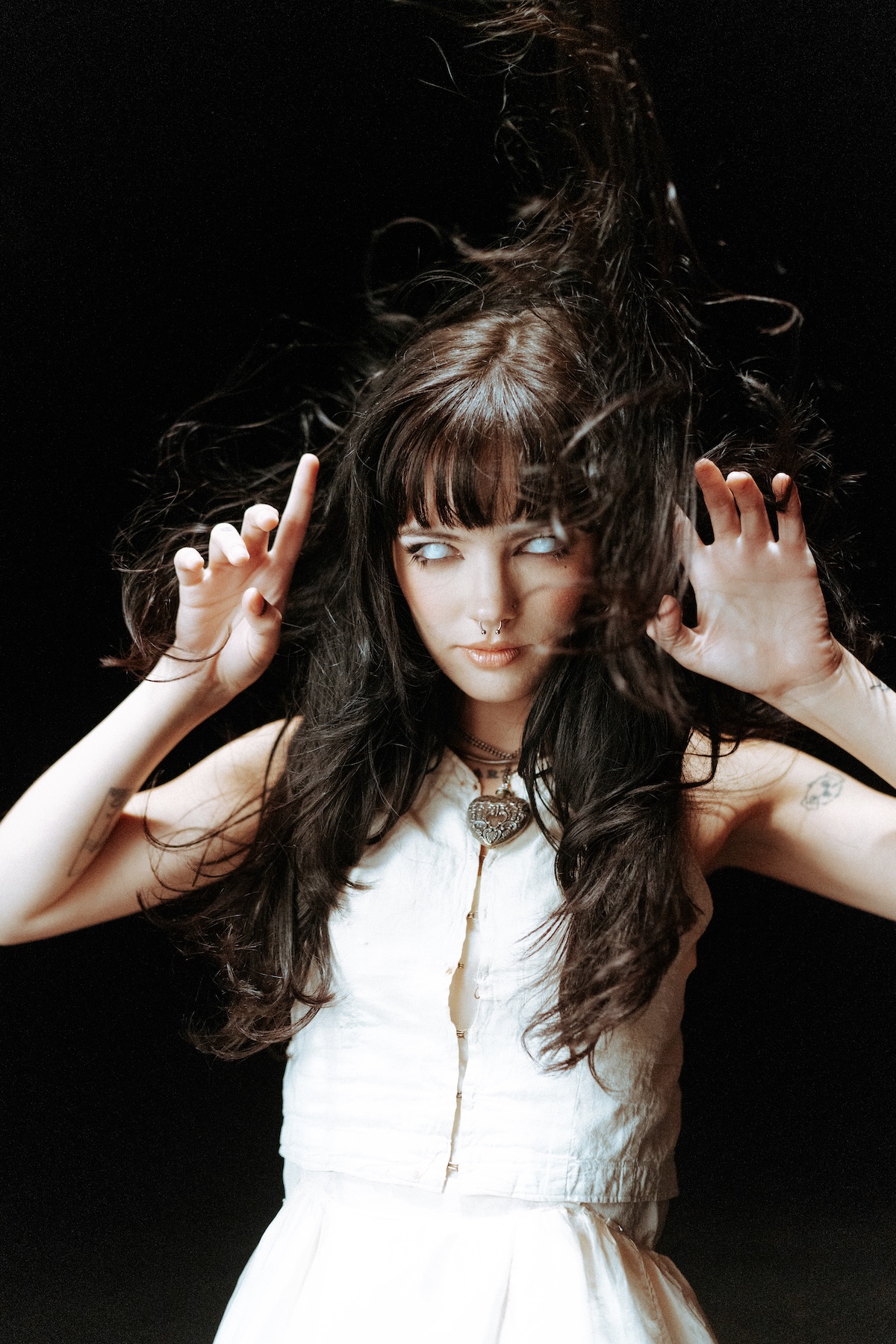
Singer/songwriter Delaney Bailey opens up about her spellbinding sophomore record ‘Concave,’ a sweeping and deeply personal meditation on growth, womanhood, artistry, and emotional honesty.
Stream: “Lion” – Delaney Bailey
As a writer, I’m constantly searching for new ways to grow; of expressing myself, and testing the boundaries of what I can tangibly manifest creatively.
Delaney Bailey is an artist who does anything but shy away from evolving. From the scintillating synths that cascade and envelop you straight from the outset, Bailey’s sophomore album Concave is a project that never stops asking “what more?”
These were questions Bailey asked herself during the writing process. Concave’s dreamscape sonics stretch into the beyond, letting Bailey’s voice rise above mellow guitars and grand synths, like a devastating whisper. Tender in its strength yet assured in its softness, Concave orbits around themes of growth. From gendered experiences and choice (or lack thereof) women have over their own bodies in “Lion,” the prospect of motherhood in “Baby Dream,” to the more intimate discoveries of sexuality and the self in tracks like “Wither.” Bailey revels in the things she does not know, and sits in the discomfort, allowing the music to take her on a journey of discovery–with no pressure on outcome.
Lyrically, Bailey has the distinct ability to build worlds around the seemingly mundane, as she does with “Retainer,” a larger meditation on change and time passing. Concave marks the start of a new era, as she continues to push the bounds of expansive production scapes, and lyricism that feels absolutely devastating and poignant all at once. Atwood Magazine sat down with Bailey to discuss the making of the artist’s sophomore album, the themes behind Concave, and creativity as her ever growing resource.
— —
:: stream/purchase Concave here ::
:: connect with Delaney Bailey here ::
— —
Stream: ‘Concave’ – Delaney Bailey
A CONVERSATION WITH DELANEY BAILEY
Atwood Magazine: I wanted to ask about your creative process. One thing I really like about your music is that it feels quite visual, there’s almost a cinematic quality to it. You seem to think visually around the project, which I find really interesting. How does that play out when you’re creating the music?
Delaney Bailey: I actually based the whole album around the Romantic movement in art history. That focus on nature, the idea of humans being very small within vast landscapes, and this general deviation from tradition. I wanted to move away from my usual sound a little bit, and I also wanted the production to feel more present than in my past work. That was partly inspired by the nature aspect of Romantic art. But interestingly, I don’t usually think about those ideas until the music already exists. I had already written “Lion” and “Wound,” and then I showed them to my manager. He said, “We should make an album.” So once that idea came up, I wanted to give the project a clear framework. I started looking for a movement in art history that matched the feeling of the music, something that would also translate well into a live performance context. That’s how I landed on the Romantic movement. But it always comes after the music. The music comes first, and then I build the conceptual world around it.
That’s really interesting. Does that happen with all your projects?
Delaney Bailey: It started with the Chiaroscuro EP before this album. Before that, it was much more like, “Here’s the music.” But with Chiaroscuro I began thinking more conceptually about the world around the songs, and I’ve really enjoyed doing that. It’s something I want to keep exploring. I studied art in college, so it’s also a way for me to integrate those interests into my music.
I loved the music video for “How To.” Visually it feels exactly like how the album sounds to me. Can you tell me a bit about the visual inspiration behind that?
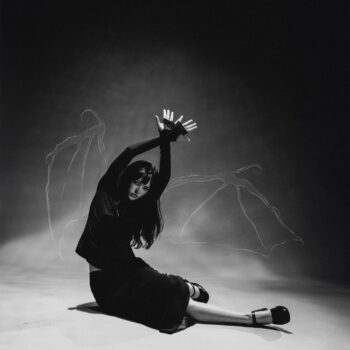
Delaney Bailey: Totally. Before we even conceptualised the video, I had already made some merch for the project. One of the items was a bat shadow puppet made with hands. So we started using the bat imagery throughout the album rollout. There are bat wings on the album cover, and we decided to incorporate that imagery into the story for the “How To” video.
The song itself is about my fear of developing memory loss in old age. A lot of the women in my family experience it, so I’ve watched people close to me go through that, and it’s something that has always scared me. The lyrics are basically the little things I tell myself every day, reminders like “use your hands,” “take your vitamins,” “eat well,” and small rituals that feel like they might ward off dementia. For the video, we chose three conceptual ideas to represent that feeling. The shadow puppet imagery came from the merch, and it ended up working really well visually. Another big element came from a conversation with Johnny (Chew), who worked on the video with me. He asked me what landscape the album lives in. There’s a park in Indiana called Turkey Run, and it has these canyon-like formations with forests on top of them. In my mind, the album lives there. That’s where the forest environment in the video came from. But a lot of the visual work really came from Johnny. He did an incredible job, so a lot of the credit goes to him.

I love that idea of placing a song within a specific landscape. It feels very personal, like a window into how you see the music. The subject matter of the song is also quite personal and heavy. Was it difficult to sit with those feelings while writing the album?
Delaney Bailey: I don’t think it’s particularly difficult for me to sit with uncomfortable feelings. In a strange way, I’m quite used to that space. Sometimes it even feels more comfortable for me to sit in sadness than to move out of it. What’s actually harder for me is getting out of that emotional state. But writing has always been therapeutic for me. It gives me somewhere to place those feelings so that I can step back from them. When I’m in the middle of the feeling, of course it’s not enjoyable. But once I’m able to put it into words and share it, it becomes something different.
When people tell me they relate to a song, or even just that they like it, it makes the experience feel less isolating. And the process itself helps with that distance too. When I take a song to a producer, I end up listening to it so many times that eventually it stops feeling like my song in the same way. I start hearing it from an outside perspective. At that point I can look at the emotions behind it much more objectively. The whole process becomes a kind of therapy. Writing it, producing it, releasing it. It’s something I’ve always done, and it’s always helped me process things. So it wasn’t uncomfortable in the sense of making the album. But of course, when you’re actually feeling those emotions, it can be.
Were there any songs that had a surprising reaction for you, either during the process of making them, or after release from listeners?
Delaney Bailey: I didn’t expect “Know” to be what it was. I kind of expected it to sound a lot more like “Wake Up.” But when I got into the studio, I realised I was a lot more attached to the demo than I thought. I just didn’t want to add too much to it. I still think there’s a good amount that you can sink your teeth into with that song production-wise, but it surprised me how bare bones it ended up being.
Reaction-wise, I didn’t expect people to like “Retainer” as much as they do. I had a hard time with “Retainer.” It’s just such an old song. I think it’s one of the demos that’s, like, four years old. I wrote it my junior year of college. I have a hard time loving old songs and finding the beauty in them. I’m glad people like it, but it’s interesting. And then the reaction to “Wither” was surprising too. I didn’t expect my audience to gravitate towards that one, but it seems like that’s the one everybody’s like, “I love this.” So that’s cool.
I love “Wither.” I think the strings on Wither are my favourite moment of the whole album. Why do you find it hard to like old songs?
Delaney Bailey: I’ve only been writing since my freshman year of college, so it’s been about six years. I think I’ve just changed so much. My writing style changes a lot over the years and I’m the most proud of what I create now, obviously. So when I look back on my old writing style it just doesn’t feel like me anymore. It’s still something people resonate with, and it was still me. But because I tend to write a lot and the way I write changes a lot, it’s hard for me to look back and be like, “wow, I love that.” But I love what I’m doing now.
I don’t think it’s particularly difficult for me to sit with uncomfortable feelings. In a strange way, I’m quite used to that space.
* * *
I love the thread between “Lion” and “Baby Dream.” That relationship you speak about, the one you have with the idea of motherhood, feels really poignant in light of the world women are living in now. I wonder if there’s been any kind of reaction to those songs, given the context?
Delaney Bailey: I think people tend to gravitate towards the songs that sound more like my music prior to this release, which is to be expected. “Baby Dream” does a good job of sounding like my old music while still growing in production, and I think that’s great. But there hasn’t been a huge amount of response specifically around the motherhood aspect. To be honest, I don’t read a lot of my comments or DMs, I mostly just see what people send directly to me. But the reaction’s been good. I haven’t really seen anything about people digesting it in terms of motherhood, so I’m glad you picked up on that.
It definitely is coming out at a really trying time, though, and I wrote it at a trying time too. I wrote it a couple of months after Roe v. Wade was overturned, probably. “Lion” specifically I remember writing around that time, and then “Baby Dream” a couple of months later. So yeah, it’s always poignant. It’s kind of horrifying, the world we’re living in. A lot of it came from expectations people have for women’s bodies, expecting them to change their minds if they don’t want kids. And people in my own life were saying those things too. It’s just an insane time.

It’s crazy to me how people think they can talk women out of that decision. Circling back to what you said about your older music, do you feel like that’s something you have to learn to detach from? Or is it something you kind of embrace? What’s that like for you?
Delaney Bailey: It definitely is something that I have to learn to grow away from. Mostly just because I know what kind of music I want to make now, but I also know what my audience loves. So it’s an interesting line to walk, trying to write music that I love while still knowing that this is my job. I have bills to pay, and I do have an audience that expects a certain thing from me. With this project I tried to include some of the little acoustic moments and chill, droney things that I’ve done in the past, like with “Wither,” “Baby Dream,” and “Know,” while still trying to integrate a newer sound.
I feel like I’m taking baby steps to get to where I want to be. But I think my North Star at the moment is, sonically, artists like The Marías and The Japanese House. I love what they do so much. I think that’s where I want to grow, that kind of electronic indie sound while still maintaining something acoustic within it. That’s where I want to go, but it’s definitely something I’ve had to mentally shift my perspective around. I love making acoustic music, that’s what all my demos are, but I do want to grow as an artist.
Was there a moment you decided that Concave was going to be an album and the start of your next record?
Delaney Bailey: I think it was after I wrote “Wound,” because that was kind of a continuation of “Lion.” I sent those two songs to my manager, and it just felt like the right time to write an album. I had a lot of demos, most didn’t make it onto the album, but I sent them all to my manager, and he said, “you could have an album here.” I was like, okay, if we’re doing that, I actually want to try writing for a specific project. That was after I wrote “Wound,” which was about a year and a half ago, maybe two. It’s been a while, but it was really fun making the album.
Another song I really liked is “Far Away.” I love that it addresses getting older, and realising you don’t actually know a lot. Is there anything you’re currently unlearning?
Delaney Bailey: Yeah, I think I’m unlearning my relationship with food. Growing up, I was a really picky eater, and a lot of the associations I had with food were shame and embarrassment because people in my life could be judgmental about it. As I’ve grown older, I try more foods and I’m fine now, but it’s been a tumultuous relationship. That’s what “Nightshade” is about, it’s like, you gotta buck up, dude. Just eat. You’ve got to survive. I’ve been working on that in therapy lately.
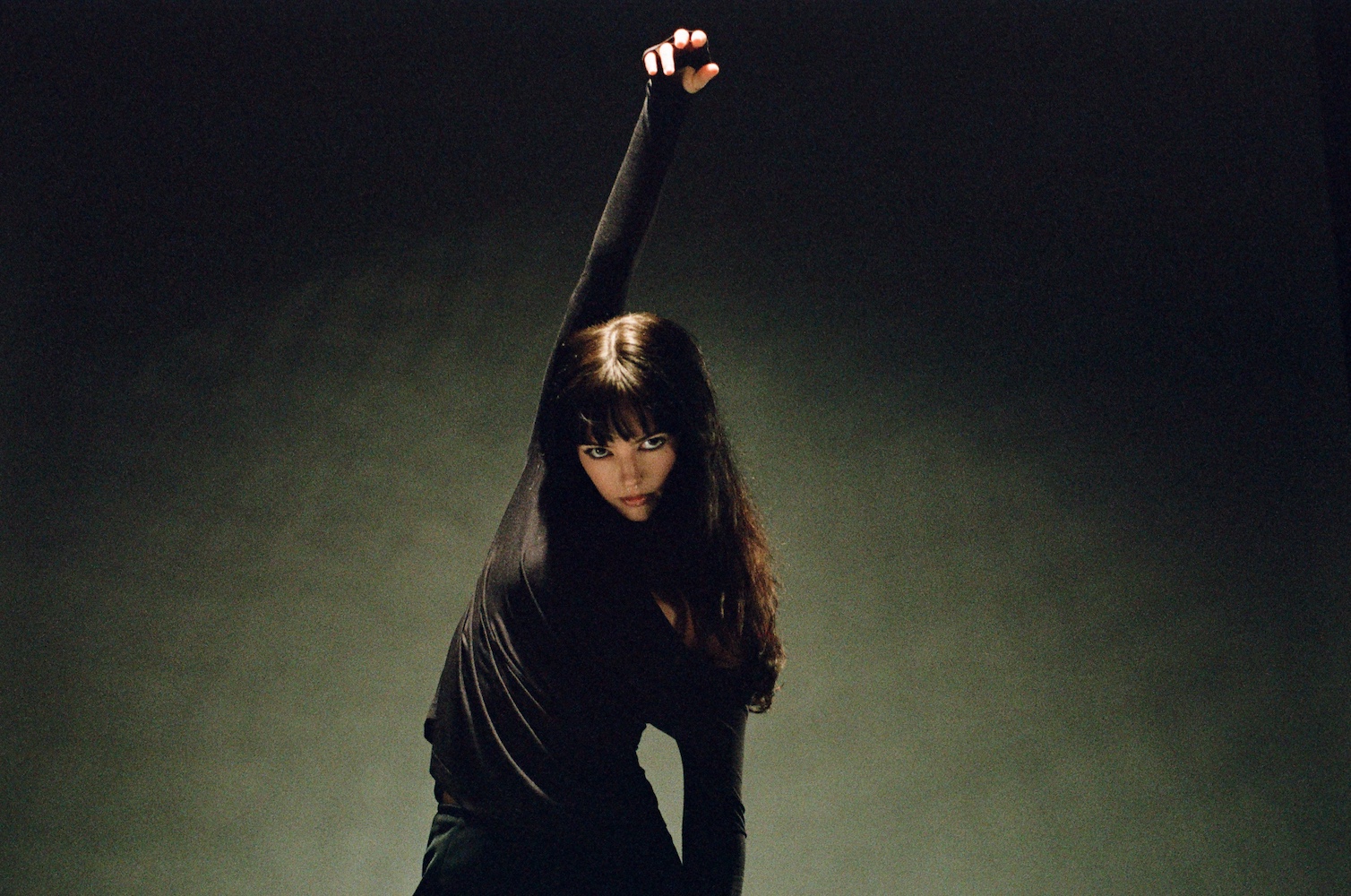
I also love this idea of how songs and art change meaning as you grow, some evolve, and some stay frozen in time. Do you think there’s a song that has changed meaning for you, or one that has stayed the same?
Delaney Bailey: “j’s lullaby” has definitely changed for me. I wrote it about a one-month thing in college, I don’t even speak to him anymore. Now it’s more about my relationship with fans and performing live. It’s funny that it started as such a small, personal thing and became my biggest song. A song that’s stayed the same… “Dance Again.” That one’s about being overwhelmed by nostalgia and not knowing how to move forward in life. I love to feel nostalgic, so it’s a feeling I’ll always come back to. Also, the song “Wella” about my grandma who passed from dementia, is probably frozen in time for me. It’s a beautiful capsule of memories, and I think it will always stay that way.
How does Concave feel different for you as an artist compared to your past work?
Delaney Bailey: It’s different in a few ways. Production-wise, I went into the studio thinking more about production than just my vocals. I allowed myself to have imperfect moments in my voice, I love hearing humanness in recordings, especially nowadays with AI and everything.
This album is all about me, about my interactions with the world, how I feel about myself, and what I can do to move on from or accept the things that have happened. Concave is about learning to love yourself, seeing the bad parts, and still finding light in them. Writing this album was much more of a journey than my last projects. Before, my projects felt like a conglomeration of songs, I had a bunch and just released them. Concave felt like I had gone through something and had a story to tell. It’s important to listen to it top to bottom. You start in a hole, unsure of where to go, but it ends with light at the end of the tunnel. The journey of the album really flows like that.
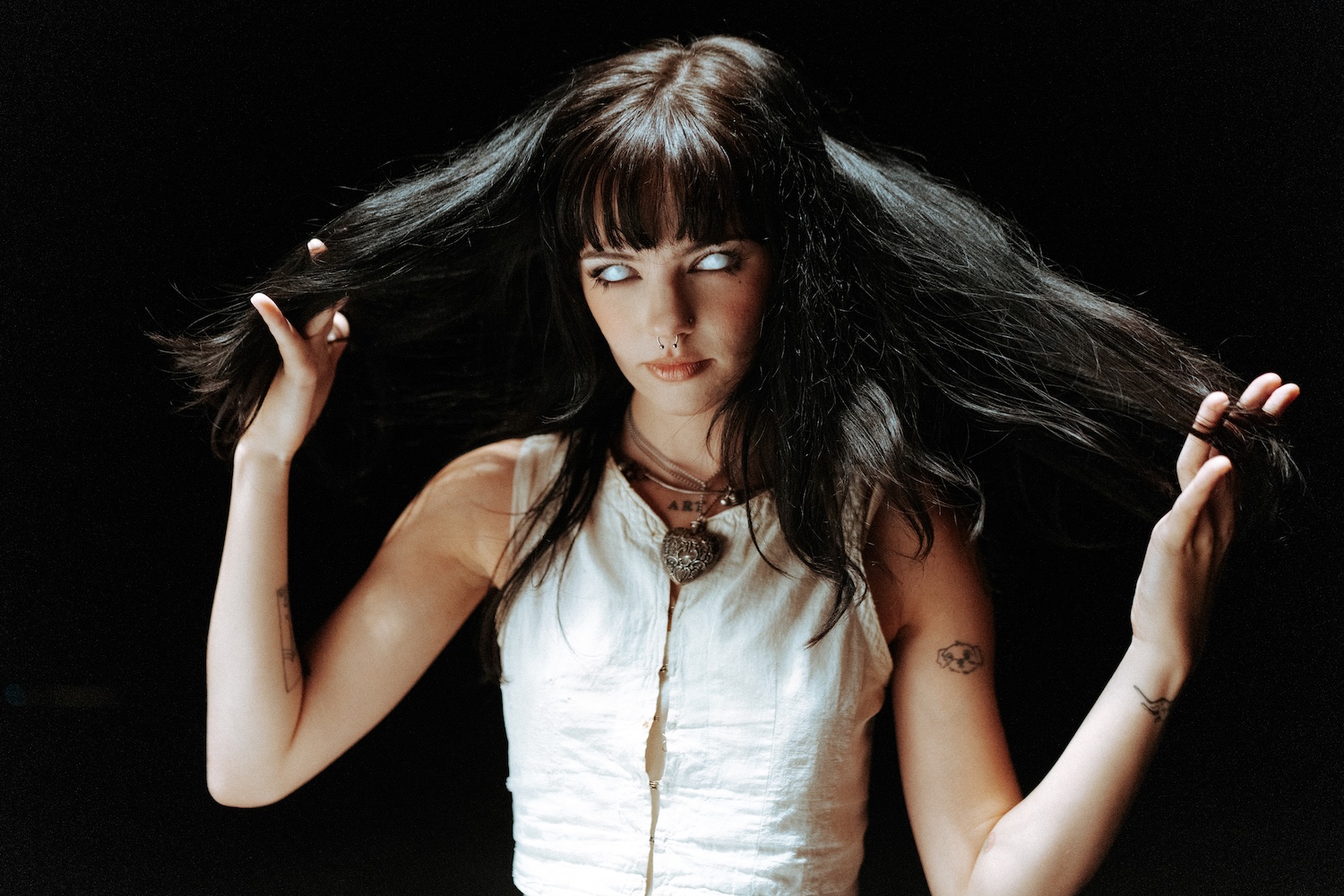
‘Concave’ is about learning to love yourself, seeing the bad parts, and still finding light in them.
* * *
What does this album symbolize for you in the trajectory of your artistry, and as a creative?
Delaney Bailey: I think it’s a really big step in the direction I want to go. “How To” was one of the first songs where I thought, yes, this. I can see my future in this sound. It was important for me to release music that helps fans who are used to my old sound ease into this newer direction. It’s a signal that I’m ready to grow, both as an artist and as a human being. Conceptually, my music has always said something about me, ever since I started writing. This album is just a big brace forward into the next phase of my artistry.
And finally, what’s keeping you curious about music right now?
Delaney Bailey: That’s a great question. I’ve been listening to a lot of This House is Creaking from Chicago. They opened for me on my last headline tour, and they’re incredible. Their production is what keeps me curious. It’s maximalist, almost overwhelming in the best way. There’s so much happening that you can listen over and over again and keep finding new details. So yeah, maximalist production is really what’s keeping me curious in music right now.
— —
:: stream/purchase Concave here ::
:: connect with Delaney Bailey here ::
— —
— — — —
Connect to Delaney Bailey on
Facebook, TikTok, Instagram
Discover new music on Atwood Magazine
© Alexa Viscius
 © Alexa Viscius
Concave
an album by Delaney Bailey