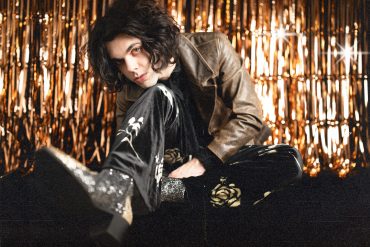
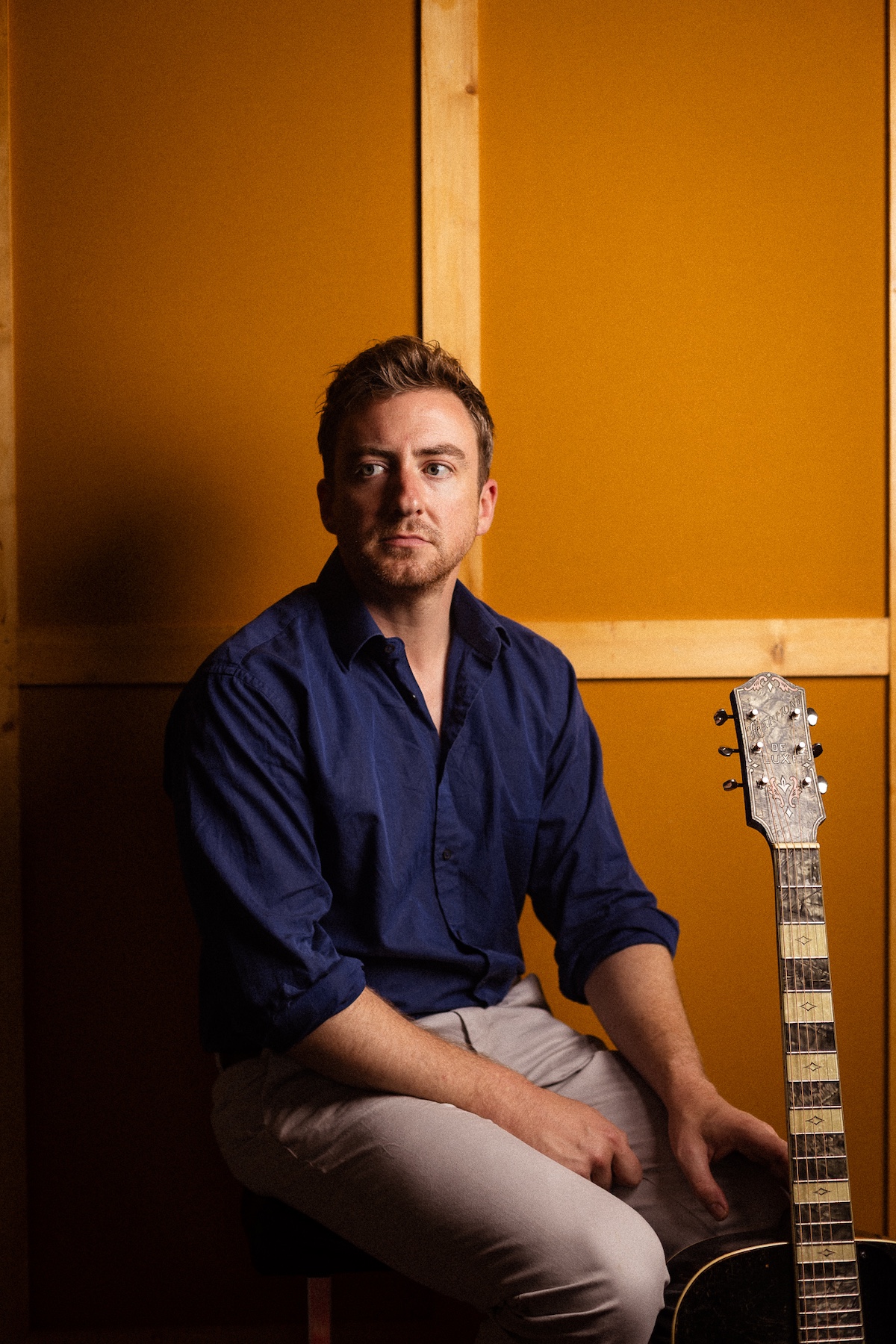
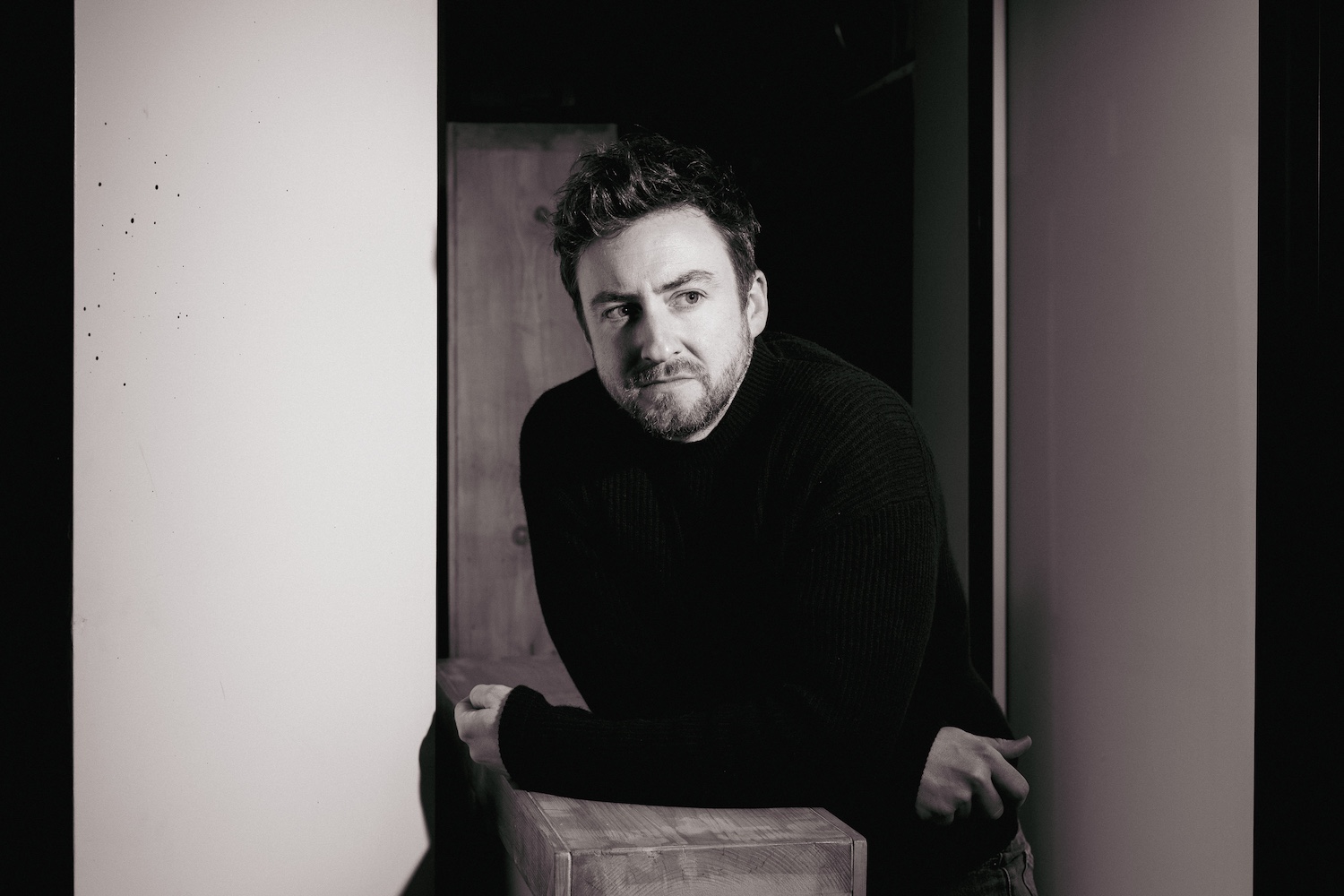
English singer/songwriter Eugene McGuinness takes us track-by-track through his resplendent new album ‘Eugene McGuinness Versus the Universe’ – a richly melodic, harmony-laced return that captures rediscovery, reflection, and the enduring pull of creativity through vivid, image-driven songwriting.
Stream: ‘Eugene McGuinness Versus the Universe’ – Eugene McGuinness
A life can slip into routine so gradually you don’t notice what’s missing until you hear it again –
– that flicker of instinct, that pull toward creation, that voice you thought had gone quiet suddenly ringing out with clarity. Songs become a way back in, a reconnection to the parts of yourself that never fully left, only waited. On Eugene McGuinness Versus the Universe, singer/songwriter Eugene McGuinness steps back into that space with a collection of songs that feel rediscovered rather than written – fragments of memory, imagination, and lived experience stitched into something alive, expansive, and deeply human.
Across luminous portraits of city life, fatherhood, memory, and myth, he threads richly melodic folk-pop and orchestral textures through vivid, image-driven storytelling, turning fleeting moments and interior reflections into a cohesive, ever-evolving sonic world. It’s a record about returning to yourself through creation – where intuition leads, meaning follows, and the smallest moments reveal their lasting weight.
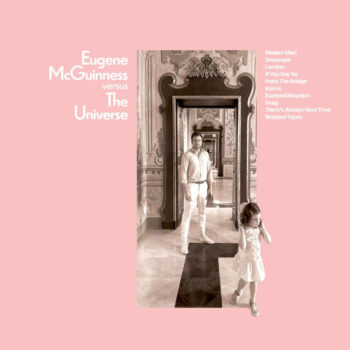
Atwood Magazine is proud to be premiering Eugene McGuinness Versus the Universe, a radiant and richly textured return from a songwriter who once believed his chapter in music had closed. A London-born songwriter of Irish heritage, McGuinness first emerged in the late 2000s with his Domino Records debut The Early Learnings of Eugene McGuinness, quickly earning a reputation as a sharp, melodically gifted storyteller with a flair for the off-kilter. Across releases like Glue, The Invitation to the Voyage, and Chroma, he carved out a distinct space rooted in literary lyricism, theatricality, and a deep love of classic songwriting forms – before stepping away from the spotlight following 2018’s independently-released Suburban Gothic.
Now nearly a decade removed from his last release, and following years shaped by fatherhood, work, and distance from the industry, McGuinness reemerges with an album that leans fully into instinct, spontaneity, and emotional truth. The result is a warm, harmony-laden blend of folk, pop, and rock – lush yet unforced, playful yet reflective – that captures the beauty of rediscovery in real time.
What makes this album resonate so immediately is the way it carries both lightness and weight without ever forcing a resolution.
These songs drift between dream and reality, grounded in everyday life but illuminated by flashes of the surreal – celestial imagery, city streets, childhood wonder, and late-night introspection all coexisting in the same breath. McGuinness describes the process as one of pure exploration: “There is a fragility and intimacy to my voice that I was mindful of protecting, but I don’t really go into the studio with a plan,” he tells Atwood Magazine. “It’s a process of exploration, I try to capture something special and exciting whilst being mindful of being true to myself.”
That openness defines the record’s spirit. The music arrived steadily, through accumulation – voice notes, ideas, moments that quietly gathered until they demanded attention. “The songs really snuck up on me,” McGuinness reflects. “I’ve been very busy in recent years with other things – songwriting hasn’t been on the agenda –and yet, one day I found myself scrolling through all these untitled voice notes on my phone and… there they were!” What followed was a burst of creation in Liverpool, where, alongside old friends, he transformed those fragments into a fully realized body of work in just a matter of days.
“[We did it] just to see if these weird little voice notes had any potential,” McGuinness adds. “And they did!”
If only I had a clue now
Of what I knew back then…
A ghost of an echo of a notion from when
All the world was new how
Greeny blue eyes would glisten
And pylon after pylon-
Now the silence is deafening
Call me on your way
it won’t be long
Your chariot awaits tonight
I see the avenue invaded
by another evening of siren light
Same again…
There’s a sense of wonder embedded in that origin story, and it carries through every note of Eugene McGuinness Versus the Universe.
The album moves with a natural, almost subconscious flow – what McGuinness calls “one giant animal,” where concepts bleed into one another and songs feel interconnected rather than isolated. “Ideas are shared and exchanged between the tracks,” he smiles. “There’s an osmosis to it all.” It’s a record that values feeling over definition, atmosphere over explanation, and in doing so, it invites listeners to find their own meaning within its shifting landscapes.
Even the album title reflects that balance between sincerity and playfulness. “It’s done with tongue firmly in cheek… I like the melodrama of it, it makes me laugh,” he says, noting the way celestial imagery threads throughout the album’s world. That sense of scale – the individual set against something vast and unknowable – becomes a quiet undercurrent, shaping songs that feel both intimate and expansive at once.
Highlights abound on the journey from “Meteor Man” to “Warped Tapes” as McGuinness maps out a world where memory, imagination, and lived experience blur into one continuous sonic stream of consciousness. Opener “Meteor Man” sets the tone with a sense of cosmic wonder and self-definition – “I’m your meteor man / I am what I am and that’s all I am” – grounding its galactic imagery in a quietly human expression. That same balance carries into “Seascape,” a song born from a summer morning with his daughter, where the natural world feels almost surreal in its intensity: “The sky is in the ocean / And I can see the ocean crashing in your eyes / And all the stars exploding.” It’s no surprise McGuinness points to it as a favorite; there’s a lived-in immediacy to its joy, a fleeting moment preserved in full color and motion.
I ride my luck
I drive it up the mountainside
A rainbow floating
in the vapour of a fountain
I can’t be touched
And the sun is up
Maya is dancing and singing
in the honey light
I had a dream that it was
all just a dream last night
Still can’t wake up
The sky is in the ocean
And I can see the ocean
crashing in your eyes
And all the stars exploding.
All nights are days and days are nights
– “Seascape,” Eugene McGuinness

That interplay between place and emotion sharpens on “London,” a love letter and reckoning wrapped into one. “London I love you / But you’ve stung me,” he sings, capturing the push and pull of a city that gives as much as it takes. The relationship feels personal, volatile, and ongoing – “we’re falling in and out of love so fast” – a sentiment that echoes throughout the record’s broader exploration of attachment, identity, and return. Elsewhere, “If You Say So” leans into collage and contradiction, its quick turns of phrase and dark humor reflecting a songwriter comfortable letting ideas exist without over-explanation, while “From The Bridge” embraces mystery outright, its shifting imagery and doubled perspective offering more questions than answers.
At the center of it all sits “Icarus,” the album’s gravitational core. The song drifts in with a cosmic ease, suspended between dream and memory, its hazy guitars and soft strings framing a self-aware reckoning with ambition and excess. Lines like “You say I’m all chorus / Well here is the verse” land with both wit and weight, while the refrain “Oh look what you do to me” feels less like accusation than surrender – a recognition of forces, internal and external, that shape who we become. It’s a song that doesn’t resolve its tension so much as live inside it, circling the flame rather than crashing into it.
I want to tell you but I don’t have the words
I tried to bell you but you never answer
You say I’m all chorus
Well here is the verse
I know it ain’t the best but trust me
Could be worse!
Just like Icarus who flew
too close to the sun
That’s me when I’m out
in your end of London
The gamblers of this circus city
climb up the walls
As the cockfights in the warehouse
descend into bloody brawls

That instinct to leave space – to let songs breathe without pinning them down – defines much of the album’s back half.
“Drag” thrives in its minimalism, built around fragments and feeling, while “Eastend Requiem” transforms fleeting inspiration into something richly cinematic, its siren-lit streets and late-night reflections folding personal history into the fabric of the city itself. Then there’s “There’s Always Next Time,” where McGuinness delivers one of the record’s most striking passages: “I heard the lampposts fold down along Kensington Gore / So, in the event of some chemical or nuclear war / A royal wave from aeroplane window will be / The last thing that the peasants of Chelsea will see.” It’s biting, surreal, and darkly funny all at once – a reminder of his lyrical prowess and his ability to hold humor and unease in the same frame.
By the time “Warped Tapes” closes the album, there’s a sense of everything folding back in on itself – ideas looping, refracting, and reshaping. The song’s fixation on memory and rewind feels like a quiet thesis statement: “What you say we rewind these warped tapes?” It’s not about correcting the past, but revisiting it, understanding how each moment – however fleeting, however fragmented – contributes to the larger picture. Across Eugene McGuinness Versus the Universe, that picture never settles into one fixed form. Instead, it remains fluid, expansive, and alive, just like the world he’s built within it.
What lingers most about Eugene McGuinness Versus the Universe is the clarity of its perspective – the way it captures a songwriter reengaging with his craft not out of obligation, but out of genuine curiosity and renewed purpose. There’s a looseness to these songs that never slips into aimlessness; instead, each moment feels considered yet unforced, guided by a seasoned voice that trusts its own instincts without overreaching. McGuinness writes and sings with a rare attentiveness, turning inward without losing sight of the world around him, and shaping scenes that feel both intimately observed and quietly expansive. The result is a record that rewards close listening – not through grand gestures, but through detail, texture, and emotional precision – offering a deeply enriching listening experience that unfolds gradually, revealing new shades of meaning with each return.
I wasn’t the first
And I won’t be the last
To wince when I think of things
I’ve done in my past
This mind of mine
It’s a dangerous street
That I walk down,
while rocking my baby to sleep
Her tired eyes close
As all these ghouls awake
A whole gallery of rogues have
now come out to play
I try crowbar a car
Hotwire the thing
But in reach their arms now,
they’re all climbing in
– “There’s Always Next Time,” Eugene McGuinness

Ultimately, Eugene McGuinness Versus the Universe plays like a document of rare, fleeting moments of connection – the kind McGuinness describes as almost otherworldly.
“Making a record, similar to writing, is like being possessed by some entity… which never happens immediately – it takes a lot of work to get to that state,” he shares. “And once you’ve experienced it, there is an understanding and respect for how rare and special those moments are. I think that this record is a collection of those moments, and I hope that some people can hear that in this thing.” This album captures those moments as they happen, preserving their immediacy, their warmth, and their sense of discovery.
You ain’t been nothing like your former self
That shadow can go fall right over someone else
And the night just drags on
And there’s a train to catch
And the heart beats like a tom
For you
– “Drag,” Eugene McGuinness
And that’s what makes it feel so vital: Not just a return, but a reawakening – a body of work that doesn’t chase the past or try to define the future, but exists fully in the present, alive with possibility.
It’s the sound of an artist fully present again – and all the richer for the time it took to get there. In stepping back into the light, McGuinness hasn’t just found his voice again; he’s reminded us why it mattered in the first place.
Stream the full record exclusively via our below stream, and peek inside Eugene McGuinness Versus the Universe with Atwood Magazine as the singer/songwriter takes us track-by-track through the music and lyrics of his new album!
Eugene McGuinness Versus the Universe releases April 24, 2026 via Docklands Speed Shop / Mellowtone Records.
— —
:: stream/purchase Eugene McGuinness Versus the Universe here ::
:: connect with Eugene McGuinness here ::
— —
Stream: ‘Eugene McGuinness Versus the Universe’ – Eugene McGuinness
:: Inside Eugene McGuinness Versus the Universe ::
— —
Meteor Man
It’s the newest song, it was written very quickly… I think I nicked some imagery from a book called ‘The Great God Pan,’ a horror by Arthur Machen. I don’t really know what it’s about. It’s about a feeling, more than anything.
Seascape
Seascape started in Portstewart in Northern Ireland, it’s summertime, and with my daughter… a beautiful summer morning, it was her first trip to Portstewerat, which is a big part of my life… that morning energy, amplified by watching your child be just happy… and the ocean, living in London I miss it all the time, and it also quotes my father – he has paintings, oil painting he does over there… where he talks about light and colour. The skies and ocean are very much from his paintings.
London
That was written on the first day of a break from a job I used to have. The first morning I’d been set free. I do love that song, because it really energised me to write more.
If You Say So
That is a kind of a red herring in a way… just a collage of images I had in my head. A collage of ideas. It just had its own identity, and kind of wrote itself. i enjoy it. It’s dark, but it’s funny.
From The Bridge
That was an early one… I hadn’t written in a long time. Me very much wearing my Neil Young influence out in the open, which I’ve tried to suppress in the past! It’s got an energy, but it’s kind of mysterious to me. I’ve grown to love it because I don’t know what it’s about.
Icarus
That was something I wrote on a piano. It does encapsulate where all the other songs on the LP go. Without the pun, I see it as the sun all the other songs orbit around.
Eastend Requiem
That is the most spontaneous song on the record… I’d kind of assembled it in my head on the way to the studio, there was something about it that was exciting to me. I kind of wrote it with my daughter in mind – something that she would enjoy if it came on in the car. I’m fond of it.
Drag
I was thinking of small songs, tiny things, short… but they really go somewhere. Sometimes it’s more interesting to have a question mark with a song, than to fill in the gaps myself.
There’s Always Next Time
That song is melodically something I’m very fond of … it’s a comment on ‘every second counts,’ there isn’t always next time. Take nothing for granted.
Warped Tapes
I always thought it was gonna close the album … “Warped Tapes” could have been anything really, I just went with how it was originally done. I was referencing the very first voice note I did. That was the point of the record… the spawn of an idea.
— —
:: stream/purchase Eugene McGuinness Versus the Universe here ::
:: connect with Eugene McGuinness here ::
— —
Stream: ‘Eugene McGuinness Versus the Universe’ – Eugene McGuinness
— — — —
Connect to Eugene McGuinness on
Facebook, 𝕏, TikTok, Instagram
Discover new music on Atwood Magazine
© Robin Clewley
 © Robin Clewley
:: Stream Eugene McGuinness ::