
Atwood Magazine is excited to share our Editor’s Picks column, written and curated by Editor-in-Chief Mitch Mosk. Every week, Mitch will share a collection of songs, albums, and artists who have caught his ears, eyes, and heart. There is so much incredible music out there just waiting to be heard, and all it takes from us is an open mind and a willingness to listen. Through our Editor’s Picks, we hope to shine a light on our own music discoveries and showcase a diverse array of new and recent releases.
This week’s Editor’s Picks features Holly Humberstone, Konradsen & Beharie, Blessing Jolie, MX LONELY, Lia Pappas-Kemps, and Louis Oliver!

 follow EDITOR’S PICKS on Spotify

“To Love Somebody”
by Holly HumberstoneI cried happy tears the first time I listened to “To Love Somebody” – not because it’s so devastating, but because it feels true. The song reached straight into my own love story, into that overwhelming, grounding joy of being in love and choosing it fully. My partner, my wife, is my best friend – and for me, I’ve always believed it’s better to love and lose than never love at all (though I hope it never comes to that). Holly Humberstone captures that feeling with rare clarity here – the decision to cherish every second you’re given, knowing love may not last forever, and choosing it anyway.
Humberstone has long had a gift for translating interior life into something shared, and “To Love Somebody” feels like a natural evolution of that instinct. Released January 23rd as the lead single from her forthcoming sophomore album Cruel World (due April 10), the track introduces a new chapter that’s warmer, more grounded, and quietly self-assured. Where her earlier work often wrestled with turbulence and displacement, this song is anchored in reflection – shaped by acceptance rather than fear. Sonically, it shimmers with an upbeat temper and a warm, glistening melodic glow, proof that pain and joy don’t cancel each other out; they coexist.

True to form, Humberstone doesn’t treat love like a simple storyline. She’s spent the past half-decade turning the quiet turbulence of young adulthood into something cinematic, visceral, and unflinchingly intimate – spilling her heart out in bruised poetry that reads like it was torn from the pages of a coming-of-age diary. Ever since Falling Asleep at the Wheel first introduced her in 2020, she’s been a longtime Atwood Magazine favorite – an artist whose music aches from the inside out, not for drama’s sake, but for connection.
This ethos came fully into focus on her 2023 debut album Paint My Bedroom Black, a bold, bruised, and breathtaking coming-of-age statement that found Humberstone emerging from her own shadows with painstaking intimacy, vulnerability, and unfiltered resolve. Written amid constant motion – hotel rooms, tour buses, late-night reckonings far from home – the record wrestled openly with turbulence, longing, and the search for belonging, pairing loud catharsis with hushed confession in equal measure. Songs like “Paint My Bedroom Black,” “Into Your Room,” and “Cocoon” captured love as both sanctuary and undoing, while the album as a whole traced a young artist learning how to live inside her feelings rather than run from them. It was a record that didn’t flinch, earning its power not through spectacle, but through empathy – a celebration of raw humanity, lived fully and freely. Whether she’s reckoning with home, heartbreak, self-worth, or the messy in-betweens, Humberstone has always written like feeling is the point – that being human means being moved, cracked open, and brave enough to say it out loud.
That’s what makes “To Love Somebody” feel so instantly identifiable and true to her core: Even in its brightest moments, it holds the full weight of the thing it’s singing about – the beauty and the bruise in the same breath, the way love can be grounding and destabilizing all at once. There’s a familiar Humberstone alchemy here: Warm, glistening melody meeting vulnerable, clear-eyed honesty, catharsis hiding in plain sight, a chorus that lands like a truth you already knew but needed to hear again. It’s the sound of an artist who’s never been afraid of the deepest cuts – only now, she’s letting the light in, too.
The song’s verses move through heartbreak with a wry, almost cinematic self-awareness:
So you crashed into the wall
You’re cleaning up the broken glass
Thinking what the hell was that
In the movie of your life
You’re the first to die
And the critics called it trash
Too bad
They tell you that you feel too much
Euphoria right down to the crush
It all breaks down, it always does
It all works out, it always does
And the shit they say, in the songs you love
The greatest hits, the deepest cuts
It all breaks down, it always does
It all works out, it always does
At its core, “To Love Somebody” is about cherishing the love you have, and honoring the love you had, even if it doesn’t last. The song moves with a gentle momentum, pairing buoyant melodies with lyrics that don’t flinch from the cost of feeling deeply. “To love somebody / To hurt somebody / To lose somebody / Is to know you’re only human honey,” Humberstone sings, reframing heartbreak not as failure, but as evidence of having lived and loved fully, truly, transparently, and unapologetically. It’s a song that understands how love can be grounding and destabilizing at the same time – how it can bruise you and still be worth everything.
To love somebody
To hurt somebody
To lose somebody
Is to know you’re only human honey
To love somebody
To hurt somebody
To lose somebody
Well at least you got to love somebody
This balance – between love’s beauty and its bruises – is something Humberstone understands instinctively, and it’s baked into the heart of her song. “I wrote ‘To Love Somebody’ after watching someone close to me go through a brutal heartbreak,” she tells Atwood Magazine. “It’s better to have loved and lost, even when it sucks, because feeling everything is part of the human experience. Loving hard is a painful thing and there are two sides to love and they exist in the same space to me. They are all real, brutal and vulnerable experiences. This blue and green ball just keeps spinning and you learn to ride things out.”
What gives “To Love Somebody” its staying power isn’t just what Humberstone says about love, but how closely she studies what it feels like to move through it. The verses are filled with small, unglamorous moments of reckoning – crashing into walls, cleaning up broken glass, brushing your teeth, putting on powder, trying to look presentable enough to rejoin the world. Heartbreak here isn’t mythologized; it’s experienced and expressed in real time, narrated with a wry self-awareness that acknowledges both the absurdity and the ache. When she frames pain as “the movie of your life” where you’re “the first to die” and “the critics called it trash,” Humberstone turns vulnerability into perspective – not to diminish it, but to survive it. There’s humor in the humiliation, resilience in the self-mockery, and an understanding that sometimes the only way through is to name the mess as honestly as possible.
You took a right hook to the jaw
So you go and brush your teeth
A little powder on your cheeks
And you feel a little better
And this blue and green ball
Keeps spinning to the beat
You gotta try and move your feet
Gotta be boxing clever
They tell you that you feel too much
you bet it all on a summer crush
It all breaks down, it always does
It all works out, it always does
The humanity deepens as the song widens its lens, tracing how love and loss coexist with the ordinary forward motion of life. The world keeps spinning; the beat doesn’t stop; you still have to move your feet. Humberstone captures that push-and-pull – between feeling too much and carrying on anyway – with striking tenderness. Whether she’s wearing someone’s T-shirt while hating their guts, or betting everything on a summer crush, her lines resist neat conclusions, honoring the contradictions that define real relationships. Love isn’t presented as clean or instructive; it’s chaotic, devotional, embarrassing, sustaining. By the time she circles back to the refrain – that it all breaks down, and it all works out – it doesn’t read as blind optimism, but as hard-earned truth. Not because everything is fine, but because feeling deeply, even when it hurts, is proof of being alive. That’s the grace of “To Love Somebody”: It doesn’t promise safety or security, only meaning – and in Humberstone’s hands, that’s more than enough.
And you wear his t shirt you hate his guts
You read the hand book, you take the drugs
You said from here on out it’s us
It always was, it always was
Seen this way, the song becomes less about heartbreak itself and more about loving (and losing) wholeheartedly and with no regrets – learning how to stand back up, re-enter the world, and keep choosing love anyway. Love isn’t a game of winning or losing; it’s connection, memory, emotion, and lived experience. “To Love Somebody” doesn’t argue with pain or try to outpace it – it accepts it as part of the deal. In doing so, Humberstone offers something cathartic and comforting: Permission to love without guarantees, to cherish connection without conditions, and to believe that even when love ends, it still counts. Sometimes the bravest thing we do is love, knowing it might hurt. “To Love Somebody” understands that, and it meets us right there – open-hearted, unguarded, and beautifully human.
For me, this song feels like a quiet vow. To keep choosing love while it’s here, to stay present in the joy of it, and to hold every shared moment with care. If loving fully means risking loss, I’ll still take it every time. “To Love Somebody” reminds me that nothing meaningful comes without vulnerability, and that the love we give and receive, however long it lasts, is never wasted.
To love somebody
To hurt somebody
To lose somebody
Is to know you’re only human honey
To love somebody
To hurt somebody
To lose somebody
Well at least you got to love somebody
“Efficiency”
by Konradsen ft. BeharieLove doesn’t always arrive like lightning. Sometimes it shows up as repetition – as choosing each other again in the mundane, in the middle distance, in the slow accumulation and everyday practice of a shared life: The daily meals, the softened edges, the unspoken forgiveness, the small mercies that only time can teach you to notice. Konradsen’s “Efficiency” (feat. Beharie) holds that kind of devotion with both warmth and weight – an instantly seductive, smoldering indie folk reverie that moves at its own pace, slow and spellbinding, like a late-night conversation you don’t want to end. It’s the sound of closeness built in real time: Softly strummed guitars and unhurried percussion, a hush of strings in the background, and voices so steady and intimate they feel like hands at the small of your back, guiding you gently away from the world’s constant rush.
To you I am a saint
A number two
A memory from the past
You hold onto
Let’s slow down and be brave
Eat some food
It always gives us strength
And keeps us true
Released January 9, “Efficiency” arrives as the second single from Konradsen’s forthcoming third album Hunt, Gather, due out March 27 via 777 Music. The Northern Norwegian duo – comprised of vocalist and pianist Jenny Marie Sabel and multi-instrumentalist Eirik Vildgren – have spent the better part of a decade carving out one of indie folk’s most intimate, emotionally resonant worlds. Their music has always moved with a rare patience: Warm pianos, hushed guitars, subtle brass and strings, and production that feels tactile and lived-in, like sound you can almost touch. Across their Norwegian Grammy–winning debut Saints and Sebastian Stories and its deeply rooted follow-up Michael’s Book on Bears, Konradsen have built a body of work defined by emotional precision, communal spirit, and a profound sense of place – records that Atwood Magazine has long celebrated, and that have made the duo a personal favorite within these pages for years now.

With Hunt, Gather, Konradsen aren’t abandoning that foundation so much as widening the frame. Written partly while the duo were scoring a short film set in Sabel’s hometown, the album grows out of field recordings, home studios, and the shifting realities of adulthood – parenthood, work, partnership, and the ongoing choice to build a life with someone. Where earlier records leaned heavily into homecoming and community, this new chapter turns inward, asking harder questions about devotion, endurance, and what it means to protect closeness over time. Songs like “Nick of Time” (ft. Gia Margaret) and “Efficiency” point toward a record less concerned with grand gestures than with emotional stewardship – music that lingers, slows the pulse, and makes space for love that deepens not through drama, but through care, patience, and presence.
Let’s talk about it
What you do to me
Speak your mind and be done
Write a letter to my man
Acid lines that explain
How I reason
If I’m all that you have
Then you should’ve made me believe it
“Efficiency” takes its title from a word we’re taught to admire – a virtue of modern life, a shorthand for productivity, progress, and emotional self-sufficiency. But in Konradsen’s hands, efficiency becomes something heavier, more complicated: An antagonist to intimacy. It’s the instinct to streamline feeling, to skip the hard conversations, to move on instead of sitting with discomfort. The song lingers in that uneasy space where love is no longer new, where routines replace adrenaline, and where staying requires intention rather than impulse. Rather than rejecting that stage outright, “Efficiency” asks what might happen if we stopped treating slowness as failure – if we let relationships unfold at a human pace, imperfections and all, and allowed time itself to deepen the bond instead of eroding it.
For Konradsen, the song’s emotional core lives in the space between falling in love and staying in love. “‘Efficiency’ portrays a kind of love that isn’t always immediate or all-consuming, but one that endures nonetheless — a relationship where time, patience, and a willingness to see the beauty in each other’s imperfections are essential,” they explain. “It touches on a phase many people recognize: When the distance between two people can feel greater than before, yet the bond remains strong.”
Jenny Sabel puts it even more plainly: “I tend to separate falling in love from actually loving someone. The early stages are intense and emotional, but the love that comes from years of choosing each other is deeper – and should be praised more.” In a culture obsessed with immediacy, she notes, “efficiency is the name of the game… We want things to happen quickly, and if it doesn’t, we move on. And by doing so, we never get to feel that strong bond that can only grow out of time.”
To you I am a child
On speakerphone
Running out to hide
Raised on efficiency
Efficiency
What you do to me
Let’s be frank and move on
Find me in the crowd
Scratch my back
We’ll fold into a napkin
And hold on tight
This tension – between a world that demands speed and a love that asks for time – is etched into every line of “Efficiency.” Sabel sings from the uneasy middle of a long-term bond, where intimacy has weight and history, and closeness can feel fragile in ways infatuation never does: “To you I am a saint, a number two. A memory from the past you hold onto.” There’s tenderness in her words, but also a quiet fear – the sense of being known so fully that you risk being taken for granted. When the chorus arrives – “Running out to hide / Raised on efficiency” – it lands not as accusation, but as confession: A recognition of how modern life trains us to rush past the very relationships that need time most.
That vulnerability opens into one of the song’s most beautifully profound ideas: that love isn’t meant to preserve us exactly as we are, but to alter us – slowly, mutually, and irreversibly. “For me, it’s about letting a relationship change you,” Sabel says. “People often say ‘never change,’ and I get the point, but we should actually wish for someone to change – to evolve, learn and grow. You learn each other’s flaws and strengths, and ideally help shape them into something better. Maybe instead of ‘never change,’ we should be saying: I hope you change and take me with you on that journey.” It’s a vision of partnership rooted not in permanence, but in evolution – a shared willingness to be shaped by time, by experience, and by each other.
That belief – that love deepens through patience, change, and shared endurance – shapes not just the lyrics, but the song’s pacing and physical presence. “Efficiency” emerged from an unexpected starting point – a reference that pushed Konradsen somewhere unfamiliar, slower, more soulful. “Halfway through, we knew the track needed another voice,” they recall. “Our producers had been working with Beharie a long time… We knew we wanted to invite him to the studio one day, and that’s how ‘Efficiency’ came together.” An acclaimed Norwegian singer/songwriter in his own right, Beharie brings fresh warmth and depth to an already soul-stirring performance. His voice enters like a deepening shadow, grounding the song’s emotional gravity and reinforcing its central truth: Love doesn’t need to be loud to be profound.
Such openness to change extends beyond the song itself and into the making of Hunt, Gather, a record shaped by creative curiosity and a growing trust in collaboration. Rather than protecting a fixed version of their sound, Konradsen allowed the album to expand outward – inviting new voices in, following instinct over expectation, and letting inspiration lead wherever it wanted to go. As they put it, “We’ve just tried to go where we felt inspired to go musically. Collaborations ended up being one of the most creatively energizing parts of the process. We’ve admired both Gia and Beharie (and other collabs on this record) for a long time, so inviting them into this world felt natural (and luckily they said yes). We’re branching even more out on this album and that feels really good.” That spirit of openness is felt throughout “Efficiency” itself – a song that thrives on shared space, emotional exchange, and the kind of connection that deepens when more than one voice is allowed to shape the story.
Ultimately, “Efficiency” feels less like a love song than a gentle act of resistance – a refusal to let intimacy be flattened by speed, productivity, or emotional shorthand. “We hope the song can live alongside people in their everyday lives – something that slows things down,” Konradsen share. “Ironically, it came together very quickly. But every time we hear it now, time seems to stretch. We smile, sing along, maybe dance a little bit.” As a window into Hunt, Gather, the song doesn’t just signal a new era for the band – it makes a smoldering, persuasive case for patience, presence, and the radical beauty of being together over time. For me, it lands as something rare and deeply true: A song that understands long-term love not as a compromise, but as a shared life built intentionally and in motion – in the ordinary moments, the hard ones, and the steady miracle of still finding each other there.
“20teens”
by Blessing JolieThere comes a point where clarity stops being gentle. Where you recognize the pattern, name the red flag, and realize that continuing would cost you more than walking away ever could. Growing up often announces itself in moments like these – not as certainty, but as self-trust; the quiet, resolute decision to stop negotiating with your own discomfort. That reckoning – sharp, unflinching, and hard-won – fuels Blessing Jolie’s “20teens,” a tempestuous, larger-than-life release that turns self-awareness into combustion and self-respect into something loud enough to shake the walls.
Twenty nothing now
same friends, same threads
Tug my heart at the same ol’ seams
Dot your I’s all on my T’s
Gotta break the news, I’m in my head
You never come break no bread
Let me loose to keep your cred, I say
Surely there has gotta be
a list where my name is
Surely whited out,
more like blacked out
Time came to tell me not
Karma said he wanna come
around with no daisies
Turn the light out, whеn I find out
It was twice now
You went to nookie
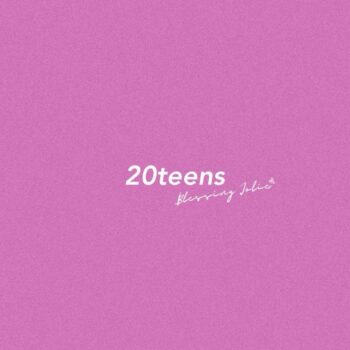
Released September 12, 2025 via ThirtyTigers, “20teens” is the unapologetic and soul-stirring second single taken off Blessing Jolie’s upcoming debut album 20nothing (out this March). A bold, high-voltage introduction to Jolie’s world, it doesn’t just spotlight potential – it stamps her as an undeniable Artist to Watch this year, a rising storyteller with the voice, presence, and pen to meet the moment head-on.
Raised in Katy, Texas, the 23-year-old Nigerian American artist has been writing songs since she was fifteen – learning guitar the hard way, failing loudly, and returning anyway, persistence shaping her artistry as much as talent. Her influences are as eclectic as her emotional range – from Shawn Mendes and Destiny’s Child to Limp Bizkit – and you can hear that wide-open appetite in the way she blurs borders between folk intimacy, R&B soul, and pop-punk punch without ever losing the thread of sincerity.
As unapologetic in her lyrics as she is uncompromising in her artistry, Jolie’s vulnerability is her compass. She has described her music as a documentation of her life, “the emotions I rarely say out loud,” and “20teens” arrives with that same unfiltered, raw honesty – only now it’s framed as catharsis with teeth, a coming-of-age refusal to stay stuck in anyone else’s pattern. “‘20teens’ is one of my favorite songs from my upcoming album, and I’m beyond excited to finally release it,” she tells Atwood Magazine. “I wrote it in a moment of clarity – when I started recognizing red flags and realized I don’t have to accept what I can’t tolerate. It’s another honest moment, one the song captures candidly.”
That “moment of clarity” is the song’s engine: the point where the heart stops bargaining and starts drawing boundaries. “20teens” opens in a place of restraint – tender, open-handed guitar lines setting the scene like a held breath – while Jolie steps in sounding measured but alert, her voice carrying the weight of someone already halfway to the truth. In the first verse, she sketches a life caught in repetition – “Twenty nothing now same friends, same threads / Tug my heart at the same ol’ seams” – capturing the quiet exhaustion of realizing how long you’ve been circling the same emotional ground, mistaking familiarity for stability.
There’s a sharp, almost conversational wit threaded through these early lines – “My present looking lot like my past / Only difference I got HBO Max” – humor cutting through the ache without dulling it. Jolie isn’t romanticizing the cycle; she’s naming it, clocking the way routine can masquerade as comfort even as it keeps you small. Her delivery remains controlled, but the tension is unmistakable – each line tightening the screws as the arrangement slowly swells beneath her.
By the time she reaches the pre-chorus, that restraint begins to crack. The questions turn inward, then accusatory – “Surely there has gotta be a list where my name is / Surely whited out, more like blacked out” – a brutal image of erasure that lands with quiet devastation. Even in her most dramatic swells, Jolie sounds centered in her conviction, threading wit and bite through the bruises. What follows is the sound of realization hitting twice as hard: “Turn the light out, when I find out / It was twice now” – clarity arriving not as a whisper, but as a shock, and then an undeniable confirmation. It’s a sharp, spiraling inner monologue that snaps into focus the second the chorus hits, no take-backs and no softening the truth.
Darling how you lеave me like that
Stupid now you want be my man
Pawn her, call her, holding out a bit longer
No take backs, bitch take that
I won’t have 20teens in my-
When the chorus finally detonates, Jolie lets everything loose. Drums crash, guitars flare, and her voice surges with fury, disbelief, and resolve all at once – “Darling, how you leave me like that / Stupid, now you want be my man” – the words tumbling out like truths she’s done protecting. You can hear her push past the melody, leaning into the line rather than smoothing it out, as if volume itself becomes a form of boundary. The line “I won’t have 20teens in my bed” lands as both boundary and declaration: a refusal to keep reliving the same heartbreak under the guise of nostalgia, a promise to herself not to carry old patterns forward just because they’re familiar.
This is not a song for the middle of the spiral. It’s a song for the moment after – when the decision has already been made, when going back is no longer an option, and when strength shows up not as anger, but as resolve. “20teens” doesn’t try to talk you out of staying; it meets you exactly when you’ve decided you’re done. It’s a release that feels earned, not impulsive – the sound of someone finally saying what they mean and meaning it fully. In that explosive turn, “20teens” transforms from introspection into declaration, from recognition into action – a fiery, unflinching refusal to shrink, settle, or stay silent in the face of her own knowing.
For Jolie, that eruption isn’t just dramatic – it’s deliberate and intentional. “20teens” marks a shift not only in how she writes, but in how she speaks. “I want people to know that I say what I mean,” she explains. “I don’t always mean some of the abrasive things I say, but I do always say what’s on my mind.” That clarity of voice – unfiltered, unsmoothed, and unapologetic – is what gives the song its bite. It’s not about revenge or rehashing the hurt; it’s about the instant when you finally believe yourself enough to draw the line. The power here isn’t in sounding wounded, but in sounding sure.
In that way, “20teens” captures a distinctly early-twenties realization: The moment when endurance stops being romantic and discernment takes its place. It’s a coming-of-age not defined by heartbreak itself, but by the decision to stop mistaking tolerance for maturity.
That confidence sharpens as the song pushes forward, especially in its later verses, where Jolie revisits the relationship with even clearer eyes. “Only fall for you to fall back in bed / Shit, I’d rather watch Charmed instead” lands with cutting specificity – intimacy reduced to habit, attachment exposed as routine, longing replaced by distraction. When she deadpans, “My present looking lot like my past / Only difference I got HBO Max,” the humor isn’t deflective; it’s diagnostic. She’s clocking the cycle for what it is, naming the stagnation without romanticizing it. Growth hasn’t arrived yet, but awareness has – and that awareness is what makes staying impossible.
Only fall for you to fall back in bed
Shit, I’d rather watch Charmed instead
My present looking lot like my past
Only difference I got HBO Max
You’re something now and it’s fine by me
I’mma go out, club with a bad bitch beat
Now you’re telling me I’m all lip, no feet
Cause, I’m still at home and I still can’t beat
There’s a pointed restraint to how Jolie delivers these lines – a composure that mirrors what she describes as the song’s defining quality. “What makes ‘20teens’ special is that I was able to express my hurt without actually sounding hurt,” she says, “which is why the song carries that sarcastic, witty edge.” That distance is crucial: The pain is there, but it no longer runs the show. Instead, it’s been processed, sharpened, and turned outward as resolve.
That list where my name is (is)
Surely whited out, more like blacked out
Time came to tell me not
Karma said he wanna
come around with no daisies
Turn the light out, when I find out
It was twice now that
You went to nookie
That resolve crystallizes in the chorus’s most definitive declaration. “I won’t have 20teens in my bed” isn’t just a boundary – it’s a worldview. As Jolie puts it plainly, “In ‘20teens,’ I made it known that I don’t offer second chances.” The line lands not as bitterness, but as self-respect finally spoken aloud, a refusal to let nostalgia, attraction, or history override what’s already been revealed.
Darling, how you leave me like that
Stupid now you want be my man
Pawn her, call her, holding out a bit longer
No take backs, bitch take that
I won’t have 20teens in my bed
Even as Jolie imagines motion – “I’ma go out, club with a bad bitch beat” – the song keeps circling back to the same internal reckoning, the same erasure she can no longer ignore. Escape is tempting, but clarity won’t be rushed. “Surely there has gotta be a list where my name is / Surely whited out, more like blacked out” resurfaces like an intrusive thought, reinforcing the truth she’s already named: this isn’t a misunderstanding, it’s a pattern. By the time she repeats “Turn the light out, when I find out / It was twice now,” the shock has hardened into certainty – the kind that doesn’t ask permission or wait to be softened.
Pawn her, call her,
holding out a bit longer
No take backs, bitch take that
I won’t have 20teens in my bed
The outro seals that transformation. Repetition becomes ritual; realization becomes release. “It was twice now I was lucky” reframes the betrayal not as loss, but as escape – luck defined not by what she endured, but by what she’s no longer willing to carry. Heard this way, the repetition isn’t redundancy but reinforcement, the mind replaying the truth until it finally sticks. “20teens” doesn’t just end a chapter; it closes the door on it, leaving no room for revisionism, nostalgia, or return.
Turn the light out when I find out
It was twice now you went to nookie
Turn the light out when I find out
It was twice now you went to nookie
Turn the light out when I find out
It was twice now I was lucky
That sentiment mirrors the lesson Jolie hopes listeners take with them: “When someone shows you who they really are, believe them.” It’s a hard-earned realization, delivered without regret – the sound of someone who’s learned the difference between staying hopeful and staying stuck.
That sense of growth runs parallel to the larger arc of her debut album 20nothing, which Jolie describes as grappling with “early-twenties growing pains – ‘20teens’ being one of them.” In that context, the song becomes more than a breakup anthem; it’s a marker of adulthood, a line drawn between who she was and who she’s choosing to be now. As she reflects, “I’ve grown up – I’m 24, not 19 – and ‘20teens’ is a symbol of that growth.”
“20teens” doesn’t ask for sympathy – it asks for recognition. It’s the sound of someone choosing clarity over comfort, discernment over endurance, and truth over nostalgia. That same conviction runs through Blessing Jolie’s words off the page, too. Speaking candidly with Atwood Magazine, she reflects on saying what she means, drawing hard lines, and how this song – and 20nothing as a whole – captures the growing pains of learning when to walk away.
“Return to Sender”
by MX LONELYIndifference can be more devastating than cruelty. It offers no shape to push against, no clear wound to tend — just the slow, destabilizing sense of being unseen, unchosen, unresolved. MX LONELY’s “Return to Sender” lives inside that psychological freefall: The moment you realize someone feels nothing for you, and the mind spirals trying to understand what that absence means. Rather than chasing closure or pleading for clarity, the song turns inward, reckoning with the impossible task of controlling how you’re perceived – and arriving, painfully and powerfully, at the realization that other people’s detachment is not yours to carry. What follows is not resignation, but reclamation: A refusal to internalize indifference as truth.
Released January 7th, “Return to Sender” is the latest, and boldest, single off MX LONELY’s upcoming debut album ALL MONSTERS, due February 20, 2026 via Julia’s War Recordings – the kind of hard-hitting fever dream that stays long after the last note fades. From Rae Haas’s visceral vocals and the sludgy, searing electric guitars, to the charged, churning drum pulse that pushes the track forever onward, the song aches, seethes, and shivers shooting down the spine – dynamic in motion, but weighted with real heft, drama, and intensity.
I don’t like you and I don’t dislike you
threads unknotting in the back of your head
Fighting the feeling is useless when you’re dead
Return to sender, return to sender
Return to sender, return to sender…
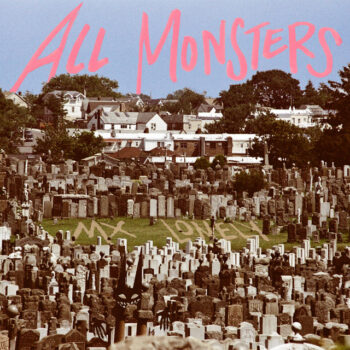
Active since 2020, Brooklyn-based MX LONELY make music that bruises beneath the surface – heavy, murky alt-rock streaked with beauty, built to hold big feelings at full volume. Anchored by synthesist/vocalist Rae Haas, guitarist Jake Harms, and bassist Gabriel Garman, the band’s story is rooted in both community and honesty: The trio originally met at AA meetings, bonded, and started shaping what would become MX LONELY as a place to excavate the things we carry and can’t always name.
That ethos is all over their work – songs that don’t hide behind abstraction, but turn overwhelm, anxiety, listlessness, dysphoria, addiction, and self-sabotage into something physical you can move through. Or, as Haas puts it in the band’s larger worldview, their music is about “shadow work; internal and external monsters,” and refusing to let those monsters stay in the dark.
If ALL MONSTERS is an exorcism – a record about dragging the monsters into the light and destroying the ideas that keep you trapped – then “Return to Sender” feels like one of its sharpest spells: A charged, thorny meditation on perception, projection, and the particular psychological damage of indifference.
I don’t know you and I don’t wanna know you
People crowd small places with their heat
And a quick, sharp stomping of their defeat
Cash out and spend her, I’m a scene defender
Return to sender, return to sender…
Return to sender, return to sender
Return to sender, return to sender
Return to sender, return to sender
“‘Return to Sender’ is about trying to understand the other side of someone feeling indifference towards you,” Haas tells Atwood Magazine. “When this sentiment has been expressed to me in my life, it has the capability to send me into an absolute spiral – I would much rather have an unambiguous emotion, like hatred, directed towards me. It’s easier to process. This song was written off the dome, and was me trying to write from a viewpoint outside of my own head. The repeated phrase ‘return to sender’ that makes up the chorus was an attempt to accept this outside perspective. If you know that your side of the street is clean, others’ opinions are not your burden to carry.”
What makes “Return to Sender” so brutal is how cleanly it captures that emotional paradox: Wanting anything but ambiguity, craving the clarity of conflict because indifference is a void you can’t argue with. The opening lines are deceptively plain, almost conversational, but they’re laced with dread: “I don’t like you and I don’t dislike you / threads unknotting in the back of your head / Fighting the feeling is useless when you’re dead”
That “threads unknotting” image is such a quiet gut punch – the slow, invisible unravelling of attachment, the moment you realize someone is already leaving you behind emotionally. Then MX LONELY slam the emotional thesis into the chorus by repetition alone: “Return to sender, return to sender”
It’s mantra as muscle memory – the mind trying to make acceptance physical. And the band plays it that way: That charged verse riff keeps grinding forward like it’s trying to outpace panic, while the chorus opens up into something roaring and massive, fuzzed-out and feral, the full-body release you get when the feelings finally stop negotiating and just spill.
The song’s structure gives it that fever-dream quality. Jake Harms calls it “the closest thing we have to a straight up Nirvana-style punk rock song,” and you can hear that DNA in the way the track balances immediacy with danger: A tight verse/chorus hook that still makes room for a long, diverging bridge/solo section that feels like the song slipping out of your grasp mid-sprint. That divergence matters – because the lyric is about spiraling, and the arrangement spirals too, refusing to stay contained.
One of the biggest reasons this song lands is that MX LONELY are fundamentally a live band – and they talk about the music as a whole-body, sensory event. “I’d say the best way to experience our music first is by seeing it live,” Harms shares. “Get the energy of a show, then do a deep dive on the records.”
Haas echoes that physicality – and it’s hard not to read “Return to Sender” through this lens, as something meant to be felt in the chest before it’s understood intellectually: “We love seeing people move at shows. The decibel level of the live performance becomes a part of a whole sensory experience. The sound and vibration drown all your thoughts and you’re able to be totally present with the music.”
That “drown all your thoughts” line feels like an accidental mission statement for “Return to Sender” – because the song’s core wound is overthinking someone else’s distance, someone else’s unreadable emotional math. The remedy, in MX LONELY’s world, isn’t a perfect answer – it’s presence. It’s turning the anxiety into volume until it can’t talk back.
On the making-of side, ALL MONSTERS is the band’s first entirely self-recorded release, and the way they describe the process explains why “Return to Sender” feels so immediate – big, but not polished into lifelessness. They tracked at Goose Room (Staten Island) with Garman engineering, produced it themselves, and later mixed/mastered with Corey Coffman (Gleemer). “I knew I wanted it to be a live band,” Harms says. “I wanted it to breathe and not be so confined to the digital recording world.”
That “breathe” is key – because even at its most sludgy and intense, “Return to Sender” isn’t just a wall of noise. It’s dynamic. It moves. It has negative space and then sudden, roaring weight, like the band is letting the song’s emotional logic dictate when to constrict and when to explode. Harms also shouts out drummer Andy Rapp as a major factor in shaping the album’s final form – and specifically names “the drum riffs in Return To Sender” as “a lot of key moments.” That tracks: The percussion here doesn’t just keep time; it drives the spiral, turning the verse into a clenched jaw and the chorus into a release.
And thematically, “Return to Sender” sits right at the record’s core concept – not just as a lyric hook, but as a protective framework. Haas reframes the phrase as a boundary: “When I say ‘return to sender’ I’m saying to return the anxiety over people’s opinions to the depths of hell they came from. Trust your instincts and check for projection. Everything that is meant to reach you will reach you, and everything else will return to sender.”
Then they take it one step further – into ritual: “‘Return to Sender’ is named after a type of protection spell that sends any harm that someone may wish upon you back to its source.”
That’s what makes the song feel bigger than a breakup track or a grievance – it’s not just “I’m hurt,” it’s “I’m done carrying what isn’t mine.” It’s taking the impossibility of controlling other people’s perceptions and turning it into a practice: Return it. Release it. Don’t let it live in you.
Floating on blue moon sometimes
You get numbers confused with angel signs
Carve a martyr out of opaline
You construe the world’s apologies
Cuz that’s what you are
That’s what you are
I’ll return to sender, return to sender
Return to sender, return to sender…
“Return to Sender” matters because it names something people don’t always validate as “real hurt”: The psychic violence of being met with shrugging indifference. The song doesn’t romanticize that spiral, but it doesn’t minimize it either. Instead, it offers a hard-earned reframe – not “fix yourself so you don’t care,” but know your side of the street is clean and stop accepting responsibility for someone else’s interior world. And sonically, MX LONELY make that message visceral. The song’s weight and heft aren’t just aesthetic – they’re the emotional payload. This is what it sounds like when your nervous system is trying to solve an unsolvable problem, and the only way out is to let the sound swallow the thought.
As ALL MONSTERS approaches, the band’s hopes are beautifully simple and deeply human: They want people to spend time with the record, live in it, unpack it, return to it. “I hope people spend some time with it,” Harms shares. We put everything into this record and made something that feels like a complete idea of what this band is, and I hope that people get to find it and live in its world for a bit. I hope it fills people up with as much emotion as we put into it, and I hope people re-listen to it over time. There’s a lot of stuff to unpack, thematically and sonically.”
Haas’ takeaway is both a blessing and a battle cry – and it perfectly frames “Return to Sender” as a tool, not just a song: “I hope people feel free and I hope you use that freedom to kill more monsters. I hope the same for me.”
For me, “Return to Sender” hits so hard because it doesn’t just describe the spiral – it sounds like one: Feverish, heavy, brilliant, and loud enough to drown out the part of your brain that keeps begging for answers it’ll never get. It’s a song that turns indifference into intensity, turns anxiety into armor, and turns a single repeated phrase into a release valve you can actually use. The riff churns, the drums churn, the whole thing churns – until, somewhere in that cacophony, you feel the boundary click into place.
“Towers”
by Lia Pappas-Kemps“Hand me that flare gun – this is the eleventh hour, I’ll send a prayer up…” Love doesn’t usually end all at once. More often, it erodes in plain sight – through ignored signs, quiet compromises, and the stories we tell ourselves to justify staying. Lia Pappas-Kemps’ searing single “Towers” lives inside that fragile moment of reckoning: The realization that you’ve been lying to yourself to preserve something that’s already slipping away. It’s a song about denial cracking open, about seeing clearly and choosing whether to return to yourself or keep pretending not to notice the fall.
A charged and soul-stirring indie rock eruption, “Towers” balances tenderness with volatility, mirroring the emotional push-and-pull at its core. Propulsive guitars surge and recede beneath Pappas-Kemps’ intimate, searching vocal, while the song builds with a slow-burn intensity that never rushes the truth. It’s dynamic without being chaotic – dramatic, aching, and deeply human in its restraint.
I turned a corner
Back towards her
Back towards the past
I crossed the border
According to the GPS
Ten thousand hours
Thousand towers
Locked inside her head
Turning the dial
Every mile made a difference

Released January 16th, “Towers” arrives as the latest preview of Lia Pappas-Kemps’ anticipated debut album Winged, out March 13, 2026 via Coalition Music. No stranger to Atwood’s pages, the 21-year-old Toronto-based singer/songwriter has quickly emerged as one of indie rock’s most compelling new voices, praised for her close-to-the-bones lyricism and instinctive melodic sense. Her music carries echoes of Fiona Apple, Joni Mitchell, Courtney Barnett, and Feist, but always lands somewhere unmistakably her own – emotionally precise, observant, and unafraid of discomfort.
That clarity is central to Winged, a record shaped by themes of yearning, misrecognition, and the slow work of self-reckoning. As Pappas-Kemps explains, the album is threaded by “the idea of ignoring signs, and retrospectively acknowledging that it was perhaps purposeful.” “Towers” sits at the heart of that arc – not as a dramatic collapse, but as the moment when the illusion finally stops holding.
“It’s about the tipping point of a relationship, when everything feels like it’s slipping,” Pappas-Kemps tells Atwood Magazine. “I think it’s about realizing you’ve been lying to yourself to be able to stay in a relationship and about returning to yourself. Also, the last-ditch effort to maybe try and preserve it.” That tension – between self-honesty and emotional bargaining – pulses through every line of the song.
You had eyes for another
Hand me that flare gun
This is the eleventh hour
I’ll send a prayer up
Written and recorded in one fluid motion with her cousin Elia in their Montreal apartment, “Towers” stands apart in Pappas-Kemps’ catalog for how inseparable its writing and recording became. “It’s the only song on the record where the recording and the writing felt synonymous,” she explains. That immediacy shows: The song feels urgent and raw, as if it’s unfolding in real time rather than reflecting backward.
Lyrically, “Towers” captures the mental spiral of a relationship at its breaking point – flare guns fired too late, prayers sent upward in the eleventh hour, and the devastation of realizing someone else already has “eyes for another.” Lines like “I wanna break the spell / clock strikes twelve” land with aching inevitability, while the recurring imagery of distance, borders, and time underscores how far apart two people can drift without ever officially leaving.
I blurred the vision with precision
Then the morning dawned
Felt my imposition
On the dinner
Cue the monologue
We fought with the light on
Then again when we turned the light off
I wish I couldn’t have been bothered
But I was very much
What makes “Towers” so powerful is its refusal to dramatize clarity. There’s no villain here, no explosive ending – just the weight of recognition and the courage it takes to finally believe it. In that way, the song becomes less about loss and more about reclamation: choosing honesty over illusion, even when it hurts.
As Winged approaches, Pappas-Kemps’ hopes are simple and sincere. “I hope people hear ‘Towers’ and wanna come out to a live show,” she shares. More broadly, she hopes listeners “feel seen through the songs.”
As emotionally charged as it is satisfyingly cathartic, “Towers” stays because it understands how quietly lives change – how truth arrives not as lightning, but as a slow, unmistakable knowing. It’s a song that doesn’t rush the fall or the landing, honoring the moment when self-deception gives way to self-return – and trusting that, sometimes, that’s where real flight begins.
You had eyes for another
Hand me that flare gun
This is the eleventh hour
I’ll send a prayer up
I wanna break the spell
Clock strikes twelve
I wanna feel an angel
In my bedroom again
You had eyes for another
Hand me that flare gun
This is the eleventh hour
I’ll send a pray
“Time Can Really Run Away”
by Louis OliverTime doesn’t always slip away in moments of crisis. Sometimes it disappears in comfort – in good evenings, long conversations, shared silences, and the strange safety of being “pretty happy.” Louis Oliver’s debut single “Time Can Really Run Away” is a reckoning with that quieter truth: The realization that life can feel full and meaningful even as it quietly rushes past you. Rather than dramatizing loss or heartbreak, the song lingers in something rarer and harder to name – mindfulness, intentionality, and the fragile responsibility of choosing how, and with whom, we spend our time.
A gorgeous piano ballad full of heart and soul, “Time Can Really Run Away” unfolds with a natural warmth that feels both effortless and devastating. Oliver’s performance is expressive and unguarded, his voice carrying a conversational intimacy that makes each line feel shared rather than sung. The arrangement is restrained but alive – gentle swells of piano, subtle dynamic shifts, and a sense of emotional churn beneath the calm, as if the song itself is holding time still while reflecting on how quickly it moves.
What a lovely evening
Sky above me weakens
And I think it’s time for us to
Call it a night
What a lazy morning
We were up all night talking
And I think it fair enough to let this
Hangover hang over us
Let’s get out of bed
Holding our sore heads
So we can get back in
After a few drinks

Released November 21, 2025, “Time Can Really Run Away” marks Oliver’s first official step into the world as a solo artist, and it’s a stunning introduction. Hailing from south-west London, Oliver arrives fully formed – a songwriter with a storyteller’s instinct and a performer’s emotional clarity. Though music has always been his true center, some listeners may recognize him from his early acting work, including roles in Sherlock, Midnight Mass, and Inside Man. That narrative background shows in his writing: He understands pacing, presence, and how small moments can carry enormous weight.
While this is his debut single, Oliver is no stranger to the stage. His earlier EP Live at Eastcote captured four live cuts recorded in single takes, reflecting a performer who trusts feeling over perfection. “Time Can Really Run Away” sets the tone for what’s ahead – the first in a run of singles leading into his next chapter, all rooted in emotional honesty rather than spectacle.
And bitch about the friends we love
Cause they don’t think the same as us
And talk about important things
Like the economy and politics
And laugh about mistakes we’ve made
And how it feels like the other day
Time can really run away
Time can really run away
For Oliver, songwriting has always been less about invention than excavation. “The way I get inspired to write songs is both a curse and a blessing. I like to write solely what I know, and feel in the moment or upon reflection,” he explains. “Songwriting for me has always been a tool to process emotions and explore how I feel. The aforementioned ‘blessing’ is that the songs I come out with are so incredibly personal, which I think resonates with an audience. The ‘Curse’ is that there are moments when I have no strong emotions to explore, and thats exactly what this songs about.” The song’s central idea – that time slips fastest when nothing is wrong – comes from what he calls both the blessing and curse of that approach: Writing about the complete normalcy of being content, and realizing how quickly those days pass when you’re not paying attention.
Lyrically, “Time Can Really Run Away” finds its power in accumulation. Scenes stack gently – lazy mornings, late nights, sore heads, shared complaints and private jokes – building a portrait of intimacy that feels deeply lived-in. Lines like “No such thing as time lost / when you know how much time costs” land with quiet authority, reframing happiness not as stasis, but as something that demands awareness. There’s no grand twist here, only the growing understanding that presence itself is precious.
No such thing as time lost
When you know how much time costs
It’s a privilege to get you alone
No such thing as a wasted day
I could sit here ’til I waste away
And it’s a lovely image
Us sharing a home
Musically, Oliver lets the song breathe. The piano leads with grace, never overpowering the vocal, while the dynamics rise and fall like thought itself – moments of stillness giving way to emotional swells that feel earned rather than engineered. His vocal performance is the anchor: Warm, controlled, and deeply human, delivering each lyric with the kind of conviction that comes from having lived it rather than imagined it.
That honesty extends to how Oliver thinks about his path forward. He’s not chasing grandeur for its own sake. “My bucket list in music doesn’t include stadium tours and stupid amounts of money,” he says. “I just want the songs to sound great, while preserving the whole reason I do it in the first place.” What matters most to him is giving everything he has – whether to a packed room or a quiet crowd – and letting the songs do the rest.
What a perfect picture
The winds just a whisper
And I’ve never felt a day
Just simply melt away
I have to tell you babe
I think it’s getting late
We’ve had to much to drink
And the room starts to spin
And there’s no arguing
Just staying up for hours and
Talk about the harder times
And how we danced to the other side
Love is not an easy game
Can’t wait til we meet again to
That intention is exactly why “Time Can Really Run Away” matters. It speaks to a version of fulfillment we don’t always validate – the beauty of ordinary joy, the danger of drifting through it unconsciously, and the gentle urgency of paying attention before it’s gone. It’s not a warning so much as an invitation: To notice, to choose, to stay awake inside your own life.
For Oliver, the hope is simple and sincere. He wants listeners to step through this first doorway and follow him further – to hear more songs, share more moments, and let music be a place where cluttered minds can exhale. For me, “Time Can Really Run Away” stays because it understands something essential: That time doesn’t need to be wasted to be lost, and that the most meaningful lives are built not from drama, but from presence. It’s tender, wistful, achingly human – a song that settles into your bones and reminds you, quietly and unmistakably, to look up before the evening fades.
Bitch about the friends we love
Cause they don’t think the same as us
And talk about important things
Like the economy and politics
And laugh about mistakes we’ve made
And how it feels like the other day
Time can really run away
Time can really run away
— — — —

Connect to us on
Facebook, Twitter, Instagram
Discover new music on Atwood Magazine
Editor’s Picks
follow EDITOR’S PICKS on Spotify