Throughout the year, Atwood Magazine invites members of the music industry to participate in a series of essays reflecting on art, identity, culture, inclusion, and more.
Editor’s Note: The following essay was originally written as the academic component of Craig Campbell’s dissertation project for the BA (Hons) Commercial Music program at the University of the West of Scotland, with MALLRATS’ album ‘elements’ serving as its creative component. It has been adapted for publication by Atwood Magazine.
Stream: ‘elements’ – MALLRATS
elements
Mapping the constraints on expression, place and identity in UK popular music and societies through creative practice.

* * *
Summary
This project explores identity work within spaces and places affected by modern censorship tactics in the popular UK music industries, shaped by power-led hierarchies and their influence on musical works, the musicians who create them, the listeners who engage with the music, and the profiteers behind it.
Decisions made by those in authority often misrepresent artists, genres, and communities, impacting identity, belonging, and creative output in favour of economic, political, or personal ideology and morals. The concepts of moral correctness and incorrectness in UK popular music can be shaped by economic, political, societal, and ideological factors that mainly favour those in positions of authority. The spaces and places we create as professionals in the music industry can negatively impact others’ identity, artistry, and sense of belonging if they benefit only a select few. The outcomes of popular music tend to favour the profiters, managers, labels, and people in positions of power, and this form of censorship might influence how music is composed and consumed. Further, since artistic autonomy in the industry is often negotiable rather than absolute, economic interests controlled by those in power can determine which music or artists are deemed acceptable, profitable, or promotable across the UK’s popular music scene. These creative limitations, imposed by those in authority, expose an underlying hierarchy within the cultural industries.
Preface
“For twenty-five centuries, Western knowledge has tried to look upon the world.
It has failed to understand that the world is not for the beholding. It is for hearing. It is not legible, but audible.
Our science has always desired to monitor, measure, abstract, and castrate meaning, forgetting that life is full of noise and that death alone is silent: work noise, noise of man, and noise of beast. Noise bought, sold, or prohibited.
Nothing essential happens in the absence of noise.”
– Noise by Jacques Attali
A friend and I sat in my flat in the Gorbals, Glasgow, and we discussed the disappearance of music venues across Glasgow, the tightening of expression limits due to the rise in political & social authoritarianism in the UK, and the fact that income is at the forefront of most artists’ minds. I wondered – ‘Will art have to be created with economics in mind? Will elements of expressionism always be limited by entrepreneurial control? Will the control over the musical notes I want to write always be dictated by the banknotes others want to pass around? What can I do?’
Introduction & Rationale
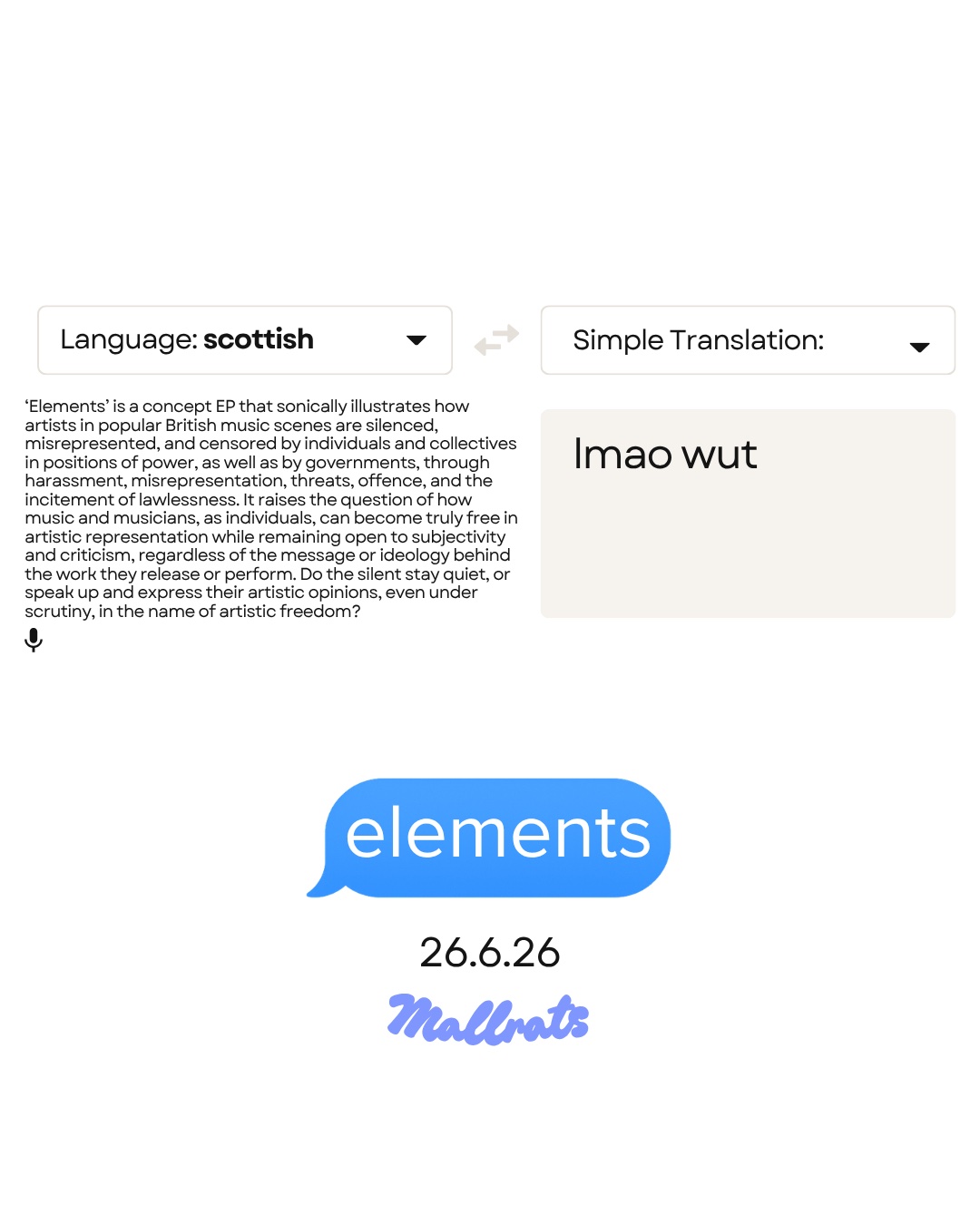
elements is a concept EP that sonically illustrates how artists in popular British music scenes are silenced, misrepresented, and censored by individuals and collectives in positions of power, as well as by governments, through harassment, misrepresentation, threats, offence, and the incitement of lawlessness.
It raises the question of how music and musicians, as individuals, can become truly free in artistic representation while remaining open to subjectivity and criticism, regardless of the message or ideology behind the work they release or perform. Do the silent stay quiet, or speak up and express their artistic opinions, even under scrutiny, in the name of artistic freedom?
Elements responds to a significant shift in social and political climates, marked by the rise of authoritarianism in the UK and its human impact. It explores the growing culture of self-censorship in the digital age, driven by fears of social and/or professional backlash across the political spectrum, which often operates as an invisible yet powerful form of silencing and restraint on expression. This is further exemplified through the concept of ‘elements’, a shortened, practice-based exploration of self-censorship deliberately created to fit submission guidelines. It serves as a metaphor for how individuals craft, shape, and silence parts of their identity within today’s socio-cultural environment through class, voice, and disproportionate silencing. Musical expression has long been a vital tool for understanding diverse ways of self-expression, empathy, and social issues through emotion in a context saturated with political and social debate. elements offers a different approach to engaging with these issues through tangible, abstract concepts. The project references foley effects, storytelling, and songwriting techniques from Pink Floyd’s The Wall, Amen Dunes’ Freedom, and Orson Welles’ The War of the Worlds to craft a sonic atmosphere of UK city soundscapes. Using practice-based research, I have incorporated sounds from the Gorbals in Glasgow, Scotland, by self-producing and mixing Foley recordings made in my own space within the Gorbals, creating an acoustic territory for the listener to explore (LaBelle, 2019, pp. 31-91). This process was enhanced by experimenting with everyday sonic experiences. Jean-François Augoyard and Henry Torgue developed a comprehensive catalogue of how we experience and interpret sounds in everyday life; this project experiments with recording and virtually mapping these sonic experiences (ibid, 2006; pp. 19-153).
‘Elements’ gives voice to those within working-class communities whose experiences and identities are often ignored or silenced due to stereotypes upheld by those in power. My artistic identity has been shaped by the people, spaces, and places of Glasgow, and more specifically by the Gorbals. This provides a lived perspective that recognises the area not merely as a setting but as a central theme that illustrates how physical and social environments influence our identities and our ability to express ourselves. This project aims to deepen understanding of how censorship and lack of artistic expression in British pop music can affect and shape everyday life, niche communities in the music industry, the listeners of specific artists or genres, and independent musicians. Through institutional and algorithmic gatekeeping, companies can control which voices are heard, effectively silencing others, while the fear of public shaming fosters widespread self-censorship. Drawing on personal and second-hand experiences, academic research, and analyses of influential musical works, the project presents a purposeful misrepresentation of the protagonist, highlighting an ambiguous relationship with their identity, relationships, vices, surroundings, and interactions.
Censorship themes run throughout the tracks, illustrating distorted examples of both self- and external censorship through virtual reality audio mapping, voice acting, the censorship of certain words and notable names, crude Glaswegian slang, tempo shifts, and genre changes. Initially, my goal for this project was to examine how individual artists are censored in 21st-century British pop music, leading to diminished self-expression under societal, political, financial, sociological, and ideological pressures exerted by governments, society, and class structures. Through research conducted during the writing process, I have gained a deeper understanding of how we silence ourselves—whether through personal weakness (Ruparelia, 2020; pp.15-25), or collective silencing by societies, corporations, and governments—shaped by political, societal, and ideological biases, moral grandstanding, discrimination, and performative activism (Westra, 2021; pp.156-178).
Descriptors & Definitions
Sonic Experiences and Foley Sounds
Everyday life is full of sonic experiences, from the moment an alarm clock rings in the morning to the ambient sounds of a quiet bedroom as one falls asleep. Frederick Vinton Hunt, an acoustician from the 1950s, is quoted in Jean-François Augoyard’s ‘Sonic Experiences’ as describing everyday sounds as “an uneasy ocean of air continually agitated by the disturbances we call sound waves.” Augoyard’s 1995 work emphasises the importance of the listener’s and artists’ experiences in space and place, across different socio-cultural environments, and the collective and individual effects on ‘earwitness accounts’ (ibid, 2005; pp. x – xv).
Everyday Acoustics and Virtual Reality Mapping
LaBelle’s 2019 work ‘Acoustic Territories’ highlights the importance of location in shaping individual listening preferences, and the sounds individuals prefer often reflect the tensions and understandings within space & place, identity, and belonging. LaBelle’s work develops the concept of acoustic ecology, examining how sound can create or disrupt an individual’s sense of belonging, and how communities can use sound to claim space, express identity, and shape the politics of everyday public life (ibid, 2019: North and Hargreaves, 2008; pp.45-70).
Defining censorship
What individuals consider offensive in art and should be censored from public view is entirely subjective. Jeffrey W. Howard proposes moral duties, including the duty not to impose or inflict harassment, misrepresentation, threats (that constitute a criminal offence), offences (that can be easily avoided in conversation), or the incitement of lawlessness (ibid, 2019; pp. 100-106). Howard’s definition and work provide a set of moral principles for the project to adhere to. Rather than censoring art, the project focuses on the moral duties individuals can choose to follow. Unlike censorship, it does not involve legal or political involvement through creative input, control, or backlash; instead, it examines the relationship among identity, music, the creator, and the consumer.
Creative/Academic Juxtaposition
Space & place, Expression & Censorship, and Urban Soundscapes & Society are the main themes of this project. To create sonic space & place, environmental experiences must be grounded in an understanding of how space & place are produced, as theorised by Henri Lefebvre, as products of social behaviour through communication, interaction, and power. This social product can be reproduced and shaped to fit certain social, political, and economic ideologies. Ideologies can be constructed through social, mental, and physical dimensions, described through a trialectic model of the everyday space we move through, known as ‘perceived space’, the designed or planned spaces created by institutions, planners, systems, or architects, called ‘conceived space’, and the personal, emotional, and symbolic experiences we have through ‘lived space’ (ibid, 2017). In addition to these spaces is the idea of a lack of ‘protected spaces.’ The idea of ‘protected spaces’ would allow artists the freedom to choose what they create and how they are represented as autonomous artists, with protection and without interference. Further into the analysis of music, space & place are examples of how sound production and place can shape communities and cultural identities through the importance of identity, place, and community in production (Devereaux, 1993; pp. 66–85).
These sounds are inspired by the Foley effects used in The Wall by Pink Floyd. The sounds often heard in 1940s Britain—such as bombers, primary school scenes, and the album’s continuous flow—are a deliberate artistic choice that has influenced my work since I first listened to the album in 2011. ‘War of the Worlds’ by Orson Welles used vocal acting, storytelling, and scene-setting to cause widespread societal panic during its initial broadcast. This demonstrated that sound alone could incite mass hysteria. The effects used in the Jeff Wayne version particularly stood out to me; the combination of instruments and effects to establish the scene and propel the tracks inspired the background music in certain scenes of ‘Elements’. Other musical and songwriting influences from artists Tatsuro Yamashita, Casiopea, and Toshiki Kadomatsu are woven throughout the instrumentals. These artists’ music defined the City-Pop genre in 1980s Japan, inspiring many tracks with funk, soul, and disco influences. The concept of continuous radio playing across different settings draws inspiration from ‘Come Along I & II’ by Yamashita, further enriching the soundscapes created. The mixing techniques and expressive methods for the tracks are inspired by Amen Dunes’ ‘Freedom,’ which explores self-expression and issues within a lived space and place, standing out as a perfect fusion of identity exploration and a catalyst for discussion of modern societal issues.
As of 2026, one of the most discussed issues within British popular music spaces and freedom of expression isn’t limited to artists but also includes producers, planners, managers, governments, and local councils (Whitley et al., 2017; pp. 149–200). This creative piece draws inspiration from what Lefebvre and Deveraux propose: that the spaces we inhabit are individually important, and that what we consider artistically valuable is subjective to the individual; likewise, what should and should not be considered ‘acceptable artwork’ for the public.
Economic interests are embedded in the popular music industry and can influence creative work, shaping outcomes in favour of business strategies and the political economy over artistic representation and the public interest (Hesmondhalgh, 2012; pp. 10-32). A local example is the Glasgow live music sector, where public parks are treated as economic assets rather than shared community spaces, and the public are treated as customers rather than decision-makers (Guillard & McGillivray, 2022).
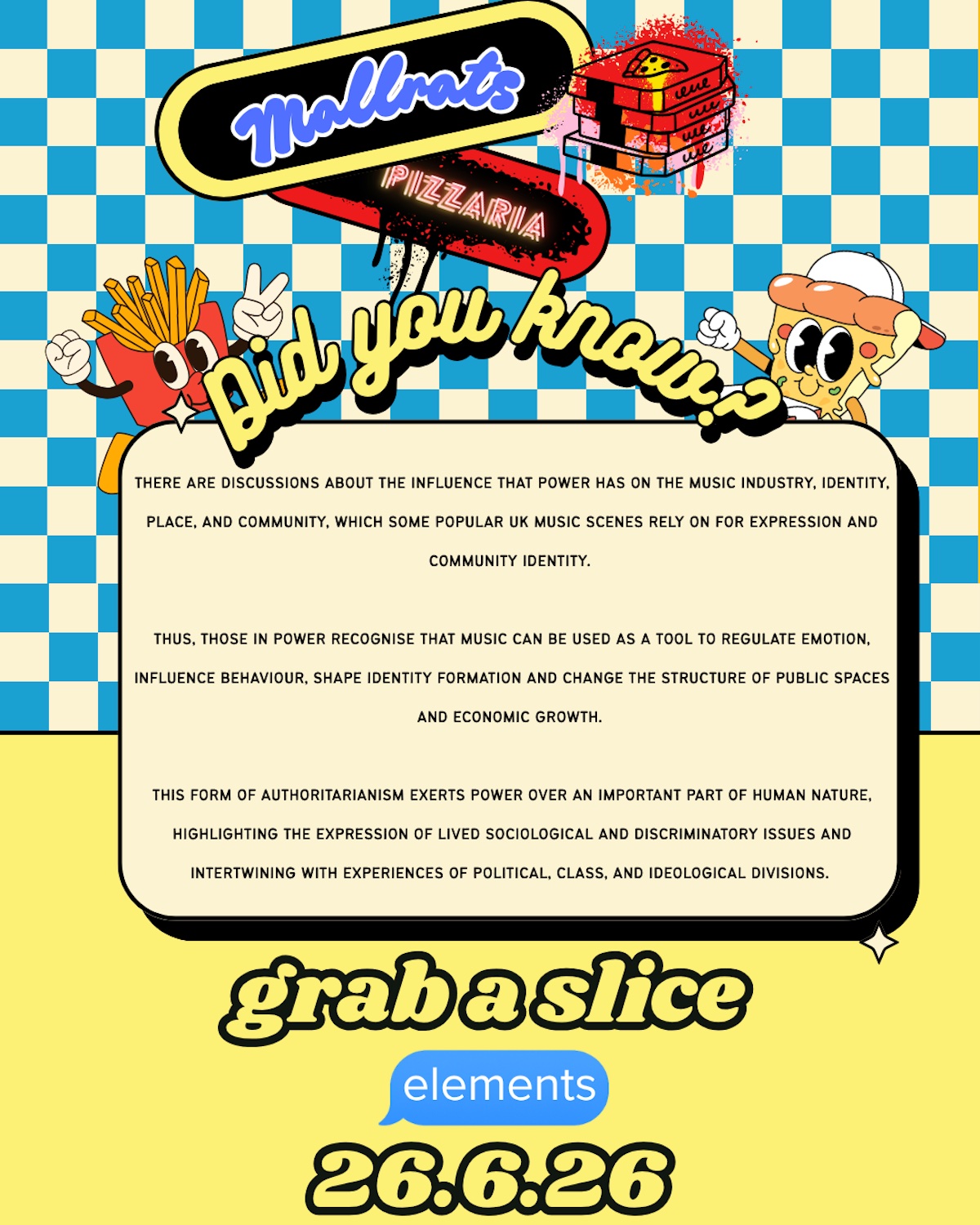
There is discussion about the influence that power has on the music industry, identity, place, and community, which some popular UK music scenes rely on for expression and community identity (DeNora, 2000; pp. 46-74). Thus, those in power recognise that music can be used as a tool to regulate emotion, influence behaviour, shape identity formation and change the structure of public spaces and economic growth (ibid., 2003; pp. 118-150). This form of authoritarianism exerts power over an important part of human nature, highlighting the expression of lived sociological and discriminatory issues and intertwining with experiences of political, class, and ideological divisions.
Discrimination, as a form of censorship, is prevalent in gender discrimination, and gender divisions are present across all sectors of the music industry. In the UK’s popular music scene, particularly in live performances such as the TRNSMT festival in Glasgow, social movements advocating for equality and inclusion have scrutinised the absence of female headliners throughout the festival’s run since 2014 (Mundey, 2022; Henderson, 2025). The persistent gaps in pay, recognition, favouritism, and support caused by gender discrimination continue to impact female voices in the UK music industry (Bain, 2019; Women and Equalities Committee, 2024).
INTERVIEW WITH REBECCA WALLACE
For this project, external lived experiences from musicians in Glasgow who have experienced or are experiencing censorship and limited expression within their space & place have been gathered through an interview with Rebecca Wallace, an artist and policy shaper in the local Glasgow DIY music scene. While discussing space and place, Rebecca mentions that during the early stages of a music career.
‘People would be surprised if you’re a woman (in the industry) and also play instruments.’
And elaborates on
‘weird juxtapositions of, like, being a woman in the music industry, being a woman in the music industry in Scotland, being a woman in the indie scene, which is probably back when I was younger, the toughest scene to be in as a woman. And then shifting scenes and shifting trajectories, and the scene itself changing. And that makes more space for me. And then me having the opportunity to become a space maker. (um)
But certainly, I experienced it. Was I conscious of it?
no more than all the other female experiences of the time, I think.
Did it hold me back?
Yeah, of course.‘
These experiences from Rebecca’s start in the Glasgow music industry brought forth ‘a sense of things being unfair,’ and Rebecca states that she ‘felt this feeling of, (like) having to ask for permission to be there.’
I then asked Rebecca about what steps can be taken to change policies or power structures that could benefit artists.
I’m not going to sit here and wish that the music industry was more equal. Because I honestly believe it’s becoming that, and I think a conversation like this will be really different in 10 years, I really do… and I accept that slow and steady is sometimes the way that things work, especially if… I mean, we’ve got the world on fire, it’s a bin fire, right?..
(But) more and more, I’m seeing women in positions of power, I’m seeing, you know, people’s identities being celebrated, rather than mocked.
(And) that kind of change overnight…There is a massive generation of people who still hold power, and they’re not going to hold it forever. And I think when that happens, we will actually see a change, especially in the creative industries.“
Rebecca notes ongoing policy shifts in the UK music scene and remains optimistic that, depending on policy changes and decision-makers, industry power could shift favourably. Discussions on discrimination, stereotypes, and the roles of DIY and independent artists show progress, but industry shortcomings and external constraints persist.
Design, Development, & Dissemination
There are two versions of the EP. The full, unedited version contains 7 tracks totaling 20 minutes and is my genuine representation of this piece. The submitted version is 15 minutes long, with tracks shortened, intermittently cut, and one track completely removed to creatively explore themes of censorship and expression within the submission guidelines. Both versions will be linked, but only the 15-minute version is relevant to this contextualisation. This is a deliberate part of my creative research methodology: self-censorship as praxis, not just writing about censorship but actively self-censoring to explore this theme through a practice-based exploration of self-censorship. The submitted version is a performance of its own theme through cuts, removals of tracks, and censors to make the abstract concept tangible, where the 15-minute version becomes a case study on how external demands shape expression, reflecting how forces of power can influence an artist’s capacity to express themselves and the nature of musical creation within any institution.
This does not mean that the two versions are separate. They create a dialogue with each other, where the submitted 15-minute version shows the result of censorship, and the full version represents the intended artistic statement. The full version will be publicly distributed and serves as a reference for this submitted version. The availability can invite the listener to consider the absent elements in both versions, where the cut parts become as meaningful as the music that has remained.
This approach was influenced by a self-directed content analysis of an advertisement I saw on the London Underground from Mullvad, a VPN service campaigning against government online censorship in the UK, and how their advert was banned from British TV for criticising government control over what can be accessed and presented to the public, which is approved by those with ideological and bias-driven interests (Mullvad, 2026). Qualitative research into the services, further posts, and public campaigns provided by the organisations associated with Mullvad led me to question what would happen if further intervention in the arts continues. This inspired a censored and ‘approved’ version, which was planned around the story built from analysis of sources, interviews, and lived experiences.
A convergent design combining qualitative and quantitative data merges research approaches to collect and contextualise information, functioning as research through a creative lens. This concept centres on an artist’s EP release, in which the pieces are not solely autonomous representations of the protagonist but also explore themes of censorship. Both elements shape an individual’s environment, interactions, and navigation of space and place.
Building on the academic work of R. Murray Schafer, a Canadian composer and environmentalist who argues that acoustic environments are crucial in shaping identity and perception (ibid., 2006; pp. 133-214), I created sonic environments based on the research analysed, using practice-based research methods. This included self-recorded urban soundscapes from the Gorbals and around Glasgow city, voice acting, storyboarding, and virtual reality audio engineering techniques, to present an autonomous auditory perception of expression, censorship, and identity within space and place. This does not limit the creative component to practice-as-research; it enacts research-as-practice by analysing the audio engineering practices of Orson Welles, Pink Floyd, and Amen Dunes. The final version of the creative component will serve as an example of practice-based research.
To incorporate multiple audible themes of censorship into the project, I focused on aspects of popular British music scenes in which the ‘lived experience’ of censorship is prevalent in my own space and place. In my previous academic year, I researched the sociological, political, and societal issues expressed within British rap subgenres, specifically grime, trap, and drill (Campbell, 2025). There is debate that these ‘violent’ subgenres serve as ways of expressing first-hand lived experiences of poverty, discrimination, and stigmatisation (Johnson & Cloonan, 2008; pp.95-112). Trap, drill and grime are popular subgenres in UK rap, and they experience the most legal, political and societal scrutiny over constant violent imagery, lyricism and the glorification of gang violence aimed at their young listener demographics (North and Hargreaves, 2008; pp. 165-200.) Self-censorship arises from a mix of lived and shared experiences of substance abuse, self-confidence issues, and social influences, leading the protagonist to choose silence (Shapiro, 1999). I concluded that the lyrics within drill reflect the sociological issues prevalent in urbanised areas where these subgenres are popular, and the link between the moral panic surrounding the political influence of the ‘violence in UK rap’ debate and the areas where the artists or listeners reside (Campbell, 2025). The knowledge gained from this research was then utilised in my practice-based research to examine the effects of hierarchical censorship on UK popular music scenes from the perspective of someone without control.
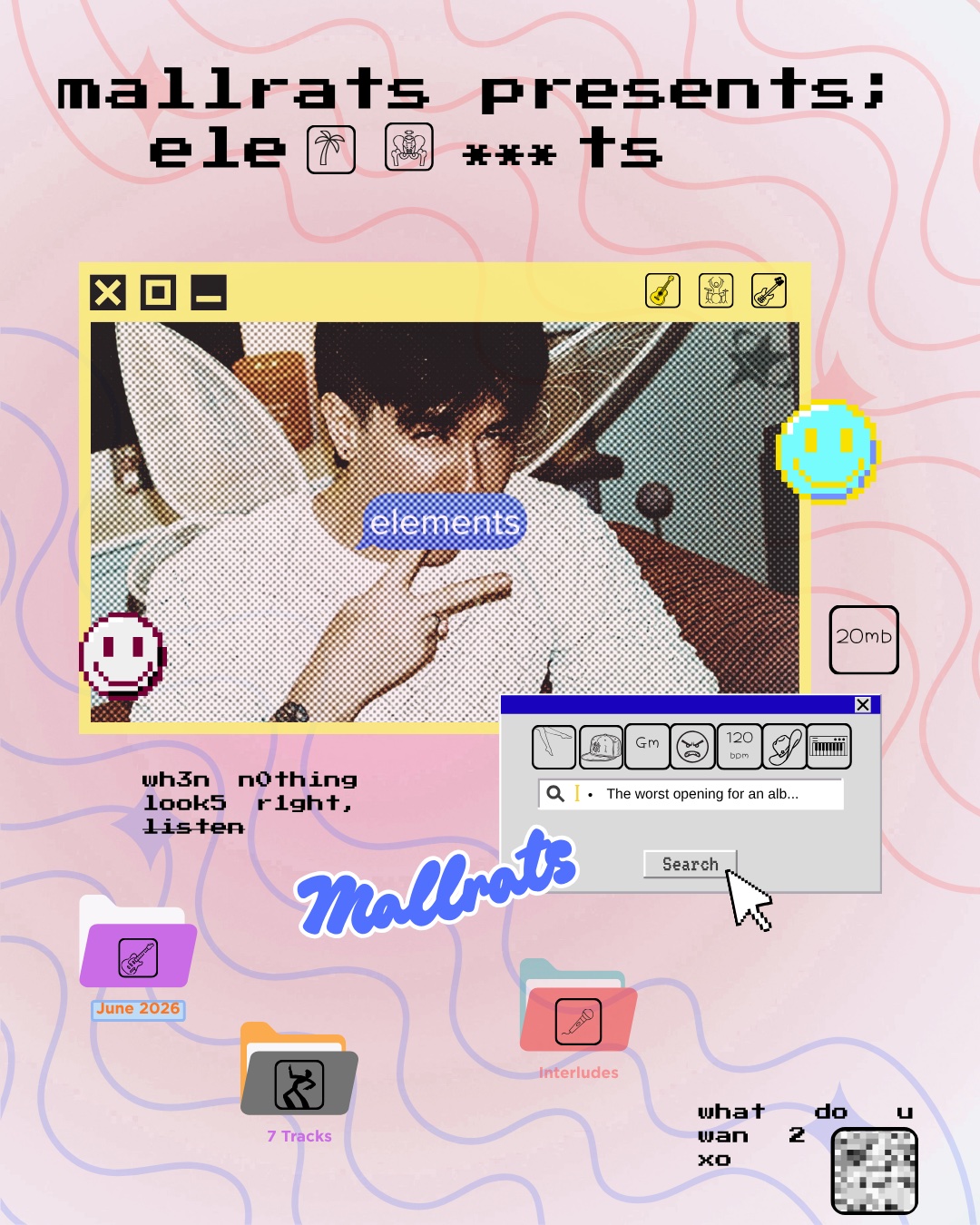
I faced challenges identifying the main concepts and themes for this project, with a primary focus on freedom of speech in music. After feedback from head lecturer Iain Taylor at UWS Ayr Campus, I further reflected on academic artefacts, emphasising self-expression, accurate representation, autonomy, and identity within the creative and communicative spaces of UK popular music scenes. The EP design was influenced by an analysis of the popularity and impact of short-form content (Manic, 2024). This reflects the widespread use of apps like TikTok, Instagram Reels, and YouTube, which enable quick expression of opinions and creativity, often resulting in short-term dopamine boosts (Arouch et al., 2025). I included this in a personal reflection on how we communicate and express ourselves; it suggests that we may neglect interpersonal communication through self-censorship, thereby affecting identity development across various spaces (Ruben et al., 2021). The stylistic shifts across genres such as Rap, Lo-Fi, Country, Jazz, Funk, Soul, Disco, Pop, Electronic, Orchestral, and Acoustic illustrate rapidly changing moods, as multiple voices and opinions are heard simultaneously. As part of my personal reflection on the creative process and its context, I created a document outlining the project’s artistic development as an artefact. I believe that including visual elements to represent the artist-producer collaboration enhances understanding. As the decision was made to cut parts of the EP to fit within the submission guidelines, it was also decided to include more contextualisation of artist representation in another creative way. The digital file within the submission strengthens the connection between the artist and the researcher.
ARTEFACT DOCUMENT
The focus on short-term content aligns with the project’s promotional aspect, with the above apps serving as the primary promotional tools. Given TikTok’s previous scrutiny for censoring voices based on gender, sexuality, disabilities, and ethnicity (Ungless et al., 2025), promotional campaigns will run across all platforms. On TikTok, they are more likely to raise awareness of censorship. To seek feedback, I approached other musicians, fans of my works, peers and lecturers at UWS Ayr. The feedback sessions included arranged Zoom calls, in-person meetings, one-to-one listening sessions, and supervisor meetings with Iain Taylor and Paul McGeehan of UWS Ayr. Development steps were guided by feedback, and the project was shaped by it, shifting the concept’s focus from a very abstract “free speech” approach to identity and artistic autonomy. This allowed the project to move from a purely political focus to a focus on hierarchical and structural control within the UK pop music scene. The meetings and one-to-one listening sessions encouraged further development of the grounding arguments in lived experiences and spatial theory, further strengthening the link between my sonic decisions and theoretical thinking/processing. The feedback sought assisted in refining my concept from an opinion-led to a research-led approach, helping to shape my creative, academic, and theoretical opinions.
After seeking public feedback on the 3rd song, “smooth,” as a single, four individuals suggested releasing it in early summertime, citing the track’s feeling and energy. The rest of the EP was then sent to listeners, and all four said to release the full EP around that time, scheduled for 26th June 2026, as the feedback from multiple listeners was consistent with an early summer release. This made me think about artists who have had to change their style to appear more profitable – raising the question of whether we now must create with economics in mind?
Critical Reflection
The listener can engage with this contextualisation through 3 layers: first, at the micro-level, with the narrative structure playing the EP track-by-track, each track exposing a different mechanism of censorship. Secondly, at the macro-level, the theoretical framework appears sonically through theory and audible manifestations. Thirdly, at the meso-level, practice-as-research takes the research question and the submission format itself and implements them as a form of censorship and restricted expression as the listener experiences what the contextualisation theorises.
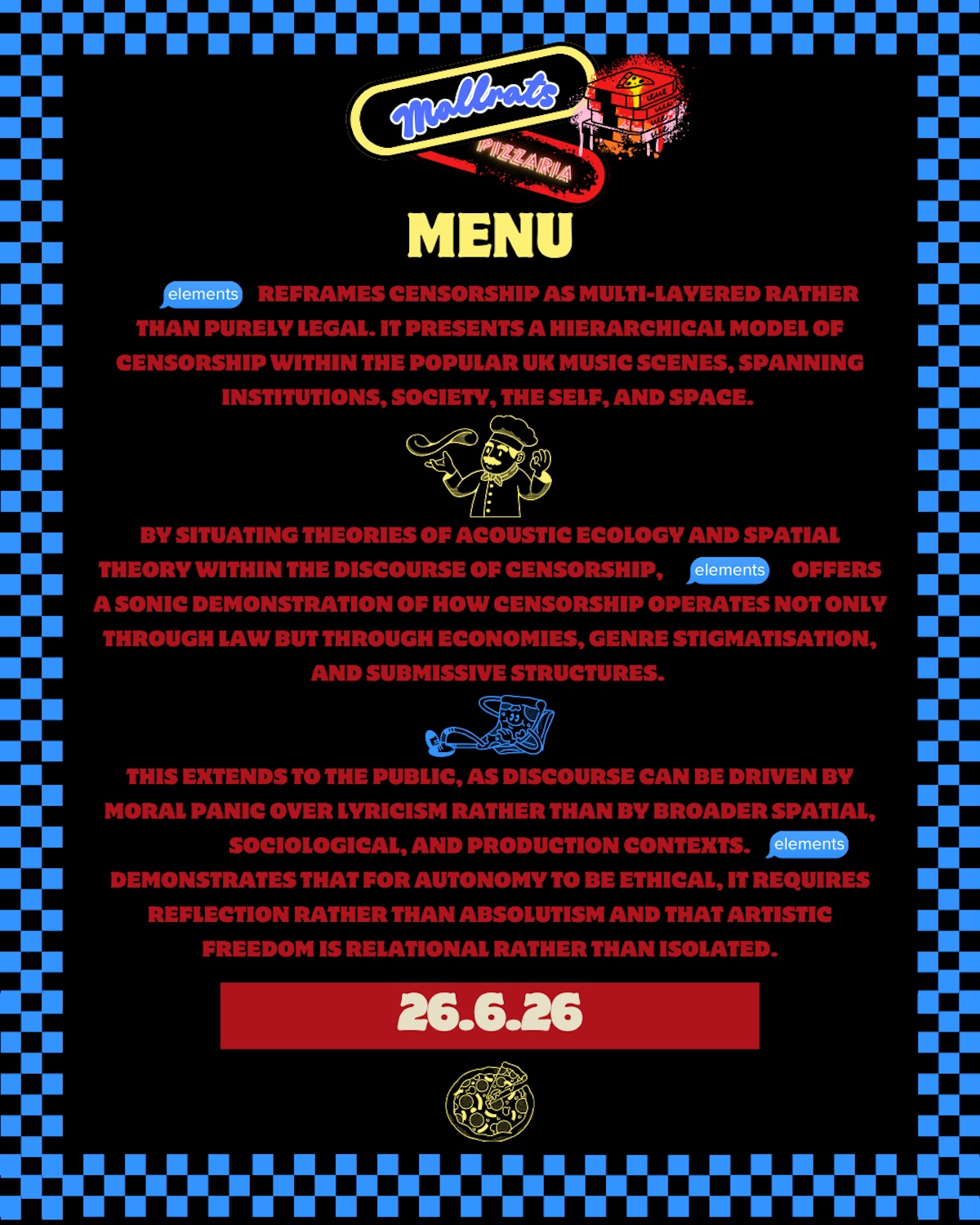
This project reframes censorship as multi-layered rather than purely legal. It presents a hierarchical model of censorship within the popular UK music scenes, spanning institutions, society, the self, and space. By situating theories of acoustic ecology and spatial theory within the discourse of censorship, the project offers a sonic demonstration of how censorship operates not only through law but through economies, genre stigmatisation, and submissive structures. The project contributes to the view that practice-based research can serve both as an illustration and as a theoretical argument, positioning self-censorship as equally significant as institutional censorship, since both are equally damaging to music and the arts. This extends to the public, as discourse can be driven by moral panic over lyricism rather than by broader spatial, sociological, and production contexts. A further contribution is the demonstration of how urban field recordings can serve as socio-political evidence and further embed theory more deeply into the sound design choices in the submitted field recordings and tracks. A methodological contribution is to treat the submission constraints themselves as part of the conceptual argument and to use the dual-release format as a structural research design.
Additionally, the project demonstrates that for autonomy to be ethical, it requires reflection rather than absolutism and that artistic freedom is relational rather than isolated. Professionally, this project contributes to the DIY approach of spatial awareness in production by grounding itself in my own space and place. This allowed me to offer a framework for ethical artistic autonomy that proposes something beyond the ‘absolute free speech’ rhetoric by showing how independent artists can critically and personally respond to discrimination from industries and those in power through composition.
— —
:: stream/purchase elements here ::
— —
— — — —
Connect to MALLRATS on
Instagram, TikTok
Discover new music on Atwood Magazine
© courtesy of the artist
 © courtesy of the artist
elements
an album by MALLRATS
Bibliography
Amen Dunes (2018) Freedom [CD]. Electric Lady Studios, Sunset Sound, Trout Recording, Future Past Studios, NY & CA: Chris Coady & Damon McMahon.
Arouch, S. et al. (2025) The impact of short-form video use on cognitive and Mental Health Outcomes: A systematic review [Preprint]. doi:10.1101/2025.08.27.25334540.
Augoyard, J.F. and Torgue, H. (2005) Sonic experience: A guide to everday sounds. Montreal: McGill-Queen’s University Press.
Bain, V. (2019) Counting the Music Industry: The Gender Gap A study of gender inequality in the UK Music Industry. rep. London, England: QMU.
Campbell, C. (2025) British Rap: Is it problem music or a relfection of sociological issues? An analysis of individual and collective violence as depicted in British rap music from 2010-2025. rep. Ayr, Scotland: UWS.
DeNora, T. (2000) Music in everyday life. Cambridge: Cambridge University Press.
DeNora, T. (2003) After adorno: Rethinking music sociology. Cambridge: Cambridge University Press.
Devereaux, M. (1993) ‘Protected space: Politics, censorship, and the Arts’, The Journal of Aesthetics and Art Criticism, 51(2), pp. 66–85. doi:10.2307/431387.
Guillard, S. and McGillivray, D. (2022) ‘Eventful policies, public spaces and neoliberal citizenship: Lessons from Glasgow’, Cities, 130, p. 103921. doi:10.1016/j.cities.2022.103921.
Henderson, J. (2025) ‘TRNSMT Festival Snubs Female Headliners for Ninth Straight Year’, CITY LIVE, 13 November.
Hesmondhalgh, D. (2012) The Cultural Industries. London: SAGE. pp. 10-32.
Howard, J.W. (2019) ‘Free speech and hate speech’, Annual Review of Political Science, 22(1), pp. 100-106. doi:10.1146/annurev-polisci-051517-012343.
Johnson, B. and Cloonan, M. (2008) Dark side of the tune popular music and violence. Burlington, VT: Ashgate.
LaBelle, B. (2019) Acoustic territories: Sound culture and everyday life. London: Bloomsbury Academic.
Lefebvre, H. and Nicholson-Smith, D. (2017) The production of space. Oxford, OX, UK: Blackwell.
Manic, M. (2024) ‘Short-form video content and consumer engagement in digital landscapes’, Bulletin of the Transilvania University of Brasov. Series V: Economic Sciences, pp. 45–52. doi:10.31926/but.es.2024.17.66.1.4.
MULLVAD (2026) ‘And then? And then Mullvad was censored in the UK. Watch the banned ads here.’, Mullvad VPN, 20 February. Available at: https://mullvad.net/en/and-then/uk (Accessed: 21 February 2026).
Mundey, S. (2022) ‘Festivals in Glasgow 2022: How many female headliners are there at your local music festival?’, GLASGOW WORLD, 23 May.
Nokes, C., Cameron, L. and Colburn, E. (2023) Misogyny in music. rep. London, England: House of Commons.
North, A.C. and Hargreaves, D.J. (2008) The social and Applied Psychology of Music. Oxford: Oxford University Press.
Orson Welles (1938) The Mercury Theatre on the Air: The War of the Worlds [CD]. Columbia Broadcast Building, 485 Madison Avenue, 52nd Street, New York City, NY: CBS.
Pink Floyd (1979) The Wall [CD]. Super Bear Studios, Britannia Row, LA, France, London & LA: Roger Waters, David Gilmour, Bob Ezrin, James Guthrie.
Ruben, M.A. et al. (2021) ‘Is technology enhancing or hindering interpersonal communication? A framework and preliminary results to examine the relationship between technology use and nonverbal decoding skill’, Frontiers in Psychology, 11. doi:10.3389/fpsyg.2020.611670.
Ruparelia, A. (2020) ‘Virtue, silencing and perception’, Dianoia: The Undergraduate Philosophy Journal of Boston College, 7(1), pp. 15–25. doi:10.6017/dupjbc.v7i1.12729.
Schafer, R.M. (2006) The Soundscape our sonic environment and the tuning of the world R. Murray Schafer. Rochester: Destiny Books. pp.133-214.
Ungless, E.L., Markl, N. and Ross, B. (2025) ‘Experiences of censorship on tiktok across marginalised identities’, Proceedings of the International AAAI Conference on Web and Social Media, 19, pp. 1952–1965. doi:10.1609/icwsm.v19i1.35912.
Westra, E. (2021) ‘Virtue signaling and moral progress’, Philosophy & Public Affairs, 49(2), pp. 156–178. doi:10.1111/papa.12187.
Whiteley, S., Bennett, A. and Hawkins, S. (2017) Music, space and place: Popular Music and Cultural Identity. London: Routledge, Taylor & Francis Group. pp. 149–200.