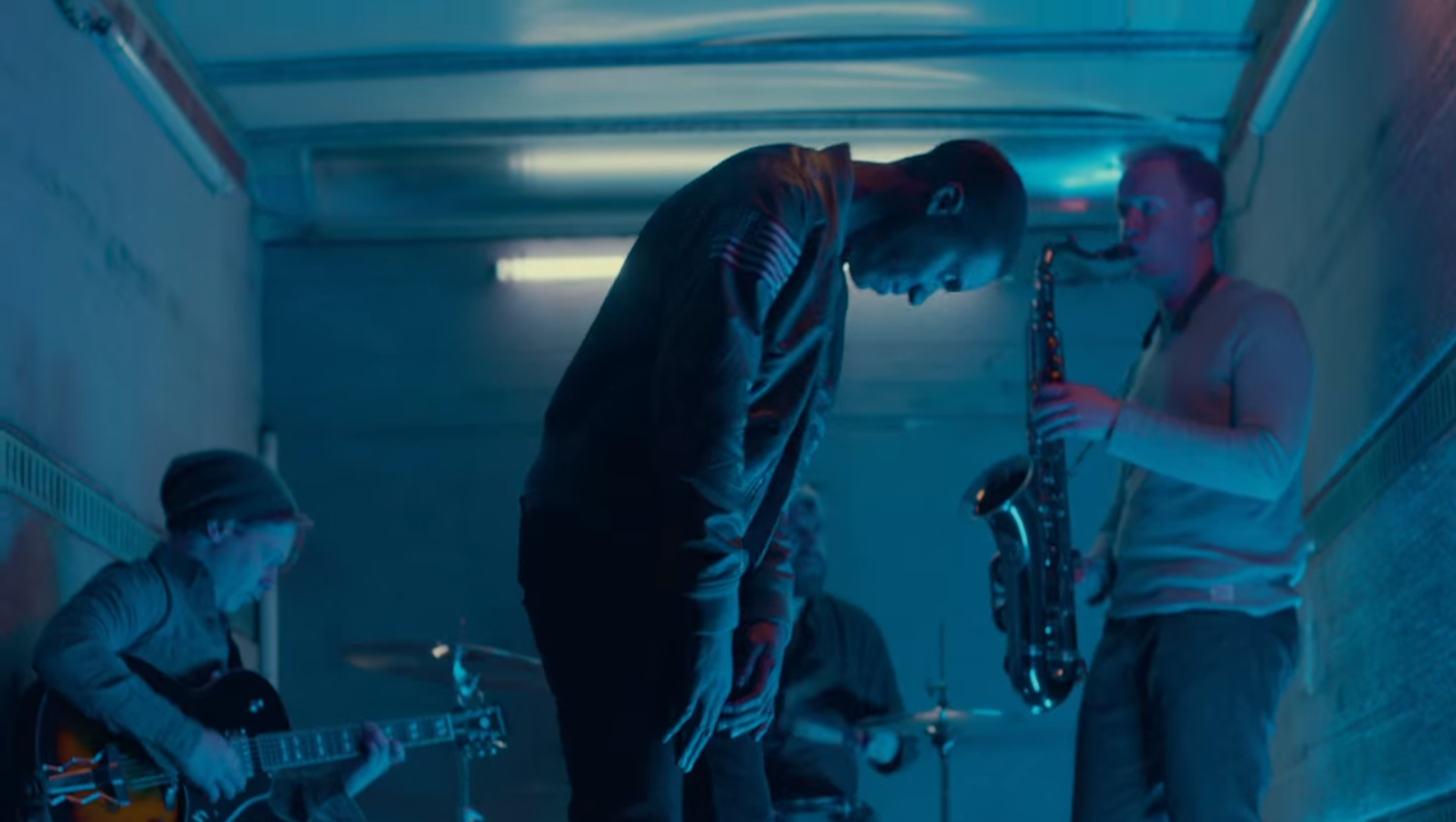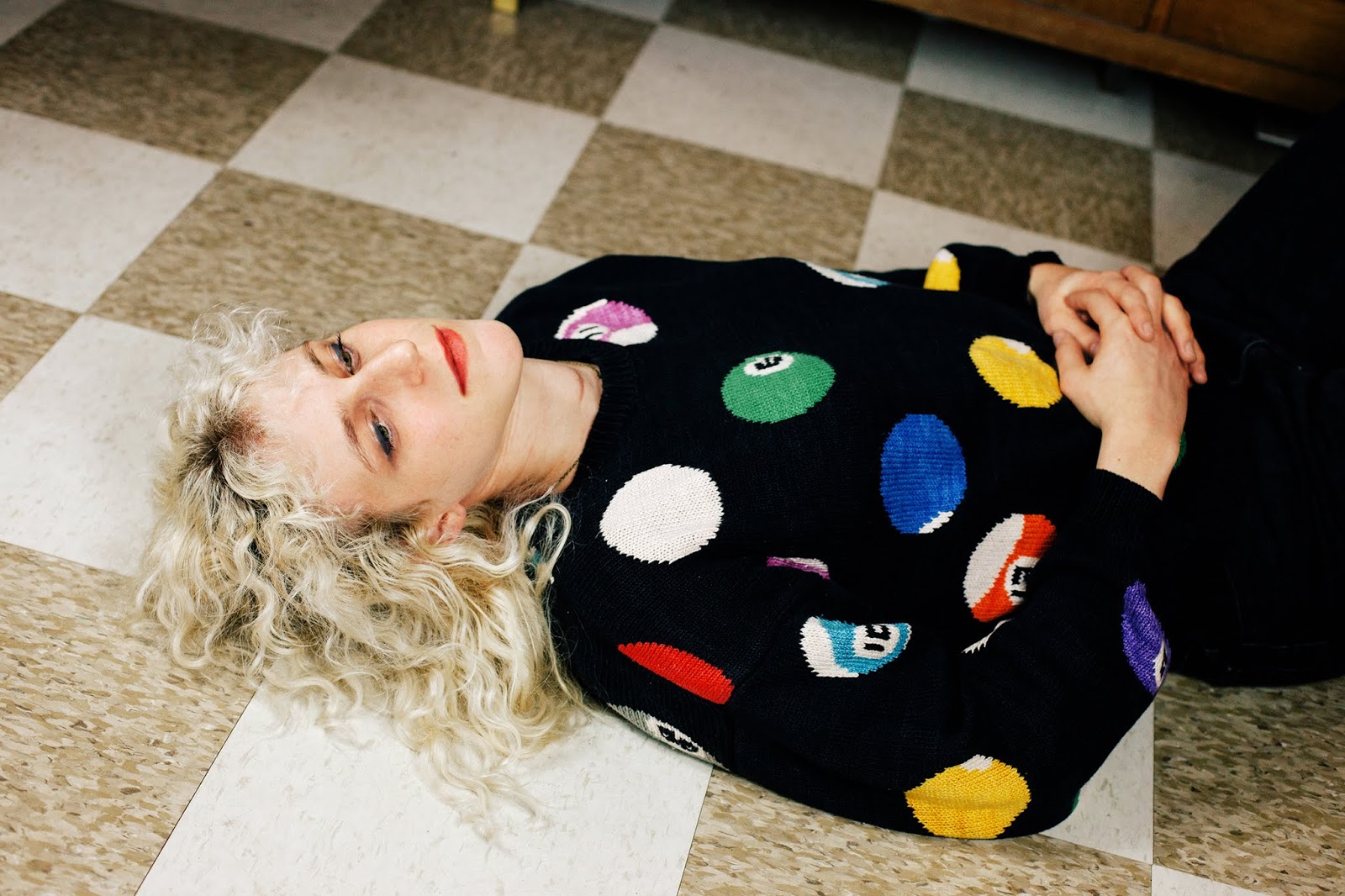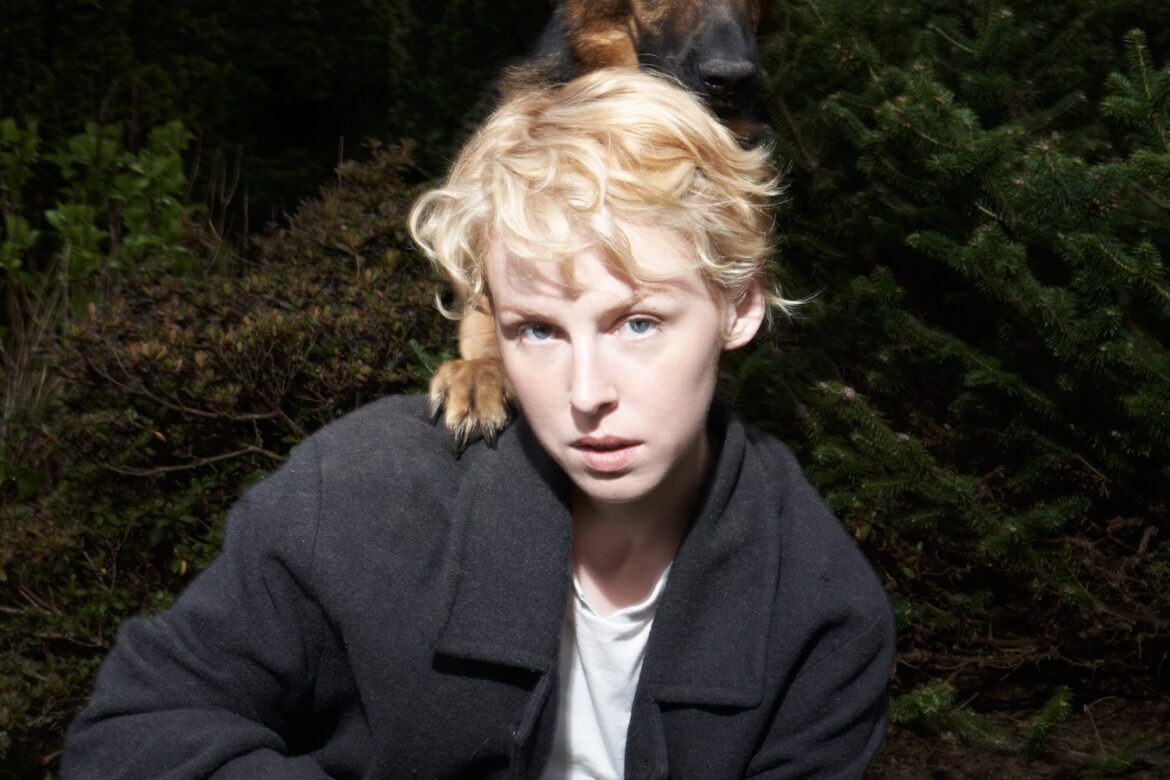
Singer/songwriter Fenne Lily lets old pain and new love coexist on “Uh Huh,” the warm, weathered, and wistful lead single from her long-awaited fourth studio album, ‘Win Win.’ In conversation with Atwood Magazine, she shares lessons from her first decade in music, celebrates the friends who gave her new record its communal pulse, and reveals why this shrug-and-a-wink song had to lead her next chapter.
Stream: “Uh Huh” – Fenne Lily
I write when I’m trying to figure something out. Luckily for me, I’ve had a lot of breakups, and that has been most of the fuel behind my writing.
* * *
Heartbreak doesn’t always leave cleanly. Sometimes it follows you across coasts, through apartments and heatwaves, into new rooms and new love, softening with time but never quite disappearing.
Fenne Lily’s “Uh Huh” inhabits that tender afterlife – the strange, aching space where one love has ended, another has begun, and the body is still learning how to believe in safety again.
Released June 2nd, the lead single off her forthcoming fourth album Win Win is beautiful, brutal, and wonderfully alive all at once: A dreamy, country-kissed indie folk reverie full of warm, sunlit sonics, hushed vocals, and lyrics so plainspoken they send feeling shooting straight through the chest. “Does it hurt to talk about it? Uh huh / ‘cause you never thought to doubt it? Uh huh,” she sings, turning the smallest sound of affirmation into a whole emotional weather system – exhaustion, recognition, resignation, and the faintest flicker of a smile.
One sound holds an entire conversation – it hurt, I know, and I’m still here.

Home from California
looking like the hell you’ve seen
You only brought the clothes you’re in
And she missed you and you’re older
And you’re back laid on her shoulder
Talking about love again
Out October 23, Win Win marks Fenne Lily’s first album since 2023’s Big Picture, as well as her first release for Nettwerk Music Group. Written and recorded after her move from England to New York, the record began in the wake of an unexpected breakup, a crisis of confidence, and the untethered shock of trying to find herself in a city that could feel too large, too loud, and too unforgiving. Across its ten songs, Lily transforms that vacuum of loss, loneliness, and self-doubt into a body of work rooted in self-preservation, rediscovery, and emotional openness – a record she describes, simply and beautifully, as music that sounded like the sun was out.
That light matters because it has been hard-won. Lily has been writing songs since she was 14, and while her influences, collaborators, and surroundings have shifted with time – from Bristol to Chicago, North Carolina to Brooklyn – her core impulse has remained the same: She writes to understand what’s happening inside her. “I write when I’m trying to figure something out,” Lily tells Atwood Magazine. “Luckily for me, I’ve had a lot of breakups and that has been most of the fuel behind my writing.” She laughs at the pattern, but there’s a deep seriousness beneath it, too. “The music is the softest part of me,” she says – and that softness, in her hands, is not fragility so much as truth given room to breathe.
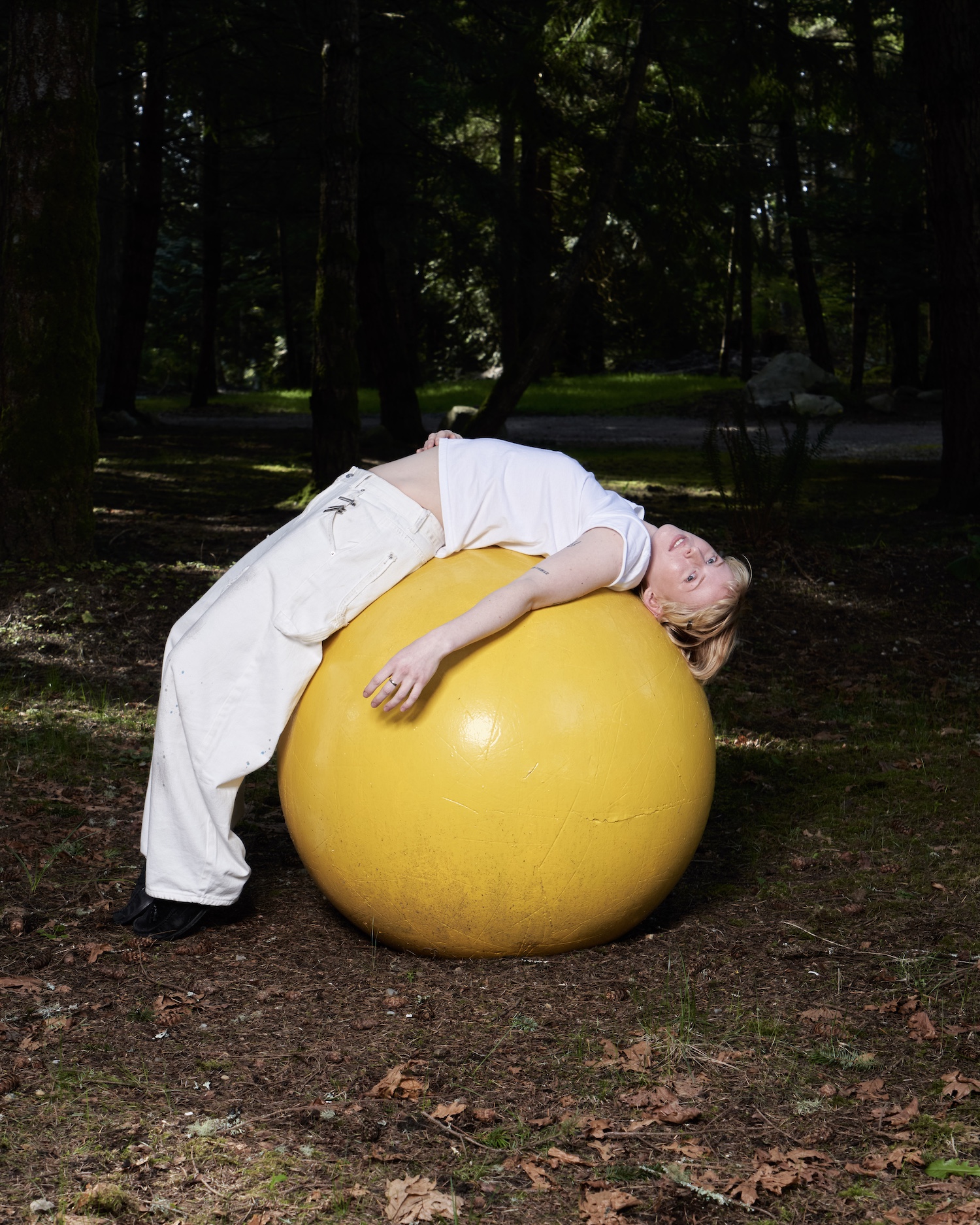
“Uh Huh” began in Beacon, New York, after a swim with friends, instruments set up in the living room, and a joke-song premise built around claims and tiny nods of agreement.
Back home, the chorus kept calling to her. What had started as play revealed itself as the missing piece of a much larger story: A song about falling in love again while the last love still hurt, about moving from pain and dissolution onto steadier ground without pretending the pain had vanished. “It really is like the clearest description of moving from pain and dissolution onto more stable ground while still recognizing that if you’re hurt in the way that I was hurt, that I know other people have been hurt, it never really goes away,” Lily reflects. “But it becomes less of a big deal. It’s like a shrug and a wink of a song.”
That shrug is everywhere in “Uh Huh,” but so is the wound beneath it. Lily’s delivery is gentle and conversational, her voice close to the ear and warm around the edges, while the music moves with a quiet steadiness that feels both sweet and sure of itself. Acoustic textures glow, the rhythm sits upright and purposeful, and the arrangement carries a soft country tint – “British country music,” as Lily calls it – without losing the murmured intimacy that has long made her songwriting feel so disarming. She wanted the song “to be solid, sound strong and sure of itself,” and it does: Not loud, not armored, but sturdy enough to hold an old hurt without collapsing around it.
You say it’s nothing like the last time
Think I found the real thing
If I only have this one life
It should take the shape I’m in
He just wanted to surround me
I just wanted to believe when he said
“Every time my heart broke
it was leading you to me”
At the song’s center is that luminous line: If I only have this one life / it should take the shape I’m in. It sounds simple until it hits, and then it feels enormous – a declaration of self-acceptance from someone surprised to realize she means it. Lily has said the line proved to her how much had changed, how far she had moved from the panic and sadness that came before. In our conversation, she described returning from California with barely any of her things after being broken up with over the phone, immediately calling the friend who would hold her through the aftermath, and dissolving into a kind of grief so physical it changed how she moved through the world. “I came back and completely dissolved into panic and sadness,” she says. “But with the drum beat that we have on this track, with how kind of strident and purposeful it sounds, I guess people probably wouldn’t picture the reality of it. But I love a story song.”
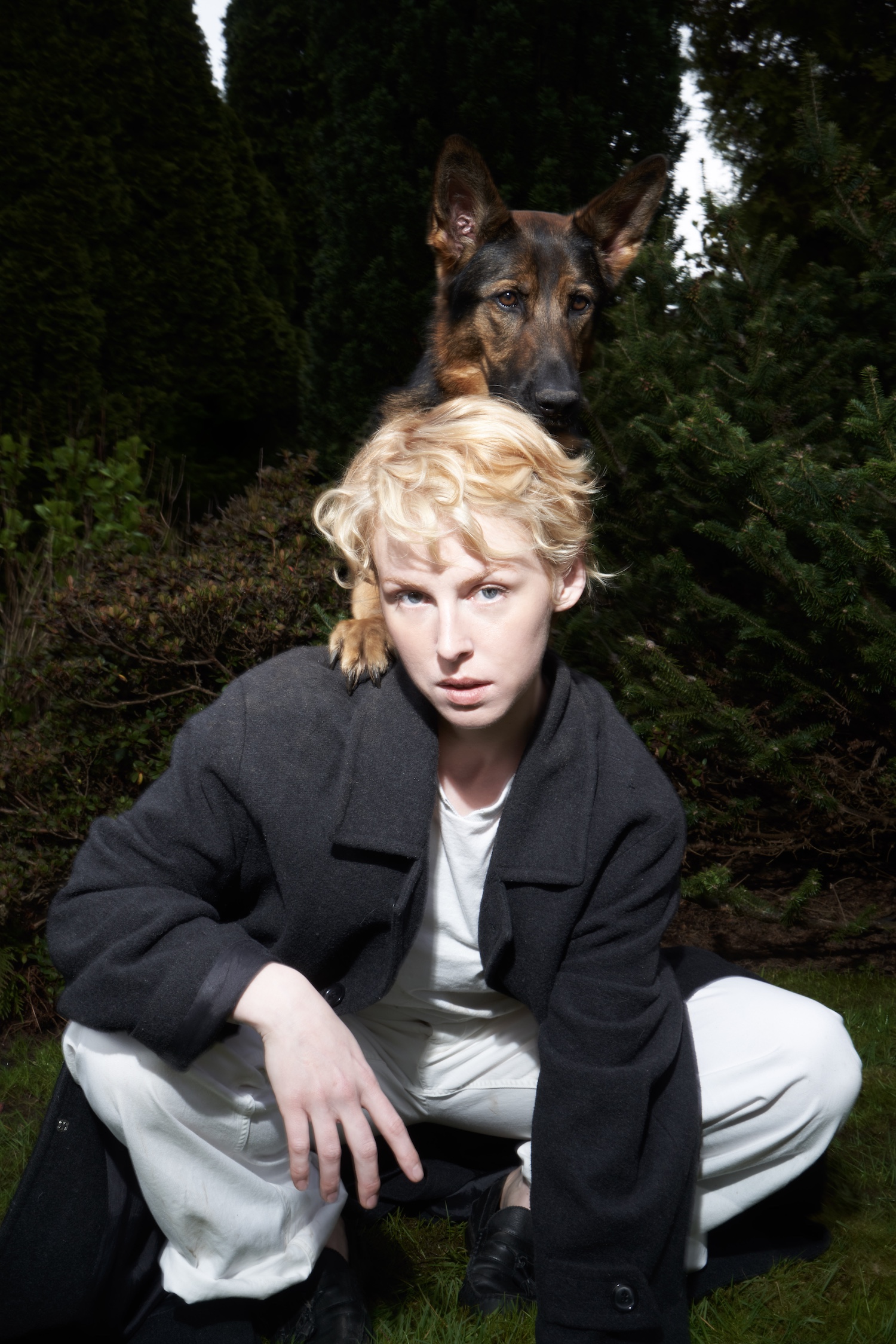
The story keeps shifting perspective – first person, third person, self-address, conversation – until “Uh Huh” feels like Lily sitting beside her past self, asking the questions that don’t need explaining anymore.
Does it hurt to think about it? Uh huh / ‘cause you really thought you’d found it? Uh huh. That refrain cuts because “uh huh” is barely language, and yet here it says everything: Yes, it hurt. Yes, it still does. Yes, I know. Yes, I am tired of saying it out loud. Lily connects it to the kind of care that arrives when someone trusted can name the feeling for you, sparing you the labor of explaining yourself one more time. “When you’re so tired of explaining how sad something has made you, how useless something has made you feel, and you’re talking to someone you trust and who understands, and they are positing ideas about how you feel so you don’t have to describe it anymore,” she says. “The least effort response is… like a primal grunt of affirmation.”
That emotional economy gives “Uh Huh” its ache, but its warmth comes from the people in the room. Lily wrote alone, as she always has, but Win Win opened the process up more than ever before, bringing longtime English bandmates and New York collaborators into music born from isolation. “I always make everything I’m making with my friends,” she says. “I write alone and record with my friends.” That communal texture can be felt in the single’s living pulse: The song sounds delicate, but never solitary; raw, but carefully held. It’s one of those rare breakup songs that does not make pain the only point. Instead, it lets pain become part of a wider landscape – friendship, new love, summer heat, Brooklyn rooms, the body remembering how to stand upright again.
How I see it, it’s a lonely life
without this kind of
Time doesn’t heal
everything but it tries
That line may be “Uh Huh” in miniature: Clear-eyed, funny in its bluntness, deeply wise without making a show of itself. Time doesn’t fix the break, exactly, but it does something. It tries. And so does Lily. By the final verse, love is no longer a fall so much as a climb – difficult, deliberate, worth the bruises it may leave behind. The last time you have it, it won’t kill you / You still wanna do this? Uh huh. It’s a devastating little victory: Not innocence restored, but courage returning with a limp and a grin.
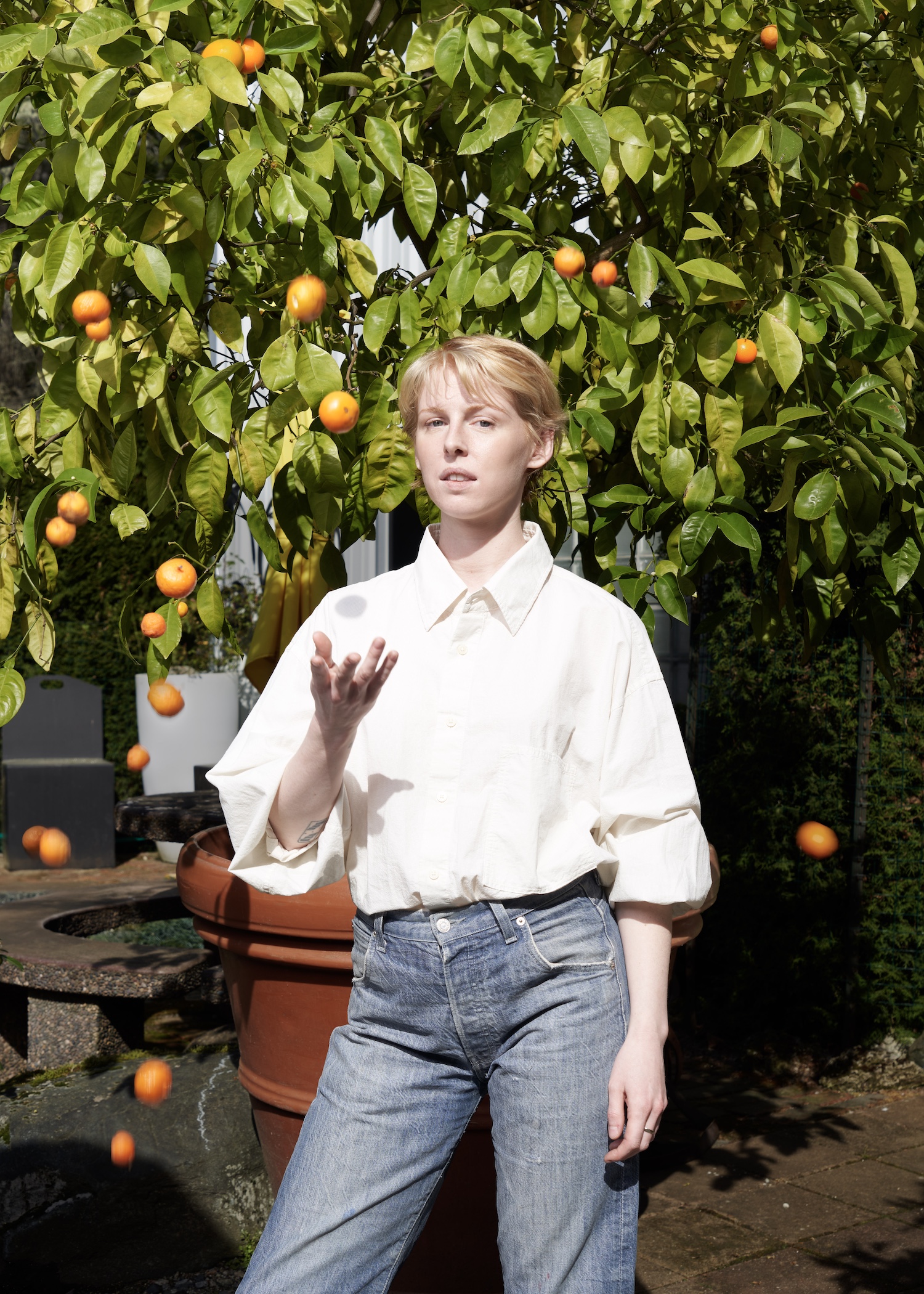
Lily hopes listening to “Uh Huh” feels “peaceful and joyful,” even if the space it came from was anything but.
She talks about wanting the song to become part of someone’s “roster of safe songs,” the kind of track you return to without having to decide what you need from it. That ambition suits “Uh Huh.” The song asks for no grand catharsis. It sits beside the listener, names the hurt without enlarging it, and leaves the door open to love anyway – offering recognition, warmth, and a place to rest inside the unfinished work of healing. As the first light from Win Win, it finds the singer/songwriter bruised but not broken, tender but not adrift, moving through heartbreak with candor, dry humor, and a voice that makes even the smallest words feel like they have weathered whole lives. Beautiful, brutal, and glowing with hard-won grace, “Uh Huh” is the sound of love hurting, changing shape, and somehow still being worth the climb.
Will it hurt to think about it? Uh huh
And you’ll never wanna doubt it? Uh huh
The last time you have it, it won’t kill you
You still wanna do this? Uh huh
In conversation with Atwood Magazine, Lily traces the decade that led from writing her debut single “Top to Toe” at 15 to opening Win Win up to the friends and collaborators who gave its private grief a communal pulse. She speaks candidly about the breakups that shaped her new record, the city that unsettled and remade her, and the growing confidence that has allowed her to trust her instincts more fully. She also shares the records she keeps close, the painting taking shape in her apartment, and the children’s sousaphone recital at Carnegie Hall that reminded her why making music with other people still feels like magic. Less interested in reinvention than in understanding what has endured, Lily is learning to stand more firmly inside the identity she has built – still writing to make sense of her world, but increasingly assured that a song does not need to resolve every uncertainty in order to tell the truth.
The music may be the softest part of Fenne Lily, but she has never sounded more sure of what that softness can hold.
— —
:: stream/purchase Uh Huh here ::
:: connect with Fenne Lily here ::
:: pre-order Win Win here ::
— —
Stream: “Uh Huh” – Fenne Lily
A CONVERSATION WITH FENNE LILY

For those who are just discovering or rediscovering you today through this write-up, what do you want them to know about you and your music?
Fenne Lily: It’s the antithesis of AI. That’s the first thought that came to my mind. I have been writing music since I was 14. The first song I ever wrote and uploaded to the world afforded me the opportunity to keep making music, and it hasn’t really changed form in the sense that I write when I’m trying to figure something out.
Luckily for me, I’ve had a lot of breakups, and that has been most of the fuel behind my writing. But I moved to New York three years ago, and I didn’t have a breakup straight away, so I had to write about other stuff. I was writing about my life and the fact that where you go follows you – not in an It Follows way, but the stuff I learned and was around when I was a kid is still rolling around, making life hard and difficult. So I was writing about other stuff, and then I had another breakup. That’s this record.
What do I want people to know? I would say that if you heard my singing voice and the way I speak about things in songs, you might think it’s antithetical to the way I am as a person. The music is the softest part of me. I also make everything I’m making with my friends. I write alone and record with my friends. I think a lot of people I know do that – all the people I know are musicians – but I feel like that’s becoming less and less common, and that makes me sad. All the records I loved growing up felt like you could recognize a close bond between the people who put them together. I’m trying to keep that theme going in what I make.
“Top to Toe” first came out 10 years ago, and there will be people who still know your name because of that song. How do you feel your artistry has grown and evolved over those 10 years – not only from what people last heard three years ago, but through whatever is on the horizon in 2026?
Fenne Lily: Artistry is a big word. When I wrote that song, I was 15, and I recorded it without thinking it would be heard by certainly not that many people. I was at art school, I wanted to be a painter, and that was what I was putting my energy into. I was writing as a hobby.
The thing that hasn’t changed from then to now, even though everything else has changed around it, is that nothing about that song felt wrong once I had finished writing and recording it. Even while I was recording it, none of it felt like I was trying to do something that wasn’t easy or natural. Parts of writing, recording, and releasing music are difficult, but it felt right. That has continued, and I’m lucky for that.
The main thing that has evolved is that, when I was 15 and made that whole first record as a teenager, I was listening to a very limited type of music. I was primarily listening to music that was, for lack of a better word, solo and quite contained. When I made the next record, the people I was playing music with were listening to post-punk and Modest Mouse. Then I made my second record with one of the guys who made a Modest Mouse record. The influences developed as I got older, but the thing that stayed the same was that I was always writing from experience. What I was writing felt, certainly at the time of writing, exactly like what I should be doing. I wasn’t reaching to be like, “I’m writing a rock record,” or, “I’m writing a concept album about this mug,” or whatever.
In simple terms, I’ve got older, and I’ve got less precious about every part of the process having to be me. I realized, certainly on this record that’s about to come out, that the thing I can do best is the writing. I always find it uncomfortable to say that I’m a musician because I’m surrounded by actual musicians – people who can pick up any instrument and play it well. But I do think I’ve grown stronger as a songwriter and become more confident about that stuff. That’s where my responsibility ended for this record. I do play instruments on it, but I was thinking, “What would happen if I let go a bit and brought people into this?” It doesn’t have to be an isolated process just because the things I’m writing about came from a place of feeling isolated. I let more people into the room.
You’ve described making music with your friends and letting more people into the room. Music is so much about community – strangers becoming friends, or friends becoming even closer through creating together. What does that communal side of music mean to you?
Fenne Lily: I was thinking about this recently. Yesterday, my roommate and I went to our downstairs neighbor’s kid’s sousaphone recital. She’s a child and she plays the sousaphone. We went to support her, and it was amazing. It was at Carnegie Hall, and there were all these kids from different schools playing music unamplified. They were amazing musicians, and they were children. It was incredible.
I could enjoy it completely because I was never in that world. My roommate used to play violin in an orchestra when he was growing up, and he couldn’t fully relax into watching it because he had competition attached to his enjoyment of that type of music.
I felt so lucky sitting in that room because, even when I’m at an indie rock show, listening to Springsteen, or listening to music at my house, I’m never feeling like I missed out on something, like I don’t have something anymore, or that what I enjoy is unattainable.
I’m still in the headspace – and I hope it continues – where I’m so stoked that people have been doing this for so long, it’s still being done, and I’m doing it.
This is part of the reason I moved to New York. Not that the music scene in Bristol isn’t amazing – it’s really good – but there are trends in the music there. Right now, it’s more of the post-punk type of thing. It’s a smaller place, so there’s less variety.
I wanted to go somewhere where every type of music is being made and explored at all times.
You moved to New York in fall 2022. Is this the first record you’ve made while actually living in the city?
Fenne Lily: Funnily enough, I made my second record in Chicago, and I made my third record in North Carolina. This record I made in Brooklyn while I was living here, so it’s the first record I made while living here.
Fenne Lily – a very American artist. Do you still make physical art? You mentioned that you went to art school.
Fenne Lily: I’m working on a painting right now. I’m painting my boyfriend asleep, and I’m going to put it above his bed.
The pink is the background. I still have to do all the skin, but he bought me an easel for my birthday, and as soon as he gave it to me, I thought, “I need to be painting again. This is stupid. I don’t do it anymore.”
It has been three years since the release of your third album, Big Picture. What is your relationship with that record and its songs today?
Fenne Lily: That’s a really good question. I don’t feel negatively about any album I’ve made because I loved the people I was writing about, and I loved the people I made them with. Big Picture was a stepping-stone record because it was about a stepping-stone time. It’s probably the saddest record for me, despite the fact that it may not sound like it.
If you listen to On Hold, it sounds like it’s coming from someone who is at a breaking point or underneath a feeling. Some of the songs on Breach sound the same. I feel like Big Picture sounds the most resilient, but I was really struggling. I was in love with someone, and we were fighting a lot. It was COVID, and I had just released Breach, and no one had listened to it because it was COVID. It was this trauma capsule. But when I was recording Big Picture in North Carolina, I realized there was life to be enjoyed outside my head. The process of making and releasing that record made me realize that being in motion and being away from home was what I needed. I’m grateful to it for that.
I will say I haven’t listened to it since it came out. You listen to a record so much when you’re mastering it. I still don’t really know what mastering is, but I know it makes a difference. About three months ago – we’re in 2026 – I woke up to a text from my ex-boyfriend, who I had been living with during COVID and who Big Picture is largely about. The text said, “I don’t know why, but today, on my way to work, I put on Big Picture. I want to say that you did an amazing job, and I hope you’re doing well. I hope that we can get a drink at some point. Here’s a picture of a mouse.” It gave me the feeling that it’s really cool that that time has been committed to a physical and audible entity. It was special and meant something, and now it’s going to be around forever, which is cool to me.
What are some of your musical North Stars these days, and what most excites you about the music you’re putting out today?
Fenne Lily: I love Brooklyn bands, honestly. Wild Pink are my favorite band right now. All the people who play on this record – my friend Jules Olson, Isaac Stalling, Sam Skinner. Emma Munger has a record I listen to a lot. The guy who recorded this next record made it with her, and it’s an amazing record.
Truly, though, yesterday all I listened to was the Beastie Boys, so I guess New York is also a North Star. Anything where it feels like the person singing isn’t making that singing face. You know when people do the singing face? I need to believe the voice, and I need to believe that the person singing believes what they’re saying. Anything that fits that category – and there’s a lot. I recently found a guy called Thomas Dollbaum. He’s really good. He has a record called Birds of Paradise.
I think I’m listening more to bands that sound like they might have recorded on a porch. There’s probably a banjo and an upright bass, but also overdriven guitars – Songs: Ohia-type stuff. It’s funny to be excited about something that I already feel has happened. I made the album, but I’m excited to play these songs live. With every record I make, I get closer to fully enjoying every song when we play shows.
There’s a lot going on with this record, and it’s very delicately woven together. The musicians who played on it are so proficient and locked in, and that made it possible. I’m excited to have that exist in a live space because, whenever I see a show where all the musicians are completely in it, it’s magic – like the sousaphone Carnegie Hall event. I’m excited to go on the road, and I’m excited to have updated music in the world. So much has shifted for me in the last couple of years, and it feels wrong to have nothing out there that reflects that. It will be an update to my life résumé.
What is the story behind your new single, “Uh Huh,” and why did you want to return with this song?
Fenne Lily: This was the last – that’s not true. It was the second-to-last song written for the record. I wrote it in the summer of 2024. I was on a trip with my friends in Beacon. (Let it be known that Mitch was punching the air.)
We were hanging out. We had just gone swimming, and we set up all our instruments in the living room of the house where we were staying. We were writing joke songs, and I was like, “What if the chorus of this joke song was just claims and then agreeing with them?” It didn’t get further than that. But when I came home, something about it felt like a missing piece of the puzzle. Up until that point, the record had been based in what had happened in the year before and before that. It had been very reflective and retrospective.
The way I write is that I have a melody, sing whatever comes to mind, and record all of it. Then I sift through it and pick the bits that work. Everything I was singing on this joke song was about how I was in love again, and how, even though I was in love again, the end of the last love still hurt. Would that ever go away? And if it didn’t, would that be all right?
It came together really fast. I was also moving house at the time. I moved house twice in one month because I moved into a new apartment where somebody was killed while I was living there.
While I was recording – it was February 2025 – I was trying to write the last couple of songs for the record, including “Uh Huh,” record other songs on the album, and move house twice. I got a chest infection, a UTI, and something else happened. It was nuts. But in that chaos, I thought, “This song feels important.”
I wanted to lead with it because it’s the clearest description of moving from pain and dissolution onto more stable ground while still recognizing that, if you’re hurt in the way I was hurt – and the way I know other people have been hurt – it never really goes away. But it becomes less of a big deal. It’s a shrug and a wink of a song. I don’t know how else to describe it. I also managed to get my English band to play on it, which was really cool. They were on holiday, and I made them come and record with me.
“I’m from California, looking like the hell you’ve seen / You only brought the clothes you’re in,” you sing at the song’s start. Can you share a bit about the world you paint in those lyrics?
Fenne Lily: It’s almost documentary for me. I’m not really thinking about what people are picturing when I’m saying what I’m saying. I’m picturing what happened. I was in California with this guy, and he left me over the phone when I returned to New York. I had left a bunch of stuff at his house because I expected to be back soon. I left a suitcase of clothes so I could fly back with my merch because I had just done a tour.
I came home without most of my stuff, got broken up with, and immediately called my friend. There’s another song on the record about her. She held me through all of this. Instead of coming back in love, ready to see everyone again and reenter my life, I came back and completely dissolved into panic and sadness. With the drumbeat on this track and how strident and purposeful it sounds, I guess people probably wouldn’t picture the reality of it.
But I love a story song. I love a song where there’s almost a The Old Man and the Sea-type singular character with a singular problem. The breakup is this big fish that I’m trying to kill, but maybe it will kill me. No spoilers. It doesn’t always have to be that literal, but if what you’re speaking about is interesting, why not say what happened? If we’re zooming in on “Uh Huh,” there were so many overlapping dramatic events. The simple fact of being broken up with is enough, but I was also calling New York home even though I’m from the UK and had only recently moved there. I was floating in this space between states and countries, and I was away from all of my support network. Then the song moves to falling in love again when I had expected to feel lonely for a really long time. There was no need for me to add a metaphor or screen any part of it. It really was a good story.
“Does it hurt to think about it? / ’Cause it hurt to think about it / Uh huh…” What does that little phrase represent in the context of the song?
Fenne Lily: You’ve probably been in this position. Let’s see what I’m about to say. It’s when you’re so tired of explaining how sad something has made you and how useless something has made you feel. You’re talking to someone you trust, who understands, and they’re positing ideas about how you feel so you don’t have to describe it anymore. My roommate was literally feeding me for a month. I was too sad to chew. I wouldn’t eat solid food. I was really a mess. I was a shell. He would be like, “Are you feeling empty and sick? Maybe you want to go outside?” The least-effort response, when you can’t find anything else to say, is that primal grunt of affirmation.
The song is also in the third person. When I was writing it, and when I sing it, I’m truly having a conversation with myself. “Does it hurt to think about it?” It still does. That whole breakup is painful and strange. You’ll never want to doubt it – “it” being love. I will never want to expect the worst of someone again. But that seed has been planted, so I probably will.
I lost the thread of the question, but I also thought it was funny. You can be as intelligent and smooth with language as possible in a song, so why not also be like, “Uh huh”? I draw the line at saying “LOL,” but we’ll see. Maybe album five.
What do you hope listeners take away from “Uh Huh,” and what have you taken away from creating it and preparing to release it?
Fenne Lily: I hope that listening to it is, for lack of better words, peaceful and joyful, which is at odds with the space it came from contextually and thematically.
It’s a weird thought to have something I’ve been holding for so long belong to other people soon. There have been a few songs over the last two years that I go to as safe songs. Sometimes I need to listen to something, but I don’t want to make a decision, so I go to the same three songs. I’ll always love them for that. I hope at least one person out there is like, “Welcome to my roster of safe songs.”
Once it’s out, I don’t think I’ll feel strange about it. But right now, it’s daunting because it means so much to me, and the world may not care. That’s fine. That’s the risk we run caring about things.
What are those safe songs?
Fenne Lily: “Enough to Make You Laugh” by Chartreuse, “To Be Forgotten” by Squirrel Flower, and “Dulling the Horns” by Wild Pink. Those are my go-to songs. And “Sabotage” by the Beastie Boys. That was yesterday.
In the spirit of paying it forward, who else are you listening to these days?
Fenne Lily: Horse Like Me by Red PK. It’s a great record. Really, really good stuff.
Companion by Sluice. Great band.
Ken Yates – I’ve been listening to a lot of Ken Yates.
Deftones probably don’t need me to shout them out. They’ve got enough going on.
There’s also the band Hut. They’re kind of like an indie Brooklyn supergroup. Their record is also called Hut, and one of the songs on the album, “Hook,” is by Hut, too. They’re special.
Everyone should also be listening to Losin’ by Colin Miller. To me, it’s a perfect record.
We’ve talked about so much today. Is there anything we missed that we should have uncovered?
Fenne Lily: It’s hard for me to know what I should say about stuff.
— —
:: stream/purchase Uh Huh here ::
:: connect with Fenne Lily here ::
:: pre-order Win Win here ::
— —
Stream: “Uh Huh” – Fenne Lily
— — — —

Connect to Fenne Lily on
Facebook, 𝕏, TikTok, Instagram
Discover new music on Atwood Magazine
© Sage Szkabarnicki-Stuart
 © Sage Szkabarnicki-Stuart
:: Stream Fenne Lily ::