
Singer/songwriter Fiona-Lee says the quiet part out loud on her unflinching EP ‘Every Woman,’ a fierce, feverish reckoning with sexual assault, shame, self-doubt, and the hard-won freedom of reclaiming your voice and refusing to stay silent. Speaking with Atwood Magazine, the East Yorkshire artist opens up about anger as release, softness as strength, and the confrontational, diary-like songs that make her second EP feel so urgent, intimate, and alive.
Stream: “Every Woman” – Fiona-Lee
“Because it’s all too common how every woman has been in a similar position with a man.”
Fiona-Lee’s “Every Woman” does not ask for permission to be angry, and it does not soften its fury for anyone’s comfort. The East Yorkshire singer/songwriter’s feverish title track off her second EP is a blunt-force reckoning with sexual assault, rape culture, shame, silence, and the endless burden placed on women to explain harm that should already be obvious. It’s brash, bodily, and blistering – an indie rock eruption that turns confrontation into catharsis, naming the violation, the minimization, the defensiveness, and the cultural rot with a voice that refuses to flinch. “What’s hard to understand,” she sings again and again, and the question lands like a challenge, a condemnation, and a rallying cry all at once.
Released in mid-February via Gravity / Capitol Records, “Every Woman” is the title track to Fiona-Lee’s sophomore EP Every Woman (out now). Produced by Thom Lewis, known for his work on Sam Fender’s Hypersonic Missiles and Seventeen Going Under, the six-track record follows last year’s striking debut EP Nothing Compares to Nineteen and finds Fiona-Lee sharpening her already visceral gift for turning diary-like confession into full-bodied release. The 26-year-old artist has quickly become one of the UK’s most compelling new songwriters, earning praise across the press landscape, support from BBC Radio 1 and BBC 6 Music, tour slots with CMAT and Miles Kane, and live momentum including her debut UK headline tour and a support slot with Paul Weller. Yet for all the momentum around her, “Every Woman” feels less like a career move than a necessary act of truth-telling – the kind of song that burns because it has to.

“Ey up. I’m from East Yorkshire,” Fiona-Lee tells Atwood Magazine. “First thing I do every morning is have a cup of tea. Always squeeze the bag. You are welcome to form your own opinion on my music, but I would say my music is lyrically very confrontational and self confessional. My songs are basically how I process life and validate experiences I’ve had whilst commenting on society.”
That self-confessional directness is rooted, in part, in where she comes from. Fiona-Lee speaks about Yorkshire not as background scenery, but as a grounding force – a place whose dry humor, emotional plainness, and no-nonsense clarity have helped shape her voice. “I love Yorkshire,” she says. “It’s always going to feel like home to me and it’s usually where my songs come most naturally. I think there’s something about northern attitudes that probably shapes the music – I think we can be quite straightforward and to the point sometimes, especially when it comes to humour it can be quite dry, so I think that plays a part in my direct and almost diary-like lyricism.” You can hear that in “Every Woman,” but you can feel it across the EP as a whole: The refusal to dress pain up as poetry when the plainest words cut deepest.
I wonder if he’d talk to you
Take a shot at intimidation
I could tell him what you did to me
Then how you couldn’t handle
my confrontation

This directness is everywhere in “Every Woman,” from its opening confrontation – “I wonder if he’d talk to you / Take a shot at intimidation / I could tell him what you did to me / Then how you couldn’t handle my confrontation” – to its devastating second verse: “It could’ve been worse / You could’ve hurt me / It’s not the first / violation of my body / But why’s it the norm / What we must go through / To learn who to trust and learn how to run.” Fiona-Lee writes with a frightening clarity here, refusing euphemism and refusing shame. The song does not spiral inward; it points outward. It names a system that teaches women to brace, excuse, justify, rationalize, and stay silent – then rips that silence open with guitars, grit, and an almost physical insistence on being heard.
“I wrote ‘Every Woman’ after being at a friend’s house and talking about our own experiences with sexual assault,” she shares. “It just clicked that that literally every woman I knew had a similar story, and basically went home and wrote it when I was really pissed off. I remember feeling a very physical drive within me when writing it and just thinking I really wanted other women to hear it and feel pissed off too, and for men to hear it and know that it’s directed at them.”
That physical drive surges through the song’s arrangement. “Every Woman” is all serrated guitars, biting vocals, and forward motion – a call-to-arms built to be shouted from a packed room until the walls shake. Fiona-Lee’s voice has a raw, vibrato-tinted force that makes every line feel lived-in, not performed; she sounds wounded, furious, and utterly clear-eyed. The track’s power lies in how naturally it fuses accusation and release: The chorus is catchy enough to feel communal, but the lyrics keep cutting through any temptation to treat this as simple catharsis. “And it’s so straightforward so don’t ask me so many questions on my side of the communication / What’s hard to understand.” That line is the song’s spine – not just anger, but exhaustion at having to explain the obvious to people more invested in defensiveness than care.
Because it’s all too common
how every woman
has been in a similar position
with a man
And it’s so straightforward
so don’t ask me so many questions
on my side of the communication
What’s hard to understand
“I don’t think the meaning will ever really change for me,” Fiona-Lee says. “It’s always represented calling out rape culture and confronting those that should be held accountable.”
The song’s final stretch broadens that confrontation into a demand for education, empathy, and accountability: “Because boys should be educated / Boys should learn to cry / And not feel emasculated / To ask how to get it right.” It is one of the track’s most potent turns because Fiona-Lee does not stop at indictment; she pushes toward responsibility. “Every Woman” is not only about what women carry, but about what men are taught to ignore, excuse, defend, and repeat. The song’s anger is not reckless – it is purposeful, clarifying, galvanizing. Its fury does not close the door; it breaks one open.
I’m sure he didn’t mean it
Does intention overrule harm
Maybe inexperienced
But you don’t need to read minds
Because boys should be educated
Boys should learn to cry
And not feel emasculated
To ask how to get it right
Because boys should be educated
And taught what it looks like
Without getting so defensive
To know when they cross the line
Fiona-Lee put it plainly: “‘Every Woman’ is about sexual assault, a subject that remains dangerously silenced. Despite how common it is, rape culture attaches shame to the conversation. It’s clear we have failed and are still failing to teach young men how to respect women. This song is about releasing that shame and reclaiming power. It’s about taking action and confronting those who should be held accountable. I want women to hear it and feel anger – not as something to suppress, but as something validating and energising. And I want men to hear it and know this song is addressing them, and calling on them to take responsibility.”

The need to name the truth – plainly, physically, without apology – doesn’t begin or end with the EP’s title track.
Every Woman opens with “Erin,” a song Fiona-Lee frames as a crossroads: the moment where taking ownership, forgiving yourself, and trusting your own account of the world become acts of survival. “And there it was, redemption right on the doorstep / Making up for what I’m not proud of / ‘Cause you were God for too many years in my eyes,” she sings, immediately placing us inside a reckoning that’s as personal as it is expansive. “It’s a song about taking someone off a pedestal and validating your own experiences,” Fiona-Lee explains, “and it was a confrontation that I think triggered a whole bout of self reflection, forgiveness and compassion, which is continued through the EP.”
That sense of reclaimed power runs through the entire Every Woman EP, a record Fiona-Lee describes as a more mature step forward from Nothing Compares to Nineteen. Its songs move through self-reflection, imposter syndrome, friendship fracture, health anxiety, shame, compassion, and self-acceptance, opening with “Erin” and closing with “Victim” in a wider arc of confrontation and healing. If “Every Woman” is the EP’s clenched fist, then the record around it is the body learning how to breathe again – through accountability, vulnerability, humor, fear, release, and the slow work of making peace with yourself. For Fiona-Lee, the EP became a lesson in strength beyond volume: Not every truth has to be screamed to be powerful, though “Every Woman” proves that sometimes a scream is exactly what the moment demands.
“To me, this EP feels a lot more mature,” she says. “Writing the songs and being on that journey of creating and sharing them has really helped me understand myself more and I’ve definitely recognised a lot of personal growth throughout the whole process. I think I’ve learnt so much about just ‘serving the song’ too within the production process. Before this EP I always thought that as a young woman you have to be constantly loud and shouting above the noise to be heard – but I’ve learnt that there’s a lot of power in moments of softness and vulnerability.”
This maturity shows up in the EP’s range. “Imposter” turns self-doubt into something intimate and shadowy – “There’s an imposter in my bedroom / She follows me around and puts me down” – while “Rational” lets health anxiety move with a lighter, almost country-leaning lift. Fiona-Lee points to the harmonica solo in “Rational” as a moment of “pure joy,” and the guitar solo in “Imposter” as one that “really embodies that moment of breaking through the imposter syndrome and finding some peace within myself.” Those flashes matter because they widen the record’s emotional world: Every Woman is not only a document of harm, anger, and confrontation, but a portrait of an artist learning where to press harder, where to pull back, and where to let the song carry the feeling for her.
“I hope people can hear the songs and feel encouraged to speak their truth and open up about their experiences in a way that can really empower them,” she adds. “I want people to know that they have a voice and when it comes to things like sexual assault they really don’t have to stay silent. I want it to energise people and also encourage a boogie to songs like ‘Rational’!”
That last note is essential to understanding Fiona-Lee’s world: The anger is real, the hurt is real, the truth is real – but so is the release. These songs are built to confront and to move, to validate and to energize, to make room for the mess of feeling everything and still wanting to dance your way back into yourself.
Because it’s all too common
how every woman
has been in a similar position
with a man
And it’s so straightforward
so don’t ask me so many questions
on my side of the communication
What’s hard to understand
And it’s so f*ing blatant
and they can say it’s a generalisation
but if they cared enough
to even listen they might understand
Every woman… Every woman
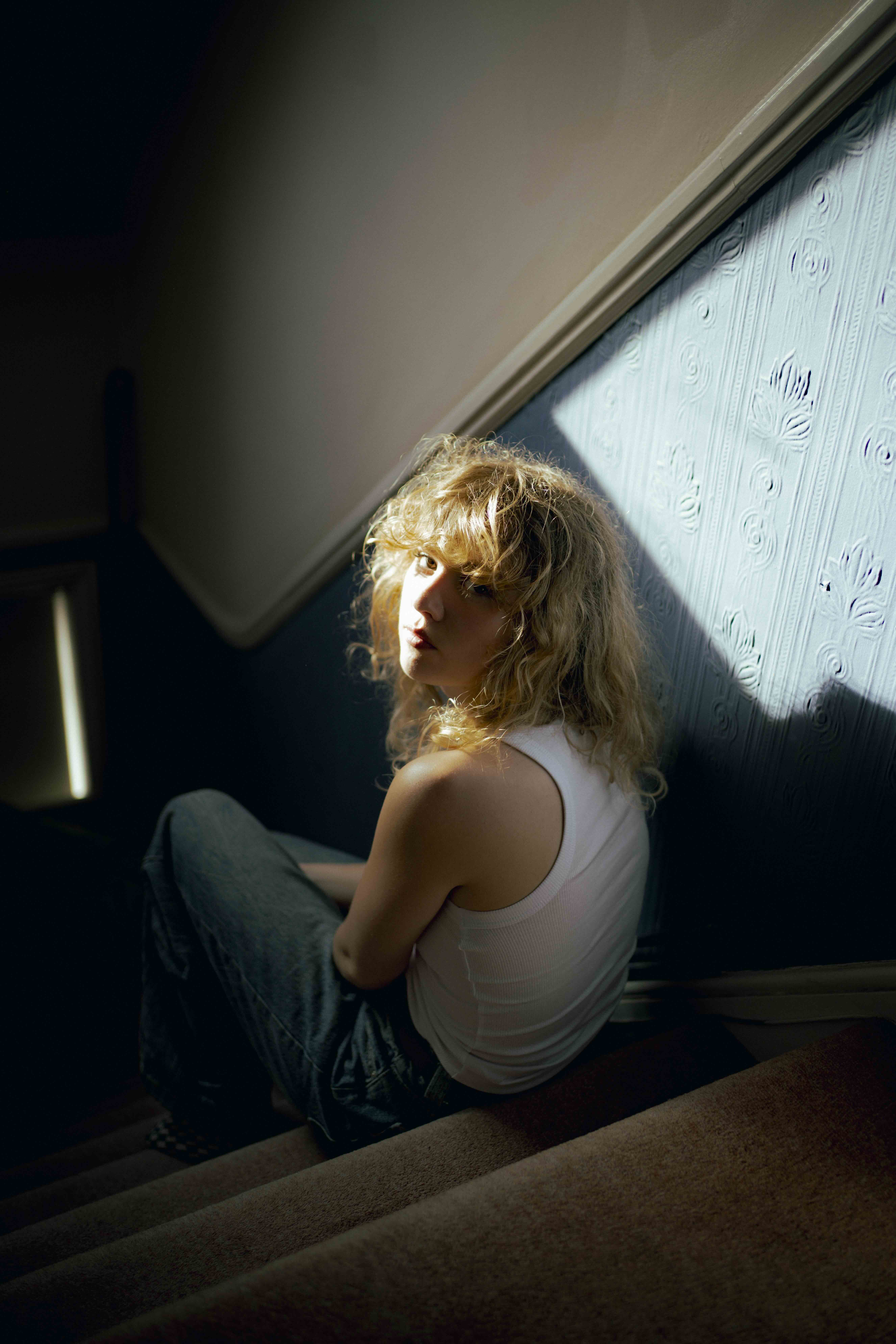
“Every Woman” is not interested in being palatable; it’s interested in being true.
Fiona-Lee takes a subject too often buried under shame, silence, and semantic gymnastics, and drags it into the light with the force of a storm breaking open. The result is a song that feels both deeply personal and terrifyingly collective – a fist in the air, a nerve exposed, a refusal to carry what was never hers to hold. In her hands, anger becomes not an endpoint, but a beginning: A way back to voice, body, self, and power. In directness, she finds liberation.
But Every Woman doesn’t end at fury. The EP’s lasting force lies in the way Fiona-Lee keeps pushing past silence toward self-trust, compassion, and release, making room for anger without letting it be the only thing that survives. What’s hard to understand? Nothing, really – not when she says it this plainly.
Fiona-Lee recently sat down with Atwood Magazine to discuss the anger, growth, softness, and self-reflection behind Every Woman – from the direct, diary-like lyricism shaped by her Yorkshire roots to the hard-won power of learning how to serve the song. Read our conversation below, and let this record be a lasting reminder that speaking your truth can be an act of confrontation, compassion, and release.
— —
:: stream/purchase Every Woman here ::
:: connect with Fiona-Lee here ::
— —
Stream: “Every Woman” – Fiona-Lee
A CONVERSATION WITH FIONA-LEE

Atwood Magazine: Fiona-Lee, for those who are just discovering you today through this writeup, what do you want them to know about you and your music?
Fiona-Lee: Ey up. I’m from East Yorkshire. First thing I do every morning is have a cup of tea. Always squeeze the bag. You are welcome to form your own opinion on my music, but I would say my music is lyrically very confrontational and self confessional. My songs are basically how I process life and validate experiences I’ve had whilst commenting on society.
Who are some of your musical north stars, and what are you most excited about the music you're making today?
Fiona-Lee: Bruce Springsteen. Kings Of Leon. Alanis Morrisette. Sam Fender. Sinead O’Connor. Radiohead. Jeff Buckley. PJ Harvey. Big Thief. Blondshell. Paul Simon.
I’m a strong believer that our surroundings have an impact on the music we make, and I’m so curious, what’s your relationship like with Yorkshire? How does it affect your artistry?
Fiona-Lee: I love Yorkshire. It’s always going to feel like home to me and it’s usually where my songs come most naturally. I think there’s something about northern attitudes that probably shapes the music – I think we can be quite straightforward and to the point sometimes, especially when it comes to humour it can be quite dry, so I think that plays a part in my direct and almost diary-like lyricism.
Congratulations on the release of your sophomore EP! How do you feel Every Woman reintroduces you and captures your artistry, especially compared to your debut EP Nothing Compares to Nineteen?
Fiona-Lee: Thank you! To me, this EP feels a lot more mature. Writing the songs and being on that journey of creating and sharing them has really helped me understand myself more and I’ve definitely recognised a lot of personal growth throughout the whole process. I think I’ve learnt so much about just ‘serving the song’ too within the production process. Before this EP I always thought that as a young woman you have to be constantly loud and shouting above the noise to be heard – but I’ve learnt that there’s a lot of power in moments of softness and vulnerability.

You open the EP singing, “And there it was, redemption right on the doorstep, making up for what I’m not proud of, ‘cause you were God for too many years in my eyes.” Instantly, we’re thrust into not just your musical world, but your story – these lyrics are raw, and they feel exceptionally real. Can you tell me about this introduction, and the scene you’re painting in “Erin”?
Fiona-Lee: The start of Erin is about a crossroads moment I had a few years ago where I could either take ownership of my mistakes whilst forgiving myself or basically avoid the whole thing and not grow as a person. It was a moment where I was able to put my own opinions of myself first before someone else’s. It’s a song about taking someone off a pedestal and validating your own experiences and it was a confrontation that I think triggered a whole bout of self reflection, forgiveness and compassion, which is continued through the EP.
I’m especially moved by the EP’s title track “Every Woman” and its direct approach to sexual assault. You’ve said this song is about releasing shame and reclaiming power – about taking action and confronting those who should be held accountable. I hope you don’t mind my asking, what drove you, or really what inspired you to write this song?
Fiona-Lee: I wrote “Every Woman” after being at a friend’s house and talking about our own experiences with sexual assault. It just clicked that that literally every woman I knew had a similar story, and basically went home and wrote it when I was really pissed off. I remember feeling a very physical drive within me when writing it and just thinking I really wanted other women to hear it and feel pissed off too, and for men to hear it and know that it’s directed at them.

One thing I love about this song is its framing – “It’s all too common how every woman has been in a similar position with a man.” Not every man may be bad, but every woman has had a bad experience – and that’s the point, isn’t it? About making that point, singing it from the rafters until it breaks through, and then singing it some more. Now that the song and the EP that bears its name is out, I’m curious, what does “Every Woman” mean to you now? What does it represent?
Fiona-Lee: I don’t think the meaning will ever really change for me. It’s always represented calling out rape culture and confronting those that should be held accountable.
I’m also moved by the chorus to “Imposter,” “There’s an imposter in my bedroom, she follows me around and puts me down.” There’s an intimacy to this song, and to all the lyrics on this EP in particular, that you’re not just singing lyrics but telling stories. I’m curious, how do you approach lyric writing? Who are some of your favorite lyricists, and how do you go about writing a song like “Imposter” or “Victim”?
Fiona-Lee: I honestly try not to overthink it. With writing lyrics, I think the best ones usually just flow out naturally. I think it’s about getting into a state of mind where you aren’t judging anything that comes out and then going in and making edits after you’ve got the core message down.
Each time I listen to this record, I find new moments to love – right now, it’s the lead-up to the chorus in “Rational,” that steady rise in the melody (“it’s so physical…”) - what are some of your favorite moments, lyrics, sounds, melodies on this EP?
Fiona-Lee: I love the harmonica solo in rational, that for me just feels like pure joy, I remember recording it in my old flat in London and it was a really fun moment for me, dancing around and playing really badly, haha. And then the guitar solo in Imposer also feels really special and makes me feel a lot in my chest. Something about it just really embodies that moment of breaking through the imposter syndrome and finding some peace within myself.
How much thought went into the tracklisting for this EP? Is there a method to starting with “Erin” and closing with “Victim,” or conscious throughlines connecting all these songs together in the order they’re presented?
Fiona-Lee: “Erin” was always going to be the first track, it just felt like the perfect opener, and encompassed all of the confrontational feelings and euphoria that would follow on with the other tracks. And then the rest of it was decided just through listening to it in different orders and feeling like there was a good dynamic flow throughout it.

What do you hope listeners take away from Every Woman?
Fiona-Lee: I hope people can hear the songs and feel encouraged to speak their truth and open up about their experiences in a way that can really empower them. I want people to know that they have a voice and when it comes to things like sexual assault they really don’t have to stay silent. I want it to energise people and also encourage a boogie to songs like rational!
In the spirit of paying it forward, who are you listening to these days that you would recommend to our readers?
Fiona-Lee: Geese!! Been obsessed with them for years. Searows, Sinéad O’Connor, Ethel Cain. Nadia Kadek!
— —
:: stream/purchase Every Woman here ::
:: connect with Fiona-Lee here ::
— —
Stream: “Every Woman” – Fiona-Lee
— — — —
Connect to Fiona-Lee on
Facebook, 𝕏, TikTok, Instagram
Discover new music on Atwood Magazine
© Tatiana Pozuelo
 © Tatiana Pozuelo
:: Today’s Song(s) ::

 follow our daily playlist on Spotify

:: Stream Fiona-Lee ::