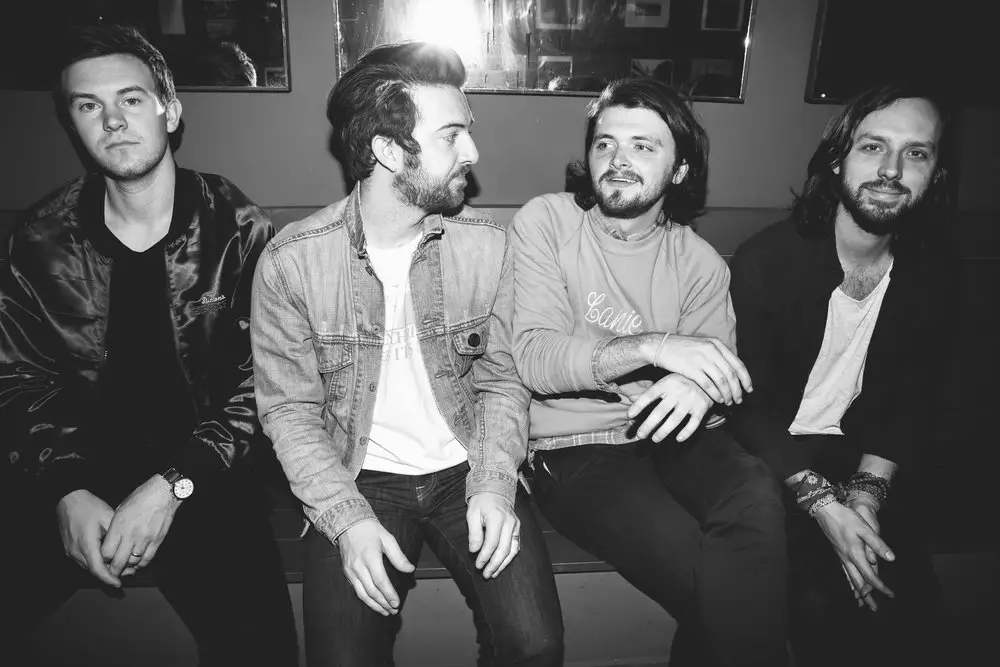
Finnish alternative artist Louie Blue rediscovered himself on ‘Blood & Bones,’ stripping life back to its quietest corners to find a warm, instinct-driven sound that let his true voice rise for the first time. In our conversation, he opens that world up, reflecting on the subtle shifts, bold choices, and close-knit collaborations that shaped his third album into the brooding, volatile, and unmistakably personal record it became.
for fans of Mk.gee, Dijon, Bon Iver, Genesis, The Police
Stream: ‘Blood & Bones’ – Louie Blue
Something stirs in the quiet places of Blood & Bones – a soft glow beneath the haze, a pulse flickering in the dark.
Louie Blue’s third studio album feels like stepping into the Finnish artist’s inner chamber, where memory, instinct, and self-interrogation blur into one raw, aching current. Rooted in solitude and shaped through four years of soul-searching and soundscaping, craft-honing and communal creation, it’s a record that strips everything down to its essence – the spirit, the impulse, the elemental human core – those parts of him that existed long before perfectionism, pressure, and the noise of life in the 2020s. The result is Blood & Bones, a breathtaking alternative record full of ‘80s heat and authentic humanity, a portrait of a 23-year-old making the most unapologetic, unvarnished music of his life. Guided by instinct and intuition, it’s the sound of a young artist confronting himself without armor, crafting a world that feels warm, imperfect, and deeply alive.
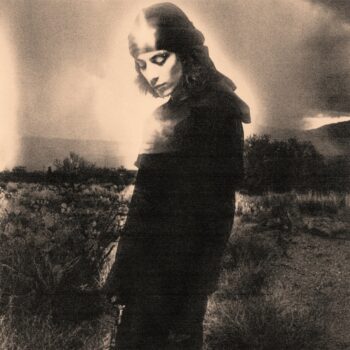
Released September 19 via Sony and Booa Music, Blood & Bones arrives four years after Louie Blue stepped away from the fast-paced, commercially driven cycle that shaped his first two records. The Finnish-Italian artist first emerged at seventeen with “Confused,” followed quickly by 2020’s Notes and 2022’s DIVISION 8, but the rush of early success left him searching for meaning, direction, and a sound that felt like his own. Blood & Bones is what emerged from that retreat and reinvention: A self-built studio, a thrifted collection of gear, a small circle of friends, and a renewed devotion to analog warmth and intuitive playing. Across eight songs shaped by nostalgia, deep introspection, and the enduring imprint of ‘80s icons, Louie Blue steps fully into himself.
“This album invites the listener into a space where vulnerability meets intention. For me, it’s about choosing to feel deeply – or not feel at all,” Blue tells Atwood Magazine. “Rather than chasing formulas, I leaned into unpredictability and risk. This is music that mirrors who I am, not who I’m supposed to be. It’s bold, honest, and alive. I wanted to make music that sounds like music again.”
He adds, “I wanted to picture something that felt very stripped for me and just elemental in a way, like core elements… in a human way. Facing yourself, facing your fears, climbing your mountain… there’s no earthly sensation, there’s no worth in anything material. It’s just your blood and bones.”
That search for depth – emotional, spiritual, artistic – runs through every corner of the record, shaping a world that feels both intimate and expansive, rooted in the past yet reaching for something truer than anything he’s made before.
As he puts it, Blood & Bones grew out of a three-year period of rethinking what music meant to him, learning to channel it in “a deeper way to actually benefit from the power of music,” and searching for a vision that felt wholly his.
Blood & Bones sounds as intimate as its creation: Warm tape hiss, glowing synths, glistening guitars, and rhythms that feel tenderly lived-in rather than polished. Blue leans into analog textures and imperfect spaces, embracing the wilder edges of his DIY gear and the instinctive playing that guided so much of the process. His songs drift between hazy melancholy and soft radiance, rooted in nostalgia for eras long past, yet grounded in the foggy forests and long, dark winters of Finland – a landscape he admits naturally pulls his music toward something cloudier, moodier, and more reflective. From spiritual introspection to moments of ego-death, from fleeting romances to the search for a quieter, truer sense of self, Blood & Bones feels like an emotional exhale, a slow unraveling of everything he’d once buried and is finally willing to sit with.
The fiery “In the Dark” captures that tension better than almost anything else on Blood & Bones. Built on glistening guitars, a tight, hypnotic groove, and a vocal that smolders even as it trembles, the album’s second track moves with a seductive clarity that cuts straight through the haze. It’s sharp and soulful, bright on the surface but bruised underneath – a song where longing curdles into danger, where tenderness and volatility sit uncomfortably close. Blue sings like someone confessing through clenched teeth, stretching each line until the hurt reveals itself, and the production mirrors that emotional pressure: Minimal, textural, quietly volatile. It’s instantly gripping, endlessly replayable, and one of the clearest distillations of the world Blood & Bones builds – an aching-heart groove that moves your body even as it weighs heavy on the soul.
If “In the Dark” distills the album’s turmoil, other songs reveal its breadth and depth. “Ordinary Girl” opens the record with a kind of dusty warmth, its guitar tones setting the emotional temperature before a single lyric lands; it feels like a doorway swinging open into the album’s world. “Get It Back” is moodier and more internal, built around a slow, looping groove that mirrors its themes of self-repair and stripped-back honesty. “Toni” runs hotter: A restless, pulse-driven track full of harmonic twists and flickers of desire, the kind of song that feels like it’s sweating through its own tension. A personal favorite for Blue, “Alone in My World” is another of the album’s true peaks – spacious, patient, and quietly devastating, with soft drums, a searching vocal, and a guitar solo that pierces through the haze like a flare. Together, all these songs stretch the record’s palette without ever breaking its spell, each one revealing a different facet of the internal landscape Blue has painstakingly carved out.
“I feel like [creating this album] has given me a greater sense of meaning in general… this very abstract thing living in me that I didn’t have before,” he shares. “I can just execute and do what I do best more spontaneously and with intuition. I guess that’s freedom.” That freedom radiates through Blood & Bones, a record that may span only eight songs and twenty-eight minutes, yet lands with the weight and clarity of an artist arriving fully as himself. It feels like a milestone – not just because Blue crafted it on his own terms, but because you can hear him discovering the shape of his voice in real time. The music is steeped in lineage, touched by the greats he grew up with, but the world he builds is unmistakably his: Textural, tender, sharply intuitive, and strengthened by the small circle of collaborators who helped bring it to life. In its brevity, Blood & Bones becomes even more striking, a concentrated burst of artistry that positions Louie Blue as a formidable force – an artist with a sound that belongs entirely to him.
And like the record itself, our conversation unfolded with that same sense of openness and discovery – a young artist tracing the lines of where he’s been, what he’s learned, and what he’s reaching toward next. Blue speaks the way he writes: with intention, curiosity, and an honesty that cuts straight to the bone. Blood & Bones may chart his inner world, but it also widens ours, offering a rare glimpse into the instincts, uncertainties, and quiet revelations that shaped it. Dive into our conversation below, and step further into the world Louie Blue has built – one defined by courage, clarity, and a voice steadily becoming its own.
— —
:: stream/purchase Blood & Bones here ::
:: connect with Louie Blue here ::
— —

A CONVERSATION WITH LOUIE BLUE

Atwood Magazine: Louie, your album’s been out for only ten days. What has it been like to have Blood & Bones finally out in the world?
Louie Blue: My strongest feeling was just this sense of relief and having all that space cleared up within your mind. That’s been like my overall feeling, I’d say.
We spoke earlier this year about how this record compares to your previous albums, DIVISION 8 and Notes. Can you expand on that, now that Blood & Bones is out of the world? What does this album mean for you?
Louie Blue: I feel like it was this growth period that I had after the first two albums, which we made when I was like, on the second one, I was 19. So, I’d say that I was a teenager. So, I think it was this three-year period where I had found this new outlook for making music and just channeling it in for me, like a deeper way to actually benefit from the power of music, and just me going on for a search of that. And I think that that’s Blood & Bones, basically.
It’s been over three years since DIVISION 8 came out now. What does that record mean to you now?
Louie Blue: I think it sort of represents a picture in my mind rather than words necessarily. I got to do a lot of awesome gigs that were, in a way, way out of my league. And I felt just so lucky doing that and this kind of the positive side of it, it brought many interesting and cool memories for me. But musically it hasn’t been anything that I’ve sort of looked back on with any inspiration necessarily. Not yet or. Well, I’m not sure will the day come, but I feel like it’s sort of a painful listen for me still, in a way. But I guess this is growth, you know.
Yeah, sometimes growth comes with some cringe for the past. At the same time, right now, can you imagine ever looking back on this new album and cringing, or are you kind of comfortable in the space that you've moved into now?
Louie Blue: I feel like there’s been a lot less like this conscious mindset. It’s been a different kind of writing process. And I think that was the root of all my disagreeing feelings towards the earlier music. I feel like I didn’t have that kind of a fight within and just made it as my first album ever. And I think that was a major part of, like the feeling of kind of wanting to be proud maybe in the future making something that I actually want to hear. I knew that was going to be a major part of it, like, what do I actually like? So I just kind of naturally drifted towards that. So, I think I feel like I won’t have like that kind of regret or it’s kind of this like coming-of-age type of pain that you only experience once

Tell me about the title, ‘Blood & Bones.’ What does the name of this record mean for you?
Louie Blue: I wanted to picture something that felt very stripped for me and just elemental in a way, like core elements, but I guess in a human way. Yeah. So I think that it’s kind of symbolic for me as in our core elements. I guess that that’s it, but I’ve kind of kept it a mystery for myself as well.
What is it about our core elements that meant something for you this time around?
Louie Blue: I feel like I spoke about it a lot on the record, like in a spiritual sense and kind of facing yourself, facing your fears or whatever that might be, like climbing your mountain in a way. And how bare it can get, like once you dwell deep in that, like there’s no earthly sensation, there’s no worth in anything material. It’s just your blood and bones. I mean, I think it just resonates that type of sensation for me.
I want to talk about your sound for a second. I know this record was entirely, incredibly DIY. You used cheaper equipment, you embraced weird spaces. Bring us into the world of this album. What does it look like, and why did you go for that approach this time around?
Louie Blue: I think it was just purely a product of circumstance. Because I lived, I actually just moved out of there but in a smaller city, like next to Helsinki, which was the only way that I could afford my own studio on top of my apartment because rent is way cheaper there. And I grew up there and, you know, but I was kind of alone there with my music. All the people that I used to make it with, they live two hours away. So I feel like the cheaper equipment and stuff just, it was the stuff that I could thrift or just find from my dad’s basement or stuff like that. Like, what could I get from my friends that, like some gear that they wouldn’t have or, you know, just pretty cheap stuff? Of course I bought a couple of things that were like maybe more like Hi-Fi Studio, still vintage stuff to keep the spirit alive. But yeah, just random stuff and having no money, you know, to be honest, trying to make that sound like what you hear in your mind still, like not compromising too much without having all the fancy shit.
I think it's incredibly impressive what you've done. I mean, you've brought us into your bedroom, right? A makeshift studio with so many different types of equipment that were probably never ‘meant’ to go together, and yet they came together to create the sonic world of this album. What's your favorite musical instrument of your collection right now?
Louie Blue: My favorite, probably my D50, the Roland synth from ’87. That’s pretty fun. It’s kind of wacky and there’s like five people on earth who can program the thing. But I mean, I love it. It has something to like early digital stuff. It’s just, you know, they all sound so soft and pleasing. I think that’s my favorite thing right now. Yeah.
Where do we hear the Roland D50 on this album?
Louie Blue: It’s a lot on “Ordinary Girl.” Like all the pads and the keys and the bass, actually. Yeah. That was like, most of the song is from that synth and “Toni” as well during the hook and just some random bits and pieces here and there, quite a lot.
Did you have to learn how to program it in order to really make it do what you wanted it to do?
Louie Blue: I did maybe like four patches on my own and then just quit because it was barely enough. But it takes so long just menu diving. I guess I got quite lazy with it, but I’m happy with my presets.
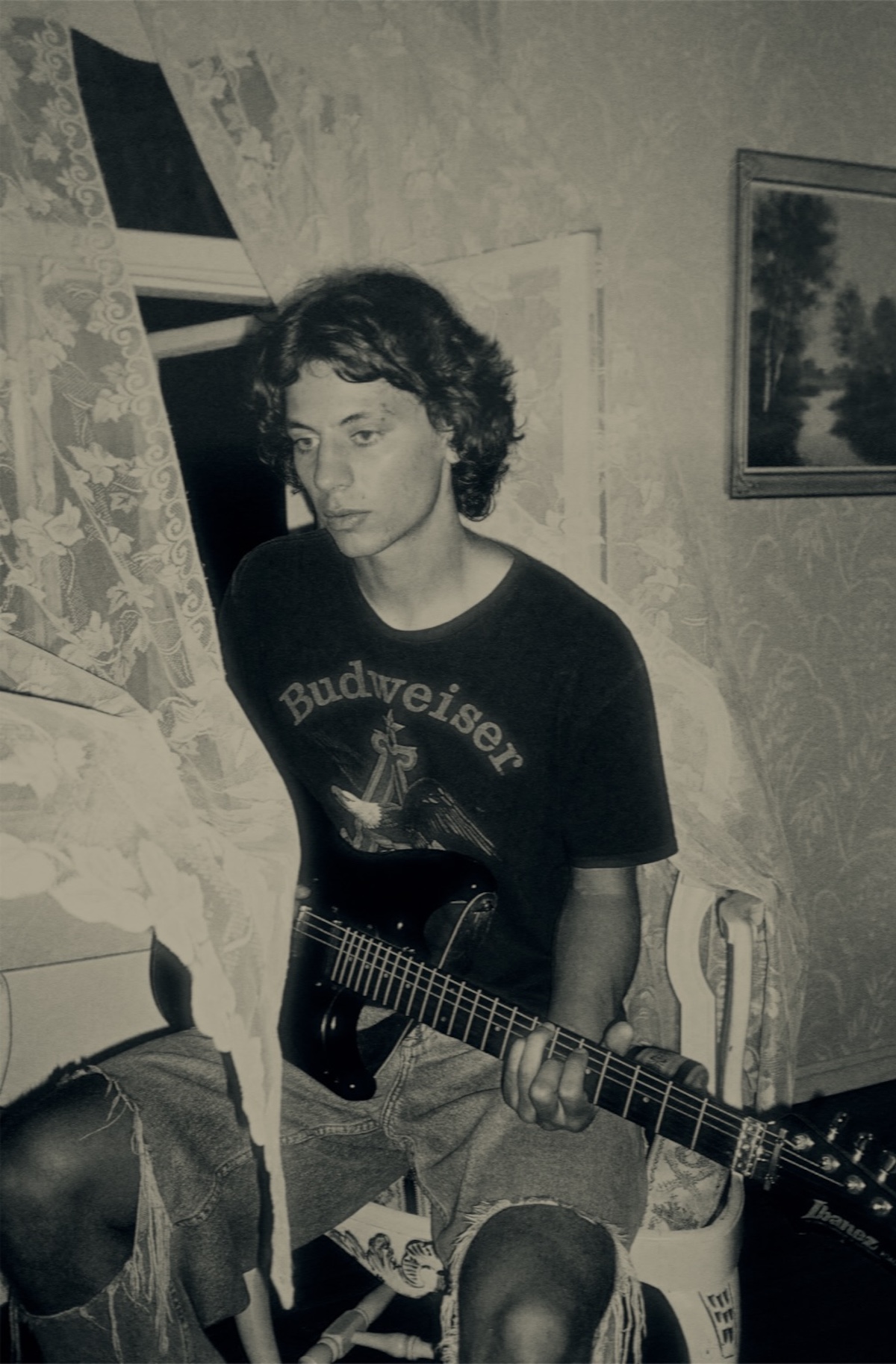
Well, you have time now to mess around with it again and see what you can create. I want to pivot and dive into the songs. After a three-year hiatus, you returned earlier this year with “Diamond,” as the first single off of this album. What inspired you to come back into the spotlight with that song?
Louie Blue: It was in fact the first song that I worked on on ‘Blood & Bones’, and it was kind of the first song, the earlier songs where there was no idea of the album yet, which is, you know, searching for a sound type of face. And it just kind of stuck with me. And yeah, I had this idea for the music video and it just felt like the most complete piece at the time and I just kind of went with it. And we filmed the video and yeah, it just felt right, I guess, you know, first song, first idea, first release, kind of.
Can you share more about that song, what it's about for you?
Louie Blue: It was about this idea of getting played around, like being in this type of relationship and just some being kind of like pawned around. And writing it from this dark kind of angle, I want it to be like this kind of hazy, blurry feeling because there’s like this very romantic angle of like getting played around. But of course, in general it’s a hurtful feeling. So, yeah, I think the song’s about a story like that.
You followed that with “Toni,” which has a big influence on the album overall, I know. Can you share a little bit about what that song is about?
Louie Blue: I guess it’s kind of the similar type of situation of just kind of being in a bad relationship and kind of having someone so, like, it’s really like beautiful to you in a way that you’re just kind of helpless in that place. And yeah, I don’t know that this is maybe something that I’ve had to get up my chest in one way or another.
I think you really set the scene for the entire album with the “Ordinary Girl.” I love how in the opening moments of the entire album, we hear you playing a couple lines on the guitar and immediately, the soundscape for what we're going to hear is set. Your guitar tones, I feel, are very unique. Tell me about the choice to open the album with “Ordinary Girl.”
Louie Blue: It wasn’t actually my idea. It was my friend/manager’s idea. He recommended this draft of the play order of the album. And I think, I’m not sure that could have even been the original idea. It’s just, you know, I think it’s a good way to start off, just pick it up in a way, because the album has a lot of, like, the sense of, like, dwelling, and it can be pretty hazy for a longer period of time. And I just wanted to, or I like the idea of balancing the kind of dynamic spectrum the most, you can, you know, throughout the album. Yeah, I feel like that’s why it felt right.
I was so honored to do the premiere of “In the Dark” earlier this summer. That song has been on repeat for me so much, and it was just happenstance that we ended up premiering the song that happens to be probably my favorite song on the album. When we last talked about it, you called it a portrayal of an intense, dangerous, and hurtful relationship. What does this song mean to you and what significance does it hold for you in the context of the album?
Louie Blue: I think it kind of goes, like, in this more dangerous direction the most. And songwriting wise, it’s something that you feel like you shouldn’t be writing about necessarily, or, you know, it has kind of that aspect which I like about it. But I think that’s the most, like, how would I call it? It has a angry influence to it and kind of this, like, hatred to me. And I’m not a hateful person, so I think that’s like, maybe like, some part of you who just wants to kick, you know, like kicking screen once in a while. And that’s kind of what the song resemblances or resembling to me. Yeah. And I think it has kind of like this more like rock vibe to it compared to most of the stuff. So yeah, it’s kind of like this little clap, you know, clap along in the middle of the album, kind of.
I could talk your ear off about all of these songs. What are your favorite tracks? What are your favorite moments on the album?
Louie Blue: We made a couple of songs or we finished them together with some of the people that are heavily in this project right now and are like very close friends of mine, almost like my family. And we got to make a couple of the songs. “Alone in My World” for one, I wrote it and then we produced it together and recorded drums and that type of stuff. And that was really special. And as a song too, it’s very personal and one of my best songs yet, for me.
So yeah, that’s my song I’m most proud of, along with “Get it Back” – that song, we made as a team as well. It’s like a second family for me – a group of guys who are heavily into this project, like in the production. For me, because I know the background of the songs, they sound immediately very different for me from the others. I think it’s cohesive, but it’s like a different kind of memory for me. And it was different way of like giving a birth to a song, you know. So I think, yeah, those songs stayed very beautiful for me, and I can feel it when I’m playing them live, and yeah, just very natural songs. Those were the most vivid and beautiful memories of making these songs, and they stand out a lot for me.
So, when you're looking back on the songs, you're really remembering the creation story right now. For you, each of these songs is a moment in a studio with your friends. I love that. That's as pure as music making can be, right?
Louie Blue: For sure, and I think one of my biggest personal needs has been making music with more old school mentality, and just making it more free and fun during the sessions and not being too caught up in making the best hook ever, or something like that. Just letting it come naturally.
This was your first time producing your own album. What was that experience like for you? What did you learn about production from making this album?
Louie Blue: I couldn’t really play the guitar before starting to write the album that well. And the guitarists that I was listening to and inspired off were pretty good, and it kind of backfired a lot of times, but I always found a way to make the idea come alive in one way or another. And the solos I played are played by Jonathan Snappier, who’s a close friend of mine. Guitar god to me. And, yeah, I’m really happy to have him around to play all the hard stuff.
Just overall, it was a lot of firsts to produce a whole album, and kind of overwhelming at times, but at the same time, something that I’ve always wanted, so it felt very good.
One thing I definitely feel you did really well, and I've been talking about it a little bit throughout our conversation, is to create a world for this album that belongs to this album and this album alone. Who are some of your inspirations? Who were you looking to as you were creating the songs for this record?
Louie Blue: I mean, Andy Summers, for example, and Jeff Beck. Jeff Beck is a big one. The kind of ‘80s session stuff, those types of players. Music from that era kind of was a big inspiration. Dominic Miller, maybe. All those guys. The main man.

For someone who is just listening to this album for the first time, if they only had time to listen to one song, where would you have them start?
Louie Blue: I honestly feel like “In the Dark” maybe, but at the same time I feel like “Alone in My World” gives like a more accurate description of kind of the world. It’s not that it doesn’t stand out too much sonically.
What is your favorite thing about the music that you just put out on this album? What, to you, do you love about it the most?
Louie Blue: I think just a palette, man. The overall mix of things feels accurate to me, for what I was going for. And that’s always like a big if, you know, when making any project. It can be like something that completely surprises you or you kind of maintain that picture throughout. And yeah, I think that’s the biggest part of it.
I feel like our surroundings have so much of an influence on the art that we make. Do you feel like your city had an influence on these songs? Do you hear Turku when you listen to this album?
Louie Blue: Yeah, in some ways, yeah. It’s a city where you can get into a big ass forest in like 10 minutes. So you always have like nature right there, and then that I think like almost all Finnish artists can relate to is that it’s so dark and cold here like during the winters, that everything just starts, for me and my friends, I think like everything just starts to go into more like, this melancholic direction and gloomier, cloudier place. And I’ve started to notice that, like, maybe with this project in particular, that it’s just very hazy in a way. And I wasn’t kind of conscious of that while making it. It just turned out that way. Yeah. So maybe it must be the nature, you know, I think that’s like, a huge part for me.
I get that. I live in a small mountain town north of New York City, and you can literally see the mountains from my window.
Louie Blue: Sounds beautiful.
It is beautiful, and I find it so inspiring.
Louie Blue: Yeah. That’s sick. There’s no mountains here in Finland. It’s so flat throughout, it’s crazy.
You’ve got to go elsewhere for the mountains?
Louie Blue: Definitely.
What do you hope listeners take away from listening to Blood & Bones?
Louie Blue: I hope people maybe gather some sense of beauty from it and sense of ease in a way, even if it’s maybe painful at first. And, yeah, I think it’s music to reflect on. A sense of beauty is maybe the most important thing for me, the most impactful way of music.
What have you taken away from creating this album – and what do you think you'll still be looking back on in a year's time? What significance does it hold for you?
Louie Blue: I think it’s given me a greater sense of meaning in general and this direction and path. This very abstract thing living in me that I didn’t have before. And I think that’s kind of the souvenir that I want to keep from it, and keep from any project I’m a part of from now on. But I think it’s gotten me to a place where I didn’t have to think too much about everything and I can just execute and do what I do best spontaneously and with intuition. I guess that’s freedom.
It really is, in a sense. I think it definitely comes across in your music. Closing up in the spirit of just paying it forward, who are you listening to these days that you would recommend to our readers?
Louie Blue: All right. So, I just heard this song, “Sharing Your Love” by the band Change. Never heard of them before, and it’s one of the sickest songs. And “Some Girls Are Bigger Than Others” by The Smiths, it’s been on heavy rotation as well.
Man, you're deep in the '80s.
Louie Blue: Yeah, definitely. Today makes you go crazy, so you’ve got to step away a little bit.
— —
:: stream/purchase Blood & Bones here ::
:: connect with Louie Blue here ::
— —
— — — —
Connect to Louie Blue on
Facebook, TikTok, Instagram
Discover new music on Atwood Magazine
© Julian Riikonen
 © Julian Riikonen
Blood & Bones
an album by Louie Blue