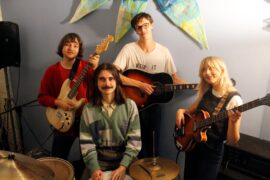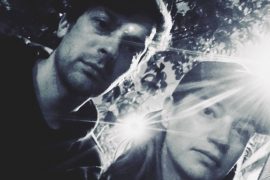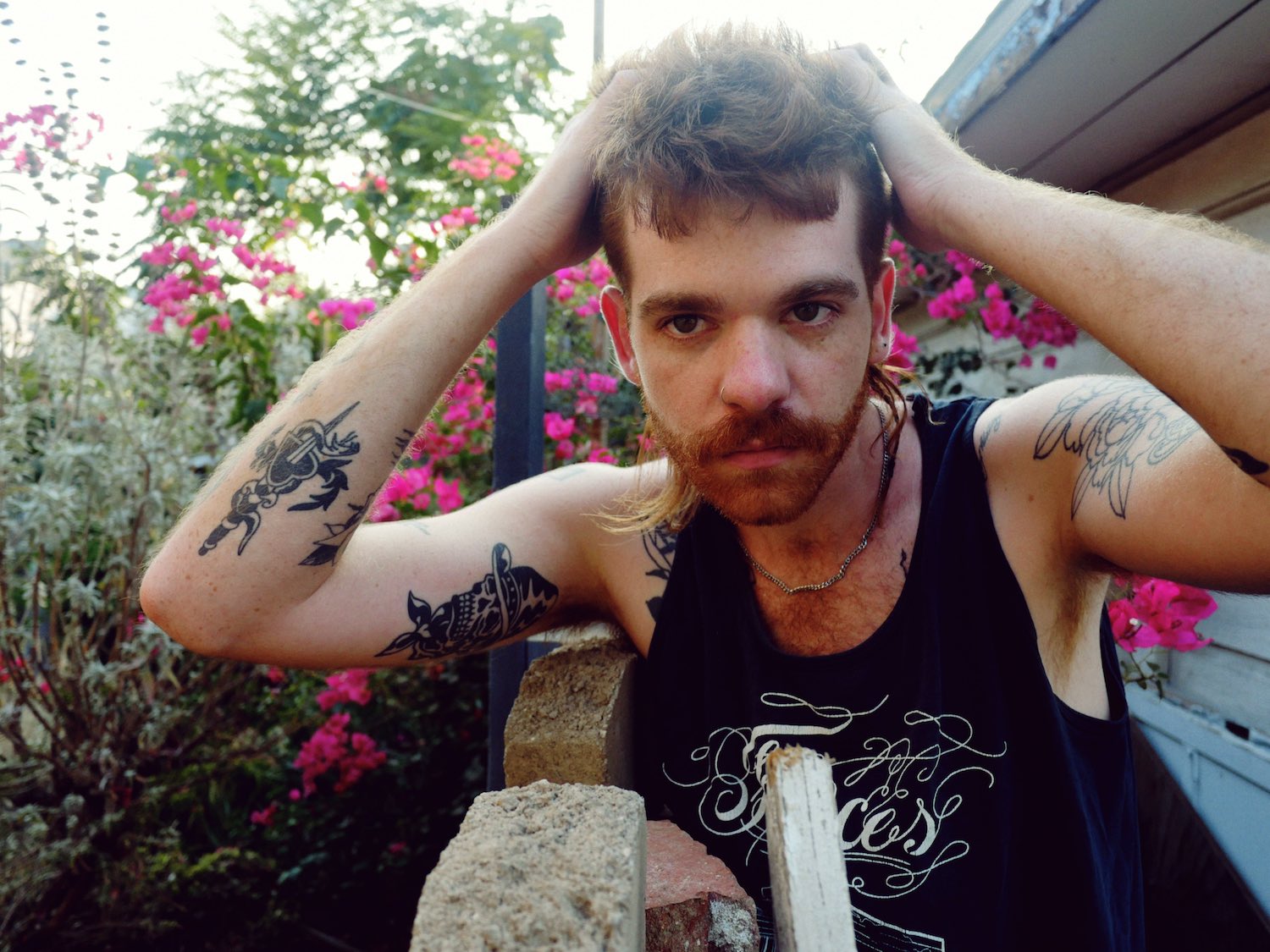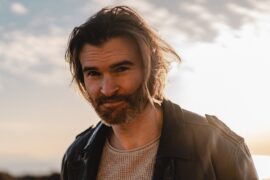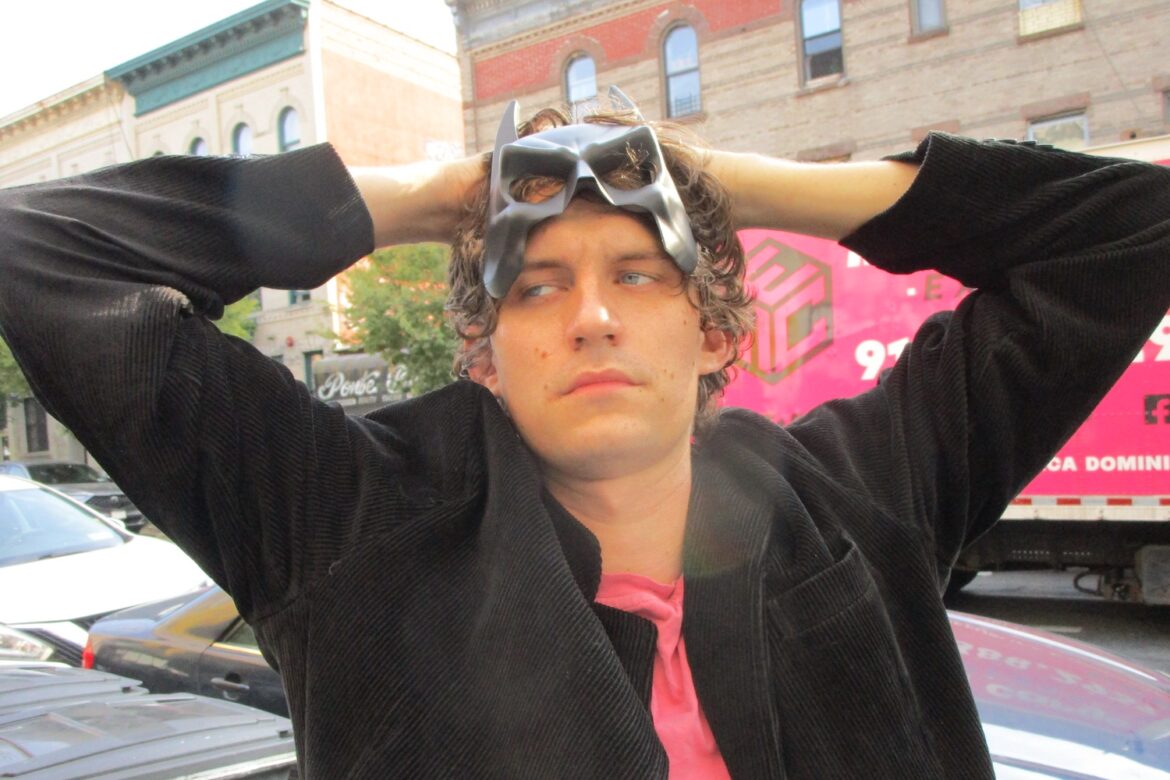
Brooklyn-based artist Victoryland discusses how he found his voice outside of his idols, collaborating with Dan Howard, and what it’s like to have explored the different ways of making his debut album ‘My Heart Is a Room with No Cameras In It.’
‘My Heart Is a Room With No Cameras in It’ – Victoryland
Melodic synths that sound like bells with drumsticks tapping rims introduce A Heart Is A Room With No Cameras in it.
Followed by Julian McCamman’s warm and solemn vocals and a colorful acoustic guitar, the textures of Victoryland coalesce. The album instantly bubbles with buoyant and prevalent energy that forms its own gravitational pull, an invisible force of attraction. There’s a wild joy that’s born from the tone among understated, and sometimes explicit lyrics that oscillate from deep metaphor to clear imagery or ideas. My insides feel tingly, and I’m not immune to the invisible force as it beckons me.
Here I stand
whoever said it’s foolish
f*** you and everyone else
here I stand
“Here I stand” and “f*** you and everyone else” are declarative, punchy statements that almost feel fleeting. Here I stand, and here I am. Try saying that five times a day in different spaces, and I wonder what that would feel like. I think I would feel powerful, confident, and unabashed. “Here I stand” as a whole is a beautiful introduction to what the album has to offer. The urgency is in lingering notes, lyrics, and the whole composition.
Curiosity can open unseen figurative doors to feel and see many textures life has to offer. Maybe it’s not something that has to be sought out; perhaps it’s to be let in. Into our bodies and minds. My Heart Is A Room With No Cameras In It. There’s an exploration of sounds, texture, vulnerability, and curiosity. The composition is unafraid to stretch the imagination as far as the mind can see. It feels good, electric, and tasty.
i have so much love to give
my heart is a room with no cameras in it
bound to the falling down
watch me fade out
We live in an era of distorted digitalization of our lives, and it seems McCamman subtly comments on the idea of this lyrically and sonically. Our relationships are digitized through social media, which is funny because humans were already terrible at communicating in real life, and to add another prominent mode of language to our existence is beyond hilarious. Insecurities, depression, and loneliness are fervently fueled by these digital social media platforms, and I know, even though I said we were terrible at communicating in person, how can we get back to more in-person interactions, and what would that do to mitigate the digitization of our bodies?
While listening to My Heart Is A Room With No Cameras In It, like many other records coming out these days, there are moments where digital sounds meld with the analog.
To push them together, and to do it in such a raw and distinctive way, the way this record does it is tactful and rich. Take ”Keep Me Around,” how it starts with this unmitigated, subtle whaling constant sound that melts slowly and almost unnoticed through different octaves. Then the guitar and drums come in, seamlessly, and the guitars have this twanging swing. I can feel the song pressing itself to the limits of its own emotions, and it carries the rush and sensation of being on a roller coaster. There’s a pinching tension.
This record isn’t flowery, it’s tender. The humor is real, too, but it’s real, too. Take the song title, “You Were Solved.” The play on the idea that a person can be solved is reductive, but don’t we long to truly solve or know ourselves, or the people that we love or want to know? It’s kind of a joke because humans have the capability to evolve so much. If humans were solvable, would they f*** up? Would we not be perfect and live in some kind of paradise?
i f***ed it up
i cry like fireworks
i’m drunk
in every next life
and it’s now
you we’re solved
you we’re solved
Some of the things we talk about in the interview play at this idea of imperfections that we have as humans and as individuals.
oh i’ll dance like
i’m your bitch
we’re just shaking out the night
from our wrists
The freedom and playfulness of the lyrics mirror the power of the sound.
McCamman prominently notes that producer Dan Howard had a large part in actualizing this album, as he notes, “it’s a 50/50.”
The album was recorded between McCamman’s Bed Stuy basement and Dan’s Williamsburg studio, which gave the album a lot of its identity and its uniqueness. Read our Victoryland interview below as McCamman dives into some of their processes, how he reached this apex of vulnerability of expression, and what this album means to him.
— —
:: stream/purchase My Heart… here ::
:: connect with Victoryland here ::
— —
A CONVERSATION WITH VICTORYLAND

Atwood Magazine: So how are you doing today?
Victoryland (Julian McCamman): I’m good, man. A crazy ass week, to be honest with you.
Music or just life?
Victoryland: Music mostly. I think music is life right now.
You feel good about the record?
Victoryland: Yeah, I think for me it’s the first record I’ve made, or been a part of making, that has felt like every piece of music you put out feels like a culmination of all this stuff before, and it’s informed by the stuff. And I think I’ve put out records before that I still love, but just felt on shaky ground with. And when I listen, sometimes I’m still kind of, “Oh, I would change this. I would change that.” And I think this is just the most confident I’ve felt in my songwriting ability.
I had a long conversation with my good friend last night about this. The idea that the record oh so Victoryland was a band in Philly first, and it was more of a classic band set up, like it was me and three other dudes. We wrote the music together and then the first record was all of us recording that together. And then when I moved to New York and quit my other band Blood.
The Texas band. Texas/Philly band.
Victoryland: Yeah. When I moved to New York, I had this idea of the kind of musician I would be, and it’s honestly pretty embarrassing. It’s probably Julian Casablanca-esque, like a rockstar guy. It was just really cringey and just not who I am. And I think this record, to me, felt so free because I think I finally admitted to myself that I don’t feel like that guy, and I don’t feel comfortable in crowds of cool kids or like wearing cool outfits or whatever. I feel like a fool a lot, and I f*** up in my life and stuff. Everybody does, but I think I just realized that the image that I was trying to reach for was just not me. And then when I was like, “Oh, I can just be me on the record,” and I can really express something that’s real to me and maybe show something that’s painful or just some raw real thing about me.
It was just so freeing. Then I just was able to write so much and just let it go. And, you hear it back and you feel seen or you feel like you see yourself better. You understand yourself better. And I think that’s just the first time I felt that way with an album. It’s just that I really learned more about myself through making the record and the freedom of knowing that I wasn’t gonna be this idyllic, rockstar type guy. It was really just, “I am who I am,” and I just want to represent that honestly.
The record doesn't hold itself up to any other music but itself, like what you are trying to express, like how you told me about how you felt like you're expressing yourself and being yourself. The record seems to have a real freedom in how it wants to use sounds and shapes of sound. Like when it wants, when it needs to. And it works. The composition works. It's beautiful. It helps me see the uniqueness in every song, because every song is expressing itself how it wants to, how it needs to.
Victoryland: No, for sure. I think you’re totally right. Yeah, no, and part of that I guess also the whole idea of seeing myself in the record. That’s sonically also. It’s weird. It’s not just a mirror image reflection. It’s some kind of cosmic soul reflection, sounds so stupid, but it really is and it has to do with the sound of the album too. And a huge part of that also is,
Dan Howard?
Victoryland: Yeah, it’s a 50/50. I mean it, and I say that I don’t know where to even draw the line between our collaboration, but this record sounds the way it does because he was a part of it. And he has just been a total [part of] the idea of being more free and also letting go of preconceived ideas of how I wanted it to sound. That was super freeing too, to just let go of that. A lot of the record pretty much started with demos I made at home. And pretty much every song has some element from that kind of crappy-sounding home demo. And that was really his idea. I would send him a demo and he would be like, “We should really keep this part and lose this part.” And he’s just brilliant ’cause he is able to see the best part of your idea and bring it out to the forefront. And then add stuff around it to support that idea and strip away the stuff that doesn’t matter,
And then with you and Dan, were you guys, some of it was on the phone through emails. Were you ever in the studio together working outside?
Victoryland: No. He lives here. It was all in the studio. I would make stuff. I live in Bed-Stuy and I have a basement here, which I’m very blessed my roommates don’t use, so it’s just my studio space. It’s really an insane blessing. I don’t expect it to last that much longer, but so I would make demos at home and then we’d go into [the studio]. The I Will Tear You Down EP was the first thing we made together, and that was me recording stuff in Philly, coming up to work with him. ‘Cause I knew him from the Blood record he recorded. We met through our bands playing together back in the day. And then he was a huge part of the reason I moved up here. We have a really great collaborative relationship and we learned that on the Blood record. But that’s a whole other story. Making this stuff together, I was like, “Wow, we really work well together, and we really hit a stride with this album.
What is it like in the studio? Are you laying down guitar tracks or playing while sitting behind the desk? How is it operating there?
Victoryland: It depends; there’s usually a little bit of a push and pull. Like he really likes stuff that’s performed live, at least one live element in it. I think I had to get comfortable with that because I really was into perfecting on the multi-tracking and stuff and. I totally see his side way more now. But so he’s usually behind the computer or we jam on an idea a little bit. He’ll be playing; he’s a drummer mostly and he’s amazing. He’ll either be playing drums. He also recorded all the bass on the record. It’s very playful and we’re running around ideas.
This was a more personal process of recording. Is that because you're not doing it with a bunch of other people, you're only doing it with one other person?
Victoryland: Yeah, probably. I think that, leaving those other bands, it was really important to me that the recording process in particular had very few heads in the room like. I really didn’t want to do a big collaborative thing because we all know how that can go. And I had some really negative experiences at the end of Blood in particular, with that stuff. And I love those guys. It’s all good. Like I love all those people a lot. But, yeah, I just, it was really important to me that, especially the recording stuff, it was also a strategic thing because I wanted to be able to play more shows and it’s really hard to keep a group of people on the same schedule here.
How much of the lyrics did you write before?
Victoryland: None of ‘em. I didn’t sing in that band. It was Tim, who’s my best friend who just moved to New York. He sang in that band and he’s a poet. He went to school for poetry. So I think the words were really important. He was really particular about how he wanted to write the vocal melodies
That’s a big window for you to jump through to have all the lyrics be all on you.
Victoryland: Man, it was, but I have been writing songs for a long time and I think I just wasn’t performing them. But, I’ve written during that whole time with Blood. The reason I started Victory Land is ’cause when blood was going, getting a little bit unsavory, I started writing so many songs. I just couldn’t stop writing songs. And so I was like, I feel like I need my own band here. And that was the onus of starting the project.
What do you gravitate towards or what are different things you gravitate towards?
Victoryland: It’s tough because I think when I’m writing the lyrics, it’s not a super conscious process. Part of this record was also feeling a big part of my sense of humor. It’s a big way I relate to people and I think I’ve found myself cracking myself up with lyrics on this one. I think in general, I really tried to lean more into abstract imagery and placing weird kinds of images next to each other. I really like a fractured image next to a fractured image that kind of unlocks a new feeling or something like that, something that touches on that kind of intangible human thing that I feel good poetry tries to get at.
Sick.
Victoryland: Or the words are like a doorway to a place, and I think particularly what I wanted to do on this record is get away from writing in a literal sense. I think I like the abstract imagery paired with really direct, simple statements. I love classic “I love you” lyrics. I love that shit. I think it’s what music’s about, you just want to hear a simple message with good sounds and feel something. But as far as the subject matter goes, or something I was thinking a lot about writing the lyrics for this record is, I want to figure out a better way to say this, but it’s the idea of a dark psychedelic imagery thing – I really like that. There’s a lyric on the record where I say I say what do I say? Something or something into a fractal of nothing. Stuff like that. I like it when it’s like “I got God,” I think is the best example of I want it to be weird and psychedelic is, I think psychedelic has a connotation of being really positive.
And I think if you play music, you probably had a bad trip or something, but also, I think we live in a really strange world and a crazy time and that’s a big thing with the record too – I think a lot of the lyrics are about seeking real human connection in a world. That is it, it’s built on a kind of surface-level pleasure seeking and like systems are set up to support that behavior.
Yeah!
Victoryland: It’s stuff I struggle with, in my life. I think that’s at the heart of the record, is that seeking the human connection and wanting real experiences that don’t feel flat. And that’s like the name of the album. A little bit about that. I think projecting some kind of psychedelia or subconscious thing onto that, through the words, but yeah.
Now that I think about it, My Heart Is a Room With No Cameras In It makes a lot of sense to me now. It's very clear, actually. It’s a play at that.
Victoryland: Yeah, it’s a weird image and I hope it means different things to different people, but I think, and once again, it wasn’t a super conscious thing. I think I just thought of the name. I was like, “Oh, that sounds cool.” And then, now I feel like I’ve been viewed with this meaning because I’ve been forced to think about it.
As we do as humans.
Victoryland: Definitely. And I think that’s also the freedom on this record. And what I’ve learned and what I think will be especially good about the next record will be the idea that if you let yourself say something, you will say the thing you need to say. You don’t have to think about it. It’s there. It’s in you. You know what I mean? It’ll come out. You just gotta let it happen.
Oh, I love that.
Victoryland: It’s true, man. And I think I used to just be so cerebral with it and be like, “I have to say this, and it’ll have this effect on people,” and I’m trying to make you feel something. And that’s not really how people relate to music. They wanna connect with you, and see the real side of you. They don’t want to be told how to feel necessarily. They just wanna experience it with you.
Like relationships and romantic relationships.
Victoryland: Yeah. Definitely. For sure.
— —
:: stream/purchase My Heart… here ::
:: connect with Victoryland here ::
— —
— — — —
Connect to Victoryland on
YouTube, Bandcamp, Instagram
Discover new music on Atwood Magazine
© Meg Ha
 © Meg Ha
:: Stream Victoryland ::