Every Friday, Atwood Magazine’s staff share what they’ve been listening to that week – a song, an album, an artist – whatever’s been having an impact on them, in the moment.
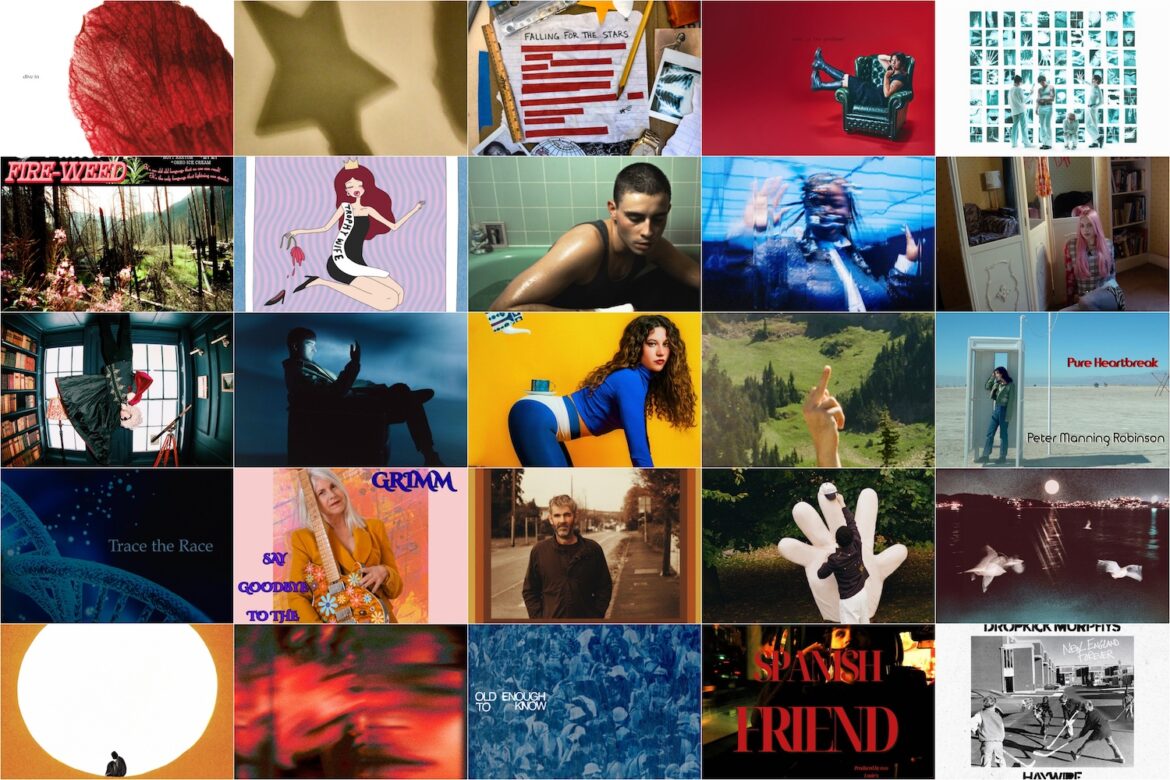
This week’s weekly roundup features music by Nxdia, Death Cab for Cutie, Dom Jones, Dropkick Murphys & Haywire 617, gabby rivers, Teenage Priest, favourite daughter, Elliot, chinachinachina, Isaac Neilson, Galimatias, People Person, Empire Child, TAPE HOUSE, Jordan Tariff, Train Room, ARI LEE, Nian Tong, Kathryn Grimm, BERENICE, LEAP, EMERG, Drexler, Orillia, & Peter Manning Robinson!
•• •• •• ••
 follow WEEKLY ROUNDUP on Spotify


•• ••
:: “Cool” – Nxdia ::
Mitch Mosk, Beacon, New York

Coolness is a funny thing – the more you chase it, the faster it slips through your fingers. Nxdia knows this better than most. On their sly, hypnotic new single “Cool,” the Egyptian-Sudanese alt-pop provocateur leans into the thrill of the moment instead: A late-night connection, a fleeting spark, a feeling that doesn’t need to last forever to mean something. It’s smooth, vibey, and utterly intoxicating – a softer but no less magnetic turn from the riotous energy that defined much of their 2025 debut mixtape I Promise No One’s Watching.
Built around a steady, pulsing beat and velveteen vocals that glide across the track, “Cool” unfolds like a hazy memory of a night out – the kind where a quick drink turns into a taxi ride across town, which turns into something else entirely. Nxdia thrives in emotional honesty and playful oversharing, and here they let the tension simmer rather than explode. The track’s instantly addictive refrain – “You’re so f**ing coooooool” – arrives like a half-dazed confession, part admiration, part surrender.
“Cool” also captures a different side of the London-based singer/songwriter’s storytelling. Born in Cairo and raised in Manchester, Nxdia has built a reputation for blending bilingual lyrics, genre-blurring alt-pop textures, and fearless self-reflection – turning vulnerability into community along the way. After a breakout 2025 that saw them release I Promise No One’s Watching, tour across the UK and Europe, and draw massive crowds at festivals from Latitude to Lollapalooza Paris, “Cool” feels like both a continuation and a reset: Looser, breezier, and unapologetically present-tense.
“There’s nothing like exploring your hoe era!” Nxdia tells Atwood Magazine. “Letting go, saying f**k it an seeing what works, what feels good and what doesn’t – it’s a fun process. I wrote ‘Cool’ when I was trying to wrap my head around how I felt about dating without thinking about long term, and it turns out it can be really great. I haaaaate this whole aversion to casual sex, how about we just enjoy the moment by overthinking stuff? Everything is temporary anyway, get into it baby!”
That spirit – messy, curious, alive in the moment – is what makes “Cool” so irresistible. Nxdia isn’t trying to package romance into something tidy or permanent; They’re celebrating the freedom of letting things unfold exactly as they are. In a culture obsessed with labels and expectations, sometimes the coolest thing you can do is stop overthinking and simply feel the night as it happens.
:: “Riptides” – Death Cab for Cutie ::
Mitch Mosk, Beacon, New York

There’s something especially stirring about hearing a band this deep into its career sound newly unguarded. Death Cab for Cutie have had plenty of eras over the past three decades – the homespun indie melancholy of their late ‘90s beginnings, the widescreen emotional sweep of Transatlanticism, the polished introspection of their Atlantic years, the textural experimentation that followed. Through it all, Ben Gibbard has remained one of indie rock’s most honest narrators of inner life, turning doubt, grief, and fragile hope into songs that feel quietly universal. Nearly thirty years in, they no longer have anything to prove – which might be exactly why their music can feel so searching now. Legacy isn’t the point (not that it ever was); the feeling is. And when Death Cab reach for that feeling, they still know how to let it unfold slowly, patiently, until it hits with full force.
Released March 16 via ANTI- Records, the band’s slow-burning single “Riptides” leans into that instinct, wrestling with the quiet exhaustion of carrying personal turmoil through an already overwhelming world. The track builds patiently before opening into something heavier and harder to contain, with loud electric guitar crashing against a steady, thumping bassline as Ben Gibbard finally lets the tension spill over. It’s tense, weary, and deeply human – the sound of someone trying to keep moving while the ground beneath them keeps shifting.
That emotional architecture is what makes “Riptides” such a compelling first look at I Built You A Tower, Death Cab’s eleventh studio album and first for ANTI- after two decades on Atlantic. The title alone suggests structure, distance, protection – some monument built to contain what hurts. But as Gibbard has explained, this record is less about preservation than compartmentalization: A place to put grief so life can continue, until that grief inevitably breaks through the walls. “Riptides” captures that collapse in real time. “And though I’m feeling fine / Roughly half the time / There’s a fatal flaw / In my heart’s design” lands like a quiet confession, devastating precisely because of how plainly it’s delivered.
Gibbard says “Riptides” is “about the challenge of dealing with personal struggles as the world around us experiences tragedy and loss on an unfathomable scale,” and “how when these two elements intertwine themselves in our psyches, it feels utterly paralyzing.” You can hear that paralysis in every line: The muteness of “These days I say goodbye without opening my mouth,” the numb resignation of “I’m too tired to talk, I’m too tired to end the war,” the overwhelming churn of a mind turning in on itself. Even the title feels perfect – riptides as unseen forces, sudden undertows, something dangerous not because it’s loud, but because it pulls you under before you realize what’s happening.
What’s especially powerful is how this song mirrors the larger ethos behind the band’s current chapter. After the anniversary tours for Transatlanticism and Plans, after the weight of nostalgia and the sheer physical and emotional demands of revisiting that history night after night, Death Cab for Cutie could have easily leaned on legacy. Instead, “Riptides” sounds and feels like a reclamation – of instinct, immediacy, and messiness. Recorded quickly with John Congleton and rooted in a more stripped-back, deeply human sound, it doesn’t reach for polish so much as truth.
And that’s what makes “Riptides” feel so special. It isn’t just a strong lead single – it’s a statement of purpose. Not a return to form, but a refusal to calcify; a band continuously willing to crack itself open in search of something real. Death Cab for Cutie have always known how to soundtrack ache, uncertainty, and the long shadow of feeling too much. Here, they remind us that even now – especially now – they can find new ways to say the hard thing out loud.
:: “The Blacker Berry” – Dom Jones ::
Grace Holtzclaw, Los Angeles, CA
Dom Jones continues to build momentum around her forthcoming EP 2.0 by teasing us with another single off the project. She’s an Oakland born, Los Angeles based artist who isn’t afraid to take risks. From sensual R&B dreamscapes to rap that shakes the pavement, Jones is committed to being a voice that matches the energy of her music.
Her new single “The Blacker Berry” captures an instant spark that unravels over a wild night out. Pulsating beats, lush electronics, and seductive vocals collide to bring her fantasy to life. She sings, “Ain’t no intermission once you come through the door / Just follow all your intuition, take me to the floor.” The lyric video for the track highlights how music can set your inhibitions free. The visuals show off a euphoric dance floor where nothing is held back.
“The Blacker Berry” was produced by Kasey Phillips / Precision Productions. Phillips has worked with artists among the likes of Ciara, Shaggy, and Carl Thomas to name a few. Dom Jones is a graduate of Berklee College of Music and she’s the recipient of the ASCAP Foundation Jay Gorney Award for Emerging Songwriters. With her 2.0 EP on the horizon, it’s only just the beginning for Dom Jones.
:: “Citizen I.C.E.” – Dropkick Murphys & Haywire ::
Jimmy Crowley, New York
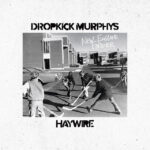
As the spring became the summer in 2025, Haywire were crowned as the most exciting up-and-coming band in hardcore where it seemed like every gig was one for the history books. The Boston up-and-comers have gotten the cosign from Boston punk’s most recognizable export the Dropkick Murphys, and as they open up the band’s annual St. Patrick’s Day tour, the elder statesmen and new kids on the block have teamed up for the upcoming New England Forever split. Fittingly, the first single and opening track is a reworked Murphys classic flipping their anti-imperialist “Citizen C.I.A.” into “Citizen I.C.E.” The Murphys and Haywire have rightfully called out the “power-hungry scumbags” in I.C.E.
Of the protest songs to come out about the murders that I.C.E. have committed in Minneapolis, “Citizen I.C.E.” actually sounds like a jolt to the system. Where Bruce Springsteen and Billy Bragg have lifted up the people protesting, DKM and Haywire are cutting right into the “scumbag grifters kidnapping squad.” These are all fighting songs, but “Citizen I.C.E.” is a brawling tune. Murphys frontman Ken Casey and Haywire singer Austin Sparkman each get their jabs in at I.C.E. with different energy. Casey has a weathered vigor. You can tell he’s been around the block. He’s seen these dirtbags before, and he can flip from a jovial uncle to the scariest guy in the room very quickly. Sparkman has much of the classic grit that bands like Terror or Hatebreed bring on their vocals, but next Casey’s crisp and clear lines, he sounds like he’s coming at you like a glass thrown across a bar.
As much as one can appreciate a song that tries to give hope during a dark time, sometimes you need people that are going to get their hands dirty. The Dropkick Murphys have always been a band that tries to encourage their fans to put their money where their mouth is. Don’t just sing songs about workers rights and fighting tyranny, but actually do it (you can find plenty of videos of Casey fighting Nazis at their shows on the internet). Having the Dropkick Murphys and Haywire team up for this song shows that many generations of bands are sick of the shit that’s been happening.
:: What is the problem? – Gabby Rivers ::
Danielle Holian, Galway, Ireland

East Anglian grunge-pop dynamo Gabby Rivers asserts herself with striking clarity on her hotly anticipated EP What is the problem?. The Suffolk-born solo artist leans into a more direct, alternative-rock approach, trading in the ethereal textures of her earlier work for punchy riffs, distorted basslines, and fuzzy, unapologetic guitar hooks. Across seven tracks, Gabby balances raw, honest lyricism with melodies that are as catchy as they are combustible, proving her knack for crafting hooks that stick without sacrificing edge. From the explosive, coming-of-age angst of “Dig Me” to the simmering tension of “Lipstick Karma,” the EP pulses with a restless energy that positions Gabby as a rising force beyond her East Anglian roots.
Production-wise, What is the problem? leans into grit and texture, embracing imperfection in a way that feels deliberate rather than rough-hewn. The title track’s brooding riffs and jagged vocal delivery underline Gabby’s willingness to confront vulnerability head-on, while the EP as a whole navigates the line between garage-rock urgency and grunge-pop accessibility with surprising dexterity. “Noise” and “Leave me alone” are EP highlights. With inventive songwriting, forward-focused momentum, and a confident sense of identity, Gabby Rivers demonstrates not only that she’s ready to command bigger stages but that her music continues to evolve in exciting, unpredictable ways.
:: “About You” – Teenage Priest ::
Rachel Leong, France

In the rare case of Spotify discoveries these days, my shuffle delivered Teenage Priest’s “About You” last week, and it’s found its way to all my playlists since. Leading with a catchy guitar hook and dreamy instrumentation, Teenage Priest brings back catchy guitar riffs and indie rock progressions in a way that is delicious and nostalgic all at once. Charting the infatuation and hopeful hopelessness that comes with a new love, Teenage Priest captures that above-the-clouds feeling perfectly, bringing sunshine and summery melodies to the wintertime.
:: “you but different” – favourite daughter ::
Mitch Mosk, Beacon, New York

I’ve loved Lauran Hibberd’s songwriting for years, so hearing her return as ‘favourite daughter’ feels like watching a familiar spark catch fire in a whole new way. “you but different” marks my first time writing about the project – and what an introduction it is! Her sophomore single under the new name is fiery, fierce indie pop at its absolute finest: Feverish, unrelenting, unapologetic, and explosive. Glistening and gleaming one moment, dreamy and dramatic the next, the track unfolds like a full-body rush – bold, chaotic, and impossible to ignore.
Part hyperpop fever dream and part ‘80s new wavey jam, “you but different” barrels forward at breakneck speed, spilling thoughts faster than they can be sorted out – an emotional spiral that feels funny, messy, and painfully self-aware all at once. Beneath the big hooks and larger-than-life production sits a razor-sharp premise: Wanting love badly enough to convince yourself the next person will be different, even when the pattern is painfully familiar. The chorus says it plainly – “I want love ’cause it’s imminent / I want you but different” – a confession that lands somewhere between hope, delusion, and a wink at your own bad decisions.
“‘You But Different’ is a really special one for me,” Hibbard tells Atwood Magazine. “It was born from going stir crazy in the midst of recording for a month. I was in Nashville for the entirety of January last year with my closest and most talented friends. This one literally fell out of us. I think we started messing around with it at 2 AM one night, with no intention of it becoming anything. All of our rules went out the window. We wanted a key change, live reaction laughter and a million words a minute. We listened back to it the next day and we were like, ‘oh wait, this is actually good.’”
But the late-night spontaneity wasn’t the only thing bubbling beneath the surface. In the middle of the chaos, Hibberd found herself quietly interrogating her own relationships – the patterns we fall into, the comfort of staying put, and the uneasy suspicion that every new love might just be a familiar story wearing a different face.
“Subconsciously, I was evaluating my relationship at the time, and in fact all of my relationships,” she continues. “I was definitely questioning the levels of love that existed and was bored of everything eventually feeling the same. The ease of staying and the fear of leaving is really what you but different stands for. Everyone loves to be loved, whether it’s the right kind or not. This song literally feels like chaos to me, in the best way possible. I feel like I’m fighting with myself the whole time. It’s totally covered in humour to the point it feels like overhearing a conversation.”
That chaos is exactly what makes “you but different” so exhilarating. favourite daughter doesn’t try to tidy up the contradictions of love or overthinking – she lets them collide in real time, turning insecurity, longing, and self-awareness into something dazzlingly alive. If this second single is any indication, Lauran Hibberd’s reinvention as favourite daughter is already a smashing success – bold, brilliant, and bursting at the seams with personality and passion.
:: “hot but depressive” – Elliot ::
Mitch Mosk, Beacon, New York

Sometimes a song feels less like a performance and more like someone letting you overhear their inner monologue. That’s the quiet pull of Elliot’s “hot but depressive,” a dreamy, brooding indie-pop confession that glows softly even as it wrestles with darker thoughts beneath the surface.
Built around smoldering, reverb-drenched electric guitars and a hazy, slow-burning groove, the Copenhagen singer/songwriter lets the tension simmer rather than explode. His voice sits right on the mic – intimate, fragile, and quietly dramatic – turning every line into something that feels both whispered and heavy with meaning. The effect is hypnotic: gentle yet intense, restrained yet emotionally raw.
“It comes from self-sabotaging good intentions – from distancing yourself from love before it gets too close, because you don’t want to hurt others with your own emotional complexity,” Elliot explains. “Instead of showing all the beautiful things I carry inside, I end up showing my destructive sides – the person who never feels good enough – and then I’d rather destroy it before ending up in yet another superficial or staged relationship. ‘hot but depressive’ is, in many ways, a song about the fear of loneliness.”
At its core, “hot but depressive” captures the uneasy push-and-pull between wanting love and sabotaging it before it gets too close – that instinct to pull away just as someone starts to understand you. “Said that I’m hot but depressive / And I’ll end up alone / With my poetry and nicotine,” he sings, his words landing with the blunt honesty of someone narrating their own worst fears in real time.
That vulnerability is exactly what makes this track linger so seductively. Wrapped in dreamy guitars and late-night atmosphere, Elliot turns self-doubt into a magnetic and alluring moment of truth – a smoky, introspective indie pop release that feels as tender as it is haunting, bringing us deeper into his world than ever before.
:: dive in / breathe out – chinachinachina ::
Danielle Holian, Galway, Ireland
Chinachinachina’s debut, dive in / breathe out, is a study in refinement and emotional precision. The Málaga trio craft a sound that is both expansive and intimately detailed, blending dream rock, contemporary R&B, and nuanced electronic textures with subtle touches of jungle and drum & bass. Annie Bravo’s ethereal vocals glide effortlessly over Juande Jiménez and Javier Moral’s meticulously layered instrumentation, creating a sonic environment that feels both deliberate and immersive. The album’s dual-movement structure, Dive in exploring depth and intensity, Breathe out offering release and clarity, transforms the record into a narrative of introspection and emotional resolution.
Song highlights include “blind eyes,” “forget me,” and “no ordinary love,” with the production, courtesy of Grammy-nominated John Foyle and Rotterdam-based Mucky, that enhances the trio’s vision with subtlety and elegance. Every arrangement, silence, and harmonic choice is intentional, allowing the emotional weight of the compositions to resonate fully without artifice. In an age dominated by immediacy and genre conformity, dive in / breathe out stands apart as a measured, sophisticated work of artistry, one that rewards contemplation and repeated listening. It confirms chinachinachina not merely as emerging talents, but as a thoughtful, enduring presence in contemporary music.
:: “No Affection” – Isaac Neilson ::
Danielle Holian, Galway, Ireland

Isaac Neilson’s latest single, “No Affection,” arrives as both a declaration and a challenge, signaling the ambitions of a rising indie-rock storyteller unafraid to push himself to the limits. Opening with biting guitar riffs that cut through fuzzy synth layers, the track immediately establishes a sonic tension that mirrors the song’s emotional core. Neilson’s vocals, equal parts infectious and raw, ride over Tayte Nickols’ production with a precision that balances grit and polish, creating a soundscape that feels both immediate and expansive. The drums hit with a punchy urgency, anchoring the track’s energy while allowing the intricate instrumental textures to breathe.
What sets “No Affection” apart is its narrative bite: Neilson’s lyricism cuts with a pointed honesty, making the track feel less like a conventional indie-rock anthem and more like a story lived in real time. Recorded at ARC Studios with Matt Taylor, the single showcases an artist honing his voice and aesthetic, merging alt-rock dynamism with indie sensibilities in a way that’s distinctly his own. As Neilson embarks on a year-long daily gig marathon, this single is a fitting introduction to a project defined by stamina, storytelling, and a refusal to settle for anything less than fully lived music.
:: 20 Second Century – Galimatias ::
Chloe Robinson, California

Galimatias’ new LP 20 Second Century is a smooth, atmospheric voyage that lifts listeners into another stratosphere. Best heard in a single sitting, the 13-song collection unfolds as a cohesive body of work, deepening and progressing with each track. 20 Second Century sees Galimatias exploring how to stay centered amid a world that’s constantly speeding up.
The opening piece “Homicide” plays a pivotal role in setting the tone for the effervescent offering. Sharp, gleaming synths paired with bold vocals create an electrifying track that truly stuns. “Far From Home” is another dreamy treat, with warm, mesmerizing vocals that intensify the song’s emotional reach. The title track, “20 Second Century,” drifts with a wistful, spacious vibe, exuding pure zen as a voice gently states, “… feel the calm.” The album concludes with “Blue Human,” where luminous, relaxed vocals glide over a shimmering, ethereal soundscape. As you listen, it evokes a feeling of vivid essence painted in shades of blue.
Galimatias is identified for a signature mix of glossy electronic soundscapes, vulnerable vocals, and sleek production. In 2020, Galimatias unveiled Renaissance Boy, his debut LP, a masterfully constructed concept album. 20 Second Century’ is another golden standout, equally elevated in its execution.
:: “Old Enough to Know” – People Person ::
Mitch Mosk, Beacon, New York
Sometimes the loudest songs come from the moments when everything almost falls apart. People Person’s “Old Enough to Know” is exactly that kind of arrival: A feverish indie rock banger that explodes from the first note and never loosens its grip. Loud, loose, and gloriously unfiltered, the Manchester outfit charge forward with a full-throttle wall of sound – roaring guitars, pounding drums, and a hook that feels built to be shouted back from the front row.
Released February 6, “Old Enough to Know” finds People Person leaning fully into that unfiltered energy. Frontman Adam Grealish throws himself into the moment with reckless conviction, his voice cutting through the noise as the band barrels forward around him. There’s no restraint here – just pure momentum, the kind that builds until the whole track feels like it might burst apart from the inside. It’s loud. It’s messy. It’s fun in the most unapologetic way possible – a rush of indie rock fervor that refuses to slow down or soften its edges.
That urgency comes from a deeply personal place. “‘Old Enough to Know’ feels almost like a love song for the band,” Grealish tells Atwood Magazine. “It was written in a time of a lot of frustration and hardship for us as a band and I wanted to take that feeling of defeat and give it a hopeful undertone with this track.”
The story behind the song makes that optimism hit even harder. “‘Old Enough to Know’ was written between a change in lineup for the band, when I was feeling very defeated by being in a band, and had considered giving it all up,” Grealish explains. “I was loving a lot of Springsteen and took inspiration from a lot of the hopeful undertone that comes with a lot of his tracks. We recorded the track over the summer last year during another lineup change, so the track felt fresh and ready to record. It acts as a marker to keep going.”
That spirit is exactly what gives “Old Enough to Know” its fire. Beneath the raw churn and breathless energy is something stubbornly hopeful – a band refusing to fold, choosing noise, motion, and belief instead. In the end, the song feels like a turning point: the moment People Person decided they weren’t finished yet.
:: “Trace the Race” – Empire Child ::
Joe Beer, Surrey, UK

Empire Child is the musical project of Ruth Rothwell, who is stepping into the spotlight after spending years helping shape other artists’ careers behind the scenes. Having worked with some of the biggest names in dance, pop and electronic music, she brings a huge amount of experience into her own project. Her debut single “Trace the Race” showcases that experience and knowledge, delivering something that is refreshingly honest and personal. Produced alongside Madrid-based jazz musician Mariano Diaz, the track blends soul, jazz and gentle reggae influences into a sound that feels warm, thoughtful and easy to connect with.
The song looks at identity, heritage and where we come from, inspired by Rothwell’s own family background and the journeys that shaped it. “Trace the Race” sees her reflecting on migration, belonging and the idea that most families have a story of movement somewhere in their history. It carries a strong message about understanding your roots and finding confidence in your own story. As a first release from Empire Child, it introduces a project that feels meaningful and grounded, setting the tone for an upcoming album which is due this Spring.
:: “Spanish Friend” – Tape House ::
Danielle Holian, Galway, Ireland

Emerging from the creative heartbeat of Soho’s Denmark Street, Tape House return with the assured and emotionally resonant single “Spanish Friend.” The track captures the quiet, inevitable collapse of a relationship, balancing intimacy with a stark sense of finality. Written in the very rehearsal space where the band first found their footing, the song showcases their signature fusion of rock urgency with subtle jazz and classical inflexions. Charles Markham’s vocals sit at the centre with exposed precision, lending each lyric an emotional weight that resonates long after the song ends. Patiently unfolding, the track opts for atmosphere and tension over bombast, proving that restraint can be just as powerful as a crescendo.
Produced by Luie Stylianou and Louis Isaacs and mastered by Grammy-winning engineer Matt Colton, “Spanish Friend” marries indie-rock sensibilities with progressive soul and jazz textures, creating a track both expansive and intimate. The interplay between inventive guitar work and pop-conscious vocal melodies demonstrates the band’s knack for balancing commercial appeal with alternative edge. Lyrically, the song navigates that precarious space where connection exists but the future does not, exploring self-preservation over repetition with clarity and honesty. With a steadily growing reputation for emotionally charged songwriting and compelling live performances at venues including Ronnie Scott’s and the O2 Islington, Tape House confirm that they are not only a band to watch, but one capable of evolving their sound without ever losing its core sincerity.
:: “Falling for the Stars” – Jordan Tariff ::
Mitch Mosk, Beacon, New York

What happens when the dream you gave everything to suddenly collapses? Jordan Tariff’s “Falling for the Stars” sits squarely in that fragile aftermath – the uneasy space between disillusionment and the stubborn urge to keep creating. A brooding, smoky seduction that sinks deep into the bones, Tariff’s first release of the year is equal parts heartbreak and quiet surrender – a smoky, slow-burning meditation on the moment belief begins to fracture.
Released January 30 and following Tariff’s 2025 EP This Is How I Got Here, “Falling for the Stars” unfolds with a heavy, late-night gravity. Reverb-soaked guitars shimmer in the distance while Tariff’s voice hovers close to the mic – intimate, weary, and searching. The whole track moves with a kind of wounded elegance, its smoldering atmosphere pulling listeners into the uneasy space between longing and disillusionment.
Tariff says the song was born from one of the most uncertain moments of his life. “I wrote ‘Falling for the Stars’ in 2019, right after my record deal fell apart. I was young, disoriented and suddenly very alone. I had spent years giving everything I had to other people and to the industry itself while getting nothing in return,” he explains. “When it all collapsed, I didn’t even know if this was something I truly wanted anymore. I remember thinking how naive I’d been, believing I could actually make something for myself in this world.”
For a time, he considered walking away entirely. “I’m just a guy! Of course it all fell apart. Of course I didn’t have what it takes. I seriously wondered if I should move back home and pretend those years with the label never happened.” And yet, the music kept returning. “No matter how hard I tried to shut it off, I couldn’t stop writing. That’s the thing about music – it’s not really a choice. Even when you feel empty, it keeps coming out of you, almost like a physical response. ’Falling for the Stars’ lives in the space between disappointment and hope. Between wanting to quit and realizing you can’t. The stars in the song aren’t just fame or success, they’re ideals. The version of the future that I was sold. This song isn’t about failure. It’s about the loss of innocence without the loss of the desire to create. The response so far has been really comforting as well, knowing how many people have felt or even currently feel this way. This is part of the human experience I suppose and it’s nice to know we’re all in it together!”
In that sense, “Falling for the Stars” isn’t really about the music industry at all. It’s about the moment when the version of life you believed in begins to dissolve – and the quiet, stubborn realization that you still have to keep moving forward anyway. Tariff captures that fragile turning point with striking honesty, letting the song sit in the tension between disappointment and belief. The stars may not shine the way he once imagined, but the instinct to reach for them remains – and in the end, that persistence is what gives the song its undeniable gravity.
:: “Old Dizzy” – Train Room ::
Mitch Mosk, Beacon, New York

Teenage memories have an uncanny way of lingering – vivid, romantic, and slightly distorted by time. On “Old Dizzy,” Irish singer/songwriter Joe Monaghan, performing as Train Room, leans fully into that haze of nostalgia, crafting a charged and churning folk rock anthem that looks back on youth, love, and the fleeting intensity of growing up.
Released January 23 as the first single from Train Room’s upcoming sophomore album Station Road (out April 3), “Old Dizzy” swells with restless momentum. Folk-rooted storytelling collides with surging rock guitars, layered keyboards, and driving drums, creating a sound that feels both reflective and urgent. Melodic hooks rise and fall against the track’s sonic whirlwind, echoing the emotional push and pull of memory itself – the way past relationships and half-lived futures can still reverberate long after the moment has passed.
Monaghan says the song draws directly from his own teenage years in the west of Ireland. “‘Old Dizzy’ reflects through lyrics and arrangements a picture of my youth, friendship, love, and love lost, when living the teenage life in the west of Ireland in the 1990s,” he explains. “[It’s] my favourite recorded song to date and I’m proud to have self-produced it.”
That sense of reflection runs through every corner of the song. Beneath its churning guitars and sweeping arrangements lies something quietly sentimental – a portrait of adolescence seen through the lens of adulthood, where memories of love and friendship blur together with the bittersweet knowledge of how quickly those years disappear. In revisiting that time so vividly, Train Room captures something universal: the dizzying rush of youth, and the way its echoes continue to shape who we become.
:: “Someone For You” – ARI LEE ::
Rachel Leong, France

Landing on sinking electric guitars and slow percussion, ARI LEE enters on the line “Disappear and change my name and face,” a slow meditation on being enough for your loved ones – or in this case, her parents. Bridging identity, approval, and expectation, LEE’s lyrical storytelling is palpable against a backdrop of slow rising sonics and layered vocals. LEE tracks the internal push and pull of, well, wanting to be “someone for you.” Through the dynamics of being enough, to the feelings of defeat, the track morphs and transforms as you listen – making a relatable feeling fit into various contexts. To me, Ari’s meditations on trying to make herself fit a mould has returned in tenfold with “Someone for You” – a track that will resonate with listeners in all walks of life. Whether about relationships, family dynamics, or making art itself in the public sphere, one can always relate to feelings of imposter syndrome and being enough.
:: “What’s on Your Mind” – Nian Tong ::
Joe Beer, Surrey, UK

Nian Tong’s latest single “What’s On Your Mind” captures the moment when hope and heartbreak collide. Delivering his signature blend of heartfelt storytelling and bright indie pop, the now London-based singer-songwriter and producer wrote the song during his first month living in the city. It was inspired by a long-distance relationship that never became what he hoped it would, however rather than leaning into sadness, Nian wraps the story in upbeat melodies and playful production, whilst still packing an emotional punch.
Sonically, “What’s On Your Mind” leans into a colourful and feel-good pop style, built around catchy rhythms and glossy, modern production. All self-produced and recorded in his own studio, it offers an early glimpse into his upcoming EP Gradually, which explores modern dating, online connection and the uncertainty that often comes with it. With his ability to turn personal setbacks into relatable, uplifting songs, Nian Tong continues to forge a distinctive space within contemporary indie pop.
:: “Say Goodbye To The Blues” – Kathryn Grimm ::
Chloe Robinson, California
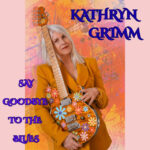
Kathryn Grimm’s uplifting, groovy track “Say Goodbye To The Blues” is a glowing gift for listeners. The highly infectious single fully soars as it beautifully displays the magic of being in love. There’s no resisting the momentum of its propulsive bass, the gently swaying melody, and the sentiment woven throughout. Grimm shares, ” ‘Say Goodbye To The Blues’ is a feel-good song describing how effortlessly the joy brought on by being in Love can erase any sorrows. The bliss – my favorite state to be in.” You can sense that warm euphoria coursing through the entire piece.
A northwest-based singer, songwriter, and multi-instrumentalist, Grimm has earned awards and acclaim while writing, recording, and performing with some of the music world’s leading talents. Friend and guitarist Jeff Buckley provided backing for her in her first band, Group Therapy. She is also the featured guitarist in Michael Bolton’s video “Dance With Me.” This latest pop-rock release continues her thrust towards success.
:: “Wifey Material” – BERENICE ::
Mitch Mosk, Beacon, New York

Perfection is exhausting – and BERENICE knows it. On “Wifey Material,” the London artist turns that pressure into a dazzling, high-voltage indie pop explosion, delivering a song that sparkles with charm, sass, and theatrical flair even as it subtly dismantles the impossible standards women are expected to live up to.
Released February 3, “Wifey Material” bursts forward with radiant confidence – a dramatic, smile-inducing rush of fire and sweetness that feels built for full-volume singalongs. Glittering hooks collide with punchy guitars and swaggering attitude, giving the track the feel of a playful audition tape performed under blinding stage lights. On the surface, it’s exuberant and electric; underneath, the song is razor sharp, exposing the strange performance of modern womanhood. As the lyrics cheekily boast “My CV says / Certified Wifey Material / Take a read yeah / Black on white, I’m just your type,” the song leans fully into the satire of presenting yourself as a perfectly packaged ideal.
BERENICE says the idea came from reflecting on the expectations placed on women today. “I wrote Wifey Material after a long conversation with my best friend about what ‘the ideal woman’ looks like in the 21st century. Be hot, but effortless about it. Successful and ambitious, but never threatening. Funny, charismatic, but still classy. Confident, but not loud. Self aware, but never messy. Basically, have it all, carry it lightly, be digestible, and make everyone else feel comfortable while you do.”
She imagined the song as a kind of theatrical audition. “I liked the idea of writing it like an audition tape, like I’m handing in a CV as ‘Certified Wifey Material’, ‘black on white, I’m just your type’, as if you can prove you’re acceptable and measurable on paper. I wanted to sit in the head of a narrator who knows how to switch on, how to line up with the picture, how to sell it hard.”
The line that anchors the song, she says, is “I can clean up anger till it looks like healing.” “It’s that pressure to make your real reactions presentable, to repackage frustration as ‘growth’, to stay polished even when you’re boiling. That’s why the track is playful on the surface, but has a darker subtext underneath. It’s really about identity – how easily you can turn yourself into something marketable, and how quietly you can disappear while everyone tells you you’re doing amazing.”
That duality is exactly what makes “Wifey Material” such a thrill. It’s bright, theatrical, and wildly fun on the surface – a glittering anthem bursting with personality – but beneath the swagger lies a pointed reflection on performance, expectation, and the cost of shaping yourself into something everyone else wants to buy.
:: “Sinking Feeling” – LEAP ::
Mitch Mosk, Beacon, New York

It hits without warning – a sudden drop in your chest, a quiet panic you can’t quite place. That creeping sense that something is wrong – even when nothing is – sits at the core of LEAP’s “Sinking Feeling,” a charged, churning alt-rock anthem that turns dread into something loud, urgent, and impossible to ignore. Built on driving guitars and restless momentum, the track surges forward with a kind of cathartic force, capturing the tension between wanting connection and feeling trapped inside your own head.
Featured on LEAP’s debut album Entropy, “Sinking Feeling” embodies the London-based band’s signature contrast – upbeat, high-energy instrumentation colliding with deeply introspective, emotionally heavy lyricism. Lines like “Sinking feeling / Something’s missing / Overtaking everything I am” echo that internal spiral, while the music itself pushes outward, almost defiantly, as if trying to outrun the weight it carries. It’s this push-and-pull – between light and dark, movement and paralysis – that gives the song its gripping intensity.
“We’re all kinda broken in our own ways, and there’s nothing wrong with that,” the band tells Atwood Magazine. “It’s a celebration and a temporary pause on that sinking feeling that we all get sometimes, that unexplained sense of dread.”
Frontman Jack Scott continues, “We wrote this track about the unexpected sense of dread that can loom over you at the strangest times. Living with bipolar disorder, I must admit it’s more of a regular occurrence than I’d like, but I think it’s a feeling a lot of people can relate to. Sonically speaking it’s actually quite a happy, uplifting track but lyrically it’s about that longing for a meaningful connection and always feeling held back by getting locked in the darkest corners of the mind.”
That sense of shared experience is what gives the song its immediate resonance – but it’s only part of the story. Beneath that understanding lies something far more intimate: A lived reality shaped by instability, self-doubt, and the constant push and pull between clarity and chaos. What might feel fleeting or occasional for some becomes something more persistent here, anchoring the song’s emotional core in real, personal struggle.
“As for the music video it was actually our first time working with a budget of more than a few hundred pounds. We are used to a pretty rogue DIY set up, so it was amazing to work with such a talented team of professionals on this. We loved the idea of creating this eerie feeling hotel called ‘The Sink Inn’ that you can check in but never check out as a metaphor for the head space being referred to in the lyrics.”
In that way, “Sinking Feeling” doesn’t just describe anxiety; it embodies it. It’s restless, unrelenting, and deeply human, turning internal chaos into something communal and cathartic. LEAP have built their identity on confronting life’s darkest corners head-on, and here, they transform that weight into a raucous, life-affirming release – a reminder that even in the depths of the spiral, you’re not alone in feeling it.
:: “Too Alive” – Georgia Nicole ::
Danielle Holian, Galway, Ireland
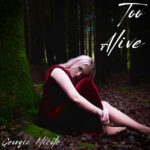
Georgia Nicole’s “Too Alive” is a study in transformation, evolving from a tender piano ballad into a commanding rock anthem that bridges vulnerability and defiance. The song’s architecture is deliberate: delicate verses give way to soaring choruses, where layered guitars and thunderous percussion create a palpable sense of release. Nicole’s vocal delivery is both intimate and authoritative, imbuing lyrics of personal struggle and resilience with a sincerity that transcends mere performance. The track balances catharsis with compositional precision, demonstrating a sophisticated understanding of dynamics and emotional pacing rarely found in emerging rock artists.
Beyond its structural merits, “Too Alive” is emblematic of contemporary rock’s capacity for narrative depth. The anthemic chants and expansive soundscapes evoke the communal experience of live performance, even within the recorded format, while the lyrical focus on isolation and perseverance situates the song within a broader discourse on mental and emotional survival. Nicole’s influences, ranging from Muse to Shinedown, are apparent but refracted through her distinct sensibility, producing a sound that is simultaneously familiar and uniquely hers. In its fusion of vulnerability, ambition, and sonic immediacy, “Too Alive” confirms Georgia Nicole as a compelling voice in modern rock, capable of marrying personal authenticity with broad, resonant appeal.
:: “Star Song” – EMERG ::
Rachel Leong, France

Driven by hard rock nostalgias, collaboration, and a dream, EMERG’s “Star Song” tracks youthful vigor and ambition all in one. With high-gain electric guitars and ’80s-esque riffs shimmering atop, it’s hard not to feel transported to my dad’s car in my early childhood – where he’d be blasting Guns n’ Roses, Aerosmith, and Extreme.
Being introduced to EMERG might have just given me a whole new hope for the next generation of rock. Most impressively, all the members are under 20, and their latest single tracks their solid ambition – where they know that the only way they can go is up. From upbeat tempos derived in nostalgia, to lyricism that speaks to a promise to evolve, EMERG’s youthful ambition is not to be mistaken for idealism. This song makes me feel that – and reminds me that optimism and joy should always be driving factors to our dreams.
:: “Prague” – Drexler ::
Rachel Leong, France

A soft piano, a melody lasting on an echo. This is “Prague,” one of the latest songs from composer Drexler. A fitting soundtrack to the winter months, Drexler’s “Prague” rises and falls within shimmering piano scapes, taking its time to arrive and settle. The scintillating piano feels like sunlight between the cracks of leaves, or reflected light off a beige pavement. A place where the air feels crisp, warm, and fresh. Presenting a slow meditation on time passing, “Prague” was named after Drexler’s trip to the city with his father – the first trip where the role of care between father and son was reversed for the first time.
This piece really strikes me for its sonic realm, and its transportive melodies – but it means so much more thinking about Drexler’s own meaning behind the track.
:: “Weather” – Orillia ::
Mitch Mosk, Beacon, New York

A fiddle kicks up dust, a voice cuts through with easy charm, and suddenly you’re somewhere between a front porch and a tall tale you’re not sure you believe. Orillia’s “Weather” carries a warmth that feels inherited – passed down through memory, melody, and the timeless tradition of storytelling. A dreamy, earthy folk rock reverie full of swing, swagger, and singalong ease, the song unfolds like a late-summer afternoon, inviting listeners into a world that feels both familiar and faintly uncanny.
Taken from Orillia’s 2025 album FIRE-WEED, “Weather” is a reimagined version of a song Andrew Marczak first recorded with his band Roof Dogs in 2022. Writing and recording as Orillia, the Chicago singer/songwriter reshapes it here with a more textured, roots-driven palette. Trading its earlier indie rock edges for something warmer and more expansive, the track leans into fiddle, banjo, and a gentle twang that give it a buoyant, homespun charm. That musical lightness, though, carries a darker narrative beneath the surface: a child’s perspective on violence, myth, and the uneasy blending of the two. As the refrain “I’ve become subservient to the weather” returns again and again, it takes on a subtle weight – a surrender not just to the elements, but to forces far harder to name.
“‘Weather’ is probably the only song I’ve written that could be classified as a lockdown song. It was written shortly after restrictions loosened up around the outbreak, and was certainly born from the anxiety of living through that specific moment in time. It is in some ways a revisionist story of my own childhood and of America’s conflation of violence and art, telling the story of a coastal serial killer and his not-so-secret admirer from a young boy’s point of view.
I originally recorded the song with my old band Roof Dogs (Earth Libraries) in 2022, and then decided to put a little more country into it for this new Orillia record. The updated version was recorded and mixed by George Rezek (of Future Crib) at Evil Chicago in Michigan and mastered by Terrin Munawet. My backing band was Chicago favorites Local Memory, with Dylan Sage on banjo and my partner in love and life, Peach, on harmonies.”
In that way, “Weather” thrives on contrast – its easygoing melodies and cheery instrumentation masking something more complex, more unsettling, just beneath the surface. It’s a song that welcomes you in with open arms, then lingers with you long after, its questions quietly unresolved. Fans of early Blind Pilot, Fruit Bats, and The Head and the Heart will find themselves right at home here, where folk rock tradition is spun into something both nostalgic and newly alive.
:: “Pure Heartbreak” – Peter Manning Robinson ::
Chloe Robinson, California

Few experiences cut deeper than the ache of a breakup. In “Pure Heartbreak,” Peter Manning Robinson vividly conveys the intense sorrow of love lost that so many people can relate to. The track channels the emotional ebb and flow of a breakup through tender, melancholic keys, blooming into a melody that speaks with unabashed honesty.
The music video plays out as a cinematic short, where director, writer, and editor Klaus Hoch poignantly captures the story of two lovers drifting apart amid the stark, haunting beauty of the California desert. In the video, dice spill from a bucket, a strong image reflecting how love is a gamble, full of uncertainty with outcomes you can’t predict. A heart resting on ice is another powerful image displayed. A literal heart makes the piece’s message hit with even more undeniable force.
Born in Chicago and raised between Vancouver and Los Angeles, Robinson started playing piano at three and was performing professionally by the age of twelve. His musical roots, anchored in classical training and jazz improvisation, were honed through studies at USC and Berklee College of Music. His performances have included appearances alongside jazz icons Ernie Watts, Phil Woods, and Freddie Hubbard. With “Pure Heartbreak,” he proves yet again the remarkable strides he’s made.
— — — —

Connect to us on
Facebook, 𝕏, Instagram
Discover new music on Atwood Magazine
:: Weekly Roundup ::
follow WEEKLY ROUNDUP on Spotify
:: This Week’s Features ::