Surinamese–Dutch singer/songwriter néomí gently guides us toward release in “Sit Back Baby,” a warm, slow-burning folk-pop mantra of softness, surrender, and self-alignment, and the soul-stirring heartbeat of her latest EP ‘Another Year Will Pass.’
 follow our Today’s Song(s) playlist


Stream: “Sit Back Baby” – néomí
“Sit back baby, let it go.”
It’s the kind of refrain that lands like a hand on your shoulder, soft but steady, asking you to loosen your grip on everything you are carrying. In néomí’s hands, those words become both comfort and challenge, a whispered rallying cry to stop running from the hard feelings and let them move through you instead. Wrapped in warm, fuzzy guitars and a hazy, slow-building glow, “Sit Back Baby” holds uncertainty, grief, and self-doubt up to the light without flinching, then gently invites them to rest. It is gentle and fierce, intimate and expansive, a smoldering folk-pop exhale that feels less like escape and more like a moment of hard-won peace.
It can be hard to be honest
Sometimes you just wanna play it cool
It would be easier not to do
Pretend it’s all good
It can be hard to be forgiven
Sometimes you just wanna let it slide
Isn’t it something you just might
That you just wanna try?
So you sit back baby, let it go
So you sit back baby, let it go

The emotional pulse of her recently released EP Another Year Will Pass (out October 31 via Nettwerk), “Sit Back Baby” distills the heart of néomí’s current artistic moment: Clarity through softness, bravery through vulnerability, and a renewed commitment to making space for what she feels rather than fighting it. Her latest record was shaped during a period of profound personal change, a time when the Surinamese–Dutch singer/songwriter (and two-time Atwood Editor’s Pick) found herself rethinking her pace, her perspective, and even her relationship to her own mind. Themes of time, surrender, and self-realignment run throughout the EP, and “Sit Back Baby” becomes the refined, immediate expression of that shift. Where other songs step back to examine years of memory, this one lives in the tiny, crucial moment where a person chooses to release instead of resist.
“It’s a song where I’m trying to convince myself it’s going to be fine,” néomí tells Atwood Magazine. “I’m telling everyone else, especially my loved ones, that it’s going to be fine. Of course, I know nothing is fine, and it will never be fine, but that’s what makes it fine. It’s a call for myself, and encouragement to others: Try to live, try to move on. If things get heavy or difficult, just sit back and let it go.”
That blend of honesty and reassurance is the pulse of the track. The guitars hum with warm, sweaty overdrive, glowing like a late-summer horizon, while néomí’s voice stays featherlight and unforced, creating a beautiful contrast between heat and hush. Her melodic phrasing feels almost conversational, circling back through the refrain until it becomes less a lyric and more a mantra. Lines like “It can be hard to be honest… it can be hard to do better” and “What means love when you can’t put your heart on the line” flicker with quiet devastation, yet the song never sinks under their weight. Instead, it glows brighter, lifting its heaviness with patience and grace.
It can be hard to do better
When you hide you will always run
Is it about all the things you’ve said
About all the things you have done
Red gaze, shoelace, run fast, make pace
And it might all go away
Remember that we just
sat on that hospital bed
And you cried, and you asked
And I laughed instead
And I said
Sit back baby, let it go
Sit back baby, let it go
Sit back baby, let it go
Sit back baby, let it go

This sense of measured release is reflected directly in how she shaped the song sonically. “I wanted the music to feel like breathing: sometimes shallow, sometimes full, sometimes shaky,” néomí shares. “There are moments where the production sits very still, almost like we’re holding a memory in our hands. And then there are little swells of sound, just enough to remind you that even in fragility, there’s movement and a sort of quiet power. To me, that was the emotional arc: starting in uncertainty, leaning into softness, and finding strength in allowing things to simply be what they are.” This breathing motion runs through the track, giving “Sit Back Baby” its sense of emotional shape rather than emotional collapse.
Such instinct, toward spaciousness and clarity, mirrors a wider transformation – a change in perspective – in how néomí has learned to move through her emotions. It is a shift that has directly influenced her music as well. After spending two years in therapy, she began to see softness not as a break in the armor, but as a form of awareness. “Therapy really softened the way I look at things,” néomí reflects. “ Before, I tended to see situations mostly from my own perspective, which is natural, I guess. But once I started talking things through, I realised how much clarity you gain when you step outside yourself a little. I learned to observe moments from different angles, to understand where other people might be coming from, and to acknowledge how much context shapes the way things feel.” That shift reshaped her writing process too. “The themes became less about ‘this happened to me’ and more about ‘this is how I’m trying to understand what happened.’ There’s something calmer in that, a gentleness that I really needed.” That tenderness is woven deeply into “Sit Back Baby,” which feels like both a reckoning and a reassurance at once.

Within the EP’s narrative, the song holds a unique position. “Another Year Will Pass looks at time in this really stretched-out way,” néomí explains, “but ‘Sit Back Baby’ focuses on the tiny moments, the few seconds you have to choose to let something go. Some things can be released in a minute if you give yourself permission.” In that sense, this track becomes a necessary counterweight to the vastness of the record’s larger themes, a reminder that the smallest decisions can shape the way we move through the world.
As she puts it, “At the core of the EP is the theme of time, as I am very fascinated about time and its infiniteness. Time is a lot of things, and if you think too much about it, you’ll go crazy. So it is also the art of just being.”
That lens – the permission to simply be, to loosen your hold on what hurts and let the moment breathe – threads its way through the entire EP. Across the project, néomí carries this emotional clarity into songs like “Do You Want To Be Honest?,” “Another Year Will Pass,” “It’s Never Easy (Leaving Someone Behind).” and “Trigger,” each offering a different angle on release, reckoning, and the quiet ache of growing into yourself. Together, they form a hushed emotional constellation around “Sit Back Baby,” expanding its message while deepening the record’s exploration of time, tenderness, and the small internal shifts that change everything.
“When I started writing these songs, I was going through so much change personally, but I was also observing so much happening around me in the world,” she says. “That makes you both vulnerable and strangely resilient at the same time.” That duality is the quiet heartbeat of “Sit Back Baby,” a reminder that tenderness can be its own kind of courage; that openness can be a form of strength.
I cannot stand it
Always say it’s fine
Over and over
Time after time
What means love when
You can’t put your heart on the line
Over and over
Time after time
Sit back baby, let it go
So you sit back baby, let it go
In many ways, “Sit Back Baby” does not just document a moment of release; it models one. By tracing the fragile edge between holding on and letting go, néomí gives shape to a feeling that so often goes unnamed in our own lives. Her songwriting becomes a mirror for the private negotiations we make with ourselves each day – the ones no one else sees, but which ultimately define how we move forward. It’s a song that invites stillness without demanding resolution, and in that invitation, it becomes something quietly radical.
“Sit Back Baby” is a spellbinding triumph, a song that aches beautifully without ever collapsing under its own weight.
It breathes, it burns, and it invites. In its warmth and weariness, its clarity and blur, it offers a moment of relief without promising resolution, which is precisely what makes it so powerful. néomí has crafted something that feels both deeply personal and universally resonant: A gentle prompt to stop fighting the tide for just a moment and let yourself drift.
If the rest of Another Year Will Pass is about time widening and stretching, “Sit Back Baby” is the soul-stirring heartbeat at its center. It reminds us that release is a form of strength, surrender can be a form of courage, and that even in the messiest seasons, a little bit of letting go can feel like peace. “It’s all part of being human,” néomí smiles. “Another year will pass, and that’s okay.”
néomí recently sat down with Atwood Magazine for an intimate conversation about time, softness, surrender, and the stories living inside Another Year Will Pass. Dive into the world behind this breathtaking record, its themes, and the emotional journey that shaped it in our interview below!
And here’s to all the small moments that help us keep going.
— —
:: stream/purchase Another Year Will Pass here ::
:: connect with néomí here ::
— —
Stream: “Sit Back Baby” – néomí

A CONVERSATION WITH NÉOMÍ

Atwood Magazine: néomí, you’ve said these songs don’t just speak for you, but reflect the world you’re observing. What’s the story behind Another Year Will Pass, and what personal significance does this EP hold for you?
néomí: While writing the EP there were loads of things going on, not just personally but also in the world. I felt concerned, but also a bit lost in not knowing what to do/or how to help, which can feel powerless and draining. At the core of the EP is the theme of “time,” as I am very fascinated about time, and its infiniteness. Time is a lot of things, and if you think too much about it, you’ll go crazy. So, it is also the art of just being, that I think, we as humankind, should focus on. At least to be ok in the moment and be happy. So yeah, to me, the songs were a way to look at the world in a different way. In a hopeful way, moving forward, but also with respect for the past. Showing concern for the world as it is now, and how it might evolve. And with the knowledge that “another year will pass” we move on.
This project was written during a period of deep personal change. Looking back now, what do you feel these songs taught you about yourself?
néomí: They might have taught me I can be impatient sometimes. And that sometimes letting go is the best thing you can do. I don’t know if you ever heard of the “let them” theory, if not and you’re interested, look it up. It helped me. I think writing always teaches me a lot, it helps me process things. When I write down my thoughts and experiences, it makes me find peace within difficulties or happiness.
You've called “Sit Back Baby” both a personal mantra and an open invitation to surrender, try again, and live in the messiness of it all. What does this song mean to you personally?
néomí: “Sit Back Baby” is really a reminder to breath, and let things go, let them pass. It reminds me of a lot of moments where I should’ve handled situations differently, but I didn’t. Or the other way around; I wish for other people that sometimes they could just lean back and let the moment pass. Sometimes the most powerful thing you can do is leave things as they are. So, I wanted to have a song with that message to myself but also for others. And yeah, of course I added a personal story to it as well.

“Sit Back Baby” holds space for uncertainty while still offering a sense of comfort. How do you balance being honest about what hurts with creating music that reassures?
néomí: Haha, nice question. I don’t know, do you mean that’s how it feels to you? I think that is perfect, and I’m happy to hear. I think being hurt and comfort lie close to each other. I know this might sound weird, but when you’re hurt, you feel, and when you feel, you heal once you’ve worked through that. It’s a beautiful thing that we, humankind, are able to feel. So, when I sing about personal subjects that also hurt me, I’ll always look for ways to ease that too.
How does this track fit into the wider narrative of Another Year Will Pass?
néomí: The whole EP looks at time in this really stretched-out way, almost like you’re standing back and watching a whole year, or even several years, unfold in front of you. A lot of the songs deal with distant memories, old patterns, the weight of history, and how things from the past still echo in the present.
“Sit Back Baby” sits in the middle of all that, but it focuses on the complete opposite scale of time. Instead of the long view, it’s about the tiny moments, the few seconds you actually have to choose to let something go. It’s that immediate pause, the breath you take when you realise you don’t have to let a situation steal more time or energy from you than it deserves.
So, within the narrative of the EP, “Sit Back Baby” becomes this little reminder that not everything needs months or years to be processed. Some things can be released in a minute if you give yourself permission. It balances the wider theme, the slow passing of time, the way memories shape us, with this gentle nudge to also stay present.
How do you feel Another Year Will Pass captures your artistry, especially compared to before and after?
néomí: I don’t know, I mean, I really see myself as a writer of songs and that’s it. Of course I’m an artist, but how does one explain their artistry compared to different works? I’m just living and experiencing, and that is why my music grows with me. I find it important for songs to capture honesty, the story and the message are everything to me. So as long as I make that promise with myself, whatever comes up is what I need to make at that time.
How did your time in therapy influence not only the themes of these songs, but the way you chose to express them musically?
néomí: Therapy really softened the way I look at things. Before, I tended to see situations mostly from my own perspective, which is natural, I guess. But once I started talking things through, I realised how much clarity you gain when you step outside yourself a little. I learned to observe moments from different angles, to understand where other people might be coming from, and to acknowledge how much context shapes the way things feel.
That shift made its way into the songs almost without me noticing. The themes became less about “this happened to me” and more about “this is how I’m trying to understand what happened.” There’s something calmer in that, a gentleness that I really needed. It taught me that softness isn’t weakness; it’s awareness.

The EP’s art sees you mid-step amidst what looks like a pile of giant pink bean bag chairs. What were you hoping to convey visually with this record?
néomí: I wanted the visuals to feel as effortless and flowy as the themes of the EP, like a moment caught in passing rather than something overly staged or symbolic. Time is a huge part of this project, and I felt that the artwork should reflect that sense of movement without making it heavy or dramatic. That’s why I loved the idea of being mid-step: it’s not a beginning or an ending, it’s just…happening, the way time does.
The pink bean bag shapes (actually hay bales wrapped in pink plastic lol) had this softness and playfulness that felt right. It wasn’t planned, I was driving with my bestie/photographer Liz through France on vacation when we just saw these pink things and thought a shoot could be fun. It was very spontaneous; I think the best things come from spontaneity.
So visually, I hoped it would capture that same ease and acceptance the songs are trying to express, the feeling that you don’t have to hold everything so tightly. Things can be simple, imperfect, relaxed. Time passes anyway, and sometimes the most honest way to show that is to keep it light and let the moment speak for itself.
Your music lives in that space between fragility and strength. How did you approach shaping the sound of this EP to mirror the emotional arc you were writing from?
néomí: When I started writing these songs, I was going through so much change personally, but I was also observing so much happening around me in the world. That makes you both vulnerable and strangely resilient at the same time.
I wanted the music to feel like breathing: sometimes shallow, sometimes full, sometimes shaky. There are moments where the production sits very still, almost like we’re holding a memory in our hands. And then there are little swells of sound, just enough to remind you that even in fragility, there’s movement and a sort of quiet power. To me, that was the emotional arc: starting in uncertainty, leaning into softness, and finding strength in allowing things to simply be what they are.
What do you hope listeners take away from Another Year Will Pass, and what have you taken away from creating it and now putting it out?
néomí: I think the biggest thing I hope people feel is that whatever they’re going through, the confusion, the fear, the grief, the weird hopefulness. It’s all allowed. It’s all part of being human. This EP isn’t about having answers; it’s more like holding a little light up to the moments that usually feel too messy or too strange to explain. If someone listens and feels a bit less alone in that, then I’m happy.
For myself, this project taught me patience…which is funny because I realised while writing it that I’m not always great at that. It also taught me a lot about letting go, that “let them” theory I mentioned before, and trusting that time really does move things forward even when you’re convinced they’re stuck.
Putting it out into the world has made me see the songs from a calmer perspective too. They’re not just emotional notes from a difficult time; they’re reminders that I made it through, that I observed, I felt, I learned. And now they get to belong to other people too, which is kind of beautiful. So, what I take away is a softer view of myself, a better understanding of how I move through change, and this weird comfort in knowing that yes, another year will pass, and that’s okay.
— —
:: stream/purchase Another Year Will Pass here ::
:: connect with néomí here ::
— —
Stream: “Sit Back Baby” – néomí
— — — —

Connect to néomí on
Facebook, 𝕏, TikTok, Instagram
Discover new music on Atwood Magazine
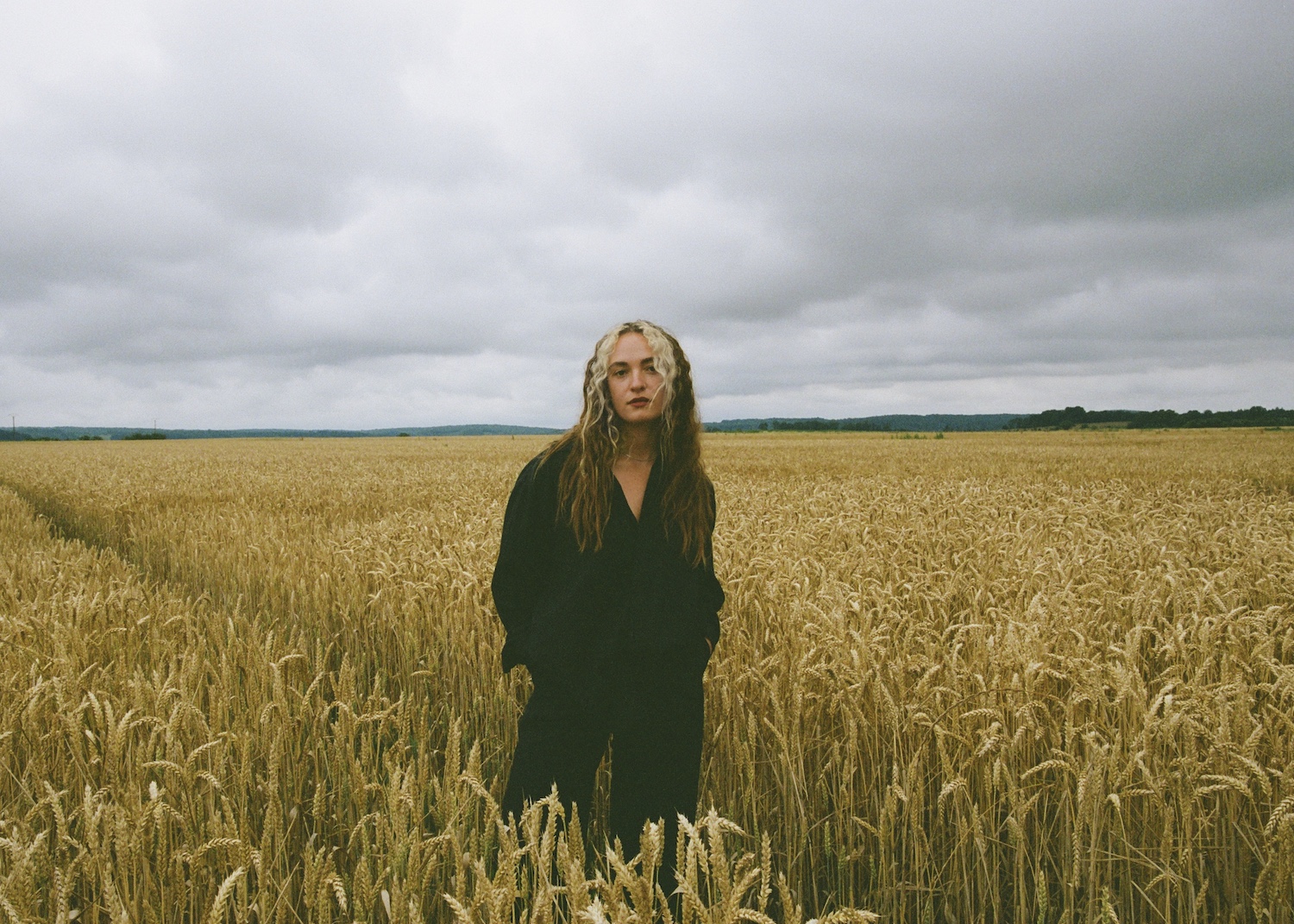
© Liz van den Akker
 © Liz van den Akker
:: Today’s Song(s) ::
follow our daily playlist on Spotify
:: Stream néomí ::