
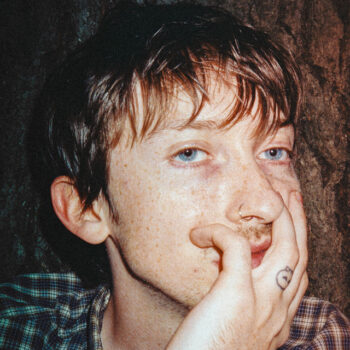
Brooklyn-based singer/songwriter and 2026 artist-to-watch Hudson Freeman unpacks the muddy, grunge-leaning evolution of his folk project and the “pre-political” urgency behind his hauntingly beautiful, hypnotic, and unflinching hit single “If You Know Me,” reflecting on sincerity, displacement, faith, and the increasingly fragile work of understanding one another on- and offline.
 follow our Today’s Song(s) playlist


Stream: “If You Know Me” – Hudson Freeman
“If you know me like you say you do, you’d be humming along, you’d be singing the tunes.”
It’s a deceptively simple opening – conversational, almost offhand – but it cuts straight to the heart of Hudson Freeman’s latest, gut-wrenching song.
Raw and dusty, achingly impassioned and quietly tender, “If You Know Me” is an alt-folk reverie that’s had me utterly hooked from the first listen. Freeman’s voice is worn, soul-stirring, and unguarded, carrying a heavy weight – the kind that sends a shiver down your spine not because it’s loud, but because it’s true.
This is dusty alt-folk at its finest: Charming and churning, heavy and heartfelt, music that sweats and sways and stirs with emotional urgency. Freeman writes with an openness that feels both bold and fragile, letting feeling spill out without ever tipping into melodrama. Released November 14th alongside a soul-stirring cover of The Rolling Stones’ “Wild Horses,” “If You Know Me” doesn’t posture or perform its sincerity – it simply is, and that authenticity is what makes it land so deeply.
If you know me like you say you do
You’d be humming along
You’d be singing the tunes
If you know me like you say you do
You’d just tell me I’m wrong
You’d just tell me the truth
Based in Brooklyn, Hudson Freeman is a folk artist – and one who deserves a spot on all music lovers’ radars. For the past decade, he has been hard at work quietly shaping a sound that sits at the crossroads of folk intimacy and alt-rock unease. Born in Waxahachie, Texas, and raised by missionary parents, Freeman’s formative years were marked by displacement – first growing up in North Dallas, then relocating to Eswatini (formerly Swaziland) as a teenager. Homeschooled and far from familiar reference points, he gravitated toward the acoustic guitar early on, explaining that “my special interest became the acoustic guitar… I preferred the acoustic to the electric because the platonic ideal of ‘good tone’ always taunted me and I hate guitar pedals.”
It was during those years abroad that he began writing songs in earnest, eventually releasing his first EP via Kickstarter after returning to the U.S. in 2015. Graduating from college into the chaos of 2020, Freeman eventually landed in New York, where his music began to take flight – rooted in faith, anxiety, belonging, and the uneasy work of becoming yourself online and off.
That decade-long process has also been about sound – about resisting easy categorization. Freeman bristles a bit at genre shorthand, even as listeners gravitate toward what some have dubbed “indie-twang.” “There’s a lot of projects I really adore that I’d put in that category – like Frog or Waxahatchee or Wednesday – that more faithfully bridge that world of country and indie-rock music,” he says. “But I can’t deny the twang in my voice… I also used to work at a Bluegrass shop in the Ozarks that slowly seeped into my brain.” Still, his aim isn’t revivalism. “I’m trying to push the genre production- and visuals-wise and make Americana music a little more left-of-center,” Freeman explains. “The desire is to just write rock music on an acoustic guitar and see what folk elements pop out in the process. Ultimately, I hope genre-f***ery never gets in the way of the songs.”

The desire is to just write rock music on an acoustic guitar and see what folk elements pop out in the process.
* * *
A smoldering sense of searching hums throughout “If You Know Me.” Written at the tail end of recording his recent album is a folk artist, the song feels like both a continuation and a clarification.
Freeman has described it as “kind of like a B-side… lyrically, a sister song to [is a folk artist‘s] ‘Good Faith,’ in that that’s what it’s about – sincerity of intention between people.” The song circles that anxiety gently but persistently, asking what it really means to be known in a world shaped by algorithms, assumptions, and quiet mistrust – a feeling Freeman articulates plainly: “I’ve increasingly had this feeling since 2020 that everyone is living in parallel realities to me, that our personal algorithms have us all spinning out on frighteningly singular journeys of thought, and that even the people I agree with the most in my life still don’t seem to share the reality I am living in,” he confides.
“I find it all, kind of lonely and terrifying, how suspicious I suddenly am of people I’ve known for years. But the way things play out online, it kind of feels impossible to cut through one another’s passive paranoia and make true pro-social appeals without your intentions being called into question. I think I genuinely feel worried that my friends hate me and think I’m obnoxious, but they’re so spun out in their world that they’re afraid to call me out on mine.”
if you know me like you say you do
if you know me
if you know what i’m about to say
you just cut me off
you just set me straight
if you know me like you think you do
you just tell me i’m off
you just read me the news
There’s a humility baked into those lines – a longing not for affirmation, but for honesty. Freeman isn’t asking to be agreed with; he’s asking to be met. Musically, the song mirrors that plea: Spare, warm, and grounded, letting space and silence do as much work as the melody itself. The repetition of the refrain doesn’t feel obsessive so much as searching, like someone turning the same thought over and over, hoping it might finally land.
Perhaps it’s only fitting that people first heard this song in its most vulnerable, intimate form. “If You Know Me” first entered the world as a stark, voice-memo-style demo – an especially haunting early version that stripped the song down to its barest elements. Shared quietly in mid-September, it began to travel on its own terms, eventually cresting more than three million streams on Spotify alone. That response wasn’t driven by spectacle or saturation, but by recognition – listeners meeting the song where it was, in its rawest state. When Freeman later released the studio version in mid-November, paired with his aching cover of The Rolling Stones’ timeless “Wild Horses,” it felt less like a reinvention than a clarification, sharpening a feeling people had already latched onto and deepening the emotional weight rather than smoothing it out.
While “If You Know Me” has drawn viral attention thanks to its instantly recognizable riff – even earning a public co-sign from John Mayer – the song’s power lies in its emotional plainness. It’s not flashy or ironic. It’s a song about wanting the people in your life to really see you, to cut you off when you’re wrong, to set you straight when you drift – and about how lonely it can feel when that connection slips just out of reach.
That commitment to honesty carries through not just lyrically, but sonically. Freeman’s recordings resist polish in favor of texture and feel. “I’ve been recording on a lot of different kinds of mics without very much consistency – some trashy ones like the EV635 and cheap condensers like the Aston Spirit,” he shares. “I’ve honestly enjoyed what I can get out of my handy recorder lately, and I also love just recording the nylon DI.” What listeners recognize as his “sound” isn’t precious gear or pristine signal chains, but character. “The signature sound comes more in the tape processing,” he says – whether that’s SketchCassette II or his mixing engineer Harper James’ “shitty TEAC.” The result is music that feels lived-in and tactile, like fingerprints left behind rather than something sealed under glass.
At its core, “If You Know Me” is a plea for good faith – for conversation that happens face to face, not filtered through screens and suspicion. Freeman has called it “a pre-political song,” explaining that he’s “trying to make the case that we have to get offline and admit our fallibility to one another in order to have good faith discourse.”
“I don’t know if, nostalgically, we ever had ‘good discourse’ in the past, but I know we aren’t going to have it moving forward on these intrinsically anti-social social media platforms,” he adds. Before discourse, before ideology, before sides, there’s the human need to be understood and corrected by people who care enough to stay.
That’s what makes this song linger. It doesn’t resolve its questions or offer easy comfort. Instead, it sits in the discomfort, trusting that naming it is its own kind of release. “I hope listeners take away an excitement for where the project is going sonically – into the mud, grunge folk, whatnot,” Freeman says. “And emotionally, I hope people feel the push to have earnest conversation about our lives offline.” In putting it out, he found something quietly affirming: “I realized that more people than I knew wanted that realized in their own lives too.” Earnest, dusty, and deeply felt, “If You Know Me” is the sound of an artist leaning fully into his voice – and inviting us to do the same, together, offline, where it still counts most.
If you know me like you say you do
If you know me
If you know me like you think you do
If you know me
If you know me like you think you do
If you know me

I’m trying to make the case that we have to get offline and admit our fallibility to one another in order to have good faith discourse.
* * *
There’s something quietly radical about an artist like Hudson Freeman right now.
In a moment defined by speed, posturing, and flattened discourse, his songs insist on patience, honesty, and discomfort. He writes folk music that doesn’t seek comfort so much as clarity, music that resists easy resolution and instead lingers in the tension of not being fully understood. By pulling alt-rock unease, slowcore weight, and lived-in textures into the folk tradition, Freeman pushes the genre forward without abandoning its emotional core. His songs feel rooted in real life rather than performance, built on the belief that meaning still comes from sitting with difficult feelings long enough to name them.
That commitment is why Freeman feels poised for a genuine breakthrough in 2026. After a decade of quietly refining his voice, this year marked a turning point: is a folk artist introduced a fully realized vision, one that connected his sonic instincts, lyrical preoccupations, and long-simmering influences into something unmistakably his own. “If You Know Me” sharpened that focus even further, capturing both the emotional and philosophical stakes of his work while reaching a wider audience than ever before. Rather than chasing momentum, Freeman has earned it the slow way, by trusting his instincts, resisting shortcuts, and letting the work speak for itself. All signs point toward an artist entering his next chapter with intention, confidence, and something meaningful to say.
In conversation, Freeman expands on the ideas that give his music its weight. He speaks candidly about growing up between worlds, about faith, displacement, and the quiet anxieties of modern life, and about how the internet has reshaped our ability to see one another clearly. He reflects on the making of is a folk artist, the emotional origins of “If You Know Me,” and his belief in sincerity as a starting point rather than a conclusion. It’s a thoughtful, searching exchange that mirrors the music itself – grounded, restless, and deeply human – and even further solidifies the singer/songwriter as one of Atwood Magazine‘s 2026 artists to watch.
Read on for our full conversation with Hudson Freeman, and stream “If You Know Me” out now via Mendel Records.
— —
:: stream/purchase If You Know Me here ::
:: connect with Hudson Freeman here ::
— —
Stream: “If You Know Me” – Hudson Freeman
A CONVERSATION WITH HUDSON FREEMAN
Atwood Magazine: Hudson, for those who are just discovering you today through this writeup, what do you want them to know about you and your music?
Hudson Freeman: My legal name and project is Hudson Freeman – I am a Folk Artist.
I was born in Waxahachie, Texas and spent most of my life in North Dallas; however, my parents became missionaries when I was a teenager and we relocated to a small country in Southern Africa called Eswatini. Being homeschooled, my special interest became the acoustic guitar (I preferred the acoustic to the electric because the platonic ideal of “good tone” always taunted me and I hate guitar pedals). I wrote an EP the last few months I lived there and did a kickstarter for it, when my family returned to the US in 2015.
Mumford & Sons and Bon Iver truly got me into music, but the older I got, the more I felt myself bored by the tendency towards sweetness in indie folk, and increasingly drawn to the kind-of unnerving aesthetics and the resentful, commiseration that is alt rock. When I first started playing guitar at 11, I distinctly remember listening to the Nirvana MTV Unplugged album and wondering why rock guitarists didn’t just play all their songs on acoustic… The last ten years of my singer-songwriter project has culminated in me trying to connect those dots.
I’ve seen you get called “the future of indie-twang.” How do you describe your own songs, and what do you love most about them?
Hudson Freeman: There’s a lot of projects I really adore that I’d put in the category of “indie-twang” like Frog or Waxahatchee or Wednesday that I feel like more faithfully than I, bridge that world of country and indie rock music. But I can’t deny the twang in my voice (I also used to work at a Bluegrass shop in the Ozarks that slowly seeped into my brain), and I can’t deny that I’m aiming to push the genre production/visuals-wise and make Americana music a little more left-of-center. I think the desire is to just write rock music on an acoustic guitar and see what folk elements pop out in the process. Ultimately, I hope genre-f***ery never gets in the way of the songs.
“If You Know Me” is your first single following the release of is a Folk Artist this past spring! What’s the story behind this new song?
Hudson Freeman: “If You Know Me” is kind of like a B-side, in all honesty, that I wrote at the tail end of recording that album, last year. Lyrically, it is a sister song to “Good Faith” in that that’s what it’s about – sincerity of intention between people.
I’ve increasingly had this feeling since 2020 that everyone is living in parallel realities to me, that our personal algorithms have us all spinning out on frighteningly singular journeys of thought, and that even the people I agree with the most in my life still don’t seem to share the reality I am living in. I find it all kind of lonely and terrifying, how suspicious I suddenly am of people I’ve known for years. But the way things play out online, it kind of feels impossible to cut through one another’s passive paranoia and make true pro-social appeals without your intentions being called into question. I think I genuinely feel worried that my friends hate me and think I’m obnoxious, but they’re so spun out in their world that they’re afraid to call me out on mine.
It wouldn’t be wrong to call it a political song, but I think it might be more accurate to call it a pre-political song, in that I’m trying to make the case that we have to get offline and admit our fallibility to one another in order to have good faith discourse. I don’t know if, nostalgically, we ever had “good discourse” in the past, but I know we aren’t going to have it moving forward on these intrinsically anti-social social media platforms.
I don’t know if, nostalgically, we ever had “good discourse” in the past, but I know we aren’t going to have it moving forward on these intrinsically anti-social social media platforms.
* * *
It’s been just about six months since the release of is a Folk Artist. Half a year out from its release, what is your relationship like with that album and its songs? What does the record mean to you, now?
Hudson Freeman: is a Folk Artist definitely feels a little overshadowed by “The Riff” at this point, but I’m still incredibly proud of it and view it as my real debut, this year. “If You Know Me” came along and introduced me to people, but it was really gratifying for this new audience to have an entire project in the same sonic vein, to check out immediately.
From the first track “We Should Eat” to the last “Kitchen,” I think you really hear me start to discover my sound. If you pay attention to the way it flows, I think you kind of hear me slowly sinking into the mud. The beep-boop folk turns twangy slowcore… and “If You Know Me” kind of picks up where we left off.

You’ve said that “If You Know Me” is about this sense you have, and one I share, that the internet - social media in particular - incentivizes us to misunderstand each other. You took it one step further to call it “a slow moving catastrophe that none us can get our hands around.” Can you dive deeper into these feelings?
Hudson Freeman: Right, so I think social media incentivizes bad faith readings of one another. I think the people who built these platforms have been speciously convincing us that the whole thing runs on connection and likemindedness, but it seems like what actually generates engagement (and thus, ad revenue) is making friend/enemy distinctions out of everyone in the world, but the actual people in power. To take a film from this summer that I think was maybe mischaracterized or possibly just misunderstood (ironically), but is exactly about this idea with “Good Faith” or “If You Know Me,” Ari Aster said the point of Eddington was the “data center being built offscreen the whole time.”
We KNOW these technofreaks don’t want us to have flourishing, pro-social lives or well-intended public discourse – there is SO MUCH for them to gain from our physical social lives being increasingly subjected to the virtual. There is SO MUCH for content creators to gain from good faith discontent being redirected into personal clout and a dedicated audience online.
With AI now joining the mix of potentially toxic tools everyone can access and use - especially in place of human connections - do you have hope at all for humanity?
Hudson Freeman: The question with the power of “AI” is the same question to me as the power of “the economy,” which is, humanity needs to ask itself (and I do mean literally, we need to ask on another), “Are we going to allow ourselves to be dominated by an abstraction?” In other words – are we going to allow the trajectory of our world, our species, our hopes, dreams, and commitments to one another, be subjected to the totally theoretical ideas of a few people in power? I just am honest to God, simply not convinced that AI is a terminator-like being that we brought into the world that has its own agency, nor is The Market. We can decide as political beings, at any time that we want, to change how power and resources are distributed.

I just am honest to God, simply not convinced that AI is a terminator-like being that we brought into the world that has its own agency, nor is The Market. We can decide as political beings, at any time that we want, to change how power and resources are distributed.
* * *
What does your decision process look like when you’re figuring out which mic to record your voice with, and how to capture your guitars? Do you have a go-to method and you layer from there, or is there tons of trial and error involved with capturing what is quickly becoming your identifiable, sort of “signature” sound?
Hudson Freeman: I’ve been recording on a lot of different kinds of mics without very much consistency – some trashy ones like the EV635 and cheap condensers like the Aston Spirit. I’ve honestly enjoyed what I can get out of my handy recorder, lately and I also love just recording the nylon DI. The signature sound comes more in the tape processing – which is either the emulating plugin SketchCassette II or my mixing engineer Harper James’ shitty TEAC.
What do you hope listeners take away from “If You Know Me,” and what have you taken away from creating it and now putting it out?
Hudson Freeman: I hope listeners take away an excitement for where the project is going sonically, into the mud, grunge folk whatnot. And emotionally, I hope people feel the push to have earnest conversation about our lives offline. In putting it out, I got a lot out of realizing that more people than I knew wanted that realized in their own lives, too.
— —
:: stream/purchase If You Know Me here ::
:: connect with Hudson Freeman here ::
— —
Stream: “If You Know Me” – Hudson Freeman
— — — —

Connect to Hudson Freeman on
Facebook, TikTok, Instagram
Discover new music on Atwood Magazine
© Sophie B
 ©
©
:: Today’s Song(s) ::
follow our daily playlist on Spotify
:: Stream Hudson Freeman ::